
9 Best Board Games For Young Kids in 2026
This post contains affiliate links. As an Amazon Associate, we earn from qualifying purchases.
The Peaceable Kingdom Count Your Chickens Board Game is the best overall board game for young kids because it teaches counting and teamwork without requiring any reading. For toddlers just starting out, the HABA My Very First Games First Orchard offers durable wooden pieces and cooperative play. The Hasbro Gaming Candy Land Kingdom of Sweet Adventures remains a classic no-reading option for preschoolers.
Finding a board game your young child can actually play, and wants to play again, means matching the rules to their attention span and fine motor skills. Too complex and they lose interest; too simple and they get bored. The sweet spot is a game that builds a skill without feeling like a lesson.
This guide is research-based, drawing on manufacturer specifications, expert round-ups, and patterns in owner feedback across nine top-rated games. We focus on what actually matters for young kids: age-appropriate rules, durable components, and play value that holds up past the first few rounds.
Top 9 Board Games For Young Kids in the Market
Certain content that appears on this site comes from Amazon. This content is provided "as is" and is subject to change or removal at any time.
The Best Board Games For Young Kids, Reviewed
Peaceable Kingdom Count Your Chickens Board Game

What We Like
- Cooperative play builds social skills
- No reading required for kids
- Teaches counting and teamwork
Trade-offs
- Only supports up to 4 players
A cooperative counting game where everyone wins or loses together means zero tears over who comes in last, a huge relief for parents of three-year-olds. The 40 chicks to collect give kids a clear shared goal, and since no reading is needed, even pre-readers can jump right in. That social development layer, paired with the counting practice, makes this feel less like a lesson and more like a team mission. The design respects both the child’s need to move and the parent’s hope for a calm game night.
For families who want a gentle introduction to turn-taking and counting without the pressure of individual competition, this cooperative approach delivers exactly what it promises.
Product photos
HABA My Very First Games First Orchard

What We Like
- Cooperative play builds teamwork skills
- Large wooden pieces for small hands
- Teaches colors, counting, and taking turns
- Sustainable PEFC certified wood components
Trade-offs
- Only one die limits variety for older toddlers
- No expansion or advanced rules for growing kids
Over 3 million copies sold in 30 years means this cooperative toddler game has been refined to near perfection for its audience. The chunky wooden fruit pieces and single color die are sized exactly right for two-year-olds, letting them practice color recognition and counting while working together to beat the raven. Designed by educators, it introduces turn-taking and graceful winning or losing without the pressure of head-to-head competition, ideal for families wanting a gentle first board game experience that builds social skills alongside fine motor control.
The trade-off is that the same simplicity that makes it accessible for toddlers can feel limiting once a child turns four or five. For parents seeking a durable, sustainably made wooden game that genuinely teaches cooperation and basic skills to the youngest players, this is the one to start with.
Product photos
Hasbro Gaming Candy Land Kingdom of Sweet Adventures

What We Like
- No reading required for play
- Classic beginner game for ages 3+
- Color-coded cards for easy moves
- Fun gingerbread man pawns
Trade-offs
- No reading or counting skills built
- Purely luck-based with no strategy
With no reading required and a simple color-matching mechanic, Candy Land lets three-year-olds jump straight into the action without needing any help from an adult. The colored cards and sweet-themed board keep little ones engaged as they race their gingerbread pawn toward the castle. That straightforward design is exactly why it remains the classic beginner game for families introducing preschoolers to board games for the first time.
Since the game requires no reading and relies entirely on colored cards, the outcome is pure luck, there’s no decision-making or skill building, so older kids or adults may find it repetitive quickly. But for the youngest players who just want to play without frustration, Candy Land delivers exactly what it promises.
Product photos
Hasbro Gaming Don't Break The Ice
What We Like
- Encourages fine motor skills through tapping
- Fun suspense for preschoolers
- Classic family game for game night
- Includes Phillip the Penguin figure
Trade-offs
- Only supports 2-4 players
- Gameplay relies on luck, not strategy
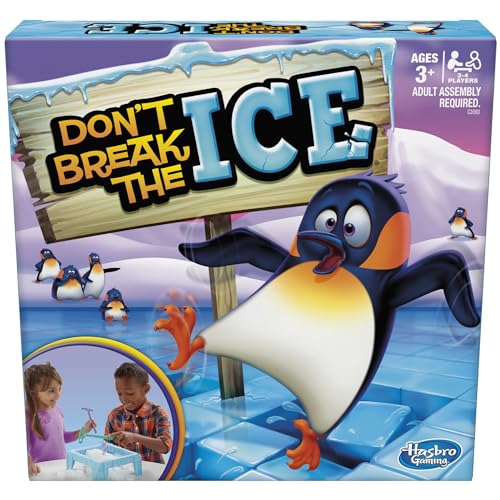
At 1.0 pounds and sized for small hands, Don’t Break The Ice is built for preschoolers who need a game that’s easy to set up and quick to play. The core mechanic, tapping out plastic ice blocks one by one while keeping Phillip the Penguin balanced, teaches turn-taking and fine motor control without demanding reading or counting skills. That makes it a good choice for families with 3- and 4-year-olds who aren’t ready for rule-heavy games but still want real suspense and a satisfying “ker-plop” moment.
This is purely a luck-based game, with no strategy or skill progression to keep older kids engaged after a few rounds. Compared to cooperative picks like Peaceable Kingdom Count Your Chickens, which builds early math skills through counting, Don’t Break The Ice offers more physical excitement but less educational depth. It’s best for short, giggly sessions where the goal is shared laughter, not learning, and for parents who don’t mind resetting the ice blocks between games.
Product photos
Peaceable Kingdom Monkey Around First Game

What We Like
- Encourages active play with parent
- Includes beanbag banana for fun
- Builds gross motor skills and coordination
- Award-winning toddler game design
Trade-offs
- Only for parent and one toddler
- No solo play or sibling interaction
Monkey Around gets you and your two-year-old moving with cards that prompt hugs, high fives, balancing, hopping, and marching. The included beanbag banana adds a tactile element that makes each action feel like a small celebration. This game is designed to turn playtime into a shared physical activity that builds gross motor skills, coordination, and listening skills while you both laugh. For a toddler who needs to wiggle, this is exactly the kind of structured movement that channels energy into learning.
This one is strictly a one-adult-one-toddler experience, so siblings or friends will have to wait their turn or join in as observers. If your goal is a first game that gets your child moving and giggling with you, this delivers, just know it’s a duo activity, not a crowd-pleaser.
Product photos
Educational Insights The Sneaky Snacky Squirrel Game
What We Like
- Squirrel squeezer builds fine motor skills
- Color matching and strategy for preschoolers
- Tree-shaped board doubles as storage box
- Teaches turn-taking and winning gracefully
Trade-offs
- Only 20 acorns for up to 4 players
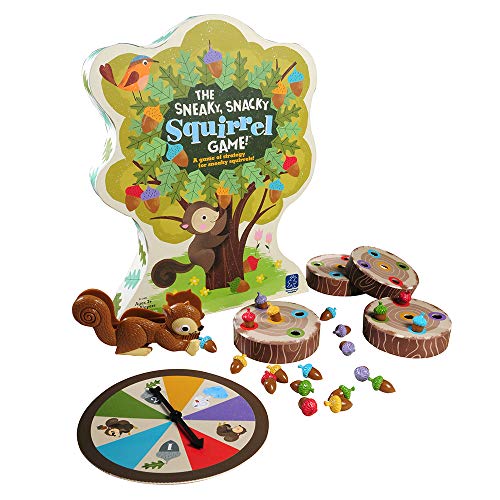
The included squirrel squeezer forces little fingers to work in a pincer grip, so every spin of the spinner becomes a deliberate hand-eye challenge that builds dexterity while kids match colors. That makes it ideal for three-year-olds who need to strengthen fine motor control before they tackle writing or buttoning. The turn-taking and sharing built into the rules give parents a natural way to practice social skills without a lecture.
The windstorm and opponent-snatch spaces add a competitive twist that some preschoolers may find challenging, especially if they are not used to losing pieces. For families who prefer a fully cooperative experience, the Peaceable Kingdom Count Your Chickens board game offers a different dynamic where everyone works together. At just one pound, the game is lightweight and easy to carry.
Product photos
Orchard Toys Shopping List Game
What We Like
- Encourages matching and memory skills
- Fun shopping theme for young kids
Trade-offs
- Limited to 2-4 players, not ideal for larger groups
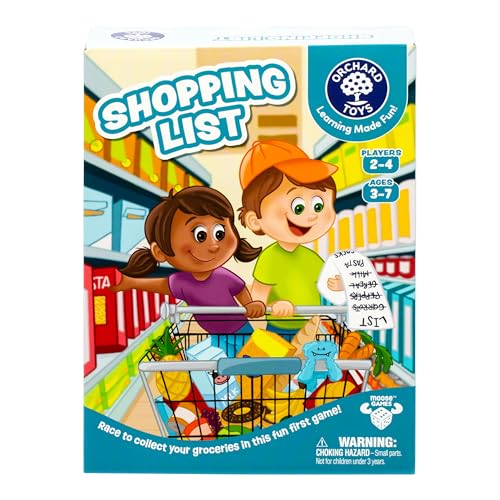
A 2-4 player memory game that asks kids to match grocery items to their shopping list, simple, direct, and effective. That straightforward matching loop is why it’s earned a reputation as a strong memory builder for ages 3-7. The new artwork freshens up the look, and the shopping theme gives little ones a familiar context that makes practicing recall feel like play, not homework.
The game is designed for 2-4 players, so it works best when everyone is ready to take turns and remember their items. Because it’s a race to fill your trolley first, younger players who struggle with memory or speed might find it challenging. For a cooperative alternative, Peaceable Kingdom’s Count Your Chickens board game lets all players work together toward a common goal, which can be a better fit for children who prefer teamwork over competition.
Nene Toys Cooperative Orchard Board Game

What We Like
- Chunky wooden pieces for small hands
- Teaches colors, numbers, and teamwork
- FSC-certified safe materials
- Screen-free Montessori-inspired play
Trade-offs
- Only 2-4 players limits larger groups
- No competitive mode for kids who prefer head-to-head play
A 2-4 player cooperative game built from FSC-certified wood means toddlers get a durable, safe introduction to teamwork and early learning. Chunky pieces are easy for little hands to grasp, and the orchard theme naturally encourages color recognition, counting, and turn-taking without screens or batteries. It’s an ideal first board game for families who want shared play that builds confidence and social skills from age two.
The cooperative format means everyone wins together, which is great for avoiding tears, but kids who prefer head-to-head competition might find it less exciting. This set uses FSC-certified wood with smooth, child-safe finishes, so it’s built to survive years of enthusiastic toddler play. If your child thrives on collaborative problem-solving and you value sustainable construction, this is a thoughtful pick for quiet afternoons or family game night.
Product photos
Goliath Don't Wake Daddy Board Game

What We Like
- No reading required to play
- Builds fine motor skills through button pressing
- Supports up to 6 players
Trade-offs
- Not suitable for children under 4 years old
The central hook here is a single button press that could send Daddy springing upright, and that moment of suspense is what keeps kids ages 4 and up coming back. No reading is needed, so even the youngest players can jump in without help, and the simple turn-taking structure teaches patience and hand-eye coordination while everyone holds their breath. It’s ideal for family game night where you want something energetic that gets everyone giggling, but still keeps the pace manageable for short attention spans.
The Goliath Don’t Wake Daddy Board Game is built around a single suspenseful moment: pressing a button that might make Daddy spring up in bed. For kids ages 4 and up who enjoy that kind of surprise, it’s a giggle-filled way to practice turn-taking and hand-eye coordination. But the sudden movement can be startling, so it’s not ideal for very sensitive toddlers. Up to 6 players can join, making it a good fit for family game night, and the simple rules mean no reading is required.
How We Evaluated Board Games For Young Kids
We started with the published age recommendations and component specs from each manufacturer, then cross-referenced those against patterns in owner feedback from families with young children. A game that says “ages 3+” but requires reading or complex strategy gets flagged immediately. We also looked at expert round-ups from play specialists and early childhood educators to understand which skills each game genuinely builds.
Three criteria mattered most for this age group. First, age fit, the rules must match what a 2-, 3-, or 4-year-old can actually do. Second, durability, young kids drop pieces, chew corners, and test seams. Third, replayability, a game that plays the same way every time loses its magic fast. We weighed cooperative games higher for toddlers because they remove the stress of losing, which is a real concern for this age.
The honest limit of a research-led evaluation is that we cannot replicate the chaos of your specific living room floor. A game that works for one family’s 3-year-old might frustrate another’s. We prioritize games with flexible rules and forgiving components so you can adapt as your child grows.
What To Look For In Board Games For Young Kids
The best board game for your young kid is one they can almost play on their own, simple enough to remember, sturdy enough to survive, and short enough to hold their attention.
Look for games with no reading required, chunky pieces for small hands, a short playtime, and cooperative or luck-based mechanics that avoid competitive frustration.
Age-Appropriate Rules
The biggest mistake parents make is buying a game their child is not ready for. For 2-year-olds, look for games with one-step instructions and no reading, think color matching or simple counting. For 3- and 4-year-olds, games with turn-taking and light strategy work well. Many of the best board games for preschoolers use picture-based cards or color-coded paths so kids can play independently. If the box says “ages 3+” but the instructions have a paragraph of text, it is likely too complex.
Component Durability and Safety
Young kids put things in their mouths, drop pieces on hard floors, and occasionally throw a game piece across the room in frustration. Cardboard tokens get bent, paper boards tear, and small plastic parts become choking hazards. The best games for 3 year olds use thick wooden pieces, coated cards, and boards that lie flat without creasing. HABA and Nene Toys use sustainably sourced wood with rounded edges and non-toxic finishes, which matters when your toddler decides to test the game piece with their teeth.
Playtime Length
A long game is an eternity for a 3-year-old. Look for games that wrap up quickly, which matches a young child’s attention window. Games like Don’t Break The Ice and Monkey Around finish fast, which means you can play multiple rounds without a meltdown. The best games for 4 year olds often have variable-length rules, you can play to one win condition for a short game or extend it for older siblings.
Skill Building vs. Pure Fun
Not every game needs to teach something, but the best ones build skills incidentally. A game that practices counting, color recognition, or fine motor control while feeling like play will get more repeat use than a drill disguised as a game. The educational board games in this guide build skills through the mechanics themselves, the Sneaky Snacky Squirrel game strengthens the pincer grip needed for writing, and Count Your Chickens practices one-to-one correspondence without flash cards.
- Check that all pieces are larger than a toilet paper tube to avoid choking hazards.
- Verify the game accommodates your child’s maximum attention span, set a timer and see if they can stay focused.
- Look for games with “first game” or “my very first” in the title, as these are designed specifically for young beginners.
- Read the box for “no reading required”, this is the single most important feature for 2- to 4-year-olds.
A good rule of thumb: if you cannot explain the rules in 30 seconds, your child will not remember them.
Board Games For Young Kids Compared
The table below compares all nine games across the features that matter most for young kids: age range, player count, skills taught, and whether reading is required.
| Product | Age Range | Players | Dimensions |
|---|---|---|---|
| Peaceable Kingdom Count Your Chickens Board Game | 3+ years | 2-4 | L 231.0 inches, W 41.0 inches, H 320.0 inches |
| HABA My Very First Games First Orchard | 2+ years | 1-4 | L 8.9 inches, W 8.9 inches, H 2.8 inches |
| Hasbro Gaming Candy Land Kingdom of Sweet Adventures | 3 & Up | N/A | L 1.2 inches, W 15.8 inches, H 10.6 inches |
| Hasbro Gaming Don't Break The Ice | 3+ years | 2-4 | L 2.5 inches, W 10.5 inches, H 10.5 inches |
| Peaceable Kingdom Monkey Around First Game | Ages 2+ | Parent + toddler | L 8.1 inches, W 8.0 inches, H 0.1 inches |
| Educational Insights The Sneaky Snacky Squirrel Game | 3+ | 2-4 | L 14.2 inches, W 11.0 inches, H 2.1 inches |
| Orchard Toys Shopping List Game | 3-7 years | 2-4 | L 2.0 inches, W 5.5 inches, H 7.5 inches |
| Nene Toys Cooperative Orchard Board Game | 2-4 years | 2-4 | L 8.7 inches, W 8.7 inches, H 1.4 inches |
| Goliath Don't Wake Daddy Board Game | 4+ | 2-6 | L 10.5 inches, W 2.5 inches, H 10.5 inches |
Frequently Asked Questions
What is the best board game for a 2-year-old?
The HABA My Very First Games First Orchard is the best choice for 2-year-olds. It uses large wooden pieces that are easy for tiny hands to grasp, teaches colors and counting through cooperative play, and has no reading required. The game also uses sustainable PEFC certified wood, so it holds up to rough toddler handling.
How do I know if a board game is age-appropriate for my child?
Check the manufacturer’s age recommendation on the box, then read the instructions yourself. If the rules require reading, complex strategy, or more than three steps, it is likely too advanced. The best simple board games for young kids use picture-based cards, color coding, or one-step actions that a child can learn by watching one round.
What is the difference between cooperative and competitive games for kids?
In cooperative games, all players work together toward a common goal, either everyone wins or everyone loses together. This removes the stress of losing for young children who may not have the emotional maturity for competitive play. Competitive games have one winner and can cause tears for sensitive kids. The cooperative board games on this list are ideal for toddlers and preschoolers who are still learning to handle disappointment.
How long should a board game session be for a 3-year-old?
Aim for a short game. Young children have short attention spans, and forcing them to sit through a longer game can create negative associations with board games. The best family board games for young kids have flexible rules that let you stop early or play multiple short rounds.
What skills do board games teach young children?
Board games for young kids can teach counting, color recognition, matching, memory, fine motor skills, turn-taking, and social skills like winning and losing gracefully. The best games for kindergarteners build these skills through the game mechanics themselves rather than through explicit instruction, which keeps learning feeling like play.
The Bottom Line
The Peaceable Kingdom Count Your Chickens Board Game is our best overall pick for families with 3- to 4-year-olds. It teaches counting and teamwork without reading, uses cooperative play to avoid competitive meltdowns, and has a short playtime that matches a preschooler’s attention span. If your child is closer to 2, start with the HABA My Very First Games First Orchard for its chunky wooden pieces and gentle introduction to game mechanics.
For families who want a classic no-reading option, the Hasbro Gaming Candy Land Kingdom of Sweet Adventures delivers reliable fun with its color-coded card system and gingerbread man pawns. If your child needs to burn energy while playing, the Peaceable Kingdom Monkey Around First Game gets them moving with a parent in a one-on-one active play session.
The single most important factor when choosing a board game for a young child is the “no reading required” feature. If your child cannot play without an adult reading every card, they will not play independently, and the game will gather dust on the shelf.
