
8 Best Board Games For Preschoolers in 2026
This post contains affiliate links. As an Amazon Associate, we earn from qualifying purchases.
The best board game for preschoolers is Hasbro Gaming Candy Land Board Game. It requires no reading and has a colorful board that captures young attention. The rules are simple enough for a three-year-old to grasp on the first turn. For families who want to practice counting together, the Peaceable Kingdom Count Your Chickens Board Game offers cooperative play, while the Educational Insights Sneaky Snacky Squirrel Game builds fine motor skills through color matching.
The challenge with preschool board games is finding one that holds a short attention span. It shouldn’t frustrate a child who can’t read, and it should teach something useful like turn-taking, counting, or patience without feeling like a lesson. Many games aimed at this age rely on luck, which is fine for fairness but can bore adults who want to play along.
This guide is research-based: we looked at manufacturer specifications, expert round-ups from child development sources, and patterns in owner feedback across hundreds of reviews. You’ll get eight carefully selected games, a clear breakdown of what each one teaches, and honest notes on where each falls short.
Top 8 Board Games For Preschoolers in the Market
Certain content that appears on this site comes from Amazon. This content is provided "as is" and is subject to change or removal at any time.
The Best Board Games For Preschoolers, Reviewed
Hasbro Gaming Candy Land Board Game

What We Like
- No reading required to play
- Classic beginner game for ages 3+
- Colorful board and sweet destinations
Trade-offs
- Board is 15.8 inches wide, needs table space
- Gameplay relies entirely on luck, no strategy
A game that requires zero reading means a three-year-old can jump in and play alongside older siblings or adults without needing help with instructions. That simplicity is the core reason Candy Land has been a preschool staple for generations. The bright, sugary artwork and the race to the castle keep little attention spans engaged, and the colored cards make every turn a surprise. For families looking for a low-stress, high-fun introduction to board games, this is the one that gets the job done without frustration.
The Candy Land board game requires no reading and no strategy, players simply draw colored cards and move their gingerbread man pawn toward the castle. That means it’s pure luck of the draw, which can be frustrating if your child wants to make choices or learn counting and matching. For a game that builds early math skills through cooperation, you might prefer Peaceable Kingdom Count Your Chickens. But for preschoolers who just want to play without any rules to learn, Candy Land delivers exactly that: sweet, simple fun.
Product photos
Hasbro Gaming Hi Ho Cherry-O Board Game

What We Like
- Classic beginner game for ages 3+
- Practices counting, addition, subtraction
- Simple turn-based gameplay for preschoolers
Trade-offs
- Spinner can require returning fruit to the tree
- Only 2 to 4 players
At just 0.4 pounds, this board game is light enough for a preschooler to carry to the table, and its 10.5-inch square board fits neatly on a shelf. The spinner tells kids how many cherries, blueberries, apples, or oranges to pick or put back, so every turn reinforces counting, addition, and subtraction without feeling like a math lesson. It’s a straightforward, turn-based game for families who want to build early math skills in 3-year-olds.
The competitive format means a player may have to return fruit to the tree when the spinner says so, which some children might find disappointing. Cooperative games like Peaceable Kingdom Count Your Chickens offer a different experience where everyone works together toward a shared goal. If your preschooler is ready for turn-taking and a bit of competition, Hi Ho Cherry-O provides classic counting practice. For a cooperative alternative, consider a game where players team up instead.
Peaceable Kingdom Count Your Chickens Board Game

What We Like
- Cooperative play builds teamwork skills
- No reading required for young kids
- Teaches counting and social development
Trade-offs
- Only 2-4 players limits larger groups
- No competitive element for older preschoolers
A cooperative counting game where everyone wins together, that’s the core idea behind Count Your Chickens. Designed for ages 3 and up, it asks 2 to 4 players to work as a team to help Mother Hen gather all 40 chicks before they scatter. No reading required, so even the youngest can jump in and start learning numbers and turn-taking right away. The cooperative format means no one loses, which takes the pressure off kids still figuring out how to handle competition. For families who want playtime to focus on collaboration rather than winning, this is a natural fit.
The trade-off is that some preschoolers who enjoy head-to-head challenges might miss the thrill of beating an opponent. Compared to Candy Land, which uses a straightforward race-to-the-end format, Count Your Chickens asks everyone to pull in the same direction. That’s great for shy or sensitive kids, but if your child thrives on direct competition, you may want to look elsewhere. For a gentle introduction to counting and teamwork, though, this award-winning game delivers exactly what it promises.
Product photos
Educational Insights Sneaky Snacky Squirrel Game
What We Like
- Builds fine motor skills with squirrel squeezer
- Reinforces color learning and matching
- Encourages strategic thinking and turn-taking
- Tree-shaped board doubles as storage box
Trade-offs
- Acorns are small, potential choking hazard for under 3
- Limited to 4 players, not for larger groups
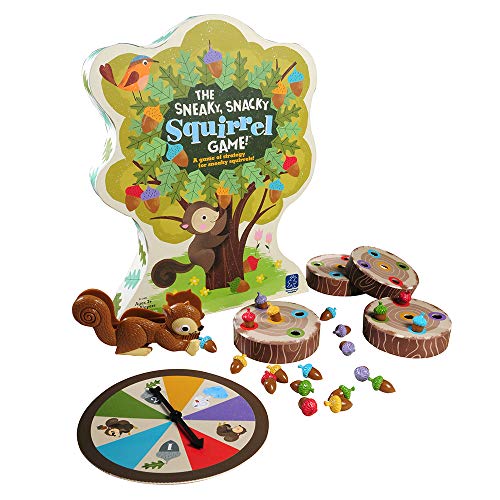
A 2-4 player game that uses a squirrel-shaped squeezer to pick up acorns, turning color matching into a fine-motor challenge. The squeezer action helps develop hand-eye coordination and dexterity in a playful way. It’s ideal for preschoolers who need to work on dexterity and color recognition, and the spinner adds just enough unpredictability to keep them engaged without overwhelming them. The tree-shaped board that doubles as the box makes setup and cleanup nearly effortless, which any parent will appreciate after a long day.
The real trade-off here is that the windstorm and opponent-snatch spaces on the spinner can be tough for kids who aren’t ready to lose gracefully. Compared to games like Peaceable Kingdom’s Count Your Chickens, which focuses on counting and early math skills, Sneaky Snacky Squirrel introduces direct competition that might cause tears for the more sensitive set. But if your child is ready to learn about taking turns and handling a little friendly rivalry, this game delivers solid skill-building wrapped in a charming theme.
Product photos
HABA My Very First Games First Orchard

What We Like
- Cooperative play for ages 2+
- 16 large wooden fruit pieces
- PEFC certified sustainable wood
- Teaches color recognition and counting
Trade-offs
- Only one color die limits variety
- Raven mechanic can frustrate very young kids
With 16 large wooden fruit pieces and a chunky color die, this cooperative game gets toddlers working together before they can even read. Over 3 million copies sold in 30 years tell you it’s been refined for tiny hands and short attention spans. The PEFC certified wood means you’re not just teaching turn-taking, you’re also putting something sustainable on the table. It’s ideal for families who want a first board game that builds color recognition, counting, and fine motor skills without the sting of losing alone.
With over 3 million copies sold over 30 years, this cooperative toddler game is a proven favorite for introducing young children to board games. The large wooden fruit pieces and chunky color die are sized perfectly for small hands, making it easy for 2-year-olds to grasp and play. Designed by educators, it helps develop social skills like taking turns and following directions while reinforcing color recognition, counting, and fine motor skills.
Product photos
Jax Sequence For Kids Board Game

What We Like
- No reading required for play
- Develops logical thinking skills
Trade-offs
- Only supports 2-4 players
- Strategy depth limited to 4-in-a-row
A ‘no reading required’ design means your preschooler can jump into strategic thinking without needing to recognize letters or words. That’s the core strength here: kids ages 3 to 6 simply match cards to characters on the board, aiming to get four chips in a row. It builds logical reasoning through a familiar sequence mechanic, so they’re learning pattern recognition and planning ahead without feeling like they’re doing schoolwork. For parents seeking a step up from pure luck-based games, this gives young minds a real but gentle challenge.
The trade-off is that it only seats 2 to 4 players, so larger playdates or family gatherings may leave someone out. If you’re looking for a first game that rewards thinking over chance, this is a solid fit.
Peaceable Kingdom Round the Mountain Cooperative Board Game
What We Like
- No reading required for play
- Teaches turn-taking and teamwork
- Includes wooden train and board
- Quick 15-minute play sessions
Trade-offs
- Only 2-4 players limits larger groups
- Falling rock tokens can cause sudden loss
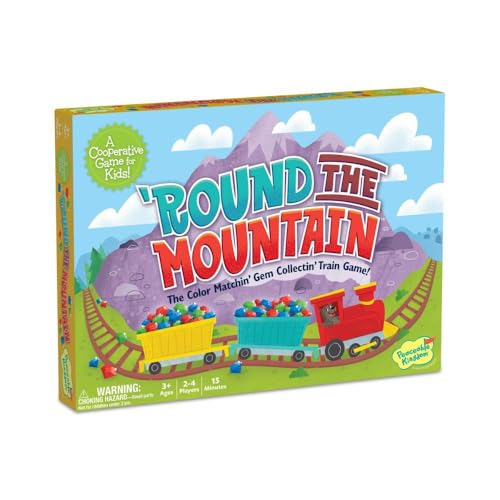
A cooperative board game for 2-4 players ages 3 and up, Round the Mountain has everyone working together to collect gems and dodge falling rocks instead of competing. No reading is required, so a three-year-old can follow the color-coded die and spinner without help. The 15-minute playtime keeps attention spans intact, and the wooden train, die, and board provide hands-on pieces that make the game feel more like play than a lesson.
As a low-stress introduction to board games where everyone wins together, this cooperative game delivers exactly that. The falling rock tokens add a challenge, but they can cause a sudden loss that younger players might not handle well. Once a preschooler masters the rules, there isn’t much new strategy to discover. It just won’t hold the same replay value for older siblings or kids ready for more complex decisions.
Goliath Don't Wake Daddy Board Game

What We Like
- No reading required for play
- Develops fine motor skills
- Supports up to 6 players
- Quick to learn rules
Trade-offs
- Requires a flat, stable surface
- Not suitable for children under 4 years
A game board that measures 10.5 inches on each side and stands 2.5 inches tall sets the stage for up to six players. They take turns pressing a button, hoping not to wake the sleeping dad. The rules are simple enough for four-year-olds to grasp quickly, and since no reading is required, everyone can join in right away. The button press and the surprise action help develop hand-eye coordination and turn-taking skills in a playful way, making it a lively addition to family game night.
The board does need a flat, stable surface to work properly; a wobbly table or thick carpet can interfere with the surprise mechanism. Compared to a game like Candy Land, which relies on drawing cards and moving along a path, this game adds a physical element that can keep active preschoolers engaged. For families looking for a game that creates laughter and suspense rather than focusing on winning, this one fits the bill. It is designed for ages 4 and up, so very young toddlers who might be startled by sudden surprises may not be the best fit. But for the intended age group it serves as a fun icebreaker.
Product photos
How We Evaluated Board Games For Preschoolers
We started by reading manufacturer specifications and age recommendations for dozens of games marketed to children ages two through five. From there we cross-referenced expert round-ups published by occupational therapists and early childhood educators, paying close attention to which skills each game claims to build and whether those claims match typical preschool development milestones.
Our evaluation focused on four criteria that matter most for this age group. First, no-reading-required design, a preschooler should be able to play independently after a single explanation. Second, skill development, the game should teach at least one concrete ability like counting, color recognition, or fine motor control. Third, frustration tolerance, games that punish young players with long waits or harsh setbacks were downgraded. Fourth, replayability, a game that a child will want to play more than twice.
A research-led evaluation like this cannot substitute for knowing your own child’s temperament. A cooperative game that works beautifully for one three-year-old may bore another who craves competition. We flag these trade-offs honestly so you can match the game to your child, not the other way around. For more options at the younger end of this range, see our dedicated list of board games for 3-4 year olds.
What To Look For In Board Games For Preschoolers
A good preschool board game meets a child where they are developmentally: no reading, short play sessions, and a clear goal that a three-year-old can understand. The best ones teach a skill without the child realizing they’re learning.
No-Reading-Required Design
A preschooler who cannot yet read should be able to play independently after one explanation. Look for games that use pictures, colors, or symbols instead of text. Candy Land uses a color-coded path. Sequence For Kids uses picture cards. If a game requires an adult to read every card aloud, the child isn’t really playing, they’re following instructions.
Skill Development Match
Different games teach different skills, so match the game to what your child needs practice with. Counting games like Hi Ho Cherry-O and Count Your Chickens reinforce number recognition and one-to-one correspondence. Fine motor games like Sneaky Snacky Squirrel strengthen the pincer grip needed for writing. Cooperative games like First Orchard and Round the Mountain teach turn-taking and emotional regulation.
Play Time and Attention Span
Preschoolers have short attention spans, most games in this list finish in a short time. Games with longer play times will frustrate young children and exhaust parents. Check the listed play time and consider your child’s typical focus window. If a game claims a longer play time but your child checks out earlier, look for something shorter.
Player Count and Group Size
Most preschool games support two to four players. If you have a larger family or plan to use the game for playdates, look for games that support more players. Don’t Wake Daddy supports up to six players, which makes it a good choice for group settings. For smaller families, two-player games like Sequence For Kids work fine.
- Check the box for “ages 3+” or “ages 4+”, age labels are conservative, but a game marked for ages 6 will likely frustrate a three-year-old.
- Look for large, durable pieces that are easy for small hands to grasp and hard to swallow.
- Read the “best for” and “not ideal for” notes in each review, they save you from buying a game your child will reject.
- Consider cooperative games if your child struggles with losing, they teach teamwork instead of competition.
A preschool board game that your child can play independently, finishes before they lose interest, and teaches one real skill is worth ten games that check only one of those boxes.
Board Games For Preschoolers Compared
The table below compares all eight games by age range, player count, play time, and the primary skill each one teaches. Use it to narrow your choices before reading the full reviews.
| Product | Ages | Players | Weight |
|---|---|---|---|
| Hasbro Gaming Candy Land Board Game | 3 & Up | N/A | 1.1 pounds |
| Hasbro Gaming Hi Ho Cherry-O Board Game | 3 and up | 2 to 4 | 0.4 pounds |
| Peaceable Kingdom Count Your Chickens Board Game | 3+ | 2 to 4 | 1.0 pounds |
| Educational Insights Sneaky Snacky Squirrel Game | 3 and up | 2-4 | 1.0 pounds |
| HABA My Very First Games First Orchard | 2+ years | 1-4 | 1.8 pounds |
| Jax Sequence For Kids Board Game | 3-6 years | 2-4 | 1.5 pounds |
| Peaceable Kingdom Round the Mountain Cooperative Board Game | 3+ | 2-4 | 1.5 pounds |
| Goliath Don't Wake Daddy Board Game | 4+ | 2-6 | N/A |
Frequently Asked Questions
What is the best board game for a three-year-old?
The HABA My Very First Games First Orchard is designed for ages two and up, making it the best choice for the youngest preschoolers. It uses large wooden fruit pieces, cooperative play, and a single color die, simple enough for a toddler to understand but engaging enough to hold their attention through a full game.
What board game teaches counting for preschoolers?
Hasbro Gaming Hi Ho Cherry-O Board Game is the classic counting game for this age. Players pick fruit from a tree and practice counting, addition, and subtraction with every turn. For a cooperative alternative that teaches the same skills without competition, try Peaceable Kingdom Count Your Chickens Board Game.
Are there board games for preschoolers that don’t require reading?
Yes, most games on this list require no reading. Hasbro Gaming Candy Land Board Game uses color-coded cards and spaces. Jax Sequence For Kids Board Game uses picture cards. Peaceable Kingdom Round the Mountain Cooperative Board Game uses symbols and a wooden train. All can be played by a child who cannot yet read a single word.
What is a good cooperative board game for preschoolers?
Peaceable Kingdom Count Your Chickens Board Game is the best cooperative option for ages three and up. Players work together to bring baby chicks back to the coop before the fox reaches them. For younger children ages two and up, HABA My Very First Games First Orchard offers the same cooperative structure with larger pieces.
How do I choose a board game for a preschooler who gives up easily?
Look for cooperative games that eliminate the sting of losing. Peaceable Kingdom Count Your Chickens and HABA My Very First Games First Orchard let the whole team win or lose together, which reduces frustration. Avoid games with harsh setbacks like returning pieces to the start, Hi Ho Cherry-O can frustrate some children when the spinner sends fruit back to the tree.
The Bottom Line
Hasbro Gaming Candy Land Board Game is our best overall pick because it meets every criterion that matters for a preschooler’s first board game. It requires no reading, has a colorful board that feels like a journey, and has rules that a three-year-old can explain to a friend. It is the game most likely to succeed on a first play session and the one that families will reach for again and again.
If your child needs practice with counting, choose Hasbro Gaming Hi Ho Cherry-O for competitive play or Peaceable Kingdom Count Your Chickens for a cooperative experience. For fine motor skill development, the Educational Insights Sneaky Snacky Squirrel Game is unmatched. And if you want a cooperative game that works for the youngest preschoolers, HABA My Very First Games First Orchard is the clear choice.
The single most important factor in choosing a preschool board game is whether your child can play it independently after one explanation. Everything else, skill development, replay value, player count, matters only if that first condition is met. For more recommendations as your child grows, explore our guides to board games for 4-5 year olds and board games for kindergarteners.
