
10 Best Board Games For 4 And 5 Year Olds in 2026
This post contains affiliate links. As an Amazon Associate, we earn from qualifying purchases.
For families with preschoolers, Hasbro Gaming Candy Land Board Game wins as the best overall because it requires no reading and introduces turn-taking through simple color matching. Our list of ten games also highlights Hasbro Gaming Hi Ho Cherry-O Board Game for building counting skills and Peaceable Kingdom Count Your Chickens Game for cooperative play.
The gap between a four-year-old and a five-year-old is surprisingly wide. One child is still learning to wait their turn, while the other is ready for simple strategy. You need games that meet each child where they are, not ones that frustrate one or bore the other.
This guide is built from manufacturer specifications, expert round-ups, and patterns in parent feedback. We focused on age-appropriate rules, skill-building value, and replayability to give you a clear, honest look at what works.
Top 10 Board Games For 4 And 5 Year Olds in the Market
Certain content that appears on this site comes from Amazon. This content is provided "as is" and is subject to change or removal at any time.
The Best Board Games For 4 And 5 Year Olds, Reviewed
Hasbro Gaming Candy Land Board Game

What We Like
- No reading required to play
- Classic beginner game for ages 3+
- Includes colored cards and fun illustrations
- Lightweight at 1.1 pounds
Trade-offs
- No strategy or decision-making for older preschoolers
- Relies entirely on luck with colored cards
With no reading required and a simple color-matching mechanic, Candy Land lets even the youngest players jump in without frustration. Designed for ages 3 and up, it uses colored cards and a sweet-themed path to guide kids from start to finish. The lightweight box and straightforward rules make it an easy first board game that parents can set up in seconds.
The trade-off is that there’s zero strategy or player choice, which can leave older preschoolers wanting more control over the outcome. Compared to other games for this age group, Candy Land relies entirely on luck. It’s a fine starting point for the youngest players, but if your child craves a bit more challenge, you might look at games that introduce light strategy or memory elements.
Product photos
Hasbro Gaming Hi Ho Cherry-O Board Game

What We Like
- Teaches counting, addition, subtraction
- Classic gameplay for ages 3+
- Simple turn-taking for preschoolers
Trade-offs
- Only 2-4 players limits larger groups
The spinner tells kids exactly how many pieces to pick or put back, turning every turn into a mini math lesson without feeling like school. For a child ages 3 and up who’s just starting to count, that concrete one-to-one matching, pick three cherries, drop two back, builds number sense faster than any workbook. It’s the kind of game where the learning hides inside the fun, so little ones stay engaged round after round. The simple rules mean no reading required, and the bright fruit pieces keep small hands busy. If your child needs practice with basic addition and subtraction in a low-pressure, playful setting, this is the one to grab.
The game board and pieces are light, at 0.4 pounds, so a determined preschooler can knock the whole thing off the table mid-game. Compared to a sturdier option like Candy Land, which has a heavier board and no small pieces to scatter, Hi Ho Cherry-O demands a little more supervision during play. But for focused counting practice, it’s hard to beat the direct feedback loop of filling a basket one fruit at a time. Just keep it on a flat surface and you’ll be fine.
Goliath Don't Wake Daddy Board Game

What We Like
- No reading required for play
- Supports up to 6 players
- Develops fine motor skills
- Easy to learn rules
Trade-offs
- Limited to 2-6 players only
- Not suitable for solo play
Pressing a button to see if Daddy wakes up creates genuine suspense that keeps little ones giggling and engaged. With simple rules and no reading required, it’s one of the most accessible picks for kids ages 4 and up. Up to 6 players can join, making it ideal for siblings, playdates, or family game night. The game also encourages hand-eye coordination and turn-taking in a playful way, so you’re building skills without a lecture.
Compared to a cooperative game like Peaceable Kingdom’s Count Your Chickens, this one relies on individual suspense rather than teamwork, so it’s better for families who enjoy a little friendly tension. If your child thrives on anticipation and giggles, this is a solid fit.
Peaceable Kingdom Count Your Chickens Game

What We Like
- Cooperative play teaches teamwork
- No reading required for kids
- Builds early math skills
- Award-winning design
Trade-offs
- Limited to 4 players max
- Only counting skill focused
- Box dimensions are unusually large
A 40-chick cooperative counting mission means every player works together to bring the flock home, so there’s no loser and no tears. That social development angle is what makes this a favorite for preschool groups and playdates, kids learn turn-taking and basic math without any reading needed. The five industry awards back up what the design delivers: a genuinely collaborative experience that builds confidence alongside counting.
This game only practices counting, not letters, colors, or strategy, so it won’t stretch a child who already knows their numbers. Compared to Candy Land’s pure luck-and-color path, Count Your Chickens offers more meaningful interaction but less variety in skills. If your little one needs broader cognitive challenges, you might want a game like Shelby’s Snack Shack that mixes fine motor work with early math.
Product photos
Peaceable Kingdom Dinosaur Escape Game

What We Like
- Cooperative play builds teamwork and memory
- Includes 12 reversible fern tokens for matching
- Volcano puzzle pieces create a shared goal
Trade-offs
- Only 2-4 players limits larger groups
- No solo play option for a single child
A cooperative memory game where 2 to 4 kids work together to rescue dinosaurs before a volcano erupts. That shared goal turns every round into a team effort rather than a winner-takes-all showdown. The game includes 12 reversible fern tokens, a die, and a board, so children practice memory and simple logic while playing. It suits families who want a non-stressful play experience that encourages shared decision-making and positive self-esteem, all wrapped in a theme that captures the imagination of dinosaur-loving preschoolers.
The catch is that the memory element demands attention; if your child struggles with recall or prefers games driven purely by chance, the pressure to remember token positions might feel like homework. For a group of four or fewer kids ages 4 and up who enjoy working together and love dinosaurs, this is a thoughtful pick.
Product photos
Educational Insights Shelby's Snack Shack Game
What We Like
- Builds fine motor skills with Shelby Squeezer
- Teaches counting and early math through play
- Includes storage in game board box
- Double spinner adds variety to turns
Trade-offs
- Not suitable for children under 3 due to small bones.
- Requires adult setup for the double spinner.
The Shelby Squeezer, a little plastic pug-nose tool, forces small hands to pinch and grip, building the fine motor control they’ll need for writing and buttoning. With 40 bones to collect and a double spinner that decides both action and quantity, every turn becomes a mini counting lesson disguised as a beach cleanup. That makes it a natural fit for 4-year-olds who are still refining their pincer grasp and number sense, especially if they already love dogs or pretend play. The game board folds into its own storage box, so setup and cleanup stay simple for parents.
The fine motor challenge can be demanding for younger or less coordinated children, as the squeezer requires precise grip. Compared to Candy Land, which relies purely on color matching and luck, Shelby’s demands more hand control and patience, so it’s better suited for children who already enjoy puzzles or building toys. The 40-bone count also means the game can feel repetitive after a few rounds, though the spinner’s randomness keeps each turn slightly unpredictable. For families wanting a game that sneaks in skill-building without feeling like homework, this one delivers, just be ready to cheer through the occasional dropped bone.
Product photos
Goliath 0055J Board Games
What We Like
- Rotating pond with opening fish mouths
- Develops hand-eye coordination
- Classic fast-action fishing gameplay
- Includes mini fishing poles
Trade-offs
- No cooperative play mode for young groups
- Only 21 fish limit game length
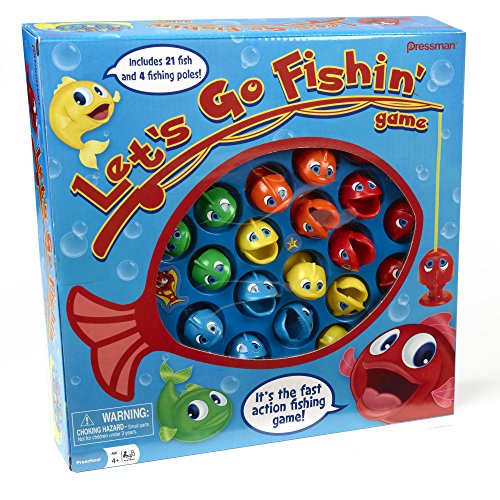
A rotating pond with fish that open and close their mouths means every round feels alive. Kids have to time their casts just right to hook one, which is exactly the kind of focused challenge that builds hand-eye coordination without feeling like work. The game keeps up to four players ages four and up engaged in a simple race to catch the most fish. For families who want a screen-free activity that teaches patience and fine motor control through pure, silly fun, this is the one that delivers.
With only 21 fish in the rotating pond, games wrap up fast when players are skilled, and the competitive free-for-all design means younger kids who struggle may get frustrated watching siblings scoop up fish. Unlike cooperative games such as Peaceable Kingdom Count Your Chickens, this one has no built-in team mode, so it’s best suited for children who enjoy direct competition.
Product photos
Jax Sequence For Kids Game

What We Like
- No reading required to play
- Develops logical thinking skills
- Targets ages 3-6
- Classic sequence gameplay for kids
Trade-offs
- Only supports 2-4 players
- Not suitable for children over age 6
No reading is required, so a child ages 3-6 can play by matching cards to the board and placing chips, building independence during game time. Logical thinking gets a gentle workout as they decide where to place chips to block opponents or build their own row.
Designed for two to four players, this game works best for smaller groups. Families with more than four children may need to take turns or pair up, since the board and pieces only accommodate up to four participants. Reviewers note that the player limit keeps rounds quick and focused, making it ideal for young children ages three to six who benefit from shorter attention spans. Unlike some cooperative games that allow larger groups, this one maintains a clear structure for each turn. Parents of a single child or two siblings find the limit perfectly suited for their household size.
ThinkFun Zingo Bingo Award Winning Preschool Game

What We Like
- Builds language and matching skills
- Includes extra card for up to 7 players
- Unique Zinger device delights all ages
- Clear, easy-to-learn instructions
Trade-offs
- No reading required but needs adult setup
- Only supports up to 7 players at once
The Zinger device, a tile-dispensing machine that shoots out picture tiles, is the star here, turning simple matching into a lively, almost magical event for preschoolers. It’s designed for pre-readers and early readers, so kids don’t need to know letters or numbers to play; they just match the images on their card to what pops out. That makes it a fantastic pick for mixed-age groups where some children are still learning their ABCs while others are just starting to read. The game supports up to seven players, which is rare for a preschool board game, so it works well for larger playdates or family gatherings without leaving anyone out.
The fast-paced, competitive nature of Zingo might not suit every 4-year-old. While the Zinger creates excitement, it also demands quick reactions, and a child who prefers a slower, more thoughtful pace could feel left behind. Compared to a cooperative game like Peaceable Kingdom Count Your Chickens, where everyone works together toward a shared goal, Zingo is squarely about individual speed and matching. For kids who thrive on that energy, it’s a blast; for those who get anxious under pressure, you might want to pair it with a calmer, turn-based alternative.
Educational Insights The Sneaky Snacky Squirrel Game
What We Like
- Squirrel squeezer builds hand strength
- Color matching and strategic thinking
- Teaches turn-taking and sharing
- Tree-shaped board doubles as storage box
Trade-offs
- Windstorm and steal spins can frustrate young kids
- Only 2-4 players limits larger groups
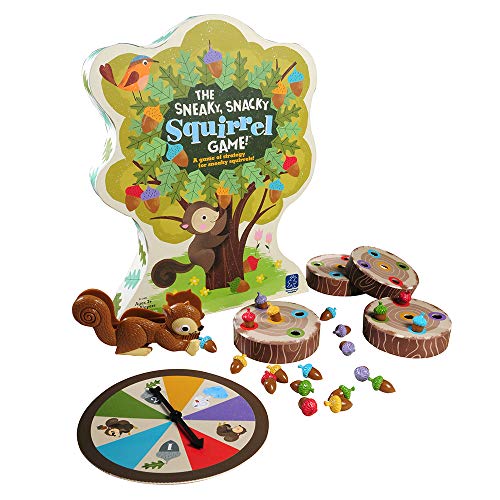
The squirrel squeezer is the star here, it forces little fingers to squeeze and release, building the fine motor control that makes tasks like buttoning and writing easier later on. For a child whose hands are still figuring out precision, that tweezer action turns color matching into a real workout. The game also sneaks in strategic thinking: do you go for the easy color or risk a spin that could let an opponent steal your acorn? It’s a good choice for parents who want playtime to quietly strengthen dexterity and decision-making without feeling like a lesson.
The same spinner that adds excitement can also cause tears, landing on a windstorm or “steal an acorn” space means losing progress, which some kids this age aren’t ready for. If your child is easily frustrated by setbacks, Peaceable Kingdom’s Count Your Chickens cooperative game avoids that entirely by having everyone work together toward a shared goal. But if your kid can handle a little friendly competition and needs practice with those fine motor skills, this game delivers exactly that, with a setup that packs away into its own tree-shaped box.
Product photos
How We Evaluated Board Games For 4 And 5 Year Olds
We started by reviewing the manufacturer’s listed age ranges, player counts, and component quality for each game. Then we cross-referenced those specs with patterns in owner feedback to see which games actually hold a preschooler’s attention after the third playthrough. Our board games for preschoolers guide covers the broader age range, but here we zoomed in on the specific needs of 4- and 5-year-olds.
The three criteria that mattered most were reading requirement, skill focus, and player limit. A game that demands reading excludes a four-year-old entirely. A game that only teaches counting might bore a five-year-old who already knows their numbers. And a game that seats only two players won’t work for a family with three kids.
A research-led evaluation has limits. We did not playtest these games with children, and individual kids vary widely in attention span and tolerance for competition. What we can tell you is which games consistently earn praise from parents for the same reasons, and which trade-offs come up most often in feedback.
What To Look For In Board Games For 4 And 5 Year Olds
Choosing the right game means matching the child’s developmental stage, not just their age. Here are the key factors that separate a hit from a closet-dweller.
Focus on games with no reading requirement, simple turn-taking, and a skill that matches your child’s current ability, counting, matching, memory, or fine motor control.
Reading Requirement
The single biggest barrier for this age group is text. A four-year-old who cannot read is locked out of any game with written instructions or cards. Our best board games for 4 year olds list is built entirely around picture-based and color-coded play. Even five-year-olds who are beginning to read benefit from games that use symbols or images so they can play independently.
Skill Focus and Challenge Level
A game that teaches counting is perfect for a four-year-old but may feel pointless to a five-year-old who already counts to 40. Look for games that layer skills, matching plus memory, or fine motor control plus color recognition. The best board games for 5 year olds often introduce simple strategy or cooperative goals that keep older preschoolers engaged without relying on reading.
Player Count and Group Dynamics
Most preschool games cap at four players, which works for a single family but fails for playdates or larger sibling groups. If you regularly have more than four children playing, prioritize games like ThinkFun Zingo Bingo Award Winning Preschool Game that support up to seven. Cooperative games are especially valuable for mixed-age groups because they remove the sting of losing and encourage teamwork. Our cooperative games for 5 year olds list highlights the best options for group play.
- Check the box for the minimum and maximum player count before buying.
- Look for “no reading required” on the box or in the description.
- Choose a skill (counting, matching, memory, fine motor) that your child is still developing.
- Consider cooperative games if your child struggles with losing or turn-taking.
- Avoid games with small pieces if you have a child under three in the house.
A game that matches a child’s current skill level will be played again. A game that overshoots will gather dust.
Board Games For 4 And 5 Year Olds Compared
The table below compares all ten games across the factors that matter most for this age group: reading requirement, primary skill taught, and player count.
| Product | Players | Age Range | Weight |
|---|---|---|---|
| Hasbro Gaming Candy Land Board Game | N/A | 3 & up | 1.1 pounds |
| Hasbro Gaming Hi Ho Cherry-O Board Game | 2 to 4 | 3 and Up | 0.4 pounds |
| Goliath Don't Wake Daddy Board Game | 2-6 | 4+ | N/A |
| Peaceable Kingdom Count Your Chickens Game | 2 to 4 | 3 years and up | 1.0 pounds |
| Peaceable Kingdom Dinosaur Escape Game | 2-4 | 4+ | 1.1 pounds |
| Educational Insights Shelby's Snack Shack Game | 2-4 | 4-6 | 0.9 pounds |
| Goliath 0055J Board Games | 1-4 | 4 and up | 0.8 pounds |
| Jax Sequence For Kids Game | 2-4 | 3-6 | 1.5 pounds |
| ThinkFun Zingo Bingo Award Winning Preschool Game | Up to 7 | 4 and up | 1.0 pounds |
| Educational Insights The Sneaky Snacky Squirrel Game | 2-4 | 3 and up | 1.0 pounds |
Frequently Asked Questions
What is the best board game for a 4-year-old who cannot read?
Hasbro Gaming Candy Land Board Game is the top choice because it uses colored cards and pictures instead of words. No reading is required, so a four-year-old can play independently after one explanation of the rules.
What is a good board game for a 5-year-old who already knows how to count?
Jax Sequence For Kids Game introduces simple strategy and logical thinking without requiring reading. It targets ages 3-6 and gives a five-year-old a satisfying challenge beyond basic number recognition.
How many players do most preschool board games support?
Most preschool board games support 2 to 4 players. If you need a game for a larger group, ThinkFun Zingo Bingo Award Winning Preschool Game accommodates up to 7 players, making it a strong choice for playdates or larger families.
What is a cooperative board game for 4 and 5 year olds?
Peaceable Kingdom Count Your Chickens Game is a cooperative game where all players work together toward a shared goal. It teaches counting and teamwork with no reading required, making it ideal for children who are not ready for competitive play.
What is the best board game for building fine motor skills in preschoolers?
Educational Insights The Sneaky Snacky Squirrel Game uses a squirrel-shaped squeezer to build hand strength and coordination. It also teaches color matching and turn-taking, making it a well-rounded choice for fine motor development.
The Bottom Line
Hasbro Gaming Candy Land Board Game is the best overall pick for families with 4- and 5-year-olds because it requires no reading, teaches turn-taking, and works for the widest age range. If your child is already counting confidently, Hasbro Gaming Hi Ho Cherry-O Board Game reinforces those skills through play. Peaceable Kingdom Count Your Chickens Game offers a cooperative alternative for kids who need a low-pressure introduction to board games.
For parents focused on fine motor development, Educational Insights The Sneaky Snacky Squirrel Game and Educational Insights Shelby’s Snack Shack Game both use squeezer tools to build hand strength. And if you have a larger playgroup, ThinkFun Zingo Bingo Award Winning Preschool Game supports up to seven players without requiring reading.
The single most important factor is matching the game to your child’s current developmental stage, not their age. A game that fits their skill level today will be played again tomorrow.
