
9 Best Board Games For Kindergarteners in 2026
This post contains affiliate links. As an Amazon Associate, we earn from qualifying purchases.
The best board game for most kindergarteners is Hasbro Gaming Candy Land Board Game. It requires no reading, teaches turn-taking, and its sweet-themed illustrations keep young children engaged. For families wanting to build counting skills, the Hasbro Gaming Hi Ho Cherry-O Board Game is the best choice for counting skills, while ThinkFun Zingo Bingo Award Winning Game is our pick for early readers.
A kindergartener’s first board game needs to hold their attention without overwhelming them. The sweet spot is a game that takes about 10 minutes to play, has simple rules, and builds a specific skill like counting, matching, or taking turns. Too much complexity leads to frustration, and too little challenge leads to boredom.
We researched manufacturer specifications, expert round-ups, and patterns in parent feedback to find the nine best board games for kindergarteners. This guide breaks down what to look for and which game fits your child’s current stage.
Top 9 Board Games For Kindergarteners in the Market

Certain content that appears on this site comes from Amazon. This content is provided "as is" and is subject to change or removal at any time.
The Best Board Games For Kindergarteners, Reviewed
Hasbro Gaming Candy Land Board Game

What We Like
- No reading required for play
- Classic beginner game for ages 3+
- Engaging sweet-themed illustrations
Trade-offs
- Entirely luck-driven with no decision-making for players
- Limited replay value once a child masters turn-taking
No reading required means kids as young as 3 can play without needing to read instructions, so the focus stays on turn-taking and shared fun. The colored cards and sweet-themed path are part of the classic design, and the gingerbread man pawns are easy for small hands to move. For families introducing board games for the first time, this removes the frustration of rules and lets the focus stay on turn-taking and shared fun.
Candy Land is a pure race to the castle where players move gingerbread man pawns along a path using colored cards. No reading is required for kids ages 3 and up, so it’s a straightforward choice for families introducing board games to children who haven’t learned to read yet. The game’s sweet destinations and fun illustrations keep little ones engaged, but once a child grasps turn-taking, they may want more challenge from a game like Hi Ho Cherry-O, which offers a different play experience for the same age group.
Product photos
Hasbro Gaming Hi Ho Cherry-O Board Game

What We Like
- Teaches counting, addition, and subtraction
- Classic beginner game for ages 3+
- Simple turn-based gameplay for preschoolers
Trade-offs
- No cooperative play, only competitive
Filling a basket with pretend fruit from a tree is the core goal of this counting board game for kids ages 3 and up. Players take turns spinning to see how many pieces to pick or put back, making each turn a small lesson in addition and subtraction. The first to fill their basket wins, so the action stays focused and quick for young attention spans. Reviewers note that children enjoy the tactile feel of the plastic fruit pieces and the satisfaction of watching their bucket gradually fill. It’s a straightforward race that introduces basic math skills without feeling like a lesson.
The trade-off is that every player is out for themselves, which can frustrate a child who struggles with losing. If your kindergartener prefers working together, Peaceable Kingdom Count Your Chickens is a cooperative board game where everyone helps the hen gather all 40 chicks. Hi Ho Cherry-O keeps the focus on individual counting practice, and at 0.4 pounds, it is lightweight enough to take along to a grandparent’s house or a classroom. For a straightforward counting game that fits a short attention span, this one works well.
ThinkFun Zingo Bingo Award Winning Game

What We Like
- Builds language and matching skills
- Includes unique Zinger device
- Supports up to 7 players
- Clear instruction manual
Trade-offs
- Beginner skill level limits use for independent readers
- No strategic depth beyond matching pictures and words
With room for up to 7 players, this game brings more kids to the table than many preschool board games that cap at 4 players. That makes it a natural fit for playdates, larger families, or classroom centers where you need everyone engaged at once. The Zinger device adds a tactile, surprising element that keeps little hands busy while they practice matching pictures and words, exactly the kind of low-pressure repetition that builds early reading confidence without feeling like schoolwork.
Zingo’s beginner skill level means it won’t grow much with a child who’s already reading independently. Compared to Candy Land, which relies on color recognition, Zingo offers more language-building opportunity but less room for strategic thinking. For a kindergarten classroom or a family with kids close in age, the matching action and expandable player count make it a practical pick that gets used often.
Peaceable Kingdom Count Your Chickens Game

What We Like
- Cooperative play builds social skills
- No reading required for young kids
- Teaches counting and early math
- Multiple award-winning design
Trade-offs
- Only 2-4 players limits larger groups
- No competitive element for some kids
A cooperative counting game where everyone works together to bring 40 chicks back to the coop means no one loses, and that’s a huge win for kindergarteners just learning to take turns. The game requires no reading, so young players can focus on counting and social skills instead of decoding rules. It has won five awards including the Oppenheim Toy Portfolio Platinum Award and Creative Child Game of the Year Award. For parents introducing board games to 3‑year‑olds, the frustration‑free packaging and cooperative format make it a gentle starting point.
The cooperative format means everyone wins or loses together, so kids who thrive on head-to-head competition might find it less exciting. Candy Land also targets ages 3+ but uses a different structure, if your child prefers a clear winner at the end, that game might be a better fit. The game is for 2 to 4 players, which keeps the group small.
Product photos
Educational Insights Sneaky Snacky Squirrel Game
What We Like
- Builds hand-eye coordination and dexterity
- Reinforces color learning and matching
- Encourages strategic thinking and turn-taking
- Includes 20 acorns in five colors
Trade-offs
- Only 2-4 players limits larger group play
- No solo play option for only children
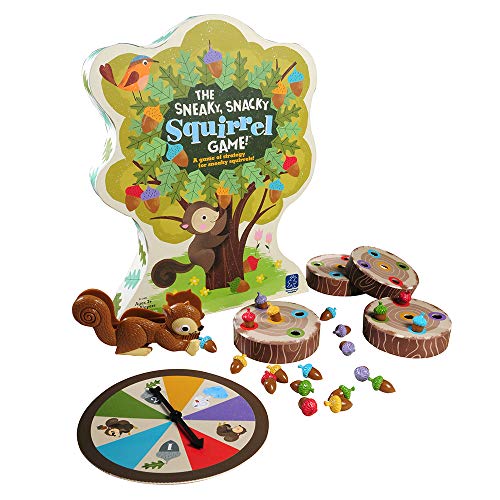
The squirrel squeezer turns color matching into a deliberate, satisfying challenge rather than a passive exercise. The game also sneaks in turn-taking and sharing, key social-emotional skills, without feeling like a chore. For a preschooler who’s still refining fine motor control, this is a playful way to strengthen those skills while keeping everyone engaged.
The spinner can be tricky: when it lands on a windstorm or a steal-an-acorn space, a child who’s just mastered picking up their acorn can lose it to another player. That’s a real bummer for a 3-year-old, and it means an adult may need to soften the rules or help with emotional coaching. Compared to Candy Land, Sneaky Snacky Squirrel demands more dexterity and offers more interaction, but it also asks more of a child’s emotional resilience. If your kid is still learning to lose gracefully, you might want to play cooperatively at first.
Product photos
Educational Insights Pancake Pile-Up Game

What We Like
- Builds matching, patterning, and sequencing skills
- Encourages gross motor play and balance
- Supports turn-taking and social-emotional learning
- Includes griddle board that doubles as packaging
Trade-offs
- Requires enough floor space for relay setup
- Two-player minimum limits solo play
A relay race that asks kids to flip order cards, dash to the griddle, and stack pancakes with a spatula, this game turns matching and patterning into a full-body challenge. With 2 to 12 players, it works well for birthday parties or family game night, and the cooperative relay format naturally teaches taking turns and handling winning or losing gracefully. The included griddle board even doubles as packaging, so setup is as simple as opening the box.
Space is the main consideration: you need enough room for kids to run back and forth, which might be tight in a small living room. Compared to a seated game like Candy Land, Pancake Pile-Up demands more active movement and coordination, so it’s better suited for kids who need to burn energy while learning. Best for families who want a game that gets everyone moving and practicing early math skills together.
Product photos
Goliath 0055J Board Games
What We Like
- Develops hand-eye coordination
- Rotating pond with opening fish mouths
- Deluxe plastic game base
- Classic fast-action gameplay
Trade-offs
- Competitive play only, no cooperative mode
- Limited to 21 fish pieces
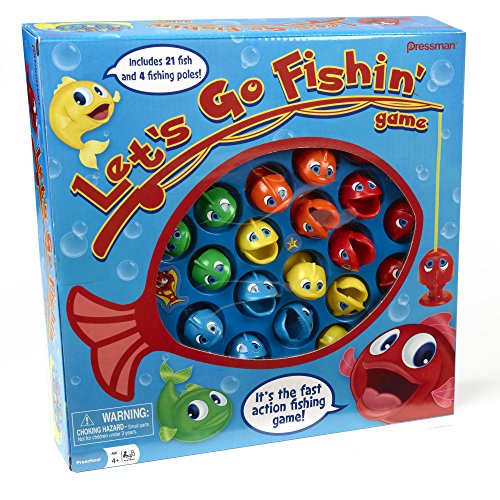
The rotating pond and fish that open and close their mouths create a fast-paced challenge that keeps little hands busy and helps build hand-eye coordination without them realizing they’re learning. With 21 colorful fish and mini fishing poles for up to four players, this is the kind of game that works equally well for a solo afternoon or a small playdate. It’s a straightforward, screen-free activity that delivers exactly what a budget-friendly kindergarten pick should: immediate engagement and a clear goal that even a four-year-old can grasp.
The original Let’s Go Fishin’ game helps develop hand-eye coordination as players use mini fishing poles to catch fish with mouths that open and close on a rotating pond. It’s a fun way to introduce turn-taking and focus without a big investment. Parents will remember playing this classic as kids, and the deluxe plastic game base and 21 colorful fish keep the action fast-paced for 1 to 4 players ages 4 and up.
Product photos
Peaceable Kingdom Dinosaur Escape Cooperative Memory Game
What We Like
- Teaches cooperative play and shared decision-making
- Builds memory and simple strategy skills
- Everyone wins together, reducing stress
Trade-offs
- Limited to 2-4 players, not for larger groups
- Requires at least 2 players, no solo play
A cooperative memory game where 2 to 4 kids ages 4 and up work together to rescue dinosaur friends before a volcano erupts. That shared goal, everyone wins or everyone loses, turns memory practice into a team effort, not a competition. The game includes 12 fern tokens that players flip to find matching dinosaurs, relying on memory and a bit of luck. It’s a way to introduce logic and strategy in a non-stressful environment, as the cooperative format encourages shared decision-making and positive self-esteem.
The game is designed for exactly 2 to 4 players, so it works best for small groups of kids who can cooperate and take turns. Compared to Candy Land, which also handles 2 to 4 players, Dinosaur Escape adds memory and teamwork, but that also means it demands more attention and patience from the group. If you often have five or more kids at the table, this one might sit on the shelf more than it gets played.
Product photos
Goliath Don't Wake Daddy Board Game

What We Like
- No reading required to play
- Develops fine motor skills
- Supports up to 6 players
- Quick to learn rules
Trade-offs
- Requires adult setup for battery
- Not suitable for solo play
A 4+ age rating and no-reading-required rules mean this game hits the table fast, even with a mixed-age group of kindergarteners. The core mechanic, tiptoeing and pressing a button, never knowing when Daddy will pop up, builds suspense in short, giggly bursts. For families looking for a game that rewards patience and gentle hands, this one turns waiting into the main event. Up to six players can join, which makes it a good fit for playdates or larger sibling sets.
The surprise element can genuinely startle younger or more anxious kids. If your child prefers cooperative play without sudden scares, Peaceable Kingdom’s Count Your Chickens game offers a calmer, counting-based alternative. But for families who enjoy a little theatrical tension and a payoff that gets everyone laughing, Don’t Wake Daddy delivers that specific thrill without complex instructions.
How We Evaluated Board Games For Kindergarteners
We started by reviewing manufacturer specifications and age recommendations for dozens of games marketed to children ages 3 to 6. From there, we cross-referenced expert round-ups from child development specialists and toy industry reviewers to identify games that consistently appear on recommended lists for kindergarten-age children.
Our evaluation focused on four criteria: skill-building value, age-appropriateness, replayability, and group dynamics. Skill-building value looks at whether the game teaches counting, reading, or motor skills. Age-appropriateness checks if the rules are simple enough for a 4- or 5-year-old. Replayability considers whether the child will want to play it more than twice. Group dynamics examines if it supports cooperative or competitive play in a healthy way. We also looked closely at parent feedback to understand which games actually hold a child’s attention beyond the first play.
A research-led evaluation has limits: we did not play-test these games with children, and individual results will vary based on a child’s temperament and developmental stage. What this guide offers is a curated starting point based on what the data and experts say works for most families. For more age-specific recommendations, see our curated board games for 5-year-olds and games for 4 and 5 year olds.
What To Look For In Board Games For Kindergarteners
Choosing the right board game for a kindergartener means matching the game’s demands to the child’s current abilities. The best games feel like play first and learning second.
Look for games with a play time of about 10 minutes, simple rules that can be explained quickly, and a clear skill focus: counting, matching, reading, or motor coordination. Avoid games with small pieces that pose a choking hazard for children under 3.
Age Rating and Skill Level
Most board games for this age group are rated for ages 3 and up or 4 and up. That rating is a safety floor, not a skill ceiling. A 3-year-old might enjoy the color matching in Candy Land, while a 5-year-old ready for more challenge will get more from a game like Hi Ho Cherry-O that introduces basic addition and subtraction. Our guide to board games for preschoolers covers options for the younger end of this range, while our top picks for kindergarten age address children on the older side.
Skill Focus: What Do You Want the Game to Teach?
Different games build different skills. Some focus on counting (Hi Ho Cherry-O, Count Your Chickens), others on early reading and matching (Zingo), and still others on fine motor control (Sneaky Snacky Squirrel, Pancake Pile-Up). Decide what your child needs most practice with, then choose accordingly. If you want a broader look at educational board games that build multiple skills, we have a dedicated guide for that.
Cooperative vs. Competitive Play
Some kindergarteners thrive on competition, while others find losing distressing. Cooperative games like Peaceable Kingdom’s Count Your Chickens and Dinosaur Escape let everyone win together, which builds teamwork and reduces frustration. Competitive games teach resilience and turn-taking but require a child to handle the disappointment of losing. If your child is sensitive, start with a cooperative board game option. For families who prefer simpler formats, our simple board games list includes both cooperative and competitive picks.
- Check the box for the recommended age range and number of players before buying.
- Look for games with large, durable pieces that small hands can grasp easily.
- Read the rules ahead of time to make sure you can explain them in under a minute.
- Consider whether the game requires adult setup (batteries, assembly) or is ready to play out of the box.
- Think about whether siblings of different ages can play together, some games scale well, others don’t.
A good rule of thumb: if you cannot explain the rules to your child quickly, the game is probably too complex for a kindergartener.
Board Games For Kindergarteners Compared
The table below compares all nine board games across key features so you can quickly see which one matches your child’s needs.
| Product | Age Range | Players | Weight |
|---|---|---|---|
| Hasbro Gaming Candy Land Board Game | Ages 3 & Up | N/A | 1.1 pounds |
| Hasbro Gaming Hi Ho Cherry-O Board Game | 3 and up | 2 to 4 | 0.4 pounds |
| ThinkFun Zingo Bingo Award Winning Game | 4 and up | Up to 7 | 1.0 pounds |
| Peaceable Kingdom Count Your Chickens Game | 3 years and older | 2 to 4 | 1.0 pounds |
| Educational Insights Sneaky Snacky Squirrel Game | 3 and up | 2-4 | 1.0 pounds |
| Educational Insights Pancake Pile-Up Game | 4+ | 2-12 | 1.0 pounds |
| Goliath 0055J Board Games | 4 and up | 1-4 | 0.8 pounds |
| Peaceable Kingdom Dinosaur Escape Cooperative Memory Game | 4+ | 2-4 | 1.1 pounds |
| Goliath Don't Wake Daddy Board Game | 4+ | 2-6 | N/A |
Frequently Asked Questions
What is the best board game for a kindergartener who cannot read yet?
Candy Land is the top choice because it uses color matching instead of words or numbers. No reading is required, which makes it accessible to children as young as three.
How long should a board game for a kindergartener last?
Aim for about 10 minutes per game. Longer games lose a young child’s attention, while shorter games feel unsatisfying. Most of the games on this list fit that window.
Are cooperative board games better for kindergarteners than competitive ones?
It depends on the child. Cooperative games like Count Your Chickens teach teamwork and remove the stress of losing, which is ideal for sensitive children. Competitive games teach resilience and turn-taking. Many families keep both types on hand.
What skills do board games teach kindergarteners?
Board games for this age group teach counting, color and shape recognition, early reading and matching, fine motor control, turn-taking, and social-emotional skills like handling winning and losing gracefully.
Can a 4-year-old play the same board games as a 5-year-old?
Often yes, but with caveats. A 4-year-old may need help with games that require counting or reading. Games rated for ages 3 and up, like Candy Land and Count Your Chickens, work well for both ages. Games rated for ages 4 and up, like Pancake Pile-Up, are better suited to older kindergarteners.
The Bottom Line
For most families, Hasbro Gaming Candy Land Board Game is the best place to start. It requires no reading, teaches the fundamental skill of taking turns, and its colorful board keeps young children engaged. It is the safest bet for a child’s first board game experience.
If your child already understands turn-taking and needs a challenge in a specific area, look at the award winners. Hasbro Gaming Hi Ho Cherry-O Board Game builds counting and basic math. ThinkFun Zingo Bingo Award Winning Game develops early reading and matching. Peaceable Kingdom Count Your Chickens Game is the best cooperative option for families who want to avoid competition.
The single most important factor is matching the game to your child’s current developmental stage, not their age on the box. A game that is too simple bores them, and one that is too complex frustrates them. Pick the skill your child needs to practice most, and choose from there.
