
10 Best Board Games For 3 4 Year Olds in 2026
This post contains affiliate links. As an Amazon Associate, we earn from qualifying purchases.
The best board game for 3 and 4 year olds is Hasbro Gaming Candy Land Board Game, a classic no-reading game that teaches turn-taking through colorful cards and simple luck-based play. For families who prefer teamwork, the Peaceable Kingdom Count Your Chickens Game offers cooperative counting fun, while the HABA My Very First Games First Orchard delivers durable wooden pieces for the youngest players.
At ages three and four, children are just learning to sit still, wait their turn, and follow simple rules. The right board game meets them where they are, short attention spans, developing fine motor skills, and a strong preference for winning over losing gracefully.
This guide is based on manufacturer specifications, expert round-ups of preschool game design, and patterns in parent feedback. We focused on age ratings, skill-building value, and whether a game works for competitive or cooperative play styles.
Top 10 Board Games For 3 4 Year Olds in the Market

Certain content that appears on this site comes from Amazon. This content is provided "as is" and is subject to change or removal at any time.
The Best Board Games For 3 4 Year Olds, Reviewed
Hasbro Gaming Candy Land Board Game

What We Like
- No reading required to play
- Classic beginner game for ages 3+
- Colorful cards and fun illustrations
- Includes cute gingerbread man pawns
Trade-offs
- No cooperative play option
- Luck-based with no skill element
No reading required means a three-year-old can jump in without any literacy skills, just matching colored cards to move their gingerbread pawn toward the castle. That simplicity is exactly what makes this a perfect entry point for preschoolers who are still learning how to take turns and follow simple rules. The bright, candy-themed board keeps their attention, and the short playtime fits their attention span. For families introducing board games for the first time, this is the gentlest on-ramp you can find.
The trade-off is that Candy Land is pure luck, there’s no decision-making, so older siblings or adults may find it repetitive after a few rounds. Compared to other beginner games for the same age group, such as Hi Ho Cherry-O, Candy Land offers less engagement for kids who are ready for a small challenge. But for the youngest players who just need to practice turn-taking and color recognition, the straightforward design is a feature, not a flaw.
Product photos
Hasbro Gaming Hi Ho Cherry-O Board Game

What We Like
- Teaches counting, addition, and subtraction
- Simple turn-based gameplay for preschoolers
- Classic design familiar to parents
- Includes pretend fruit pieces for tactile fun
Trade-offs
- No cooperative play option for non-competitive families
The spinner tells kids how many cherries, blueberries, apples, or oranges to pick or put back, which helps practice counting and basic math skills without feeling like a lesson. For a three- or four-year-old who’s just starting to count, that concrete one-to-one matching, plucking fruit and dropping it in a bucket, makes numbers click. It’s a straightforward race to fill your basket first, so the focus stays on the action, not the math. That makes it a natural fit for families who want a screen-free activity that builds early number sense while keeping little hands busy.
The catch is that it’s purely competitive: one winner, the rest lose. At this age, that can lead to tears if a child isn’t ready for that dynamic. A cooperative alternative like Peaceable Kingdom Count Your Chickens lets everyone work together toward a shared goal, which might suit a more sensitive group better. That said, if your child thrives on a clear finish line and you’re okay guiding them through the ups and downs of taking turns, Hi Ho Cherry-O delivers exactly the counting practice it promises, no frills, no fuss.
Peaceable Kingdom Count Your Chickens Game

What We Like
- Cooperative play teaches teamwork
- No reading required for gameplay
- Builds early math skills
- Award-winning design
Trade-offs
- Only one game mode (counting)
- Oversized box won't fit on most shelves
Forty chicks need to get back to the coop, and every player works together to make it happen. That cooperative twist means nobody loses, which is huge for three- and four-year-olds still learning how to handle competition. The game builds early counting skills without requiring any reading, so even pre-readers can jump in. It also won five awards, including the Oppenheim Toy Portfolio Platinum Award, which tells you the design has been vetted by people who think hard about what works at this age.
Because the game focuses entirely on counting and cooperation, there is only one way to play. That focus is great for building a specific skill, but if your child wants variety, you might end up rotating it with other games. For families who value teamwork over winning, this is a smart pick.
Product photos
Educational Insights Sneaky Snacky Squirrel Game
What We Like
- Color matching and strategic thinking reinforced
- Teaches turn-taking and winning gracefully
- Easy setup and cleanup with box-as-board design
Trade-offs
- Small acorn pieces are a choking hazard for children under 3
- Squirrel squeezer requires fine motor control beyond some 3-year-olds
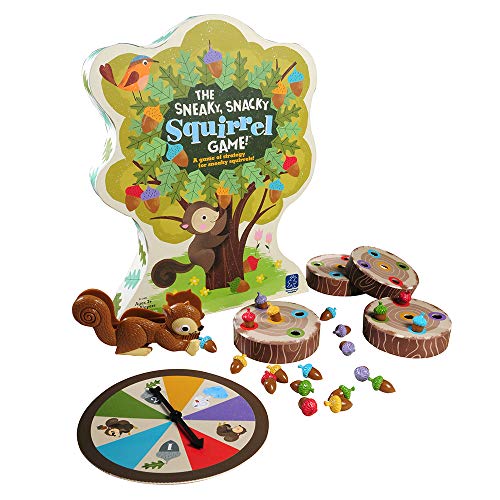
The included squirrel squeezer turns every turn into a fine-motor exercise, so a three- or four-year-old gets repeated practice pinching and releasing while matching acorns to colors. That makes it a strong choice for parents who want a game that quietly builds coordination and dexterity alongside the usual preschool lessons of taking turns and sharing. The spinner adds just enough unpredictability to keep a short attention span engaged without overwhelming it.
The windstorm and opponent-snatch events on the spinner can feel unfair to a child still learning to lose gracefully. If your little one melts down when another player takes their acorn, a cooperative game like Peaceable Kingdom Count Your Chickens removes that sting entirely. But for families ready to gently introduce competitive play while sneaking in a fine-motor workout, this is the one to grab.
Product photos
HABA My Very First Games First Orchard

What We Like
- Cooperative play for 1-4 players
- Large wooden fruit pieces
- PEFC certified sustainable wood
- Develops color recognition and counting
Trade-offs
- No expansion packs or additional challenges available
- Not challenging enough for older preschoolers
With over 3 million copies sold, this cooperative fruit-collecting game has proven popular with families. Designed for ages 2 and up, it uses 16 chunky wooden fruit pieces and a single color die to teach turn-taking, color matching, and counting without the pressure of competition. The PEFC certified wood components are sized right for small hands, and the cooperative format means everyone works together to pick fruit before the raven reaches the tree. That makes it a gentle introduction to board game rules for toddlers who aren’t ready for head-to-head play.
The single color die and straightforward pick-a-fruit mechanic can feel repetitive after a few rounds, especially for a 4-year-old who has already mastered colors. Compared to the Hasbro Candy Land board game, which is designed for ages 3 and up and has a different theme, First Orchard is simpler and aimed at younger children. But if your goal is a first game that builds social skills and fine motor control, this wooden set delivers exactly that. It’s a focused early learning game for toddlers.
Product photos
HABA Here Fishy Fishy Magnetic Fishing Game

What We Like
- Magnetic rod builds hand-eye coordination
- Teaches turn-taking and color matching
- Sustainable wooden pieces made in Germany
- Works for solo or group play
Trade-offs
- Dice-rolling adds luck, not skill
- Color matching only, no counting or letters
A magnetic fishing rod and wooden sea creatures make this a hands-on introduction to board games for the youngest players. Designed for ages 2 and up, it supports 1 to 4 children, so a solo toddler can practice on their own or learn turn-taking with siblings. The dice-rolling and color-matching mechanics keep the focus on fine motor control and concentration rather than complex rules, which is exactly what a preschooler needs before moving to more structured games.
The gameplay is very simple, roll, match a color, catch a fish, so it won’t hold the attention of a four-year-old who already knows their colors. For a child who still needs to develop hand steadiness and patience, this is a gentle win; for one ready for strategy, it will feel repetitive quickly.
Nene Toys Cooperative Orchard Board Game

What We Like
- Cooperative play teaches teamwork
- Chunky wooden pieces easy for small hands
- FSC-certified wood with child-safe finishes
- Screen-free Montessori-inspired learning
Trade-offs
- At 1.4 lb, a bit heavy for toddlers to carry
- Heavier than some comparable toddler games at 1.4 pounds
A 8.7-inch square board with chunky wooden pieces means little hands can grab, sort, and place fruit without frustration, exactly what a 3- or 4-year-old needs to stay engaged. This cooperative orchard game asks kids to work together to pick fruit before the squirrel gets it, turning early color and number recognition into a shared mission rather than a solo drill. The FSC-certified wood and smooth finishes also mean you won’t worry about splinters or toxic coatings when the game inevitably ends up near a mouth.
The cooperative-only design means there’s no winner or loser, which suits the intended age range of 2-4 years but may not appeal to older children who prefer competitive play. At 1.4 pounds, the box is heavier than the Peaceable Kingdom Count Your Chickens game (1.0 pounds), so it’s less convenient for travel. However, for families focused on teamwork over winning, this wooden set delivers durable, screen-free play that holds up to repeated use, and the squirrel adds just enough tension to keep the rounds interesting.
Product photos
Goliath 0055J Board Games
What We Like
- Develops hand-eye coordination
- Rotating pond with opening/closing fish mouths
- Classic fast-action gameplay for 1-4 players
- Deluxe plastic game base
Trade-offs
- Not suitable for children under age 4
- Requires quick timing to catch fish
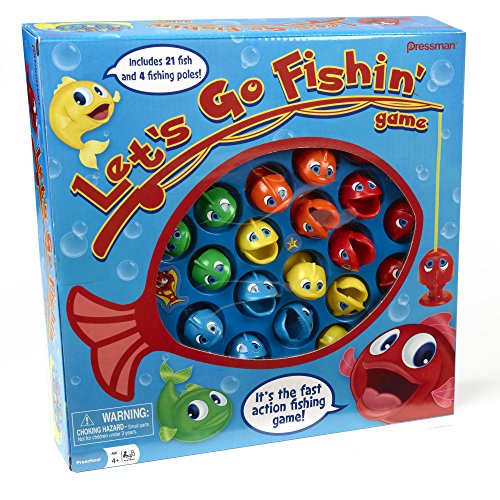
The rotating pond and fish that snap their mouths open and shut create a genuine physical challenge that rewards timing and a steady hand. That means your child isn’t just pressing a button, they’re learning to coordinate eye and hand movements under mild pressure, which is exactly the kind of play that builds fine motor skills without feeling like practice. For a child aged 4 or older who enjoys cause-and-effect toys and has a bit of patience, this is a lively solo or group activity that feels more like a carnival game than a board game. The 21 colorful fish and durable plastic base hold up to repeated rounds. The one-to-four-player setup means it works for an only child or a small playdate.
The recommended age starts at four, so some younger children may struggle with the timing needed to hook a fish before its mouth closes. But for a kid who loves action and a bit of friendly competition, this game delivers exactly what it promises: fast, engaging fishing that keeps little hands busy and growing.
Product photos
Peaceable Kingdom Round the Mountain Cooperative Board Game
What We Like
- Cooperative play builds teamwork
- Wooden train with clicking die
- No reading required
- Includes 20 gems and spinner
Trade-offs
- Only 2-4 players limits larger groups
- Falling rock tokens add randomness
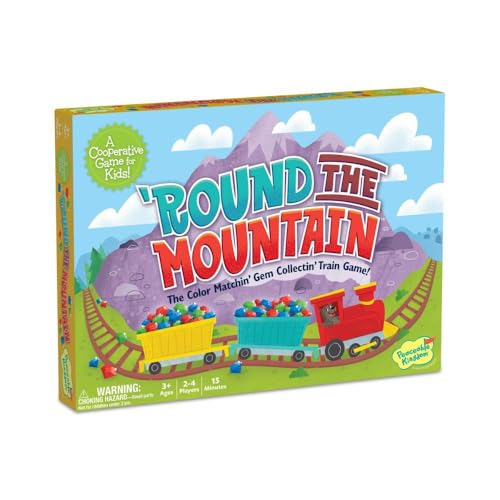
A wooden train that clicks as it rolls around a track is the kind of tactile detail that turns a simple color-matching game into a small event for a three-year-old. The cooperative structure means everyone works together to collect gems and dodge falling rocks, so no one loses and the focus stays on the shared goal. That design directly supports turn-taking and fine motor practice without requiring any reading, which makes it a strong fit for preschool playdates or family game nights where the youngest players need to feel included.
The falling rock tokens add a luck element that can frustrate a child who just lost a gem to a random event. For families who prefer teamwork over competition and want a short, hands-on activity that requires no reading, this cooperative game works well. It’s less ideal for a child who dislikes losing progress due to chance.
ThinkFun Zingo Bingo Award Winning Preschool Game
What We Like
- Up to 7 players included
- Builds language and matching skills
- Includes unique Zinger device
- Clear high-quality instruction manual
Trade-offs
- Only one Zinger device limits simultaneous play
- Not suitable for children under age 4
The ability to include up to seven players means this game can handle a preschool playdate without anyone sitting out. That’s a big deal when you’re trying to keep a group of four-year-olds entertained and engaged. Zingo builds language and matching skills through fast-paced play, and the unique Zinger device adds a tactile, exciting element that even adults enjoy. It’s designed for beginners, so the rules are simple enough for pre-readers and early readers to jump in right away.
The age rating of 4 and up means the game is designed for children who have developed basic matching and attention skills. Families with a child who is not yet 4 or who struggles with fast-paced activities may want to consider a slower, turn-based alternative. For children who enjoy quick, interactive play, Zingo offers a lively experience that builds language and matching skills.
How We Evaluated Board Games For 3 4 Year Olds
We started by reviewing the age recommendations, rule complexity, and physical components of dozens of preschool games. Manufacturer documentation told us which games require reading, which use dice versus spinners, and what materials the pieces are made from. We also looked at award winners from trusted toy industry programs.
Three criteria mattered most. First, the game must match a three or four year old’s developmental stage, no reading required, simple one-step turns, and short play sessions under 15 minutes. Second, the physical pieces need to be safe and durable: no sharp edges, no tiny parts for kids under three, and materials that survive drops and spills. Third, the game should teach something valuable, whether that’s counting, color matching, turn-taking, or cooperation.
A research-led evaluation has limits. We cannot claim to have played every game with a room full of preschoolers. Instead, we cross-referenced what experts say about early childhood game design with what hundreds of parents report in their reviews. We also considered which games offer cooperative play, since many families with young children prefer working together over competing.
What To Look For In Board Games For 3 4 Year Olds
The best games for this age group are simple, short, and built around skills a preschooler is already developing. Look for no-reading rules, chunky pieces, and a play time under 15 minutes.
Age Rating and Safety
Always check the manufacturer’s age recommendation. Games labeled for ages 3 and up have passed safety testing for small parts. But games marked for ages 4 and up, like the Goliath 0055J Board Games, often contain smaller pieces or require finer motor control. For younger three-year-olds, stick with games that feature large wooden pieces, like the HABA My Very First Games First Orchard or the Nene Toys Cooperative Orchard Board Game.
The Educational Insights Sneaky Snacky Squirrel Game uses small acorn pieces that are a choking hazard for children under three.
Cooperative vs. Competitive Play
Some preschoolers thrive on the thrill of winning, while others melt down when they lose. Cooperative games like the Peaceable Kingdom Count Your Chickens Game and the Peaceable Kingdom Round the Mountain Cooperative Board Game let everyone play on the same team against the game itself. Competitive games like Candy Land and Hi Ho Cherry-O teach winning and losing gracefully but can frustrate sensitive kids. Think about your child’s temperament before choosing.
Skill Development
Every game on this list builds at least one preschool skill. Counting games like Hi Ho Cherry-O and Count Your Chickens reinforce early math. Color-matching games like Sneaky Snacky Squirrel and Here Fishy Fishy strengthen visual discrimination. Fine motor games like the HABA Here Fishy Fishy Magnetic Fishing Game and the Goliath fishing game develop hand-eye coordination through magnetic rods and rotating targets. Language-building games like ThinkFun Zingo Bingo introduce matching and vocabulary.
- Check that the box lists a play time of 15 minutes or less, attention spans are short at this age.
- Look for games that include adult play tips or simplified rule variations for younger players.
- Choose games with chunky, easy-to-grip pieces that small hands can manipulate independently.
- Avoid games with complex setup or many small pieces that will scatter before the first turn.
A good rule of thumb: if you cannot explain the rules in under 30 seconds, the game is too complex for a three or four year old.
Board Games For 3 4 Year Olds Compared
The table below compares all ten games across the features that matter most for preschool play, age range, player count, cooperative or competitive format, and primary skill taught.
| Product | Age Range | Players | Weight | Dimensions |
|---|---|---|---|---|
| Hasbro Gaming Candy Land Board Game | 3 & Up | N/A | 1.1 pounds | L 1.2 inches, W 15.8 inches, H 10.6 inches |
| Hasbro Gaming Hi Ho Cherry-O Board Game | 3 and Up | 2 to 4 | 0.4 pounds | L 10.5 inches, W 10.5 inches, H 0.0 inches |
| Peaceable Kingdom Count Your Chickens Game | 3 years and older | 2-4 players | 1.0 pounds | L 231.0 inches, W 41.0 inches, H 320.0 inches |
| Educational Insights Sneaky Snacky Squirrel Game | 3 and up | 2-4 | 1.0 pounds | L 14.2 inches, W 11.0 inches, H 2.1 inches |
| HABA My Very First Games First Orchard | 2+ | 1-4 | 1.8 pounds | L 8.9 inches, W 8.9 inches, H 2.8 inches |
| HABA Here Fishy Fishy Magnetic Fishing Game | 2+ | 1-4 | 1.4 pounds | L 8.9 inches, W 8.9 inches, H 2.9 inches |
| Nene Toys Cooperative Orchard Board Game | 2-4 years | 2-4 | 1.4 pounds | L 8.7 inches, W 8.7 inches, H 1.4 inches |
| Goliath 0055J Board Games | 4 and up | 1-4 | 0.8 pounds | L 10.5 inches, W 2.0 inches, H 10.5 inches |
| Peaceable Kingdom Round the Mountain Cooperative Board Game | 3+ | 2-4 | 1.5 pounds | L 12.5 inches, W 9.0 inches, H 0.1 inches |
| ThinkFun Zingo Bingo Award Winning Preschool Game | 4 and Up | Up to 7 | 1.0 pounds | L 8.2 inches, W 3.5 inches, H 10.2 inches |
Frequently Asked Questions
What is the best board game for a 3 year old who cannot read?
Hasbro Gaming Candy Land Board Game is the top choice because it requires zero reading. Players draw a colored card and move their pawn to the matching space on the board. The game relies entirely on color recognition and luck, making it accessible to children as young as three.
Are there any cooperative board games for 3 and 4 year olds?
Yes, several. The Peaceable Kingdom Count Your Chickens Game and the HABA My Very First Games First Orchard are both cooperative, everyone works together to beat the game. The Nene Toys Cooperative Orchard Board Game and the Peaceable Kingdom Round the Mountain Cooperative Board Game also let kids play as a team.
What skills do board games teach preschoolers?
Board games for this age teach turn-taking, patience, counting, color matching, fine motor control, and social skills like winning and losing gracefully. Games like Hi Ho Cherry-O build early math, while Sneaky Snacky Squirrel strengthens hand-eye coordination through the use of a squeezer tool.
How long should a board game session be for a 3 year old?
Aim for a short playtime. Most games on this list are designed for short attention spans, Candy Land and First Orchard both play in about ten minutes. If your child loses interest, put the game away and try again another day. Forced play ruins the fun.
What is the difference between games for 3 year olds and games for 4 year olds?
Games for 3 year olds typically have larger pieces, simpler rules, and no reading. Games for 4 year olds may introduce dice, spinners, timed elements, or finer motor challenges. The Goliath 0055J Board Games and ThinkFun Zingo Bingo are both rated for ages 4 and up because they require quicker reactions and slightly more advanced skills.
The Bottom Line
For most families with a three or four year old, Hasbro Gaming Candy Land Board Game is the best place to start. It requires no reading, teaches the fundamentals of turn-taking and following a game path, and the colorful board and gingerbread man pawns keep little eyes engaged. It is luck-based, so every child has an equal chance to win.
If your child struggles with competitive play, skip the winner-loser format and go straight to the Peaceable Kingdom Count Your Chickens Game or the HABA My Very First Games First Orchard. Both are cooperative, meaning everyone cheers together when the team wins. The HABA game is especially good for younger two and three year olds because of its chunky wooden fruit pieces.
The single most important factor when choosing a board game for this age is matching the game’s complexity to your child’s current attention span and emotional readiness. A game that feels too hard or too long will end up in the closet. Pick one that meets them where they are, and let the fun do the teaching.
