
10 Best Family Board Games With Kids in 2026
This post contains affiliate links. As an Amazon Associate, we earn from qualifying purchases.
The best family board game with kids is Asmodee My First Carcassonne Board Game. It introduces tile-laying strategy to ages 4-6 without counting scores, and the first player to place all their pawns wins. For a classic race, try Hasbro Gaming Trouble, or build teamwork with Gamewright Outfoxed.
The real challenge with family board games is finding one that holds a five-year-old’s attention while still engaging older siblings and adults. Too simple and the older kids check out. Too complex and the youngest gets frustrated and wanders off.
We looked at specifications, manufacturer recommendations, expert round-ups, and patterns in owner feedback to build this guide. You get ranked picks with honest trade-offs and clear best-for statements, so you can match a game to your family’s exact age range and play style.
Top 10 Family Board Games With Kids in the Market

Certain content that appears on this site comes from Amazon. This content is provided "as is" and is subject to change or removal at any time.
The Best Family Board Games With Kids, Reviewed
Asmodee My First Carcassonne Board Game

What We Like
- Tile placement builds the city together
- No counting high scores needed
- Includes sheep, hens, and cows
- First to place all pawns wins
Trade-offs
- Only 2-4 players limits larger groups
- No deeper scoring for older kids
A 30-minute tile-laying game that drops the scoring math and keeps the core of Carcassonne means kids as young as four can join in without frustration. The goal is simple: lay tiles to build streets, catch loose animals, and be the first to place all your pawns. That makes it a perfect entry point for families with preschoolers who aren’t ready for the original’s counting demands, yet still want a real strategy game where every tile placement matters. The illustrations of children chasing sheep, hens, and cows across the board keep little eyes engaged, and the 2-4 player count fits most family game nights without dragging on.
The simplicity that makes My First Carcassonne accessible to four-year-olds also means it won’t grow with them into deeper strategy. Once kids outgrow the animal-catching theme, the game offers no advanced scoring or variable strategies to keep them engaged. It’s a bridge game that teaches tile placement and turn-taking, but it won’t hold a mixed-age group for repeated plays. If you have a preschooler who wants to play what the bigger kids play, this is the right ramp.
Product photos
Hasbro Gaming Trouble Board Game

What We Like
- Pop-o-Matic bubble keeps die from getting lost
- Easy to learn and quick to set up
- Power Up Spaces add challenge for experienced players
- Classic gameplay for ages 5 and up
Trade-offs
- No cooperative play option for team-building
- Limited to 4 players max
The Pop-o-Matic bubble keeps the die contained and adds a tactile thrill kids love, making it the heart of this game. Designed for ages 5 and up with 2-4 players, it’s a straightforward race where the first to get all their pieces around the board wins. The game is easy to learn and quick to set up, so you can go from box to playing in no time. That makes it ideal for spontaneous family game nights or playdates. It earned its spot as best classic fun because it delivers exactly what a family with young kids needs: no lengthy explanations, no fragile components, and a built-in attention grabber that even the youngest player can operate independently.
The trade-off is that Trouble is purely competitive, there’s no cooperative mode, so younger kids who struggle with losing may need extra patience. Compared to Outfoxed, which uses cooperative team play, Trouble puts every player against each other from the start. That said, the Power Up Spaces variant adds a layer of strategy for older kids, keeping the game fresh beyond the first few rounds. At 0.8 pounds and compact dimensions, it’s also easy to toss in a bag for travel or visits to grandparents.
Product photos
Days of Wonder Ticket to Ride Board Game

What We Like
- Easy to learn, hard to master
- Beautiful map and miniature trains
- Multiple strategies for victory
- Fun for ages 8 and up
Trade-offs
- 30-60 minute playtime requires a longer time commitment
With 2-5 players and a 30-60 minute playtime, Ticket to Ride hits a sweet spot where a family can finish a game in one sitting without it dragging into bedtime. The simple rule set, collect train cards, claim routes, connect cities, makes it approachable for kids as young as eight. The layered scoring (ticket completion, longest route, color sets) gives experienced players room to think ahead. That balance of easy entry and strategic depth is exactly why this cross-country train adventure works so well for family game night: everyone feels like they have a real shot at winning, and the giant map with those little plastic trains adds a tactile charm that keeps younger players engaged between turns.
The 30-60 minute playtime means this is a longer commitment than a quick round of Outfoxed, which runs about 15-20 minutes, so it works best when you have a solid hour to focus. For families with kids eight and up, the simple rules and engaging gameplay make it easy to learn yet hard to master, offering a strategy game that grows with players. Reviewers note that the multiple ways to win, collecting train cards, completing tickets, and building the longest routes, keep each session fresh and replayable.
Product photos
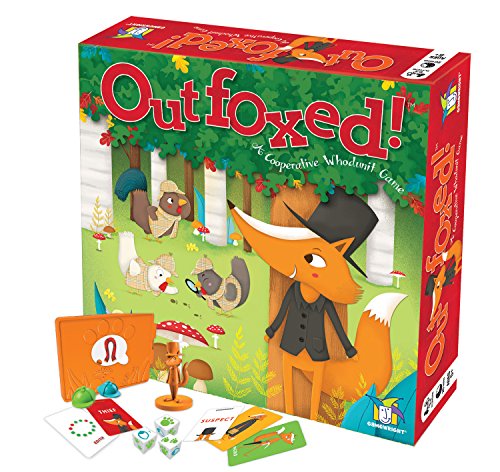
Gamewright Outfoxed Board Game
What We Like
- Cooperative team play for ages 5+
- Quick 15-20 minute rounds
- Dice and decoder clue solving
- Easy to learn in minutes
Trade-offs
- Limited to 4 players max
A 15-20 minute playtime means you can fit a round between snack and bath without losing anyone’s attention. This cooperative whodunit gets kids ages 5 and up working together, rolling dice, collecting clues, and using a decoder to eliminate suspects. There’s no winner or loser, just a team trying to catch the fox before it escapes. It’s built for short attention spans and repeat sessions, making it a natural fit for family game nights where you want everyone engaged without a long rules explanation.
It only supports up to 4 players, so larger families or playdates will need to rotate or pick something else. Compared to Asmodee My First Carcassonne, which also targets young kids but plays up to 4 and runs 30 minutes, Outfoxed is quicker and more focused on deduction rather than tile-laying strategy. If your group regularly has more than four kids or you want a game that scales up, you’ll want to look at a different option.
Spin Master Games Jumanji Stampede Board Game

What We Like
- Cooperative gameplay builds teamwork
- Interactive 3D board with moving pieces
- 6 unique jungle emergency challenges
- Includes 20 cards for varied objectives
Trade-offs
- Setup involves many small 3D pieces
- Play area needed for 3D board assembly
With a 7-inch-tall Rhino Mountain and six different jungle emergencies, spinning snakes, leaping leopards, and barreling boulders, this cooperative game turns family game night into a mini adventure park. You work together to collect five magical crystals before the villain reaches the mountain, which means no one gets left out or eliminated early. The interactive 3D pieces, including a bridge and launcher, make each round feel like a new challenge, perfect for children ages 5 and up who crave hands-on excitement. It’s the kind of game where the board itself becomes part of the story, not just a flat surface to move tokens across.
All those 3D parts, baboon trees, leopard launchers, and plastic balls mean more setup and a bigger footprint on your table. Compared to a simpler cooperative game like Outfoxed, which has a smaller box and quicker cleanup, Jumanji Stampede demands a bit more patience from parents before the fun starts. But if your family enjoys building the world as much as playing in it, the extra effort pays off with memorable moments that flat boards just can’t deliver. Just clear the coffee table and prepare for some friendly chaos.
Fireside Games Castle Panic Board Game

What We Like
- Cooperative play for 1-6 players
- Four game modes add replay value
- 3D towers and vibrant monster tokens
- 45-minute sessions fit family nights
Trade-offs
- Requires coordination for best experience
- Not suitable for players under 8 years old
With support for up to six players and a 45-minute playtime, Castle Panic packs a cooperative tower defense experience that fits neatly into family game night. The 3D towers and monster tokens make the siege feel tangible, and the four distinct modes, co-op, solo, competitive Master Slayer, and Overlord, give you real variety without needing extra expansions. It’s a solid match for families with kids aged 8 and up who enjoy working together against a common threat rather than competing directly against each other.
The fantasy theme and tower defense mechanics demand more coordination than a simple roll-and-move game, so younger or less patient players might struggle to stay engaged. If your group prefers a gentler entry point, My First Carcassonne is designed for ages 4 and up. Castle Panic shines when your family is ready for a bit more tension and teamwork, but it’s not the pick for every mood or age range.
Product photos
Peaceable Kingdom Gnomes at Night Board Game

What We Like
- Cooperative maze teamwork
- Magnetic gnome movers
- 4 difficulty levels
- Develops communication skills
Trade-offs
- Only 12 treasure cards
- No solo play option
A cooperative maze game where two players each see a different side of the board means you literally cannot win without talking to each other. The magnetic gnome movers glide along the paths, but only your teammate can move your gnome through walls on their side. That forced collaboration makes every round a quick-thinking exercise in giving clear directions like left, right, up, and down. With four game boards labeled A through D, the difficulty ramps up as kids get better, so it stays challenging for ages 6 and up without ever feeling like a solo puzzle.
The sand timer included with the game sets a time limit for each round, which adds a sense of urgency to the cooperative search. For families who enjoy fast-paced communication and quick decision-making, this can be a fun challenge. However, children who prefer a more relaxed, turn-based style may find the timer distracting rather than motivating. The game includes four difficulty levels (A through D) so you can adjust the challenge as kids improve.
Product photos
Peaceable Kingdom Race to the Treasure Board Game

What We Like
- Cooperative play teaches teamwork
- No reading required for young kids
- Award-winning design with 4 honors
- Frustration-free packaging
Trade-offs
- Only 2 to 4 players limits larger groups
- No solo play option
A cooperative path-building game for 2 to 4 kids ages 5 and up means everyone works together to beat the Ogre to the treasure, no reading required, so even pre-readers can jump in. That shared goal is exactly what makes this a smart budget-friendly pick for families hoping to avoid the meltdowns that come with competitive play. With four awards including the Oppenheim Toy Portfolio Platinum award, it’s a design that’s been recognized for its learning value, not just its fun factor.
The player count tops out at four, so if you’ve got a bigger family or a playdate with more than four kids, you’ll need to take turns or look elsewhere. Compared to the cooperative Gnomes at Night from the same brand, which targets ages 6 and up, Race to the Treasure is designed for ages 5 and up. That makes it a good entry point for younger children. For a first cooperative board game that teaches strategy and social skills without the reading barrier, this one hits the mark.
Product photos
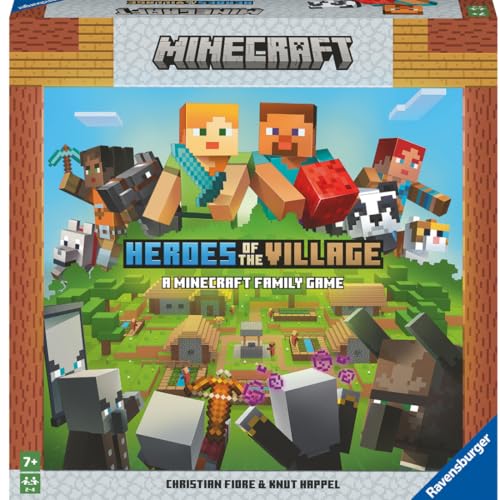
Ravensburger Minecraft Heroes of The Village Board Game
What We Like
- Cooperative play encourages joint strategies
- Map changes every game for high replay value
- Includes 25 wooden blocks and 18 world tiles
- Aimed at ages 7 and up
Trade-offs
- Heavier than some family board games at 2.7 pounds
- Not suitable for solo play without another player
A 2-4 player cooperative format means everyone works together instead of against each other, which is exactly what you want when kids are still learning to handle losing gracefully. The map changes every time you play, so no two games feel the same, and that keeps even the most restless seven-year-old coming back to the table. The game includes 25 wooden blocks, 18 world tiles, and 12 mob tokens, all crafted with care to enhance the experience. It’s a smart pick for families hoping to introduce cooperative strategy without the frustration of direct competition.
The cooperative design for 2 to 4 players means you’ll need to join in if your child wants to play solo, but it encourages teamwork and shared victories. At 2.7 pounds, the box has some heft, which keeps the components secure during storage and transport. The 7+ age rating targets slightly older kids compared to simpler games like My First Carcassonne (ages 4+), so younger children may struggle with the challenge.
Mattel Games Ghost Fightin' Treasure Hunters Board Game
What We Like
- Winner of Kinderspiel des Jahres 2014
- Two game modes in one box
- Cooperative play for team bonding
- Basic and advanced cooperative options
Trade-offs
- Only 2-5 players limits larger groups
Winning the 2014 Kinderspiel des Jahres (Children’s Game of the Year) award is a rare honor that signals thoughtful design and genuine family appeal. Everyone works together to battle ghosts and escape a haunted house with 8 Treasure Jewels before 6 of the rooms become Haunted, so no one gets eliminated early. Basic and Advanced options in Cooperative Mode let you dial up the challenge as kids get comfortable, making it a great choice for families hoping to avoid the hurt feelings that come with competitive games, especially when younger players are still learning to lose gracefully.
The trade-off is the age floor: at 8+, it’s not for preschoolers, so if you have a mixed-age group with a 5-year-old, you’ll want a game designed for younger kids instead. Head Haunter Mode does let one player control the ghosts against up to 4 others for a change of pace, but the core appeal is the cooperative teamwork. For families with kids 8 and up who enjoy a spooky theme without real scares, this is a smart, award-backed choice that keeps everyone playing together.
Product photos
How We Evaluated Family Board Games With Kids
We started by reviewing manufacturer age ratings, box specifications, and rulebook complexity for dozens of family board games. Then we cross-referenced those details with patterns in owner feedback. We looked at what parents actually said about whether their 5-year-old could follow the rules, how long setup took, and which games got pulled off the shelf most often. Expert round-ups from play-focused publications helped us identify award-winners and games with strong educational backing.
Four criteria mattered most. Age range accuracy came first: a game labeled 5+ that plays well with a 5-year-old is rare, and we flagged any that truly work below or above their listed range. Playtime was second: family games need to fit between dinner and bedtime without dragging. Cooperative vs. Competitive was third because many families with young kids prefer working together over head-to-head conflict. Replay value came last: games with variable boards, multiple modes, or scaling difficulty keep kids coming back.
A research-led evaluation has limits. We haven’t played every round of every game ourselves, and no amount of spec-sheet analysis replaces knowing your own child’s attention span. What we can do is give you the most accurate picture possible from the data available, the rest is up to your family’s next game night.
What To Look For In Family Board Games With Kids
The best family board games balance a short learning curve with enough depth to keep everyone engaged. Look for clear age ratings, a playtime that fits your schedule, and a play style (cooperative or competitive) that matches your family’s dynamic.
Age Rating and True Accessibility
A box that says “ages 5+” doesn’t always mean a 5-year-old can play independently. We found that games with no reading required, like Peaceable Kingdom Race to the Treasure, genuinely work for pre-readers. Strategy games like Days of Wonder Ticket to Ride truly hit their stride around age 8. Check whether the game relies on text, counting, or complex symbols, especially if you have a mix of ages.
Playtime and Setup Speed
Family game night usually has a window. Games like Gamewright Outfoxed wrap up in 15-20 minutes, which works for short attention spans. Longer games like Castle Panic (45 minutes) or Ticket to Ride (30-60 minutes) need a bigger time commitment. Also consider setup: Spin Master Games Jumanji Stampede has many small 3D pieces that take time to assemble, while Hasbro Gaming Trouble sets up in seconds.
Cooperative vs. Competitive Play
Younger kids often handle cooperative games better because there’s no “loser.” Titles like Peaceable Kingdom Gnomes at Night, Ravensburger Minecraft Heroes of The Village, and Mattel Games Ghost Fightin’ Treasure Hunters let everyone work toward a shared goal. Competitive games like Trouble and Ticket to Ride teach turn-taking and good sportsmanship. But they can frustrate a child who falls behind early.
- Check the player count, many family games cap at 4 players, so larger families need options like Castle Panic (1-6).
- Look for variable boards or multiple game modes to extend replay life.
- Read the rulebook length online before buying, a 12-page manual might be too much for a quick weeknight game.
- Consider storage: games with many small pieces (Jumanji Stampede) need a dedicated shelf spot.
A good rule of thumb: if the youngest player can’t grasp the core mechanic after one round, the game is too complex for your family right now.
Family Board Games With Kids Compared
The table below compares all family board games by age, player count, playtime, and play style so you can quickly narrow down your options.
| Product | Age Range | Players | Dimensions |
|---|---|---|---|
| Asmodee My First Carcassonne Board Game | 4+ | 2-4 | 7.5 x 2.8 x 10.8 in |
| Hasbro Gaming Trouble Board Game | 5 and Up | 2-4 | 10.5 x 10.5 x 1.6 inches |
| Days of Wonder Ticket to Ride Board Game | 8+ | 2-5 | 11.7 x 3.0 x 11.7 inches |
| Gamewright Outfoxed Board Game | 5+ | 4 | 9.5 x 9.5 x 2.2 in |
| Spin Master Games Jumanji Stampede Board Game | 5+ | 2-4 | 14.4 x 5.2 x 10.9 inches |
| Fireside Games Castle Panic Board Game | 8+ | 1-6 | 10.5 x 10.5 x 2.4 in |
| Peaceable Kingdom Gnomes at Night Board Game | 6+ | 2-4 | 10.8 x 10.8 x 0.0 inches |
| Peaceable Kingdom Race to the Treasure Board Game | 5+ | 2 to 4 | 12.5 x 1.5 x 9.0 inches |
| Ravensburger Minecraft Heroes of The Village Board Game | 7+ | 2-4 | 11 x 11 x 3 inches |
| Mattel Games Ghost Fightin' Treasure Hunters Board Game | 8+ | 2-5 | 16.0 x 16.0 x 0.1 inches |
Frequently Asked Questions
What is the best family board game for a 5-year-old?
Gamewright Outfoxed works well for ages 5 and up because it’s cooperative, has quick 15-20 minute rounds, and requires no reading. The dice-and-decoder clue system is simple enough for young kids to follow while still feeling like real detective work.
How do I choose a board game for a family with mixed-age kids?
Look for games with adjustable difficulty or simple core mechanics that younger kids can grasp while older players still find engaging. Peaceable Kingdom Gnomes at Night has four difficulty levels, and cooperative games like Race to the Treasure let older kids help younger ones without dominating the play.
What is the difference between cooperative and competitive family board games?
In cooperative games, all players work together against the game itself, no single winner or loser. Competitive games have one winner and everyone else loses. Cooperative games like Castle Panic or Ghost Fightin’ Treasure Hunters are often better for younger or sensitive children because they build teamwork without the pressure of losing.
How long should a family board game session last?
For families with kids under 8, aim for 15-30 minute games. Gamewright Outfoxed (15-20 minutes) and Hasbro Gaming Trouble (20-30 minutes) fit this window well. Older kids can handle 45-60 minute sessions with games like Days of Wonder Ticket to Ride or Fireside Games Castle Panic.
What are the best family board games for large families?
Most family board games max out at 4 players. For larger families, Fireside Games Castle Panic supports 1-6 players, and Asmodee My First Carcassonne (2-4) can be paired with an expansion for more. Look for the player count on the box before buying if you have more than 4 family members.
The Bottom Line
For most families with kids ages 4-6, Asmodee My First Carcassonne is the best overall pick. Its gentle tile-laying mechanic teaches spatial thinking without the pressure of scoring, and the animal tokens (sheep, hens, cows) keep little hands busy. Older siblings can still enjoy the strategy without dominating the game.
If your family prefers working together instead of competing, look at the cooperative picks: Gamewright Outfoxed for ages 5+, Peaceable Kingdom Race to the Treasure for a budget-friendly option, or Fireside Games Castle Panic for older kids who want a tower-defense challenge. Budget shoppers should start with Race to the Treasure. It’s award-winning, requires no reading, and costs less than most games on this list.
The single most important factor is age match. A game that’s too complex will sit unplayed on the shelf; one that’s too simple will bore older kids. Match the game to your youngest regular player, and let the older ones take on helper roles or harder difficulty settings. That’s how family game night becomes a weekly habit instead of a one-time event.
