
10 Best Cooperative Board Games For Kids in 2026
This post contains affiliate links. As an Amazon Associate, we earn from qualifying purchases.
The best cooperative board game for kids overall is Peaceable Kingdom Round the Mountain Cooperative Game. It teaches turn-taking and color matching with a tactile wooden train that clicks as it moves, so the dice roll feels interactive. No reading required for preschoolers, which makes it easy to jump in. For families who love a whodunit, the Gamewright Outfoxed Cooperative Mystery Game builds logic and teamwork, while the Peaceable Kingdom Count Your Chickens Cooperative Game turns counting into a group win.
Many parents find that competitive games lead to tears and arguments before the first turn is over. Cooperative games flip the script: everyone plays together against the game itself, so kids learn teamwork, patience, and problem-solving without the pressure of losing to a sibling.
We evaluated these 10 games by digging into manufacturer specifications, expert round-ups, and patterns in owner feedback. This guide focuses on what actually matters for family play, age fit, setup time, replay value, and whether the game genuinely teaches cooperation.
Top 10 Cooperative Board Games For Kids in the Market


Certain content that appears on this site comes from Amazon. This content is provided "as is" and is subject to change or removal at any time.
The Best Cooperative Board Games For Kids, Reviewed
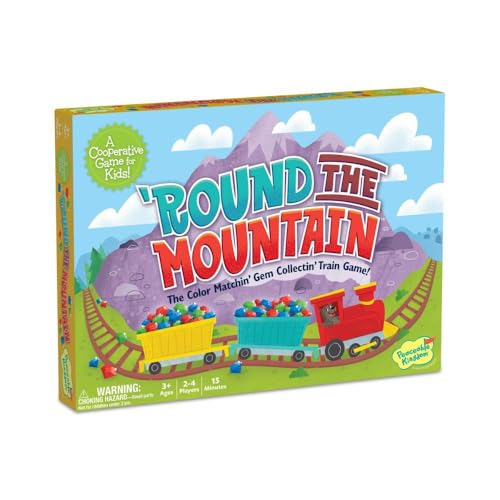
Peaceable Kingdom Round the Mountain Cooperative Game
What We Like
- No reading required for preschoolers
- Wooden train clicks as it moves
- Teaches turn-taking and teamwork
- Quick 15-minute play sessions
Trade-offs
- Only 2-4 players limits larger groups
- Falling rock tokens add mild frustration
A wooden train that clicks when you roll the die by moving it around the track is a tactile detail that keeps little hands engaged. For ages 3 and up, this cooperative race lets kids work together to collect gems and dodge falling rocks, with no reading required and a 15-minute playtime that respects short attention spans. It builds color matching, fine motor skills, and the simple lesson that winning together is more fun than beating each other. That hands-on feel and clear visual cues make it the ideal starting point for families new to cooperative play.
With a maximum of four players, this cooperative game is best suited for small family game nights rather than large playdates. The wooden die is rolled by moving the train around the track, and players peek under the train to see the color rolled, which keeps the action moving. The falling rock tokens add a bit of tension, and the game is designed for ages 3 and up, so it’s a gentle introduction to teamwork and turn-taking.
Product photos
Gamewright Outfoxed Cooperative Mystery Game
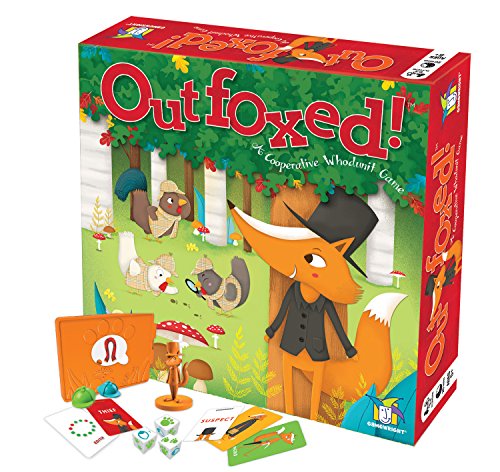
What We Like
- Cooperative team play builds social skills
- Dice decoder keeps clue-solving interactive
- Quick setup and easy rules
- Screen-free fun for family nights
Trade-offs
- Designed for exactly 4 players, not more
- No solo play mode included
A 15-20 minute play time means you can fit a full mystery into even the shortest attention spans, perfect for preschoolers just learning to focus. Outfoxed wraps deduction, memory, and teamwork into a whodunnit that feels more like a game than a lesson. The cooperative format eliminates sore losers, letting kids share clues and work together to catch the sneaky fox before it escapes. Rolling dice, collecting clues, and using the decoder keeps little hands busy and minds engaged without needing a screen.
The trade-off is that the 4-player cap and short rounds may leave older siblings or larger families wanting more. If your group includes kids under 5 or you need a longer game night anchor, this one’s best as a warm-up or a focused activity for a small team.
Peaceable Kingdom Count Your Chickens Cooperative Game
What We Like
- Teaches counting with no reading required
- Award-winning cooperative gameplay
- Players work together to win
- Frustration-free packaging
Trade-offs
- Only 2 to 4 players limits larger groups
- No reading required means limited text engagement
For a cooperative counting game aimed at the youngest players, the shared goal of helping Mother Hen collect her chicks turns counting into a group effort, not a solo drill. So kids learn numbers while rooting for each other. With no reading required and a design that won five awards (including the Oppenheim Platinum), it’s built for ages 3 and up who are just starting to recognize numbers and need a low-pressure way to practice. The cooperative mechanic means no one loses, which keeps little ones engaged and reduces tears at game night.
With only 2 to 4 players and a 3+ age range, it’s a tight fit for bigger families or mixed-age groups where older siblings might get bored. If you’ve got a preschooler just learning to count and want a game that rewards teamwork over competition, this is a smart, gentle introduction. Not ideal for families with more than four players.
Product photos
HABA My Very First Orchard Toddler Game

What We Like
- 16 large wooden fruit pieces
- PEFC certified wood
- Teaches turn-taking and color recognition
Trade-offs
- Only 1-4 players limits larger groups
- No reading required, but very simple rules
With 16 large wooden fruit pieces and a chunky color die, this game is built for tiny hands that still need to practice fine motor control. Designed by educators, it introduces turn-taking, color matching, and counting without the pressure of competition, kids work together to pick fruit before the raven reaches the orchard.
The gameplay is straightforward: roll the die and match the fruit, which is appropriate for toddlers. For a slightly older child seeking more narrative or strategic depth, Peaceable Kingdom’s Count Your Chickens cooperative game offers a counting-based challenge for ages three and up. This orchard game provides a gentle introduction to cooperative play and basic skills for a two-year-old’s first board game experience.
Product photos
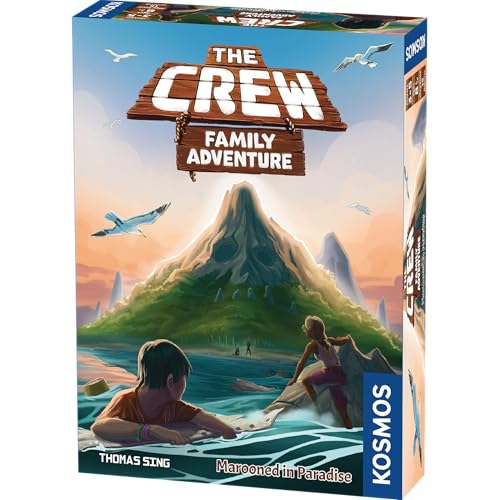
Thames & Kosmos The Crew Family Adventure Card Game
What We Like
- 35 unique missions with logbook
- New power-ups for tough challenges
- Illustrated game board for planning
- Family-friendly version of award-winning series
Trade-offs
- Requires 3-5 players, no solo or 2-player
- Ages 8+ limits preschool participation
A 35-mission logbook means this isn’t a one-and-done card game, you get a real campaign to work through together. That’s the big draw for families who want more than a quick round. It’s a trick-taking game where everyone is on the same team trying to beat the missions, not each other. The illustrated game board helps you map out your actions and track progress, and all-new power-ups give you a way to turn the tide when facing your toughest challenges. This is a great pick for families with kids 8 and up who already enjoy card games and are ready for a cooperative challenge that builds communication and planning skills.
Trick-taking itself takes a bit of explanation for younger players, and the 3-5 player count means it won’t work for a duo or a solo kid. Compared to Peaceable Kingdom’s Round the Mountain, which is aimed at ages 3 and up and plays with 2-4, The Crew demands a more mature group. But for a family with older kids who love strategy and working together through a story, this is a smart, replayable choice that respects everyone’s brainpower.
Product photos
Fireside Games My First Castle Panic Game

What We Like
- Cooperative castle defense gameplay
- No reading required, icon-based cards
- Durable components for small hands
- Quick 20-minute rounds
Trade-offs
- Only color and shape matching mechanics
- No strategy beyond matching for older kids
A 20-minute playtime means this fits neatly into a preschooler’s attention span, letting you finish a round before anyone wanders off. Designed for ages 4 to 8 with icon-based cards and no reading required, it gives young kids a confident entry into cooperative play. They match colors and shapes to stop monsters from reaching the castle. The sturdy standing castle, thick wall pieces, and large monster tokens are built for small hands, and the bright path board keeps the action clear. It’s a solid introduction to teamwork and turn-taking that rewards shared success over competition.
Because the gameplay relies entirely on color and shape matching, older kids or experienced players may find it repetitive after a few rounds. Compared to Peaceable Kingdom Count Your Chickens, which builds early math skills through counting, My First Castle Panic focuses more on visual matching and defense strategy. The components are lightweight at 0.2 pounds, making them easy for little hands to move. Best for families with preschoolers who want a quick, cooperative castle defense game that requires no reading and emphasizes teamwork over complexity.
Product photos
Mattel Games Ghost Fightin' Treasure Hunters Game
What We Like
- Two game modes in one box
- Cooperative basic and advanced options
- Award-winning children's game design
Trade-offs
- Recommended for ages 8 and up
- Requires 2-5 players, not solo-friendly
This board game offers two distinct ways to play, including a cooperative mode with both basic and advanced options. The basic setting helps new players learn the rules, while the advanced option adds more challenge for those ready for it. That range of difficulty makes the game suitable for families with kids of different ages, as long as they meet the recommended age of 8 and up.
The age floor of 8+ means it targets an older audience than preschool-friendly picks like Count Your Chickens. However, the Head Haunter mode, where one player controls the ghosts against the rest, introduces a competitive element that can appeal to older kids and adults, offering variety that simpler cooperative games may not provide.
Product photos
Blue Marble RTSAFARIGME Cooperative Board Games

What We Like
- Three difficulty levels grow with child
- Teaches teamwork and strategic thinking
- Includes 21-animal Learning Guide
- Award-winning brand with U.S. support
Trade-offs
- Only one theme (safari animals)
- Designed for ages 4-6, not suitable for older kids
Three difficulty levels let the game adapt as kids get older, so it stays challenging without needing a new purchase. Children as young as four can play on the easiest setting, learning to work together to see all the animals before the sun sets. As they improve, they can move to harder levels, which keeps the game fresh. The included full-color Learning Guide has facts about each of the 21 animals, adding an educational layer to every round. That combination of adjustable difficulty and real animal facts makes it a practical choice for families who want a game that teaches cooperation and introduces biology in a natural way.
The Blue Marble My First Safari game is an Amazon exclusive from a Toy of the Year Award-winning brand, so you’re getting a well-supported product designed specifically for cooperative play with kids ages 4 to 6. It includes a full-color Learning Guide packed with facts about 21 animals, which adds educational value beyond just moving pieces around the board. The three difficulty levels mean the game can grow with your child, keeping them engaged as their skills improve.
Product photos
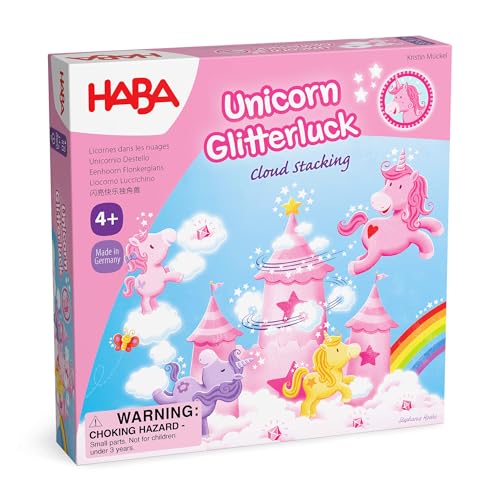
HABA Unicorn Glitterluck Cloud Stacking Cooperative Game
What We Like
- Cooperative play for ages 4-8
- Enhances fine motor skills
- High-quality German-made components
- All players win together
Trade-offs
- Limited to 4-8 age range
- Only one game mode available
A 10-crystal, 5-unicorn cooperative stacking challenge means every player works together to get all pieces into the cloud kingdom before rain starts. That shared goal makes this a great pick for families with kids ages 4-8 who are still developing fine motor skills and hand-eye coordination. The German-made components feel durable enough for repeated play, and the cooperative mechanic means no one gets left out or loses alone. It’s a solid way to introduce young children to turn-taking and teamwork without the pressure of competition.
The goal is to stack all five unicorns in the cloud kingdom before the rain starts, which means every player works together to win, a setup that encourages teamwork rather than competition. Since the game is designed for ages 4 and up, the stacking action helps build fine motor skills and hand-eye coordination, as noted in the educational benefits. Compared to Peaceable Kingdom’s Count Your Chickens, which focuses on counting and gathering chicks, this HABA game emphasizes dexterity and balance, making it a good fit for kids who enjoy building activities.
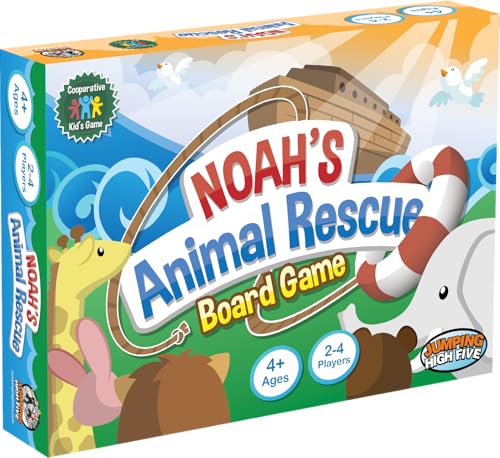
Jumping High Five NARBG Cooperative Board Games
What We Like
- No reading required for play
- Teaches matching, communication, teamwork
- Bible-story theme engages faith-based families
- Supports a family-owned small business
Trade-offs
- Limited to 2-4 players only
A cooperative game that requires zero reading means even the youngest players can jump right in without needing a grown-up to interpret rules or cards. The Bible-story theme gives it a clear identity, and the emphasis on collaboration over competition fits perfectly with families looking for a game that reinforces teamwork rather than head-to-head rivalry. It’s a thoughtful pick for church groups, Sunday school, or any household that wants faith-friendly content woven into playtime.
The theme and image-matching mechanics might feel narrow for families who prefer a broader, non-religious setting. Still, for its intended audience, it delivers exactly what it promises: a simple, cooperative, faith-based board game that gets everyone working together.
Product photos
How We Evaluated Cooperative Board Games For Kids
Our research started with manufacturer specifications and official game descriptions, then expanded to expert round-ups from child development and toy review sources. We cross-referenced those findings with patterns in owner feedback to understand which games hold up after ten or twenty plays.
The three criteria that mattered most were age appropriateness, cooperative mechanics, and replay value. A game that asks a four-year-old to read complex instructions fails before it starts. We also looked for games where the cooperative element is central, not a tacked-on “everyone wins” ending to a competitive game. Finally, we considered whether kids would actually want to play it again next week.
A research-led evaluation has limits: we haven’t played every game in every household dynamic. But by combining expert analysis with real-world owner reports, we can confidently point you toward games that work for most families. For more on how cooperative play benefits development, see our guide to what is cooperative play.
What To Look For In Cooperative Board Games For Kids
Choosing a cooperative game for your child comes down to three factors: age fit, how the game makes everyone work together, and whether it stays fun after the fifth play.
Look for games where the rules match your child’s attention span and reading level. The best cooperative games make teamwork the only way to win, not a bonus option. Check that the components are durable enough for small hands and that the game offers enough variety to avoid boredom.
Age and Reading Level
The single most common mistake is buying a game that requires reading skills a child hasn’t developed yet. Games like Peaceable Kingdom Round the Mountain and HABA My Very First Orchard Toddler Game use colors, shapes, and pictures instead of text. For older kids, Thames & Kosmos The Crew Family Adventure Card Game requires reading but rewards strategic thinking. If you need more options for specific age groups, our list of cooperative games for 5-year-olds breaks down picks by developmental stage.
Cooperative Mechanics
A truly cooperative game forces players to communicate and plan together. In Gamewright Outfoxed, players share clues to solve a mystery. Fireside Games My First Castle Panic has everyone defend a castle against monsters as a team. Avoid games where the “cooperative” mode feels like an afterthought, the best ones make teamwork the only path to victory. For a deeper look at how these dynamics work, our guide to cooperative board games explains the different mechanics designers use.
Replay Value and Durability
Kids will play a favorite game dozens of times. Check that components are sturdy, HABA uses PEFC-certified wood, and Blue Marble includes a 21-animal Learning Guide that adds educational value. Games with multiple difficulty levels, like Blue Marble RTSAFARIGME and Mattel Games Ghost Fightin’ Treasure Hunters, grow with your child. If you’re looking for more ideas, our roundup of best games for families highlights games that work across multiple age groups.
- Look at the recommended age range on the box, but also consider your child’s attention span and reading ability.
- Check the player count, many cooperative games cap at 4 players, which may not fit larger families.
- Read owner feedback about component quality; cardboard tokens and thin cards wear out fast with young children.
- Consider whether the game offers a solo mode or multiple difficulty levels for longer-term play.
A good rule of thumb: if the game’s rules take longer to explain than the game takes to play, look for something simpler.
Cooperative Board Games For Kids Compared
The table below compares the key specs for each of our 10 top picks, including age range, player count, and standout features.
| Product | Players | Age | Weight |
|---|---|---|---|
| Peaceable Kingdom Round the Mountain Cooperative Game | 2-4 | 3+ | 1.5 pounds |
| Gamewright Outfoxed Cooperative Mystery Game | 4 | 5+ | 1.1 lb |
| Peaceable Kingdom Count Your Chickens Cooperative Game | 2 to 4 | 3+ | 1.0 pounds |
| HABA My Very First Orchard Toddler Game | 1-4 | 2+ | 1.8 pounds |
| Thames & Kosmos The Crew Family Adventure Card Game | 3-5 | 8+ | N/A |
| Fireside Games My First Castle Panic Game | N/A | 4 to 8 years | 0.2 pounds |
| Mattel Games Ghost Fightin' Treasure Hunters Game | 2-5 | Ages 8+ | 1.6 pounds |
| Blue Marble RTSAFARIGME Cooperative Board Games | 2-4 (cooperative) | Ages 4-6 | 1.0 pounds |
| HABA Unicorn Glitterluck Cloud Stacking Cooperative Game | Cooperative | 4-8 years | N/A |
| Jumping High Five NARBG Cooperative Board Games | 2-4 | 4 and Up | 0.9 pounds |
Frequently Asked Questions
What is the best cooperative board game for preschoolers?
Peaceable Kingdom Round the Mountain Cooperative Game is our top pick for preschoolers ages 3-5. It requires no reading, uses a tactile wooden train, and teaches turn-taking and color matching in quick 15-minute sessions. The whole team wins or loses together, which builds cooperation without frustration.
How many players do cooperative board games for kids usually support?
Most cooperative games for kids support 2 to 4 players. Some, like Thames & Kosmos The Crew Family Adventure Card Game, require exactly 3-5 players. If you have a larger family or group, check the player count before buying, many games do not include a solo mode or options for more than four players.
What age can kids start playing cooperative board games?
Children as young as 2 can start with HABA My Very First Orchard Toddler Game, which uses large wooden fruit pieces and simple color recognition. Most cooperative games target ages 3 and up, with more complex options like Thames & Kosmos The Crew starting at age 8. Always check the manufacturer’s age recommendation and your child’s attention span.
Do cooperative board games help with social skills?
Yes. Cooperative games teach turn-taking, communication, and teamwork because players must work together toward a common goal. Games like Gamewright Outfoxed require players to share clues and discuss strategies, building social skills without the pressure of competition.
What is the difference between cooperative and competitive board games?
In competitive games, one player wins and the rest lose. In cooperative games, all players work together against the game itself, everyone either wins together or loses together. This format reduces arguments and helps children learn problem-solving and teamwork. Many families find that cooperative family games create a more positive game night experience.
The Bottom Line
For most families with preschoolers, Peaceable Kingdom Round the Mountain Cooperative Game is the best choice. Its no-reading-required design, tactile wooden train, and 15-minute play sessions make it easy to pull out on a weeknight. The game teaches turn-taking and color matching without the frustration of competitive play.
If your kids are older or your family prefers a specific theme, one of the other picks may fit better. Gamewright Outfoxed delivers a satisfying mystery for ages 5 and up. Thames & Kosmos The Crew offers a campaign-style card game for strategic 8+ players. For toddlers just starting out, HABA My Very First Orchard uses chunky wooden pieces and simple rules.
The most important factor is matching the game to your child’s developmental stage, not just their age. A game that requires reading or complex strategy will sit on the shelf. Start simple, let everyone win together, and watch your family’s game night transform.
