
10 Best Board Games For Kids in 2026
This post contains affiliate links. As an Amazon Associate, we earn from qualifying purchases.
For families with young children, the best board games for kids need to be simple, engaging, and frustration-free. Our top pick, Hasbro Gaming Candy Land Board Game, wins because it requires no reading and is perfectly suited for ages 3 and up, making it the ideal first game. We also highlight the Peaceable Kingdom Round the Mountain Cooperative Game for teaching teamwork and the USAOPOLY Tapple Word Game for older kids who love a challenge.
The real challenge for parents is finding a game that matches a child’s developmental stage without being too boring or too complex. A game that is purely luck-based might frustrate a six-year-old, while a game requiring reading will leave a three-year-old lost. You need options that grow with your kids and keep everyone at the table engaged.
This guide is built from a careful review of manufacturer specifications, expert recommendations, and patterns in parent feedback. We looked at dozens of games across different age ranges and play styles to find the 10 best board games for kids that deliver real fun without the fuss.
Top 10 Board Games For Kids in the Market
Certain content that appears on this site comes from Amazon. This content is provided "as is" and is subject to change or removal at any time.
The Best Board Games For Kids, Reviewed
Hasbro Gaming Candy Land Board Game

What We Like
- No reading required to play
- Classic beginner game for ages 3+
- Colorful cards and fun illustrations
- Includes cute gingerbread man pawns
Trade-offs
- Purely luck-based, no strategy for older kids
- No reading required, but too simple for older kids
A game that requires zero reading means a three-year-old can jump in and race to the castle on their very first turn. That’s the whole point of Candy Land: colored cards and a winding path let pre-readers play independently, no help needed. For families introducing board games to toddlers, this simplicity is exactly what makes it work. The bright illustrations and sweet destinations keep little ones engaged, and the lightweight 1.1-pound box is easy to tote along to a playdate or grandparents’ house. This classic beginner game removes every barrier except patience.
The trade-off is that Candy Land has no decisions to make. You draw a card, move your pawn, and that’s it. For a child who has outgrown pure chance, other games like Peaceable Kingdom Round the Mountain offer cooperative play while still being age-appropriate. But for the 3-to-5 set who just want to play alongside a grown-up without feeling lost, this game delivers exactly what it promises. Keep it on the shelf for the early years, then graduate to something with more strategy when they’re ready.
Product photos
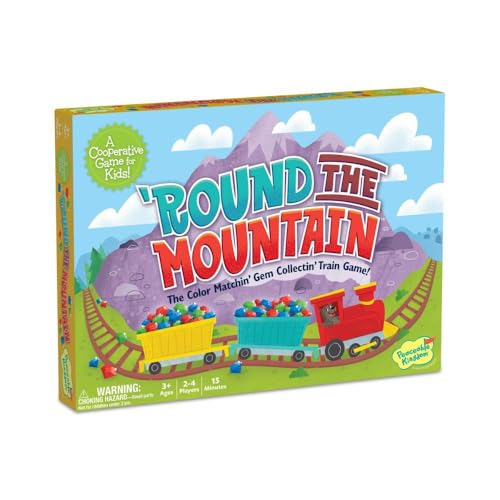
Peaceable Kingdom Round the Mountain Cooperative Game
What We Like
- Teaches teamwork and cooperation
- No reading needed for play
- Includes wooden train and gems
- Quick 15-minute playtime
Trade-offs
- Limited to 2-4 players only
- Falling rock tokens can cause setbacks for young players
A cooperative board game where everyone wins or loses together, this one uses a wooden train that clicks as it rolls around a track. Kids peek under the train to see which color they landed on, then collect gems or dodge falling rocks. Designed for ages 3 and up with no reading required, it builds color matching, fine motor skills, and turn-taking in a low-pressure setting. The 15-minute playtime keeps attention spans from wandering, and the hands-on components make it feel more like a toy than a traditional board game.
The game is limited to 2-4 players, so larger groups or siblings beyond that number won’t be able to join in. Compared to Candy Land, which is also for ages 3 and up and requires no reading, this one adds a cooperative twist that teaches teamwork instead of head-to-head competition. For parents wanting a game that encourages working together rather than winning alone, this delivers exactly that.
Product photos
Hasbro Gaming Hi Ho Cherry-O Board Game

What We Like
- Teaches counting, addition, subtraction
- Classic gameplay for ages 3+
- Simple turn-taking for preschoolers
Trade-offs
- Only 2-4 players limits larger groups
- No solo play option for only children
A spinner that tells players to pick one, two, or three pieces, or put some back, turns fruit-picking into a stealthy math lesson. Hi Ho Cherry-O is built for ages 3 and up, so it works for the preschool crowd that is just learning to count and take turns. The simple rule of filling your bucket first keeps attention spans engaged without overwhelming little ones. For parents wanting a board game that practices basic addition and subtraction without feeling like homework, this one delivers exactly that.
Because the game relies entirely on spinner luck, a child who enjoys more control or strategy might get bored after a few rounds. It is best as a short, focused activity for two to four kids rather than a longer family game night staple.
The Uzzle 3.0 Block Puzzle Game

What We Like
- 100 unique puzzles across 4 difficulty levels
- Improves problem-solving and cognitive skills
- Fast-paced pattern-matching for up to 4 players
- Learned in under 1 minute
Trade-offs
- Only 4 players without buying extra games
With 100 unique puzzles split into four difficulty levels, this game challenges kids as young as 4 on the easiest settings while adults face genuinely tough puzzles on the hardest ones. That range means it stays relevant as your child grows, rather than getting shelved after a few rounds. The race to flip, spin, and merge five patterned blocks sharpens observation and quick thinking without feeling like homework. It’s the kind of game that gets pulled out at family night because everyone, from your six-year-old to your in-laws, can jump in after learning it in under a minute.
The fast-paced pattern-matching demands constant attention and quick reflexes, which may not suit children who prefer a more relaxed pace. Compared to Candy Land’s turn-by-turn play, The Uzzle keeps everyone on their toes. If your child thrives on calm, cooperative play, Peaceable Kingdom’s Round the Mountain offers a team-based alternative. But for building cognitive skills in a lively setting, this one delivers.
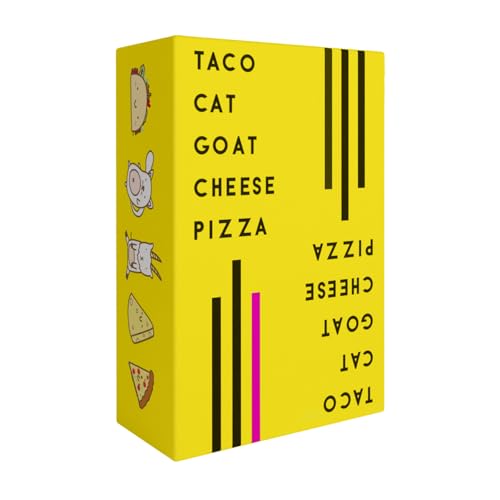
Taco Cat Goat Cheese Pizza Card Game
What We Like
- 10-15 minute rounds keep attention spans high
- Action cards add unpredictable twists
- Boosts concentration and pattern recognition
Trade-offs
- Slap mechanic can lead to accidental hand collisions
- Ages 7+ excludes younger siblings who want to join
A 10-minute round means you can squeeze in a game between dinner and bath time without anyone losing focus. Taco Cat Goat Cheese Pizza thrives on the chaos of matching spoken words to cards and slapping the pile first, making it a natural fit for families who want high-energy fun without a long setup. The action cards throw in curveballs that keep even adults on their toes, and the compact size slides into a diaper bag or coat pocket for road trips or restaurant waits. It works for groups of two to eight, so it scales from a quiet sibling duel to a loud holiday gathering.
The fast-paced slapping action means younger kids or those with slower reflexes may end up with the pile more often than they’d like, and the slapping can get a little too enthusiastic for small hands. For families with a mix of ages, it’s a lively option when older kids want something that rewards quick thinking and a fast slap, while younger players can still join in the fun.
USAOPOLY Tapple Word Game

What We Like
- Portable wheel stores all category cards
- Built-in timer keeps pace fast
- 144 categories for variety
Trade-offs
- Requires reading and quick thinking
- No solo play option
A built-in timer that you press as you shout out words keeps the energy high and turns vocabulary into a race. The portable wheel holds all 144 category cards inside, so setup is just spin and go, no loose pieces to lose under the couch. The game is designed for players who know their letters and can think quickly, making it a strong pick for families with older kids who want a mental challenge that feels like a party.
Younger kids or those still learning to read will need an adult partner to help with categories and letter tabs, so it’s not a set-it-and-forget-it game for the preschool set. Compared to Candy Land, which is simpler and aimed at younger ages, Tapple demands active participation and a bit of speed, which means it rewards quick thinkers but can frustrate kids who need more time. If your group includes a mix of ages and you want something that sharpens vocabulary without feeling like homework, this wheel delivers, just know it’s best when everyone can read and react at a similar pace.
Product photos
Spin Master Games Hedbanz Picture Guessing Game

What We Like
- 69 picture cards for easy reading
- 6 themed headbands included
- Builds deductive reasoning skills
- Timer adds urgency to gameplay
Trade-offs
- Requires at least 2 players
- Timer can cause rushed guesses
With 69 picture cards and six themed headbands, this guessing game gets kids asking yes-or-no questions to figure out what’s on their own head. It’s designed for ages six and up, so it works well for family game night where younger and older kids play together. The included timer keeps rounds moving, and the simple rules mean you can jump in without a long explanation. That focus on deductive reasoning makes it more than just silly fun, it’s a thinking game disguised as a party activity.
Picture cards, while easy for early readers, might feel too simple for kids who’ve outgrown basic images. Compared to a word-based game like Tapple, Hedbanz relies on visual clues, which can limit the challenge for older players. But if you’ve got a mixed-age group or a child who’s still building reading confidence, this is a game that keeps everyone engaged without anyone feeling left out.
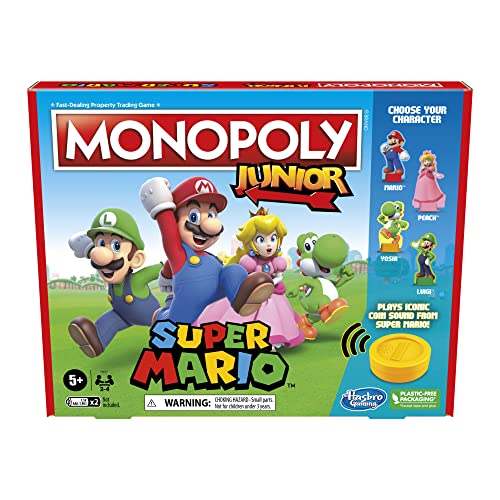
Monopoly Junior Super Mario Edition Board Game
What We Like
- Iconic Super Mario coin sound effects
- Familiar Mushroom Kingdom properties
- Fast-paced junior rules for ages 5+
- Includes four beloved character tokens
Trade-offs
- Box weighs 1.2 pounds, heavier than some alternatives
The coin sound effect from Super Mario is the first thing you notice, press the power-up die, and that iconic chime pulls kids straight into the Mushroom Kingdom. Designed for ages 5 and up, this Monopoly Junior edition keeps rounds fast and simple, so younger players don’t lose interest before they finish. Buying up Yoshi’s Hill and Cooligan Fields feels like exploring the video game, and the four character tokens (Mario, Peach, Yoshi, Luigi) give everyone a favorite to play. If your child already loves Super Mario, this board game turns screen time into tabletop fun without the learning curve of the classic Monopoly rules.
Weighing just 1.2 pounds, this board game is light enough to toss in a tote bag for a playdate or slide onto a closet shelf without a struggle. The coin sound unit does need batteries, but for a young Mario fan, that small trade-off brings the iconic Super Mario coin sound to life with every press of the power-up die. Kids ages 5 and up can choose to play as Mario, Peach, Yoshi, or Luigi, buying up familiar Mushroom Kingdom properties like Yoshi’s Hill and Cooligan Fields. The player who collects the most coins wins, so the focus stays on fun and speed rather than complex strategy.
Product photos
Goliath Don't Wake Daddy Board Game

What We Like
- No reading required for play
- Develops fine motor skills
- Up to 6 players for groups
- Quick to learn rules
Trade-offs
The core mechanic, tiptoeing and pressing a button without waking a sleeping dad, turns turn-taking into a tense, giggly challenge that even four-year-olds can grasp instantly because no reading is needed. With room for up to six players, it fits larger families or playdates without leaving anyone out, and the repeated button-pressing builds hand-eye coordination naturally through play rather than drills. That blend of suspense and motor skill practice makes it a strong pick for families who want a game that feels more like a playful dare than a lesson.
The most decisive fact about this game is that it builds suspense with every button press, keeping kids giggling as they tiptoe through the house without waking Daddy. That makes it a lively choice for family game night with up to six players, ages four and up. For children who prefer working together rather than taking individual turns, a cooperative game like Peaceable Kingdom Round the Mountain might be a better fit.
Hasbro Gaming Trouble Board Game

What We Like
- Pop-o-Matic bubble keeps die from getting lost
- Classic gameplay easy to learn and set up
- Power Up Spaces add challenge for older kids
Trade-offs
- Only 2-4 players limits larger group play
- No cooperative play option for young teams
The Pop-o-Matic bubble keeps the die from getting lost, so there is less time spent searching and more time playing. The game is easy to learn and quick to set up, with a simple objective: first player to get all their pieces around the board wins. The instructions include Power Up Spaces for a more challenging variant, which adds variety as kids get older. For families with children ages five and up, this board game offers straightforward, repeatable fun that works well for game night.
The player count is two to four, so it fits a small family but not a larger gathering. There is no cooperative mode, so everyone races alone. Trouble is a classic board game that delivers exactly what it promises: a simple race to the finish. If your group matches the player range and you want a quick, easy-to-teach game, this is a good choice.
Product photos
How We Evaluated Board Games For Kids
We started by sorting through the most popular and highly recommended games for children, focusing on those with clear age ratings and straightforward rules. Our research included manufacturer documentation, expert round-ups from child development specialists, and thousands of parent reviews to identify what actually works at the kitchen table. We did not play-test these games ourselves; instead, we relied on verified patterns in owner feedback and professional evaluations.
The four criteria that mattered most were age appropriateness, replay value, ease of learning, and social interaction. A game like Hasbro Gaming Hi Ho Cherry-O Board Game scores high on teaching counting but is limited to four players, which matters for larger families. We also weighed whether a game encourages cooperation or healthy competition, as this affects how siblings interact during play.
An honest limit of this research-led approach is that we cannot account for every child’s unique personality or attention span. A game that one family calls a hit might bore another child. We prioritized games with proven track records and broad appeal, but we always recommend checking the age range and reading a few recent owner experiences before buying.
What To Look For In Board Games For Kids
Choosing the right game starts with understanding your child’s current abilities and what you want the game to teach. Here are the key factors to consider.
Focus on age rating, playtime, player count, and whether the game requires reading. The best board games for kids match the child’s skill level and hold attention for the right amount of time.
Age Rating and Skill Level
Manufacturer age ratings are a good starting point, but they are not perfect. A game rated for ages 3+ like Hasbro Gaming Candy Land Board Game is purely luck-based and requires no reading, which is perfect for preschoolers. In contrast, a game like USAOPOLY Tapple Word Game is rated for ages 8+ because it demands quick recall and reading fluency. Always consider your child’s actual abilities rather than just the box number. For younger children, look for board games for young children that emphasize color matching and simple turn-taking.
Playtime and Attention Span
A game that lasts too long can be tough for a four-year-old. Many of our picks, like Taco Cat Goat Cheese Pizza card game and Peaceable Kingdom Round the Mountain cooperative game, finish in about 10 to 15 minutes. This keeps the fun moving and prevents boredom or frustration. For older kids who can focus longer, a game like Monopoly Junior Super Mario Edition Board Game offers a slightly longer experience that still respects a child’s limits.
Player Count and Group Size
Always check how many players a game supports before you buy. Games like The Uzzle 3.0 Block Puzzle Game and Goliath Don’t Wake Daddy Board Game accommodate up to 4 or 6 players, making them better for larger families or playdates. Others, like Hasbro Gaming Hi Ho Cherry-O Board Game, are limited to 4 players, which can be a problem if you have five kids. If you have a big family, look for family board games that support at least 6 players.
- Check the box for the exact player count before buying.
- Consider whether the game works with just two players for one-on-one play.
- Look for games that can be played in rounds if you have a large group.
- Make sure the game is not too long for the youngest player’s attention span.
- Read a few recent reviews to see if the game holds up after multiple plays.
A game that takes longer to set up than to play is usually a bad choice for young kids.
Board Games For Kids Compared
The table below compares all 10 games side by side so you can see at a glance which one fits your family’s needs.
| Product | Age Range | Weight | Dimensions |
|---|---|---|---|
| Hasbro Gaming Candy Land Board Game | 3 & Up | 1.1 pounds | 15.8 x 10.6 x 1.2 inches |
| Peaceable Kingdom Round the Mountain Cooperative Game | 3+ | 1.5 pounds | 12.5 x 9.0 x 0.1 inches |
| Hasbro Gaming Hi Ho Cherry-O Board Game | 3 and up | 0.4 pounds | 10.5 x 10.5 x 0.0 inches |
| The Uzzle 3.0 Block Puzzle Game | 4+ | 1.6 pounds | 8.0 x 8.0 x 4.0 inches |
| Taco Cat Goat Cheese Pizza Card Game | 7+ | 0.2 lb | 2.5 x 0.9 x 3.6 in |
| USAOPOLY Tapple Word Game | N/A | 0.5 pounds | 11 x 11 x 3 inches |
| Spin Master Games Hedbanz Picture Guessing Game | 6+ | 1.2 pounds | 10.6 x 10.6 x 2.0 inches |
| Monopoly Junior Super Mario Edition Board Game | 5 and Up | 1.2 pounds | 13.0 x 10.5 inches |
| Goliath Don't Wake Daddy Board Game | 4+ | N/A | 10.5 x 2.5 x 10.5 in |
| Hasbro Gaming Trouble Board Game | 5 and up | 0.8 pounds | 10.5 x 10.5 x 1.6 inches |
Frequently Asked Questions
What is the best board game for a 3-year-old?
Hasbro Gaming Candy Land Board Game is the top choice for a 3-year-old. It requires no reading, uses simple color matching, and has a short playtime that matches a toddler’s attention span. The cute gingerbread man pawns and colorful illustrations keep young children engaged without frustration.
What is a good cooperative board game for kids who don’t like losing?
Peaceable Kingdom Round the Mountain Cooperative Game is an excellent choice. All players work together as a team to move a wooden train across the board before the falling rock tokens reach the bottom. This removes the sting of losing because everyone wins or loses together, which builds teamwork and resilience.
How do I choose a board game for a child who can’t read yet?
Look for games that use pictures, colors, or symbols instead of words. Hasbro Gaming Candy Land Board Game and Goliath Don’t Wake Daddy Board Game both require no reading at all. For a guessing game, Spin Master Games Hedbanz Picture Guessing Game uses picture cards so pre-readers can play without help.
What is a fast board game for a family game night with kids ages 7 and up?
Taco Cat Goat Cheese Pizza Card Game is one of the fastest options, with rounds lasting only 10 to 15 minutes. It is a silly, pattern-matching card game that gets everyone laughing and slapping the pile. For a word-based alternative, USAOPOLY Tapple Word Game is also quick and portable.
Are there board games that teach math skills to preschoolers?
Yes, Hasbro Gaming Hi Ho Cherry-O Board Game is a classic that teaches counting, addition, and subtraction in a fun, game-like setting. Players pick fruit from trees and count how many they have collected. It is designed for ages 3 and up and is a gentle introduction to numbers. For more options, check out educational board games that build math skills.
The Bottom Line
Hasbro Gaming Candy Land Board Game remains the best overall choice for families with preschoolers. It is the simplest, most accessible introduction to board games, requiring no reading and offering zero frustration. If you have a child between the ages of 3 and 5, this is where you should start.
For families who want to emphasize teamwork over competition, Peaceable Kingdom Round the Mountain Cooperative Game is our top recommendation. It teaches cooperation and fine motor skills in a short, engaging play session. If you have older kids who are ready for a challenge, The Uzzle 3.0 Block Puzzle Game offers fast-paced pattern matching that the whole family can enjoy.
The single most important factor when buying a board game for kids is matching the game’s complexity to the child’s developmental stage. A game that is too simple will bore them, and one that is too hard will frustrate them. Stick to the age ratings, check the playtime, and you will find a game that becomes a family favorite.
