
10 Best Board Games For 5 Year Olds in 2026
This post contains affiliate links. As an Amazon Associate, we earn from qualifying purchases.
For families with a five-year-old, the Hasbro Trouble Board Game wins as the best overall because its Pop-o-Matic die roller keeps the game moving without lost pieces. The Power Up Spaces add a challenge when your child is ready. For cooperative play, Gamewright Outfoxed Board Game and Peaceable Kingdom Count Your Chickens let everyone work together instead of against each other.
At age five, kids are ready for simple rules and turn-taking but still need games that hold their attention and don’t require reading. The sweet spot is a game that teaches a skill, counting, matching, or basic strategy, without feeling like a lesson.
We built this guide by studying manufacturer specs, expert recommendations, and patterns in parent feedback across ten top-rated games. Each pick is ranked for the specific needs of a five-year-old: short attention spans, developing motor skills, and the social challenge of winning and losing gracefully.
Top 10 Board Games For 5 Year Olds in the Market
Certain content that appears on this site comes from Amazon. This content is provided "as is" and is subject to change or removal at any time.
The Best Board Games For 5 Year Olds, Reviewed
Hasbro Trouble Board Game

What We Like
- Pop-o-Matic keeps die from getting lost
- Power Up Spaces add challenge options
- Quick setup and easy to learn
- Classic gameplay for family night
Trade-offs
- Only 2-4 players limits larger groups
- No cooperative play option for young kids
The Pop-o-Matic bubble keeps the die from getting lost, so you won’t have to hunt under the couch cushions mid-game. The rules are simple enough that a 5-year-old can join in right away, and the goal is straightforward: be the first to move all your pieces around the board. It’s a fun, fast-paced family activity that gets everyone involved without a long setup.
Weighing only 0.8 pounds with a compact 10.5-inch square footprint, this board game slides easily onto a crowded shelf or into a tote bag for a playdate at a friend’s house. The lightweight build means kids can carry it themselves without help, and the square shape stacks neatly alongside other games. Families appreciate that it doesn’t demand a large table or dedicated storage space, making it a practical choice for small apartments or playrooms where every inch counts.
Product photos
Hasbro Candy Land Disney Princess Edition

What We Like
- No reading required to play
- Features beloved Disney princess characters
- Colorful Disney-themed gameboard
- Great for ages 3 and up
Trade-offs
- Only supports 2 to 3 players
- Limited to Disney Princess theme only
This Disney Princess edition of Candy Land keeps the classic no-reading-required race-to-the-castle format, so children ages 3 and up who haven’t learned to read can jump right in. With Cinderella, Rapunzel, and Ariel as movers and a gameboard full of familiar Disney scenes, it offers a themed adventure for little ones. It’s a game that relies on luck rather than skill, keeping the focus on fun.
The biggest limitation is the player count: it supports only 2 to 3 players, so it won’t work for larger playdates or families with more than three kids wanting to join. By contrast, Hasbro Trouble handles up to four players and is recommended for ages 5 and up. If your group regularly has four children, you’ll need a second game to rotate in.
Product photos
Hasbro Hi Ho Cherry-O Board Game

What We Like
- Teaches counting, addition, subtraction
- Classic gameplay for ages 3+
- Simple turn-taking for preschoolers
Trade-offs
- Fruit pieces can be lost easily
- Not challenging enough for older kids
The spinner in Hi Ho Cherry-O tells players how many pieces to pick or put back, turning counting into a game rather than a lesson. For a five-year-old just learning numbers, that means they practice addition and subtraction without realizing it. The simple turn-taking and pretend fruit make it feel like play, not school. The game is designed for kids ages 3 and up, and the first to fill their basket wins.
The game’s spinner can force a child to put fruit back when their bucket is nearly full, which tests a five-year-old’s patience. For kids who need to practice counting and can handle a little disappointment, this classic board game delivers exactly what it promises.
Monopoly Junior Super Mario Edition
What We Like
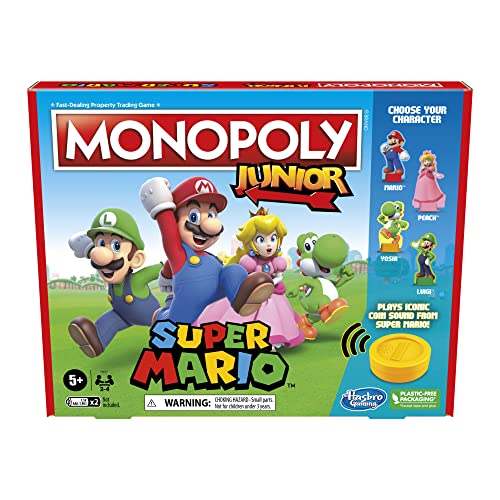
- Mario-themed artwork and characters
- Interactive coin sound unit
- Fast-paced junior gameplay
Trade-offs
- Only 2-4 players, not for larger groups
- Requires batteries for sound unit, not included
The interactive coin sound unit that plays the iconic Super Mario coin sound when you roll the power-up die is the standout feature here, it turns every turn into a mini event for a 5-year-old. Kids move as Mario, Peach, Yoshi, or Luigi, buying up familiar Mushroom Kingdom properties like Yoshi’s Hill and Rock-Candy Mines, which makes the whole experience feel like an adventure rather than a math lesson. This is a great pick for families whose little ones already love Super Mario, because the theming does the heavy lifting of keeping them engaged while they learn basic money concepts. Monopoly Junior is designed to be fast and exciting, so it won’t drag on like the adult version.
The trade-off is that this is still a Monopoly game at heart, so kids who aren’t into Mario or who prefer cooperative play might find the competitive property-buying frustrating. For a Mario fan turning five, the sound effects and character tokens make this a memorable first board game experience.
Product photos
Jax SEQUENCE for Kids

What We Like
- No reading required to play
- Develops logical thinking skills
- Simple matching gameplay for young kids
- Classic Sequence adapted for children
Trade-offs
- Only 2-4 players limits larger groups
- Strategy depth is very basic for experienced gamers
Since reading isn’t required, kids as young as three can start playing right away, matching cards to characters on the board instead of struggling with text. This makes it a fantastic first strategy game for children ages 3 to 6 who are still building their literacy skills. The simple goal of getting four chips in a row teaches logical thinking and pattern recognition without overwhelming them. That’s exactly why it works so well as a starter strategy game for this age group. It’s a gentle introduction to turn-based planning that feels like a game, not a lesson.
The same simplicity that makes it accessible also means it won’t hold the attention of kids who are ready for more complex rules or longer play sessions. If a child is already comfortable with multi-step instructions or enjoys games with more player interaction, this one might feel a little flat after a few rounds. But for a child who is just starting to grasp the concept of strategy, it hits the sweet spot.
Gamewright Outfoxed Board Game
What We Like
- Cooperative team play builds social skills
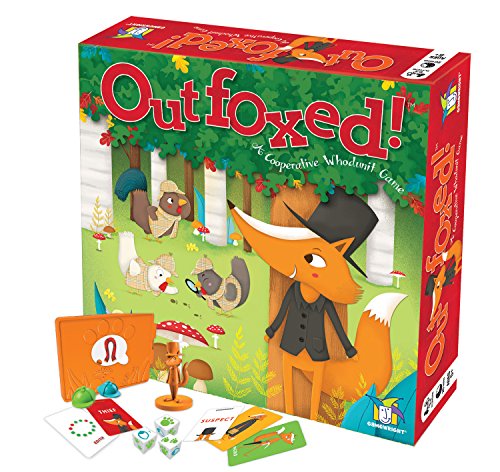
- Roll dice and use decoder for clues
- Quick setup with easy rules
- Screen-free fun for family nights
Trade-offs
- Designed for 4 players, not larger groups
- Not suitable for solo play with only one child
A 15-20 minute round means this mystery fits neatly into a preschooler’s attention span without dragging on. The cooperative design, kids work together rolling dice, collecting clues, and using the decoder to eliminate suspects, turns deduction into a shared adventure, not a competition. That team-first approach builds logic and memory while sidestepping the sore-loser meltdowns that can plague other games at this age. It’s a solid fit for families who want a quick, engaging activity that feels like play, not a lesson.
The 1.1-pound box and 9.5-inch square footprint make it easy to stash on a shelf, so it won’t take over your game closet. Designed for up to four players, larger gatherings or sibling-heavy households will need to rotate or pick something else. For a fast, cooperative whodunit that respects short attention spans, this one delivers.
Peaceable Kingdom Count Your Chickens

What We Like
- Award-winning cooperative counting game
- No reading required for play
- Teaches social development skills
- Ages 3+ with frustration-free packaging
Trade-offs
- Only 2-4 players limits larger groups
- No solo play option for one child
A cooperative counting game where everyone wins together, that’s the core idea behind Count Your Chickens. With no reading required and a focus on early math and social skills, it’s designed for ages 3 and up, making it a natural fit for families with younger kids. The fact that it’s won five awards, including the Oppenheim Toy Portfolio Platinum Award, tells you the design has been thoughtfully vetted. For a 5-year-old, this means learning to count while working as a team, not against each other. The frustration-free packaging is a nice touch for parents who’ve wrestled with impossible plastic clamshells.
Cooperative play isn’t every kid’s cup of tea; some children at this age want to win outright, and this game doesn’t offer that thrill. Compared to other games for this age group, such as Hasbro Trouble, which is a competitive game for 2-4 players ages 5 and up, Count Your Chickens is designed for collaboration. If your child thrives on head-to-head challenge, a competitive game might hold their attention longer. But if you’re looking to build teamwork and counting confidence without the pressure of losing, this Peaceable Kingdom game delivers exactly that.
Product photos
Peaceable Kingdom Race To The Treasure

What We Like
- No reading required
- Teaches strategy and social skills
- Everyone wins together
- Award-winning cooperative play
Trade-offs
- Only 2-4 players limits larger groups
- No solo play option
A cooperative path-building game where 2 to 4 kids work together to beat the Ogre to the treasure, if they succeed, everyone wins. That single mechanic turns a simple race into a lesson in strategy and social development, with zero reading required. It’s a natural fit for 5-year-olds who are still learning to take turns and share decisions, and the four awards it’s won (including the Oppenheim Platinum) back up its thoughtful design. Parents looking for a game that builds teamwork without frustration will find exactly that here.
The cooperative format won’t appeal to every kid, some 5-year-olds thrive on head-to-head competition, and this game doesn’t offer that. If you’ve got a child who loves beating an opponent, something like Hasbro Trouble gives them that direct rivalry. But if your goal is to teach collaboration and keep the whole group on the same side, Peaceable Kingdom’s design delivers that experience cleanly.
Product photos
Ravensburger Bugs in the Kitchen

What We Like
- Working HEXBUG Nano adds real chase action
- Quick 15-minute rounds hold attention
- High-quality components last many sessions
- Easy to learn and play
Trade-offs
- Game board at 14.7 inches is compact
- Requires 2-4 players, not solo play
A working HEXBUG Nano scurries across the board while players race to trap it, that’s the kind of physical, unpredictable action a five-year-old finds hilarious. The game supports 2 to 4 players and wraps up in about 15 minutes, which is just long enough to stay fun without turning into a meltdown. Ravensburger includes 24 utensils, 4 traps, and 20 bug tokens, so there’s plenty of variety to keep each round feeling fresh. This is a smart pick for families who want something that feels more like a toy than a sit-still board game, and the durable components mean it won’t fall apart after a few plays.
All those small pieces, pegs, tokens, utensils, can easily scatter under a couch or get swallowed by a curious dog. For families who love interactive chaos and don’t mind a little cleanup, this is a memorable, giggle-filled choice.
ThinkFun Zingo Bingo

What We Like
- Includes unique Zinger device
- Supports up to 7 players
- Builds language and matching skills
- Clear instruction manual included
Trade-offs
- Beginner focus limits appeal for older kids
- Not challenging enough for kids beyond age 4
The included Zinger device that dispenses tiles is the real draw here, it adds a tactile, almost magical element that keeps little hands engaged and eyes on the game. Designed for pre-readers and early readers ages 4 and up, this matching game builds language and observation skills through fast-paced play. With room for up to 7 players, it works well for preschool playdates or family game night where younger siblings need to join in without feeling left out. The beginner skill level means the rules click quickly, so you’re not spending twenty minutes explaining before anyone gets to play.
Once a child has mastered matching, there isn’t much depth to grow into, so this game is best for the 4-5 year old crowd just starting to connect images and words. Compared to Jax SEQUENCE for Kids, a strategy game for ages 5 and up, Zingo stays firmly in the pure matching lane. That makes it ideal for younger kids but less suited for a mixed-age group where older children might want more of a challenge. The Zinger device is durable and satisfying, but parents of older kids should consider a game like Outfoxed, which is a cooperative whodunit for preschoolers.
How We Evaluated Board Games For 5 Year Olds
We started with the hard specs: player count, age rating, and setup time. A game that takes twenty minutes to set up is already lost on most five-year-olds. We also looked at component quality, small pieces that break easily or get lost quickly frustrate both kids and parents.
The three criteria that mattered most were teachability, replay value, and skill-building. A game must be explainable in under two minutes, offer enough variety to survive more than a few rounds, and teach something real, whether that’s counting, matching, or the social skill of taking turns. We also prioritized games that require no reading, since most five-year-olds are pre-literate.
This evaluation draws on what parents and experts report, and we flag trade-offs honestly so you can decide what matters for your family. For more options in this age range, see our full list of games for 5-6 year olds.
What To Look For In Board Games For 5 Year Olds
The best board game for a five-year-old is one they can play without help after one or two rounds. Look for simple rules, no reading required, and a playtime under 20 minutes.
Player Count and Group Size
Most games for this age support 2 to 4 players. If you have a larger family or plan to play with cousins, look for games like ThinkFun Zingo Bingo that support up to 7 players. If you only have one child, cooperative games that can be played parent-child are a better fit than competitive games that require at least three.
Skill Level and Complexity
Five-year-olds vary widely in attention span and frustration tolerance. Some are ready for the basic strategy in Jax SEQUENCE for Kids, while others need the pure luck-based play of Hasbro Candy Land Disney Princess Edition. Look for games that match your child’s current ability, not where you hope they’ll be in six months. Our list of educational board games can help you find games that build specific skills.
Cooperative vs. Competitive Play
Cooperative games like Peaceable Kingdom Race To The Treasure let everyone win or lose together, which removes the sting of losing for sensitive kids. Competitive games teach resilience and good sportsmanship. Some families alternate between both styles. If your child struggles with losing, start with cooperative board games and introduce competition gradually.
Component Size and Durability
Small pieces are a safety concern and a frustration. Games with large, chunky pieces like the fruit in Hasbro Hi Ho Cherry-O Board Game are easier for small hands to grasp and harder to lose under the couch. Check whether replacement parts are available before you buy.
Replay Value
A game that your child plays once and ignores is a waste. Look for games with variable setups, multiple paths to win, or expansion options. Ravensburger Bugs in the Kitchen has a real HEXBUG Nano that moves differently each time. That gives it unusual replay value for this age group.
- Does the game require reading? If yes, your child can’t play alone.
- How many players does it support? Does that match your typical group?
- What happens when someone loses? Cooperative games avoid this entirely.
- Are the pieces large enough to handle safely?
- Can you explain the rules in under two minutes?
A five-year-old’s favorite game is the one they can play without waiting for an adult to re-read the instructions.
Board Games For 5 Year Olds Compared
The table below compares all ten games side-by-side so you can quickly see which ones match your child’s age, your group size, and the skills you want to build.
| Product | Players | Age Range | Weight |
|---|---|---|---|
| Hasbro Trouble Board Game | 2-4 | 5 and up | 0.8 pounds |
| Hasbro Candy Land Disney Princess Edition | 2 to 3 | 3 and up | 1.1 pounds |
| Hasbro Hi Ho Cherry-O Board Game | 2 to 4 | 3 and up | 0.4 pounds |
| Monopoly Junior Super Mario Edition | N/A | 5+ | 1.2 pounds |
| Jax SEQUENCE for Kids | 2-4 | 3-6 | 1.5 pounds |
| Gamewright Outfoxed Board Game | 4 players | 5 and up | 1.1 pounds |
| Peaceable Kingdom Count Your Chickens | 2-4 | 3+ | 1.0 pounds |
| Peaceable Kingdom Race To The Treasure | 2 to 4 | 5+ | 1.0 pounds |
| Ravensburger Bugs in the Kitchen | 2-4 | 5 and up | 1.9 pounds |
| ThinkFun Zingo Bingo | Up to 7 | 4 and Up | 1.0 pounds |
Frequently Asked Questions
What is the best board game for a 5 year old who can’t read?
Hasbro Trouble Board Game is our top pick because it requires no reading. The Pop-o-Matic die roller and color-coded spaces make it completely visual. Jax SEQUENCE for Kids and Peaceable Kingdom Count Your Chickens are also excellent no-reading options.
How long should a board game for a 5 year old last?
Games should finish in 15 to 20 minutes. Ravensburger Bugs in the Kitchen has 15-minute rounds, while Hasbro Trouble Board Game typically wraps up in 20 minutes. Longer games lose a five-year-old’s attention and lead to frustration.
What is a good cooperative board game for a 5 year old?
Gamewright Outfoxed Board Game is a cooperative mystery where all players work together to catch a fox before time runs out. Peaceable Kingdom Count Your Chickens and Race To The Treasure are also excellent cooperative options. They teach teamwork and social skills.
Are board games good for 5 year old development?
Yes. Board games teach turn-taking, counting, matching, and emotional regulation. Hasbro Hi Ho Cherry-O Board Game builds counting and subtraction skills, while Jax SEQUENCE for Kids develops logical thinking. Games also create structured social interaction that helps with impulse control.
What is the most popular board game for 5 year olds?
Hasbro Trouble Board Game is consistently popular because the Pop-o-Matic die roller is novel and satisfying for small hands. Hasbro Candy Land Disney Princess Edition is also a top choice for families with Disney fans. It requires no reading and features beloved characters.
The Bottom Line
For most families, Hasbro Trouble Board Game is the best all-around choice. It teaches turn-taking and basic strategy, the Pop-o-Matic prevents lost dice, and the Power Up Spaces let you add challenge as your child improves. It works for ages 5 and up and plays in under 20 minutes.
If your child is sensitive about losing, start with cooperative games. Peaceable Kingdom Count Your Chickens builds counting skills without competition, and Gamewright Outfoxed Board Game turns gameplay into a shared mystery-solving adventure. Both let everyone win together.
The single most important factor is whether your child will actually play it. A game with perfect educational value is useless if it sits on the shelf. Pick something your five-year-old is excited about, whether that’s Disney princesses, Mario, or bugs, and the learning will follow naturally. For more ideas, check our full list of toys for 5 year olds and family board games.
