
9 Best Board Games For 3 Year Olds in 2026
This post contains affiliate links. As an Amazon Associate, we earn from qualifying purchases.
For a three-year-old’s first board game, Hasbro Gaming Candy Land Kingdom of Sweet Adventures wins as the best overall because it requires no reading and teaches turn-taking through simple color matching. If counting practice is the goal, Hasbro Gaming Hi Ho Cherry-O sneaks in early math, while Peaceable Kingdom Count Your Chickens offers cooperative play that builds teamwork without competition.
A three-year-old’s attention span and fine motor skills are still developing, so the best games for this age use simple rules, large pieces, and quick rounds. The real challenge is finding something engaging enough to hold their focus without frustrating them with complex instructions or tiny components.
We researched specifications, manufacturer recommendations, and patterns in owner feedback to build this guide. You’ll find nine picks that prioritize safety, skill-building, and the kind of repeatable fun that makes a game worth pulling off the shelf again and again.
Top 9 Board Games For 3 Year Olds in the Market
Certain content that appears on this site comes from Amazon. This content is provided "as is" and is subject to change or removal at any time.
The Best Board Games For 3 Year Olds, Reviewed
Hasbro Gaming Candy Land Kingdom of Sweet Adventures

What We Like
- No reading required to play
- Classic beginner game for ages 3+
- Includes colorful cards and fun illustrations
- Race to the castle with gingerbread pawns
Trade-offs
- No reading required means limited educational depth
- Board game format requires flat surface and setup
Candy Land requires zero reading ability, which makes it one of the most accessible board games for a three-year-old who hasn’t yet learned letters or numbers. The colored cards and sweet-themed path let kids focus on matching colors and moving their gingerbread man pawn forward without any frustration from text they can’t decode. That simplicity is exactly why this classic beginner game works well as a first board game. It removes every barrier to play, so a toddler can jump in and race to the castle on their first try.
The trade-off is that the same no-reading design means the game offers little beyond basic color recognition and turn-taking. Compared to Peaceable Kingdom Count Your Chickens, which builds early math skills through cooperative counting, Candy Land is a luck-driven race with no reading or counting required. For parents who want a game that introduces early math or cooperative play, this one may feel limited after a few rounds. But for the first board game experience, where the goal is simply to have fun and learn how to take turns, it’s hard to beat.
Product photos
Hasbro Gaming Hi Ho Cherry-O

What We Like
- Teaches counting, addition, and subtraction
- Simple turn-based gameplay for preschoolers
- Classic beginner game for ages 3+
- Includes fruit-picking spinner mechanic
Trade-offs
- No cooperative or team-based option
- No cooperative play; only competitive gameplay
A spinner tells each player how many pieces of pretend fruit to pick from their tree, or put back, so kids practice counting, addition, and subtraction without realizing they’re learning. That built-in math practice makes this a natural pick for parents who want playtime to double as early number work. The simple turn structure (spin, count, pick) keeps three-year-olds engaged without overwhelming them, and the familiar fruit theme gives even first-time players a clear goal: fill your bucket first.
The game is designed for 2 to 4 players, so someone wins and someone loses. For families who prefer a cooperative experience, other games like Peaceable Kingdom Count Your Chickens are available, though that game’s details are not provided here. If you want a straightforward counting game that gets little fingers moving and introduces basic math concepts, this classic delivers exactly what it promises.
Peaceable Kingdom Count Your Chickens

What We Like
- Cooperative play teaches social skills
- No reading required for gameplay
- Builds early math and counting
- Award-winning design with 5 awards
Trade-offs
- Only 2-4 players limits larger groups
- No competitive option for kids who prefer winning alone
The cooperative design means players work together to help Mother Hen collect her 40 chicks, and if they succeed, everyone wins. This builds early math and social skills without requiring any reading, making it a low-pressure introduction to board games for young children. The five awards it has won, including the Oppenheim Toy Portfolio Platinum Award, recognize its quality for the age group. For a three-year-old, the counting mechanic provides a gentle challenge that feels like a real game while staying accessible, and Peaceable Kingdom’s frustration-free packaging helps keep play smooth.
The cooperative structure removes direct competition, which some older preschoolers may miss, and with a maximum of four players, larger groups may need to take turns. Compared to Candy Land, which is a luck-based color-matching game, Count Your Chickens adds counting practice and teamwork, giving it a stronger educational focus. However, once children master counting, the game may offer less variety than options like The Sneaky Snacky Squirrel Game, which targets different skills.
Product photos
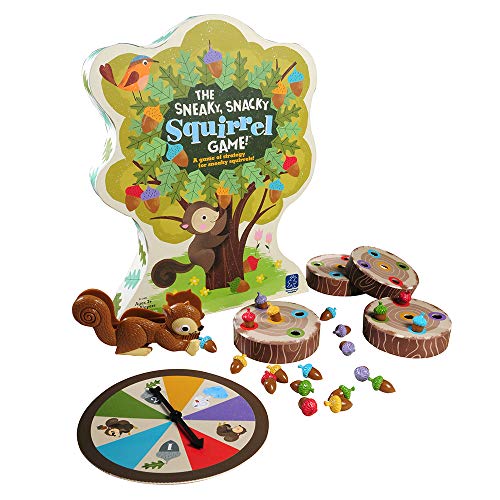
Educational Insights The Sneaky Snacky Squirrel Game
What We Like
- Squirrel squeezer builds hand strength
- Color matching and strategic play
- Easy setup with tree-shaped game board box
- Teaches turn-taking and sharing
Trade-offs
- Spinner adds luck element that can frustrate some toddlers
- Small parts pose a choking hazard for children under 3
The squirrel squeezer turns color matching into a fine-motor activity, helping your three-year-old build hand strength and dexterity while hunting for acorns. That makes it a smart pick if you want a game that actively develops those small hand muscles, not just a simple roll-and-move. With 20 acorns in five colors and a spinner that adds windstorms and theft, it keeps little ones engaged through a mix of luck and strategy without overcomplicating things.
The small acorns and squeezer require a bit of patience; if your child still mouths toys, you’ll want to supervise closely. Compared to Candy Land’s color-matching path, this one demands more precision and control, which some kids love and others find frustrating.
Product photos
HABA My Very First Games Here Fishy Fishy

What We Like
- Magnetic rod builds hand-eye coordination
- Color matching and dice rolling
- Solo or multiplayer for 1-4 players
- Made in Germany from sustainable wood
Trade-offs
- Only 4 puzzle pieces per player limits replay
- No expansion or add-on sets available
The magnetic fishing rod demands real hand-eye coordination, so your two-year-old isn’t just spinning a spinner, they’re aiming, catching, and matching colors. HABA’s Here Fishy Fishy uses a wooden rod with a magnetic tip to pick up felt fish, then fits them into puzzle boards based on dice rolls. It works for solo play or up to four kids, so siblings can take turns without fighting over the rod. The sustainable wood construction and German manufacturing give it a solid, non-toxic feel that holds up to the occasional throw across the room.
Each player only needs four fish to fill their board, so a full game wraps up in about five minutes. That’s fine for short attention spans, but you’ll be resetting it often. Unlike Candy Land, which uses a deck of cards and no fine motor skill, Here Fishy Fishy demands actual dexterity, great for development, but frustrating if your child isn’t ready for that precision.
Peaceable Kingdom Round the Mountain
What We Like
- Cooperative play teaches teamwork
- No reading required for preschoolers
- Wooden train and die for tactile fun
- Color matching and fine motor practice
Trade-offs
- Falling rock tokens add mild frustration
- Limited to 2-4 players
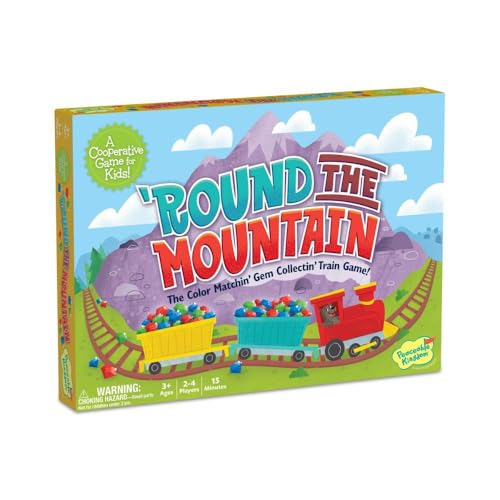
A cooperative train race where everyone wins or loses together, that’s the core idea behind Peaceable Kingdom Round the Mountain. Players roll a wooden die by moving the train around the track, listening to it click, then peek under the train to reveal the color rolled. The goal is to collect gems while avoiding falling rock tokens, and because there’s no reading required, a three-year-old can jump in right away. The 15-minute playtime is designed for young attention spans, and the color-matching and turn-taking build early skills. This game is built for family play with preschoolers.
In a cooperative game, everyone wins or loses together, so a sensitive child never has to face being the sole loser. That shared outcome can soften the blow for a player who struggles with competition, unlike Candy Land where each person plays alone. The wooden train and gems provide hands-on fun, and the game supports up to four players, meaning larger groups will need to take turns.
FoxMind Don't Rock The Croc

What We Like
- Natural wooden pieces with safe colors
- Quick setup in just a few minutes
- Builds fine motor and logical skills
- Exciting balancing challenge for toddlers
Trade-offs
- No cooperative play option for shy kids
- Single-player mode not available for solo play
The 0.8-pound wooden croc with a balancing belly offers a simple, hands-on challenge for a 3-year-old. Players place colorful cylinders on the croc without making it tumble, which naturally builds fine motor control, observation, and logical thinking. The wooden construction feels sturdy and safe, and setup takes only minutes: put the croc on the table, grab the cylinders, and roll the die. That makes it a great pick for families who want a quick, tactile game that teaches patience and dexterity through play.
The core mechanic is the same every round: balance pieces until someone rocks the croc, which might feel repetitive for kids who crave variety or storytelling. Compared to Candy Land’s path-based adventure, this one leans more on physical skill than narrative. It’s best for a child who enjoys building and testing limits, not for one who prefers cooperative or imaginative play.
Educational Insights Ruby's Gem Quest

What We Like
- Builds hand strength and scissor coordination
- Color matching and turn-taking practice
- Includes 20 gems in five colors
- Game board doubles as storage
Trade-offs
- Only 2-4 players limits larger groups
- Small gem pieces require adult supervision
A scissor scooper tool that forces little hands to squeeze and release builds the exact fine motor skills three-year-olds need before they ever touch real scissors. That concrete design choice, turning a preschool readiness skill into a race for colorful gems, makes Ruby’s Gem Quest stand out among toddler board games. It suits families who want playtime to quietly strengthen hand coordination while kids think they are just filling treasure chests. The game includes everything needed for two to four players: twenty gems, a spinner, four chests, and a board that folds into its own storage box, so setup and cleanup stay simple.
The game includes a scissor scooper tool that requires squeezing and releasing to collect gems, so it builds hand strength and coordination needed for using scissors. For caregivers who want a board game that actively develops fine motor skills rather than just teaching color matching, this offers a more hands-on challenge than some alternatives. It supports up to four players, which fits typical small-group play for toddlers.
Product photos
Spin Master Barrel of Monkeys

What We Like
- Builds fine motor skills and dexterity
- Easy clean-up with snap-together barrel
- Fun for solo or group play
- Classic linking and balancing gameplay
Trade-offs
- Only 15 monkeys limits chain length
- No scoring or strategy for older kids
Fifteen monkeys in a barrel sounds simple, but linking their curved arms into a dangling chain is exactly the kind of hands-on challenge a three-year-old needs. It builds fine motor control and hand-eye coordination without feeling like a lesson, just the satisfying click of plastic monkeys hooking together. The barrel doubles as storage, so cleanup is as easy as pouring them back in and snapping the lid shut. That makes it a low-fuss option for anyone seeking a quick activity that still delivers real developmental value.
The game is very short. With only 15 monkeys, a round can wrap up in minutes, which is fine for a toddler’s attention span but might leave older siblings wanting more. Best for families who value tactile play and quick sessions over narrative or turn-taking structure.
Product photos
How We Evaluated Board Games For 3 Year Olds
Our research began with manufacturer specifications and age recommendations, cross-referenced with expert round-ups from child development and early education sources. We also looked at common patterns in parent feedback to understand which games actually hold a toddler’s attention beyond the first play.
The four criteria that mattered most were: age-appropriate complexity (no reading required, simple rules), skill development (counting, fine motor, color matching), safety (no small parts for children under three), and replay value. A game that a three-year-old can learn in one round and still enjoy after ten plays is rare and valuable.
A research-led evaluation has limits, we can’t speak to how a specific child will react to a game’s theme or frustration level. Every toddler is different, so we focused on design features that reliably work for this age group based on what families report.
What To Look For In Board Games For 3 Year Olds
The best board games for this age group balance simple rules with genuine skill-building. Focus on games that require no reading, use large pieces, and finish in under 15 minutes.
No Reading Required
A three-year-old cannot read, so any game that relies on text is immediately frustrating. Look for games that use color-coded cards, picture-based instructions, or simple spinner mechanics. Hasbro Gaming Candy Land Kingdom of Sweet Adventures is the classic example, players move based on card colors, not words. The same principle applies to board games for preschoolers, where visual cues replace written rules.
Skill Development Focus
The best games for this age teach something without feeling like a lesson. Counting games like Hasbro Gaming Hi Ho Cherry-O build early math skills, while fine motor games like Educational Insights The Sneaky Snacky Squirrel Game strengthen hand muscles through the squeezer mechanic. Consider what skill your child needs most practice with, turn-taking, counting, or dexterity, and choose accordingly. Many educational toys for 3 year olds follow the same principle of learning through play.
Piece Size and Safety
Three-year-olds explore with their mouths, so small parts are a genuine choking hazard. Every game on our list uses pieces large enough to be safe, but some, like the gem pieces in Educational Insights Ruby’s Gem Quest, still require adult supervision. Check the manufacturer’s age rating and inspect pieces yourself before play. If you’re unsure where to start, our toy selection guide covers safety basics in more detail.
- Check that all pieces are larger than a toilet paper roll tube (the standard choking hazard test).
- Confirm the box lists ages 3+ or 4+, never buy a game rated 5+ for a three-year-old.
- Look for games with a clear “no reading required” label on the box.
- Choose games with round times under 15 minutes to match a toddler’s attention span.
A good rule of thumb: if you can teach the game in under half a minute, it’s probably right for a three-year-old.
Board Games For 3 Year Olds Compared
The table below compares all nine games across the criteria that matter most for a three-year-old: player count, skill focus, and whether reading is required.
| Product | Players | Age | Weight | Dimensions |
|---|---|---|---|---|
| Hasbro Gaming Candy Land Kingdom of Sweet Adventures | N/A | 3 & Up | 1.1 pounds | 15.8 x 10.6 x 1.2 inches |
| Hasbro Gaming Hi Ho Cherry-O | 2 to 4 | 3 and up | 0.4 pounds | 10.5 x 10.5 x 0.0 inches |
| Peaceable Kingdom Count Your Chickens | 2-4 | 3+ | 1.0 pounds | 231.0 x 41.0 x 320.0 inches |
| Educational Insights The Sneaky Snacky Squirrel Game | 2-4 | 3 and up | 1.0 pounds | 14.2 x 11.0 x 2.1 inches |
| HABA My Very First Games Here Fishy Fishy | 1-4 | 2+ | 1.4 pounds | 8.9 x 8.9 x 2.9 inches |
| Peaceable Kingdom Round the Mountain | 2-4 | 3+ | 1.5 pounds | 12.5 x 9.0 x 0.1 inches |
| FoxMind Don't Rock The Croc | Multiplayer | 3+ | 0.8 lb | 10.2 x 8.2 x 1.2 in |
| Educational Insights Ruby's Gem Quest | 2-4 | 3+ | 0.9 pounds | 8.1 x 8.7 x 2.5 inches |
| Spin Master Barrel of Monkeys | 1-4 | 3+ | N/A | 4.2 x 3.2 x 6.2 inches |
Frequently Asked Questions
What is the best board game for a 3 year old who can’t read?
Hasbro Gaming Candy Land Kingdom of Sweet Adventures is the best choice because it uses color-coded cards instead of words. Players move their gingerbread pawn toward the castle by matching card colors, so no reading is needed at all.
Are board games good for 3 year old development?
Yes, the right board games teach turn-taking, counting, color recognition, and fine motor skills. Games like Hasbro Gaming Hi Ho Cherry-O build early math skills, while Peaceable Kingdom Count Your Chickens teaches social skills through cooperative play.
How long should a board game for a 3 year old last?
Games should finish in under a quarter of an hour to match a three-year-old’s attention span. Some picks, including Hasbro Gaming Candy Land Kingdom of Sweet Adventures and Peaceable Kingdom Round the Mountain, take about that long per round.
What is the difference between cooperative and competitive games for toddlers?
Cooperative games like Peaceable Kingdom Count Your Chickens have all players working together toward a shared goal, which reduces frustration and teaches teamwork. Competitive games like Hasbro Gaming Hi Ho Cherry-O have one winner, which can be harder for some three-year-olds to handle emotionally.
Can a 3 year old play board games with siblings?
Yes, most of our picks support 2-4 players, making them perfect for siblings. HABA My Very First Games Here Fishy Fishy even works as a solo game for independent play. Spin Master Barrel of Monkeys works for groups of any size.
The Bottom Line
Hasbro Gaming Candy Land Kingdom of Sweet Adventures is the best overall board game for a three-year-old because it requires no reading, uses simple color matching, and has been a trusted first game for generations. It’s the safest bet for any family introducing board games for the first time.
If your child needs counting practice, Hasbro Gaming Hi Ho Cherry-O sneaks in early math through a fun fruit-picking mechanic. For families who want cooperative play that teaches teamwork instead of competition, Peaceable Kingdom Count Your Chickens is the clear winner. And if fine motor skills are the priority, Educational Insights The Sneaky Snacky Squirrel Game builds hand strength through its squeezer mechanic.
The single most important factor is choosing a game your child can play without frustration. If they can learn the rules in one round and feel successful, they’ll want to play again, and that’s where the real developmental benefits come from.
