
10 Best Board Games For Middle Schoolers in 2026
This post contains affiliate links. As an Amazon Associate, we earn from qualifying purchases.
The best board game for middle schoolers overall is CATAN Board Game 6th Edition, a modular strategy game that teaches resource management and trading while offering high replayability. For active groups, the Super Skills Party Board Game delivers 120 physical challenges, while Big Potato Herd Mentality is our budget-friendly pick for large gatherings.
Middle school is a sweet spot for board games. Kids this age have the attention span for deeper strategy but still crave the social buzz of group play. The trick is finding games that challenge without frustrating and keep everyone engaged, not just the most competitive player.
We built this guide by studying manufacturer specs, expert round-ups, and patterns in owner feedback across dozens of games. Our goal was to find 10 options that balance learning, fun, and replayability for this specific age group.
Top 10 Board Games For Middle Schoolers in the Market
Certain content that appears on this site comes from Amazon. This content is provided "as is" and is subject to change or removal at any time.
The Best Board Games For Middle Schoolers, Reviewed
CATAN Board Game 6th Edition

What We Like
- Modular board for high replayability
- Teaches resource management and trading
- Supports 3-4 players, ages 10+
- Classic family strategy game
Trade-offs
- No 2-player mode without expansion
- Requires reading and strategy, not for casual play
A modular hexagonal board means no two games play the same, which is the single biggest reason this classic holds up for middle schoolers who crave variety. Designed for ages 10 and up with 3-4 players and a 60-90 minute session, it teaches resource management, negotiation, and long-term planning without feeling like homework. The race to 10 victory points keeps everyone engaged, and the trading mechanic forces real interaction, no quiet solo strategies here. This is the pick for families who want a game that grows with their kids, offering depth that rewards repeat plays without overwhelming new players.
The trade-off is that the base game only supports 3-4 players. If you have exactly two players or a larger group, you’ll need the 5-6 Player Extension sold separately. Compared to Ticket to Ride, which plays 2-5 out of the box and finishes in 30-60 minutes, Catan demands a bigger time commitment and a minimum of three people. That makes it less flexible for quick duels or big parties, but for a dedicated game night with three or four middle schoolers ready to trade sheep and outwit the robber, it’s the most rewarding option on this list.
Days of Wonder DOW7201N Board Games

What We Like
- Easy to learn, hard to master
- Beautiful giant map and miniature trains
- Multiple victory paths for replayability
- Fun for ages 8 and up
Trade-offs
- 2-5 players limits larger group sessions
- No solo play option for one person
Ticket to Ride’s 30-60 minute playtime hits a sweet spot for players who want a satisfying strategy game without losing focus halfway through. The simple rules make it easy to get started, but the multiple ways to win, collecting color sets, completing destination tickets, or building the longest route, keep every game feeling fresh. That giant map of early 20th century North America and the little plastic trains make the board itself a conversation starter, which helps pull in kids who might normally resist a thinking game.
The 30-minute playtime floor can leave older or more competitive players wanting more time to build their network, especially compared to a game like CATAN which runs 60-90 minutes. But for a family with shifting attention spans, that shorter commitment is actually a strength. The game supports up to five players, so larger groups will need to rotate or split into teams. Still, for a cross-country train adventure that’s easy to pull off the shelf on a weeknight, this is hard to beat.
Product photos
Asmodee Splendor Gem Trading Board Game

What We Like
- Quick 30-minute play sessions
- Three simple actions per turn
- Rewards timing and long-term planning
- Replayable with shifting development card race
Trade-offs
- Only 2-4 players limits larger groups
With just three possible actions per turn and a 30-minute playtime, Splendor keeps the pace brisk enough that middle schoolers won’t lose focus while still offering real strategic depth. The engine-building mechanic, collect gem tokens, buy development cards, attract noble patrons, gives every player a clear path to 15 prestige points, but the shifting race for cards means no two games feel the same. It’s a natural fit for family game nights where you want something that rewards planning without dragging on.
Splendor supports only 2-4 players, so it won’t cover a large sleepover or big group gathering. The Renaissance gem-trading theme is clean and functional, but it’s more abstract than the train routes of Ticket to Ride or the island settlement of CATAN, which some middle schoolers might find less immediately engaging. For a quick, thoughtful game that teaches resource management and timing, though, Splendor delivers exactly what it promises.
Product photos
Super Skills Party Board Game

What We Like
- 120 skill challenges for active play
- Works for 2 to 10 players
- No screens or batteries needed
- Adjustable difficulty for younger kids
Trade-offs
- Requires table or floor space for physical challenges
- Some challenges need coordination and reflex
- Not a quiet or seated game
120 skill challenges that look easy until you’re blindfolded stacking cups or bouncing a ball with chopsticks, that’s the core of this party game. It’s built for competitive groups of 2 to 10 players, with one-minute rounds that keep everyone on their feet. The box includes everything: challenge cards, cups, balls, dice, chopsticks, rope, blindfold, sand timer, and a dry-erase scoreboard. No batteries, no setup, no screens. That makes it a good fit for tweens and teens who want something active and loud, whether it’s a birthday party, a youth group, or a family game night. The difficulty adjusts for younger kids, so it can grow with the group.
Keep in mind that this isn’t a quiet seated game. It’s physical, fast, and chaotic, which is exactly the point for a skill challenge party game, but it means you need enough space to move. The 45-minute playtime fits a party slot well, and the sand timer keeps each turn short enough that nobody sits out long. If your group prefers quiet engine-building or train routes, this won’t replace those. But if you want a game that gets tweens and teens laughing, competing, and actually moving, this one delivers exactly that.
Product photos
Asmodee DOW7202NA Board Games

What We Like
- 225 plastic trains for tactile play
- Detailed map with tunnels and ferries
- Develops network planning and spatial skills
- 30-60 minute playtime fits family nights
Trade-offs
- No solo mode for independent play
- Map focuses on Europe, not global
The 225 plastic trains and the map of Europe let players build a connected railway across the continent, with tunnels and ferries adding tactical decisions that exercise decision-making and visual perception. The 30-60 minute playtime is long enough to develop a satisfying route network but short enough to keep the game moving, making it a good fit for family game nights.
The game is designed for the European map, so if your group wants to build routes across the US, the original Ticket to Ride (2025 Refresh) is another option. With support for 2-5 players, it works well for small groups; larger parties may need to split into teams or choose a different game. For a family game night where you want to challenge players without overwhelming them, this refresh delivers a tactile experience that rewards careful planning.
Product photos
CGE Czech Games Edition CGE00128 Board Games
What We Like
- Harry Potter themed word association
- Two distinct special abilities per house
- Includes groundskeeper Filch mechanic
- Supports 4+ players
Trade-offs
- No age recommendation listed
- Game ends early if Filch is encountered
- Only supports 4+ players, not smaller groups
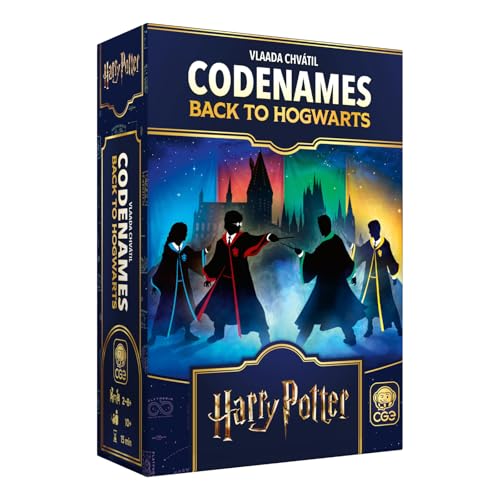
This is Codenames: Back to Hogwarts, a word-association party game that drops players into rival Hogwarts houses, each with a prefect who knows the secret card grid. The core twist is that a single word and a number become your clue. If your team hits the rival house, a dead end, or a locked door, your turn ends, but hitting Argus Filch ends the whole game and hands the win to the other house. That sudden-loss risk keeps every round tense, and the two distinct special abilities per house add meaningful strategy on top of the classic Codenames formula. It’s a team-based challenge that rewards clever wordplay rather than speed or dexterity, making it a natural choice for Harry Potter fans who enjoy cooperative guessing.
The biggest trade-off here is that the game can end abruptly if someone guesses Filch, which might frustrate players who prefer a guaranteed playtime. That unpredictability is part of the fun for some groups, but if your middle schoolers prefer a longer, more predictable session, you might want to look at a different option. For a Harry Potter fan who enjoys word association and doesn’t mind the occasional early finish, this is a fun party game.
Product photos
Plan B Games NMG60090EN Board Games

What We Like
- Hexagonal tiles boost creative placement
- Dual matching mode adds strategic depth
- Colorful drafting keeps play engaging
- More intricate than other Azul games
Trade-offs
- No solo mode for independent play
The hexagonal tile design opens up creative placement options, letting players experiment with patterns and colors. With a 45-60 minute playtime, it fits neatly into a family game night without dragging on. The dual matching mode, scoring by pattern or color while avoiding identical neighbors, keeps every move a fresh puzzle. This is the Azul for players who enjoy strategy and want something that rewards careful planning.
The hexagonal tiles open up endless creative possibilities, so you can design a garden that feels uniquely yours. Reviewers note that the dual matching mode, scoring by matching patterns or colors while avoiding identical adjacent tiles, adds a satisfying puzzle-like layer to each turn. The colorful drafting mechanism keeps the board visually inviting even when the strategy gets tough.
Product photos
USAOPOLY Hues and Cues
What We Like
- 480 unique color squares
- Quick-to-learn rules
- Works for 3-10 players
- Encourages creative word clues
Trade-offs
- No scoring or timer included
- Requires good color perception
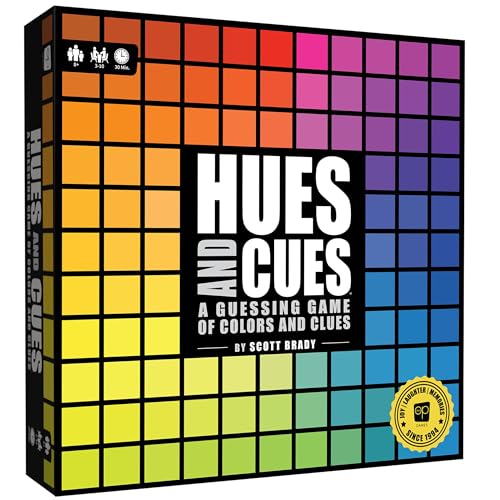
With 480 distinct color squares, Hues and Cues turns a simple guessing challenge into a surprisingly deep party game. You give one- or two-word clues to guide others to the exact hue you’re thinking of, which sparks creative thinking and keeps every round fresh. It’s quick to learn, supports up to 10 players, and works for ages 8 and up, making it an easy fit for middle schoolers and mixed-age groups. The fast-paced action means you can play several rounds without losing anyone’s attention, and the variety of colors ensures no two games feel the same.
Hues and Cues doesn’t include a scoring system or timer, so it relies on the group to keep things moving. Competitive players who love clear winners might find it less satisfying than a more structured game. But if your goal is a low-pressure, creative activity that gets everyone talking and laughing, this is a good fit. It’s especially good for family game nights or parties where you want something inclusive and easy to jump into.
Product photos
Big Potato Herd Mentality
What We Like
- Supports 4-20 players at once
- Easy to learn for all ages
- Endlessly repayable with extra questions
- Encourages group thinking and laughter
Trade-offs
- No solo or small-group mode for 2-3 players
- Relies on group consensus, not individual strategy
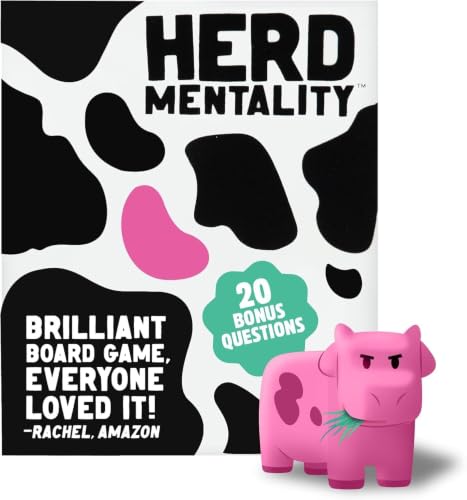
With support for 4 to 20 players, Herd Mentality turns any gathering into a shared guessing game where the whole group tries to think alike. Answer a question with the most popular response and you win cows; if you’re the odd one out, you get stuck with the pink cow of doom. The 20 extra questions mean you won’t burn through the deck on the first night, and the easy-to-learn rules get everyone playing quickly.
Herd Mentality shines only with a crowd. If you have fewer than four players, it simply won’t work, so it’s not a replacement for a tighter game like Codenames: Back to Hogwarts when only a handful of kids are around. But for sleepovers, birthday parties, or any time the whole class shows up, this is the easiest way to get everyone playing within minutes. No complex rules, no long setup, just a question, a guess, and a lot of groans when someone lands the pink cow.
Product photos
Hasbro Gaming Priorities Card Game

What We Like
- Cooperative, not competitive
- 2-minute learn time
- Works for 2+ players
- Ages 14+
Trade-offs
- Ages 14+ excludes younger middle schoolers
A 2-minute learn time means you can go from unboxing to laughing in the time it takes to find a seat. Priorities is a cooperative party game where everyone ranks everyday items from love to loathe, and the group tries to guess your order. It works for 2 or more players, so it fits a quiet afternoon with a friend or a bigger group at a sleepover. The focus on absurd choices and honest debate makes it a natural icebreaker for teens who might be shy at first.
The 14+ age rating means this game is designed for older teens and adults, not for younger kids or families with mixed ages. Reviewers note it sparks hilarious debates about absurd choices, making it a quick 30-minute icebreaker for parties or game nights.
Product photos
How We Evaluated Board Games For Middle Schoolers
Our research method combined three sources: manufacturer documentation and published rules, expert round-ups from toy and game specialists, and patterns in owner feedback across a wide range of games. We focused on games that work for ages 10 and up, since that matches the typical middle school range.
Four criteria mattered most. First, replayability, a game that feels different every time is worth the shelf space. Second, social engagement, middle schoolers play together, so we favored games that keep everyone involved between turns. Third, learning curve, the rules need to click within a few minutes, not a few hours. Fourth, group size flexibility, games that work for 3-10 players fit more family and party scenarios than strict 4-player games.
A research-led evaluation has limits. We did not play-test these games ourselves, so we relied on what owners consistently report: which games gather dust and which ones get pulled out week after week. For more age-specific recommendations, check our guides on board games for tweens and games for 10-12 year olds.
What To Look For In Board Games For Middle Schoolers
The right board game for a middle schooler balances strategy with social fun, fits the group size you actually have, and rewards repeat plays without getting stale.
Age Rating and Complexity
Most games for this age group are rated 10+ or 14+. A 10+ rating usually means the game involves reading, basic math, and multi-step planning. A 14+ rating often adds more abstract strategy or mature themes. If you are buying for a younger middle schooler, stick with 10+ games like Ticket to Ride or Splendor. For eighth graders, the 14+ Priorities card game works well. Our guide to games for 11 year olds can help narrow the options further.
Group Size and Play Time
A game that needs exactly 4 players will sit unused if your family has 3 or 5 members. Look at the player count before anything else. For large groups, Herd Mentality supports up to 20 players. For smaller families, CATAN and Splendor work with 3-4. Play time matters too, 30-minute games like Splendor fit a weeknight, while 60-minute games like Ticket to Ride need a longer evening.
Skill Development and Engagement
The best middle school games build skills without feeling like homework. Resource management (CATAN), spatial planning (Ticket to Ride), and engine building (Splendor) all teach real thinking. Party games like Super Skills and Hues and Cues build creativity and physical coordination. For parents who want more learning-focused options, our educational board games guide covers games that teach directly.
- Check the player count matches your typical group size
- Look for games with adjustable difficulty or variant rules
- Read the box age rating, not just the publisher’s suggestion
- Consider whether the game rewards repeat plays or gets predictable
- Make sure the theme appeals to the specific middle schooler
A good rule of thumb: if the game takes longer to explain than to play the first round, it is probably too complex for casual family nights.
Board Games For Middle Schoolers Compared
The table below compares our 10 picks across the criteria that matter most for middle schoolers: player count, play time, age rating, and the primary skill each game develops.
| Product | Players | Ages | Playtime | Weight |
|---|---|---|---|---|
| CATAN Board Game 6th Edition | 3-4 | 10+ | 60-90 min | 2.6 pounds |
| Days of Wonder DOW7201N Board Games | 2-5 | 8+ | 30-60 min | 2.8 pounds |
| Asmodee Splendor Gem Trading Board Game | 2-4 | 10+ | 30 min | 0.2 lbs |
| Super Skills Party Board Game | 2 to 10 | N/A | 45 minutes | 2.1 pounds |
| Asmodee DOW7202NA Board Games | 2-5 | 8+ | 30-60 min | N/A |
| CGE Czech Games Edition CGE00128 Board Games | 4+ | N/A | N/A | 2.2 pounds |
| Plan B Games NMG60090EN Board Games | 2-4 | 10+ | 45-60 Mins | N/A |
| USAOPOLY Hues and Cues | 3-10 | 8+ | Fast-paced | 2.7 pounds |
| Big Potato Herd Mentality | 4-20 | 10+ | Quick to play | 1.0 pounds |
| Hasbro Gaming Priorities Card Game | 2+ | 14+ | 30 mins | 1.1 pounds |
Frequently Asked Questions
What board games do middle schoolers actually enjoy?
Middle schoolers gravitate toward games with social interaction, clear goals, and a mix of luck and strategy. CATAN, Ticket to Ride, and Splendor are consistent favorites because they reward planning but keep everyone engaged between turns. Party games like Herd Mentality and Super Skills work well for larger groups.
How long should a board game for middle schoolers last?
Thirty to sixty minutes is the sweet spot for this age group. Games under 30 minutes feel too short for deeper strategy, while games over 90 minutes lose attention spans. Splendor wraps up in about 30 minutes, while Ticket to Ride and CATAN typically run 60 minutes.
Can middle schoolers play adult board games?
Many adult strategy games are perfectly fine for middle schoolers, especially those rated 10+ or 12+. CATAN and Ticket to Ride are marketed to ages 10 and up. The key is reading the box for complexity cues, games with simple turn structures and clear victory conditions work best.
What is a good 4-player board game for middle schoolers?
CATAN supports 3-4 players and is the most popular choice for this group size. Splendor also works well for 4 players and plays faster. For a more active option, Super Skills accommodates up to 10 players but works great with 4.
Are there board games that teach skills for middle schoolers?
Yes. CATAN teaches resource management and negotiation. Ticket to Ride develops spatial planning and network strategy. Splendor builds timing and long-term planning. For more direct learning, our math board games and science board games guides cover games designed around specific subjects.
The Bottom Line
CATAN Board Game 6th Edition is our best overall pick because it delivers a fresh challenge every time, teaches real strategic thinking, and keeps 3-4 players engaged for a full game night. It is the game most likely to become a family staple for years.
If CATAN does not fit your group size or energy level, the right alternative is here. Budget-minded buyers should grab Herd Mentality for large parties. Active groups will love Super Skills. Harry Potter fans have a dedicated word-association game in CGE Czech Games Edition CGE00128. And for two-player sessions, Ticket to Ride remains the gold standard.
The single most important factor when choosing a board game for a middle schooler is the group size you actually have. A brilliant 4-player game is useless if your family has five kids. Count heads first, then pick the game.
