
10 Best Science Board Games in 2026
This post contains affiliate links. As an Amazon Associate, we earn from qualifying purchases.
The best science board game we found is Genius Games Cytosis Board Game, which turns real cell biology into a worker-placement strategy game with a peer-reviewed educational booklet. For chemistry fans, the Genius Games Periodic Board Game offers a Mensa-recommended lesson in element groups, while Blue Orange Photosynthesis rewards players who think like an ecosystem. These games prove that accurate science and engaging gameplay can share the same box.
Most science board games fail because they prioritize facts over fun, leaving players bored after one round. The best ones hide the learning inside a solid game: you build a cell, race to complete circuits, or compete to grow the tallest trees. What matters is replay value, age-appropriateness, and how naturally the science emerges from the rules.
We built this guide by analyzing manufacturer specs, educational credentials, and patterns in owner feedback across ten top-rated science board games. Each pick earned its spot for teaching real concepts, from periodic trends to primate evolution, without feeling like homework.
Top 10 Science Board Games in the Market
Certain content that appears on this site comes from Amazon. This content is provided "as is" and is subject to change or removal at any time.
The Best Science Board Games, Reviewed
Genius Games Cytosis Board Game

What We Like
- Science-accurate cell biology gameplay
- Worker placement strategy inside a human cell
- Includes peer-reviewed educational booklet
- Teaches organelles, enzymes, and hormones
Trade-offs
- Focus on cell biology limits broader science scope
- Heavier than the Periodic and Compounded board games
Cytosis drops you inside a human cell where every flask you place on an organelle, mitochondria, Golgi, or ribosome, actually matters for building real proteins, enzymes, or hormones. That worker placement core means you’re not just memorizing flashcards, you’re thinking two turns ahead to grab the resource your hormone or hormone receptor needs before someone else does. For families and classrooms who want the science to be the point, not just the theme, that accuracy is the whole point. The fact booklet reviewed by over 20 PhDs ensures the game teaches real biology, not just labels. It is the best overall pick because it marries genuine learning with genuine strategy, so you never feel like you’re just playing a game with the wrong facts.
That depth is also the trade-off. If your group wants a lighter night, the detail can slow the pace. You need players who enjoy thinking about enzymes and organelles as much as the strategy. The board is 8.8 inches long and weighs 2.2 pounds, so it fits a standard table without dominating it. For a science class or a family that already loves biology, this is exactly the game that makes those players want.
Product photos
Genius Games Periodic Board Game

What We Like
- Teaches periodic trends and element groups
- Strategic action economy for adult gamers
- Accurate chemistry vocabulary and concepts
- Mensa Recommended for educational value
Trade-offs
- 2.4 pounds is heavy for a classroom shelf
- Ages 10+ excludes younger family members
The Periodic Board Game weighs 2.4 pounds and teaches real periodic trends, element groups, and compound formation through strategic set collection and action economy, so it pulls double duty as a family night activity and a classroom learning tool. The chemistry is accurate enough for middle school through college levels, and it complies with STEM and NGSS standards, which makes it a natural fit for teachers who want students to actually engage with the periodic table instead of just memorizing it. If you’re shopping for a science-minded teen, a homeschooling parent, or a chemistry teacher who appreciates thoughtful design, this is the one to grab.
At 2.4 pounds, it’s noticeably heavier than something like the Snap Circuits Snap 2 It board game, which means it won’t tuck as easily into a backpack for travel or a crowded classroom cabinet. It also requires players to be at least 10 years old, so younger siblings may need to sit out unless you adapt the rules. But if your goal is a game that rewards repeat plays while sneaking in real chemistry lessons, the Periodic Board Game delivers exactly that depth without sacrificing accuracy.
Product photos
Green Butterfly Games Primates Board Game
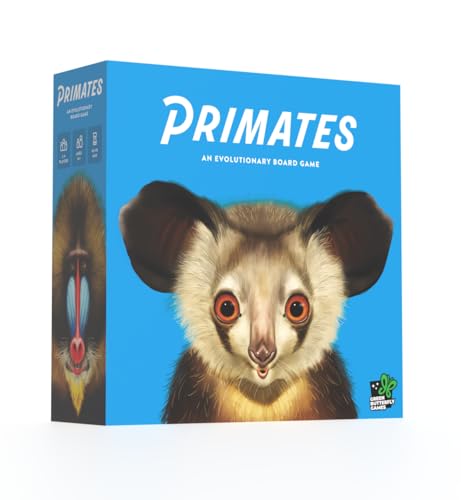
What We Like
- Board uses a real phylogenetic tree diagram
- Includes 70+ plant and insect illustrations from field research
Trade-offs
- Ages 14+ excludes younger science enthusiasts
- 45-90 minute playtime is too long for quick sessions
At 5.7 pounds it’s also noticeably heavier than lighter science games such as Periodic, so it’s less of a toss-in-the-bag option for game nights away from home. If they want a quicker science fix, you might want a shorter alternative on hand.
Product photos
Snap Circuits Snap 2 It Board Game

What We Like
- Teaches circuit-building through competitive play
- Quick setup and 10-25 minute rounds
Trade-offs
- Requires batteries for the included battery pack
- Limited to 4 players max for group play
- Circuit complexity depends on card draws, not player skill
A 10-25 minute play time means this is a race to light up your board before anyone else, using real Snap Circuits parts. That hands-on component is what sets it apart from trivia-style science games; you are physically snapping together a working circuit, not just answering questions. For families seeking a quick, competitive STEM activity that fits into board game night, this delivers exactly that.
The circuit path you build is determined by the cards you draw, so your opponent might get a simpler path than yours, which can feel random compared to something like Cytosis, where the strategy is more deliberate. If your group prefers deep planning over fast reflexes, this one leans lighter. But for a game that gets a working light bulb into a child’s hands in under half an hour, it is hard to beat the directness of the Snap Circuits approach.
Blue Orange Photosynthesis Board Game

What We Like
- Works well as a 2-player abstract game
- Ever-changing forest with rotating sun mechanic
- Life-cycle loop from seedling to rebirth
Trade-offs
- Action points system can slow early turns
- Setup takes longer than many family board games.
Its action points allowance system forces you to budget every move as the sun rotates around the board, making each decision about where to plant and harvest feel like a real ecological trade-off. This is the one to grab for families who want a strategy game that rewards planning ahead without needing a biology degree to follow along.
Compared to the lighter Planet board game from the same brand, Photosynthesis demands more patience and forward thinking, which suits older kids and adults better. If your group enjoys abstract spatial puzzles with a clear nature theme, this one delivers a satisfying mental workout that stays true to its subject.
Greater Than Games Compounded Board Game
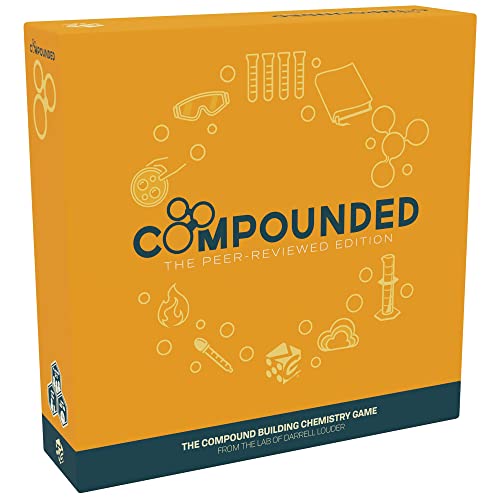
What We Like
- Updated mechanics for streamlined play
- Teaches real compounds and elements
- Larger pieces for easier handling
- Bigger element bag fits all hands
Trade-offs
- Ages 14+ limits younger family members
- No solo or two-player mode supported
A 45-minute playtime and 2-to-5 player count mean this fits neatly into a game night without dragging on. The all-new mechanics and bigger pieces show the designers listened to feedback from the original edition, making setup and turns smoother. This is the pick for anyone who wants a strategy game that actually teaches real chemistry, the periodic table scoring and compound-building are baked into the rules, not pasted on as an afterthought.
The 14+ age rating means this game demands comfort with abstract rules and element names, so it’s not for casual family game night with younger kids. Compared to Cytosis, which has a similar weight and dimensions, Compounded offers a chemistry theme focused on building compounds and scoring points. If your group wants a strategy game that rewards careful planning, this earns its spot.
Product photos
University Games 06135 Science Board Game
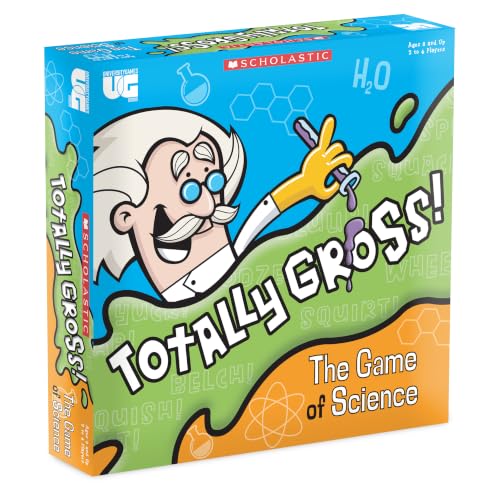
What We Like
- 150 fascinating gross topics
- Real slime included
- Lab experiments use household items
Trade-offs
- Lab experiments require separate household supplies
- Not challenging enough for older kids or adults.
Fifty Totally Gross cards pack 150 delightfully disgusting science facts into a single box, so kids get a broad tour of biology, chemistry, geology, astronomy, zoology, anatomy, and physics without ever feeling like they’re studying. The included real slime gives them something gooey to handle while they learn, and the 280 simple investigation activities keep hands busy between turns.
The lab experiments at the end of each game expect you to gather items from around the house, which means a parent needs to plan ahead if you want that hands-on finale to actually happen. For a young scientist who loves facts and goo, it’s a fun introduction.
Talicor Somebody Human Anatomy Game
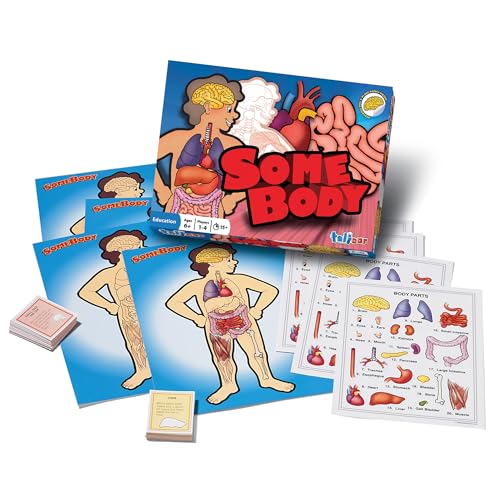
What We Like
- Five different games in one box
- Young children can use as puzzle
- Teaches anatomy to older kids
- Fun and educational balance
Trade-offs
- Only supports 2-4 players
- Single anatomy topic limits replay variety
Five distinct games packed into one box means this anatomy set can grow with your child from simple puzzle assembly to full-on organ-system learning. At 1.2 pounds, it’s light enough to carry along for a playdate. The variety of play modes keeps the body’s systems from feeling like homework for kids ages six and up who want to introduce human biology without drilling flashcards.
The biggest strength of this game is that it includes five different games in one box, so a single purchase can serve as a puzzle for younger children and a more advanced anatomy lesson for older kids. With a maximum of four players, larger groups will need to take turns or form teams. Compared to the Periodic board game, which covers the entire periodic table with a single strategy mechanic, this title focuses specifically on the human body and offers multiple ways to play. For buyers who want a dedicated anatomy game that adapts to different ages, this is a straightforward choice.
Product photos
Blue Orange Planet Board Game

What We Like
- Unique 3D magnetic planet cores
- Environmental drafting and tile placement
- High-quality components with table presence
Trade-offs
- No explicit science facts or educational booklet included
A 12-sided magnetic planet core that you build tile by tile makes Planet one of the most tactile science board games you can put on a table. Each of the 12 turns you draft landscape tiles, oceans, deserts, mountains, frozen lands, and snap them onto your globe to create habitats that attract animal cards. It is a drafting and tile-placement game at heart, so the science comes from thinking about ecosystems and biodiversity rather than memorizing facts. That hands-on approach works well for families with kids 8 and up who want a strategy game that looks like a centerpiece while they play.
Planet leans into strategy over raw science content. If you want a game that teaches cell biology or periodic table mechanics explicitly, something like Cytosis or Periodic will deliver more textbook-style learning. But those games also weigh more. Cytosis weighs 2.2 pounds and Periodic weighs 2.4 pounds, so Planet at 0.6 pounds is lighter and easier to carry. Just know it rewards spatial planning more than fact retention.
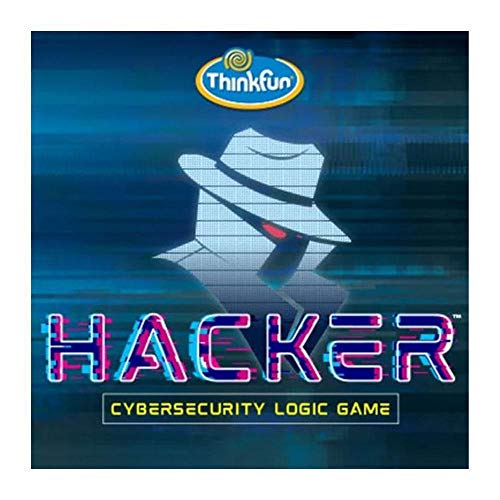
ThinkFun Hacker Cybersecurity Coding Game
What We Like
- Teaches programming principles through gameplay
- Includes 13 revolving platform tiles
- Clear instruction manual for immediate play
Trade-offs
- Single-player only, no multiplayer option
- Requires careful setup of tiles and tokens
A single-player puzzle grid and a stack of challenge booklets mean this is a pure logic workout, not a party game. The 13 revolving platform tiles and 9 movement tiles force you to think steps ahead, then rethink when a virus token or lock token blocks your path. For a child who loves cracking codes or a parent wanting stealth learning, the core programming principles baked into each challenge make it a quiet brain gym, not a family night centerpiece. ThinkFun’s reputation for clean instructions means you can hand it over and walk away without explaining rules for ten minutes first.
The solitary focus is the main thing to know. Compared to the Cytosis board game from Genius Games, which gets multiple players building proteins together, Hacker keeps you alone with your logic. The 2.0-pound weight and 11.7-inch length makes it portable, but if your household wants shared tabletop time, this one stays a solo sport. It develops reasoning and planning skills, just don’t expect the social buzz of a multiplayer science game.
How We Evaluated Science Board Games
Our evaluation started with the science itself. We looked for games that use accurate vocabulary, real diagrams, and concepts that match what kids learn in school. Games like Cytosis and Compounded use genuine chemical compounds and cell structures, not made-up science words. We also checked whether the game includes an educational booklet or reference guide, that extra material turns a fun night into a lasting lesson.
Gameplay quality mattered just as much as the science. A great [educational board games like Cytosis and Periodic teach real concepts because the mechanics force you to make strategic choices, not just luck into victory. We gave preference to games with a clear target age range and an honest difficulty curve and a playtime that fits a family evening. We also considered component quality and table presence, a magnetic 3D planet or real slime makes the science tangible.
Finally, we weighed trade-offs honestly. A game that excels at teaching cell biology may not work for a quick party, and a gross-out science game with real slime won’t challenge older teens. We left room for both, so you can match the game to your group, not the other way around.
What To Look For In Science Board Games
Choosing a science board game that teaches real science takes more than checking the box label. Here is what separates a real learning tool from a trivia deck.
Focus on games that teach through mechanics, not just facts on cards. Look for accurate vocabulary, a clear age range, and a playtime that fits your family’s attention span.
Science Accuracy and Educational Value
The best science board games use real terminology and concepts. Cytosis teaches organelles, enzymes, and hormones by name, a player who builds a Golgi apparatus learns what it does. Games backed by educators or peer reviewers, like Mensa Recommended Periodic, carry more weight. Avoid games that use fake science words or treat facts as a trivia add-on.
Age Appropriateness and Complexity
Ages 10+ means something on this list. Games like Primates and Compounded target teens and adults. Younger players need simpler rules and shorter playtimes. Snap Circuits Snap 2 It works for kids as young as 8 because it strips circuit-building to a race. Pushing a complex game on a younger child kills both the fun and the learning.
Replay Value and Group Size
A science game that only works once is a science worksheet. Look for variable setups, random elements, or strategy depth that changes each play. Photosynthesis uses a rotating sun mechanic and a life-cycle loop from seedling to rebirth. Check player counts, some games require 2 to 4 players, while some require exactly 4. The best strategy board games on this list reward repeat plays because the science stays the same but the path to winning changes.
- Check the box for a peer-reviewed booklet or educator endorsement.
- Match the age range exactly, a game for teens will frustrate a younger child.
- Count your players before you buy.
- Read about the setup time in the description.
- Look for variable setup or random elements that change each play.
A game that teaches real science will work for a school classroom and a family night.
Science Board Games Compared
The table below compares all ten picks across science accuracy, age range, playtime, and what each game teaches best.
| Product | Ages | Weight | Dimensions |
|---|---|---|---|
| Genius Games Cytosis Board Game | N/A | 2.2 pounds | 8.8 x 2.2 x 11.5 inches |
| Genius Games Periodic Board Game | 10+ | 2.4 pounds | 11.5 x 8.6 x 2.0 inches |
| Green Butterfly Games Primates Board Game | 14+ | 5.7 pounds | 11.6 x 11.6 x 0.1 inches |
| Snap Circuits Snap 2 It Board Game | N/A | 1.4 pounds | 12.0 x 2.8 x 12.0 inches |
| Blue Orange Photosynthesis Board Game | 8 & Up | 4.0 pounds | 3.5 x 11.8 x 11.8 inches |
| Greater Than Games Compounded Board Game | 14+ | 2.4 pounds | 8.7 x 8.7 x 2.1 inches |
| University Games 06135 Science Board Game | Ages 6+ | 1.2 pounds | 2.0 x 10.5 x 10.5 inches |
| Talicor Somebody Human Anatomy Game | 6+ | 1.2 pounds | 14.8 x 1.8 x 10.8 inches |
| Blue Orange Planet Board Game | 8 & Up | 0.6 pounds | 11.5 x 3.5 x 11.5 inches |
| ThinkFun Hacker Cybersecurity Coding Game | 10 and Up | 2.0 pounds | 11.7 x 2.4 x 10.2 inches |
Frequently Asked Questions
What is the best science board game for learning biology?
The Genius Games Cytosis Board Game is the best overall pick for biology learners. It uses a worker-placement mechanics inside a human cell and includes a peer-reviewed educational booklet. It teaches organelles, enzymes, and hormones through strategy, not just trivia.
What is a good chemistry board game for families?
The Genius Games Periodic Board Game teaches periodic trends and element groups with strategic action economy. It is Mensa Recommended for educational value and works best for science teachers and homeschoolers ages 10 and up.
What science board game teaches ecology and evolution?
The Green Butterfly Games Primates Board Game uses a real phylogenetic tree diagram on the board. It includes more than 70 plant and insect illustrations from field research and teaches primate evolution and ecology. It is best for ages 14 and up.
What is a good board game for teaching circuits and electronics?
The Snap Circuits Snap 2 It Board Game teaches circuit-building through competitive race play. It has quick setup and 10-25 minute rounds, and it works best for families with kids who love building and racing.
What is a fun gross-out science board game for kids?
The University Games 06135 Science Board Game covers 150 fascinating gross topics and includes real slime. Lab experiments use household items and work best for curious kids ages 6 and up.
The Bottom Line
The Genius Games Cytosis Board Game is the best overall pick for biology enthusiasts and classrooms. It teaches real cell science through a strategy game that rewards repeat plays, and the peer-reviewed booklet turns gameplay into a lasting lesson. If your group prefers chemistry or ecology, the Periodic Board Game and Primates Board Game offer equally accurate learning with their own trade-offs.
Budget-minded families or those with younger kids should look at the Snap Circuits Snap 2 It Board Game for circuit-building races or the Talicor Somebody Human Anatomy Game for flexible anatomy learning. Both offer solid science at a lower entry point without sacrificing accuracy.
The most important factor when choosing a science board game is age match. A game designed for teens will frustrate a younger child, and a game made for kids will bore a high school biology class. Match the game to your group first, then check the science accuracy second.
