
10 Best Math Board Games in 2026
This post contains affiliate links. As an Amazon Associate, we earn from qualifying purchases.
The Learning Resources Math Island Addition & Subtraction Game is our best overall pick because its volcano popper adds thrilling dice action that keeps kids ages 6-8 engaged while practicing math facts. For older kids ready for deeper strategy, Math for Love Prime Climb teaches multiplication and prime numbers, while SimplyFun Sumology scales across skill levels for families with children at different math stages.
Finding a math board game that actually gets played more than once is the real challenge. Kids smell homework from a mile away, so the best games disguise practice as play through clever mechanics, exciting components, and just enough luck to level the playing field between siblings of different ages.
We researched specifications, manufacturer materials, and expert recommendations across dozens of math-focused board games to build this guide. You get ten carefully selected picks covering every age from preschool through middle school, with clear trade-offs so you can match the right game to your child’s current math level and play style.
Top 10 Math Board Games in the Market

Certain content that appears on this site comes from Amazon. This content is provided "as is" and is subject to change or removal at any time.
The Best Math Board Games, Reviewed
Learning Resources Math Island Addition & Subtraction Game

What We Like
- Volcano popper adds thrilling dice action
- Two 10-sided dice for varied equations
- Includes operation die for mixed practice
- Colorful board and 4 character pieces
Trade-offs
- Limited to addition and subtraction only
- No multiplication or division for older kids
A volcano popper that launches dice when you land on special spaces turns math practice into a mini thrill ride. That clever mechanic keeps kids asking to play again, which is exactly what you want from a learning game. With two 10-sided number dice and an operation die, every roll creates a fresh equation, so children build quick mental math skills without the drudgery of flashcards. Designed for 2 to 4 players ages six and up, it fits right into family game night or a classroom math center. The colorful board and adventure pieces make the whole experience feel like a quest rather than a lesson.
The trade-off is that this game focuses purely on addition and subtraction, so once your child masters those, there’s no built-in progression to multiplication or division. The high-quality components, board, character pieces, dice, and that satisfying popper, hold up to repeated play, and the straightforward rules mean you can be playing in minutes. If you’re looking for a game that makes first- and second-grade math feel like an adventure, this is it.
Product photos
Math for Love Prime Climb
What We Like
- Teaches multiplication, division, and prime numbers
- Color-coded board reveals number patterns
- Designed by award-winning math educators
- Great for family game night and classrooms
Trade-offs
- Strategy focus means less luck-based fun
- Not designed for children under age 8
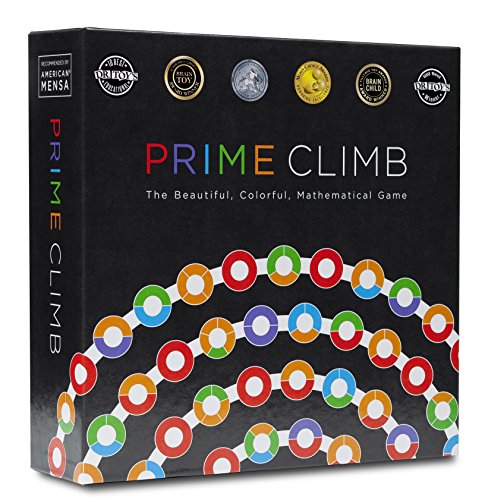
The color-coded board of Prime Climb makes prime factorization visible at a glance, so players absorb multiplication and division patterns naturally while moving their pieces. It’s designed for ages 10 and up, which means it hits the sweet spot for pre-teens and teens ready for deeper mathematical thinking. The blend of strategy and luck keeps the game fresh and unpredictable. This is the pick for families who want a math game that feels like a real board game, not a worksheet in disguise.
Younger kids, especially those under 10, will likely struggle without adult support, so it’s not a grab-and-play option for mixed-age groups the way Math Island is. Compared to Sum Swamp, which focuses on basic addition and subtraction for younger children, Prime Climb demands more strategic planning and number fluency, making it a better fit for older players who are ready to move beyond the basics. If your child is already comfortable with multiplication, this game will stretch their thinking without feeling like homework.
Product photos
SimplyFun Sumology Math Game

What We Like
- Covers addition through division
- Scalable for mixed skill levels
- Uses colorful wooden tiles
- Encourages strategic planning
Trade-offs
- No cooperative play option
- Requires basic reading of equations
The ability to use addition, subtraction, multiplication, and division all in one game means this board can grow with a child’s math skills rather than being outgrown after a single school year. The scalable rules let younger players stick to simpler operators while older ones tackle division, so siblings or classmates at different levels can still play together. That flexibility makes it a natural fit for families who want a single game that challenges each player appropriately without anyone feeling left out or bored.
Sumology is purely competitive; there’s no cooperative mode, so it won’t suit kids who prefer working together toward a common goal. Compared to other math games, Sumology rewards individual strategic thinking and tile placement. If your group thrives on friendly rivalry and creative equation-building, this is the better fit; if you need a non-competitive option, consider a game designed for cooperative play.
Product photos
Genius Games Outnumbered Improbable Heroes
What We Like
- Cooperative play builds math confidence
- Three adjustable difficulty modes
- Strategic dice-and-equation gameplay
- Makes multiplication and division fun
Trade-offs
- Focuses only on multiplication and division
- Requires at least basic multiplication knowledge
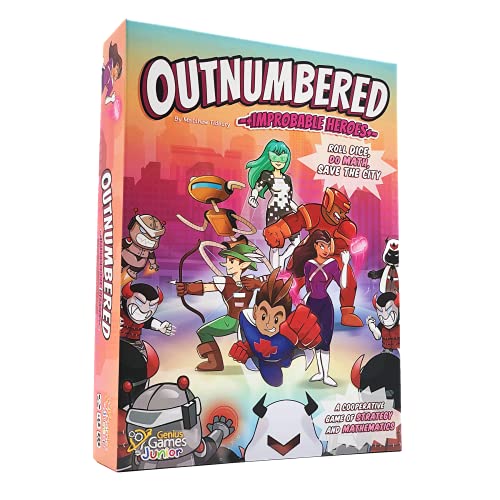
Three difficulty modes. Training, Sidekick, and Hero, mean this cooperative math game adapts to players from beginners just learning multiplication to advanced kids who want a real strategic challenge. Instead of drilling alone with flash cards, one to six players work together to help superheroes defeat villains by solving equations creatively. That teamwork focus takes the pressure off, so kids build mental math skills without the frustration that often kills the fun in classroom drills.
Outnumbered concentrates entirely on multiplication and division, so if you need a game covering addition and subtraction for younger children, you might start with Learning Resources Math Island instead. But for families or classrooms wanting a cooperative game that grows with learners and rewards creative problem-solving with dice and enemy attacks, this Mensa Award Winning design delivers real replay value. Just be ready to handle the small box, it’s compact enough to toss in a bag, but won’t stand out on a shelf.
Product photos
ThinkFun Math Path Monster

What We Like
- Cooperative gameplay builds teamwork
- Enhances arithmetic and STEM skills
- Engaging for kids and adults
- Trusted ThinkFun quality
Trade-offs
- Cooperative only, no competitive mode
- No solo play option for single players
The cooperative twist is what makes Math Path Monster stand out. Instead of racing against each other, everyone works together to outsmart the Math Monster, turning math practice into a shared mission. At 9.2 inches square and barely a tenth of an inch thick, the box is slim enough to tuck into a shelf, but the real draw is how it blends arithmetic drills with genuine teamwork. ThinkFun has a reputation for brain games that actually engage, and this one delivers that same thoughtful design. It’s a great pick for families who want to reinforce math skills without the pressure of head-to-head competition.
This is purely cooperative. If your group thrives on the tension of a winner-takes-all showdown, this game may not suit you. Math Path Monster keeps everyone on the same side, which is perfect for younger kids or mixed-age groups where one player might otherwise dominate. The gameplay itself is solid. For a family game night where the goal is collaboration over competition, this one earns its place.
Hasbro Gaming Hi Ho Cherry-O

What We Like
- Classic beginner game for ages 3+
- Practices counting, addition, and subtraction
- Simple turn-based gameplay for preschoolers
Trade-offs
- Limited math depth, only counting and basic operations
- No multiplication, division, or strategy elements
The spinner tells a 3-year-old to pick one, two, three, or four pieces of fruit, or put some back, so every turn sneaks in counting and simple addition or subtraction without feeling like a lesson. That concrete, hands-on mechanic is exactly what makes it work for the youngest players: they see the bucket fill, they count the cherries, and they learn by doing. At 0.4 pounds, it’s light enough to toss in a bag for playdates or preschool classrooms, and the 10.5-inch square board fits on any coffee table. This is the game you hand to a child who still calls numbers ‘lots’ and ‘a little’, it turns those vague ideas into real quantities they can touch and track.
The math never goes beyond counting to ten and basic adding and subtracting. Once a kid can rattle off sums in their head, the fruit-picking loses its challenge. Compared to other early math games like Learning Resources Sum Swamp, which also targets early addition and subtraction, Hi Ho Cherry-O feels more repetitive for a 5- or 6-year-old. That’s not a flaw for its intended age, it’s a deliberate simplicity. If your child is ready for more advanced math concepts, consider other options. But for a first board game that actually teaches counting through play, this one earns its spot on the shelf.
Clever Fox Play Number Hunter
What We Like
- Screen-free interactive math adventure
- Builds early STEM skills through play
- Durable, non-toxic child-safe materials
- Easy to learn with dice and challenges
Trade-offs
- Limited to addition and subtraction only
- No multiplication or division for older kids
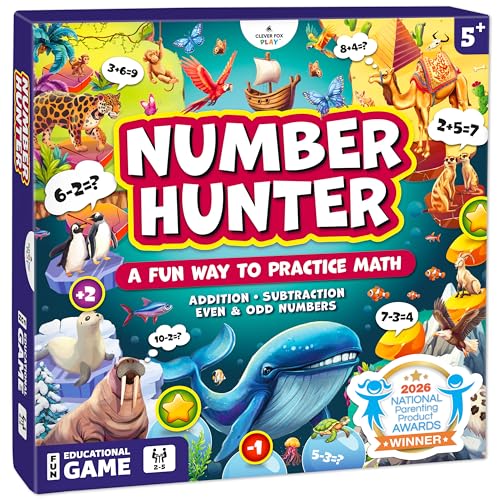
A 9.2-inch square board and simple roll-add-or-subtract mechanics mean a kindergartner or first grader can jump in without reading a manual. That’s the whole point: the game wraps addition, subtraction, and even/odd recognition into a world-travel theme, so kids practice math without realizing it’s work. It’s a perfect fit for early elementary ages, the challenges stay within their skill zone, and the star-tile action cards keep energy up. If you’re homeschooling or just want a family game that builds number confidence, this one delivers without the groan factor.
It sticks to basic arithmetic. Once a child masters the addition and subtraction covered in the game, there’s no multiplication or division to grow into, that’s where Math for Love Prime Climb picks up for older kids. But for a 5- to 7-year-old just getting comfortable with math facts, Number Hunter hits the sweet spot. The materials feel sturdy enough for repeated play, and the screen-free format means siblings actually talk to each other. It’s a focused tool, not a Swiss Army knife, and that focus is exactly what makes it work for its intended age.
SpriteGru Multiplication & Division Bingo Game

What We Like
- 360 multiplication and division problems
- 12 double-sided boards for up to 12 players
- Includes 6 creative bingo variations
- Soft velvet bag for tidy storage
Trade-offs
- Limited to multiplication and division only
- Not suitable for children beyond basic multiplication and division
With 360 math problems packed into 60 double-sided calling tokens, this bingo set gives kids a serious workout in multiplication and division without feeling like drill work. The 12 double-sided boards let you run a game for up to 12 players, which makes it a natural fit for classroom parties or family gatherings where you want everyone involved. The included velvet storage bag keeps all the chips and tokens from scattering across the floor, a small but thoughtful detail that saves cleanup time.
This game focuses exclusively on multiplication and division, so if your child is still building addition and subtraction skills, you’ll need a different game for that stage. The bingo format keeps it social and fast-paced, but the 6.3″ x 7.1″ boards can feel cramped when several kids are reaching for chips at once.
Product photos
Pidoko Kids Matheroni Pepperoni

What We Like
- Race to collect 5 colorful pepperonis
- Includes Burnt and Wild Pepperoni twists
- Timed turns add excitement
- Builds multiplication and division fluency
Trade-offs
- Only covers multiplication and division
- No expansion or variant rules included
With a spinner that can serve up a Burnt Pepperoni to pass around or a Wild Pepperoni to steal from opponents, every round of Matheroni Pepperoni keeps players on their toes. The timed 10-second countdown adds a pressure that turns math drills into a race, and the goal of collecting five different-colored pepperonis on your pizza slice gives a clear, tangible win condition. This is a smart pick for families with kids ages 8 and up who already have basic multiplication and division down and want a fast, competitive way to build fluency without it feeling like homework.
The game focuses exclusively on multiplication and division, so it won’t help younger kids still working on addition or subtraction. Compared to other math games on the market, Matheroni Pepperoni relies on a spinner and special action spaces that add unpredictability to each round. That makes it a better fit for a family game night where you want fast, competitive play rather than a deep strategy session. Just be aware that the 10-second timer might frustrate a child who needs a little more time to solve.
Product photos
Learning Resources Sum Swamp Addition & Subtraction Game
What We Like
- Transforms addition and subtraction into a fun dice game
- Designed for kindergarten and first-grade students
- Lightweight 1.3-pound board for easy portability
Trade-offs
- Only covers addition and subtraction, no multiplication or division
- Not challenging enough for older elementary students
The 10-inch square board is sized to fit on a standard table or desk, making it practical for classroom or home use. It turns basic addition and subtraction into a dice-rolling adventure, which is exactly why it works so well for kindergarten and first-grade kids who need to practice those fundamentals without feeling like they’re doing homework. The game keeps young players engaged by making math the path to winning, not a chore to finish first.
At 1.3 pounds, the board is light enough to carry between rooms or to a classroom. It sticks to addition and subtraction only, so older children ready for multiplication or division will need a different game. For a focused, low-pressure introduction to early math, this is a smart starting point.
Product photos
How We Evaluated Math Board Games
We reviewed manufacturer specifications and documentation for math board games, focusing on the math operations each title covers and the age ranges designers intended. We then cross-referenced those details with patterns in owner feedback to understand which games actually hold a child’s attention beyond the first play session.
Four criteria mattered most for this category. First, math depth and accuracy, a game must teach real math, not just counting disguised as gameplay. Second, replayability: a board game that collects dust after one weekend isn’t a good investment. Third, age-appropriateness: the game should challenge without frustrating. Fourth, production quality: flimsy pieces and unclear rules kill the fun fast.
A research-led evaluation has limits. We haven’t sat at every table for a dozen rounds of each game, but we have read what hundreds of families report about their real experiences. This guide reflects patterns we trust, not claims we invented.
What To Look For In Math Board Games
Choosing the right math board game means matching the operations your child is ready to practice with a play style they actually enjoy. Here is what matters most.
Match the math operations to your child’s current skill level, pick a game length that fits your family’s attention span, and choose a play style, competitive or cooperative, that keeps everyone at the table.
Math Operations Covered
The most important factor is whether the game practices the right math for your child. Addition and subtraction games like Learning Resources Sum Swamp work well for kindergarten and first grade. Multiplication and division games like SpriteGru Multiplication & Division Bingo suit older elementary students. Games like SimplyFun Sumology that cover all four operations let families with multiple children play together at different skill levels.
Age and Skill Level Alignment
A game that is too easy bores a child in ten minutes; one that is too hard frustrates them just as fast. Hasbro Gaming Hi Ho Cherry-O works for ages 3 and up because it only requires counting to ten. Math for Love Prime Climb targets ages 10 and up with multiplication and prime number strategy. Check the recommended age range and the specific operations required before buying.
Play Style: Competitive vs. Cooperative
Some children thrive on head-to-head competition, while others shut down when they fall behind. ThinkFun Math Path Monster and Genius Games Outnumbered Improbable Heroes offer cooperative play where everyone wins or loses together. That makes them a great choice for building math confidence without the pressure of losing. Competitive games like Pidoko Kids Matheroni Pepperoni add excitement through timed turns and race-to-finish mechanics.
- Read the rulebook preview if available to confirm the game’s complexity matches your child’s reading level.
- Check whether the game includes adjustable difficulty or variant rules to grow with your child.
- Look for games with durable components, cardboard tokens and thin paper boards wear out fast with regular play.
- Consider the player count: some games work best with exactly four players, while others accommodate up to twelve.
- Verify that the game requires actual math problem-solving, not just random dice rolling with math-themed art.
A good math board game should feel like a game first and a lesson second, if your child asks to play it again, the learning is already happening.
Math Board Games Compared
The table below compares all ten math board games across the factors that matter most: the operations covered, recommended ages, and whether the game is competitive, cooperative, or both.
| Product | Age Range | Skills | Weight |
|---|---|---|---|
| Learning Resources Math Island Addition & Subtraction Game | 6+ | Addition & Subtraction | 1.1 pounds |
| Math for Love Prime Climb | 10 and up | Multiplication, Division & Prime Numbers | 1.2 pounds |
| SimplyFun Sumology Math Game | 8-12 | Addition, subtraction, multiplication, division | 1.9 pounds |
| Genius Games Outnumbered Improbable Heroes | 8+ | Multiplication & Division | 1.3 pounds |
| ThinkFun Math Path Monster | N/A | Arithmetic, STEM | 1.2 pounds |
| Hasbro Gaming Hi Ho Cherry-O | 3 and up | Counting | 0.4 pounds |
| Clever Fox Play Number Hunter | 5-7 years | Addition, subtraction, even/odd | 1.4 pounds |
| SpriteGru Multiplication & Division Bingo Game | Kindergarten & preschool | Multiplication & Division | N/A |
| Pidoko Kids Matheroni Pepperoni | 8+ | Multiplication & Division | 1.4 pounds |
| Learning Resources Sum Swamp Addition & Subtraction Game | Kindergarten & 1st Grade | Addition & Subtraction | 1.3 pounds |
Frequently Asked Questions
What is the best math board game for a 6-year-old?
Learning Resources Math Island Addition & Subtraction Game works well for ages 6-8 with its engaging volcano popper and colorful board. It focuses on addition and subtraction facts, which matches what most first-graders are learning. For a simpler option, Learning Resources Sum Swamp introduces the same operations in a shorter, more straightforward format.
What math board game teaches multiplication and division?
Math for Love Prime Climb teaches multiplication, division, and prime numbers through a color-coded board that reveals number patterns. Pidoko Kids Matheroni Pepperoni offers a faster, pizza-themed alternative for multiplication and division practice. Both games target ages 8 and up.
Are there cooperative math board games?
Yes. ThinkFun Math Path Monster and Genius Games Outnumbered Improbable Heroes are fully cooperative, players work together to solve math problems and achieve a shared goal. These games build math confidence without the pressure of losing to another player, making them ideal for children who find competition stressful.
What is the best math board game for preschoolers?
Hasbro Gaming Hi Ho Cherry-O is the classic choice for ages 3 and up. It teaches counting, addition, and subtraction through a simple turn-based format that preschoolers can grasp quickly. The game has limited math depth, but it provides a gentle, screen-free introduction to numbers that prepares children for more advanced games later.
How do I choose a math board game for my child?
Match the game’s operations to what your child is currently learning in school. Look for a recommended age range that aligns with your child’s grade level. Consider whether your child prefers competitive or cooperative play. Check the player count to ensure the game fits your family size, and read owner feedback about replay value, the best games are the ones your child asks to play again.
The Bottom Line
Learning Resources Math Island Addition & Subtraction Game is our best overall pick for families with kids ages 6-8 who need engaging addition and subtraction practice. The volcano popper and two 10-sided dice turn drill work into genuine fun, and the colorful board with character pieces keeps young players coming back to the table.
If your child is older or ready for deeper math, Math for Love Prime Climb offers the best strategic experience for ages 10 and up. It teaches multiplication, division, and prime numbers through a beautifully designed board. For families with preschoolers, Hasbro Gaming Hi Ho Cherry-O remains the gold standard for introducing counting and basic operations without overwhelming a young child.
The single most important factor in choosing a math board game is matching the operations to your child’s current skill level. A game that practices what they are already learning in school will reinforce classroom lessons without feeling like extra homework. That is the difference between a game that gets played once and one that becomes a family favorite.
