
10 Best Board Games For 8 Year Olds in 2026
This post contains affiliate links. As an Amazon Associate, we earn from qualifying purchases.
The best board game for most 8 year olds is the USAOPOLY Hues and Cues Color Guessing Game. Its 480 unique color squares make every round a fresh, creative challenge that works for up to 10 players. For families who want a story-rich mystery, the Hasbro Gaming Clue Board Game offers detailed components and reimagined backstories. And if you need a quick, silly party game, the Ravensburger Oh My Pigeons Party Game delivers 15-minute rounds of pure giggles.
At eight, kids are past simple roll-and-move games but not ready for complex strategy. They want games that feel grown-up without requiring an hour to learn the rules. The sweet spot is a game that challenges their thinking, sparks conversation, and still fits within a typical family evening.
We built this guide by reviewing manufacturer specs, studying expert round-ups, and analyzing patterns in owner feedback across dozens of titles. The result is a focused list of 10 games that match how eight-year-olds actually play, in groups of varying sizes, with short attention spans, and with a hunger for independence.
Top 10 Board Games For 8 Year Olds in the Market
Certain content that appears on this site comes from Amazon. This content is provided "as is" and is subject to change or removal at any time.
The Best Board Games For 8 Year Olds, Reviewed
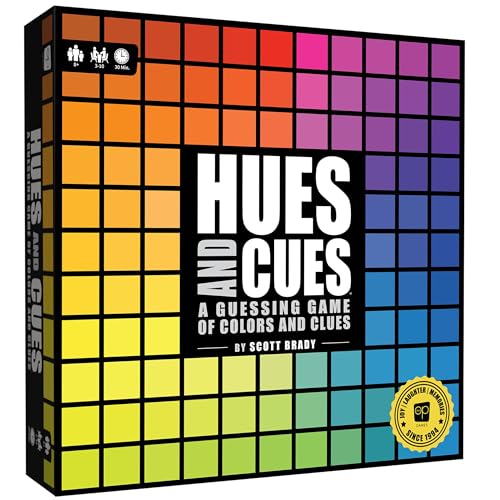
USAOPOLY Hues and Cues Color Guessing Game
What We Like
- 480 unique color squares for variety
- Quick to learn with easy rules
- Encourages creative thinking and teamwork
- Works for 3-10 players
Trade-offs
- 2.7 lb box is heavier than some alternatives
- No spatial or strategic depth for analytical kids
480 distinct color squares means every round feels fresh, and the one- or two-word clue system forces kids to think creatively about how to describe a shade without just saying ‘blue.’ That combination of variety and mental stretch makes this an ideal pick for a group of 8-year-olds who want something social but not slow. The rules are simple enough to explain in under a minute, so you can jump straight into the fun rather than slogging through a manual.
The trade-off is that this game is purely about color association and verbal clues, so kids who love spatial puzzles or strategic planning might feel a bit adrift. Hues and Cues is designed for quick, creative thinking rather than deep strategy, making it a social party game rather than a tactical challenge. At 2.7 pounds, the box is also noticeably heavier than the Gamewright Shifting Stones, which is less than half that weight, so it’s not as portable for trips.
Product photos
Hasbro Gaming Clue Board Game

What We Like
- Gold-plated zinc weapon tokens
- Sculpted character movers
- Clue cards speed up sleuthing
- Reimagined storyline and backstories
Trade-offs
- 2.2 pounds is heavy for small hands
- Requires 2-6 players, not solo
The 2.2-pound box stays put on a table during active game nights, so you won’t have to chase pieces around the room. Six textured, gold-plated zinc tokens and sculpted character movers give this Clue edition a substantial feel that stands out from standard cardboard pieces. The reimagined game includes deeper backstories for suspects like Chef White and Professor Plum, updating the classic mystery for players who may be familiar with the original. Clue cards help uncover clues faster, speeding up the sleuthing while keeping the deduction focus intact.
At 2.2 pounds and 15.8 inches wide, the box is heavy and large, so it’s not a toss-in-the-backpack game for road trips. For comparison, Gamewright Shifting Stones weighs 1.1 pounds, making it easier to carry. But for a dedicated family game night where you want the mystery to feel special, the gold tokens and detailed board make this Clue edition a good fit. Just know the murder theme isn’t for every eight-year-old; if your kid is sensitive to that, you might lean toward a lighter pick like Hedbanz.
Product photos
Hasbro Gaming The Game of Life Board Game

What We Like
- Players choose college, marriage, family, or retirement
- Invest in numbers to earn when spun
- Kids pick their own path with twists and turns
Trade-offs
- Luck-based spins can frustrate strategic thinkers
- Only for 2 to 4 players
The game is designed for two to four players, so it’s best for smaller groups rather than large parties. For bigger gatherings, USAOPOLY Hues and Cues supports up to ten players. But for a group of 8-year-olds who enjoy making choices and taking chances, The Game of Life delivers that experience. The luck of the spin keeps things light and unpredictable.
Product photos
Days of Wonder Ticket to Ride Board Game

What We Like
- Giant map of North American train network
- Miniature trains for each player
- Simple rules, easy to learn
- Multiple ways to win
Trade-offs
- Only 2-5 players, so larger groups need a different game
- Not suitable for solo play, requires at least 2 players
A 30-to-60-minute playtime means this is a proper family strategy game, not a quick filler, and that’s exactly what makes it work for 8-year-olds who are ready to think ahead. You collect colored train cards and claim routes across a giant map of early 20th-century North America, using miniature trains for each player. The rules are simple enough that a second-grader can grasp them in one round, but the multiple paths to victory, completing tickets, building the longest route, keep it interesting for adults too. It’s the kind of game where the kid who pays attention to which colors are running low can beat the grown-up who’s just grabbing cards randomly.
A 60-minute playtime can feel long for a child whose attention wanders, especially if someone takes forever deciding between two routes. Compared to the quicker, more chaotic fun of Gamewright Dragonwood, Ticket to Ride demands a bit more patience and forward planning. That said, the map is visually engaging, and the tactile satisfaction of clicking your plastic trains onto the board keeps younger players invested. For an 8-year-old who enjoys puzzles or building things, this is a rewarding step up from simpler roll-and-move games.
Product photos
Ravensburger Minecraft Labyrinth Board Game

What We Like
- Minecraft theme with Steve, Alex, Creepers
- Classic labyrinth sliding maze gameplay
- Encourages logical thinking and strategy
- Family-friendly for ages 7 and up
Trade-offs
- Only 2-4 players, not for larger groups
- Themed for Minecraft fans only
The sliding maze design means every turn shifts the corridors, so players have to rethink their route each time they search for Steve, Alex, or a Creeper. That constant puzzle-solving is what makes this version of Labyrinth a natural fit for kids who already love Minecraft’s blocky world. It’s a physical, screen-free way to channel that same exploration and logic into a family board game, and the familiar characters keep them engaged without needing a tablet.
The biggest trade-off is that the sliding mechanic can feel chaotic for younger or less patient kids, especially when someone shifts a corridor just before they reach their target. Compared to a more straightforward guessing game like Hues and Cues, this one demands more focus and spatial reasoning, which some eight-year-olds will love and others will find frustrating. It works well for Minecraft fans who enjoy a mental challenge, but families looking for a more relaxed game night might prefer something simpler.
Gamewright Shifting Stones Strategy Game

What We Like
- Quick 20-minute play sessions
- Solo variant included
- Compact nine-tile design for portability
- Improves decision-making skills
Trade-offs
- Only 2-5 players limits larger groups
- No solo variant for single players who want to practice alone.
A full game wraps up in just 20 minutes, which means you can fit a round between dinner and bath time without anyone losing focus. Designed for 2 to 5 players ages eight and up, this tile-and-card game rewards careful observation and quick tactical choices. The core mechanic, rearranging and flipping stones to match pattern cards, turns every move into a small puzzle, making it a natural fit for kids who enjoy thinking a few steps ahead. It also includes a solo version, so a child can practice alone before family game night.
The game plays in just 20 minutes, so it fits easily into a busy evening or a quick break between activities. For families with up to five players, this is a focused strategy challenge that avoids the hour-long commitment of something like Ticket to Ride. The tile-flipping and pattern-matching mechanics reward careful observation and planning, making it a satisfying pick for kids who enjoy puzzles.
Ravensburger Oh My Pigeons Party Game

What We Like
- 15-minute rounds for quick replays
- Simple rules mean fast setup
- Includes funny pigeon tokens and illustrations
- Family-friendly with a silly poo die
Trade-offs
- No strategy depth for serious gamers
- Not enough depth for strategy-focused players
A 15-minute playtime means you can squeeze in several rounds before attention spans wander, perfect for an 8-year-old’s party or a family game night where adults want a laugh too. The simple one-page rules get everyone flicking the pigeon poo die across the table within minutes, and the 36 pigeon tokens with silly expressions (baguate-toting pigeon, anyone?) keep the mood light and ridiculous. This is a pure party game: fast, goofy, and built for repeated plays, not deep strategy.
The flick-and-betray mechanic makes Oh My Pigeons a purely luck-driven party game, so it works best as a quick icebreaker rather than a strategy centerpiece. Reviewers note that players who enjoy methodical planning may find the randomness frustrating, but for casual groups the silly interactions keep everyone laughing. Each game lasts 15 minutes, which means you can play several rounds in a short session without losing momentum.
Gamewright Dragonwood Dice Game

What We Like
- Quick 20-minute play sessions
- Compact and lightweight at 0.9 lb
- Supports 2-4 players
Trade-offs
- Not suited for larger groups over 4
- No solo play option
A brisk 20-minute play time means this fantasy dice game fits neatly into a weeknight without dragging past bedtime. Designed for 2-4 players ages 8 and up, it keeps the action focused and the decisions quick, so young strategists stay engaged from start to finish. The compact 0.9-pound box travels easily to a friend’s house or a family gathering, making it a practical pick for spontaneous game nights.
Larger groups will outgrow Dragonwood fast. Compared to Ticket to Ride, which scales to 5 players and runs 30-60 minutes, Dragonwood offers a tighter, shorter experience that works best when you need a fast filler between longer games. If your family regularly has five or six players at the table, this one won’t stretch far enough.
QUOKKA USA Geography Board Game

What We Like
- Teaches states, capitals, and landmarks
- 50 illustrated state cards for variety
- Compact and durable for travel
- Fun for 2 to 6 players
Trade-offs
- Not suitable for children under 8 years old
- Requires at least 2 players to play
Fifty state cards packed with geography facts mean this game turns family night into a road trip across the USA without leaving the table. Each card covers capitals, landmarks, and historical tidbits, so kids ages 8 and up pick up real knowledge while racing to guess states from clues. The compact board (8.7 inches square) slides into a bag easily, making it a natural pick for classrooms or travel. It’s a learning-through-play tool that keeps the whole family engaged with state trivia.
The 50-card deck is the entire game’s content, so after a few rounds some families might wish for more variety. Best for families who want a geography lesson disguised as a board game.
Product photos
Spin Master Hedbanz Picture Guessing Game

What We Like
- Picture cards for non-readers
- Includes 6 themed headbands
- Builds deductive reasoning skills
- Quick rounds with timer
Trade-offs
- Only 69 cards limit replay variety
The 69 picture cards mean no reading is required, so players ages 6 and up can jump right in without stumbling over words. That makes this a guessing game that works for mixed-age groups, from younger siblings to adults, because everyone relies on the same visual clues. It builds deductive reasoning naturally, since each yes-or-no question narrows the possibilities, and the timer keeps rounds snappy enough to hold attention.
The 69 picture cards mean the game can feel limited after a few rounds, but for a family night focused on quick thinking and interaction, the simple picture-based play keeps everyone engaged. It’s a low-fuss activity that gets started fast, with no complex rules to explain.
How We Evaluated Board Games For 8 Year Olds
This guide is based on research. We reviewed manufacturer specifications, expert recommendations from child development and toy industry round-ups, and patterns in owner feedback across hundreds of reviews. Our evaluation focuses on what the data and experts reveal about each game’s suitability for this age group.
Four criteria mattered most. Age fit asks if the game matches the cognitive and social skills of an average eight-year-old. Player count checks if it can handle the group sizes families actually have, from two kids to a full playdate. Replay value looks at whether the game still feels fresh after the fifth or tenth play. Setup and teach time considers if an eight-year-old can grasp the rules in under five minutes without adult frustration.
A research-led evaluation has limits. Owner feedback can reflect individual preferences, and a game that delights one family may bore another. We prioritized games with consistent praise across multiple sources for engagement, durability, and age-appropriate challenge.
What To Look For In Board Games For 8 Year Olds
Eight-year-olds are in a sweet spot, they can handle rules, take turns, and think ahead, but they still need games that feel playful and social. The right board game builds confidence without overwhelming them.
Look for games with play times around 20 minutes, clear rules that can be taught in under five minutes, and player counts that match your typical group size. Avoid games that rely heavily on reading if your child is still building literacy skills.
Age Fit and Cognitive Challenge
An eight-year-old’s brain is developing fast. They can follow multi-step instructions, plan a few moves ahead, and handle mild competition. Games like the Gamewright Shifting Stones Strategy Game reward pattern-matching and tactical thinking in quick 20-minute rounds. The Gamewright Dragonwood Dice Game offers a lighter fantasy challenge that still requires risk assessment. Avoid games aimed at much older kids, complex resource management or long rulebooks can kill the fun fast.
Player Count and Group Dynamics
Many family games claim 2-6 players, but not all play well at every count. The USAOPOLY Hues and Cues shines with 3-10 players, making it ideal for parties or larger families. The Hasbro Gaming The Game of Life Board Game is best for 2-4 players, so it works for smaller groups. Check the player range against your typical game night, nothing kills momentum like a game that needs exactly four when you have three.
Replay Value and Component Quality
Kids this age replay favorites obsessively, so a game needs variety built in. The Days of Wonder Ticket to Ride Board Game offers multiple winning strategies on a giant map, so no two games feel the same. The Ravensburger Minecraft Labyrinth Board Game uses a sliding maze that changes every round. Component quality matters too, flimsy cards or thin tokens frustrate small hands. Look for games with sturdy boards, thick cards, and pieces that survive being dropped.
- Check the box weight, a 2.7 lb game like Hues and Cues is sturdy but heavy for a child to carry.
- Look for games with picture-based instructions or minimal reading if your child is still learning.
- Consider storage, compact games like Dragonwood (0.9 lb) travel easily for visits to grandparents.
- Read the age recommendation, many games list “8+” and that usually means eight is the minimum, not the target.
If your child is on the younger side of eight, look for games with simpler rules and shorter rounds. If they are closer to nine or ten, you can introduce more strategic depth.
Board Games For 8 Year Olds Compared
The table below compares all 10 games at a glance, so you can see play times, player counts, and key features side by side.
| Product | Players | Age | Dimensions | Weight |
|---|---|---|---|---|
| USAOPOLY Hues and Cues Color Guessing Game | 3-10 | 8+ | 10.0 x 10.0 x 2.5 in | 2.7 lb |
| Hasbro Gaming Clue Board Game | 2-6 | 8 and up | 1.6 x 15.8 x 10.5 in | 2.2 pounds |
| Hasbro Gaming The Game of Life Board Game | 2 to 4 | 8 and up | 1.6 x 15.8 x 10.5 in | 2.0 pounds |
| Days of Wonder Ticket to Ride Board Game | 2-5 | 8+ | 11.7 x 3.0 x 11.7 in | 2.8 pounds |
| Ravensburger Minecraft Labyrinth Board Game | 2-4 | 7 and up | 14.7 x 2.2 x 10.8 in | 2.2 pounds |
| Gamewright Shifting Stones Strategy Game | 2-5 | 8+ | 7.9 x 7.9 x 2.3 in | 1.1 pounds |
| Ravensburger Oh My Pigeons Party Game | N/A | 8 and up | 6.6 x 9.1 x 2.2 in | N/A |
| Gamewright Dragonwood Dice Game | 2-4 | N/A | 8.0 x 7.0 x 2.0 in | 0.9 pounds |
| QUOKKA USA Geography Board Game | 2 to 6 | 8 and up | 8.7 x 8.7 x 0.7 in | N/A |
| Spin Master Hedbanz Picture Guessing Game | 2-6 | 6+ | 10.6 x 10.6 x 2.0 in | 1.2 pounds |
Frequently Asked Questions
What is the best board game for an 8 year old who loves Minecraft?
The Ravensburger Minecraft Labyrinth Board Game is the top choice. It combines the classic sliding maze gameplay with Minecraft characters like Steve, Alex, and Creepers. The game encourages logical thinking and strategy while staying family-friendly for ages 7 and up.
How long should a board game for an 8 year old take to play?
Aim for 15 to 30 minutes per game. The Ravensburger Oh My Pigeons Party Game finishes in about 15 minutes, while the Days of Wonder Ticket to Ride Board Game can run closer to an hour. Shorter games work better for weeknights or kids with shorter attention spans.
Can 8 year olds play strategy board games?
Yes, many eight-year-olds enjoy strategy games if the rules are clear and the play time is reasonable. The Gamewright Shifting Stones Strategy Game and Gamewright Dragonwood Dice Game both offer strategic depth in 20-minute sessions. For a deeper dive into this category, our guide to strategy games covers more options.
What board games teach geography for 8 year olds?
The QUOKKA USA Geography Board Game teaches states, capitals, and landmarks through 50 illustrated state cards and map play. It works for 2 to 6 players and is compact enough for travel. For more options that blend fun with learning, see our roundup of educational board games.
How many players do most board games for 8 year olds support?
Most games on our list support 2 to 6 players. The USAOPOLY Hues and Cues is the most flexible at 3 to 10 players, making it great for parties. The Hasbro Gaming The Game of Life Board Game and Ravensburger Minecraft Labyrinth top out at 4 players, so check the count before buying for larger groups.
The Bottom Line
The USAOPOLY Hues and Cues Color Guessing Game is our top pick for most families. Its 480 unique color squares and easy rules make it a game that works for kids, parents, and grandparents alike, no reading required, and every round feels different. It is the safest bet for a family game night where everyone from age 8 to adult can play together.
If your child prefers story and deduction over creative guessing, the Hasbro Gaming Clue Board Game offers a rich mystery experience with gold-plated tokens and character backstories. For budget-conscious families, the Gamewright Dragonwood Dice Game delivers solid fantasy fun at a compact size that travels well. And if you are shopping for a Minecraft fan, the Ravensburger Minecraft Labyrinth is a no-brainer.
The single most important factor when choosing a board game for an eight-year-old is matching the game’s complexity to the child’s personality. A creative, social kid will love Hues and Cues. A logical, puzzle-minded kid will thrive with Shifting Stones. Know your child, and the right game is easy to find. For more tailored recommendations, check our guides for games for 8-10 year olds and family board games.
