
10 Best Board Games For 8-10 Year Olds in 2026
This post contains affiliate links. As an Amazon Associate, we earn from qualifying purchases.
The Hasbro Gaming Scrabble Board Game earns our Best Overall spot because it builds vocabulary and strategic thinking in a format that rewards careful planning without relying on luck. For logic lovers, Pressman The Original Mastermind offers a fast code-cracking duel, while Ravensburger Labyrinth delivers a shifting maze that changes every round.
Kids in this age range sit at a sweet spot, they have the patience for rules and the reading skills for text-heavy games, but attention spans still vary widely. Some want deep strategy, others just want to laugh with friends. The trick is matching the game to the child’s temperament, not just their age.
We built this guide by studying manufacturer specifications, expert round-ups, and patterns in owner feedback. Each pick earned its award for a specific strength, and we’ve noted the trade-offs so you can match the game to your kid’s play style.
Top 10 Board Games For 8-10 Year Olds in the Market
Certain content that appears on this site comes from Amazon. This content is provided "as is" and is subject to change or removal at any time.
The Best Board Games For 8-10 Year Olds, Reviewed
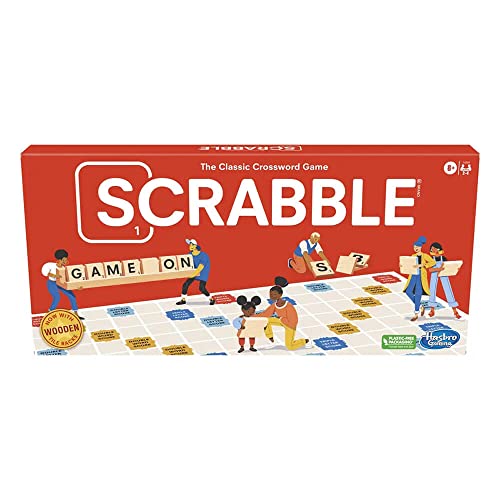
Hasbro Gaming Scrabble Board Game
What We Like
- Classic word-building gameplay
- 100 wooden letter tiles included
- Premium squares multiply scores
- Includes expert tips and alternate rules
Trade-offs
- Requires strong spelling and vocabulary
- No visual or tactile clues for younger players
- Game length can be long for short attention spans
A 15.8-inch game board with 100 wooden letter tiles and a classic crossword format means this is the real deal for building words and scoring points. The textured surface keeps tiles in place, so they stay put during play. Premium squares add a layer of strategy that rewards thoughtful placement. For a child around 8 to 10 who enjoys reading, spelling, and a bit of friendly competition, this is the kind of game that grows with them, simple enough to learn in one round, yet deep enough to keep parents engaged too.
The trade-off is that Scrabble demands a solid vocabulary, which can frustrate kids who struggle with spelling or prefer fast-paced action. Compared to Ravensburger Labyrinth, which uses a shifting maze and treasure hunting, Scrabble is more about language than spatial reasoning. That makes it best for word lovers and families who want a quiet, thoughtful game night, but less ideal for kids who need constant movement or visual excitement.
Product photos
Pressman The Original Mastermind

What We Like
- Teaches deductive reasoning and logic
- Fast, simple strategy game
- Promotes STEM and STEAM principles
Trade-offs
- Only 2 players, not for larger groups
- No variation in game mode or difficulty levels
More than 2,000 possible code combinations mean no two rounds of Mastermind play the same way, so it stays engaging even after dozens of games. That variety is what has kept this logic game a classic for decades: you have to think deductively, testing guesses until you crack the pattern. For a child around 8 to 10, it’s a mental workout wrapped in a fast, simple turn-based duel. Since it’s for two players, it works best for one-on-one time with a sibling or parent, and the STEM and STEAM principles it teaches are a bonus for parents who want play to double as learning.
Mastermind is strictly a two-player affair. If you have three or four kids wanting to join, you’ll need to rotate turns or pick something like Ravensburger Labyrinth, which handles up to four players. That said, for its intended purpose, a focused logic challenge between two people, Mastermind delivers exactly what it promises. It’s compact at 0.8 pounds and easy to store, and the simple setup means kids can jump right in without a long rules explanation. Just don’t expect it to fill a game night with a crowd.
Ravensburger Labyrinth Board Game

What We Like
- Shifting maze for endless replayability
- Builds critical thinking and planning skills
- Easy to learn, tactical family fun
- Includes 34 maze cards and 24 treasure cards
Trade-offs
- At 2.1 pounds, it's heavier than some family games
- Only supports 2 to 4 players
The shifting maze board rearranges every turn, so no two games play the same. That means you get genuine replay value instead of the same path memorized after round three. For a child aged 7-10 and older who’s starting to enjoy strategy over pure luck, this builds planning and cause-and-effect thinking without feeling like homework. The 20-30 minute rounds keep attention spans intact, and the treasure-hunt goal gives a clear win condition that even younger siblings can grasp quickly.
The 2.1 pound box is heavier than some other family games, so it’s less portable for tossing in a bag on the way to grandma’s. And with a 2-4 player cap, larger family gatherings or classroom groups will need a second game going. Still, for a focused family night where you want a mix of luck and real decision-making, this delivers a strategic experience that stays accessible.
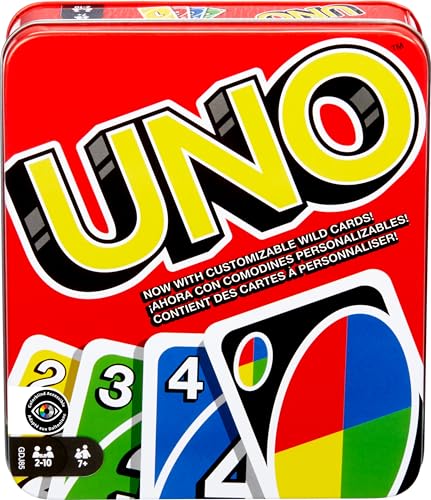
Mattel Games UNO Card Game
What We Like
- Colorblind accessible graphic symbols on cards
- Includes 3 blank Wild Cards for custom rules
- Supports 2-10 players for large groups
- Classic matching gameplay with Action Cards
Trade-offs
- Relies on luck more than strategy or planning
- Lightweight deck box can be easily misplaced
With support for 2 to 10 players, UNO fits nearly any gathering, from a quiet family of three to a chaotic birthday party crowd. The deck includes three blank Wild Cards so you can invent your own house rules. Every card uses special graphic symbols that make the colors readable for players with any form of color blindness. That thoughtful design is why it works so well as a family card game: no one gets left out, and the rules are simple enough that players ages 7 and up can jump in after a round or two. The classic match-by-color-or-number race keeps everyone engaged without needing to read or calculate, which makes it a reliable pick for mixed-age groups.
UNO leans heavily on luck. You can play perfectly and still lose because the next card drawn is a Wild Draw Four. For a child who prefers thinking ahead, a more strategic game like Ravensburger Labyrinth lets them plan moves and block opponents. But if the goal is a fast, loud, laugh-filled game that works for a wide age range and doesn’t punish slow readers, UNO delivers exactly that. The deck weighs 0.3 pounds, and the colorblind-friendly design means players with any form of color blindness can identify card colors using the graphic symbols.
Product photos
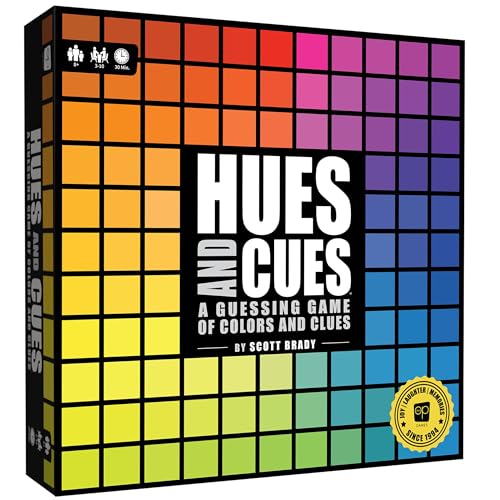
USAOPOLY Hues and Cues
What We Like
- 480 vibrant color squares
- Quick-to-learn rules
- Unique each playthrough
- Encourages creative thinking
Trade-offs
- 2.7 lb box is heavier than most
- Guessing relies on color perception differences
The 480 color squares mean you’ll never run out of fresh challenges, so every round feels like a new puzzle. The one- or two-word clue system keeps the rules simple enough for kids to jump right in, and the fast pace ensures nobody zones out. With support for up to 10 players, it’s equally at home during a quiet family night or a lively birthday party.
The real trade-off is the box size and weight: at 2.7 pounds and 10 inches square, it’s bulkier than a card game like UNO. That makes it less portable for travel or tight shelves. Compared to Scrabble, which focuses on spelling and vocabulary, Hues and Cues leans entirely on color association and descriptive language, great for kids who think in images, but less suited for those who prefer structured word-building or strategy.
Product photos
Hasbro Gaming Battleship Classic

What We Like
- Easy-to-learn two-player strategy
- Portable battle cases with storage
- Salvo feature for advanced play
- Classic naval combat theme
Trade-offs
- Only two players, no group play
- No solo or cooperative mode
- Requires opponent to be present
Designed exclusively for two players, Battleship Classic turns head-to-head naval combat into a clean, focused strategy duel. The portable battle cases with built-in storage mean you can stow all ships and pegs neatly inside, making this a travel-friendly choice for road trips or rainy afternoons. Kids ages 7 and up can learn the rules in minutes: call a shot, fire, and try to sink every ship before your opponent does. The Salvo feature adds a layer of complexity for those ready to launch multiple attacks per turn, keeping the game fresh as skills grow.
The classic naval combat game is strictly a two-player experience, so it won’t work for larger family game nights the way a four-player game like Ravensburger Labyrinth would. But for one-on-one strategic play, Battleship delivers a satisfying hunt-and-sink challenge that rewards memory and planning without overwhelming young strategists.
Product photos
Spin Master Hedbanz Picture Guessing

What We Like
- Picture cards for easy reading
- Builds deductive reasoning skills
- Includes 6 themed headbands
- Fast-paced timer adds excitement
Trade-offs
- Picture cards limit vocabulary growth
- Scoring badges small for little hands
With 69 picture cards and a simple yes/no question format, Hedbanz Picture Guessing gets kids thinking without needing to read a single word. That’s a huge win for ages 6 and up, especially when playing with mixed-age siblings. The timer keeps rounds snappy, and the six themed headbands, dino, narwhal, robot, and more, add personality that kids actually care about. It’s the kind of game that turns a quiet evening into a room full of giggles and guesses, all while quietly exercising deductive reasoning. For families who want a guessing game that’s inclusive for younger players too, this hits the mark.
Picture-based clues don’t stretch vocabulary the way a word-based guessing game might. But for pure, low-stakes fun that gets everyone talking and laughing, Hedbanz delivers. The included timer and scoring badges keep structure without overcomplicating things, and at 2-6 players it fits both small families and bigger gatherings. It’s a reliable choice for parties, rainy days, or any time you need a quick icebreaker that actually works.
Mattel Games Pictionary Board Game

What We Like
- Classic fast-paced drawing game since 1985
- No drawing skill required, adds humor
- Exclusive Catch-All Category with 400 bonus clues
- Easy to learn, great for multi-generational play
Trade-offs
- Requires at least 4 players for two teams
- Team play can lead to uneven participation
Since 1985, the simple draw-and-guess mechanic has turned the fear of a blank page into the punchline of the party. No artistic talent is needed, and bad drawings often get the biggest laughs, making it a natural fit for players aged 8 and up who’d rather giggle than compete. The exclusive Catch-All Category adds 400 bonus clues, which keeps the game fresh after many rounds. Easy-to-learn rules let teams start playing quickly, and the game bridges ages, adults, tweens, and kids all end up on the same team, passing the same pen.
Pictionary demands a minimum of four players to form two teams, so it won’t work for a quiet afternoon with just two kids. Compared to Scrabble, which scales down to two players, Pictionary is designed for larger groups. For family game night with a crowd, that’s exactly what you want. If you’re looking for a solo or duo activity, you’ll want something else in the cart. But for getting a roomful of players aged 8 and up, and their adults, drawing, guessing, and laughing together, this is the one.
Product photos
Hasbro Gaming Trouble Board Game

What We Like
- Pop-o-Matic bubble keeps die secure
- Easy to learn and quick setup
- Power Up Spaces add challenge
- Classic gameplay for family fun
Trade-offs
- Limited strategic depth for older kids
- Luck-based rather than skill-driven
The Pop-o-Matic bubble is the star here: it rolls the die with a satisfying pop and keeps that tiny cube from vanishing under the couch. That single feature makes Trouble a no-fuss choice for younger kids who might lose pieces or get frustrated with traditional dice. It suits families with a wide age range, especially those with 5- to 8-year-olds, because the rules are simple enough to learn in one round and the Power Up Spaces option lets you dial up the challenge a notch when the basic game gets stale. The box weighs 0.8 pounds and the board measures 10.5 inches on each side, so it fits easily into a bag for trips to a friend’s house or a relative’s home.
If your 8 to 10 year old is ready for real strategy, Trouble leans almost entirely on luck. Once you pop, you move, there’s no way to outthink an opponent or plan more than one turn ahead. Compared to Ravensburger Labyrinth, which is a strategic maze challenge for family nights, Trouble feels more like a quick filler than a thinking game. It’s great for a quick round with mixed-age groups, but if your 10-year-old wants something that rewards planning, you’ll want to look at the more strategic picks in this guide.
Product photos
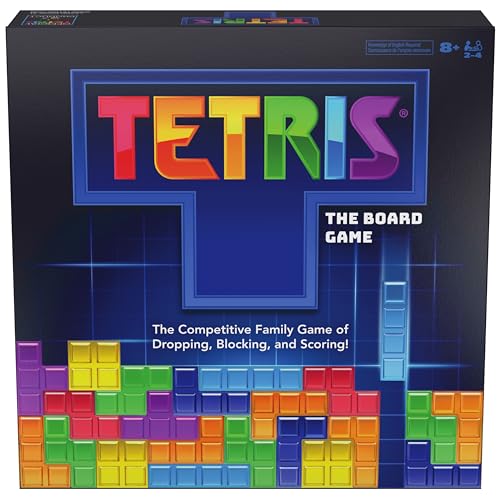
Spin Master Games Tetris Board Game
What We Like
- Semi-translucent Tetriminos for real game feel
- Garbage Drop adds blocking strategy
- Includes 128 Tetriminos for long play
- Competitive head-to-head Tetris action
Trade-offs
- 128 small pieces can be easy to lose
- Competitive garbage blocks can frustrate younger players
The 128 Tetriminos and four separate grids turn the classic digital puzzle into a real-life head-to-head battle. Each player drops pieces into their own grid, trying to complete lines while using the Garbage Drop mechanic to add blocking pieces to opponents’ grids. This direct interference keeps everyone engaged and thinking ahead, making it a great pick for kids who love strategy and a bit of friendly sabotage. It works best with two to four players ages eight and up, so it fits right into family game night or a playdate without leaving anyone out.
The box weighs 2.4 pounds and measures about 10 inches square, so it’s compact enough for a shelf but still a solid presence on the table. Compared to the Ravensburger Labyrinth, which also weighs around 2.1 pounds, the Tetris board game is slightly heavier and takes up a similar footprint. That heft keeps the grids from sliding around during play, which matters when you’re dropping pieces quickly. For families who already own a few board games, this one won’t dominate the closet.
How We Evaluated Board Games For 8-10 Year Olds
Our research started with the basics: player count, play time, and age range from each manufacturer’s documentation. We then cross-referenced those specs against expert round-ups and thousands of owner comments to spot patterns in what actually works at the table.
The four criteria that mattered most were replay value, rule complexity, group size flexibility, and whether the game rewards skill over luck. Does the game stay interesting after several plays? Can an 8-year-old teach it to a friend after one round? A game that only works for two players or that drags past a certain length lost points for this age group.
This is a research-led evaluation, not a testing lab. We cannot tell you how a game feels in hand or whether the box survives a drop. What we can do is surface the specs, the common complaints, and the features that experienced players and reviewers consistently praise.
What To Look For In Board Games For 8-10 Year Olds
The right game for this age group balances challenge with frustration tolerance. A game that is too simple bores a 10-year-old, while one that requires reading paragraphs of text loses an 8-year-old after one round.
Focus on play time (20 to 30 minutes is ideal), player count (4+ is best for family nights), and whether the game rewards thinking over luck. Avoid games with elimination mechanics that leave kids sitting out.
Player Count and Group Dynamics
Games that support 4 to 6 players work best for this age because they accommodate siblings, friends, and parents without leaving anyone out. Two-player games like Battleship or Mastermind are excellent for one-on-one time but limit group play. If you have a large family or frequent playdates, look for games that scale up.
Mattel Games UNO Card Game supports up to 10 players, making it a reliable choice for mixed-age gatherings. For more options that work across different group sizes, our guide to family board games covers picks that scale well.
Skill vs. Luck Balance
Eight-year-olds often lack the patience for pure strategy games, while 10-year-olds can feel patronized by games that rely entirely on dice rolls. The best games for this age mix both elements. Scrabble rewards vocabulary and tile placement but still has a luck factor in the letters you draw. Trouble is almost entirely luck-based, which makes it great for younger kids but frustrating for older ones. If your child leans toward strategic thinking, check our recommendations for strategy games for 8-year-olds for more options.
Learning Curve and Rule Complexity
A game that takes 20 minutes to explain will lose half the table before the first turn. The best games for 8-10 year olds have rules that can be taught in under five minutes and understood after one round. Hedbanz and UNO are nearly instantaneous to learn, while Mastermind requires a single demonstration. For kids who need a gentler introduction, our guide to games for 8-year-olds focuses on simpler mechanics.
- Read the rulebook online before buying, some games have hidden complexity.
- Check the minimum age on the box, but know that a 7-year-old can often handle a game rated for 8+ if they have a patient teacher.
- Look for games with visual or tactile clues for kids who struggle with reading.
- Consider whether the game has a “catch-up” mechanic to keep losing players engaged.
- Avoid games with player elimination, kids sitting out get bored and disruptive.
A shorter game played three times in a row is almost always better than a longer game played once.
Board Games For 8-10 Year Olds Compared
The table below compares our top picks across the criteria that matter most for this age group, player count, play time, and the primary skill each game builds.
| Product | Players | Ages | Weight | Dimensions |
|---|---|---|---|---|
| Hasbro Gaming Scrabble Board Game | 2-4 | 8+ | 1.0 pounds | L 1.4 inches, W 15.8 inches, H 7.5 inches |
| Pressman The Original Mastermind | 2 | 8+ | 0.8 pounds | L 12.0 inches, W 2.4 inches, H 6.5 inches |
| Ravensburger Labyrinth Board Game | 2-4 | 7-10 and older | 2.1 pounds | L 14.0 inches, W 10.0 inches, H 2.0 inches |
| Mattel Games UNO Card Game | 2-10 | 7+ | 0.3 lb | L 2.0 inches, W 5.9 inches, H 6.7 inches |
| USAOPOLY Hues and Cues | 3-10 | 8+ | 2.7 lb | L 10.0 inches, W 10.0 inches, H 2.5 inches |
| Hasbro Gaming Battleship Classic | 2 | 7+ | 1.0 pounds | L 2.3 inches, W 10.5 inches, H 9.5 inches |
| Spin Master Hedbanz Picture Guessing | 2-6 | 6+ | 1.2 pounds | L 10.6 inches, W 10.6 inches, H 2.0 inches |
| Mattel Games Pictionary Board Game | 2 teams of any size | 8 years and up | 1.0 pounds | L 2.0 inches, W 9.8 inches, H 10.5 inches |
| Hasbro Gaming Trouble Board Game | 2-4 | 5 and up | 0.8 pounds | L 1.6 inches, W 10.5 inches, H 10.5 inches |
| Spin Master Games Tetris Board Game | 2-4 | 8 & up | 2.4 pounds | L 10.1 inches, W 10.1 inches, H 2.5 inches |
Frequently Asked Questions
What is the best board game for an 8-year-old who struggles with reading?
Hedbanz Picture Guessing uses picture cards instead of text, so non-readers can play alongside older siblings. The game builds deductive reasoning through yes-or-no questions about the card on your head, making it fully accessible without reading skills. For more reading-free options, our guide to card games for this age includes several picture-based picks.
How long should a board game last for a 9-year-old?
Twenty to forty minutes is the sweet spot. Games shorter than that feel insubstantial, while anything over an hour tests attention spans and leads to unfinished games. Ravensburger Labyrinth finishes in about 20-30 minutes, and UNO games can wrap up quickly or stretch depending on the group. Our guide to games for 9-year-olds has more timing details.
What is a good two-player board game for siblings?
Pressman The Original Mastermind and Hasbro Gaming Battleship are both excellent two-player options that reward logical thinking over luck. Mastermind teaches deductive reasoning through code-breaking, while Battleship adds a spatial element with its grid-based naval combat. Both play in under 30 minutes and require no reading.
Are there board games that teach strategy without being too complicated?
Yes. Ravensburger Labyrinth teaches planning and spatial reasoning through a shifting maze mechanic that is simple to understand but offers real strategic depth. Spin Master Games Tetris Board Game turns the classic video game into a head-to-head strategy duel where players must plan their piece placement while blocking their opponent. For more options, see our list of strategy board games for this age.
What is the best board game for a 10-year-old who loves video games?
Spin Master Games Tetris Board Game translates the iconic video game into a competitive tabletop experience with semi-translucent Tetriminos and a Garbage Drop mechanic that lets you block your opponent. It captures the fast-paced feel of the original while adding a head-to-head element that video game fans appreciate. Our guide to games for 10-year-olds has more picks for this age.
The Bottom Line
Hasbro Gaming Scrabble Board Game is our Best Overall pick because it rewards vocabulary and planning in a format that feels timeless rather than dated. It works best for kids who already enjoy wordplay and can handle a longer game session, think about an hour. If your child struggles with spelling or gets restless, this is not the right choice.
For families with a mix of ages and attention spans, Mattel Games UNO Card Game is the safest bet. It supports up to 10 players, takes seconds to learn, and works for everyone from grandparents to kindergartners. If you have a pair of logical thinkers, Pressman The Original Mastermind delivers a tight, satisfying puzzle in a short time.
The single most important factor in choosing a board game for this age is knowing whether your child prefers thinking or laughing. Games that reward skill keep the thinkers engaged; games that prioritize speed and social interaction keep the laughers coming back. Pick the one that matches your kid’s natural play style, and the rest takes care of itself.
