
10 Best Developmental Toys For 18 Month Old in 2026
This post contains affiliate links. As an Amazon Associate, we earn from qualifying purchases.
The Battat Pop-Up Pals is our best overall pick for developmental toys for 18 month olds. It teaches cause-and-effect with four distinct button actions, requires no batteries, and includes a built-in carry handle for portability. For classic fine-motor practice, the Melissa & Doug First Bead Maze earns our Best Classic Learning Toy award, while the LeapFrog Learning Friends 100 Words Book takes the Best Language Development spot for building vocabulary.
An 18-month-old is in a sweet spot of rapid cognitive growth, where they crave independence but still need toys that respond predictably to their actions. The right toy at this stage builds fine motor control, introduces early problem-solving, and encourages language, all while holding their short attention span.
This guide draws on specifications, manufacturer documentation, expert round-ups, and patterns in owner feedback. We evaluated toys across several categories to help you choose confidently for your toddler’s next stage.
Top 10 Developmental Toys For 18 Month Olds in the Market
Certain content that appears on this site comes from Amazon. This content is provided "as is" and is subject to change or removal at any time.
The Best Developmental Toys For 18 Month Olds, Reviewed
Battat Pop-Up Pals

What We Like
- Four distinct button actions
- Built-in carry handle
- No batteries needed
- Supports cause-and-effect learning
Trade-offs
- No sound or lights for sensory variety
- Limited to one play pattern
Four distinct actions, turn, press, flip, and slide, let toddlers practice different movements while revealing a lion, elephant, bear, or dog. Each button triggers a visible pop-up, making cause-and-effect learning easy to see and repeat. The built-in carry handle makes it simple to move from room to room or take on short trips, and since no batteries are needed, there is no hunting for a screwdriver. It is a straightforward, hands-on toy that supports fine motor skills, hand-eye coordination, color recognition, and shape discovery through repeated play.
It is purely mechanical, so if your child is drawn to lights and sounds, they might lose interest faster than with a more sensory toy like the LeapFrog 6-in-1 Snap and Learn Busy Cube. But for parents who want a quiet, screen-free option that teaches cause and effect through real physical effort, this is the one. The four different actions keep little hands active, and the animal pals add a layer of discovery that rewards repeated play.
Product photos
Melissa & Doug First Bead Maze

What We Like
- Suction cup base stays steady
- 18 beads and 3 rings for exploration
- Strengthens fine motor and hand-eye coordination
- Montessori-inspired cause-and-effect learning
Trade-offs
- Only one activity type limits engagement variety
- No sound or lights for sensory variety
Four looping wires with 18 beads and 3 rings give a toddler plenty to push, pull, and spin, building fine motor control and hand-eye coordination through simple cause-and-effect play. The suction cup base locks it onto a high chair tray or table, so no sliding or tipping while little fingers work. That straightforward, focused design makes it a quiet, screen-free activity that actually teaches shapes, colors, and the motion of beads sliding along the wires.
The Melissa & Doug First Bead Maze focuses on one activity: sliding and spinning beads along four looping wires. Compared to the Battat Pop-Up Pals, which offers four different actions (turn, press, flip, slide) plus animal pals, the bead maze can feel limited once the novelty wears off. It also lacks any sound or lights, so if your child craves variety or audio feedback, you may need to rotate it with other toys. But for a calm, focused fine-motor workout that travels easily and cleans up in seconds, this classic delivers exactly what it promises.
Melissa & Doug Rollables Wooden Ocean Slide

What We Like
- Sturdy wooden slide tower with wavy ramp
- Built-in bead maze and turning sea star
- FSC-certified materials support responsible forestry
Trade-offs
- At 3.2 lb, heavier than most travel-friendly toys
- 5 pieces limit variety for longer solo play
A 17-inch wooden slide tower with a wavy ramp, bead maze, and turning sea star means this toy packs multiple sensory experiences into one compact footprint. That combination of kinetic play and tactile feedback makes it ideal for toddlers who are just starting to connect actions with reactions. The FSC-certified wood gives me confidence that it’s built to survive the floor wars of early childhood.
The trade-off is weight and piece count. At 3.2 pounds it’s heavier than some other infant toys, so you won’t want to lug it between rooms daily. And with only five pieces total, some toddlers might cycle through the novelty faster than they would with a set that includes more components. But if your priority is a single, sturdy station that delivers layered sensory feedback, rolling, chiming, spinning, and sliding, this slide tower earns its spot in the cart.
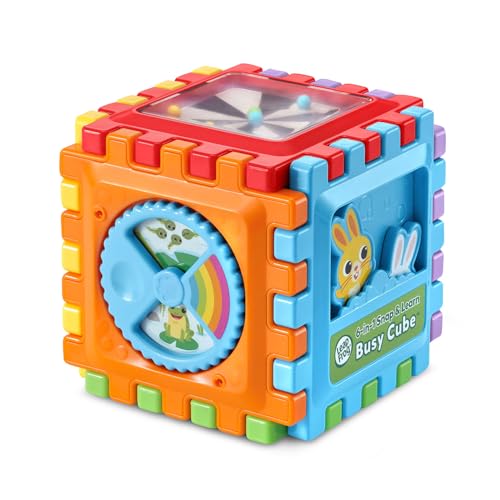
LeapFrog 6-in-1 Snap and Learn Busy Cube
What We Like
- 12 sides of interactive play
- Snap panels for cube, tower, or floor play
- Raised patterns for tactile stimulation
- Animals, gears, mirrors, beads, day/night
Trade-offs
- No sound or lights for auditory engagement
- Only one play mode at a time per configuration
Twelve sides of play in a 4.3-inch cube means every surface offers a fresh activity, slide, spin, touch, or turn, without needing batteries or a power switch. The snap-together panels let you build a cube, a tower, or lay them flat for floor play, which adapts to how a toddler actually wants to explore. Raised patterns add tactile variety, and the mix of animals, gears, mirrors, beads, and a day/night scene keeps curious fingers busy. This is a compact toy that fits easily in a diaper bag or on a shelf, making it a developmental play option without the clutter.
WOODMAM 9-in-1 Montessori Play Kit

What We Like
- 9 games in one box
- Durable natural wood construction
- Non-toxic water paint finish
- Develops multiple skills at once
Trade-offs
- At 5.7 pounds, it's heavy for small hands
- Too heavy for a toddler to carry
Nine distinct activities in a single box means this kit replaces a shelf full of individual toys. The coin box, carrot harvest game, pounding bench, xylophone, shape sorter, and stacking blocks each target a different developmental milestone for toddlers between 13 and 18 months. That breadth makes it especially useful for parents who want one versatile set that grows with their child rather than buying a new toy every few weeks. The natural wood build and smooth, splinter-free edges also give me confidence it will survive the inevitable drops and throws.
At 5.7 pounds, this kit is heavy for a toddler toy and takes up significant floor space, so it’s best for families with a dedicated play area rather than those needing a portable option. A pop-up toy at just 1.4 pounds is much easier to carry and store, but the WOODMAM set offers nine different activities in one box. If you have room and want variety without buying multiple toys, this works well; if space is tight, a lighter single-activity toy might suit you better.
Product photos
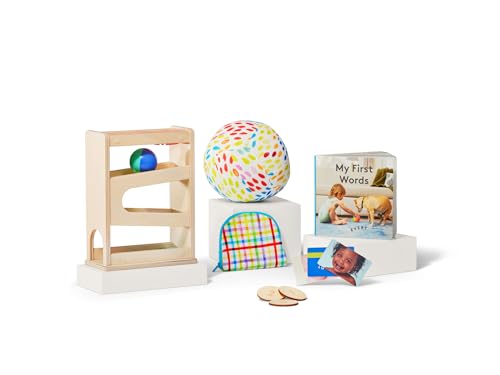
Lovevery Walk & Talk Mini Kit
What We Like
- 3 toys plus a language book
- Encourages both gross and fine motor skills
- Builds confidence through movement
- Expert-designed for purposeful play
Trade-offs
- Only 4 pieces limit variety for extended play
- Designed for 12+ months, not suitable for younger babies
This kit pairs big body play with fine motor challenges, so your toddler isn’t just sitting still. The three playthings plus a book target coordination, balance, and first words all at once. For a toddler starting at 12 months who’s learning to walk and talk, that combination works on multiple skills without feeling like a lesson. The set is designed to grow with your child, which stretches its useful life.
At 13.3 inches tall, this kit demands more floor space than a compact pop-up toy, which is shorter. That’s fine if you have a dedicated play area, but less ideal for tight apartments or quick cleanup. For motor skill variety in one box, the Lovevery delivers; if you need something smaller, the Battat might fit better.
Product photos
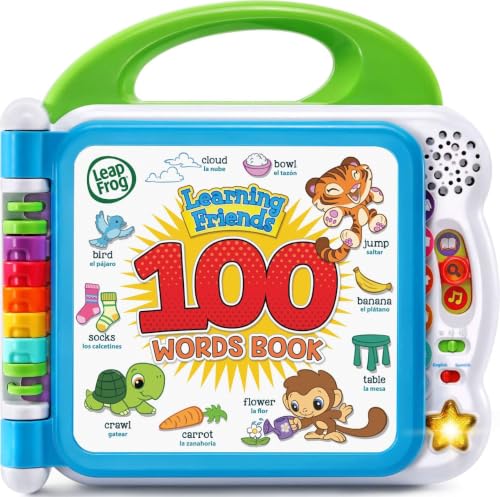
LeapFrog Learning Friends 100 Words Book
What We Like
- 100+ age-appropriate words by learning experts
- Bilingual English and Spanish mode
- Sound effects and fun facts on touch
- Light-up star button plays songs
Trade-offs
- Requires 2 AA batteries for regular use
- No physical flaps or moving parts for tactile play
With over 100 words chosen by learning experts and a full bilingual mode in English and Spanish, this book turns vocabulary building into a hands-on, auditory experience. Touching the words on the pages triggers words, sound effects, and fun facts, while the light-up star button plays the Learning Friends theme song. It’s a screen-free way to boost language development and introduce a second language early on, all in a compact, toddler-friendly package.
The most decisive feature here is that touching the words on the pages plays sounds, fun facts, and even a theme song, which makes vocabulary building feel like a game rather than a lesson. Word categories like pets, animals, food, and opposites keep the content fresh, and the light-up star button adds a little reward for curious fingers. Since it’s designed for ages 18 months and up, it’s a solid fit for toddlers just starting to connect spoken words with pictures.
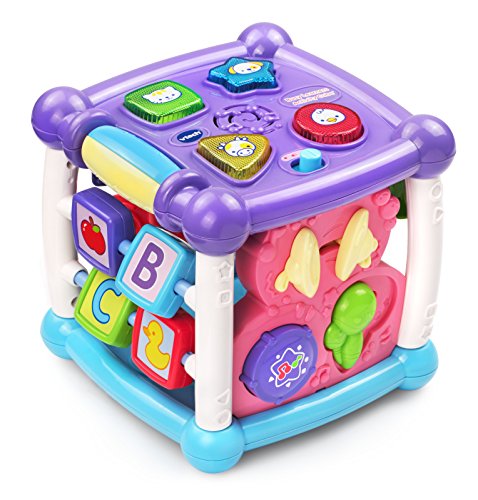
VTech Busy Learners Activity Cube
What We Like
- 25 playful songs and melodies
- Adjustable volume and auto shut-off
Trade-offs
- Small cube size limits floor play area
Fourteen interactive features packed into a 6.2-inch cube mean this little block does a lot more than sit there. With 25 songs and melodies built in, it’s the kind of toy that holds attention long enough for you to sip your coffee.
The cube’s compact size limits how much floor space it covers, so it’s more of a lap or tabletop activity than something a toddler can really sprawl out with. Compared to the larger Melissa & Doug Rollables Wooden Ocean Slide, which offers kinetic sensory play with a slide tower and plush characters, the VTech cube focuses on electronic discovery and fine motor skills in a tighter footprint. It suits families who want a self-contained, sound-rich learning station, but if you’re after big-motion gross motor play, the Rollables might be a better fit.
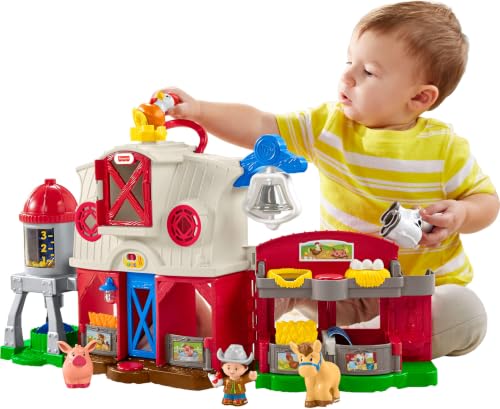
Fisher-Price Little People Caring for Animals Farm
What We Like
- 45+ songs, sounds, and phrases
- 3 Smart Stages learning levels
- Multiple interactive play points
- Figures sized for small hands
Trade-offs
- Only one farmer figure limits role-play variety
- Requires batteries for interactive features
With 45+ songs, sounds, and phrases packed into a compact 1-pound playset, this farm delivers more interactive feedback per square inch than most toddler toys. The three Smart Stages learning levels grow with your child, teaching counting, opposites, animal sounds, and colors through fresh content at each stage. That means a single toy can stay engaging from the first birthday well into preschool, which is rare for pretend play sets. The multiple play points, pressing the barn door, dropping figures through the hayloft, turning on the barn light, hatching chicks, and popping corn in the spinning silo, keep little hands busy discovering cause and effect while building fine motor skills. For an 18-month-old just starting to stage their own stories, this farm offers a familiar setting with enough prompts to spark imagination without overwhelming them.
The playset’s electronic features require batteries, so you’ll want to keep spares on hand since this farm loves to talk. For families who prefer a purely tactile experience, the Melissa & Doug First Bead Maze offers a different kind of engagement, but it doesn’t provide the same interactive feedback or learning content. The Fisher-Price farm’s figures are sized for small hands, so even an 18-month-old can grasp and move them, strengthening fine motor skills while they play.
Product photos
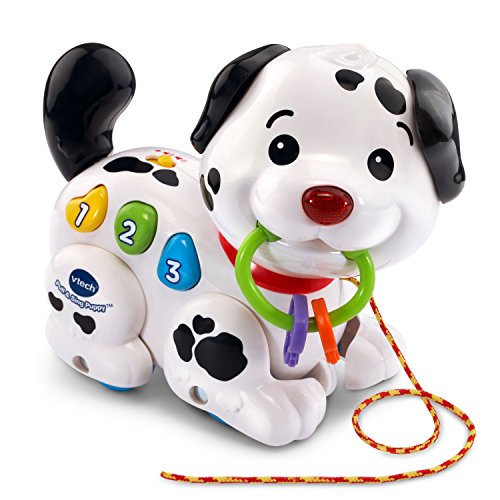
VTech Pull and Sing Puppy
What We Like
- Pull cord activates music and sounds
- Three colorful buttons for fine motor skills
- Light-up nose teaches responsive behavior
- Introduces numbers, colors, and body parts
Trade-offs
- Demo batteries only; new ones needed for regular use
- Not suitable for quiet play due to constant sounds
A pull cord that triggers music, words, and sounds means this puppy turns every step into a learning moment for a toddler just finding their feet. At 0.9 pounds, it’s light enough for little arms to tug along, and the three colorful buttons give tiny fingers something to press while building fine motor skills. The light-up nose flashes with voice and musical responses, keeping attention on cause and effect. For an 18-month-old who’s starting to walk but still wobbles, the pull-and-follow motion helps develop gross motor coordination in a playful, low-pressure way. This is the kind of toy that grows with a child from sitting play to walking practice, and it fits right into the early language development window too.
A fixed-length pull string can trip a very new walker or get tangled, and the demo batteries mean you’ll need fresh ones before the first real play session. Compared to a pop-up toy that offers four cause-and-effect actions (turn, press, flip, slide) without any batteries, the VTech relies on electronics to deliver its feedback. That makes it more engaging for some kids, but also means it stops working when the batteries die. If you prefer a quieter, more tactile experience that never needs charging, the Battat is worth a look. For families who want a cheerful, interactive companion that encourages walking and talking, this puppy delivers exactly that.
Product photos
How We Evaluated Developmental Toys For 18 Month Olds
We built this list by studying product specifications, manufacturer claims, expert round-ups from child development sources, and common praise or complaints in owner feedback. Every toy was assessed for its fit with the specific abilities and interests of an 18-month-old, not a younger baby or a preschooler.
Four criteria mattered most. First, skill alignment: does the toy target one or more of the key developmental areas at 18 months, fine motor, gross motor, language, cause-and-effect, or sensory exploration? Second, engagement variety: can a toddler interact with it in more than one way, or does it offer a single repetitive action?
Third, durability and safety: is it built to survive drops, throws, and chewing without breaking into small parts? Fourth, battery dependence: toys that require batteries often lose appeal when the batteries die, so we weighed whether the electronic features add real value or just noise.
A research-led evaluation has limits. We haven’t watched dozens of toddlers play with each toy for weeks. Instead, we synthesized what the specs, expert opinions, and real-world owner patterns tell us about how each toy performs in a typical home. For more context on what makes a good choice, see our guide on how to choose toys for this age group.
What To Look For In Developmental Toys For 18 Month Olds
Not every toy labeled “educational” actually fits an 18-month-old’s developmental stage. Focus on toys that match their current abilities, not ones designed for much older or younger children.
Look for toys that encourage cause-and-effect, fine motor practice, and early language through hands-on interaction rather than passive entertainment. Avoid toys with small parts that pose choking hazards or complex rules a toddler can’t follow.
Cause-and-Effect and Problem-Solving
At 18 months, toddlers are learning that their actions produce predictable results, pushing a button makes a character pop up, or turning a knob makes a bead slide down. Toys that offer multiple cause-and-effect actions (push, pull, twist, slide) keep them engaged longer than single-action toys. The best options in this category, like the best educational toys, use mechanical actions rather than batteries so the learning doesn’t stop when the power does.
Fine Motor and Hand-Eye Coordination
Pincer grasp, wrist rotation, and hand-eye coordination are developing rapidly at this age. Look for toys with knobs to turn, beads to slide, buttons to press, and pieces to stack. The bead maze is a classic for a reason, it requires visual tracking and precise hand movements. For more options, our roundup of toddler development toys includes many fine-motor builders.
Language and Early Vocabulary
An 18-month-old may understand far more words than they can say. Toys that name objects, animals, colors, or body parts, especially those with a bilingual mode, can support vocabulary growth. The best language toys pair spoken words with pictures or physical objects so the toddler connects the sound to the thing. Touch-activated books and talking cubes work well, but avoid toys that just play songs without labeling anything.
Durability and Portability
Toddlers drop, throw, and drag toys everywhere. Look for solid construction, wood or thick plastic, with no sharp edges or small parts that can break off. A carry handle or lightweight design helps if the toy moves between rooms or goes to daycare. Avoid toys that are too heavy for a toddler to lift, as they can cause frustration or injury if dropped on a foot.
A good rule of thumb: if you wouldn’t want to step on it barefoot in the dark, it’s probably not durable enough for daily toddler use.
Developmental Toys For 18 Month Olds Compared
The table below compares our top picks across key features like activity type, battery needs, and primary skill focus, so you can quickly see which toy fits your toddler’s current interests.
| Product | Dimensions | Weight | Age Range |
|---|---|---|---|
| Battat Pop-Up Pals | 7.5 x 10.8 x 3.5 inches | 1.4 pounds | 18+ Months |
| Melissa & Doug First Bead Maze | 8.7 x 8.1 x 4.1 inches | 1.2 pounds | Ages 1+ |
| Melissa & Doug Rollables Wooden Ocean Slide | 17.0 x 11.7 x 5.3 in | 3.2 lb | 12 months, 2 years |
| LeapFrog 6-in-1 Snap and Learn Busy Cube | 4.3 x 4.3 x 4.3 inches | 1.0 pounds | 12+ months |
| WOODMAM 9-in-1 Montessori Play Kit | 16.3 x 5.6 x 8.8 inches | 5.7 pounds | 13-18 months |
| Lovevery Walk & Talk Mini Kit | 10.6 x 7.6 x 13.3 inches | N/A | 12+ months |
| LeapFrog Learning Friends 100 Words Book | 9.2 x 9.4 x 1.9 inches | 1.5 pounds | 18+ months |
| VTech Busy Learners Activity Cube | 6.2 x 6.2 x 6.5 inches | 1.4 pounds | 6 months to 3 years |
| Fisher-Price Little People Caring for Animals Farm | 23.4 x 5.3 x 7.3 inches | 1.0 pounds | Ages 1+ years |
| VTech Pull and Sing Puppy | 3.9 x 7.9 x 6.7 inches | 0.9 pounds | 6 to 36 months |
Frequently Asked Questions
What are the best developmental toys for an 18-month-old?
The best developmental toys for an 18-month-old are those that support cause-and-effect learning, fine motor skills, language development, and sensory exploration without requiring batteries. Our top pick is the Battat Pop-Up Pals for its hands-on, no-battery design. Other strong options include the Melissa & Doug First Bead Maze for fine motor practice and the LeapFrog Learning Friends 100 Words Book for vocabulary building.
How do I choose a toy for my 18-month-old?
Focus on toys that match their current developmental stage: cause-and-effect actions, fine motor challenges like sliding beads or turning knobs, and simple language exposure. Avoid toys with small parts, complex rules, or heavy reliance on batteries. Check that the toy is durable enough to survive drops and throws, and that it offers more than one way to play to hold their attention.
Are electronic toys good for 18-month-olds?
Electronic toys can be beneficial when they actively teach, naming objects, playing animal sounds, or responding to touch with spoken words. The LeapFrog Learning Friends 100 Words Book is a good example. However, toys that only play music or flash lights without requiring interaction offer less developmental value. Battery-free mechanical toys often encourage more active problem-solving.
What skills should a toy develop at 18 months?
Key developmental areas at 18 months include fine motor control (pincer grasp, twisting, stacking), gross motor skills (walking, pulling, pushing), cause-and-effect understanding, early language (naming objects and body parts), and sensory exploration (textures, sounds, colors). A good toy targets at least one of these areas, and the best ones target two or more.
How many toys does an 18-month-old need?
Quality matters more than quantity. A small rotation of 4-6 well-chosen toys that target different skills, one for fine motor, one for cause-and-effect, one for language, one for gross motor, is more effective than a large collection of similar items. Rotating toys every few weeks keeps them novel and engaging.
The Bottom Line
For most families, the Battat Pop-Up Pals is the best overall developmental toy for an 18-month-old. It teaches cause-and-effect through four distinct mechanical actions, requires no batteries, and includes a carry handle for portability. It’s ideal for toddlers who need hands-on practice and parents who want a quiet, durable toy that won’t need new batteries.
If your toddler needs more language exposure, the LeapFrog Learning Friends 100 Words Book offers bilingual vocabulary building with sound effects and songs. For fine motor practice in a quiet, focused activity, the Melissa & Doug First Bead Maze stays put on a high chair tray with its suction cup base. Budget-conscious families should consider the WOODMAM 9-in-1 Montessori Play Kit for the sheer variety of activities in one box.
The single most important factor when choosing a developmental toy for an 18-month-old is whether it encourages active problem-solving rather than passive entertainment. If the toy does the thinking for your child, it’s not doing the job.
