
10 Best Toddler Toys For Development in 2026
This post contains affiliate links. As an Amazon Associate, we earn from qualifying purchases.
The best toddler toy for development overall is the LeapFrog Learning Friends 100 Words Book, which builds early vocabulary and bilingual skills across nine categories. The Fisher-Price Little People Caring for Animals Farm Playset earned the award for Best Interactive Learning Playset. It adapts as a child grows. The VTech Pull and Sing Puppy excels at encouraging those first steps.
A toddler’s brain is building more connections per second than at any other time in life. The right toy turns that natural curiosity into real skill-building, but the wrong one just gets ignored. Parents face a shelf full of claims about “educational” value and need to know what actually works for their child’s current stage.
This guide is based on a close look at specifications, manufacturer learning claims, and patterns in what parents report actually holds a toddler’s attention. We highlight ten toys that target specific developmental needs, from fine motor control to bilingual exposure.
Top 10 Toddler Toys For Development in the Market
Certain content that appears on this site comes from Amazon. This content is provided "as is" and is subject to change or removal at any time.
The Best Toddler Toys For Development, Reviewed
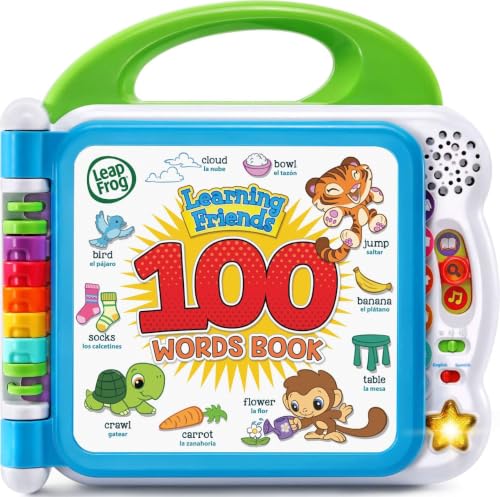
LeapFrog Learning Friends 100 Words Book
What We Like
- Bilingual English and Spanish modes
- Covers 9 word categories like animals and opposites
- Sound effects and fun facts on each page
- Light-up star button plays songs
Trade-offs
- Batteries included only for demo use
- Requires 18+ months minimum age
Over 100 age-appropriate words chosen by learning experts means this book gives a toddler a structured vocabulary foundation without overwhelming them. The pages are divided into nine categories, pets, food, colors, opposites, outside and more, so a child can focus on one theme at a time. Touching each word triggers sound effects, fun facts and the spoken word in either English or Spanish, which turns passive page-flipping into an active discovery session. The bilingual option lets a child hear words and instructions in both languages, and the light-up star button adds a musical reward that keeps little hands coming back.
The book relies on batteries (the included ones are for demo only, so have fresh AAs ready), and it is intended for ages 18 months and up, so it is not suited for younger infants. Compared to the VTech Pull and Sing Puppy, which is a different type of toy, the LeapFrog book is a sit-down language toy. That makes it ideal for quiet floor time or car rides rather than active play. For a toddler just beginning to connect spoken words with pictures, this is a focused vocabulary builder.
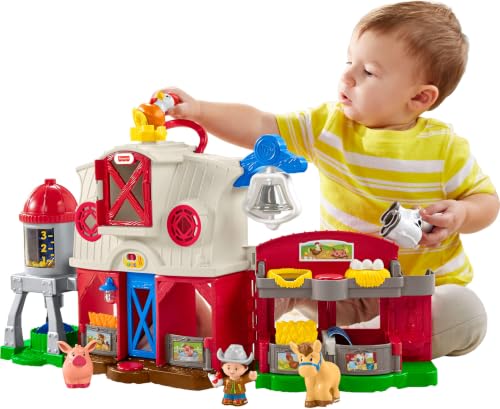
Fisher-Price Little People Caring for Animals Farm Playset
What We Like
- 45+ songs, sounds, and phrases
- 3 Smart Stages adapt as child grows
- Multiple interactive play points
- Figures sized for small hands
Trade-offs
- Plastic construction less durable than wooden barns
- Only 5 figures included in the set.
Forty-five songs, sounds, and phrases packed into a barn that weighs just one pound means this playset delivers a lot of audio engagement without taking over your floor space. The three Smart Stages learning levels adjust content from simple animal sounds up to counting and opposites, so the toy can actually keep pace with a child from their first birthday through preschool. That adaptability makes it a strong fit for parents who want one interactive toy that doesn’t get shelved after a few months of use.
The Fisher-Price farm playset weighs just 1.0 pounds, so it’s light enough for a toddler to carry from room to room. But the plastic construction means it won’t survive a drop from a tabletop as well as a heavier wooden toy. The electronic barn delivers 45+ songs, sounds, and phrases that change across three Smart Stages learning levels, teaching counting, opposites, animal sounds, and colors as your child grows. Reviewers note that the interactive features keep kids engaged for longer stretches than a silent playset, though the lightweight build may slide on a slick floor during active play.
Product photos
VTech Pull and Sing Puppy
What We Like
- Pull cord activates music and sounds
- Three colorful buttons build fine motor skills
- Light-up nose teaches responsive behavior
- Introduces numbers, colors, body parts
Trade-offs
- Batteries included only for demo use
- Limited to one mode of play
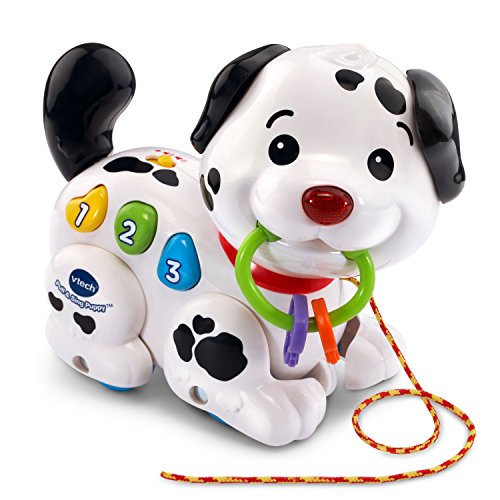
A pull cord that triggers music, words, and sounds means this puppy turns every step into a reward for gross motor development. For a toddler just finding their feet, that gentle tug-and-go feedback encourages walking and pushing in a way static toys can’t match. The three colorful buttons also work fine motor skills, and the light-up nose keeps little eyes locked on the action. It’s a solid fit for parents who want a single toy that bridges early walking practice with basic language learning, numbers, colors, and body parts are all built into the play.
Compared to the Fisher-Price Corn Popper, which offers a push-along design with no cord, the VTech Pull and Sing Puppy gives you more language features and interactive feedback. But it also introduces a potential snag point with the cord. If your child is already steady on their feet and you’d rather avoid cords entirely, the Corn Popper is the simpler choice. For a first walking toy that talks back, this puppy earns its place.
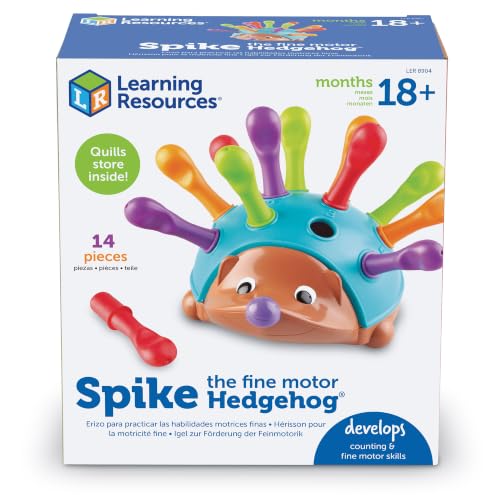
Learning Resources Spike The Original Fine Motor Hedgehog
What We Like
- Chunky peg pieces easy for small hands
- Colorful quills build color recognition
- Quills store inside hedgehog after play
- Sensory-friendly design for visually impaired children
Trade-offs
- Only one activity type: peg insertion and removal
- No sound, lights, or electronic feedback
A hedgehog about six inches in diameter with twelve chunky, peg-shaped quills gives your toddler a focused, hands-on workout for those small finger muscles. The pieces are just the right size for little hands to grasp and push into the hedgehog’s back, and the bright colors double as a simple sorting and counting game. The toy is designed for fine motor skill development, color recognition, and counting practice, as noted in the product’s feature list. It’s a straightforward, distraction-free tool for building those foundational skills.
There is no sound, lights, or moving parts to hold attention once the novelty wears off. Compared to other toys on the market, Spike is quieter and more repetitive, which may suit some children better than others. If your little one already enjoys sorting and stacking, this is a solid investment in foundational motor skills.
Product photos
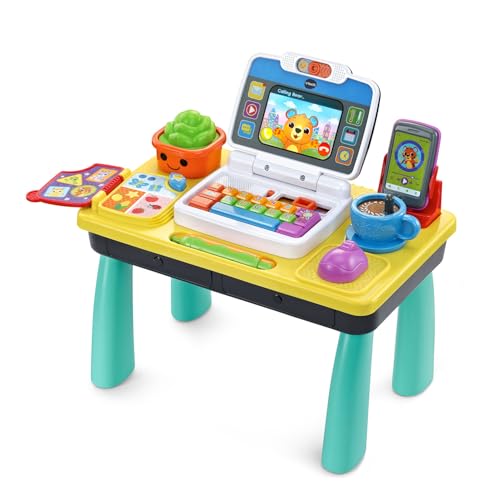
VTech Little CEO Learning Desk Toddler Activity Center
What We Like
- Multiple interactive features for busy fingers
- Introduces numbers, letters, and music
- Includes sing-along melodies
- Phone and mouse encourage pretend play
Trade-offs
- Demo batteries need replacing before regular use
- Requires 3 AA batteries not included for regular use
A 3-pound desk with a tippy-tap keyboard, a flip-open book, a peekaboo plant, and a coffee stirrer means this activity center keeps a toddler’s hands occupied in several directions at once. The phone and mouse let little ones mimic grown-up work while the sing-along melodies and number-letter introductions sneak in early academic exposure. It suits the 9-to-36-month range who want to press, scroll, and stir rather than just sit and watch, making it a strong pick for families looking to combine fine-motor play with basic pre-literacy cues.
At 3 pounds, this desk is light enough to carry from room to room, but parents should expect it to slide if a toddler pushes off from it. The Fisher-Price Corn Popper is a push-along toy that moves with the child, while this desk stays put and invites seated play. The included demo batteries are a minor nuisance, but the desk offers a variety of activities, typing, stirring a coffee cup, flipping a book, and more, that give toddlers more to explore than simpler toys like the Melissa & Doug Take-Along Wooden Barn.
Melissa & Doug Take-Along Wooden Toy Barn
What We Like
- Built-in handle for easy portability
- 11 chunky wooden pieces for sorting play
- Flip-up roof for quick access and storage
- Enhances shape recognition and problem-solving
Trade-offs
- At 2.1 lb, heavier than some portable toys
- Only 11 pieces limits variety for older toddlers
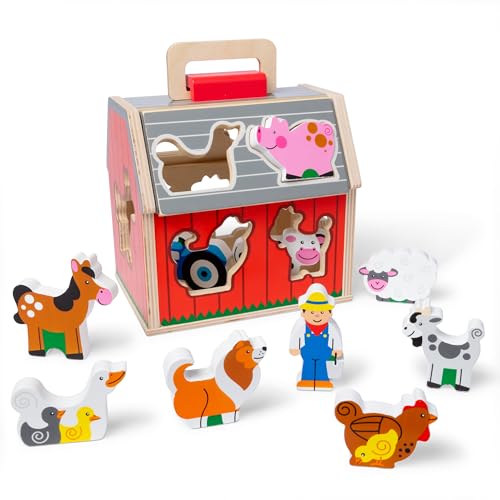
A built-in handle and a pop-up roof make this wooden barn easy to grab and go. With 11 chunky wooden pieces, farm animals, a tractor, and a farmer, your toddler can sort shapes, match animals, and build simple stories without a screen. That mix of sorting, stacking, and pretend play hits the developmental sweet spot for kids around age two. It makes a smart pick for parents who want learning to happen anywhere, not just at the playroom table.
At 2.1 pounds, this barn is heavier than some portable toys like the 0.9-pound VTech Pull and Sing Puppy, so a very young toddler might need help carrying it. The 11-piece set keeps play focused and contained, which is ideal for mess-free travel. If you value durable wood construction and a compact design that stores pieces neatly, this barn earns its spot as a portable choice for on-the-go play.
Fisher-Price Corn Popper

What We Like
- Classic ball-popping action encourages walking
- Strengthens gross motor skills
- Introduces cause and effect
- Lightweight at 1.8 pounds
Trade-offs
- Requires some assembly out of box
- No sound or light modes beyond popping
At 1.8 pounds, the Fisher-Price Corn Popper is light enough for a wobbly toddler to push without tipping forward, and the 22.5-inch handle keeps it at a comfortable height for new walkers. The colorful balls pop inside a clear dome as the toy rolls, giving a clear cause-and-effect reward that keeps little ones motivated to take another step. This makes it a natural fit for parents focused on gross motor development and the first transition from cruising to independent walking. The popping action is the only sound the toy makes, which means it won’t overwhelm a quiet playroom.
The Fisher-Price Corn Popper offers a single-action play pattern: push it along and the colorful balls pop inside. That straightforward cause-and-effect loop is exactly what a 12-month-old needs to connect walking with a rewarding sound and motion. The two-piece assembly is required before first use, so plan a few minutes to snap it together. For a baby just finding their feet, the popping reward for each step is clear and motivating. Toddlers who already walk confidently and want more varied interactions might prefer a toy with multiple play modes, like the VTech Pull and Sing Puppy.
Product photos
Melissa & Doug Farm Animals Jumbo Knob Wooden Peg Puzzle

What We Like
- Jumbo knobs for easy grasping
- Full-color matching pictures under each piece
- Extra-thick wooden pieces for durability
- Bright barnyard artwork for animal recognition
Trade-offs
- Only 8 pieces limits puzzle complexity for older toddlers
- Flat board design offers no storage for pieces
Eight extra-thick wooden pieces with jumbo knobs are designed for easy grasping by small hands, and the full-color matching pictures under each piece help guide toddlers and encourage confidence and independent play. This puzzle helps build fine motor skills, hand-eye coordination, and visual perception through hands-on activities, making it a suitable first puzzle for toddlers ages 1 and up.
The puzzle includes only eight pieces and a single farm scene, which limits complexity for older toddlers. Compared to the Fisher-Price Little People Caring for Animals Farm Playset, which offers interactive music and pretend play for the same age range, this Melissa & Doug puzzle is a matching activity with no sound or movement. That focus on matching is ideal for a first puzzle, but parents looking for more interactive features might consider the playset.
Product photos
Chuckle & Roar Pop It Book

What We Like
- Bilingual English & Spanish learning
- Quiet mode option for low-noise play
- Sturdy plastic for rough toddler handling
- Combines pop-it sensory with education
Trade-offs
- At 0.1 inches thick, pages feel thin for a book
- Only covers colors, not other early learning topics
This book teaches colors in both English and Spanish while offering a pop-it sensory experience, so your child gets language exposure and tactile play in one package. It suits families who want screen-free bilingual play from age one onward, especially if you prefer a quiet mode for car rides or winding down before bed. The sturdy plastic build is designed for toddler handling, so you can expect it to last through regular use.
This book focuses on colors, so once your child masters red and azul, the learning shelf life may be shorter than a toy that covers a wider range of topics. Also, at 1.4 pounds and with a product height of 0.1 inches, the overall shape is thin, though the plastic material keeps it from tearing. Best for caregivers who want a portable bilingual sensory tool; less ideal if you need a comprehensive early vocabulary builder.
Product photos
Play-Act Montessori Farm Train

What We Like
- 9 numbered barns for sorting and counting
- Detachable roof for placing figures inside
- Farm animals double as hand puppets
- Encourages loading, unloading, stacking play
Trade-offs
- At 1.7 pounds, heavier than many sorting toys
- Small 5-inch length limits floor space for play
Nine numbered barns and three colorful wagon carriages mean this train turns sorting into a hands-on counting game, not just a visual matching exercise. The detachable roof lets toddlers place the farmer and farm animals inside, so loading and unloading becomes part of the story. That combination of number recognition, color sorting, and imaginative role-play makes it a strong pick for a child who wants to drive a train and also practice early math skills without feeling like they’re being taught.
The train measures only five inches long and weighs 1.7 pounds, so it’s more of a lap toy than a sprawling floor setup. It suits a toddler who enjoys structure and repetition, but if your child prefers free-form farm scenarios, the barn gives them more room to roam.
How We Evaluated Toddler Toys For Development
We started by studying the core skills that toddlers develop between 12 and 36 months: language acquisition, fine and gross motor control, cause-and-effect reasoning, and sensory processing. Every toy in this lineup was chosen because it directly supports at least one of those areas with a clear, repeatable play pattern.
Three criteria mattered most. First, skill targeting, does the toy teach a specific skill (like color naming or hand-eye coordination) or just make noise? Second, durability and safety, toddlers drop, throw, and chew everything, so construction and materials had to withstand real-world abuse. Third, engagement longevity, we looked for toys that stay interesting across months of development, either through multiple play modes or open-ended design.
A research-led evaluation like this has an honest limit: we haven’t watched your specific toddler play with these toys. Every child develops at a different pace, and what fascinates one may bore another. We recommend reading owner feedback patterns alongside this guide to match a toy to your child’s temperament.
What To Look For In Toddler Toys For Development
Picking a developmental toy means looking past the flashy packaging to what the toy actually asks your child to do. The best options create a small challenge that a toddler can solve with a bit of effort, then reward that effort with a satisfying result.
Look for toys that match your child’s current skill level, offer multiple ways to play, and are built to survive drops, throws, and the occasional chewing session. Avoid toys that do all the work themselves.
Skill Alignment and The “Just Right” Challenge
A toy that is too simple gets ignored; one that is too hard causes frustration. For a 12-month-old, a chunky puzzle with knobs (like the Melissa & Doug Farm Animals Jumbo Knob puzzle) is a perfect match. As that child grows, they may need the counting and sorting challenge of the Play-Act Montessori Farm Train. When browsing educational toys, look for age ranges printed on the box, but also watch for features like adjustable difficulty levels or multiple play stages.
Material Safety and Build Quality
Toddlers explore with their mouths, so every toy must be made from non-toxic materials with no small parts that can become choking hazards. Wooden toys like those from Melissa & Doug offer durability and a pleasing weight. High-grade plastics from Fisher-Price and LeapFrog are designed to withstand drops without cracking. Check for smooth edges, securely attached parts, and finishes that won’t peel or chip.
Open-Ended vs. Directed Play
Some toys, like the VTech Pull and Sing Puppy, guide a child through a specific learning sequence. Others, like the Melissa & Doug Take-Along Barn, allow for open-ended sorting and storytelling. The best toy collection includes both types. Montessori toys often lean toward open-ended, self-correcting designs that let a child discover solutions independently, which builds problem-solving confidence.
- Does the toy have multiple functions or just one trick?
- Are the batteries included for demo use only, or for regular play?
- Can the toy be cleaned easily with a damp cloth?
- Is the toy heavy enough to stay put but light enough for a toddler to carry?
- Does the toy encourage interaction with a caregiver, or is it purely solo play?
A single great toy that your child returns to for months is worth more than a dozen that get played with once.
Toddler Toys For Development Compared
The table below compares each toy’s primary developmental focus, key features, and best-use scenario so you can match a toy to your toddler’s current needs and interests.
| Product | Age Range | Dimensions | Weight |
|---|---|---|---|
| LeapFrog Learning Friends 100 Words Book | 18+ months | 9.4" x 9.2" x 1.9" | 1.5 pounds |
| Fisher-Price Little People Caring for Animals Farm Playset | 1+ years | 23.4" x 5.3" x 7.3" | 1.0 pounds |
| VTech Pull and Sing Puppy | 6-36 months | 3.9" x 7.9" x 6.7" | 0.9 pounds |
| Learning Resources Spike The Original Fine Motor Hedgehog | Toddler and preschool | 10" x 10" x 4" | 0.1 pounds |
| VTech Little CEO Learning Desk Toddler Activity Center | 9-36 months | 8.7" x 14.0" x 0.1" | 3.0 pounds |
| Melissa & Doug Take-Along Wooden Toy Barn | 2+ | 6.5" x 7.5" x 8.0" | 2.1 pounds |
| Fisher-Price Corn Popper | 12+ months | 22.5" x 8.5" x 6.2" | 1.8 pounds |
| Melissa & Doug Farm Animals Jumbo Knob Wooden Peg Puzzle | 1+ years | 12" x 12" x 0.0" | 1.6 pounds |
| Chuckle & Roar Pop It Book | 1-4+ | 11.5" x 2.2" x 0.1" | 1.4 pounds |
| Play-Act Montessori Farm Train | 1 2 3 years old | 5.0" x 4.0" x 2.0" | 1.7 pounds |
Frequently Asked Questions
What is the best toy for a 1-year-old’s development?
For a 1-year-old, focus on toys that encourage sensory exploration and cause-and-effect learning. The Fisher-Price Corn Popper is a classic that rewards pushing with popping balls, building gross motor skills. The Melissa & Doug Jumbo Knob Puzzle also works well at this age because the chunky pieces are easy for small hands to grasp and place.
How many toys does a toddler really need?
Toddlers focus best with a small, rotated selection. Having a few toys available at a time, swapped every week or two, keeps interest high without overwhelming them. A good rotation includes one language toy, one fine-motor toy, one gross-motor toy, one sensory toy, and one pretend-play item.
Are electronic toys better for learning than simple wooden ones?
Neither type is inherently better, they serve different purposes. Electronic toys like the LeapFrog 100 Words Book introduce vocabulary and sounds that a wooden toy cannot produce. Wooden toys like the Melissa & Doug Barn build imagination and fine motor skills without batteries. The best approach is to include both in your child’s play rotation.
What should I look for in a toy to help my toddler talk?
Look for toys that name objects, play simple songs, and encourage repetition. The LeapFrog Learning Friends 100 Words Book is excellent because it pairs images with spoken words in both English and Spanish. Toys with question-and-answer patterns, like the Fisher-Price Farm, also prompt toddlers to respond and build conversational skills.
How do I know if a toy is safe for my toddler?
Check the age recommendation on the box, it is based on safety testing and choking hazard standards. Avoid toys with small parts that can fit inside a toilet paper tube for children under 3. Look for the ASTM or CPSC safety mark, and inspect toys regularly for loose parts, sharp edges, or broken pieces.
The Bottom Line
The LeapFrog Learning Friends 100 Words Book earns our top spot because it directly addresses the most critical developmental task of toddlerhood: building vocabulary. Its bilingual mode is a genuine bonus for families introducing a second language, and the sound effects keep children engaged without overwhelming them. For parents whose toddler is already walking and talking, this book continues to offer value well past the 18-month mark.
If your child needs a different kind of challenge, the other award picks in this guide target specific skills. The Fisher-Price Little People Farm grows with your child through three learning stages, making it ideal for families who want a single toy that lasts from babyhood through preschool. The Learning Resources Spike the Hedgehog is the quiet, focused fine-motor trainer for toddlers who love repetition.
The single most important buying factor is simple: watch how your child plays. A toy that matches their current developmental stage and holds their attention for more than a few minutes is a good investment. A toy that requires them to sit still and follow complex instructions before they are ready will end up in the corner. Choose the challenge that fits today, and your toddler will let you know when they are ready for the next one.
