
10 Best Board Games For 9 Year Olds in 2026
This post contains affiliate links. As an Amazon Associate, we earn from qualifying purchases.
The best board game for a group of players is Big Potato Herd Mentality Board Game, which wins because it supports up to 20 players with laugh-filled, easy-to-learn rules that reward thinking alike. For classic wordplay, the Hasbro Gaming Scrabble Board Game builds vocabulary, while the MindWare Qwirkle Board Game teaches spatial planning and strategy.
At nine, kids have outgrown simple roll-and-move games but aren’t ready for complex adult strategy. They want games that challenge their thinking, keep everyone engaged, and don’t take an hour to set up. The sweet spot is a game that feels grown-up but stays fun.
We researched manufacturer specs, expert round-ups, and patterns in owner feedback to find 10 games that hit that sweet spot. This guide covers everything from party games for big groups to quick maze challenges and pirate adventures, so you can match the game to your child’s personality.
Top 10 Board Games For 9 Year Olds in the Market
Certain content that appears on this site comes from Amazon. This content is provided "as is" and is subject to change or removal at any time.
The Best Board Games For 9 Year Olds, Reviewed
Big Potato Herd Mentality Board Game
What We Like
- Supports 4-20+ players
- Easy to learn rules
- 20 extra questions included
- Encourages group thinking
Trade-offs
- Requires at least 4 players
- Not suitable for players under age 10
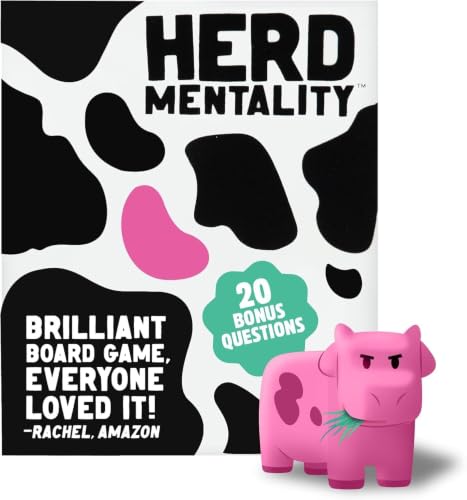
Supporting up to 20+ players at once, Herd Mentality turns a big group into a single-minded herd. The goal is to answer questions the same way as everyone else, so the whole table laughs when someone ends up with the pink cow of doom. It’s easy to learn and quick to play, making it a natural pick for family reunions or birthday parties where you need something that works for a wide age range. The 20 extra questions included keep it fresh longer than the standard version.
Compared to Ticket to Ride, which lets kids plan their own train routes independently, Herd Mentality rewards conformity over strategy. If your child enjoys being the odd one out or prefers building something on their own, this game’s whole premise works against that instinct.
Product photos
Hasbro Gaming Scrabble Board Game
What We Like
- 100 wooden letter tiles and racks
- Textured gameboard keeps tiles in place
- Classic crossword gameplay for 2-4 players
- Includes expert tips and alternate play modes
Trade-offs
- Requires strong reading and spelling skills
- No visual or shape-based elements for variety
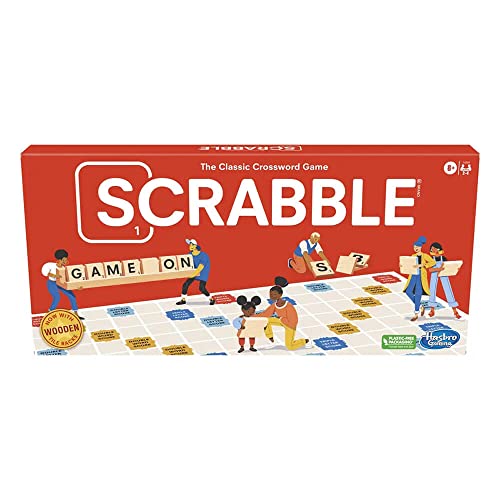
Scrabble’s 100 wooden letter tiles and textured gameboard give it a tactile, premium feel that stands out in a world of flimsy cardboard pieces. For players ages 8 and up who already enjoy reading and wordplay, this classic crossword game turns vocabulary into a friendly competition. Each letter has a point value, and premium squares multiply your score, so there’s real strategy in choosing where to place a word. The included expert tips and alternate ways to play mean you can adjust the challenge level as players grow, making it a game that stays relevant for years.
The Scrabble board game rewards strong spelling and reading skills, so confident players can build words and rack up points, but less confident players may feel left out. Other word games like Qwirkle use shapes and colors instead of letters, which some families find more accessible for younger or less experienced players.
Product photos
MindWare Qwirkle Board Game

What We Like
- Teaches spatial recognition and planning
- Easy to learn rules
- Award-winning family strategy game
Trade-offs
- Limited to 4 players max
- No expansion or variant included
With 108 wooden tiles and 36 possible color-symbol combinations, Qwirkle offers plenty of room to think ahead without feeling overwhelmed. The rules are simple: match tiles by color or shape to build lines and score. That straightforward setup means a child can grasp it in minutes, yet the tactical decisions keep growing as they play. It’s a strong pick for a kid who enjoys puzzles and pattern recognition, and it works just as well with adults, so family game night stays interesting for everyone.
The main limitation is player count: at two to four players, it won’t handle a larger group the way some party games do. So if you regularly have five or more kids at the table, you’ll need a second game. But for a child who likes to plan ahead and outthink opponents, Qwirkle delivers a clean, satisfying challenge that grows with them.
Days of Wonder Ticket to Ride Board Game

What We Like
- Easy to learn, hard to master
- Giant map and miniature trains
- Multiple strategies to win
- 30-60 minute playtime
Trade-offs
- 2-5 players limits larger groups
- No solo or 6+ player mode available
With a playtime of 30 to 60 minutes, Ticket to Ride fits well into a family game night, offering enough depth to feel like a real journey while staying within a reasonable timeframe. The giant map of early 20th-century North America and miniature trains make the theme tangible, so players aren’t just moving pieces; they’re building a cross-country rail network. Simple rules let new players pick it up quickly, yet the multiple ways to win, collecting color sets of train cards, completing tickets, or building the longest route, mean no two games play the same. That replayability is exactly what you want when the same players will ask to play again next week.
With a 30-60 minute playtime, Ticket to Ride is a step up from quicker party games like Herd Mentality, which is designed for larger groups and faster rounds. For a player who fidgets past the half-hour mark, that could feel like a stretch. But for someone ready to move beyond pure luck games into light strategy, Ticket to Ride rewards planning without overwhelming them. It’s a confident next step for players who have outgrown simpler games but aren’t ready for heavier train games.
Product photos
Hasbro Gaming The Game of Life Board Game
What We Like
- 31 career cards for variety
- 115 cards with exciting choices
- Quick setup and easy play
Trade-offs
- 2-4 players limits larger groups
- No solo or small group play options
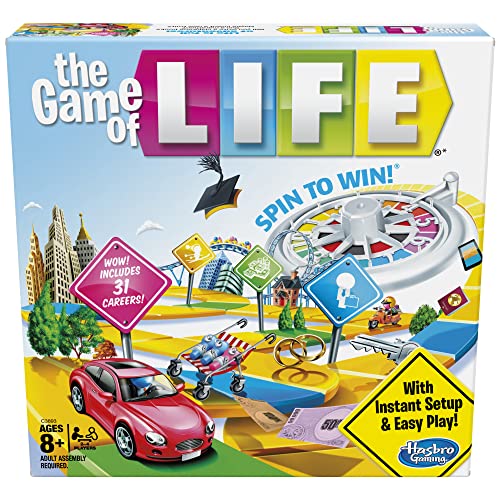
With 31 career cards ranging from ice cream flavor maker to secret agent, this edition of The Game of Life gives players ages 8 and up a huge menu of possible futures to explore. That variety is the whole point: each playthrough can feel completely different depending on which quirky job you land and which vacation you choose. The 115 cards keep the twists coming, so the game stays fresh even after multiple rounds. It suits families who want a classic board game experience with enough novelty to hold a child’s attention, and the instant setup means less waiting and more playing.
The trade-off is that the game caps at four players, so bigger family gatherings or sleepovers will need a different option. Compared to Herd Mentality, which handles up to 20 players, Life is clearly designed for smaller, more focused sessions. The endgame also hinges on who has the most money, which can feel anticlimactic for kids who don’t enjoy pure wealth accumulation. Still, for a family of four looking for a career-themed adventure with real replay value, this is a solid fit.
Product photos
Asmodee Ticket to Ride First Journey Board Game
What We Like
- Simplified rules for ages 6+
- Clear Golden Ticket goal
- Chunky train pieces for small hands
- 30-minute focused play sessions
Trade-offs
- Only 2-4 players limits larger groups
- US map only, no global routes
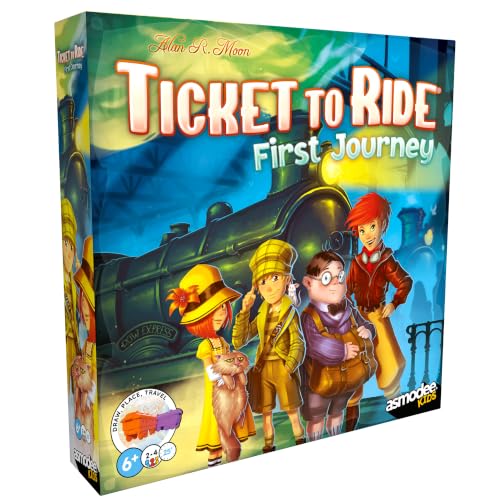
The 15-30 minute playtime means you can get a full game in before attention wanders, and the Golden Ticket challenge gives every player a clear finish line to race toward. That streamlined rule set, collect train cards, claim colorful routes across a US map, connect cities, is exactly what a 6-year-old can pick up in one sitting. Yet it still teaches route planning and card management. For a child just moving into strategy games, this hits the sweet spot between too simple and too complex, making it the obvious pick for families with younger siblings or kids who get overwhelmed by multi-page rulebooks.
A child already comfortable with full strategy games might find the simplified map and single objective a bit light. Compared to the standard Ticket to Ride board game (ages 8+, 30-60 minutes), First Journey is clearly a stepping stone. But that’s exactly the point: if your child is still building confidence with turn-taking and basic strategy, this version gives them a win without the frustration. For a family game night where the youngest player is 6, this keeps everyone engaged and happy.
Product photos
Lost Boy Entertainment Plunder A Pirate's Life Board Game

What We Like
- Replayable with unique map each game
- No player elimination keeps everyone engaged
- Easy-to-learn rules with overview guide
- Supports team play option
Trade-offs
- At 6.3 pounds, it's heavy for small hands
- 20-minute per player playtime can be long
The six double-sided ocean tiles combine into a unique map every game, so you’ll never play the same board twice, a huge plus for players who get bored easily. Designed for 2 to 6 players, it fits both small family nights and larger groups. The rules are easy to learn thanks to an overview guide, and there’s no player elimination, which keeps everyone in the action until the final cannon blast. It’s a good fit for kids who love adventure and don’t mind a bit of planning.
At 6.3 pounds, this box is hefty for a child to carry to the table, and the 20-minute-per-player pace means a full 6-player game can stretch past two hours. That’s longer than some other family board games. So if your child has a short attention span or you’re looking for a quick weeknight game, this might drag. But for pirate-loving kids who enjoy building ships and conquering islands with friends, the depth and variety are worth the extra time.
Product photos
CATAN Junior Board Game

What We Like
- Simpler rules for younger players
- Pirate theme with resource trading
- 30-minute playtime keeps attention
- Supports 2 to 4 players
Trade-offs
- Limited to 4 players max
- No solo or two-player variant for odd-numbered groups
A 30-minute playtime means this pirate-themed game fits neatly into an evening without dragging on. It introduces resource management and trading through a ring of tropical islands, where kids build ships and lairs to expand their network. The rules are simplified compared to the full Catan experience, making it a natural stepping stone for a child who’s ready for more than pure luck but not yet a heavy strategy session. The pirate setting, complete with a Ghost Captain and Coco the Parrot, keeps the theme playful and engaging.
The simplicity that makes it accessible also limits its replay value for older or more experienced players. Compared to Ticket to Ride: First Journey, which also targets ages 6+ and offers a similar playtime, Catan Junior leans harder on negotiation and trading rather than route planning. If your group regularly has five or more kids, the 2-4 player cap will be a hard stop. For a family with one or two children looking to dip into strategy games, this is a well-designed on-ramp.
Product photos
Ravensburger Labyrinth Board Game

What We Like
- Ever-changing maze for endless replayability
- Builds critical thinking and planning skills
- Easy to learn with simple rules
- Great for family game nights
Trade-offs
- Limited to 2-4 players only
- Not suitable for children under 7 years old
A shifting maze that rearranges with every turn means no two games are ever the same, keeping players engaged for the full 20-30 minute round. That dynamic layout forces kids to think ahead, plan routes, and block opponents, all while hunting for hidden treasures. It’s a smart pick for families who want something that builds strategic thinking without feeling like homework. The simple rules get everyone playing fast, and the 2-4 player count fits most family nights without dragging on.
With only 2-4 players, bigger groups or parties will need something else on the shelf, like Herd Mentality which handles up to 20. And while the maze is endlessly replayable, each round wraps up in under half an hour, so if you’re looking for a longer epic session, you might find yourself resetting sooner than you’d like. Still, for a focused, brain-stretching challenge that keeps kids coming back, this is the maze game that delivers.
Ravensburger Bugs in the Kitchen Board Game

What We Like
- Real HEXBUG Nano moves on its own
- 15-minute playtime fits quick sessions
- Works for ages 5 and up
Trade-offs
- Only 2-4 players limits larger groups
- Board is only 0.1 inches thick
A real HEXBUG Nano scurrying across the board is the whole point here, it’s not a plastic piece you push, but an actual vibrating bug that zips under traps and around utensils. That single feature makes the 15-minute chase feel genuinely unpredictable, which is exactly what you want for a quick family game. Ravensburger keeps it simple: roll the die, build a path with the included 24 utensils, and try to trap the bug before it escapes. The scoring adds just enough structure to give each round a winner without bogging down the action. For a family game night where the goal is laughing more than strategizing, this delivers.
This is a one-trick bug: once the novelty of chasing a vibrating roach wears off, the replay value depends entirely on how much your group enjoys the same short chase. Compared to Ravensburger’s own Labyrinth, which offers a strategic maze challenge for the same player count, Bugs in the Kitchen is lighter and more chaotic. That makes it better for younger players or those who prefer quick, physical fun, but kids who love planning moves may find it too simple. It’s not a game you’ll pull out for hours of play, but for a quick, silly warm-up or a wind-down before bed, it works exactly as designed.
How We Evaluated Board Games For 9 Year Olds
Our evaluation is research-based. We studied manufacturer specifications, gameplay descriptions, and recommended age ranges. We also reviewed patterns in owner feedback and expert round-ups from toy and game specialists to understand what works for this age group.
We focused on four criteria that matter most for nine-year-old players. First, age-appropriate complexity, the rules must challenge without frustrating. Second, player count flexibility, many families have siblings and friends over. Third, replayability, a game played twice and shelved is not a good investment. Fourth, engagement factor, does the game hold attention for its full playtime?
A research-led evaluation has limits. We have not played every game ourselves, and individual children’s preferences vary widely. What one nine-year-old loves, another may find boring. Use this guide as a starting point, and consider your child’s specific interests when choosing.
What To Look For In Board Games For 9 Year Olds
Nine-year-olds are at a developmental sweet spot where they can handle rules, strategy, and some reading, but still want colorful components and a sense of fun. Here is what to consider when choosing.
Look for games with 30-60 minute playtimes, rules that can be explained in under five minutes, and enough replayability to survive multiple game nights.
Age Rating and Complexity
Most games for this age are rated 8+ or 10+. An 8+ rating usually means simpler rules with some reading required. A 10+ rating may involve more strategy, longer playtimes, or more complex scoring. Games like board games for 8-10 year olds often bridge this gap well. If your child is new to strategy games, start with a 6+ or 8+ game like Asmodee Ticket to Ride First Journey Board Game before moving to the full version.
Player Count
Check how many players the game supports. Many games cap at four players, which works for a family of four but not for sleepovers or large gatherings. Big Potato Herd Mentality Board Game supports 4-20+ players, making it ideal for parties. For smaller families, a 2-4 player game like Ravensburger Labyrinth Board Game works perfectly. If you have a mix of ages, consider games for 8 year olds that younger siblings can also enjoy.
Playtime and Attention Span
Children around that age typically sustain focus for a moderate amount of time. Games like Ravensburger Bugs in the Kitchen Board Game finish in 15 minutes, great for quick sessions or younger attention spans. Days of Wonder Ticket to Ride Board Game runs 30-60 minutes. That length is ideal for a full family game night. Avoid games that run much longer unless your child already loves long strategy sessions.
Learning Curve and Teachability
The best games for this age can be taught in under five minutes. Look for clear rulebooks, visual guides, or tutorial videos. Games like CATAN Junior Board Game simplify adult strategy games without losing the core mechanics. If your child struggles with reading, choose games with more visual or tactile elements, such as the moving HEXBUG in Ravensburger Bugs in the Kitchen.
- Read the rulebook preview online before buying, if it looks confusing for a nine-year-old, it probably is.
- Check if the game includes a quick-reference card or summary sheet.
- Look for games with “family” or “junior” versions of popular adult games.
- Consider whether the game requires an adult to play or if kids can run it themselves.
A game that takes longer to explain than to play is not the right game for a nine-year-old.
Board Games For 9 Year Olds Compared
The table below compares all 10 board games across the key factors that matter most: player count, playtime, and the type of thinking each game rewards.
| Product | Players | Age Range | Dimensions |
|---|---|---|---|
| Big Potato Herd Mentality Board Game | 4-20+ | 10+ | 7.4 x 5.8 inches |
| Hasbro Gaming Scrabble Board Game | 2-4 | 8 and up | 1.4 x 15.8 x 7.5 inches |
| MindWare Qwirkle Board Game | 2-4 | 6+ | 10.5 x 10.5 x 2.8 in |
| Days of Wonder Ticket to Ride Board Game | 2-5 | 8+ | 11.7 x 11.7 x 3.0 in |
| Hasbro Gaming The Game of Life Board Game | 2-4 | 8+ | 2.2 x 10.5 x 10.5 inches |
| Asmodee Ticket to Ride First Journey Board Game | 2-4 | 6+ | 2.3 x 10.8 x 0.1 inches |
| Lost Boy Entertainment Plunder A Pirate's Life Board Game | 2 to 6 | N/A | 12.8 x 12.8 x 4.2 inches |
| CATAN Junior Board Game | 2-4 | 6+ | 10.5 x 10.5 x 3.2 inches |
| Ravensburger Labyrinth Board Game | 2-4 | 7-10 and older | 14.0 x 10.0 x 2.0 inches |
| Ravensburger Bugs in the Kitchen Board Game | 2-4 | 5+ | 14.7 x 10.8 x 0.1 in |
Frequently Asked Questions
What is the best board game for a 9 year old who loves strategy?
The MindWare Qwirkle Board Game is our pick for best strategy game for nine-year-olds. It teaches spatial recognition and planning with easy-to-learn rules. For a child ready for resource trading and route building, the CATAN Junior Board Game or Days of Wonder Ticket to Ride Board Game are excellent next steps.
How many players do most board games for 9 year olds support?
Most board games for this age group support 2 to 4 players. If you need a game for larger groups, look for party-style games like Big Potato Herd Mentality Board Game, which supports 4 to 20+ players. Always check the player count before buying to ensure it fits your family size.
Are there board games for 9 year olds that also teach skills?
Yes. Many board games for this age teach valuable skills without feeling like schoolwork. Hasbro Gaming Scrabble Board Game builds vocabulary and spelling. MindWare Qwirkle Board Game develops spatial reasoning and planning. Ravensburger Labyrinth Board Game strengthens critical thinking and problem-solving.
What is a good board game for a 9 year old who gets bored easily?
Look for games with short playtimes and high engagement. Ravensburger Bugs in the Kitchen Board Game finishes in 15 minutes. It features a real moving HEXBUG that keeps attention. Ravensburger Labyrinth Board Game changes the maze every time, offering endless variety in a quick session.
Can a 9 year old play board games designed for adults?
Some adult board games work well for nine-year-olds with simplified rules. CATAN Junior is designed specifically as a younger entry point to the CATAN system. The full Days of Wonder Ticket to Ride Board Game is accessible enough for a nine-year-old who enjoys planning, though younger or less patient kids may prefer the Ticket to Ride First Journey version.
The Bottom Line
For most families, the Big Potato Herd Mentality Board Game is the best choice because it works for large groups, has laugh-out-loud gameplay, and requires no complex setup. It is the rare game that a nine-year-old can play with grandparents, cousins, and friends all in one sitting.
If your child prefers quieter, more thoughtful play, the MindWare Qwirkle Board Game or Hasbro Gaming Scrabble Board Game offer deeper strategy and skill-building. For a pirate-obsessed kid who wants a longer adventure, Lost Boy Entertainment Plunder A Pirate’s Life Board Game delivers unique maps and no player elimination.
The single most important factor is your child’s personality. A game that excites one nine-year-old will bore another. Match the game to their interests, strategy, words, speed, or silliness, and you will find a game they actually want to play again.
