
10 Best Stacking Toys in 2026
This post contains affiliate links. As an Amazon Associate, we earn from qualifying purchases.
The best stacking toy for most families is the Sassy Stacks of Circles Stacking Ring, which wins for its sensory-rich design that builds hand-eye coordination and cause-and-effect understanding. For a classic wooden option, the Melissa & Doug Rainbow Stacker is a durable choice, while the TOWO Wooden Stacking Boxes offer excellent open-ended play for older toddlers.
Stacking toys seem simple, but choosing the right one means matching the toy to your child’s age and developmental stage. A baby needs a fixed rod and easy-to-grasp rings, while a two-year-old benefits from graduated sizes, nesting cubes, or open-ended balancing rocks. Get it wrong and the toy either frustrates or bores them.
This guide is based on a close look at specifications, manufacturer age recommendations, and patterns in owner feedback across ten top-rated stacking toys. We focused on what actually matters for development, safety, and long-term play value so you can choose with confidence.
Top 10 Stacking Toys in the Market
Certain content that appears on this site comes from Amazon. This content is provided "as is" and is subject to change or removal at any time.
The Best Stacking Toys, Reviewed
Sassy Stacks of Circles Stacking Ring

What We Like
- Straight post strengthens hand-eye coordination
- Chunky rings are easy for baby to grasp
- Each ring has different texture and weight
- Clear ring with beads connects sound to sight
Trade-offs
- Rings are fixed size, no nesting or sorting variation
- Rings are all the same size, no graduated sorting
A straight post gives a baby’s hand a stable target to aim for, which builds hand-eye coordination as they learn to place rings. The nine-piece set includes rings with different textures, weights, and a clear ring filled with beads that rattle, so each stacking attempt also engages sight, sound, and touch. This makes it a strong first stacker for babies from 6 to 24 months, supporting fine motor skills and sensory development.
The rings are all the same size, so they don’t offer graduated sorting like nesting cups do. That keeps this toy best suited for the youngest stackers who are just learning to aim and grasp, rather than toddlers ready to figure out size order. For that next step, a nesting cup set would be a better fit.
Product photos
Melissa & Doug Rainbow Stacker

What We Like
- 7 brightly colored rings teach size and color
- Child-safe, durable wood construction
- Screen-free play for fine motor skills
Trade-offs
- Only 7 rings; some competitors offer more pieces
Seven graduated rings in bright colors give toddlers clear visual cues for size and color sorting, while the smooth wooden pieces are easy for small hands to grasp. This is the pick for parents who want a classic, durable toy that builds fine motor skills through straightforward, satisfying play, without batteries or plastic noise.
And with only seven rings, older toddlers may outgrow the single challenge faster than they would a multi-piece nesting set. But for the 18-month to 3-year range, the Melissa & Doug Rainbow Stacker delivers exactly what a classic wooden stacker should, durable, simple, and built to last through more than one child.
Product photos
Fisher-Price Wood Rock-a-Stack

What We Like
- Non-toxic water-based paint finish
- Wobbly base teaches cause & effect
- 7 graduated rings for sorting play
Trade-offs
- 18+ month age limit excludes younger toddlers
The wood in this Fisher-Price stacker comes from Forest Stewardship Council-certified sources and is finished with non-toxic water-based paints, so you can hand it to a toddler without worrying about what’s going into their mouth. Seven colorful rings let kids sort from biggest to smallest, and the wobbly base wobbles when stacked, which helps introduce cause and effect. Families who want a classic ring-stacking toy made with responsibly sourced materials and safe finishes will find this fits the bill.
The 18+ month age recommendation means it won’t work for younger toddlers under 18 months. With only seven rings, the play options are limited compared to sets with more pieces, but for the target age it provides a solid ring-stacking experience.
Product photos
Fisher-Price Rock-a-Stack Drop Through
What We Like
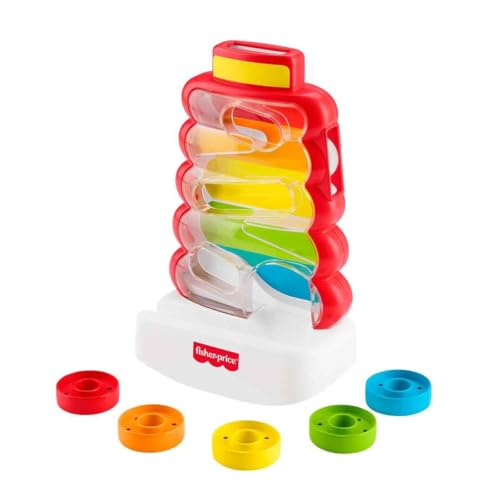
- Wobbly base rocks side to side
- Rings drop through top or side maze
- Rings attach to back for storage
- Fosters fine motor and cause-effect
Trade-offs
- Only 5 rings limits stacking variety
The wobbly base rocks side to side, turning the classic Rock-a-Stack into a drop-through activity where rings travel through a maze before rolling out. Five colorful rings can be dropped through the top or side, letting babies watch them roll down and around before exiting. At 15.3 inches tall, it’s a noticeable presence on the floor, and its 0.6-pound weight makes it easy for little ones to handle. Designed for infants 9 months and older, it helps foster fine motor skills, hand-eye coordination, and introduces cause and effect.
Its design focuses on the drop-through maze action rather than stacking height. Babies who enjoy watching rings roll will be entertained, while those aiming to build tall towers might prefer a set with more rings. The wobbly base intentionally prevents steady stacking, which is part of the fun but means it’s not a traditional stacker.
Product photos
Melissa & Doug Nesting Garages and Cars

What We Like
- Teaches color, size, and number matching
- Counting pictures on garage back walls
- Dual play: tower or town setup
- FSC-certified wood construction
Trade-offs
- Wooden cars lack storage for travel play
Fourteen pieces, seven graduated garages and seven wooden cars, give you a matching system that ties color, size, and number together in one play session. That means a toddler can pair the smallest red car with the smallest red garage, then flip the garage to see counting pictures on the back wall. It works for kids who are ready for early concept practice, and the FSC-certified wood construction means you aren’t introducing plastic into the mix. The set also doubles as a town layout, so creative play extends beyond stacking.
The set weighs one pound, which makes it easy for small hands to carry around. Compared to the Sassy Stacks of Circles Stacking Ring, this set offers a different kind of challenge: matching by color, size, and number rather than stacking on a single post. That makes it a good fit for toddlers who are ready for open-ended sorting and pretend play with cars.
TOWO Wooden Stacking Boxes
What We Like
- 10 graduated cubes for nesting and stacking
- Sustainable wood with non-toxic paints
- 115 cm tall tower when stacked
- Certified to EN71 and CPSA standards
Trade-offs
- At 2.7 pounds, heavier than most stacking toys
- Recommended adult supervision for ages 2+
- No base or rod to guide stacking
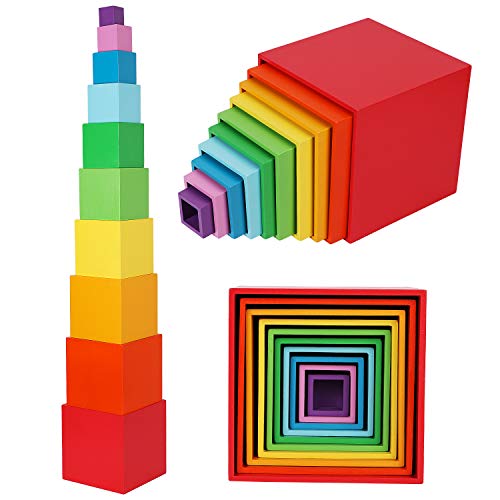
Ten solid wooden cubes that nest inside each other and stack into a tower 115 cm tall. The biggest cube measures 15 cm on each side, giving little hands plenty of room to grip, while the smallest is just 3.3 cm, so the size range is broad enough to teach relative scale. The cubes can be used for stacking, nesting, learning sizes and counting, or as drums and containers. The sustainable wood with certified non-toxic paints meets EN71 and CPSA standards, so safety is addressed for mouthing concerns. For a toddler ready for open-ended play, this set offers multiple ways to learn and explore.
At 2.7 pounds, these cubes are heavier than the Melissa & Doug Rainbow Stacker (0.8 pounds), so a toddler knocking over the tower gets a heavier impact. There is also no central rod or post to keep the stack aligned, so younger two-year-olds may need adult supervision to help steady the cubes until they get the hang of balancing. For a family that values durability and a toy that teaches size, color, and counting through real wood cubes, the extra heft and lack of a guide rod are acceptable trade-offs.
Product photos
B. toys Stacking Cups Bazillion Buckets

What We Like
- Includes storage bucket for all cups
- Works for sand, water, and bath play
- Teaches colors, numbers, and coordination
Trade-offs
- 7-inch height limits stacking height compared to taller sets
- Plastic cups lack the weight of wooden toys
At just one pound for all ten pieces, this set is light enough for a toddler to carry to the sandbox or bathtub without help. The included bucket stores all nine cups so cleanup is simple. The cups work as water and sand toys, so they can go from beach to bath to sandbox without missing a beat. The set encourages early learning by teaching colors, numbers, and hand-eye coordination through stacking play. For families who want a toy that works indoors and out, these cups offer a lot of value without extra weight.
The plastic cups are durable enough for drops and splashes, but they lack the weight and texture of wooden alternatives. With a finished height of 7 inches, a toddler who enjoys building tall towers may find this set limiting compared to taller stacking toys like the Fisher-Price Wood Rock-a-Stack, which stands 9.4 inches. However, for most 18-month-olds, the combination of nesting, stacking, and water play provides a well-rounded play experience. If your child is already focused on building the highest tower possible, a ring stacker with a longer post might be a better fit.
Product photos
The First Years Stack & Count Stacking Cups

What We Like
- BPA-free for bath safety
- Numbered bottoms teach counting
- Holes in cups for water play
- Bright colors for sensory engagement
Trade-offs
- Only 8 cups limits stacking height
- Numbers are small for young toddlers
Eight cups with numbered bottoms and holes for pouring turn bath time into a counting and water-play activity. The BPA-free plastic is safe for wet environments like baths or water tables, and the bright colors engage a baby’s senses. A 9-month-old can stack and pour, while an older toddler can practice numbers on the inverted cups. If your child spends a lot of time in the tub or at the beach, these cups offer a dual-purpose design that works wet.
The trade-off is that 0.3-pound cups are lightweight and may not stay put on a dry floor compared to the Sassy Stacks of Circles ring stacker, which weighs 0.6 pounds and has a larger base. These cups are best for water play where they can be poured and stacked; on a carpet they may tip over easily. For a dedicated dry-land stacker, the Sassy ring set offers more heft. But if bath splash is your primary play zone, the numbered, pour-through design of these cups adds learning to the fun.
Product photos
JUXUE Baby Spinning Stacking Toys
What We Like
- Spinning discs rotate as they fall
- Two colors per disc for color recognition
- Base flips to shake or fix in place
- BPA-free ABS plastic construction
Trade-offs
- Plastic construction lacks natural feel of wood
- Only one play mode without additional pieces
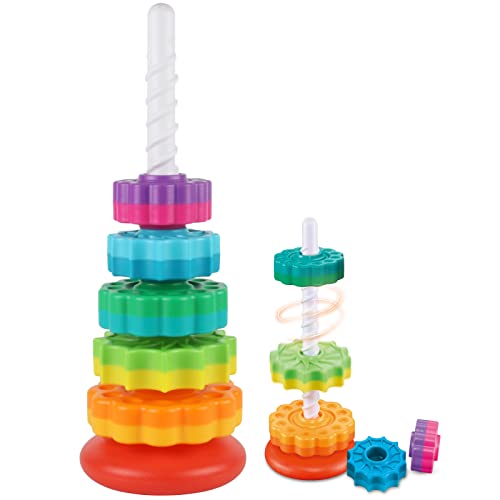
The JUXUE stacking toy uses a screw rod and rainbow-colored discs that spin as they fall when the pole is pulled off the base, giving toddlers a cause-and-effect surprise. The flip base lets you lock it steady for stacking or set it wobbly for an extra challenge. It suits families who want a Montessori-style toy that doubles as a sensory activity for hand-eye coordination and color matching. The two-tone discs (each ring has two colors adds a layer of visual sorting.
At 14 inches tall, this stacking toy towers over the Sassy Stacks of Circles (8 inches). A 12 month old on a low table might need help balancing the pole upright, and on a carpet the narrow base can wobble. The ABS plastic is durable and BPA free. It lacks the warm grippy feel of the Melissa & Doug wooden rings, so if your child tends to mouth toys or you prefer natural materials, that’s worth considering.
OESSUF Extra-Large Stacking Rocks
What We Like
- Extra-large size for toddler hands
- FSC-certified solid wood construction
- Smooth, BPA-free water-based finish
- Open-ended Montessori-style play
Trade-offs
- Only 16 pieces limits complex builds
- Noisy when dropped on hard floors
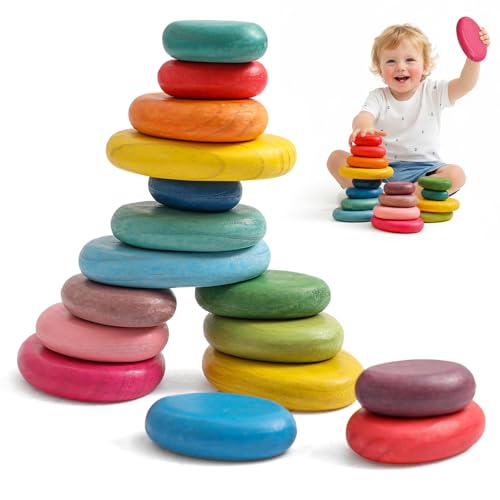
Each rock measures 3.1 inches long and is made from solid FSC-certified wood with a smooth, BPA-free water-based finish, so parents can feel confident about safety during play. These jumbo balancing stones are designed for toddlers ages 1 to 3, with pieces large enough for small hands to grip and sturdy enough for repeated stacking. The open-ended design supports fine motor skills, color sorting, and creative balancing, making it a versatile toy for early development.
With only 16 pieces, older toddlers or siblings may run out of rocks before their tower ambitions do. The OESSUF rocks focus on balance and spatial reasoning, which encourages STEM thinking, but children who prefer a more guided stacking activity might find the open-ended play less satisfying. Because the rocks are relatively flat and small in footprint, wobbly towers tip fast, teaching persistence, but potentially frustrating easily discouraged kids.
Product photos
How We Evaluated Stacking Toys
We reviewed each toy’s design, materials, and age range by studying manufacturer documentation and expert round-ups on child development through play. Owner feedback patterns helped us understand what worked in real homes, which toys held up, which frustrated kids, and which encouraged independent play. No toy was tested in a lab; this is a research-led evaluation to narrow your options.
The four criteria that mattered most were developmental fit, material safety, play value, and durability. We checked whether a toy matched its stated age range, a wobbly base is great for an 18-month-old but unsafe for a 6-month-old who needs stability. Materials like BPA-free plastic, non-toxic paints, and FSC-certified wood were prioritized for safety.
We also considered how many ways a child could play with each toy. Stacking rings that only stack once limit engagement, while nesting cubes, mazes, and spinning discs offer more variety. Durability was assessed through construction quality and owner reports of wear, though we didn’t put any toy through long-term use ourselves.
What To Look For In Stacking Toys
Choosing a stacking toy comes down to matching the toy’s features to your child’s age and your family’s priorities. Here are the key factors to consider.
Pick a stacking toy that matches your child’s age and motor skills, uses safe materials, and offers enough play variety to stay interesting beyond the first week.
Age and Developmental Stage
The most common mistake is buying a toy that’s too advanced. Babies 6-12 months need a fixed, vertical rod with chunky rings they can easily grasp. Toddlers 12-18 months can handle graduated rings and wobbly bases, like the Melissa & Doug Rainbow Stacker. By age two, open-ended toys like the TOWO Wooden Stacking Boxes or OESSUF Extra-Large Stacking Rocks encourage creative problem-solving.
Material Safety and Durability
Wooden toys like the Melissa & Doug Rainbow Stacker and TOWO cubes use non-toxic paints and sustainable wood, making them a safe choice for mouthing toddlers. Plastic toys should be BPA-free, the First Years Stack & Count cups are specifically made for bath safety. Check for smooth edges, secure paint finishes, and construction that won’t splinter or break under normal play. For more on natural materials, see our curated selection of wooden toys.
Play Value and Versatility
The best stacking toys offer more than one way to play. Nesting cubes teach size and counting, car-themed sets add pretend play, and spinning stackers add cause-and-effect action. A toy that only stacks one way will be abandoned quickly. Look for toys that grow with your child, the Melissa & Doug Nesting Garages and Cars works as both a tower and a town setup, while stacking cups work for sand, water, and bath play. For more on open-ended building play, check out our guide to the best block toys.
- Check that rings are large enough to prevent choking hazards (follow the manufacturer’s age recommendation)
- Ensure a wobbly base is paired with an age-appropriate child who can sit unassisted
- Look for storage solutions like a bucket or stacking cups that nest together
- Confirm the toy’s paint or finish is non-toxic and won’t chip easily
A stacking toy that offers two or three play modes will hold your child’s interest months longer than a single-use toy.
Stacking Toys Compared
The table below compares all ten stacking toys by age range, material, piece count, and key features so you can see at a glance which one fits your child best.
| Product | Age Range | Piece Count | Material | Weight |
|---|---|---|---|---|
| Sassy Stacks of Circles Stacking Ring | 6 to 24 months | 9 piece set | BPA Free | 0.6 pounds |
| Melissa & Doug Rainbow Stacker | 18 months to 3 years | 7 rings + topper + rod + rocking base | Wood | 0.8 pounds |
| Fisher-Price Wood Rock-a-Stack | 18+ months | 7 wooden stackers | Wood (FSC-certified) | N/A |
| N/A | 9+ months | 5 colorful rings | N/A | 0.6 pounds |
| Melissa & Doug Nesting Garages and Cars | N/A | 7 stacking garages and 7 wooden cars | FSC-certified wood | 1.0 pounds |
| TOWO Wooden Stacking Boxes | 2 years plus | 10 nesting cubes | Sustainable wood | 2.7 pounds |
| B. toys Stacking Cups Bazillion Buckets | 18+ months | 9 stacking cups and 1 bucket | Plastic (colored) | 1.0 pounds |
| The First Years Stack & Count Stacking Cups | 9 months+ | 8 Cups | BPA-free plastic | 0.3 pounds |
| JUXUE Baby Spinning Stacking Toys | 12 months + | Spinning discs + screw rod + base | ABS plastic, BPA free | N/A |
| OESSUF Extra-Large Stacking Rocks | N/A | 16 PCS | Solid wood, FSC certified | 1.1 pounds |
Frequently Asked Questions
What age should I introduce stacking toys?
Most babies can start with a simple ring stacker around 6 months once they can sit with support and reach for objects. The Sassy Stacks of Circles is designed for this age with chunky rings and a fixed post. Wait until 18 months for toys with wobbly bases or small pieces.
Are wooden stacking toys better than plastic ones?
Wooden toys like the Melissa & Doug Rainbow Stacker are more durable and feel natural, but plastic toys offer features like water play, spinning discs, and lighter weight. Both are safe when made with non-toxic materials. The best choice depends on where your child will play and what features matter to you.
How many pieces should a stacking toy have?
For babies under 12 months, 5-7 rings is plenty. Toddlers 18 months and up benefit from more pieces, the TOWO Wooden Stacking Boxes include 10 cubes, and the OESSUF Extra-Large Stacking Rocks include 16 pieces. More pieces mean longer play and more complex builds.
Can stacking toys help with learning?
Yes, stacking toys teach size differentiation, color recognition, counting, and cause-and-effect. Numbered cups like The First Years Stack & Count cups reinforce early math skills, while car-themed sets teach matching by color, size, and number. For more on early learning through play, explore our best STEM toys for toddlers.
What is the difference between stacking and nesting toys?
Stacking toys build upward on a vertical rod or by balancing pieces on top of each other. Nesting toys fit inside one another, like the TOWO Wooden Stacking Boxes. Both build fine motor skills, but nesting also teaches spatial relationships and size comparison. Many sets, like stacking cups, offer both play modes.
The Bottom Line
The Sassy Stacks of Circles Stacking Ring is our best overall pick for its thoughtful design that supports hand-eye coordination, sensory development, and cause-and-effect learning from 6 months onward. It’s the safest bet for most families starting with stacking toys.
If you prefer natural materials, the Melissa & Doug Rainbow Stacker offers classic wooden durability with a rocking base that adds a fun challenge for toddlers 18 months and up. For budget-conscious families, the B. Toys Stacking Cups Bazillion Buckets deliver versatile sand, water, and bath play at an affordable price point.
The single most important factor is matching the toy to your child’s current developmental stage. A toy that’s too advanced will frustrate, while one that’s too simple will bore. Our stacking toy buying guide can help you match features to your child’s age and skills, and our top toddler stacking toys roundup has more options if these don’t fit.
