
10 Best Sand For Sandbox in 2026
This post contains affiliate links. As an Amazon Associate, we earn from qualifying purchases.
The Sandtastik Sparkling White Play Sand is our pick for the best overall sand for sandboxes. It is non-toxic with no free silica, moldable when wet, and has a bright white color that makes sensory play inviting. For a low-dust alternative with a soft fine texture, the U.S. Silica Snow White Play Sand is a strong choice, while the Sun Joe Silica Play Sand offers a large 50-pound bag of natural white sand for versatile use.
The challenge with choosing sand for a sandbox is balancing safety, dust levels, and texture against the size of your play area. You also need to decide whether you want sand that holds wet shapes or stays loose for scooping and pouring. A bag that works for a small sensory table might leave a backyard sandbox looking bare.
This guide is research-based, drawing on manufacturer specifications, material safety data, and patterns in owner feedback across dozens of play sand products. We break down the key differences in silica content, grain size, color, and bag weight so you can match the right sand to your child’s play space.
Top 10 Sands For Sandbox in the Market
Certain content that appears on this site comes from Amazon. This content is provided "as is" and is subject to change or removal at any time.
The Best Sands For Sandbox, Reviewed
Sandtastik Sparkling White Play Sand

What We Like
- Non-toxic with no free silica
- Moldable with added water
- Sparkling white color for sensory play
- Sized for sand tables and boxes
Trade-offs
- 25 lb bag fills smaller sandboxes only
- Shovel and bucket sold separately
A 25-pound bag of non-toxic sand with no free silica means you can let the kids dig, scoop, and build without worrying about airborne dust or harmful ingredients. That safety-first design, combined with a bright sparkling white color that makes sensory play more engaging, makes this sand ideal for indoor sand tables, classroom sensory bins, and smaller backyard sandboxes. You get a clean, moldable material that holds its shape when you add a little water.
The 25-pound bag is light enough to carry with one hand, so it’s ideal for a small sand table or a sensory bin rather than a big outdoor sandbox. If you need to fill a large playground box, the 50-pound U.S. Silica Snow White Play Sand offers more volume per bag, but it contains silica, unlike this sand’s non-toxic, silica-free formula. For parents who prioritize safety and a bright white color for contained play areas, this bag hits the mark.
Product photos
U.S. Silica Snow White Play Sand

What We Like
- Washed and screened for low dust
- Soft fine texture for comfortable play
- Bright white color keeps spaces clean-looking
- Versatile for sandboxes and sensory bins
Trade-offs
- 50 lb bag is heavy to move without help
- Bright white color shows dirt and stains quickly
A 50-pound bag of fine, washed sand means you get a soft, low-dust material that’s pleasant to touch and won’t cloud the air during play. That’s the core appeal here. The washing and screening process cuts down on airborne particles, so kids can dig, pour, and mold without kicking up a haze, and you’ll spend less time sweeping sand off the patio. It’s a smart pick for anyone setting up a sandbox or sensory table where keeping the mess contained matters more than building towering castles.
This 50-pound bag of U.S. Silica Snow White Play Sand gives you twice the volume of Sandtastik’s 25-pound Sparkling White Play Sand, so you can fill a sandbox or sensory bin without needing a second bag. The fine, low-dust sand is washed and screened to reduce airborne particles, which keeps indoor play areas cleaner and cuts down on tracked dust during regular use. If you want a bright white, soft-textured sand for everyday digging and pouring, this bag delivers the quantity and cleanliness for extended play.
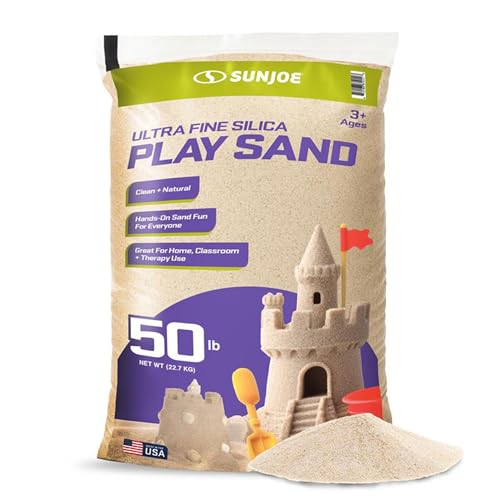
Sun Joe Silica Play Sand
What We Like
- Ultra-clean natural white silica sand
- Soft smooth texture for easy molding
- Versatile for sandboxes, sensory tables, gardens
- Supports tactile exploration and fine motor skills
Trade-offs
- Requires dry ventilated storage to prevent moisture
A full 50-pound bag of natural white silica sand gives you enough material to fill a standard sandbox or sensory table without needing a second trip. The ultra-clean, soft texture molds easily for digging and sculpting, which makes it a strong fit for families who want a versatile play medium that works both indoors and outdoors. It also supports sensory development through tactile play, so it suits parents and educators looking for more than just filler material.
This bag gives you 50 pounds of natural white silica sand, so you get twice the volume of Sandtastik’s 25-pound play sand for a similar type of material. That means fewer trips to the store if you’re filling a large sandbox or sensory table. Just keep in mind that because it’s straight silica sand, owners say it needs dry, well-ventilated storage to keep it from clumping.
Product photos
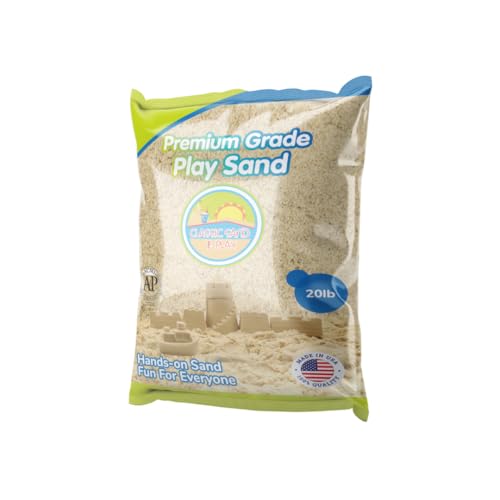
Classic Sand and Play Sand
What We Like
- Molds well when wet for castles
- Works indoors and outdoors
- Washed and dried for safety
Trade-offs
- 20 lb bag is smaller than many competitors
- Natural color only, no bright options
At 20 pounds, this bag is lighter than the 50-pound bags from several competitors, so it’s a better fit for topping off a sand table, refilling a therapy tray, or carrying to a park for a castle-building session. The sand has been washed and dried and is soft and easy to mold when wet, so it holds its shape for building. If your kid’s primary goal is packing a wet sandcastle that survives until lunch, this sand does that.
If you want a full-size sandbox filled in one trip, you’ll need to buy two or three of these 20-pound bags to match the volume of a single 50-pound bag from Quikrete or U.S. Silica. The natural color works fine for outdoor play, but the Sandtastik Sparkling White option gives a brighter look for sensory tables if aesthetics matter. For focused wet-castle building where moldability and quick drying are the whole point, the smaller bag means less leftover sand and less mess.
Product photos
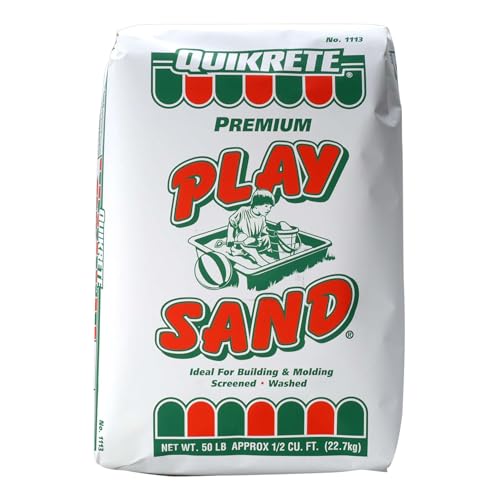
Quikrete Sandbox Play Sand
What We Like
- Pre-washed, dried, and screened for cleanliness
- 50-pound bag for filling or refreshing sandboxes
- Versatile for landscaping, crafts, reptile habitats
Trade-offs
- 50-pound bag is heavy to carry and pour
- Tan color stains light-colored clothing and fabrics.
You get a 50-pound bag of fine play-quality sand that is screened, washed, and dried. That means a soft, consistent texture with no hidden rocks or sharp bits, exactly what you want for a sandbox where little hands dig and build. This makes Quikrete Sandbox Play Sand a strong multi-use option. It works for starting a new play space, refreshing an old one, or even filling terrariums, zen gardens, and reptile habitats, so one bag covers more than just outdoor play.
You get a 50-pound bag of fine play-quality sand that is screened, washed, and dried. That means a soft, consistent texture with no hidden rocks or sharp bits, exactly what you want for a sandbox where little hands dig and build. This makes Quikrete Sandbox Play Sand a strong multi-use option. It works for starting a new play space, refreshing an old one, or even filling terrariums, zen gardens, and reptile habitats, so one bag covers more than just outdoor play.
Product photos
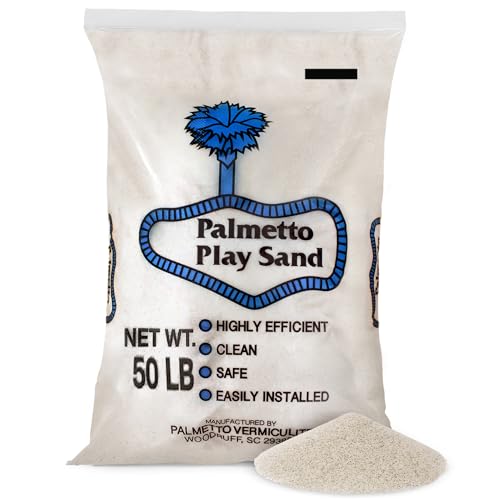
Palmetto Play Sand
What We Like
- Finely screened, washed, dried sand
- Low-dust texture for cleaner play
- Versatile for sensory bins and water tables
- Generous 50 lb bag for large setups
Trade-offs
- Coverage is modest for deep sandboxes
- Listed under pet supplies, not children's toys
A 50-pound bag of finely screened, washed, and dried creme-colored sand gives you a silky smooth texture that pours, scoops, and molds beautifully for sensory play. The low-dust particles mean less airborne grit during indoor bin sessions, so you can set up a sensory table in the living room without coating every surface in fine powder. This is the sand to reach for when your main goal is tactile exploration and creative construction rather than just filling a massive backyard pit.
The trade-off is coverage: at 18 square inches per bag at a 3-inch depth, you will need multiple bags for a typical sandbox. If you are building a dedicated outdoor sandbox for hours of digging, the modest coverage per bag means more trips to the store. But for sensory bins, classroom trays, or water table activities where a smaller volume goes a long way, this sand’s soft, clean feel and low-dust design make it a practical pick.
Product photos
Sandpiper Multiuse Kids Sand
What We Like
- Cleaned and washed for safe play
- 99% silica for sturdy castle building
- Low-dust design minimizes mess
- Made in the USA
Trade-offs
- 50 lb bag is heavy to move around
- Not suitable for parents seeking silica-free play sand.
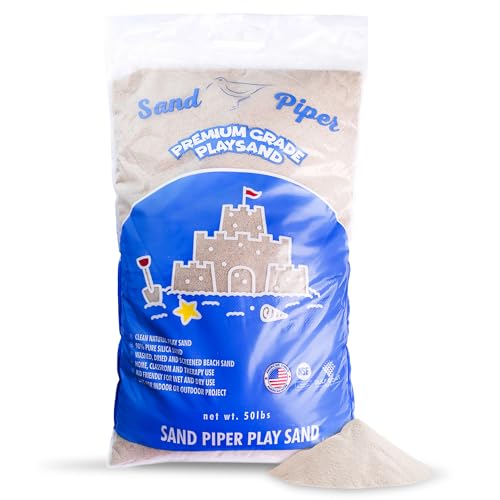
A 50-pound bag of 99% pure silica sand with consistently-sized grains means you get reliable molding for sandcastles without the clumping or dust clouds that ruin the fun. The sand is cleaned and washed, so it’s safe for little hands whether you pour it into a backyard sandbox, a classroom sensory bin, or a craft table indoors. That versatility, from beach forts to art projects, makes it a practical choice for many settings.
At 50 pounds, this bag is heavy enough that you’ll think twice before hauling it from the garage. If you need a lighter load for a smaller setup, Sandtastik’s 25-pound play sand offers a different volume option. If you want one bag that fills a sandbox and still works for crafts, Sandpiper delivers on volume.
Families with both outdoor sandboxes and indoor sensory or craft needs who want one bag to do it all. Not ideal for anyone who needs a lighter bag for frequent transport or prefers a non-silica sand option.
Product photos
Trade Grade Play Sand
What We Like
- Non-toxic and kid-safe formula
- Holds moisture for wet castle building
- Versatile for indoor and outdoor play
Trade-offs
- 10-pound bucket fills only small sandboxes
- Not enough sand for larger sandboxes
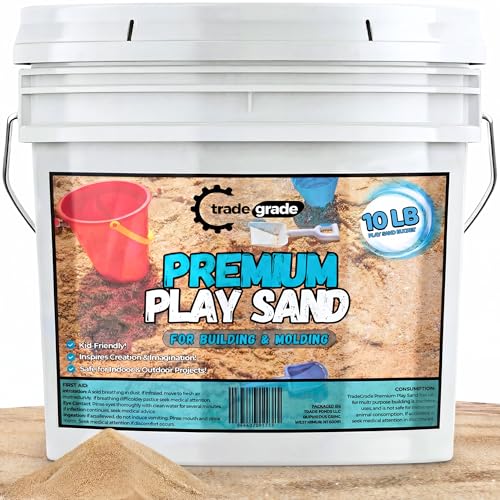
At 10 pounds, this sand comes in a compact bucket that’s easy to carry and store. It’s best for topping off a small sandbox or filling a sensory table rather than filling a large play area. The non-toxic, low-dust formula means you can let kids dig in without worrying about harmful chemicals or clouds of fine particles, and it holds moisture well enough for building wet sandcastles that actually keep their shape. For families who want a budget-friendly starter sand for occasional indoor or outdoor creative play, this is practical, no-fuss option.
The trade-off is size: a 10-pound bucket goes fast if you’re trying to fill a full-sized sandbox. Compared to the 25-pound Sandtastik Sparkling White Play Sand, this bucket is lighter and more portable but gives you less sand per purchase for the same kind of use. If your child’s sandbox is small or you’re mainly using it for a sensory table or therapy tray, the smaller volume won’t be an issue. For a larger sandbox, you’ll need multiple buckets, which adds up in handling even if the per-unit cost stays low.
Product photos
U.S. Silica Large Play Sand
What We Like
- 50-pound bulk bag for large sandboxes
- Fully washed and non-toxic
- Finely graded for moldable texture
- Safe for children 4 years and older
Trade-offs
- 50 lb bag is heavy to move around
- Beige color, not bright white
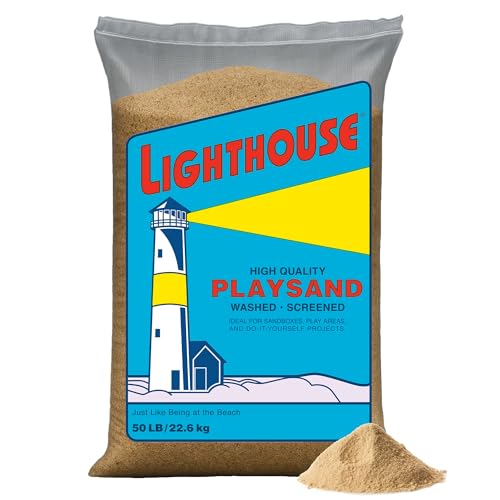
A full 50 pounds of finely graded, fully washed sand means you can fill a decent-sized sandbox in one go without multiple trips to the store. The bag can ideally fit an area of 18 inches by 18 inches up to 3 inches deep, so it’s suited for a dedicated backyard sandbox or a large sensory table. The sand is non-toxic and free from harmful chemicals, which matters when little hands are scooping and sifting for hours. It’s designed to hold its shape while providing a soft, moldable texture that’s easy to clean up, making it a practical choice for parents who want durable play value without fuss.
The bag weighs 50 pounds, so you’ll want a dolly or a helper to move it across a lawn. It’s a natural beige color, unlike the Sandtastik Sparkling White Play Sand, which is described as sparkling white. For sheer volume and straightforward quality at a bulk-friendly size, this is the sand you grab when you need to fill a real sandbox and don’t want to compromise on safety or texture.
Sandtastik Therapy Play Sand

What We Like
- Formulated for therapy professionals
- Safe and non-toxic natural materials
- Soft tactile texture for sensory play
- Versatile for sand and water tables
Trade-offs
- 25 lb box is heavy to move around
- Coarse texture won't hold wet molds or firm shapes
A 25-pound box of coarse sand designed specifically for therapy and sensory work means you’re getting a material that prioritizes tactile exploration over other uses. Sandtastik Therapy Play Sand made from 100% natural, eco-friendly materials and is free from harmful chemicals, so it’s safe for kids who might put hands in mouths. Its coarse texture is ideal for sensory tables, sand trays, and water tables, making a good fit for teachers, therapists, and parents who want a controlled sensory play that encourages fine motor development without worrying about chemicals or dust.
This sand is a coarse, tactile material formulated for therapy professionals and teachers, not for wet sculpting or firm molds. Its texture is designed for sensory play and fine motor skill development, so if you need a sand that holds a castle shape, you’d want a finer product like the U.S. Silica Snow White Play Sand. For classroom sensory bins or therapeutic sand trays, however, this 25-pound box delivers exactly what its target users need.
Product photos
How We Evaluated Sands For Sandbox
We started by reviewing material safety data and product specifications for each sand, focusing on silica content, whether the sand is washed and screened, and any certifications for non-toxic materials. We cross-referenced those specs with patterns in owner feedback about dust levels, moldability, and how well the sand held up over time in both indoor and outdoor settings.
The four criteria that mattered most were safety (no free silica for young children), dust level (low-dust sands keep play areas cleaner and reduce respiratory irritation), and texture and moldability (fine versus coarse grain. Also important is bag size, meaning how many pounds you need for your sandbox or sensory table. A 50-pound bag can fill a standard backyard sandbox, but a 25-pound bag fits small sensory tables.
A research-led evaluation has limits. Our recommendations come from reading manufacturer documentation, safety data sheets, and what owners consistently report about dust, texture, and moldability after use.
What To Look For In Sands For Sandbox
Choosing the right sand for a sandbox comes down to safety, texture, and coverage. Here is what to check before you buy.
Look for sand labeled non-toxic and free of crystalline silica for young children. Fine grains mold well when wet. Low-dust sand keeps play areas cleaner. Match bag weight to your sandbox or sensory bin size.
Safety and Silica Content
The biggest safety concern with play sand is crystalline silica, which can be harmful when inhaled as dust over time. Many play sands are labeled as containing silica because sand is naturally silica-based, but the key is whether the sand is free of free crystalline silica or has been washed to reduce dust.
The Sandtastik Sparkling White Play Sand is specifically formulated with no free silica, making it a safer choice for toddlers and sensory play. For a safe play sand overview of play sand brands. Non-toxic certification from a third-party testing is a good sign.
Grain Size and Moldability
Sand that is too coarse feels uncomfortable to touch and won’t hold shapes for castle building. Sand that is too fine can create dust clouds. Most play sands are screened to a fine or medium grain that balances soft texture with the ability to hold wet shapes.
Comparing play sand and river sand shows that play sand is typically finer. For wet castles, look for sand described as moldable or as holding shape when damp. The Classic Sand and Play Sand is a good example of sand that molds well when wet.
Dust Level and Cleanliness
Low-dust sand reduces mess and keeps play areas cleaner, especially indoors or on patios. Sands that are washed and screened before bagging produce less airborne dust when poured or scooped. The U.S. Silica Snow White Play Sand is noted for its low-dust texture. Bright white sand shows dirt and stains quickly, while tan or beige sand hides wear better. If you are filling a sandbox that stays outdoors, a natural beige color may be more practical.
- Check the label for “washed” and “screened” to ensure low dust.
- Look for “non-toxic” and “silica-free” if children under 3 will play.
- Match bag weight to your sandbox depth: a 50-pound bag fills roughly half a cubic foot.
- Choose moldable sand for wet castles, not coarse or dry sand.
- Buy from brands with clear safety data sheets.
A standard backyard sandbox needs roughly 100 to 150 pounds of sand for a 4×4-foot box at 6 inches deep.
Sands For Sandbox Compared
The table below compares each sand’s bag size, silica type, and best use case so you can see at a glance which one fits your sandbox.
| Product | Weight | Color | Material |
|---|---|---|---|
| Sandtastik Sparkling White Play Sand | 25 lb (11.3 kg) | Sparkling White | Premium Non-Toxic, No Free Silica |
| U.S. Silica Snow White Play Sand | 50 pounds | Bright white | N/A |
| Sun Joe Silica Play Sand | 50 lb bag | Natural white | Natural silica sand |
| Classic Sand and Play Sand | 20 lb | Natural | Premium-grade play sand |
| Quikrete Sandbox Play Sand | 50 pounds | Tan | Fine play-quality sand |
| Palmetto Play Sand | 50 lb | Creme | Washed, dried natural sand |
| Sandpiper Multiuse Kids Sand | 50 lb | N/A | 100% natural silica sand |
| Trade Grade Play Sand | 10.0 pounds | N/A | Kid-safe, non-toxic |
| U.S. Silica Large Play Sand | 50 pounds | beige | Premium-grade, washed sand |
| Sandtastik Therapy Play Sand | 25 pounds | White | 100% natural, eco-friendly |
Frequently Asked Questions
What is the safest sand for a sandbox?
The safest sand for a sandbox is one labeled non-toxic and free of crystalline silica. The Sandtastik Sparkling White Play Sand is formulated with no free silica, making it a top choice for toddlers and sensory play. Look for sand that has been washed and screened to reduce dust.
How much sand do I need to fill a sandbox?
To fill a standard 4×4-foot sandbox at 6 inches deep, you need about 100 to 150 pounds of sand. A 50-pound bag covers roughly half a cubic foot, so most backyard sandboxes require two or three bags. Sensory tables and small sandboxes need much less.
Can I use any sand in a sandbox?
Not all sand is safe for children. Play sand is washed, screened, and tested for contaminants, while construction sand or river sand may contain sharp particles, clay, or silica dust. Always choose sand labeled for play sandboxes or sensory play. The difference between play sand and river sand matters for safety.
What is the difference between play sand and river sand?
Play sand is washed, screened, and dried to remove fine dust and impurities. River sand is natural sand from riverbeds that often contains silt, clay, and larger particles. Play sand is safer for children because it is processed to reduce dust and tested for contaminants. River sand is used for construction.
How do I keep sandbox sand clean?
Keep sandbox sand clean by covering the sandbox when not in use, sifting out debris weekly, and replacing sand every year or two. Use a sandbox cover to keep out animals and leaves. For indoor sensory bins, store sand in a sealed container between play sessions.
The Bottom Line
For most families, the Sandtastik Sparkling White Play Sand is the best overall choice because it is non-toxic, free of silica, and moldable for wet play. Its sparkling white color makes it ideal for sensory tables and indoor sandboxes where safety and cleanliness matter most.
If you need a large bag for a backyard sandbox and prefer a low-dust, fine texture, the U.S. Silica Snow White Play Sand is a strong alternative. For budget-conscious shoppers, the Trade Grade Play Sand in a 10-pound bucket works well for sensory play or topping off a small sandbox.
The single most important buying factor is safety: choose sand that is labeled non-toxic and free of crystalline silica, especially for young children. Everything else, dust level, grain size, bag weight, comes second to knowing what is in the bag.
