
10 Best Coop Board Games in 2026
This post contains affiliate links. As an Amazon Associate, we earn from qualifying purchases.
The best cooperative board game we’ve found is Greater Than Games Spirit Island, a deeply strategic game where each of eight unique spirits offers a completely different play style across four difficulty levels. For a classic team challenge, Z-Man Games Pandemic remains the go-to, while families with young children will love Peaceable Kingdom Ghost in the Attic for its glow-in-the-dark fun.
The real challenge in finding a cooperative board game isn’t the genre, it’s matching the complexity to your group. A game that delights a pair of strategy veterans will overwhelm a family with young kids, and a simple preschool game will bore experienced players within one round.
We compared rule complexity, player counts, play time, and age ratings across expert round-ups and owner feedback. This guide covers ten top picks, from quick 20-minute trick-takers to sprawling campaign adventures, so you can find the right fit for your group.
Top 10 Cooperative Board Games in the Market
Certain content that appears on this site comes from Amazon. This content is provided "as is" and is subject to change or removal at any time.
The Best Cooperative Board Games, Reviewed
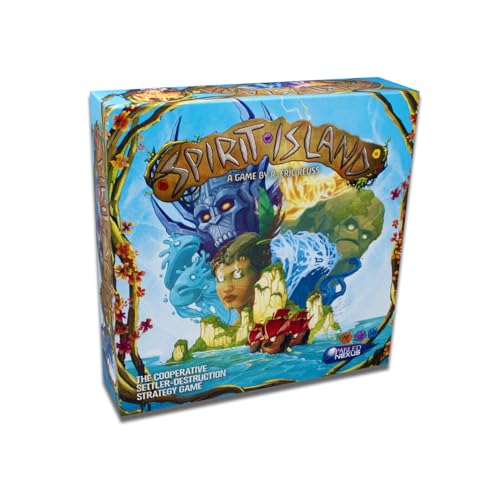
Greater Than Games Spirit Island
What We Like
- 8 unique spirits with distinct powers
- 4 difficulty levels for varied challenge
- High replayability with different setups
- Fully solo or multiplayer co-op
Trade-offs
- Complex rules for casual gamers
- Requires careful planning and teamwork
The eight spirits in this cooperative board game each have their own unique powers and playstyles, so every game forces you to adapt your strategy. Four difficulty levels let you start with simpler spirits and work up to the most complex ones, and optional Adversaries can crank up the challenge even further for experienced players. Reviewers say the game rewards planning and teamwork, making it a great fit for adults who enjoy deep, thoughtful sessions that last 90 to 120 minutes.
The trade-off is that 90-120 minutes is a serious time commitment, and the complexity can overwhelm groups looking for something lighter. Compared to Pandemic, which plays in about 45-60 minutes, Spirit Island demands more strategic planning and individual mastery. If your group prefers quick, accessible co-op, this one might sit on the shelf. But for players who love digging into a rich system and replaying with different spirit combos, it delivers exactly what it promises.
Z-Man Games Pandemic

What We Like
- Team-based cooperative play against the game
- Specialist roles shape unique strategies
- Rewards planning and communication
- Entry point to the Pandemic series
Trade-offs
- 2-4 player limit excludes larger groups
- Base game lacks campaign progression of later titles
A 45-to-60-minute play window means Pandemic delivers tense, focused sessions that fit neatly into a weeknight or family game night without dragging on. You and up to three others work as a team against the game itself, combining distinct specialist roles like Medic or Scientist to contain outbreaks and find cures before time runs out. That cooperative pressure rewards careful planning and clear communication, which is why it remains the go-to entry point for the entire Pandemic series. It suits groups who want a shared challenge rather than head-to-head competition, especially families with kids as young as eight.
Pandemic caps at four players, so larger gatherings will need to split into separate games or look elsewhere. If your group enjoys the base game, the Legacy campaigns build on these core systems for extended storytelling, but this standalone box keeps things contained and replayable without commitment.
Product photos
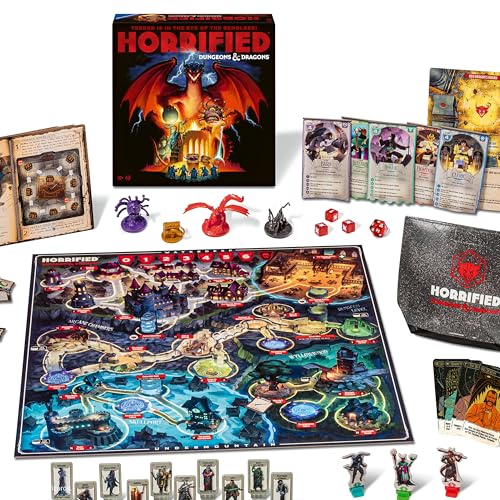
Ravensburger Horrified Dungeons & Dragons
What We Like
- 4 iconic D&D monsters with unique tactics
- Sculpted monster miniatures and custom d20
- Boosts critical thinking and teamwork
- Replayable 60-minute sessions
Trade-offs
- Requires at least one player to read rules carefully
- Only 4 monsters limit initial variety
Four legendary D&D monsters. Beholder, Displacer Beast, Mimic, and Red Dragon, each with their own unique tactics means every game forces you to rethink your strategy. That variety keeps the 60-minute sessions fresh, and the sculpted miniatures and custom d20 add real table presence. It’s a cooperative game that rewards communication and planning, making it a strong pick for families or groups who want a challenge that feels more like a shared puzzle than a race.
The 60-minute playtime can drag if someone at the table isn’t fully engaged, and younger players might struggle to stay focused that long. Compared to other cooperative games like Pandemic, which also runs about an hour, Horrified Dungeons & Dragons focuses on fantasy-themed monster battles rather than a disease outbreak scenario. If your group loves D&D lore and wants a cooperative battle where each monster feels like a boss fight, this is a smart buy.
Stardew Valley Cooperative Board Game

What We Like
- Cooperative play for 1-4 players
- Based on the hit video game
- 45-minute play time per player
Trade-offs
- 45 minutes per player can mean long sessions
- Ages 13+ excludes younger family members
- Solo play possible but limited to one player
With support for 1 to 4 players and a per-player play time of about 45 minutes, this board game turns the beloved farming sim into a shared cooperative experience. Fans of the video game will recognize the setting and collaborative spirit, making it a natural pick for anyone who wants to tend a virtual farm together without everyone needing their own screen.
The 45-minute-per-player estimate can stretch a four-player session past three hours. That might feel long for groups that prefer quicker rounds. Compared to something like Pandemic, which plays in 45-60 minutes, this one demands a bigger time commitment for larger groups. It’s best for dedicated fans of the source material or cooperative players who enjoy a slower, more immersive pace, but less ideal for families with younger kids or game nights that need to stay under an hour.
Product photos
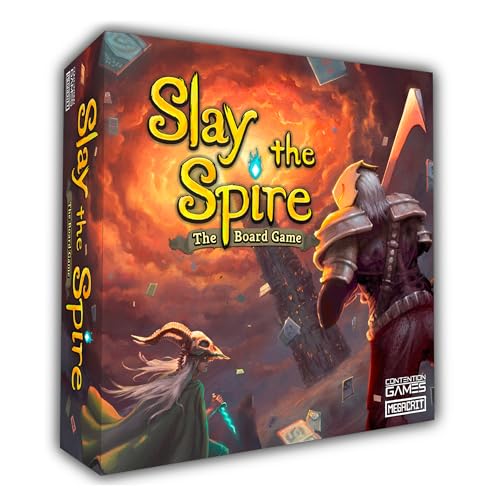
Contention Games STS001EN Coop Board Game
What We Like
- Over 650 cards for deep deckbuilding
- Cooperative 1-4 player adventure
- High-quality miniatures and boards
- 45-minute learning time for new players
Trade-offs
- At 8.4 pounds, it's heavy to transport
- Requires 45 minutes to learn before playing
With over 650 cards to build from, this board game turns the digital deck-building hit into a tabletop experience that rewards planning and teamwork. Four miniatures, two main boards, and player boards give each session a tangible weight, and the 45-minute learning time means you’re not spending the whole evening reading rules. It’s built for groups that enjoy crafting a strategy together rather than racing through a quick round, and the cooperative focus keeps everyone invested in the outcome rather than competing against each other.
This is a substantial box, at 8.4 pounds it’s not something you toss in a backpack for game night at a friend’s house. Compared to a lighter pick like Pandemic, which weighs about 2.3 pounds and fits in a smaller footprint, this one demands a dedicated table and a bit of commitment. If your group loves deep customization and doesn’t mind the heft, it delivers a rich fantasy campaign. For those who prefer a quicker setup or a more portable option, a lighter cooperative game might suit better.
Product photos
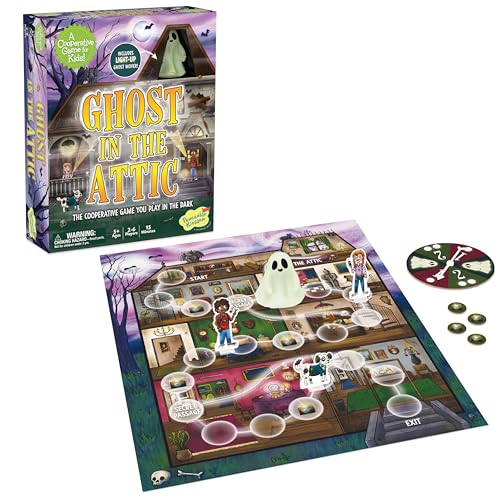
Peaceable Kingdom Ghost in the Attic
What We Like
- Glow-in-the-dark board and light-up ghost mover
- Teaches strategy, shared decision-making, and cooperation
- Non-stressful play environment for emotional development
Trade-offs
- Requires darkness to fully enjoy the glow features
A glow-in-the-dark board and a light-up ghost mover turn this cooperative game into a sensory experience that kids remember. Designed for ages 5 and up, it teaches shared decision-making and creative problem solving without the pressure of competition, perfect for young families who want game night to build skills, not stress. The haunted mansion theme and the simple ‘don’t let the ghost escape’ goal make it easy for even the youngest players to jump in and feel like they’re part of the team.
The magic really only comes alive when the lights go out, so daytime play loses some of its punch. Compared to Outfoxed, which uses a classic whodunnit format that works anytime, Ghost in the Attic leans heavily on its glow-in-the-dark gimmick to engage kids. If your family is okay with dimming the lights and wants a cooperative game that prioritizes emotional development over complex strategy, this is a memorable pick.
Gamewright Outfoxed
What We Like
- Cooperative play builds social skills
- Quick 15-20 minute rounds
- Easy rules learn in minutes
- Includes dice and decoder for clues
Trade-offs
- Limited to 4 players max
- Too simple for older kids or adults
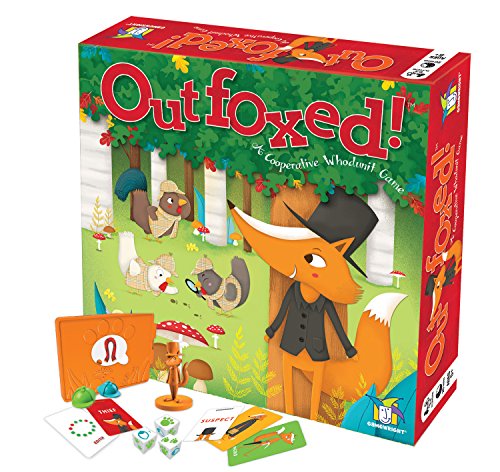
Fifteen to twenty minute rounds mean you can fit a full game in before bedtime or between chores, and the simple rules let kids as young as five jump in without a long explanation. The cooperative format turns the classic whodunnit into a team effort, so no one feels left out or loses, which is exactly what makes it work for preschoolers learning to share and solve problems together. The dice and decoder keep little hands busy while they practice logic and memory, all without a screen in sight.
The same mystery can feel repetitive after a few plays, and the four-player cap means larger families or playdates will have to take turns. Compared to something like Peaceable Kingdom Ghost in the Attic, which also targets ages five and up, Outfoxed leans harder on deduction mechanics and a clear narrative. But it doesn’t offer the glow-in-the-dark novelty or variable setup that some kids crave. If your group is strictly preschoolers and you want a fast, cooperative intro to clue-solving, this fits the bill; if you need more replayability or room for extra players, you might look elsewhere.
Scorpion Masqué Sky Team

What We Like
- 20 real-world airport scenarios with unique rules
- Cooperative dice placement for two players
- Optional modules for increased challenge
Trade-offs
- Strictly two-player, no solo or larger groups
- Dice placement requires trust between rounds
Twenty real-world airport scenarios mean every landing feels different, from the layout to the special rules, so you and your co-pilot never fly the same approach twice. This is a two-player cooperative dice placement game where you clear air traffic, adjust speed, level wings, and engage the brakes before time runs out. It encourages strategy between rounds and trust during the roll, making it a good fit for pairs who want a focused challenge that plays in about 20 minutes.
This is strictly a two-player experience. If you regularly have three or more at the table, something like Pandemic lets a whole team work together on a longer, more sprawling crisis. But for a dedicated duo who want a session with replay value, the optional modules like kerosene leaks or ice on the tarmac keep the challenge fresh. Just don’t expect to pull this out for a larger group.
Thames & Kosmos 691869 Coop Board Game

What We Like
- Innovative cooperative twist on trick-taking
- 32 difficulty levels for all skill levels
- Quick 20-minute play sessions
- Limited communication adds strategic depth
Trade-offs
- Only supports 3-5 players, not 2-player
- Requires creative communication under tight constraints
The Crew: Mission Deep Sea packs a full cooperative trick-taking experience into a 20-minute playtime, which means you can get a satisfying session in even on a busy weeknight. With 32 difficulty levels, it scales from family-friendly to brain-burning, so the same deck keeps surprising you as your group improves. The limited communication rule forces you to be creative and strategic, making every round a fresh puzzle where teamwork is the only way forward.
The Crew: Mission Deep Sea is a cooperative trick-taking card game that plays in about 20 minutes, so it’s a fast, focused experience for groups that want a quick challenge without a long time commitment. It supports 3 to 5 players, meaning duos will need to find a third. The game features 32 difficulty levels, so it can grow with your group’s skill.
Product photos
Fireside Games Castle Panic 2nd Edition

What We Like
- Four play modes including solo and competitive
- 3D towers and vibrant monster tokens
- Easy-to-learn cooperative tower defense
- Plagues, boulders, and boss monsters add tension
Trade-offs
- No solo mode for single players
- Only 1-6 players, not larger groups
Six players can huddle around the same board, trading cards and coordinating plans to keep at least one tower standing. That player count alone makes this one of the most accessible cooperative tower defense games for larger groups or family game nights. The 45-minute session keeps the tension high without dragging, and the four modes, co-op, solo, Master Slayer competitive, and Overlord, give you reasons to come back. Plagues, boulders, and boss monsters force you to adapt on the fly, so even experienced players stay engaged.
Groups seeking a light, cooperative tower defense experience will find this game gets everyone involved quickly. Designed for 1-6 players ages 8 and up, it challenges the team to defend Castle Bravehold from monsters attacking from all sides. Players trade cards, coordinate plans, and must keep at least one tower standing to survive the siege. The 45-minute adventure includes 3D towers, vibrant monster tokens, and an illustrated board that blends accessibility with strategic depth. Four modes. Co-op, Solo, Master Slayer competitive, and Overlord where one player controls the monsters, offer unique tension and replay value, making it ideal for mixed-experience groups.
Product photos
How We Evaluated Cooperative Board Games
We started by reviewing manufacturer specifications and rulebooks for every game, noting player counts, play times, age recommendations, and component quality. Then we cross-referenced these specs against patterns in owner feedback and expert round-ups to identify which games work well in practice.
The four criteria that mattered most were player count flexibility, complexity level, replayability, and age appropriateness. A game that only works for exactly four players is less useful than one that scales from two to six. Similarly, a game with a 45-minute learning curve needs a different audience than one you can teach in two minutes.
A research-led evaluation can tell you what a game includes and how it plays on paper, but it cannot replace a group’s actual taste. We prioritize games with clear rulebooks and strong owner satisfaction patterns, knowing that the best game for your group is the one your group will actually play.
What To Look For In Cooperative Board Games
The right cooperative game fits your group’s size, attention span, and tolerance for complexity. Start with player count, then match the play time and age range to your group’s habits.
Match the game’s player count, play time, and complexity to your group’s size and attention span. A great game that requires four players will disappoint a duo, and a 90-minute epic will frustrate a family with young kids.
Player Count and Group Size
Always check a game’s listed player count before buying. Some games, like Scorpion Masqué Sky Team, are strictly two-player, while others like Fireside Games Castle Panic 2nd Edition support up to six. If your group size varies, look for games that scale well across a range, many of the best cooperative games for families accommodate three to five players comfortably.
Complexity and Learning Curve
Cooperative games range from preschool-simple to strategy-heavy. Gamewright Outfoxed teaches in two minutes and plays in 15, making it ideal for young children. At the other end, Greater Than Games Spirit Island requires careful planning and a willingness to learn its systems. The best co-op games for adults often have steeper learning curves but reward that investment with deeper strategy.
Replayability and Variety
A cooperative game that plays the same way every time will lose its appeal quickly. Look for games with variable setups, multiple scenarios, or difficulty levels. Thames & Kosmos 691869 Coop Board Game offers 32 difficulty levels, while Contention Games STS001EN Coop Board Game packs over 650 cards for varied deckbuilding. Games with campaign or legacy elements offer the highest replay value.
- Check the age rating on the box, games marked 13+ are rarely suitable for younger kids.
- Verify the play time matches your group’s typical session length.
- Read the rulebook preview online to gauge complexity before buying.
- Look for solo mode if you plan to play alone sometimes.
A game your group can learn in 10 minutes and play in under an hour is the safest bet for most families.
Cooperative Board Games Compared
The table below compares all ten cooperative board games by player count, play time, age rating, and key strengths so you can quickly narrow your options.
| Product | Players | Play Time | Ages | Weight |
|---|---|---|---|---|
| Greater Than Games Spirit Island | 1-4 | 90-120 min | 14+ | 2.2 pounds |
| Z-Man Games Pandemic | 2-4 | 45-60 min | 8+ | 2.3 pounds |
| Ravensburger Horrified Dungeons & Dragons | 1-5 | 60 min | 10+ | 1.5 pounds |
| Stardew Valley Cooperative Board Game | 1-4 | 45 min per player | 13+ | 2.4 pounds |
| Contention Games STS001EN Coop Board Game | 1-4 | N/A | 12+ | 8.4 pounds |
| Peaceable Kingdom Ghost in the Attic | N/A | N/A | 5 & Up | 1.4 pounds |
| Gamewright Outfoxed | 4 | 15-20 minutes | 5 and up | 1.1 pounds |
| Scorpion Masqué Sky Team | 2 | 20 Minutes | 12+ | 1.2 pounds |
| Thames & Kosmos 691869 Coop Board Game | 3-5 | 20 Min | 10+ | 0.6 pounds |
| Fireside Games Castle Panic 2nd Edition | 1-6 | 45 min | 8+ | 2.3 lbs |
Frequently Asked Questions
What is the best cooperative board game for beginners?
Gamewright Outfoxed is the best entry point for new players, especially families with children ages 5 and up. It teaches in minutes, plays in 15 to 20 minutes, and requires no strategic planning, just simple cooperation and deduction. For adults new to cooperative games, Z-Man Games Pandemic offers a classic, well-balanced challenge that rewards communication without overwhelming complexity.
How many players do most cooperative board games support?
Most cooperative board games support two to four players, though some accommodate up to six. Fireside Games Castle Panic 2nd Edition works for one to six players. Scorpion Masqué Sky Team is strictly for two. Always check the player count on the box before buying to ensure your group can play.
What is the best cooperative board game for two players?
Scorpion Masqué Sky Team is our top pick for two players. It offers 20 airport scenarios with unique rules and optional modules for added challenge. Greater Than Games Spirit Island also plays well with two and supports solo play. For more options, see our guide to 2-player cooperative games.
Can cooperative board games be played solo?
Yes, many cooperative board games include solo modes. Greater Than Games Spirit Island supports fully solo play. Fireside Games Castle Panic 2nd Edition includes a solo mode despite its name. Stardew Valley Cooperative Board Game offers solo play but limits it to one player controlling all characters. Check the box or rulebook for solo support before buying.
What is the difference between cooperative and competitive board games?
In cooperative board games, all players work together against the game itself, sharing wins and losses. In competitive games, players oppose each other. Cooperative games emphasize teamwork, communication, and shared decision-making, making them ideal for families and groups where no one wants to be eliminated early.
The Bottom Line
Greater Than Games Spirit Island is the best overall cooperative board game for experienced players who want deep strategy, high replayability, and the option to play solo or with a group. Its eight unique spirits and four difficulty levels ensure no two games feel the same, but its complexity means it’s best for groups willing to invest in learning the rules.
If Spirit Island sounds too heavy, Z-Man Games Pandemic offers a classic cooperative experience that rewards planning and teamwork without the steep learning curve. Families with young children should look at Peaceable Kingdom Ghost in the Attic for ages 5 and up, or Gamewright Outfoxed for preschoolers who need quick, simple rounds.
The single most important factor in choosing a cooperative board game is matching the complexity to your group. A game that fits your player count, age range, and attention span will get played again and again, one that doesn’t will collect dust on the shelf.
