
10 Best Board Games To Play With Family in 2026
This post contains affiliate links. As an Amazon Associate, we earn from qualifying purchases.
The best board game to play with family depends on your group’s size and ages. For most households the Hasbro Gaming Trouble Board Game wins because its Pop-O-Matic die roller keeps things moving and kids as young as five can join in seconds. For larger gatherings, Big Potato Herd Mentality handles up to 20 players, while CATAN offers deeper strategy for older kids and teens.
The real challenge is finding a game that holds everyone’s attention, from the youngest player who can’t sit still to the teenager who wants something more than pure luck. You need a game that matches your group’s size, attention span, and preferred level of thinking.
This guide is research-based, drawing on manufacturer specs, expert round-ups, and patterns in owner feedback across ten games. We break down what each game does well, who it truly fits, and the trade-offs you should know before buying.
Top 10 Board Games To Play With Family in the Market
Certain content that appears on this site comes from Amazon. This content is provided "as is" and is subject to change or removal at any time.
The Best Board Games To Play With Family, Reviewed
Hasbro Gaming Trouble Board Game

What We Like
- Pop-o-Matic die roller keeps dice contained
- Easy to learn and quick to set up
- Includes Power Up Spaces for varied gameplay
- Classic family game for ages 5 and up
Trade-offs
- Only 2-4 players, not for larger groups
- No expansion or advanced variant for experienced players
The Pop-o-Matic bubble is the star here, it keeps the die from flying across the room and adds a satisfying pop that kids love. With rules simple enough for a five-year-old to grasp in minutes, this is the kind of game you can pull out when you need something quick and inclusive for a family night. The option to play with Power Up Spaces gives a little extra challenge once everyone has the basics down, which helps it stay interesting a bit longer than the original version.
Trouble is best for smaller families or pairs, since it only handles up to four players. If you have a bigger crew, something like Herd Mentality will fit everyone around the table. And while the gameplay is fast and frustration-free, it won’t satisfy the strategic thinker who wants to plan three moves ahead. For a low-pressure, nostalgic game that gets the youngest kids involved without a long rules explanation, this is a straightforward choice.
Product photos
Hasbro Gaming Sorry! Board Game
What We Like
- Classic race-to-home gameplay
- Slide, collide, and score mechanics
- Family game night favorite
Trade-offs
- Only 2-4 players limits large families
- No cooperative play option
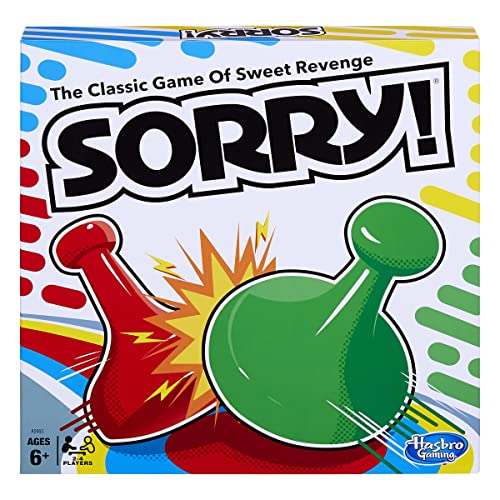
With three pawns per player and a simple race-to-home goal, this game keeps everyone on edge as they slide, collide, and send opponents back to start. It’s ideal for families with kids ages 6 and up who want a fast, competitive game that doesn’t require complex strategy. The sweet revenge mechanic turns every round into a playful grudge match, making it a go-to for casual game nights.
The biggest trade-off is player count: at 2-4 players, it can’t handle larger family gatherings like Herd Mentality can with up to 20 players. If your group regularly has more than four, you’ll need a backup game or take turns. For smaller families or pairs, though, the straightforward rules and quick rounds make it a reliable pick that even younger kids can grasp after one explanation.
Product photos
Big Potato Herd Mentality Board Game
What We Like
- Supports 4-20+ players
- Quick to learn and play
- Encourages group thinking
- Includes 20 extra questions
Trade-offs
- Requires at least 4 players
- Not recommended for under age 10
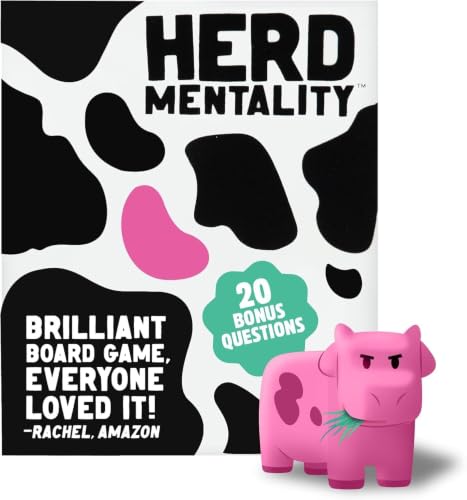
Supporting up to 20 players, Herd Mentality is one of the few board games that can handle a full holiday crowd without splitting into teams. The premise is dead simple: everyone reads a question, writes down what they think the group will say, and if your answer lands in the majority, you score a cow. The oddball who doesn’t match gets the pink cow of doom, a plastic cow that becomes a running joke as it passes around. It’s easy to teach in under a minute, and the box includes 20 extra questions, so repeat rounds stay fresh. For families that regularly host big dinners or reunions, this is the game that gets pulled out year after year.
Herd Mentality demands a crowd, it’s not a game for a quiet evening with just two or three people. If your family game night usually involves just four players, you can still play, but the magic really kicks in when you have eight or more. Compared to a game like Family Feud Deluxe Buzzer Edition, which also surveys group opinions, Herd Mentality is a different experience. For large, mixed-age groups that want something fast, funny, and almost zero setup, this is the one to grab.
Product photos
Hasbro Gaming Clue Board Game

What We Like
- Gold-plated zinc weapon tokens feel premium
- Richly reimagined characters with backstories
- Clue cards speed up sleuthing
- Beautifully detailed gameboard
Trade-offs
- Heavier than Trouble, less portable.
- 2.2 pounds is heavier than Trouble or Sorry
A 2.2-pound box with six textured, gold-plated zinc tokens and sculpted character movers gives this Clue edition a tactile heft that signals quality the moment you open it. The reimagined storyline adds depth to each suspect. Miss Scarlett, Colonel Mustard, and the rest now have backstories that make every accusation feel like uncovering a secret. For families with kids ages 8 and up who enjoy a bit of narrative with their deduction, this version turns a classic into something fresh without losing the core whodunit puzzle.
The Clue board game weighs 2.2 pounds, which is noticeably heavier than the Trouble board game at 0.8 pounds. That makes it less convenient to toss into a game-night bag. The murder mystery theme can feel heavy for younger players, but families ready to sink into a richer story and handle the gorgeous metal tokens will find this reimagined Clue delivers a satisfying, immersive experience that stands apart from simpler roll-and-move games.
Product photos
CATAN Board Game 6th Edition

What We Like
- Modular board ensures high replayability
- Teaches resource management and negotiation
- Supports 3-4 players for family nights
- Expandable to 5-6 players with extension
Trade-offs
- Requires 3 players minimum, not for 2
- Play sessions run 60-90 minutes, longer than casual games
- Ages 10+ excludes younger children
The modular hexagonal board means no two games ever play the same, so your family can return to Catan again without repeating the same map. It teaches resource management and trading in a way that feels like a friendly negotiation rather than a lecture. That’s why it earned its reputation as the go-to game for families who want a little more depth than roll-and-move. The 2.6-pound box is sturdy enough to survive a few knocks on game night, and the 10+ age rating keeps the rules accessible without being childish. A full session runs 60 to 90 minutes, so plan for a proper strategy session rather than a quick filler.
This isn’t a game you pull out for a quick 20-minute round before bed. At 60-90 minutes, it demands a block of time, and the 3-4 player minimum means a two-person household or a couple with one child will need to wait for a third. Compared to something like Ticket to Ride, which plays in 30-60 minutes and accommodates 2-5 players, Catan asks for a bigger commitment from your evening. But if your family enjoys a bit of strategic tension and the thrill of a well-timed trade, that extra time is where the fun lives.
Days of Wonder Ticket to Ride Board Game

What We Like
- Giant map of North American train network
- Miniature trains for each player
- Easy to learn, hard to master
- Multiple ways to win
Trade-offs
- 2-5 player limit excludes larger family groups
A 30-60 minute playtime and simple rules make this cross-country train adventure a sweet spot for family game night, long enough to feel like a real journey, short enough to hold attention. Designed for ages 8 and up, it works for mixed-age groups where parents and kids can both enjoy the strategy of collecting train cards and claiming routes across a giant map of North America. The miniature trains and colorful board add a tactile, visual charm that draws everyone in, and the multiple victory paths keep each playthrough fresh.
Younger kids or very large families may feel left out here. With a 2-5 player cap and a 30-60 minute commitment, it’s not the best pick for a quick round with a big group. But if your family enjoys a calm, thoughtful challenge where planning a route feels like a real adventure, this is your ticket.
Product photos
Spin Master Games Family Feud Deluxe Buzzer Edition
What We Like
- Authentic dual-action buzzers with lights & sounds
- Includes dry erase scoreboard for tracking
- Supports 3 or more players
Trade-offs
- Requires at least 3 players, not for pairs
- No built-in storage for cards and pieces
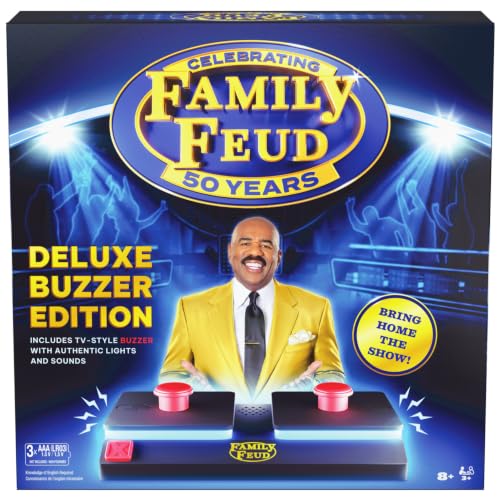
The two dual-action buzzers with authentic lights and sounds bring the energy of the TV show straight to your table, so you and your family can re-create the face-off rounds at home. With 150 Face Off and 50 Fast Money Cards, there’s enough variety to keep game night fresh for repeat plays. It works for groups of three or more, making it a natural fit for larger family gatherings where everyone wants to jump in and guess the most popular answers.
This game really shines with at least three players, so a two-person household won’t get the full team-vs-team experience. Compared to Herd Mentality, which handles up to 20 players with simpler rules, Family Feud demands a bit more setup and a dedicated host to read cards and keep score. But if your family loves the show and you’ve got a crowd ready to buzz in, the authentic buzzer action and themed question cards make it a memorable pick for game night.
Azul Mosaic Tile-Placement Board Game
What We Like
- Award-winning 2018 Spiel des Jahres
- Easy rules, deep tile placement strategy
- Fresh combinations each round for replayability
- Scales well from 2 to 4 players
Trade-offs
- Abstract theme less engaging for very young kids
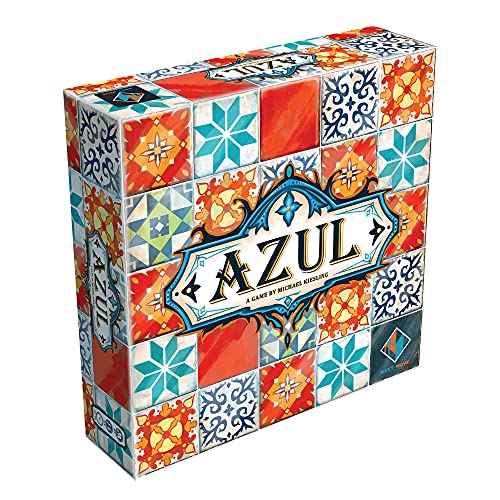
The shifting selection of tiles from shared factory displays creates a fresh puzzle each round, ensuring no two games play out the same way. This variability keeps the strategic depth high, as you must constantly adapt your tile-placement decisions to the available patterns and your opponents’ moves. Experienced players appreciate how the draft-and-deny mechanics force you to balance building your own mosaic wall while blocking rivals from completing their rows. The result is a consistently engaging experience that rewards careful planning and flexible thinking, making every 30-45 minute session feel unique and challenging.
The abstract tile-placement theme and individual scoring mean this isn’t a game for loud, chaotic groups. Compared to a party game like Herd Mentality, which supports up to 20 players, Azul is a quieter, more analytical experience. It’s best for players who enjoy outmaneuvering opponents through careful tile selection rather than shared laughter or fast guesses. Not ideal for large groups or those seeking high-energy party chaos.
Product photos
Ravensburger Labyrinth Board Game

What We Like
- Shifting maze changes every turn
- Builds critical thinking and planning skills
- Easy to learn, simple rules
- Includes 34 maze and 24 treasure cards
Trade-offs
- Only 2-4 players, not for larger groups
- Ages 7-10 target limits younger siblings
A shifting maze that rearranges with every turn means no two games play the same, that’s the core hook here, and it works. Each player slides maze cards to create new paths, hunting for treasures while blocking opponents, so you’re constantly thinking ahead and adapting. The simple rules let kids as young as seven jump in alongside adults, and the 20-30 minute rounds keep the pace lively without dragging. It’s a solid fit for family nights where you want something strategic but not punishing, especially if you’ve got a mix of ages and attention spans around the table.
The player count is a limitation: with a hard cap at four, this won’t work for bigger family gatherings or parties where you need to seat six or eight. Compared to something like Hasbro Gaming Sorry!, which also handles four players but relies on luck-based card draws, Labyrinth gives you more control over your moves and a genuine puzzle to solve each turn. That said, if your group regularly runs larger, you’ll want a second game in rotation, this one shines brightest with a focused group of two to four who enjoy outthinking each other.
The Uzzle 3.0 Board Game

What We Like
- Four difficulty levels for all ages
- 100 unique puzzles keep it fresh
- Improves problem-solving and cognitive skills
- Learned in under one minute
Trade-offs
- Requires extra games for more than 4 players
Four difficulty levels and 100 unique puzzles mean this game grows with your kids from age 4 through adulthood. Levels 1-2 are gentle enough for young children, while levels 3-4 challenge even sharp-eyed adults. The core mechanic is simple: race to flip, spin, and merge five patterned blocks to match the card. That speed-and-pattern mix keeps everyone on edge without needing a rulebook marathon first.
Player count is the main limitation: out of the box it supports up to four, so larger family gatherings require buying extra sets. Compared to a classic like Trouble, which caps at four players and offers no difficulty scaling, The Uzzle 3.0 gives you more flexibility for mixed-age play. If your family thrives on quick, competitive rounds that sharpen observation and reaction time, this is a reasonable choice.
How We Evaluated Board Games To Play With Family
We examined specifications, manufacturer documentation, expert recommendations, and common themes in owner reviews to understand how each game performs in real family settings. This evaluation is based on what the data and experienced players consistently report.
The three criteria that mattered most were player count flexibility, age range accessibility, and replay value. A game that only works for four people but takes 90 minutes is a poor fit for a family with three kids and a short attention span. We also weighed how quickly a game can be taught, since a 20-minute rules explanation kills the mood before the first turn.
A research-led approach has limits: we cannot account for every family’s unique dynamics, and no amount of spec sheets can predict whether your six-year-old will love or hate a shifting maze. What we can do is give you the clearest possible picture of what each game offers so you can match it to your family’s personality.
What To Look For In Board Games To Play With Family
Choosing the right family board game starts with three practical questions: how many people are playing, what ages are at the table, and how long does everyone want to sit still.
Look for games that fit your exact player count, offer rules simple enough for the youngest player, and have enough variety to stay interesting after the fifth play.
Player Count and Group Size
The biggest mismatch we see is buying a game that only seats four when your family has five or six players. Games like Trouble and Sorry max out at four players, while Herd Mentality supports 20-plus. If your family regularly has more than four at the table, skip the four-player games entirely and look at titles like Herd Mentality or Family Feud that scale up naturally.
Age Range and Complexity
A game’s listed age is a good starting point, but the real test is whether the youngest player can grasp the core mechanic in one round. Trouble works for ages five and up because the Pop-O-Matic die roller makes movement tactile and obvious. CATAN requires ages ten and up because resource trading and negotiation demand abstract thinking. For families with a wide age spread, look for games for all ages that offer simple rules but enough depth to keep older players engaged.
Play Time and Replayability
A 90-minute game is fine for a dedicated Friday night session, but it will gather dust if your family usually has 20 minutes after dinner. Quick games like The Uzzle 3.0 (learned in under a minute) or Labyrinth (shifting maze changes every turn) work better for short windows. For replayability, modular boards like CATAN’s or the 100 unique puzzles in The Uzzle 3.0 ensure the game feels fresh long after the first few plays.
- Check the box for minimum and maximum player count before buying.
- Read the age recommendation and then ask yourself if your youngest can understand the core rule.
- Consider how much table space the game requires, some boards are surprisingly large.
- Look at whether the game includes expansions or variants for when your family outgrows the base version.
A good rule of thumb: if the rules take longer to explain than the first round takes to play, the game is probably too complex for casual family nights.
Board Games To Play With Family Compared
The table below compares all ten games across player count, age range, play time, and key strengths so you can quickly narrow your options.
| Product | Players | Ages | Weight | Dimensions |
|---|---|---|---|---|
| Hasbro Gaming Trouble Board Game | 2-4 | 5 and up | 0.8 pounds | 10.5 x 10.5 x 1.6 inches |
| Hasbro Gaming Sorry! Board Game | 2-4 | 6+ | 1.0 pounds | 10.5 x 10.5 x 1.6 inches |
| Big Potato Herd Mentality Board Game | 4-20+ | 10+ | 1.0 pounds | 7.4 x 5.8 inches |
| Hasbro Gaming Clue Board Game | 2-6 | 8 and up | 2.2 pounds | 15.8 x 10.5 x 1.6 inches |
| CATAN Board Game 6th Edition | 3-4 | 10+ | 2.6 pounds | 11.7 x 3.7 x 0.1 inches |
| Days of Wonder Ticket to Ride Board Game | 2-5 | 8+ | 2.8 pounds | 11.7 x 11.7 x 3.0 in |
| Spin Master Games Family Feud Deluxe Buzzer Edition | 3 or more | 8 & up | 2.4 pounds | 7.2 x 3.8 x 0.1 inches |
| Azul Mosaic Tile-Placement Board Game | 2-4 | 8+ | 2.5 pounds | 10.2 x 10.2 x 2.8 inches |
| Ravensburger Labyrinth Board Game | 2-4 | 7-10 and older | 2.1 pounds | 14.0 x 10.0 x 2.0 inches |
| The Uzzle 3.0 Board Game | Up to 4 | 4+ | 1.6 pounds | 8.0 x 8.0 x 4.0 inches |
Frequently Asked Questions
What is the best board game for a family with young kids?
The Hasbro Gaming Trouble Board Game is the strongest pick for families with children ages five and up. The Pop-O-Matic die roller eliminates lost dice and makes turns satisfying, while the simple race-to-the-finish rules mean kids can play without constant adult help.
Which family board game supports the most players?
Big Potato Herd Mentality supports four to 20-plus players, making it the best choice for large family gatherings or holiday get-togethers. It requires at least four players to work well, so it is not ideal for small households.
What is a good strategy board game for older kids and teens?
CATAN is the standout choice for families with kids ages ten and up who enjoy resource management, trading, and negotiation. The modular board ensures no two games play the same, and the 60- to 90-minute session length suits a dedicated game night.
How do I choose a board game for a family with a wide age range?
Look for multi-generational games that offer simple rules but enough depth to hold older players’ attention. The Uzzle 3.0 works well because it has four difficulty levels, so a six-year-old and a parent can play the same game at different challenge tiers.
What is a quick board game for a short family game night?
Ravensburger Labyrinth plays in about 20 to 30 minutes and changes every turn as players shift the maze tiles. The Uzzle 3.0 is even faster, with rounds that take a few minutes and rules that can be learned in under 60 seconds.
The Bottom Line
The Hasbro Gaming Trouble Board Game is our top pick for most families because it balances easy rules, a satisfying physical component, and a quick setup that works with kids as young as five. It is not the game for large groups or deep strategists, but for a typical family of three or four looking for a reliable, fun 20-minute game, it delivers every time.
If your family runs larger than four players, skip Trouble and go straight to Big Potato Herd Mentality, which handles groups of 20 and delivers the kind of laugh-out-loud moments that define great family nights. For older kids and teens who want more than luck, CATAN or Ticket to Ride offer the strategic depth that keeps them coming back to the table.
The single most important factor is matching the game to your family’s actual player count and age range. A perfect game for four players is a disappointment when five people want to play, and a game meant for ages ten and up will frustrate a six-year-old. Get those two numbers right, and everything else falls into place.
