
10 Best Toys For 10 Month Old in 2026
This post contains affiliate links. As an Amazon Associate, we earn from qualifying purchases.
The best toy for a 10-month-old needs to keep up with a baby who is suddenly crawling, pulling up, and exploring everything. We think the Fisher-Price Laugh & Learn Smart Stages Puppy is the best overall because it combines soft comfort with three levels of learning content that grows from babbling into toddlerhood. For active babies who love to move, the Fisher-Price DJ Bouncin’ Beats Learning Toy rewards bouncing with music, and the Aiduy Baby Tissue Box offers a simple, screen-free way to build fine motor skills.
At ten months, your baby is a whirlwind of new physical abilities and intense curiosity. They want to touch everything, put things in containers, and understand that their actions cause reactions. The best toys for this age are the ones that encourage these emerging skills without overwhelming your child with too many features.
This guide is based on a careful review of manufacturer specifications, expert advice on child development milestones, and the patterns we see in what parents actually report working well at home. We have organized ten of the best options by their primary strength, from motorized movement to sensory exploration, so you can find the right match for your baby’s personality.
Top 10 Toys For 10 Month Old in the Market

Certain content that appears on this site comes from Amazon. This content is provided "as is" and is subject to change or removal at any time.
The Best Toys For 10 Month Old, Reviewed
Fisher-Price Laugh & Learn Smart Stages Puppy

What We Like
- 80+ songs, sounds and phrases
- 3 Smart Stages levels grow with baby
- Lights and music teach colors
- Plush design for comfort and security
Trade-offs
- Electronics inside plush body limit machine-washability
- Non-washable plush body requires spot-cleaning only
Eighty-plus songs, sounds and phrases packed into a soft plush body means this puppy keeps talking back long after a simpler toy would have gone quiet. That variety matters at ten months, when repetition is the engine of learning but a single tune can wear thin fast. The three Smart Stages levels let you dial up the challenge as your baby moves from babbling to labeling, so the toy stays relevant well past the first birthday. It’s the kind of thing you buy once and forget you own because it just keeps fitting the moment.
The trade-off is that a plush toy with electronics is harder to sanitize than a plastic block or a silicone ball. A spit-up or dropped snack means spot-cleaning, not a quick rinse. Compare that to the VTech Turn and Learn Ferris Wheel, which wipes down in seconds. But the Fisher-Price brings a warmth and emotional connection, the glowing heart, the soft fur, that a hard plastic toy can’t mimic. For a ten-month-old who is starting to hug and cuddle, that sense of security matters as much as the alphabet.
Product photos
Fisher-Price DJ Bouncin’ Beats Learning Toy

What We Like
- Motorized bouncing action engages active babies
- 75+ songs, sounds, and phrases
- 3 Smart Stages learning levels adapt as baby grows
- Mic button records and remixes baby's voice
Trade-offs
- Weighs 2.1 lb, heavier than some alternatives like the VTech Ferris Wheel (0.7 lb)
- Record feature needs adult help for younger babies to use.
A spring-loaded base that makes the toy bounce on its own means this isn’t a passive sit-and-watch toy, it rewards every bat, push, or grab with wiggling motion and a burst of lights. Fisher-Price packed in 75+ songs, phrases, and sound effects across three Smart Stages levels, so the same toy teaches alphabet, colors, counting, and opposites from now until age three. The mic button lets a 10-month-old record a babble and hear it remixed, which is exactly the kind of cause-and-effect surprise that keeps little brains firing. If your baby loves movement and noise, this delivers both in one sturdy 2.1-pound package.
At 2.1 pounds, this toy is heavier than alternatives like the Ferris Wheel (0.7 lb), so a wobbly sitter might knock it over rather than play with it. The motorized bouncing action is triggered by play, which means it moves on its own when babies press buttons or interact. If your 10-month-old craves motion and music together, this is the one that moves with them.
Product photos
Aiduy Baby Tissue Box Montessori Toy

What We Like
- Encourages fine motor skills development
- Includes 4 crinkle papers and 8 scarves
- Safe, non-toxic, and skin-friendly materials
- Reinforced stitching for shape retention
Trade-offs
- No electronic sounds or lights for extra stimulation
- Only 0.2 lb, so it slides easily on smooth surfaces
This tissue box weighs just 0.2 pounds and measures 7 inches long, so a baby can handle it independently. Pulling out the 4 crinkle papers and 8 silk scarves helps build fine motor skills and hand-eye coordination. The crinkle papers add a sound element that stimulates hearing, while the colorful scarves support visual development. Because it uses no batteries or lights, it encourages focused, self-directed play without distractions.
At 0.2 pounds, this toy is light enough that a baby can easily lift it, though reviewers note it may slide on smooth surfaces if pushed rather than pulled. Compared to the Fisher-Price Laugh & Learn Smart Stages Puppy, which adds music, lights, and five activations, the Aiduy box offers a simpler, non-electronic experience. For parents who prefer a safe, skin-friendly, and easy-to-wash sensory toy that supports fine motor skills and sensory development, this is a practical choice.
VTech Turn and Learn Ferris Wheel

What We Like
- Suction cup sticks to smooth surfaces
- Press animal buttons for language skills
- Spinning wheel activates sounds and songs
- Flashing stars capture baby's attention
Trade-offs
- Suction cup only works on smooth surfaces
- Demo batteries included; new ones needed for regular use
- At 0.7 lb, light enough to be carried off by a crawling baby
A suction cup that sticks to smooth surfaces like a table or high chair tray means the toy stays put instead of ending up on the floor. That feature makes the Ferris Wheel a practical pick for parents of a baby six months or older. Press the lion, zebra, and elephant buttons to hear them introduce numbers and objects, which builds early language skills. The spinning wheel triggers playful sounds and four sing-along songs. Three flashing stars keep those curious eyes locked on the action, and the whole thing weighs just 0.7 pounds, so it’s easy to move from the kitchen counter to the stroller tray without a second thought.
The suction cup on this Ferris Wheel needs a smooth, non-porous surface to grip, so carpet, grass, or textured tabletops won’t work. If your baby spends most playtime on a rug or at a wooden high chair without a smooth insert, the toy will end up on the floor. For families who use a smooth tray table or have a smooth play surface, the suction cup is a genuine convenience, it keeps the toy from being picked up off the floor.
Melissa & Doug Multi-Sensory Soft Taco Fill & Spill Toy
What We Like
- 12-piece set with varied textures
- Crinkle pieces add auditory feedback
- Soft foam shell safe for squeezing
- Encourages sorting and problem-solving
Trade-offs
- At 0.4 lbs, very light for grasping practice
- No electronic sounds or lights for engagement
The 12-piece set includes a soft foam taco shell, three smooth fabric pieces, three textured crinkle pieces, three food-shaped fabric pieces, and two attached textured pieces. That variety gives a baby different surfaces to touch and squeeze, which supports sensory and fine-motor development as described by the manufacturer. The crinkle pieces add auditory feedback when handled, and the soft foam shell is safe for squeezing and stuffing.
The toy weighs 0.4 pounds, so it is light enough for an infant to lift and toss easily. For a child who prefers electronic sounds and lights, the Fisher-Price DJ Bouncin’ Beats offers music and bouncing action, but this taco focuses on tactile exploration without batteries.
Sassy Developmental Bumpy Ball

What We Like
- Chunky bumps encourage reaching and grasping
- Multiple textures develop tactile sensitivity
- Gentle rattle sounds aid neural development
- Bright colors suit developing vision
Trade-offs
- No interactive lights or electronic sounds
- Lacks bouncing action found in some alternatives
This ball weighs only 0.2 pounds and its chunky bumps are sized for small hands, so it focuses on easy grasping rather than extra features. The multiple textures and gentle rattle work together to build motor skills and sensory awareness for babies aged 6 months and older. They are learning to reach, grasp, and transfer objects from one hand to the other. It suits parents who want a straightforward, developmentally-targeted toy that encourages reaching and coordination.
There are no lights, songs, or electronic feedback, which means it relies entirely on your baby’s curiosity and your engagement to hold interest. Compare that to the Smart Stages Puppy, which offers multiple activations and electronic learning features for a more interactive experience. If your baby needs a quiet, tactile challenge that builds foundational grip strength, this ball delivers; if they crave sound and lights, you might look elsewhere.
Sassy Busy Ball

What We Like
- Squishy and rigid rails for sensory play
- Beads move with rolling for cause and effect
- Lightweight at 0.1 pounds, easy to grasp
Trade-offs
- No electronic sounds or lights for engagement
- Small 4-inch size limits rolling distance
A 4-inch ball packed with moving beads and contrasting squishy-rigid rails means your 10-month-old gets a concentrated dose of cause-and-effect learning every time they roll it. The beads fall continuously as the ball moves, rewarding even a gentle push with visible motion. This is a toy that delivers sensory feedback without batteries or noise. It suits parents who want a therapist-recommended tool for learning cause and effect. The lightweight design at 0.1 pounds makes it easy for small hands to grasp and move.
The Sassy Busy Ball uses no electronics, so a baby’s own movement drives all the play. The Fisher-Price DJ Bouncin’ Beats Learning Toy includes music, lights, and bouncing action, but this ball relies on rolling and bead motion instead. That makes it a quiet, battery-free option for teaching cause and effect through independent play. If a child craves sound and light, this ball will feel subdued. For a simple, durable toy that responds only to the child’s actions, it does exactly what it sets out to do.
Product photos
TOHIBEE Montessori Sensory Teething Ball

What We Like
- 12 textured silicone balls for varied sensory input
- Rattle ring, twisting click, and rotating ball
- BPA-free silicone safe for teething
- Lightweight and sized for small hands
Trade-offs
- No electronic sounds or lights for engagement
- Silicone attracts lint and dust during travel
The twelve textured silicone balls in bright colors give a baby varied tactile input with each grab, which supports sensory development at this age. The rattle ring, twisting clicking ball, and rotating ball add extra ways to explore. This makes it a practical choice for parents who want a lightweight, easy-to-carry toy that provides real sensory variety, especially during travel as noted in the product description.
This toy does not include lights, sounds, or bouncing action, which some babies may prefer. If your baby is already drawn to electronic features, this teething ball might hold less interest. But for teething relief and tactile exploration, the BPA-free silicone is designed to help soothe sore gums. The 0.79-inch diameter of the silicone teething ball means it is small enough to require supervision during play, as with any toy with small parts.
Product photos
VTech Busy Learners Activity Cube
What We Like
- Motion sensor encourages crawling
- 5 sides of play for exploration
- 25 songs and melodies keep engagement
- Adjustable volume and auto shut-off
Trade-offs
- Demo batteries included, not long-lasting
- No volume control for songs and melodies
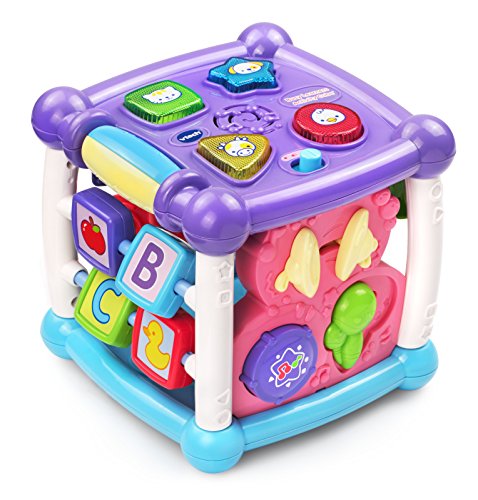
The motion sensor that activates sounds when the cube is moved is the standout feature here, designed to attract a baby’s attention and even assist with sitting up. That single detail makes this more than a static toy, it actively engages a baby who is starting to move. The five sides of play offer buttons that introduce animal names, animal sounds, and shapes, all packed into a compact 6.2-inch cube. For a baby in the 6-month to 3-year range, this cube provides a focused, self-contained world of discovery.
The cube’s size and weight (1.4 pounds) mean it stays put, but it also means less variety in how a baby can hold or carry it compared to a softer, lighter toy like the Sassy Developmental Bumpy Ball (0.2 pounds). The demo batteries are a minor annoyance; you’ll want fresh ones right away to keep the 25 songs playing. If your child is already pulling to stand or prefers a plush companion, the Fisher-Price Laugh & Learn Puppy (ages 6+ months) might offer a different interaction. But for a baby who needs a motion-driven reason to engage, this cube delivers.
Jyusmile 3-in-1 Stacking Blocks & Sensory Balls
What We Like
- 24 pieces for varied stacking play
- Soft teething-safe material with squeakers
- Includes storage bag for portability
- Montessori learning of colors, shapes, textures
Trade-offs
- No lights or electronic sounds for engagement
- Squeaker holes require careful drying after washing
- Lacks a single stable base for complex stacking
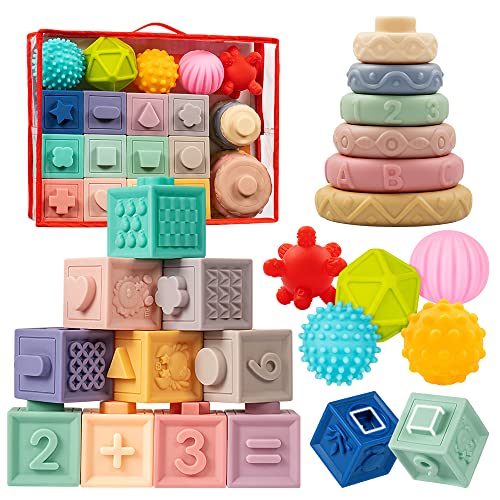
A single set of twenty-four pieces gives you stacking blocks, rings, and textured balls, so you don’t need to buy separate toys for different kinds of play. The soft, BPA-free material is safe for teething, and each piece has a small hole that makes a squeaking sound when squeezed. That means one purchase covers stacking practice, color learning, and teething relief.
None of these pieces light up or make electronic sounds, so if your baby prefers toys with music and flashing lights, they might not stay interested as long. Cleaning requires a specific routine: use high-temperature water, seal the hole before washing, shake out the water, place the hole upward, and dry in the sun until fully dry. For families who want simple, hands-on play without batteries, this set delivers that experience.
Product photos
How We Evaluated Toys For 10 Month Old
We evaluated these toys by looking at their design for the specific developmental stage of a ten-month-old. This means we prioritized toys that encourage pulling up, cruising, fine motor grasping, and cause-and-effect learning. Our research drew from manufacturer documentation, expert round-ups on infant development, and the collective feedback of parents who have used these toys at home.
The three most important criteria were developmental fit, material safety, and engagement value. A toy that is too simple will bore a ten-month-old, while one that is too complex will frustrate them. We looked for toys with multiple modes of play, safe non-toxic materials, and designs that hold a baby’s attention for more than a few minutes.
An evaluation based on research has real limits. The insights here come from studying what the toys claim to do, what child development experts recommend for this age, and what parents consistently report as wins or frustrations. Your baby’s temperament is the final test, but this framework helps you start with the most promising options.
What To Look For In Toys For 10 Month Old
Choosing a toy for a ten-month-old means thinking about what your baby is doing right now and what they are about to do next. The best toys bridge that gap.
Look for toys that encourage standing, cruising, and fine motor skills. Prioritize safe, washable materials and avoid small parts. Choose toys with multiple ways to play so they stay interesting as your baby grows.
Motor Skill Development
At ten months, most babies are crawling well, pulling themselves up to stand, and starting to cruise along furniture. Toys that reward these movements, like a ball that rolls when pushed or a cube that plays music when batted, turn practice into play. Look for toys that are stable enough for a pulling-up baby to hold onto and light enough for a sitting baby to pick up and transfer between hands.
Sensory and Cognitive Engagement
Your baby is learning that their actions have consequences. A toy that lights up when a button is pressed or makes a sound when shaken teaches cause and effect. Textures matter too: crinkle paper, soft silicone bumps, and smooth plastic all provide different tactile feedback. The best toys for this age combine two or more senses, visual, auditory, and tactile, without becoming overstimulating.
Safety and Practicality
Ten-month-olds put everything in their mouths. Every toy should be made of non-toxic, BPA-free materials with no small parts that could become choking hazards. Washability is a major practical concern. Toys that can go in the dishwasher or be wiped clean with a damp cloth will last longer and stay hygienic.
- Check that all parts are securely attached and cannot be pulled off.
- Verify the toy is BPA-free and phthalate-free if it will be mouthed.
- Look for volume control on electronic toys to protect developing hearing.
- Make sure the toy’s weight is appropriate for a baby to lift and carry.
- Choose toys with rounded edges and no sharp points.
A good rule of thumb: if a toy has more than one way to play, it will stay interesting for months, not minutes.
Toys For 10 Month Old Compared
The table below compares all ten toys across the features that matter most for a ten-month-old’s development, helping you see the differences at a glance.
| Product | Age Range | Weight | Dimensions | Key Features |
|---|---|---|---|---|
| Fisher-Price Laugh & Learn Smart Stages Puppy | 6 months to 3 years | 0.8 pounds | 10.0 x 11.2 x 7.5 inches | 80+ songs, sounds & phrases; 5 activations |
| Fisher-Price DJ Bouncin’ Beats Learning Toy | 9 months to 3 years | 2.1 lb | 7.2 x 7.2 x 13.1 in | 75+ songs, sounds and phrases; 3 Smart Stages |
| Aiduy Baby Tissue Box Montessori Toy | 6-12 months | 0.2 lb | 7.0 x 3.9 x 2.8 in | 4 crinkle papers, 8 silk scarves |
| VTech Turn and Learn Ferris Wheel | 6+ months | 0.7 pounds | 3.1 x 5.9 x 7.9 inches | N/A |
| Melissa & Doug Multi-Sensory Soft Taco Fill & Spill Toy | 6 to 12 months | 0.4 pounds | 3.1 x 9.5 x 10.1 in | 12 pieces; soft foam, fabric, crinkle paper |
| Sassy Developmental Bumpy Ball | 6+ months | 0.2 pounds | 5.5 x 7.5 x 8.9 inches | Chunky bumps; gentle rattle |
| Sassy Busy Ball | N/A | 0.1 pounds | 4.0 x 4.0 x 4.0 inches | Bead chase and ball |
| TOHIBEE Montessori Sensory Teething Ball | 0-6 6-12 Months | 0.25 lb | 4.13 x 4.13 x 2.76 in | 12 textured silicone balls; BPA Free |
| VTech Busy Learners Activity Cube | 6 months to 3 years | 1.4 pounds | 6.2 x 6.2 x 6.5 inches | 14 interactive features; 25 songs & melodies |
| Jyusmile 3-in-1 Stacking Blocks & Sensory Balls | 0-3-6-9-12 Month | N/A | 11.0 x 7.8 x 2.5 inches | 24 pieces; BPA-free, non-toxic |
Frequently Asked Questions
What kind of toys are best for a 10-month-old?
The best toys encourage the skills your baby is developing right now: crawling, pulling up, fine motor grasping, and cause-and-effect learning. Look for toys with multiple textures, sounds, and ways to play. Soft building blocks, activity cubes, simple shape sorters, and balls with bumps or rattles are all excellent choices for this age.
How many toys does a 10-month-old need?
A ten-month-old does not need a large collection. A small rotation of five to eight well-chosen toys is more effective than a room full of options. Rotating toys every few days keeps them novel and engaging. Focus on variety: one toy for cause and effect, one for fine motor, one for sensory exploration, and one for gross motor movement.
Are electronic toys bad for a 10-month-old?
Electronic toys are not bad when used in moderation. The key is whether the toy encourages interaction or just passive observation. A toy that responds to a baby’s action, like pressing a button to hear a song, teaches cause and effect. A toy that just plays music without requiring any input offers less developmental value. Balance electronic toys with simple, open-ended options like blocks and sensory balls.
What is the difference between toys for 9 months and 10 months?
The difference is subtle but real. A nine-month-old is often still mastering sitting and beginning to crawl. A ten-month-old is usually crawling well, pulling up to stand, and starting to cruise. Toys for ten months should encourage standing and weight-bearing through the legs, while toys for nine months can focus more on seated play and early crawling. Our guide to 9-12 month toys covers this transition in detail.
When should I start buying toys for the next stage?
Around ten months is a good time to start looking ahead. Your baby will likely be walking around twelve months, so toys that support standing balance and first steps are a smart investment. You can also begin introducing simple puzzles and shape sorters. Our guide to toys for 12-18 months can help you plan ahead without buying too early.
The Bottom Line
The Fisher-Price Laugh & Learn Smart Stages Puppy is our best overall pick because it balances soft comfort with genuine learning content that adapts as your baby grows. It is the toy that will still be in the rotation when your ten-month-old becomes a walking, talking toddler. For families with a very active baby who craves movement and music, the Fisher-Price DJ Bouncin’ Beats Learning Toy turns bouncing into a reward system that builds leg strength for walking.
If your baby prefers quiet, hands-on exploration, the Aiduy Baby Tissue Box or the Melissa & Doug Multi-Sensory Soft Taco Fill & Spill Toy offer screen-free sensory play without the batteries. The most important factor is choosing a toy that matches your baby’s current interests and energy level. A toy that matches your child’s temperament will be played with far more than one that checks every box on a spec sheet.
