
10 Best Toys For 12 18 Months in 2026
This post contains affiliate links. As an Amazon Associate, we earn from qualifying purchases.
The VTech Busy Learners Activity Cube is the best overall toy for 12 to 18 months because it packs five sides of discovery, motion-activated sounds, and four light-up buttons into one compact cube. For hands-on learning, the Aigybobo Farm Animals Montessori Toy builds fine motor skills through matching, and the Fisher-Price Corn Popper remains a classic push-toy favorite for new walkers.
Between 12 and 18 months, toddlers shift from crawling to walking and from babbling to first words. They need toys that reward exploration, build cause-and-effect understanding, and survive drops, throws, and curious mouths.
This guide is research-based, drawing on manufacturer specifications, expert round-ups, and patterns in owner feedback. We cover 10 carefully selected toys across learning styles, budgets, and play preferences to help you find the right fit.
Top 10 Toys For 12-18 Months in the Market
Certain content that appears on this site comes from Amazon. This content is provided "as is" and is subject to change or removal at any time.
The Best Toys For 12-18 Months, Reviewed
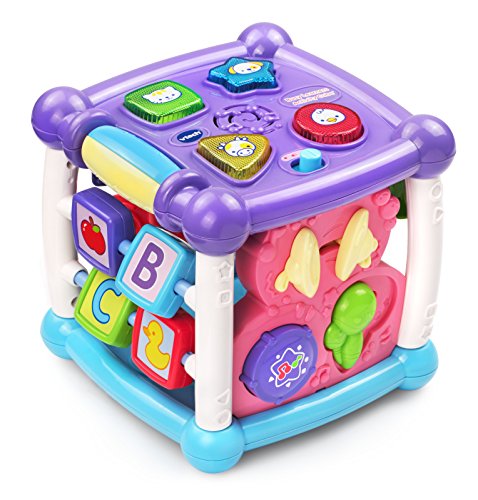
VTech Busy Learners Activity Cube
What We Like
- 5 sides of play encourage discovery
- Motion sensor activates sounds when moved
- 4 light-up buttons teach animals and shapes
- Volume control and auto shut-off included
Trade-offs
- Small 6.2-inch cube limits reach for older toddlers
- Demo batteries included, not long-term use
- No carrying handle for on-the-go play
Fourteen interactive features packed into a compact six-inch cube mean every side offers something new to poke, press, or spin. That motion sensor on the bottom is a clever touch: tip the cube and it plays a sound, which naturally encourages a baby to crawl after it or sit up to explore. For a child just starting to engage with cause and effect, this delivers a lot of variety without overwhelming them. The cube is designed for ages six months to three years, so it can grow with a child from early sitting to active crawling and beyond.
The trade-off is that at 6.2 inches per side, this cube isn’t huge. But for the 12-to-18-month stage, where sitting and crawling still dominate, the compact size actually helps, it’s easy to bat around, tip over, and pick up.
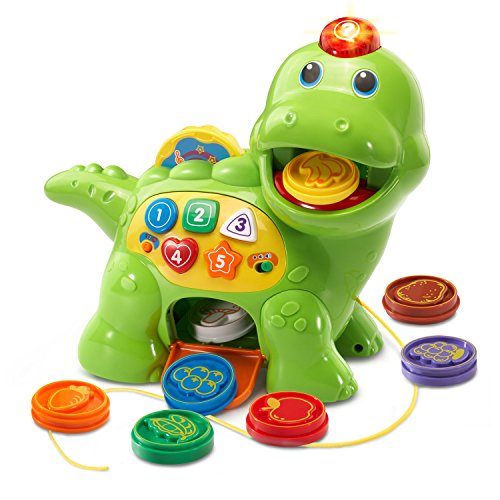
VTech Chomp and Count Dino
What We Like
- 130+ songs, melodies, sounds and phrases
- Teaches colors, food, shapes and counting
- Pull-along toy with interactive responses
- Auto shut-off and volume control
Trade-offs
- Demo batteries included; new ones needed for regular use
- Noisy for quiet play settings
The 130+ songs, melodies, sounds and phrases packed into this dinosaur mean it keeps talking back long after the first feeding session. That sheer volume of audio feedback is what makes it a strong interactive learning pick for a 12- to 18-month-old who’s just starting to connect cause and effect. It recognizes each of the eight food pieces by color and type, so every bite teaches something, colors, food names, shapes or counting, depending on whether you set it to counting or meal mode. The pull-along feature adds a second layer of play once your child is on the move, and the auto shut-off spares you from hunting for the off switch when they wander away.
The included batteries are only for demo, so plan on grabbing fresh ones before the first real play session. Compared to the push-along Corn Popper with its ball-popping action, the VTech Chomp and Count Dino offers electronic learning responses but also requires battery management. That said, for a parent who wants a single toy that teaches multiple early concepts through active play, this dinosaur delivers without overwhelming a one-year-old.
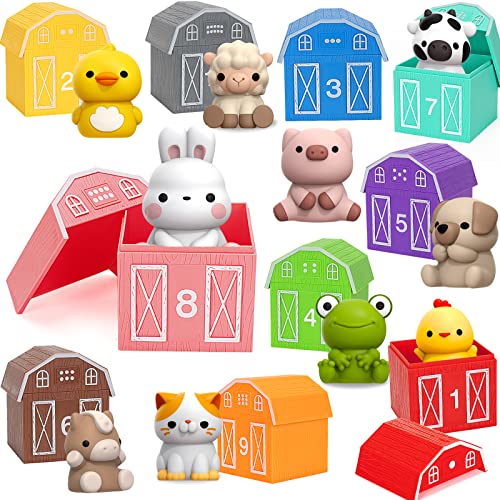
Aigybobo Farm Animals Montessori Toy
What We Like
- Vinyl animals double as bath toys
- Smooth edges and drop-resistant plastic
- 10 animal figures with numbered barns and dot patterns
Trade-offs
- No sound, lights, or electronic feedback
- No electronic features for children who prefer lights and sounds
Twenty pieces, ten animal figures and ten barns, give a toddler multiple ways to practice small hand movements that build fine motor control. The barn lids are printed with numbers 1 through 10, and the animal bodies have dots, which can be used for counting and color recognition. For a child at the 12-to-18-month stage, this set offers focused, intentional play without flashing lights or batteries.
The Aigybobo Farm Animals Montessori Toy includes 20 pieces, 10 farm animals and 10 barns, so a child can practice matching and sorting while playing. The animals are made of vinyl and the barns of safe plastic with smooth edges, making them drop-resistant and suitable for bath time. Compared to the VTech Busy Learners Activity Cube, which weighs the same 1.4 pounds but has a different shape, this set focuses on hands-on counting and color matching rather than electronic features.
Product photos
Fisher-Price Corn Popper

What We Like
- Classic push toy with popping balls
- Encourages walking with sound and action
- Teaches cause and effect through play
- Strengthens gross motor skills
Trade-offs
- Requires assembly out of the box
- At 22.5 inches long, needs floor space to push
The classic push toy measures 22.5 inches long and weighs just 1.8 pounds, which means a wobbly new walker can push it without tipping over while the colorful balls pop inside. That satisfying pop-pop-pop sound rewards every step, turning forward motion into a game that naturally encourages more walking. For a child who is just finding their feet and needs a clear, simple reason to keep moving, this toy delivers exactly that motivation with no batteries, no screens, and no fuss.
Space is a factor: at nearly two feet long, it needs a clear path on the floor, so it works better in a living room or hallway than a cramped nursery corner. If your toddler is already cruising furniture and needs a reason to take those first independent steps, this classic earns its spot in the rotation.
Product photos
Battat Pop-Up Pals

What We Like
- Four distinct cause-and-effect actions
- No batteries needed for play
- Carry handle for easy transport
Trade-offs
- Only 4 animals limit replay variety
- No sound or lights for sensory seekers
Four separate actions, turn, press, flip, and slide, mean each button works differently, so a toddler gets repeated practice with varied fine-motor movements while learning that what they do makes something happen. That direct cause-and-effect loop is exactly what developmental play at this age should deliver. For parents who want a no-fuss, battery-free toy that supports fine motor skills, hand-eye coordination, color recognition, and shape discovery, this is a focused option. It suits a child who enjoys repetitive, predictable play and doesn’t need flashing lights to stay interested.
With four animal pals and four distinct actions, turn, press, flip, and slide, this toy gives toddlers clear cause-and-effect feedback without any batteries or noise. That makes it a quiet, focused option for practicing fine motor skills. The carry handle lets you grab it for quick distractions on the go, and the simple design means a child can repeat each movement until they master it. Some reviewers note that once a toddler learns all four actions, the limited variety might not hold their attention as long as a toy with more features.
Product photos
Melissa & Doug First Bead Maze

What We Like
- Suction base holds steady on surfaces
- 18 beads and 3 rings for grasping
- Soft-coated wires for safe play
- Montessori-inspired fine motor skill building
Trade-offs
- No sound or lights for auditory engagement
- Fixed wires limit bead removal for cleaning
The bead maze features four looping wires with 18 beads and 3 rings that slide and spin. That gives a toddler plenty to grab and manipulate while sitting on the floor, at a table, or in a high chair. The suction cup base holds the toy steady on smooth surfaces, so it stays in place during play. That stability helps a child focus on moving each bead, building hand-eye coordination and fine motor control. This is a tactile, silent toy that teaches through hands-on action rather than sounds or lights.
This is a purely tactile, silent toy. If your child responds best to sounds, lights, or music, the VTech Busy Learners Activity Cube offers those sensory triggers, though it lacks the same grasping variety. The Melissa & Doug bead maze relies on the suction base sticking on smooth surfaces like tables and high-chair trays. For a parent who values a classic wooden toy that encourages focused play, this one fits the bill.
Melissa & Doug Rollables Ocean Slide

What We Like
- Sturdy wooden slide tower with wavy ramp
- Three soft, squeezable Rollables with chime
- Built-in bead maze and turning sea star
- FSC-certified materials support responsible forestry
Trade-offs
- At 3.2 pounds, heavy for a toddler to carry
- No electronic lights or sounds for extra stimulation
Five pieces in one toy, a wooden slide tower, removable funnel, and three soft Rollables, means this is less a single activity and more a tiny playscape. The wavy ramp sends the shark, crab, and octopus down with a gentle chime, while the bead maze and turning sea star keep little hands busy between drops. For a 12- to 18-month-old just starting to connect cause and effect, that variety is gold: they can drop, watch, chase, and start over without losing interest. The FSC-certified wood and squeezable plush also mean you are not choosing between sensory fun and durability.
Size and weight are the main trade-offs here. At 3.2 pounds and nearly a foot and a half long, this is a floor toy that stays put, not something a toddler totes around like the VTech Busy Learners Activity Cube. If your child prefers stationary, cause-and-effect play with a bit of noise and motion, this delivers. If they need a lightweight grab-and-go toy, the lighter plastic options may suit better.
TOOKYLAND 8-in-1 Montessori Set

What We Like
- 8 activities in one wooden set
- Natural wood with smooth rounded edges
- Includes parent guide for play ideas
- Covers vision, sound, touch, motor skills
Trade-offs
- At 12.6 inches tall, storage space needed
- No electronic sounds or lights for engagement
The set includes six toys: a shape puzzle, stacking cups, pound bench, 3-in-1 educational box, picture book, and wooden stacker, designed for babies 12-18 months. The natural wood construction and non-toxic water paint make it a safe pick for toddlers who still test everything with their mouths, and the included parent guide helps you rotate activities as your child’s skills grow. For families looking to stretch a modest budget across multiple developmental stages without cluttering the playroom, this bundle delivers real variety where many single toys only offer one trick.
Because the set focuses on hands-on, quiet play rather than electronic features, if your toddler is drawn to toys with sounds and lights, this wooden set might not hold their attention as long during a single session. You’ll also need a clear, flat surface to set up the stacker and pound bench, and at 12.6 inches tall, it’s not a portable toy for on-the-go use. That said, the educational box and picture book give you multiple ways to engage a curious child, and the lack of batteries means no frustration when batteries die.
Product photos
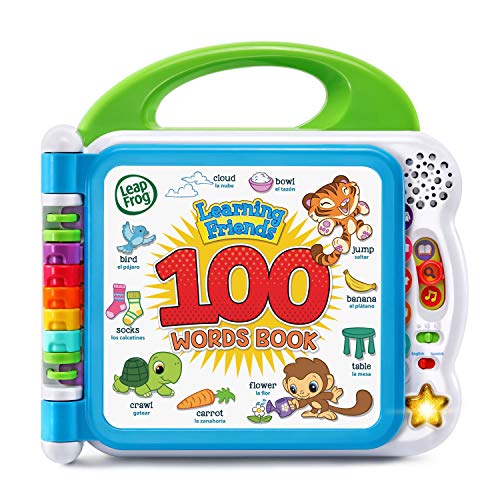
LeapFrog Learning Friends 100 Words Book
What We Like
- Teaches 100+ age-appropriate words
- Bilingual: English and Spanish
- Includes sound effects and fun facts
- Light-up star button plays theme songs
Trade-offs
- Requires 2 AA batteries for regular use
- Intended for 18+ months, not younger toddlers
This book includes more than 100 age-appropriate words chosen by learning experts, organized into categories like pets, food, colors, and opposites. Touching the pages triggers sound effects and fun facts, and the light-up star button plays two theme songs. It also offers words, songs, and instructions in both English and Spanish, so it supports bilingual exposure from the start.
The book is only 0.1 inches thick, which makes it feel more like a board than a chunky toy. It is intended for children 18 months and older, so a younger toddler who is still in a grab-and-chew phase may not be ready for it yet. If your child is already pointing at pictures and babbling, this is a good fit; if not, consider a more durable option and return to this one later.
SEREED Baby Balance Bike
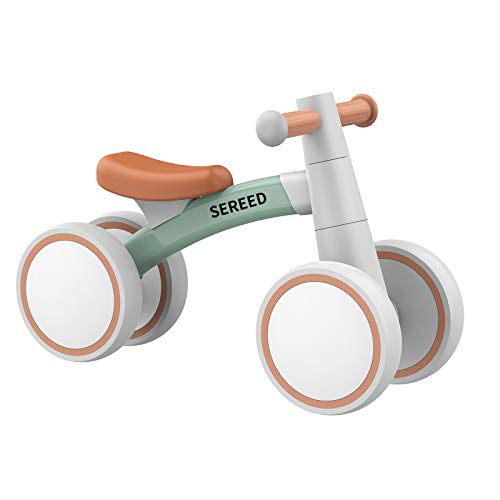
What We Like
- 135° turning limit prevents tipping
- Aluminum alloy frame is lightweight yet sturdy
Trade-offs
- 55 lb limit outgrown before age 2 for some kids
Weight is a consideration: at 3.6 pounds, this is heavier than a push toy like the classic Corn Popper, so a younger or smaller 12-month-old may need help carrying it up a step or over a threshold.
Product photos
How We Evaluated Toys For 12-18 Months
We started by mapping the developmental milestones typical for this age: standing, cruising, first steps, pincer grasp, object permanence, and early vocabulary. Then we cross-referenced those milestones against manufacturer specs, expert recommendations, and patterns in owner feedback to identify which toys actually support each skill.
Three criteria mattered most. First, safety and durability, toys had to be free of small parts, made of non-toxic materials, and sturdy enough to withstand daily use. Second, developmental match, each toy needed to target one or more skills relevant to 12- to 18-month-olds, from fine motor to language. Third, engagement longevity, we favored toys that hold attention beyond the first week, whether through multiple play modes, open-ended design, or growing complexity.
A research-led evaluation has limits. We haven’t watched a dozen toddlers play with each toy, so we rely on what parents report consistently: which features keep kids coming back, which break first, and which collect dust. The patterns are clear enough to guide a confident choice.
What To Look For In Toys For 12-18 Months
The right toy for this age hits a sweet spot between challenge and frustration. It should invite exploration without overwhelming, and it should survive the floor, literally.
Look for toys that target one or two key skills, use safe materials with no choking hazards, and offer multiple ways to play so interest doesn’t fade after a week.
Safety and Material Quality
Every toy on this list meets basic safety standards, but details matter. Check that paints are non-toxic, plastics are BPA-free, and wood is splinter-free with smooth edges. For electronic toys, a secure battery compartment with a screw lock is non-negotiable. The Melissa & Doug First Bead Maze uses soft-coated wires, and the TOOKYLAND 8-in-1 Set is natural wood with rounded edges, both examples of thoughtful material choices.
Developmental Stage Match
A toy that works at 9 months may bore an older toddler, and one meant for 2-year-olds will frustrate them. Look at the fine print: the LeapFrog Learning Friends 100 Words Book is labeled for 18 months and up, so it is better for the older end of this range. Meanwhile, the Battat Pop-Up Pals works well across the whole span because its four actions—push, slide, turn, press—offer variable difficulty.
Play Value and Longevity
The best toys for this age grow with the child. The VTech Busy Learners Activity Cube works for a sitter, a crawler, and a walker because each side offers a different interaction. The SEREED Baby Balance Bike with its 135° turning limit is safe for a first rider but has a 55-pound limit, so some kids outgrow it before age 2. Consider whether a toy will still be interesting in six months.
- Does the toy have multiple play modes or difficulty levels?
- Are the materials easy to clean (dishwasher-safe parts, wipe-clean surfaces)?
- Does it require batteries that are included or need to be purchased separately?
- Is the toy sized for small hands, or will it frustrate a child who can’t yet grip it?
- Does the toy encourage independent play, or does it require constant adult setup?
A toy that survives the floor and the dishwasher will outlast the phase.
Toys For 12-18 Months Compared
The table below compares all 10 picks across key specs, including play type, key features, and best-use scenario, so you can quickly see which toys match your child’s current interests and your priorities.
| Product | Dimensions | Weight | Age Range |
|---|---|---|---|
| VTech Busy Learners Activity Cube | 6.2 x 6.2 x 6.5 inches | 1.4 pounds | 6 months, 3 years |
| VTech Chomp and Count Dino | 11.4 x 10.0 x 4.9 inches | 1.6 pounds | 1 to 3 years |
| Aigybobo Farm Animals Montessori Toy | 12.0 x 5.5 x 3.0 inches | 1.4 pounds | 12-18 months |
| Fisher-Price Corn Popper | 22.5 x 8.5 x 6.2 inches | 1.8 pounds | 12 months and older |
| Battat Pop-Up Pals | 7.5 x 10.8 x 3.5 inches | 1.4 pounds | 18+ months |
| Melissa & Doug First Bead Maze | 8.7 x 8.1 x 4.1 inches | 1.2 pounds | Ages 1+ |
| Melissa & Doug Rollables Ocean Slide | 17.0 x 11.7 x 5.3 inches | 3.2 pounds | 12 months to 2 years |
| TOOKYLAND 8-in-1 Montessori Set | 10.6 x 5.5 x 12.6 in | N/A | 12-18 months |
| LeapFrog Learning Friends 100 Words Book | 9.4 x 9.2 x 0.1 inches | 1.5 pounds | 18 months and up |
| SEREED Baby Balance Bike | 8.7 x 3.7 x 5.5 inches | 3.5 pounds | 12-24 months |
Frequently Asked Questions
What kind of toys are best for a 12-month-old?
At 12 months, babies are often pulling up, cruising, and starting to walk. They benefit from toys that encourage movement and fine motor control. Push toys like the Fisher-Price Corn Popper, activity cubes, and simple shape sorters are excellent choices. Look for toys for 12-month-olds that reward each new skill with a satisfying sound or action.
Are electronic toys good for 18-month-olds?
Electronic toys can be very engaging for 18-month-olds when used in moderation. Toys like the VTech Chomp and Count Dino teach colors, counting, and cause-and-effect through songs and phrases. The key is choosing interactive toys that require the child to do something, press a button, feed the dinosaur, rather than just watch lights. For a deeper look, see our guide on interactive toys for toddlers.
What toys help an 18-month-old learn to talk?
Toys that combine words with clear images or actions support vocabulary development. The LeapFrog Learning Friends 100 Words Book teaches over 100 age-appropriate words in both English and Spanish. Reading together and naming objects during play also helps. For more options, check our list of developmental toys for 18-month-olds.
How many toys does a 12-18 month old need?
Quality matters more than quantity. A small rotation of 5 to 8 well-chosen toys, one push toy, one building set, one cause-and-effect toy, one sensory toy, and one or two books, provides enough variety without overwhelming a toddler. Rotating toys every few weeks keeps old favorites feeling new again.
What is the difference between toys for 12 months and toys for 18 months?
The main difference is complexity and physical demand. Toys for 12-month-olds focus on standing, cruising, and simple cause-and-effect. Press a button, get a sound. Toys for 18-month-olds introduce more steps: pull-along actions, shape sorting with multiple pieces, and early puzzles. An 18-month-old also has better fine motor control for stacking rings, turning pages, and manipulating small objects.
The Bottom Line
The VTech Busy Learners Activity Cube earns the best overall spot because it adapts to the rapid changes of the 12- to 18-month stage. A child who sits and bats at it at 12 months will be pressing the light-up buttons and shaking it for sounds at 18 months. It’s the one toy that doesn’t get outgrown halfway through the window.
If your toddler prefers quiet, hands-on play, the Aigybobo Farm Animals Montessori Toy or the Melissa & Doug First Bead Maze offer focused fine motor practice without batteries. For families on a budget, the TOOKYLAND 8-in-1 Montessori Set packs eight activities into one wooden set, impressive value for the price.
The single most important factor is choosing a toy that matches where your child is right now, not where you hope they’ll be next month. A toy that’s slightly too advanced collects dust; one that’s too easy gets ignored. Pick the one that meets them at their current skill level and watch them surprise you.
