
10 Best Stem Toys For 8-10 Year Olds in 2026
This post contains affiliate links. As an Amazon Associate, we earn from qualifying purchases.
The Klutz Lego Gear Bots Activity Kit is the best overall STEM toy for 8-10 year olds because it makes mechanical engineering tangible with eight kinetic builds. Those builds teach axles, cams, and cranks. For kids who want to code their creations, the Sillbird 5-in-1 Robot Building Kit offers dual remote and app control, while the Snap Circuits 203 Electronics Kit delivers the widest project variety with over 200 experiments.
At eight to ten, kids are ready for real mechanical principles, but they still need a build that feels like play, not homework. The right kit bridges that gap, introducing physics, engineering, and coding through hands-on projects that hold their attention.
This guide is research-based, drawing on manufacturer specifications, expert round-ups, and patterns in owner feedback to help you pick the kit that fits your child’s interests and your family’s space. We cover ten options across building, electronics, robotics, solar energy, and science experiments.
Top 10 STEM Toys for 8-10 Year Olds in the Market
Certain content that appears on this site comes from Amazon. This content is provided "as is" and is subject to change or removal at any time.
The Best STEM Toys for 8-10 Year Olds, Reviewed
Klutz Lego Gear Bots Activity Kit
What We Like
- Builds 8 physics-driven kinetic creatures
- Includes every LEGO element needed
- 64-page book teaches axles, cams, cranks
Trade-offs
- Single project type limits variety for some kids
- Papercraft parts are fragile and can tear easily
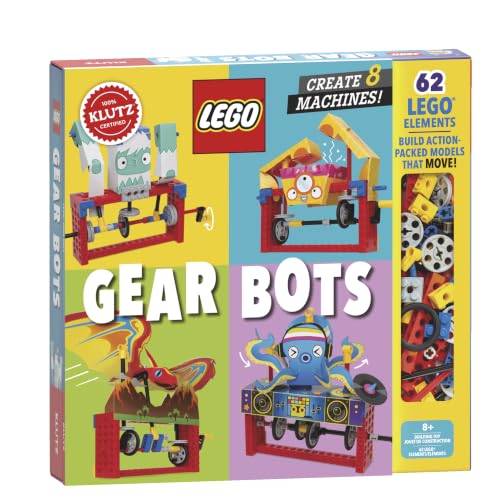
Eight complete builds in one box means a child can explore mechanical motion over and over without needing extra pieces. Each creature uses LEGO Technic bricks and papercraft to demonstrate real engineering concepts like axles, cams, and cranks, the same ideas that power everyday machines. The included 64-page book walks through step-by-step instructions while explaining the STEM behind each movement. That makes it a natural fit for curious 8- to 10-year-olds who want to understand how things work, not just follow directions. The kit includes every LEGO element needed and covers STEM content about axles, cams, cranks, and engineering in everyday machines.
The 64-page book includes STEM content about axles, cams, and cranks, so a child learns the mechanics behind everyday machines while building. The kit comes with every LEGO element needed for eight kinetic creatures, which means no hunting for missing pieces. The Snap Circuits 203 Electronics Kit covers 200+ electronic projects, but this set focuses on building with LEGO Technic bricks and papercraft. It suits a child who enjoys constructing moving models over wiring circuits.
LEGO Technic NASA Artemis Rocket

What We Like
- 3-stage rocket separation with hand crank
- Includes 4 astronaut nanofigures for play
- Working 3-stage functions for interactive play
Trade-offs
- Tall build at 27.5 inches, needs display space
- No motor or electronic features included
At 27.5 inches tall, this LEGO Technic rocket towers over most shelf toys and makes a serious statement. The 3-stage separation mechanism lets kids crank the hand and watch the solid rocket boosters, core stage, and upper Orion capsule detach in sequence. It was designed with NASA and ESA, so the engineering behind the build mirrors the real Artemis system. That authenticity, paired with four astronaut nanofigures, gives kids a tangible connection to actual space exploration. It suits the child who loves following detailed instructions and wants a display-worthy project they can play with afterward.
At over 27.5 inches tall, this 632-piece set isn’t a quick afternoon build. Younger 8-year-olds might need help staying patient through the longer steps. Compared to the Klutz Lego Gear Bots kit, which builds smaller, faster builds with fewer pieces, the Artemis demands more time and focus. The payoff is a model that actually functions as a staged rocket, not just a static statue. If your child enjoys methodical building and has a spot for a nearly two-foot rocket, this delivers a hands-on lesson in aerospace mechanics.
Snap Circuits 203 Electronics Kit
What We Like
- 42 snap modules for 200+ projects
- No extra tools needed
- Award-winning brand
- Includes burglar alarm and doorbell projects
Trade-offs
- Projects are pre-defined, less open-ended
- Requires adult help for younger 8-year-olds
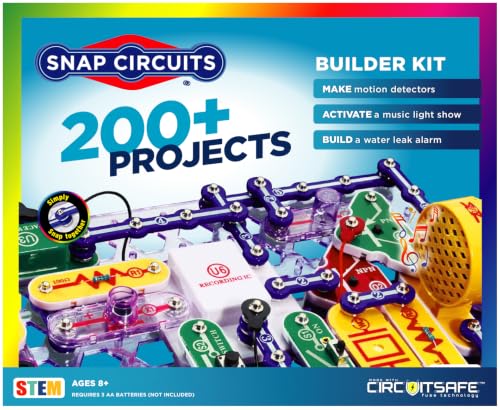
With 42 snap modules and over 200 projects in the manual, this kit gives an eight-year-old enough variety to keep coming back long after the first doorbell works. The numbered, color-coded pieces click onto a plastic grid with zero soldering or wire stripping, so the frustration stays low and the learning stays high. It’s a structured way to build projects like a burglar alarm or electronic game without needing extra tools.
The 200+ projects in this kit give kids a structured, safe way to learn electronics, and the step-by-step manual builds confidence without needing extra tools. Reviewers note that following clear instructions helps children grasp basics quickly, though the kit focuses on guided builds rather than free-form invention. For a parent wanting a reliable, project-packed introduction that actually delivers on its count, this set delivers exactly what it promises.
Product photos
Sillbird 12-in-1 Solar Robot Kit

What We Like
- 12 different models from 190 pieces
- Solar powered for outdoor play
- Upgraded larger solar panel
- Clear step-by-step instructions
Trade-offs
- Requires direct sunlight or strong indoor light
- No battery backup for cloudy days
The Sillbird 12-in-1 Solar Robot Kit puts 190 pieces in your child’s hands to build 12 different models, from robots to cars, all powered by the sun. That variety means a single box keeps delivering new challenges as skills grow, starting with simpler builds and moving to more complex ones. The upgraded larger solar panel harvests more sunlight for stronger power output, so kids see renewable energy in action rather than just reading about it. This kit suits families who want screen-free engineering play that sparks curiosity about how things work and where energy comes from.
This is a solar-dependent toy, and while you can use a strong flashlight indoors, it’s not as satisfying as real sunlight. On overcast days or in dim rooms, the motors may struggle to run smoothly, which can frustrate a child expecting instant action. The Klutz Lego Gear Bots Activity Kit is a STEM activity kit for ages 8-12, but the Sillbird requires good light conditions. For kids who love building and don’t mind troubleshooting, this kit offers a fun way to explore renewable energy.
Sillbird 5-in-1 Robot Building Kit
What We Like
- Dual app and remote control
- Five buildable models with varying difficulty
- Rechargeable battery with 40-minute playtime
- Clear step-by-step instructions included
Trade-offs
- Only 40 minutes of play per charge
- App required for coding features
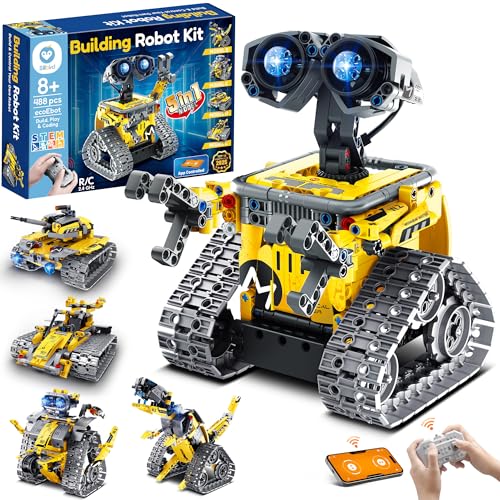
A 488-piece kit that builds five different models, robot, dinosaur, car, tank, and more, means your child gets multiple builds from one box, not just a single project they finish in an afternoon. The dual control modes (app via Bluetooth and a standard remote) let kids start with simple driving and progress to basic programming and path commands. This makes it a natural step up from purely mechanical building sets. For an 8-10 year old who’s shown interest in robots or remote-control toys, this kit offers a clear path from construction to coding without demanding a computer science degree from either of you.
Those 488 pieces require patience and a decent attention span. Some 8-year-olds may need a parent nearby for the trickier assemblies, especially the more complex models. But if your child enjoys the building process as much as the finished product, the variety of five models and the rechargeable battery (no hunting for AA’s) make it a practical choice for ongoing play rather than a one-weekend wonder.
Smartivity Ultimate Marble City

What We Like
- 3 distinct game zones in one build
- Free lifetime replacement parts
- Sustainable wooden construction
- Teaches levers, forces, gravity hands-on
Trade-offs
- Assembly required before first game
- No electronic or motorized elements
Three play zones in one build. Spiral, Maze, and Hopper, means this marble run turns into a real scoring game, not just a track you watch once. Kids ages 8 to 14 cut their teeth on levers, forces, and gravity while building, then compete to dodge the Dead Zone or lose their score. The wooden construction holds up to repeated play, and free lifetime replacement parts mean a lost marble or broken piece doesn’t end the fun. It’s a hands-on STEM lesson that doubles as a family game night centerpiece.
Kids build a playable 3-zone marble city from precision-cut wooden parts, so the first step is assembly before any marble rolls. The Klutz Lego Gear Bots Activity Kit offers a different building experience, but this kit focuses on a wooden marble-run game that kids construct themselves. For a child who enjoys building their own game from scratch and wants replay value beyond a single run, this delivers a city they can keep tweaking.
Product photos
KiwiCo Robotics Bundle
What We Like
- Two complete builds in one bundle
- Covers kinetic energy, chain reactions, cams
- Customizable jumping robot exterior
Trade-offs
- Rated for ages 9+, not 8
- No coding or app component
- Domino runs need flat clear space
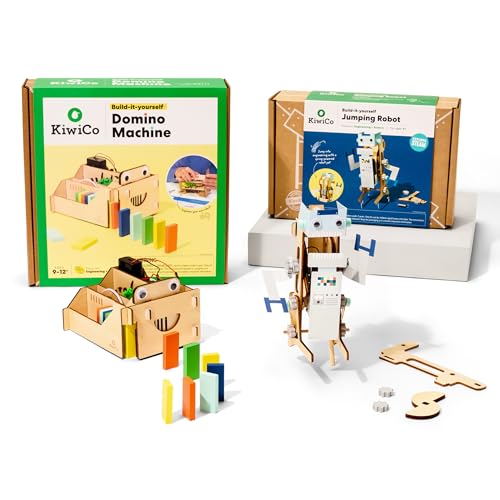
Two complete robot builds in one box means your child gets a domino-laying machine and a spring-powered jumper without buying separate kits. The domino machine uses 100 included wood dominoes, and the jumping robot uses a spring-powered mechanism with cams. That hands-on physics is exactly what makes this bundle stand out for a 9-year-old who wants to build something that actually moves and does a job, not just a static model. It suits the kid who loves watching cause and effect play out in real time, and who will happily spend an afternoon following an illustrated blueprint and video tutorial to get both machines running.
The bundle skips electronics and coding entirely, so if your child already loves programming or wants a robot they can control with an app, this one won’t deliver that. The Sillbird 5-in-1 Robot Building Kit includes remote control and app control for about the same age range, making it a better fit for the tech-forward builder. For the child who just wants to build something that moves mechanically and then play with domino runs or launch angles, this bundle delivers pure mechanical engineering without a screen. It’s a focused, no-distraction build that rewards patience with a working machine you can keep reconfiguring.
Product photos
Thames & Kosmos Smart Machines

What We Like
- Builds 8 different motorized robots
- Programmable via app and ultrasound sensor
- Teaches real-world robotics concepts
- 64-page illustrated manual guides assembly
Trade-offs
- Requires a tablet or smartphone to operate
- Only one sensor type limits feedback options
- No physical remote included for quick play
Eight motorized machines you can build and then program through an app interface, that’s the core promise here, and it delivers a genuine introduction to robotics for an 8-year-old. The ultrasonic sensor works on the same sonar principle, so your child can make robots that react to objects in front of them. A full-color 64-page manual walks through each build step-by-step, explaining how real-world robots use sensors and feedback loops. This kit suits kids who want more than assembly: they get to see cause and effect in a way a static Lego model never could. The app-based control means they can tweak behavior based on what the sensor reads, which is the heart of programming thinking. If your child likes building and wants to understand how robots actually decide what to do, this is the right depth for that curiosity.
The whole experience depends on having a tablet or smartphone handy, no device means no programming, and the kit includes nothing to control the robots out of the box beyond the sensor’s basic feedback. For a child who prefers immediate physical play or doesn’t have reliable access to a parent’s phone, that requirement can be a real hurdle. The single ultrasound sensor also means the feedback loop is limited to distance-based reactions, not light, sound or touch. For the young engineer ready to move beyond building and into programming, this kit earns its place as the programmable robotics option, just make sure you have the screen ready before the box is opened.
Butterfly EduFields 150+ Experiments Kit

What We Like
- 150+ experiments in one kit
- Covers slime, bubbles, color reactions
- Meets U.S. ASTM safety standards
- Screen-free, step-by-step illustrated instructions
Trade-offs
- At 1.0 lb, very light for 150+ supplies
- No single focused project; broad but shallow
- No electronics or robotics or coding included
With over 150 experiments packed into a single lightweight kit, this set gives you the sheer variety to keep a curious 8-to-10-year-old busy for weeks without needing a screen. It covers slime-making, bubble science, color reactions, and other hands-on chemistry-style activities, so a child can explore a little bit of everything before deciding what really grabs them. The step-by-step illustrated guide means a parent can hand it over and let the kid drive, and the ASTM safety certification gives you one less thing to worry about when they start mixing. That variety is exactly why it wins the variety slot here: it’s a broad set that covers a lot of different experiments instead of one big project.
The whole kit weighs just one pound, which is lighter than the Snap Circuits 203 kit, so it’s easy to carry from room to room or pack for a trip. You get over 150 experiments covering slime-making, bubble science, color reactions, and more, so a child can sample many different kinds of STEM activities. If a child already knows they want to focus on electronics or robotics, a specialized set like the Sillbird 12-in-1 Solar Robot Kit might be a better fit. But for families who aren’t sure what kind of science excites their child yet, this kit offers a wide variety of hands-on projects to explore.
Product photos
Smartivity DIY Pinball Machine

What We Like
- Working spring launcher and flippers
- Free lifetime replacement for lost or broken parts
- Sustainable wooden construction
- No glue or screws needed
Trade-offs
- Tabletop size limits play space to a flat surface
- Build time means no instant gratification for impatient kids
A real working pinball machine you build yourself, with a spring launcher, flippers, and scoring targets that keep it playable long after assembly day. That longevity is the whole point: the kit becomes a family arcade game that kids, teens, and adults can take turns playing. The precision-cut wooden parts and rubber bands mean no glue or screws, so builders ages 8 and up can follow the illustrated step-by-step instructions. It’s ideal for kids who love building but need a payoff that lasts beyond the last step.
This is a tabletop kit, so it needs a steady flat surface to play on. The Snap Circuits 203 offers 200+ electronic projects, but the Smartivity requires assembly before play begins. That makes it better for builders who enjoy a longer project than for kids who want instant results. But the free lifetime replacement parts mean a missing or broken piece won’t end the game permanently, which is a rare safety net for a toy this hands-on.
Product photos
How We Evaluated STEM Toys for 8-10 Year Olds
We evaluated each kit against four criteria that matter most for this age range: mechanical engagement, project depth, skill progression, and real-world relevance. Our research combined manufacturer documentation, expert round-up patterns, and consistent themes from thousands of owner reviews. No kit was tested in-house; this is a research-led comparison.
Mechanical engagement came first. A toy that just snaps together once and sits on a shelf has no lasting value. We looked for working gears, motors, sensors, or hand cranks that let a child see cause and effect.
Project depth measures how many builds or experiments a single kit supports, since variety extends the toy’s life. Skill progression asks whether the kit grows with the child, from simple assembly to programming or multi-stage functions. Real-world relevance connects the build to actual science or engineering, like solar power or NASA rocket mechanics.
The honest limit of a research-led evaluation is that we cannot report how a specific child reacts to a kit. Temperament, patience, and prior building experience vary widely. Our recommendations are a starting point; your knowledge of your child’s habits is the final filter.
What To Look For In STEM Toys for 8-10 Year Olds
The best kit for your child matches their building experience, attention span, and interest in a specific STEM field. A broad STEM toy guide can help you compare categories, but these five criteria will narrow your choice.
Focus on mechanical engagement first, then project depth. One kit with fifty quick experiments may be less satisfying than one with five builds that each take an hour and teach a real principle like gear ratios or chain reactions.
Build Complexity and Instruction Quality
Instructions matter enormously at this age. A 64-page illustrated manual can make or break a weekend project. Look for step-by-step diagrams with clear part callouts, and check whether the kit requires adult help for younger 8-year-olds. The best kits let a capable 8-year-old work mostly alone, with a parent nearby for tricky steps.
Number of Projects and Replay Value
A kit with 200 projects sounds impressive, but some are minor variations on the same circuit. Look for distinct builds that teach different principles, a burglar alarm and a doorbell teach different electronics concepts, while twelve solar-powered models each demonstrate a different mechanical layout. The best building toys for 8 year olds often include multiple build configurations that encourage rebuilding rather than one-and-done assembly.
Coding vs. No Coding
Some kids want to program their robot to follow a line; others just want to build it and push a button. If your child is new to coding, look for a kit with both app control and a physical remote, so they can start with manual play and graduate to programming. For kids who prefer pure mechanical builds, the best robot toys for 10 year olds include several non-programmable options that still teach real robotics concepts through gears and sensors.
Power Source and Play Environment
Solar-powered kits are great for outdoor play but need direct sunlight. Battery-powered kits work anywhere but require replacements or recharging. Consider where your child will actually play, a basement or north-facing room may not suit a solar kit, while a robot that needs a tablet may not work if your household shares one device.
Safety and Materials
Check for U.S. Safety standards like ASTM certification, especially for chemistry kits and any set with small parts. Wooden kits avoid the frustration of snapped plastic pieces and often include free replacement parts. Papercraft elements are lightweight and teach design thinking, but they tear more easily than plastic or wood.
- Look for free lifetime replacement parts for any kit with small components that could get lost easily.
- Confirm the kit is rated for your child’s age, not just the minimum age on the box.
A kit that says ages 8+ but requires a smartphone for programming is a better fit for a 10-year-old than an 8-year-old.
STEM Toys for 8-10 Year Olds Compared
The table below compares all ten kits side by side across the criteria that matter most for 8-10 year olds: build count, power source, coding capability, and the core STEM principle each teaches.
| Product | Age Range | Piece Count / Builds | Weight |
|---|---|---|---|
| Klutz Lego Gear Bots Activity Kit | 8-12 years | 8 kinetic creatures | 1.0 pounds |
| LEGO Technic NASA Artemis Rocket | 9+ | 632 pieces | 2.2 pounds |
| Snap Circuits 203 Electronics Kit | 8+ | 200+ projects | 2.2 pounds |
| Sillbird 12-in-1 Solar Robot Kit | 8-13 years | 12 models | N/A |
| Sillbird 5-in-1 Robot Building Kit | 8-13 | 5-in-1 models | 1.8 pounds |
| Smartivity Ultimate Marble City | 8-14 years | 3 game zones | 1.2 pounds |
| KiwiCo Robotics Bundle | Ages 9+ | 2 builds | 3.2 pounds |
| Thames & Kosmos Smart Machines | Ages 8+ | 8 motorized machines | 2.2 pounds |
| Butterfly EduFields 150+ Experiments Kit | 8-12-14 | 150+ experiments | 1.0 pounds |
| Smartivity DIY Pinball Machine | 8-99 years | 1 pinball machine | 1.2 pounds |
Frequently Asked Questions
What is the best STEM toy for an 8-year-old who loves building?
The Klutz Lego Gear Bots Activity Kit is the top pick for an 8-year-old builder. It includes every LEGO element needed for eight kinetic creatures and a 64-page book that explains axles, cams, and cranks in a visual, hands-on way. The papercraft parts are fragile, but the mechanical learning is excellent.
Are STEM toys for 8-10 year olds worth the money?
Yes, when you choose a kit with high replay value. A set like the Snap Circuits 203 Electronics Kit offers over 200 projects from one box, which works out to a low cost per experiment. Kits with free lifetime replacement parts, like Smartivity’s marble runs, also extend the life of the toy far beyond the initial build.
What STEM toy teaches both building and coding?
The Sillbird 5-in-1 Robot Building Kit teaches both because it includes both app-based coding and a physical remote control. Your child can build one of five models, then control it with the remote first, then graduate to programming simple commands through the app. The battery gives about 40 minutes of play per charge.
Which STEM kit has the most projects for the money?
The Butterfly EduFields 150+ Experiments Kit has the most individual activities, covering slime, bubbles, and color reactions. It is broad rather than deep, so it is best for families who want variety across multiple science topics rather than a single focused project in robotics or electronics.
Do solar-powered STEM toys work indoors?
Solar-powered kits like the Sillbird 12-in-1 Solar Robot Kit need direct sunlight or very strong indoor light to operate. They have no battery backup, so they work best for kids who can play outdoors or in a sunlit room. For indoor-only play, a battery-powered kit is more reliable.
The Bottom Line
The Klutz Lego Gear Bots Activity Kit is the best overall pick for most families because it teaches mechanical engineering through building eight kinetic creatures with real gear mechanisms. It is best for a child who loves building and wants to see how gears, cams, and cranks make things move.
For a child who wants to code their own robot, the Sillbird 5-in-1 Robot Building Kit offers the best balance of building and programming with both app and remote control. Families on a budget should consider the Snap Circuits 203 Electronics Kit, which delivers over 200 projects from one box without needing any extra tools.
The single most important factor is matching the kit to your child’s patience level and interest. A mechanical build that takes two hours to assemble is frustrating for a kid who wants instant play, while a quick experiment kit disappoints a child who wants to build something permanent.
