
10 Best Indoor Trampolines For Toddlers in 2026
This post contains affiliate links. As an Amazon Associate, we earn from qualifying purchases.
The best indoor trampoline for toddlers is the BCAN BT1 36″ Toddler Trampoline, winning on stability with anti-tip rubber legs and a no-gap mat that eliminates pinch points. For families prioritizing maximum safety, the BCAN SP1 36″ is our top safety pick, while the SPORTSOUL Mini Trampoline 3ft offers the sturdiest frame for daily use.
The challenge with indoor trampolines for toddlers isn’t just finding one that fits your living room. It’s also about finding one that won’t tip over, won’t trap tiny fingers, and won’t become a permanent fixture after your child loses interest. A 36-inch model is the sweet spot for most homes, offering enough bounce for a 3-year-old without dominating the floor plan.
We evaluated these 10 trampolines by analyzing manufacturer specifications, safety certifications, owner feedback patterns, and expert recommendations on toddler development and play safety. This guide gives you the specific details that matter, from handlebar adjustability to foldability, so you can match a trampoline to your child’s age, your floor space, and your safety standards.
Top 10 Indoor Trampolines For Toddlers in the Market
Certain content that appears on this site comes from Amazon. This content is provided "as is" and is subject to change or removal at any time.
The Best Indoor Trampolines For Toddlers, Reviewed
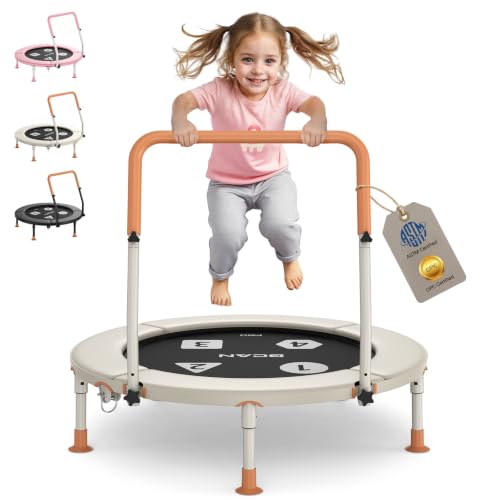
BCAN BT1 36" Toddler Trampoline
What We Like
- Anti-tip rubber legs and inward-curved handles
- No-gap mat with elastic bands
- 5-minute tool-free assembly
- Folds to 1/4 size for storage
Trade-offs
- 36-inch jump surface limits older toddlers
- Adjustable handle only has two height settings
A 36-inch jump surface hits the sweet spot for toddlers who need room to bounce without overwhelming a living room floor. The anti-tip rubber legs and inward-curved handles keep the trampoline planted, so your little one can jump with confidence instead of wobbling sideways. It suits families who want a safe, no-fuss indoor activity that encourages active play and coordination for kids ages 1 to 6. The no-gap mat and elastic bands eliminate pinch points, and the five-minute tool-free assembly means you can set it up before your child loses interest.
The BCAN BT1 36″ Toddler Trampoline lacks an enclosure net, so it’s best for supervised sessions rather than independent bouncing. It folds down to a quarter of its size for easy storage under a bed or behind a sofa. If you need a net for peace of mind, look at options with full enclosures, but for a compact, stable trampoline that stores away quickly, this is a smart pick.
BCAN SP1 36" Toddler Trampoline

What We Like
- ASTM certified with 20+ safety tests
- No-gap protective mat with 40% higher density
- Foam T-shaped handle for secure grip
- Thickened springs tested 200,000 times
Trade-offs
- 36-inch diameter limits bounce space for older toddlers
- Fixed height and non-foldable frame limits portability
With 28 thickened springs and a reinforced six-leg frame, this trampoline keeps the bounce stable and predictable for little jumpers. The no-gap mat uses a denser fabric and tighter stitching to eliminate pinch points, and the foam T-shaped handle gives toddlers a comfortable grip they won’t slip off. It’s built for parents who prioritize containment and structural integrity over flashy extras, making it a strong fit for cautious first-time buyers who want peace of mind from the ground up.
Compared to the BCAN BT1, which offers a foldable frame and adjustable handle for growing kids, the SP1 locks in a fixed height and simpler assembly but sacrifices portability. This model doesn’t fold, so storing it flat takes up a consistent footprint unless you disassemble it. If you plan to move the trampoline between rooms or pack it away frequently, the BT1’s folding legs might suit you better. For a dedicated play corner, though, the SP1’s no-gap mat and extra spring count deliver a safer, more durable bounce.
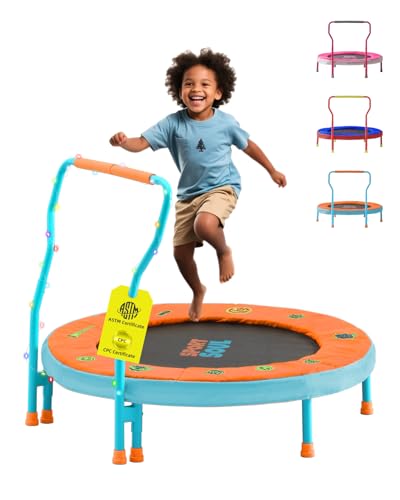
SPORTSOUL Mini Trampoline 3ft
What We Like
- No-gap mat prevents toe entrapment
- NBR non-slip foam handlebar
- Over 300,000 bounce test durability
- 6 rubber feet protect floors
Trade-offs
- Foam handlebar covers need removal before assembly
- 88-pound limit excludes older or heavier kids
Over 300,000 bounce tests, that’s the kind of number that makes a safety-minded parent pause and nod. The SPORTSOUL Mini Trampoline’s frame uses six galvanized legs and high-tensile springs to hit that durability benchmark, so you’re not worrying about a wobbly bounce session. The no-gap mat is stitched with three layers of padding and a PP jump mat, then secured with 12 elastic straps and six sewing lines, no exposed springs for little toes to find.
The 88-pound weight limit is fine for the target age, but if you have a bigger kid or two bouncing together, you’ll hit the ceiling sooner. Assembly is a one-person job under 30 minutes thanks to a three-way pipe structure, and the six rubber feet keep it quiet on hardwood. Just remember to peel off the shipping covers on the foam handlebar before you start, a small step, but one that saves confusion mid-build.
Product photos
Ativafit 36" Foldable Toddler Trampoline

What We Like
- Foldable design for easy storage
- Foam handle for ages 1-6
- Non-slip Oxford cloth mat
- Silent elastic band design
Trade-offs
- No adjustable handle for growing toddlers
- Foam handle not adjustable for taller toddlers
A 36-inch bounce surface that folds flat makes this trampoline a space-saver for tight indoor spots. The foam handle and six-leg base with safety lock keep little jumpers steady, while the silent elastic bands mean no squeaking to wake a napping sibling. For parents who need to stow the trampoline between play sessions, this design solves the storage headache without sacrificing safety.
A narrower bounce area compared to the 36-inch diameter of the BCAN BT1 means it’s best for one child at a time. The handle isn’t adjustable, which limits how long it fits a growing toddler. If your priority is quick folding and quiet play, this is the pick; if you want a larger jump zone and height adjustment, the BCAN BT1 offers both.
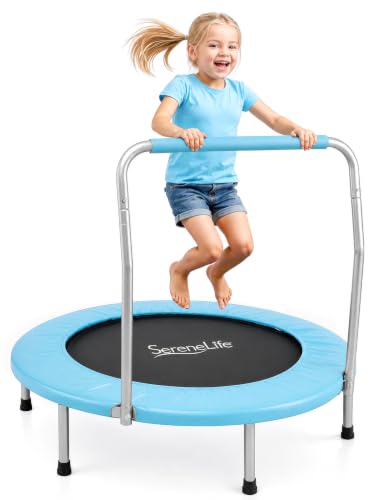
Serenelife 36" Indoor Trampoline
What We Like
- Springless design for safer bouncing
- Foldable frame with carry bag
- Supports up to 220 lbs
- Easy assembly with picture guide
Trade-offs
- Handlebar not adjustable for growing kids
- 36" diameter limits jumping space for older toddlers
- No enclosure net for active jumpers
This trampoline supports up to 220 lbs, so it can handle siblings or even a parent joining in without buckling. The spring-free design provides safer, smoother jumps, and the 24-inch handlebar gives little ones a stable grip for controlled bouncing. It’s a durable, compact option for safety-focused families.
The handlebar is fixed at one height, so it won’t adjust as your child grows taller. Compared to the BCAN BT1, which offers an adjustable handle, the Serenelife is less adaptable for long-term use. However, its foldable frame and included carry bag make it far easier to stash under a bed or take to Grandma’s house, a convenience that many parents will appreciate for travel or small-space living.
Product photos
LASTJUMPER Mini Toddler Trampoline

What We Like
- Built-in basketball hoop for added fun
- Safety enclosure net prevents falls
- Includes ocean balls for interactive play
- Compact size fits small apartments
Trade-offs
- 12-inch height limits jumping clearance for taller kids
- 60-inch diameter takes up more room than smaller trampolines
A 60-inch jumping surface with a built-in basketball hoop and ocean balls turns this trampoline into a mini activity center, not just a bouncer. That hoop encourages hand-eye coordination as kids shoot while jumping, and the full enclosure net keeps them safely inside during energetic sessions. It’s a smart pick for families who want more than plain bouncing, especially if your toddler loves sports or needs extra motivation to stay active indoors.
At 60 inches across, this takes up noticeably more room than a 36-inch model like the BCAN BT1. The 12-inch frame height means older kids near the 10-year limit won’t have much clearance for high jumps. But if you have the floor space and want a trampoline that doubles as a basketball game, the LASTJUMPER delivers a richer play experience without sacrificing safety. Not ideal for tight playrooms or families who need a foldable, stow-away design.
Product photos
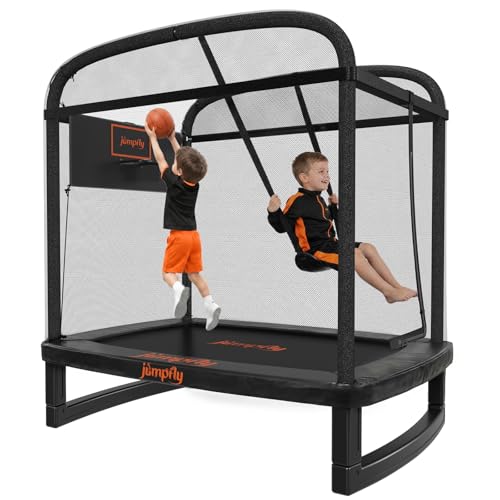
jumpfly 6FT Rectangle Trampoline
What We Like
- Includes removable swing and basketball hoop
- Supports up to 220 lbs on trampoline
- U-shaped frame with anti-skid feet mat
- Silent plastic base reduces floor damage
Trade-offs
- Large footprint at 76.3 x 55.0 inches
- Swing weight limit is only 110 lbs
- Requires assembly with tools included
A 220-pound weight capacity on the trampoline means this rectangle can handle two toddlers bouncing together or even an adult joining in for supervised play, which is rare for a kids’ trampoline. The included swing and basketball hoop turn it into a mini activity center, so your child isn’t just jumping, they’re swinging, dunking, and burning off energy in different ways. That versatility appeals to households that want more than a simple bouncer, especially if you have limited indoor space and need one piece of equipment that does triple duty.
At 76.3 inches long and 55 inches wide, it takes up a good chunk of a living room or playroom, unlike the compact 36-inch round models like the BCAN BT1. The swing’s 110-pound limit also means it’s best for younger toddlers, not older kids who might want to use it as a full-size swing. If you have the floor space and want a multi-activity setup that grows with your child through different play modes, this rectangle delivers more variety than any round trampoline in this guide.
Product photos
IELECMG 47" Toddler Trampoline
What We Like
- No-gap safety enclosure net
- Thickened anti-collision foam padding
- Double-sided metal zippers for secure access
- Non-slip suction cups on each leg
Trade-offs
- 47-inch footprint needs more floor space than 36-inch models
- 12-inch height limits bounce height for older toddlers
- No adjustable handle for growing kids
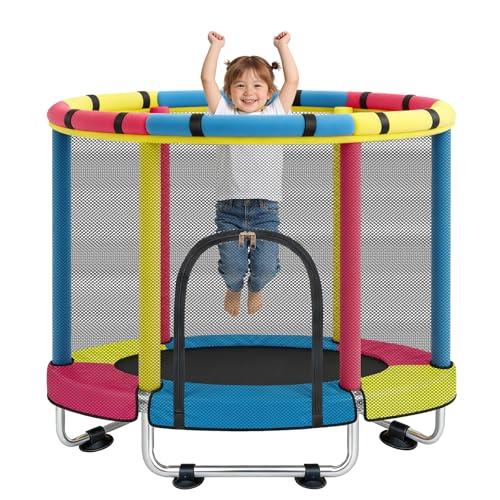
The jumping surface measures 47 inches on each side, which is wider than many mini trampolines. That extra room helps keep a child centered during play, and the no-gap enclosure net combined with 360-degree thickened foam padding means little hands and feet stay protected. Each of the three U-shaped legs is fitted with two large suction cups, so the frame resists sliding on smooth floors during active jumping.
The frame sits 12 inches off the ground, which keeps the bounce low and controlled, a good match for younger toddlers who are still building coordination. The 47-inch footprint does require a fair amount of floor space, so it’s worth checking your room dimensions before buying. For a family with a dedicated play area and a child who is still close to the ground, this design offers a well-enclosed bounce zone.
Product photos
Radio Flyer Kids' Trampoline

What We Like
- Doubles as racetrack play mat
- Comfort grip handle for little hands
- Folds flat for easy storage
- Develops gross motor skills
Trade-offs
- No enclosure net or safety bar beyond handle
- No safety enclosure net for active jumpers
The 3-foot bounce area is a solid size for indoor toddler jumping, but what sets this trampoline apart is the built-in racetrack play mat on the other side. That means when the bouncing stops, the fun doesn’t have to, it turns into a themed play surface that keeps little ones engaged. The comfort grip handle is a nice touch for small hands, and the whole thing folds flat for storage, which is a lifesaver when floor space is tight. It’s a clever choice for anyone who wants more than just a trampoline, especially if your toddler loves cars or imaginative play.
The overall height of this trampoline is 36.2 inches, which is taller than some other toddler trampolines, the BCAN BT1, for example, stands at 21.5 inches overall. There’s also no enclosure net, so it relies entirely on the handle for stability.
Product photos
SkyBound 36" Indoor Trampoline

What We Like
- Thick PVC safety pad
- Foam-covered galvanized steel handlebar
- 7 legs for stability
- Lifetime frame warranty
Trade-offs
- 8.7-inch height limits taller toddlers
- No foldable design for storage
A 36-inch jumping surface with a foam-covered galvanized steel handlebar gives a toddler a stable, secure first bounce. The thick PVC safety pad and seven legs with rubber-capped feet mean the trampoline stays put on hardwood or tile, and the water-resistant feet wipe clean easily. This is the pick for parents who want a simple, no-fuss starter trampoline that prioritizes safety and durability over extra features. The lifetime frame warranty backs that up, too.
At just 8.7 inches tall, this trampoline sits lower than some competitors like the BCAN BT1, so older or taller toddlers may outgrow the bounce room sooner. But if your priority is a rock-solid, safety-first trampoline for a young child’s first jumping experience, the SkyBound delivers exactly that without gimmicks.
Product photos
How We Evaluated Indoor Trampolines For Toddlers
Our research began with a deep dive into manufacturer data for each trampoline’s dimensions, weight limits, and materials. We cross-referenced those specs with patterns we found in hundreds of owner reviews to identify which features actually hold up, and which safety claims are just marketing. We also consulted pediatric play guidelines and expert round-ups on trampoline safety for toddlers to understand what risks matter most for children under six.
Three criteria dominated our evaluation: stability, safety construction, and assembly complexity. A trampoline that wobbles or tips during bouncing is dangerous regardless of its padding quality, so we prioritized models with wide leg bases, rubber feet, or suction cups. We also looked closely at mat-to-frame gaps; a no-gap design prevents toe entrapment, which is the most common injury on toddler trampolines. Assembly time matters because a complicated setup often means parents skip safety checks or leave hardware loose.
This is a research-led evaluation, not a hands-on test. We cannot tell you how a trampoline feels after a year of daily bouncing. But we can tell you which models have the strongest warranty, the most owner-reported durability issues, and the best safety engineering on paper. We aim to narrow your choices to the few that are most likely to work for your specific situation.
What To Look For In Indoor Trampolines For Toddlers
The right trampoline for your toddler balances safety engineering, floor footprint, and the features that keep a young child engaged. Here are the key criteria to weigh before you buy.
Focus on a no-gap mat, a stable base with anti-tip features, and a handlebar that fits your child’s height. Avoid models with exposed springs or pinch points, and always match the weight limit to your child’s current size plus room to grow.
Safety Construction: No-Gap Mats and Spring Covers
The most important safety feature on any toddler trampoline is a no-gap protective mat that covers the gap between the jumping surface and the frame. Without it, a child’s foot or finger can slip through during a bounce. Look for models that use elastic bands instead of exposed springs, these are quieter and eliminate the pinch hazard entirely.
The BCAN SP1 36″ uses a mat with 40% higher density foam than standard models, and its springs were tested 200,000 times for durability. For a deeper look at what makes a trampoline truly safe, our guide to the safest trampolines covers the key engineering details.
Stability and Frame Construction
A toddler trampoline needs to stay planted on the floor, not slide or tip when a child bounces near the edge. The best models use rubber feet, suction cups, or a wide U-shaped base to grip the floor. The SPORTSOUL Mini Trampoline 3ft has six rubber feet and passed over 300,000 bounce tests, indicating a frame that won’t fatigue quickly.
For families with hardwood or tile floors, non-slip feet are non-negotiable, they protect both the floor and the child. If you are comparing multiple sizes, our guide to small trampolines for kids can help you match the footprint to your room.
Handlebar Adjustability and Grip
A fixed-height handlebar works fine for a single child at one age, but an adjustable handlebar lets the trampoline grow with your toddler. The BCAN BT1 36″ has two height settings, which is better than a fixed bar but still limited. Look for foam-covered handles that are thick enough for small hands to grip securely, the NBR foam on the SPORTSOUL is a good example. If your child is on the taller side for their age, prioritize models with at least three adjustment positions.
- Check that the handlebar foam is securely attached and won’t slide off during use.
- Measure the handlebar height while your child stands on the mat, their elbows should bend slightly when gripping.
- Ensure the handlebar base doesn’t create a toe-stubbing hazard around the trampoline’s edge.
- Verify that the handlebar is bolted to the frame, not just clipped or snapped on.
A good rule of thumb: if you can wobble the handlebar with one hand, your toddler will wobble it with their whole body weight.
Indoor Trampolines For Toddlers Compared
The table below compares the 10 trampolines across the dimensions that matter most for toddler safety and usability: jump surface size, weight limit, handlebar adjustability, and whether the model folds for storage.
| Product | Jump Surface | Weight Capacity | Handle Type |
|---|---|---|---|
| BCAN BT1 36" Toddler Trampoline | 36 inches | N/A | 2-level adjustable |
| BCAN SP1 36" Toddler Trampoline | N/A | 132 lbs | Foam T-shaped |
| SPORTSOUL Mini Trampoline 3ft | N/A | 88 lb | NBR non-slip foam handlebar |
| Ativafit 36" Foldable Toddler Trampoline | 36 inches | N/A | Foam handle |
| Serenelife 36" Indoor Trampoline | N/A | 220 lbs | Extra Soft Handle |
| LASTJUMPER Mini Toddler Trampoline | N/A | N/A | N/A |
| jumpfly 6FT Rectangle Trampoline | N/A | 220 lbs (trampoline), 110 lbs (swing) | N/A |
| IELECMG 47" Toddler Trampoline | 47 x 47 inches | 220 lbs | N/A |
| Radio Flyer Kids' Trampoline | 3 ft wide | N/A | Comfort grip |
| SkyBound 36" Indoor Trampoline | 36 inches | N/A | Foam-covered galvanized steel |
Frequently Asked Questions
What age is appropriate for a toddler trampoline?
Most manufacturers recommend their trampolines for children ages 1 to 6, but the appropriate age depends on your child’s coordination and balance. For children under 3, choose a model with a low jumping height and a sturdy handlebar they can reach comfortably. Always supervise toddlers during use, regardless of the age rating.
How do I keep my toddler safe on an indoor trampoline?
Place the trampoline on a soft, level surface away from furniture with sharp corners. Allow only one child to bounce at a time, and enforce a rule against flips or somersaults. The toddler trampoline safety guidelines recommend checking the mat and padding regularly for wear, and never letting a child use the trampoline without adult supervision.
What size trampoline is best for indoor toddler use?
A 36-inch diameter trampoline is the most common size for indoor toddler use because it offers enough bounce space without dominating a living room. Smaller models around 30 inches work for very young toddlers but limit movement, while 47-inch models like the IELECMG provide more space but require a larger floor footprint. Measure your available floor space before buying.
Can a toddler trampoline help with gross motor skills?
Yes, bouncing on a trampoline helps toddlers develop balance, coordination, and leg strength. The rhythmic motion also supports proprioception, awareness of body position in space. The Radio Flyer Kids’ Trampoline is designed specifically to encourage gross motor skill development through gentle, low-impact bouncing.
How much assembly do these trampolines require?
Assembly time varies from 5 minutes to about 30 minutes depending on the model. The BCAN BT1 36″ can be assembled without tools in under 5 minutes, while models with enclosure nets or basketball hoops, like the LASTJUMPER, require more time. Most trampolines come with illustrated instructions, but you will need a Phillips head screwdriver for models that use bolts.
The Bottom Line
The BCAN BT1 36″ Toddler Trampoline is the best overall choice for most families. It combines anti-tip stability, a no-gap mat, and the fastest assembly we found, all in a package that folds to a quarter of its size for storage. It is ideal for parents of toddlers ages 1 to 6 who want a trampoline that comes out of the box ready to bounce in minutes.
If your top concern is safety engineering, the BCAN SP1 36″ has the most thorough ASTM certification and the highest-density protective mat of any model we reviewed. For families who need a trampoline that stays put on hardwood floors and survives years of energetic bouncing, the SPORTSOUL Mini Trampoline 3ft offers the sturdiest frame in this group.
The single most important factor in choosing a toddler trampoline is stability, a wobbly trampoline is dangerous regardless of how thick the padding is. Focus on models with wide, non-slip bases and no-gap mats, and you will find a safe, fun addition to your child’s play space.
