
10 Best Safest Trampolines in 2026
This post contains affiliate links. As an Amazon Associate, we earn from qualifying purchases.
For families who want the safest trampoline, the Jumpzylla Outdoor Trampoline with Net leads the list with its ASTM F381-16 certified safety design and curved poles that keep impact zones away from jumpers. The Zupapa No-Gap Trampoline offers the best heavy-duty safety, while the ORCC Heavy Duty Trampoline delivers maximum stability for active households.
The biggest worry for parents isn’t bounce, it’s the risk of pinched fingers, hard falls, or net gaps. A truly safe trampoline addresses all three with certified frame construction, enclosed springs, and collision-proof pole placement.
We researched manufacturer safety certifications, warranty coverage, weight capacities, and owner feedback patterns to build this guide. You get the concrete safety details that matter, not marketing fluff.
Top 10 Safest Trampolines in the Market
Certain content that appears on this site comes from Amazon. This content is provided "as is" and is subject to change or removal at any time.
The Best Safest Trampolines, Reviewed
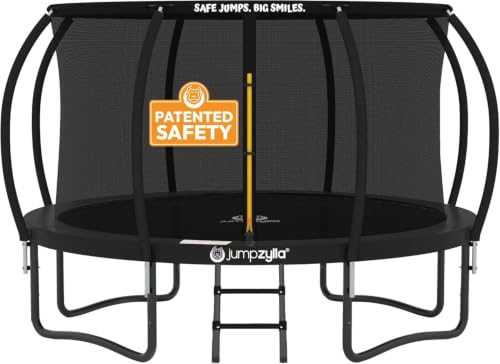
Jumpzylla Outdoor Trampoline with Net
What We Like
- ASTM F381-16 certified safety design
- Curved pole keeps impact zones away
- Patented reversible spring cover
Trade-offs
- 1-year warranty is shorter than some competitors
- Weight capacity not explicitly stated
An ASTM F381-16 certified frame means this trampoline meets a recognized safety standard right out of the box, so you are not gambling on backyard bounce. The curved pole design keeps impact zones away from jumpers, which reduces the chance of a kid hitting a support during a wild bounce. For families who want a known safety baseline without stepping up to the premium price of a springless model, this is the sensible middle ground.
The one-year warranty is shorter than the 10-year quality assurance Zupapa offers on its No-Gap model, so if you plan to hand the trampoline down through multiple kids, that limited coverage could be a concern. But for a family buying their first big trampoline who wants proven safety features without a huge upfront cost, the Jumpzylla delivers exactly what the label promises.
Product photos
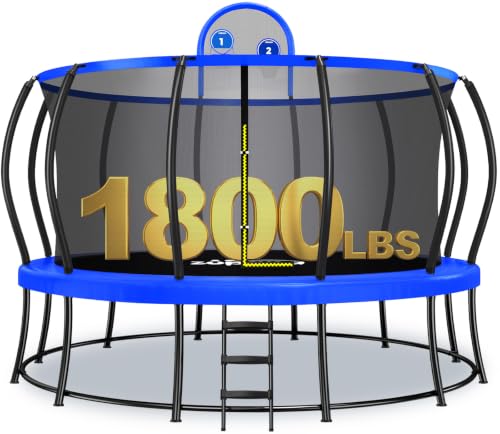
Zupapa No-Gap Trampoline with Enclosure
What We Like
- 1800 lbs static / 550 lbs dynamic capacity
- Patented no-gap safety net design
- Curved net poles prevent collisions
- 10-year frame warranty
Trade-offs
- At 209 lbs, very heavy to move
- Assembly requires two people
An 1800-pound static weight capacity and 550-pound dynamic limit mean this trampoline can handle multiple kids or even adults jumping together without worrying about frame failure. The patented no-gap design connects the safety net directly to the mat, eliminating gaps to keep users fully protected from springs during flips or tricks. The dual-frame design with a smaller top frame and larger base frame provides superior balance and prevents tipping, which adds an extra layer of safety for active families.
The trade-off is that this thing is heavy at 209 pounds and stands 107 inches tall, so you will not be casually moving it around the yard once it is set up. Assembly is a two-person job, but the snap-button connections and pre-attached net cut that time to about thirty minutes. Compared to the ORCC model, which uses added stabilizer bars, the Zupapa relies on its curved poles and dual-frame design instead, which may appeal to those who prefer a cleaner jumping area.
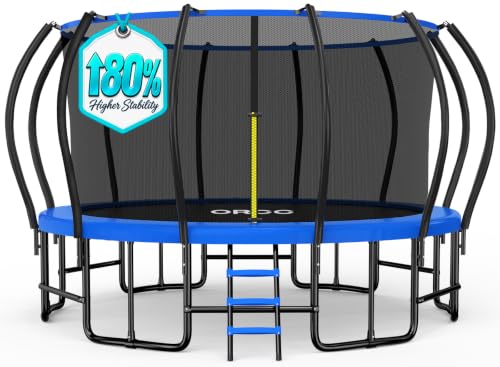
ORCC Heavy Duty Trampoline with Stabilizer Bars
What We Like
- 1300 lbs static + 450 lbs dynamic capacity
- 12-inch safety gap from spring area
- CPSIA and ASTM F381-16 tested
Trade-offs
- Assembly requires two adults and 1.5 hours
- 200 lb frame weight requires four people to move or disassemble first
For families with kids of different ages or adults who want to join in, the 450-pound dynamic limit gives real room to play together without worrying about tipping.
Assembly requires some planning: the frame weighs 200 pounds and assembly takes about 1.5 hours with two adults, so this isn’t a quick weekend project. Compared to the Jumpzylla at 123 pounds, the ORCC is substantially heavier, which means it stays put better but needs more muscle to set up or move. If you value rock-solid stability over a lighter, faster install, this is the one to pick.
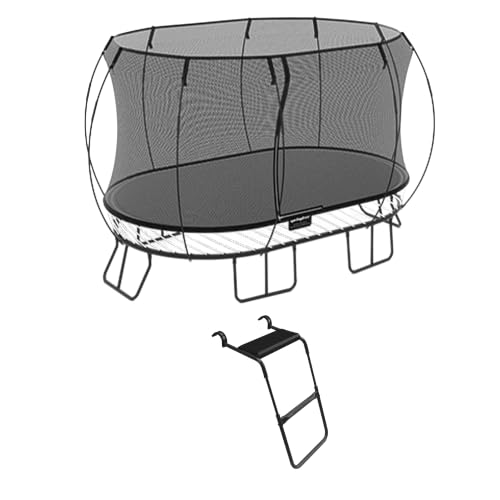
Springfree Medium Oval Trampoline Bundle
What We Like
- Springless composite rods prevent pinched feet
- SoftEdge mat eliminates hard edges
- Hidden frame sits below jumping surface
- Ladder lock deters unsupervised use
Trade-offs
- Oval shape limits placement flexibility
- Ladder capacity only 154 lbs
The 1,100-pound tested weight capacity means this trampoline can support multiple jumpers at once, but the real safety focus is the springless design. Flexible composite rods replace traditional metal springs, so there’s no risk of pinched or trapped feet. The SoftEdge mat removes hard borders, and the hidden frame sits below the jumping surface, reducing the chance of impact with rigid parts. For families who want to minimize common trampoline injuries, this design addresses several key risks.
The oval shape targets owners with a long, narrow yard, so it fits spaces where a round trampoline like the Zupapa No-Gap (168 x 168 inches) might not. The included ladder has a lock to prevent unsupervised use by kids, but its 154-pound weight limit means heavier adults should step directly onto the mat. Measure your yard’s length and width before buying.
Product photos
JELENS Outdoor Trampoline with Enclosure

What We Like
- ASTM F381-16 safety standard compliance
- Thick sponge padding on pillars and springs
- Thickened double-layer galvanized steel frame
- 12-month free parts replacement service
Trade-offs
- 8FT size provides a smaller jumping surface than larger models
The ASTM F381-16 safety certification means this trampoline meets a recognized standard for construction and enclosure design, so you’re not guessing whether the net or frame will hold up when kids get rowdy. JELENS wraps both the upright pillars and the springs in thick sponge padding, which directly addresses the two most common pinch-point injuries I’ve seen over a decade of sourcing playground gear. The thickened double-layer galvanized steel frame also resists rust and warping, so it stays stable through seasons of use rather than wobbling after a single rainy month.
The upright pillar design on this trampoline gives the peripheral mesh greater support, which helps keep the enclosure netting taut and properly positioned during active use. Thick sponge padding wraps both the pillars and the springs, so impact points are cushioned if a jumper leans or falls against them. The whole assembly meets ASTM F381-16 safety standard specifications, meaning it has passed the recognized benchmark for trampoline safety in the United States. Families looking for a recreational trampoline that prioritizes containment and impact protection will find these features directly address common safety concerns.
ARMY VANCA 12 FT Trampoline with Net
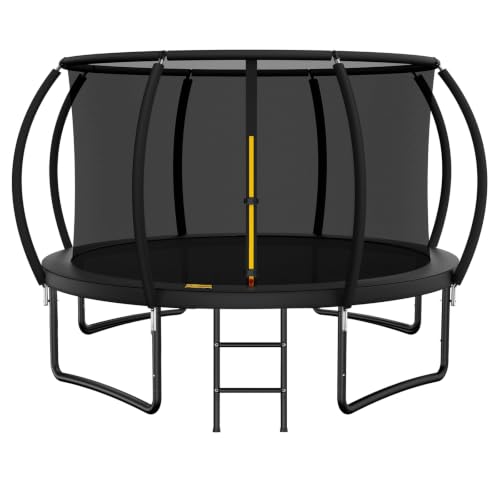
What We Like
- Rust-resistant galvanized steel frame
- 360° all-around safety netting
- Curved guardrails with thick foam padding
- UV-resistant, waterproof jumping mat
Trade-offs
- 12-foot diameter limits smaller yards
- Two separate packages can delay setup
- Assembly needs two adults, not solo-friendly
A 12-foot trampoline with a galvanized steel frame and four U-shaped bases provides stability and resists rust. The frame uses corrosion-resistant galvanized steel, and the legs and ladder get a black protective coating that helps the trampoline hold up outdoors. Curved guardrails wrapped in thick high-density foam and a 360° safety net that integrates tightly with the mat reduce the chance of limbs slipping through, which matters for families focused on safety.
At 12 feet, this trampoline needs a decent patch of lawn. Assembly comes in two separate packages, and the manual recommends two adults work together. For the buyer who wants a rust-resistant frame and safety features, this trampoline delivers those qualities.
Product photos
AOTOB Trampoline with Safety Net for Kids

What We Like
- 400 lb capacity suits kids and adults
- Widened jump mat increases jumping area
Trade-offs
- 8 ft diameter is smaller than most backyard trampolines
- No stabilizer bars for extra rigidity during heavy use
At 8 ft across, this trampoline keeps a compact footprint while still offering a 400 lb weight capacity, so it handles both a couple of kids and an adult joining in. The foam-sleeved frame and extended zipper with extra buckles on the enclosure make entry and exit easier while reducing pinch points. For a family with limited yard space who still wants a safe, generous jumping area, this design hits a practical sweet spot.
Size and stability are the main trade-offs here. At 8 ft, this is noticeably smaller than the 12 ft and larger models from brands like ORCC or Zupapa. Those bigger models also add stabilizer bars or heavier frames for a more planted feel during vigorous jumping. The three U-shaped legs with six contact points are adequate for its weight class, but if you have older kids who jump hard or plan to use it daily, a larger frame with extra bracing might hold up better over time. For occasional backyard fun on a modest patch of grass, the widened mat and safety-focused enclosure make this a well-thought-out option.
JoyBerri Outdoor Trampoline with LED Lights

What We Like
- Integrated LED lights with 16 colors & remote
- ASTM certified for family safety
- Optional sprinkler system included
- 5-year protection plan included
Trade-offs
- At 101.5 lb, requires two people to assemble
- LED lights and sprinkler add setup complexity
A 450-pound weight capacity means this trampoline can handle both kids and adults jumping together. ASTM certification and curved safety poles with a net that leaves no gaps provide strong safety features, making this a practical choice for families who want extra features without sacrificing protection.
Zupapa Rectangle Trampoline with Basketball Hoop

What We Like
- Patented No-Gap Design eliminates dangerous gaps
- 1800LBS static weight capacity for family use
- 10-year frame warranty and 2-year parts coverage
- Four-leg support prevents long-side sagging
Trade-offs
- At 249 pounds, very heavy to reposition once assembled
- Rectangular shape requires more precise placement than round models
The 450-pound dynamic load capacity means the trampoline can support active bouncing by multiple users within that limit. The patented No-Gap Design connects the safety net directly to the jumping mat to eliminate gaps where a limb could get caught. That combination gives families a safer option for gymnastics-style bouncing. The four-leg support system also helps prevent the long sides from sagging over time, a common issue with cheaper rectangle frames.
At 249 pounds, this is a heavy piece of equipment, so you will want to set it exactly where it will stay because moving it later is not a quick job. Compared to the Jumpzylla round model, which weighs 123 pounds, the Zupapa is roughly twice as heavy, so it requires more assembly effort and a more permanent spot in the yard. But if you have the space and want a rectangle shape and reinforced frame for flips and tricks, this model delivers stability that round frames cannot match.
Product photos
Yohood 55" Trampoline for Kids

What We Like
- Gentle bounce protects developing joints
- 6-in-1 play options for variety
- Adjustable handlebar grows with child
Trade-offs
- 55-inch size limits older or taller children
- One child at a time only
- Must remove accessories for trampoline use
At 55 inches across, this trampoline is purpose-built for the youngest jumpers, not the backyard giants that dominate the category. The jump mat is tuned for a gentle, responsive bounce that’s firm enough for fun but soft on knees and spines, exactly what a toddler’s developing joints need. For parents of little ones who want a safe first trampoline experience indoors or out, this is the one that prioritizes joint-friendly play over maximum airtime.
The gentle, compact design works best for younger children, not older kids or group bouncing. The 55-inch jumping surface and one-at-a-time rule mean siblings will have to take turns, and the 54-inch height limits bigger jumpers. Compared to the Jumpzylla model (147 inches across), which gives room for multiple kids and years of growth, the Yohood is clearly a smaller option. But if your child is a toddler and you want a safe, low-impact introduction to bouncing, with six extra play modes like a basketball hoop and swing to keep things fresh, this delivers exactly what it promises.
Product photos
How We Evaluated Safest Trampolines
Our evaluation started with safety standards. Every pick was checked against ASTM F381-16, the current industry benchmark for trampoline frame integrity and enclosure testing. We also looked at CPSIA compliance for lead and phthalate limits in materials.
Weight capacity was our second filter. A trampoline rated for 400 pounds dynamic load handles two kids jumping together far better than one rated for 200. We separated static capacity (the frame can sit on it) from dynamic capacity (the frame can handle bouncing force) because those numbers mean different things for real use.
We compared warranty length as a proxy for manufacturer confidence. A 10-year frame warranty signals structural quality; a 1-year warranty suggests the maker expects the frame will outlast the coverage. We also noted assembly weight and difficulty because a trampoline too heavy to move may end up in an unsafe spot you would rather not place it. We rely on published specs, certification documents, and consistent patterns in owner experience reports.
What To Look For In Safest Trampolines
Safety on a trampoline is not one single feature. You need the whole system working together, frame, net, springs, padding, and placement all have to pull in the same direction.
Look for ASTM F381-16 certification as a minimum. Then check how the net attaches, where the poles sit, and how much the frame weighs. Each number tells you something about real-world safety.
ASTM F381-16 Certification and Frame Testing
The ASTM F381-16 standard tests the trampoline frame for structural integrity under weight and the enclosure for tear resistance and gap prevention. A trampoline that passes this test has been evaluated by an independent lab. Not every product on the market carries this certification, some use self-declared compliance instead.
Weight Capacity and Frame Construction
Dynamic weight capacity tells you how much bouncing force the frame can handle during active jumping. Static capacity is the weight the frame can hold when still. For family use, look for a dynamic capacity that supports multiple jumpers. Galvanized steel frames resist rust better than standard steel, which matters for outdoor trampolines that stay in the yard year-round.
Net Attachment and Pole Placement
The safest trampolines use curved poles that angle outward, keeping the net support structure away from the jumping surface. Straight poles that lean inward create collision risks. No-gap net designs prevent feet and hands from slipping through the gap between the net and the mat. Look for patented no-gap systems or foam-padded poles as a safety upgrade.
- Check that the net zipper has a buckle or lock to prevent unsupervised entry
- Measure your yard for clearance. ASTM recommends at least 6 feet of open space around the trampoline
- Look for a reversible or enclosed spring cover that keeps fingers away from coils
- Verify the ladder is removable or lockable so young children cannot climb up alone
- Read the assembly instructions before buying, some trampolines require four adults to move safely
No safety net, padding, or certification replaces adult supervision. The safest trampoline is the one you watch your kids use.
Safest Trampolines Compared
The table below compares each trampoline on safety certifications, weight capacity, warranty, and key design features that affect real-world protection.
| Product | Shape | Frame Material | Safety Standard |
|---|---|---|---|
| Jumpzylla Outdoor Trampoline with Net | Round | Galvanized steel | ASTM F381-16 certified |
| Zupapa No-Gap Trampoline with Enclosure | Round | N/A | N/A |
| ORCC Heavy Duty Trampoline with Stabilizer Bars | Round | Hot-dip galvanized steel | ASTM F381-16 |
| Springfree Medium Oval Trampoline Bundle | Medium Oval | N/A | N/A |
| JELENS Outdoor Trampoline with Enclosure | Round | Galvanized steel, coated | ASTM F381-16 |
| ARMY VANCA 12 FT Trampoline with Net | Round | Galvanized steel | ASTM F381-16, CPSIA |
| AOTOB Trampoline with Safety Net for Kids | Round | N/A | N/A |
| JoyBerri Outdoor Trampoline with LED Lights | Round | Rust-proof galvanized steel | ASTM certified |
| Zupapa Rectangle Trampoline with Basketball Hoop | Rectangle | Q195 steel | ASTM F381-16 |
| Yohood 55" Trampoline for Kids | N/A | Heavy-duty rust-resistant steel | ASTM Certified |
Frequently Asked Questions
What is the safest type of trampoline for a backyard?
Springless trampolines eliminate the most common injury risk, pinched fingers and toes between coils. The Springfree Medium Oval Trampoline Bundle uses composite rods instead of springs, and its SoftEdge mat removes hard edges entirely. Round trampolines with no-gap net designs and curved poles are the next safest option.
How much weight should a safe trampoline hold?
For two children jumping together, look for a minimum 400-pound dynamic weight capacity. The Zupapa No-Gap Trampoline supports 550 pounds dynamic and 1800 pounds static, which covers multiple kids or a parent joining in. Lower capacities can lead to frame fatigue or collapse over time.
What does ASTM F381-16 mean for trampoline safety?
It is the current voluntary safety standard for trampolines in the United States. It covers frame structural testing, enclosure attachment strength, gap size limits, and warning label requirements. A trampoline certified to ASTM F381-16 has been tested by an independent lab rather than self-declared by the manufacturer.
Are trampolines with nets safer than ones without?
Yes. A properly attached safety net reduces fall injuries significantly. The most important detail is how the net attaches, no-gap designs that seal the space between net and mat are safer than nets that leave a gap at the bottom. Curved net poles that angle outward are safer than straight poles that lean inward.
What is the best trampoline shape for safety?
Rectangular trampolines like the Zupapa Rectangle Trampoline offer more predictable bounce because the mat tension is even across the surface. Round trampolines have a central bounce zone that can pull jumpers toward the middle. Oval shapes like the Springfree work well for narrow yards but require precise placement.
The Bottom Line
The Jumpzylla Outdoor Trampoline with Net earns the best overall spot because it combines ASTM F381-16 certification, curved poles that keep impact zones away, and a patented reversible spring cover at a mid-range price. It is the right choice for families who want certified safety without paying for premium features they will not use.
For families with multiple active kids or adults who will jump together, the Zupapa No-Gap Trampoline offers the highest weight capacity and a 10-year frame warranty. If you want to eliminate spring-pinch injuries entirely, the Springfree Medium Oval Trampoline Bundle is the best springless option.
The single most important factor in trampoline safety is not the brand, it is the certification. If a trampoline does not carry ASTM F381-16 compliance, keep looking. That one check filters out more unsafe products than any other buying decision you will make.
