
10 Best 3 Player Board Games in 2026
This post contains affiliate links. As an Amazon Associate, we earn from qualifying purchases.
For groups of three, the CATAN Board Game 6th Edition is our Best Overall pick thanks to its modular board that keeps every session fresh and its perfect balance of trading and building. The SEQUENCE Original Game by Jax is the Best Classic Family Game for its scalability, while Azul Mosaic Tile-Placement Game takes the Best Award-Winning Strategy spot for its elegant depth.
The awkward third-wheel problem is real, many games are built for two or four, leaving three-player groups stuck with unbalanced rules or a player sitting out. What actually matters for this player count is a game that scales properly, keeps everyone engaged without downtime, and offers enough strategic depth to reward repeat plays.
We built this guide by analyzing manufacturer specifications, expert round-ups, and patterns in owner feedback across the most popular three-player titles. You will find ten carefully selected games, a detailed comparison table, and practical buying advice to help your trio find its next favorite.
Top 10 3 Player Board Games in the Market
Certain content that appears on this site comes from Amazon. This content is provided "as is" and is subject to change or removal at any time.
The Best 3 Player Board Games, Reviewed
CATAN Board Game 6th Edition

What We Like
- Modular board for high replayability
- Trading and building mechanics
- Supports 3-4 players out of box
Trade-offs
- Requires 3-4 players, not ideal for 2
A modular hexagonal board means no two games unfold the same way, which is the real secret behind Catan’s staying power. You gather brick, wood, wheat, ore, and sheep to build roads, settlements, and cities, racing to 10 victory points while dodging the robber. It fits 3-4 players aged 10 and up, and a typical session runs 60-90 minutes, long enough to feel like a proper campaign but short enough for a weeknight. This is the kind of game that rewards repeated plays because the landscape changes every time, so you never settle into a single winning formula.
The trade-off is that 60-90 minutes can feel like a commitment when you only have a half-hour window. Catan also asks for exactly 3-4 players, so if your group is often just two, you will need the extension or a different game. But for those regular three-person game nights where you want negotiation, strategy, and a board that keeps you guessing, this is the one that delivers every time.
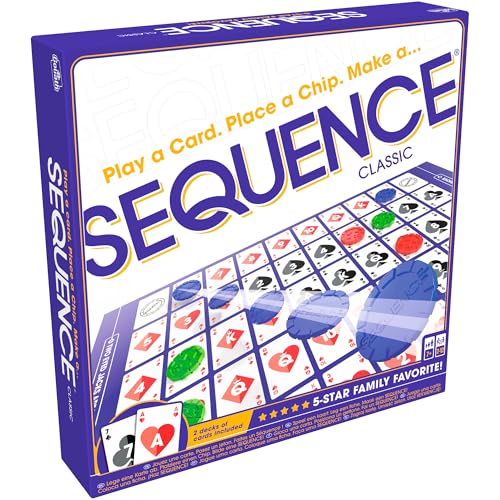
SEQUENCE Original Game by Jax
What We Like
- Plays 2 to 12 players
- Includes folding game board
- Develops STEM skills like strategy
- Easy for children, challenging for adults
Trade-offs
- No explicit playing time listed
- Red chips only 35, limiting larger teams
Sequence supports 2 to 12 players, so a three-player game works just as well as a full family gathering. The core loop is simple: play a card, place a chip, and try to line up five in a row. That straightforward mechanism makes it easy enough for a seven-year-old to pick up, but the need to block opponents and plan several moves ahead keeps adults engaged. The folding board and included chips mean you can set up and pack away quickly, which is a real plus when you only have an evening for a game night.
Sequence doesn’t give you a published play time, so a three-player match could run longer than you expect if everyone gets strategic. Compared to Catan, which caps at four players and demands a 60-90 minute commitment, Sequence is more flexible for a quick or extended session. Just be ready to clear a table for that 19.75-inch board and keep an eye on the small chips so they don’t wander off. It works well for families who want a game that scales from a small group to a crowd without changing the rules.
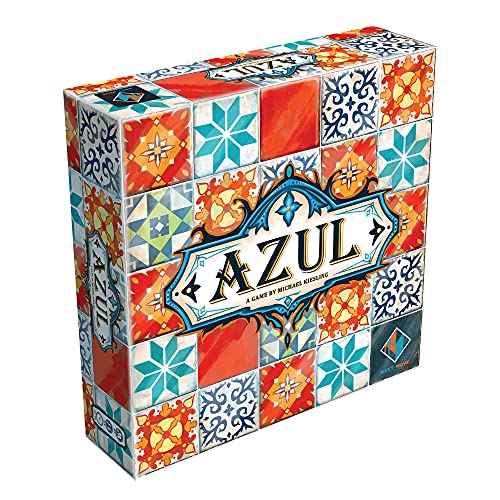
Azul Mosaic Tile-Placement Game
What We Like
- Award-winning Spiel des Jahres 2018
- Tile placement and mosaic art
- Scales well for 2-4 players
- Easy rules, deep strategy
Trade-offs
- Tile randomness can frustrate planners
- No solo mode for single players
The 30-45 minute playtime hits a sweet spot for a strategy game that doesn’t drag into a second hour, making it a reliable pick for a weeknight or a quick round between longer games. Azul shines brightest for those who enjoy a balance of visual payoff and tactical depth. Every tile you draft and place directly shapes your score, and the shifting factory displays ensure no two games play the same. It’s especially strong for two-player head-to-head duels, where the draft-and-deny mechanics feel razor-sharp, but it scales smoothly to three or four without losing tension.
The same shifting tiles that keep games fresh can also leave a planner feeling at the mercy of the draw. If you’re chasing a specific color to complete a row, you might watch it vanish into an opponent’s board. Compared to Catan’s longer playtime of 60-90 minutes, Azul’s 30-45 minute sessions offer a more contained experience that respects your time and table space. It’s a clean, elegant design, though players who want longer, more involved games should consider other options.
Product photos
Wingspan by Stonemaier Games

What We Like
- 170+ unique bird cards for variety
- Custom dice in birdfeeder dice tower
- Beautifully illustrated by three artists
- Includes Automa for solo play
Trade-offs
- 60-90 minute play time is too long for quick sessions.
With over 170 unique bird cards, Wingspan offers a variety of bird combinations that can change from game to game. You build an engine of birds that chain together abilities, earning points through food gathering, egg laying, and card draws. The custom dice in the birdfeeder dice tower and the illustrations by three artists support the theme, and the 6-minute setup means you spend more time playing than preparing. This is a medium-weight strategy game that rewards planning without the direct conflict of some other games.
The 60-90 minute play time and medium weight mean it’s not a quick, light game for every group. Splendor, for example, offers a different pace, but Wingspan’s depth rewards those who enjoy a thematic engine-builder. The solo Automa mode lets you play even when you’re alone.
Product photos
Splendor Gem Trading Game by Asmodee

What We Like
- Quick to learn with only 3 actions
- Engine-building gem trading gameplay
- Rewards timing and long-term planning
- 30-minute play time fits game nights
Trade-offs
- No solo mode for single players
- Box dimensions require a medium-sized shelf
Three possible actions per turn and clear token values make Splendor easy to teach while still offering meaningful choices around timing, reservations, and long-term planning. That quick-learn design works well for groups where one person is new to strategy games, but the engine-building depth keeps experienced players engaged as they race to 15 prestige points. The Renaissance gem-trading theme gives every move a visible goal, so you always know what you’re working toward.
At 0.2 pounds, the box is light enough to toss in a bag, but it won’t have the weight of larger board games. Still, for a 30-minute game that packs meaningful decisions into a small footprint, Splendor is hard to beat when you want something strategic but not a time commitment.
Product photos
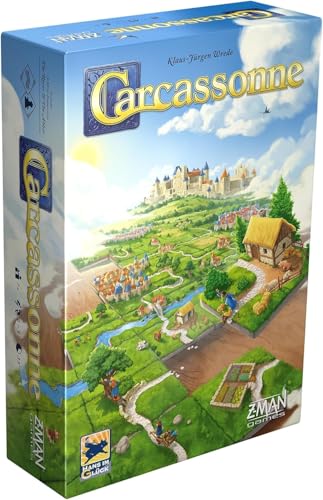
Z-Man Games ZM7810 3 Player Board Game
What We Like
- Classic tile placement mechanics
- Includes The Abbot and The River mini-expansions
- Randomized tiles for high replayability
- Works for family game night
Trade-offs
- Only supports up to 5 players
- Tile draws can lead to luck-based outcomes
With a 35-minute playtime and support for 2 to 5 players, Carcassonne fits neatly into a weeknight or family gathering without dragging on. The core loop of drawing a tile, placing it to build cities, roads, fields, or monasteries, then deploying meeples as knights, farmers, or monks turns every turn into a small puzzle. The included The Abbot and The River mini-expansions add extra layers without needing to buy anything else, making it a complete package right out of the box. This is the kind of game that works equally well for a 7-year-old learning spatial reasoning and for adults who want a quick but satisfying strategy session.
The randomized tile draw can sometimes hand one player a lucky streak, especially in a three-player game where the board is more open. Compared to other strategy games like CATAN, which is designed for 3-4 players with a longer playtime of 60-90 minutes, Carcassonne offers a quicker, more individual-focused experience. If you prefer a game where every move feels earned rather than drawn, the luck of the tile stack might frustrate you. But for families or groups that want a relaxed, creative building experience with clear rules and a short time commitment, this is a strong pick.
Product photos
Stonemaier Games STM850 3 Player Board Game

What We Like
- 183 dragon cards for huge variety
- 5-minute setup gets you playing fast
- Solo mode with Automa opponent
- Beautiful watercolor illustrations
Trade-offs
- Heavier weight (4.9 lbs) less portable
With 183 dragon cards and a 5-minute setup, Wyrmspan gets you into the action almost as fast as you can say ‘dracologist.’ That card count means every game feels fresh, you’re never seeing the same combos twice, which is exactly what you want in a strategy game that’s supposed to return to the table again and again. It’s built for 1-5 players, so it works just as well for a solo evening as it does for a game night with friends. The Automa opponent makes solo play feel like a real competition rather than just going through the motions. The watercolor art by Clémentine Campardou is soothing to look at, but don’t let the pretty pictures fool you, this is a medium-weight engine builder that rewards careful planning.
The 90-minute playtime and the engine-building depth mean this isn’t something you pull out for a quick round after dinner. Compared to a game like Ticket to Ride, which wraps up in 30-60 minutes, Wyrmspan demands a bigger time commitment and a group that’s ready to think a few moves ahead. The 4.9-pound box also makes it less of a grab-and-go option than something like the SEQUENCE folding board. If your group loves dragons and doesn’t mind settling in for a longer, more strategic session, this is a fantastic centerpiece for game night. But if you’re after something lighter or faster, you might want to look at a tile-layer like Carcassonne instead.
Product photos
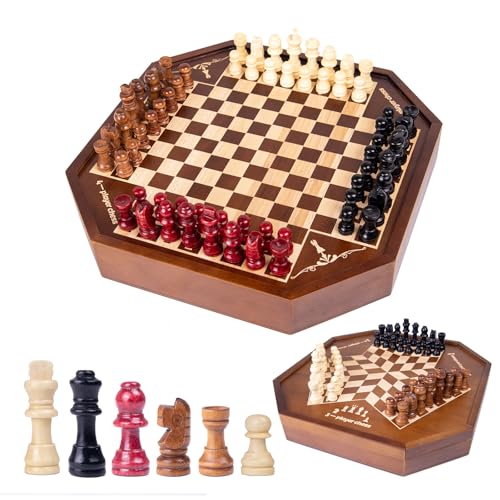
Extguds 3 Player Wooden Chess Set
What We Like
- Double-sided board for 3 or 4 players
- Marked piece positions help beginners
- Wooden box stores pieces neatly
- Includes instruction manual
Trade-offs
- Listed dimensions on Amazon are likely a data entry error
- At 2.7 pounds, heavier than many travel board games
A double-sided chessboard that flips from a three-player layout to a four-player layout means you can adapt the same wooden set to different group sizes without buying a second game. The marked starting positions printed on the board and the included instruction manual make this approachable for someone who has never played a multiplayer chess variant. For a family or friend group that wants to try something beyond standard two-player chess, this set removes the guesswork and keeps the pieces organized in the built-in storage box.
At 2.7 pounds, this wooden chess set has a substantial heft that keeps it steady on a table during play, but it is not a lightweight travel option. The Amazon listing shows dimensions of 0.1 inches on each side, which is clearly a data entry error. So you will need to measure the actual board yourself to see if it fits your shelf or game night table.
Product photos
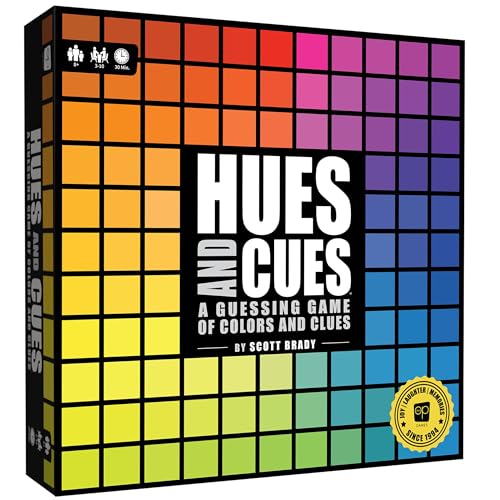
USAOPOLY Hues and Cues Color Guessing Game
What We Like
- 480 unique color squares
- Quick to learn rules
- Encourages creative word clues
- Works for 3-10 players
Trade-offs
- No strategy depth for competitive gamers
- Large box takes table space
- Relies on color perception differences
With 480 distinct color squares, Hues and Cues turns color recognition into a guessing game where one- or two-word clues lead others to the right hue. The rules are quick to learn, making it enjoyable for both casual players and gaming enthusiasts. This suits groups who want a light, creative party game that gets everyone talking and laughing, rather than a deep strategy session.
It lacks the tactical depth of some strategy games, where tile placement and scoring drive every decision. Hues and Cues is more about social connection and quick thinking than long-term planning, so it won’t satisfy players looking for a competitive challenge. If your group enjoys word association and vibrant colors, this is a great pick; if you prefer deep strategy, you might find it too simple.
Product photos
Days of Wonder Ticket to Ride Board Game

What We Like
- Easy to learn rules
- Giant North America map
- Miniature trains included
- Multiple victory strategies
Trade-offs
- 2-5 players, not ideal for exactly 3
A giant map of early 20th century North America and miniature trains for each player make this a visually immersive cross-country adventure. With simple rules that are easy to learn and strategic depth that rewards repeat plays, it suits families with kids ages 8 and up who want a relaxed but engaging game night. The 30-60 minute playtime keeps rounds moving without dragging, and multiple ways to win, collecting color sets, completing tickets, or building the longest route, mean no two games feel the same.
The biggest draw is its 30-60 minute playtime, which keeps a game night moving without dragging on, unlike longer strategy titles that can stretch past an hour. With simple rules and clear objectives, it’s a great entry point for newer players, while the route-planning and risk-taking keep experienced gamers engaged. It delivers consistent fun without overcomplicating things.
Product photos
How We Evaluated 3 Player Board Games
Our evaluation started with the core question: does this game actually work well for exactly three players? We studied rulebooks, player count recommendations, and community discussions to separate games that merely accommodate three from those that shine at that number. We also looked at how each game handles player interaction, some of the best three-player experiences create a natural tension where every decision affects both opponents equally.
We weighed four criteria most heavily. First, player scaling, does the game feel balanced and complete at three, or is it clearly designed for a different count? Second, replayability, how much variety do the components, cards, or board setup provide across multiple sessions? Third, play time, can the game fit a typical evening without dragging? Fourth, accessibility, how quickly can a new player learn the rules and start making meaningful decisions?
This is a research-led evaluation, not a hands-on test. We synthesized information from published specifications, expert recommendations, and the collective experience of thousands of owners to identify patterns and trade-offs. Our goal is to give you a clear, honest picture of what each game offers so you can match it to your group’s preferences.
What To Look For In 3 Player Board Games
The best game for your trio depends on how your group likes to play, fast and casual or deep and strategic. Focus on player count flexibility, play time, and the type of interaction the game encourages.
Key buying criteria: Look for games that explicitly support 3 players without awkward house rules. Consider play time (30-90 minutes is typical), replay value from variable setups, and whether the game encourages direct competition or parallel building.
Player Count and Scaling
A game that claims 2-4 players does not always play well at three. Some games have a “sweet spot”, Azul and Splendor are excellent at three because the limited resources create tight competition without the chaos of four. Others, like Ticket to Ride, work fine but lack the tension of a full table. Check whether the game includes components or rules specifically for three players, such as neutral pieces or adjusted victory conditions.
Play Time and Pacing
Three-player games often hit a sweet spot between the quick duels of two-player games and the longer sessions of four or more. Splendor wraps up in about 30 minutes, making it ideal for a warm-up or a weeknight. Wingspan runs 60-90 minutes, which suits groups that want to settle in. If your group has limited time, look for games with a listed play time under 45 minutes. If you enjoy longer sessions, engine-building games like Wingspan or CATAN reward the extra investment.
Interaction Type
Three-player games create a unique dynamic where two players can gang up on the leader, or each player must balance offense against two opponents. SEQUENCE and CATAN encourage direct competition through blocking and trading. Azul and Wingspan are more about building your own engine while occasionally disrupting opponents. Consider your group’s tolerance for conflict. Some trios thrive on negotiation and sabotage, while others prefer parallel play with minimal direct attacks.
- Check the box for the exact player count, “2-4 players” is not the same as “best at 3.”
- Read the rulebook excerpt online to see if three-player rules feel tacked-on or intentional.
- Look at setup time: games with modular boards or randomized tiles take longer to set up but offer more replayability.
- Consider the game’s weight rating (light, medium, heavy) to match your group’s experience level.
- Verify component quality, cards that shuffle poorly or boards that slide around ruin the experience.
A good rule of thumb: if the game is widely discussed in forums as “best at 3,” it is probably a safe bet.
3 Player Board Games Compared
The table below compares all ten games across the criteria that matter most for three-player sessions, player count, play time, and the type of gameplay each offers.
| Product | Players | Ages | Weight |
|---|---|---|---|
| CATAN Board Game 6th Edition | 3-4 | 10+ | 2.6 lbs |
| SEQUENCE Original Game by Jax | 2-12 | 7+ | 0.4 pounds |
| Azul Mosaic Tile-Placement Game | 2-4 | 8+ | 2.5 lb |
| Wingspan by Stonemaier Games | 1-5 | N/A | 2.2 lb |
| Splendor Gem Trading Game by Asmodee | 2-4 | 10+ | 0.2 pounds |
| Z-Man Games ZM7810 3 Player Board Game | 2-5 | 7+ | 1.6 pounds |
| Stonemaier Games STM850 3 Player Board Game | 1-5 | N/A | 4.9 lbs |
| Extguds 3 Player Wooden Chess Set | 3-4 | N/A | 2.7 pounds |
| USAOPOLY Hues and Cues Color Guessing Game | 3-10 | 8+ | 2.7 lb |
| Days of Wonder Ticket to Ride Board Game | 2-5 | 8+ | 2.8 lb |
Frequently Asked Questions
What is the best board game for exactly three players?
CATAN is widely considered the best overall board game for three players because its modular board and trading mechanics create balanced, replayable sessions. For a faster option, Splendor plays in about 30 minutes and scales beautifully to three.
Are there good board games for three players that are easy to learn?
Yes. Splendor and SEQUENCE are both easy to teach and play quickly. Splendor has only three possible actions per turn, while SEQUENCE uses a simple card-and-chip mechanic that children and adults can grasp in minutes.
What three-player board games have the most replay value?
CATAN leads with its modular board that changes every game. Wingspan offers over 170 unique bird cards, and Azul randomizes its tile supply each round. All three provide enough variety for dozens of sessions without feeling repetitive.
Can you play three-player board games with kids?
Yes. SEQUENCE is excellent for mixed-age groups, and Ticket to Ride has simple rules that children can learn. Hues and Cues is another strong option for families, as it relies on creative thinking rather than complex strategy.
What is the difference between competitive and cooperative board games for three players?
Competitive games like CATAN and Azul have each player working toward their own victory, often through direct competition or blocking. Cooperative games, which you can explore in our guide to cooperative board games, have all players working together against the game itself. For three players, competitive games often create more natural tension because every move affects two opponents equally.
The Bottom Line
For most groups of three, CATAN Board Game 6th Edition is the best choice. Its trading and building mechanics create a dynamic where every negotiation matters, and the modular board ensures no two games play the same. It is ideal for groups that want a strategy game with real depth and are willing to commit 60-90 minutes per session.
If your group prefers something faster or more family-friendly, Splendor offers a brilliant 30-minute engine-building experience, while SEQUENCE scales from two to twelve players and works for all ages. For strategy enthusiasts who love beautiful components, Azul and Wingspan both deliver exceptional experiences at three players.
The single most important factor when choosing a board game for three players is finding one that was designed with that count in mind, not one that merely tolerates it. Stick with games that have a reputation for playing well at three, and your game nights will never suffer from the odd-number problem again.
