What Is an Invitation to Play? Examples and Setup
This post contains affiliate links. As an Amazon Associate, we earn from qualifying purchases.
An invitation to play is a deliberate arrangement of open-ended materials that a child can walk up to and start using without instructions. You set the items out, leave them alone, and let your kid decide what they become. No demo, no narration, no adult running the show.
The setup is the easy part. What happens right after is where most of them fall apart: the what is an invitation to play question, an adult kneels down, picks up a block, and starts narrating. “Look, it’s a tower.” The kid nods, agrees, and drifts off toward something with a screen. Once you take over the story, the invitation is spent.
What follows is where the idea comes from, five setups you can build tonight from things already in your house, and the three habits that keep an invitation from sliding into a directed craft project.
Key Takeaways
- An invitation to play is a starting point. You arrange the materials, then you stop talking.
- A few material types on one surface hold attention longer than a full shelf does.
- The adult’s whole job happens before the child walks in. After that, your voice is what ends it.
- Match the invitation to the stage your kid is actually in, not the birthday on the calendar.
- Reset the same materials tomorrow instead of buying new ones.
What Is an Invitation to Play? Reggio Emilia and Loose Parts
Loris Malaguzzi’s municipal preschools in Reggio Emilia, Italy, gave the what is an invitation to play practice its modern shape. Reggio teachers call it a provocation: a Reggio Emilia approach setup of materials, light, and shadow arranged so a child asks a question out loud.
An invitation to play presents materials without a stated goal or a finished sample. The arrangement itself carries the prompt: a basket of smooth stones beside a shallow tray of water, a mirror laid flat under a cut branch, a row of wooden rings sorted by size. The child supplies the objective, the sequence, and the stopping point.
Simon Nicholson made the design-side version of the same argument with loose parts play: the number of ways a child can use an object matters more than how clever the object is.
Reggio is a municipal system in northern Italy, not a boxed curriculum you order. You can borrow the whole idea without buying a single thing, which is the part the toy aisle would rather you skipped.
Fair warning: plenty of the trays tagged as invitations online are crafts with a nicer camera.
What Counts as an Invitation to Play (and What Doesn’t)
A tray of pipe cleaners with a printed photo of the finished butterfly is a worksheet with better marketing. The child has one correct outcome and one correct method, and they know it immediately.
I spent my first few years in this business convinced a play space had to be loud and bright to pull kids in. Then I watched a group of four-year-olds walk straight past a wall of red and yellow plastic and spend the better part of an hour with a plain wooden bowl and a handful of pinecones.
Natural tones leave an object’s purpose open, so the kid has to decide. Bright plastic does the deciding for them.
Here is the line between the two:
| Invitation to Play | Directed Activity |
|---|---|
| Materials laid out, no sample shown | Finished sample sitting on the table |
| Child picks the goal | Adult picks the goal |
| Adult stays nearby and quiet | Adult demonstrates and corrects |
| Ends when the child walks away | Ends when the adult calls time |
| Mess gets contained, not prevented | Mess gets managed step by step |
The types of play in early childhood that fill an afternoon, construction and pretend and sorting and movement, all run through this one habit. What changes is who is holding the plan.
The payoff shows up later as independent play: a kid who can find something to do in a quiet room without asking you to fix their boredom.
What most people get wrong: Adding more materials the moment a child loses interest. A fuller tray narrows the options instead of widening them, and the child walks off before you have finished arranging it.
Five Invitations You Can Set Up Tonight
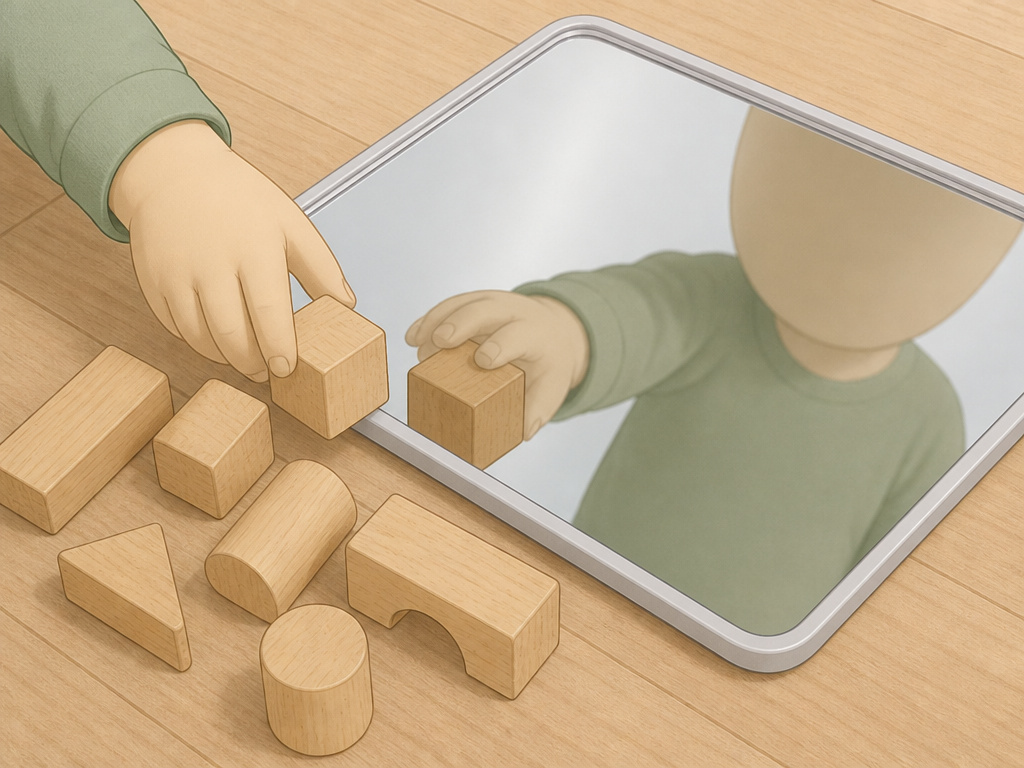
Five setups, one shared trait: you arrange, then you leave.
Before you start: Small parts are the real hazard. Button batteries and high-powered magnets stay out of reach entirely, and any setup that invites climbing needs a clear landing zone around it.
- Blocks and a mirror. A low pile of wooden blocks beside a shatterproof mirror laid flat on the floor. Skip the mirror and you get stacking. Add it and you get stacking plus a kid studying their own face while they do it.
- Water, a whisk, and a shallow tray. Set it on a folded towel. Skip the towel and you are mopping the kitchen instead of watching.
- Painter’s tape on the floor. A long line, a couple of squares, an X. Skip the squares and it is a line to walk. The squares are what turn it into a game with rules the kid invents.
- Magnetic tiles on a bare table. Magnetic tiles work best when the surface underneath is empty. Leave the table cluttered and the tiles end up in a pile with everything else.
- Kitchen tools and a bowl of dry rice. A whisk, a wooden spoon, a measuring cup, a funnel. Skip the funnel and you lose the pouring, which is the part toddlers stay for.
Keep a standing bin of these and you will never have to plan:
- Smooth stones and a shallow tray
- Wooden rings in a few sizes
- A roll of painter’s tape
- Scarves or strips of fabric
- Cardboard tubes, saved and cut
- A funnel, a whisk, a measuring cup
Take any of it outside and you get outdoor play with a new set of problems. Wind steals the scarves. The tray fills with grit.
The sound you are listening for is a low murmur and the click of wood on wood. The sound of a setup that has failed is your own voice, explaining it again.
How Do You Set One Up Without Hovering?
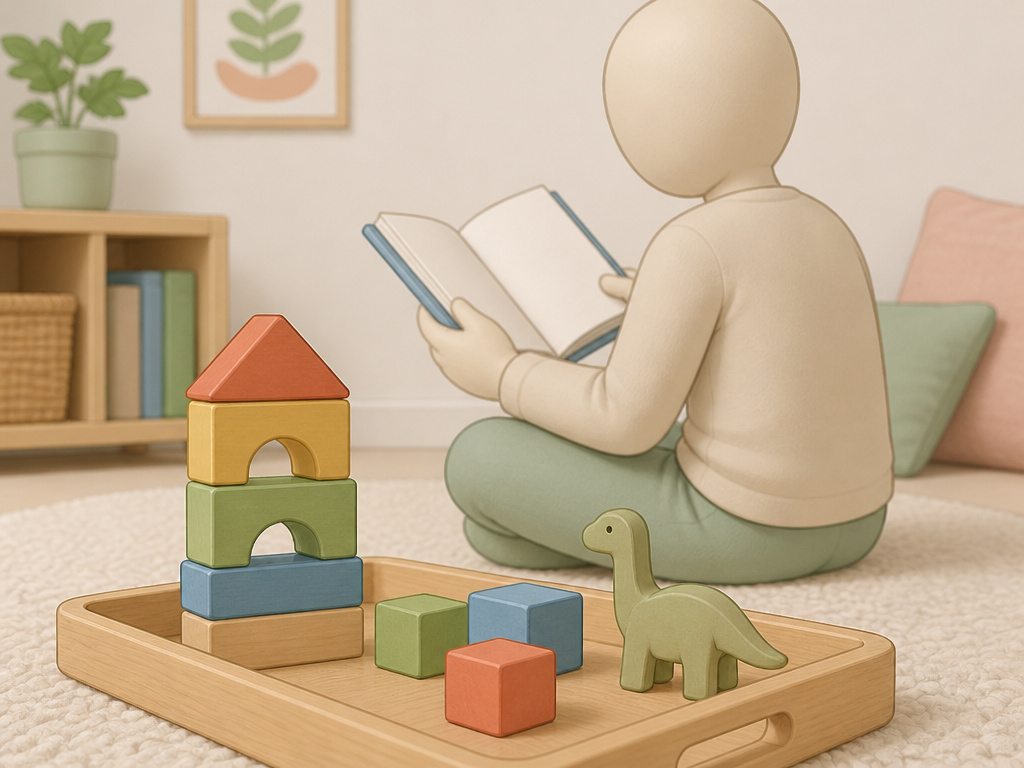
Your hands are the problem. Every time you reach in to straighten a block or rescue a wobbling tower, you hand the play back to yourself.
Three habits do most of the work:
- Build it before they walk in. If a child watches you arrange the tray, they will wait for you to keep arranging it.
- Say one sentence, then stop. “I will be right here” is plenty. Anything longer becomes a script they have to follow.
- Sit down and do something of your own. Read, fold laundry, whittle a stick. A nearby adult who is busy is company. A nearby adult who is watching is a judge.
Then there are the things that quietly kill it:
- Pulling out your phone to photograph the moment (the spell breaks the second the camera comes up)
- Asking “what are you making?”
- Correcting the color of the sun
- Cleaning up before they have actually left it
- Adding a new material because they paused
I stopped narrating play years ago, and it was the biggest single change I made. The first time I set out a tray, sat down with a book, and said nothing, the kid stayed with it until I finished the chapter. Same materials. Same room. The only thing I removed was me.
Why Do Some Invitations Get Ignored?
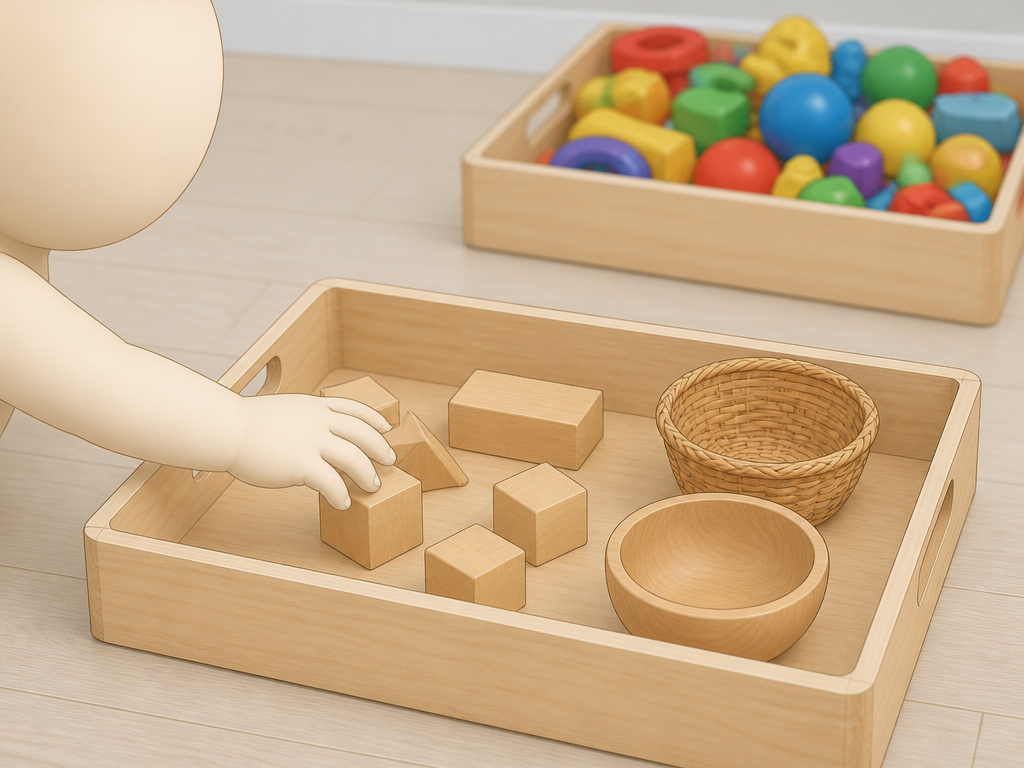
A three-year-old walks past a tray of blocks, stops, looks at it, and keeps walking. That pause is information.
Most ignored invitations fail for one of five reasons, and none of them is a bored child.
| What You Saw | Likely Cause | What to Change |
|---|---|---|
| Child walked past it | Too many materials on one surface | Cut back to a few types |
| Gone quickly, no return | The setup had one obvious use | Swap in something open-ended |
| Child asked you what to do | A sample or a theme was visible | Remove the sample, drop the theme |
| Play turned into a fight | Two kids, one of everything | Duplicate the popular items |
| Child hovered at the edge | Setup sits above their reach | Lower it, loosen the arrangement |
Peter Gray, a psychology researcher at Boston
Frequently Asked Questions
Do you need special or expensive materials to set up an invitation to play?
No. The most effective setups usually come from what is already in your kitchen, yard, or recycling bin. Wooden spoons, jar lids, cardboard tubes, pebbles, and fabric scraps all work because the child supplies the meaning. Buying a dedicated kit often adds a suggested outcome, which works against the whole point.
How long should an invitation stay out?
Leave it available for as long as your child keeps returning to it, which may be twenty minutes or several days. If interest drops off completely, clear the surface and offer something different rather than adding more items to revive it. Rotating the same materials back after a break often works better than introducing new ones.
What if my child asks me what to do with the materials?
Answer briefly and turn the question back without steering. Something like “I wonder what you will try” or “you get to decide” keeps ownership with them. If you demonstrate even once, most children will copy your idea instead of developing their own, and the setup loses its pull.
Is this the same as Montessori or unschooling?
They overlap in spirit but are not identical. Montessori uses sequenced, self-correcting materials with a defined purpose, while an invitation has no correct result at all. Unschooling is a broader philosophy about learning without formal instruction, so an invitation can fit inside it but does not define it.
