
How Long Do Wooden Playsets Last? What Warranties Reveal
This post contains affiliate links. As an Amazon Associate, we earn from qualifying purchases.
Wooden playsets last up to 20 years untreated on Northern White Cedar, per US Forest Service figures that CedarWorks cites. The Seattle parks department pulled wooden equipment after only a decade, because rot starts where posts meet soil.
Rot at the post base is the thread running through every number below. Wood decays fastest where end grain is exposed, or where ultraviolet light opens checks and cracks that let water in. That mechanism explains why two identical sets in two yards age at completely different rates.
What follows: the cedar claim and who disputes it, the ground-contact rule Seattle wrote into its own standards, what four manufacturers actually warrant, and the recall that shows what happens when a rotted beam lets go.
Key Takeaways
- Northern White Cedar is the one species a manufacturer claims will go 20 years untreated. CedarWorks says every other playset species needs chemical treatment for longevity or splinter resistance.
- Woodplay warrants wooden structure for life but chain, seats, hangers, ropes, and hardware for 5 years. The wood outlives the parts holding it together.
- Keep wooden components at least 6 inches above grade on concrete footings. That is the Seattle draft standard, and it targets the exact failure that ended those parks sets.
- Stain is not a protectant against carpenter bees, per Woodplay. The gallery entrance hole runs 3/8 to 1/2 inch wide no matter how fresh the finish looks.
- Below 32°F, swing seats come indoors. Backyard Adventures requires it in the owner’s manual.
The 20-Year Cedar Claim Comes With a Footnote
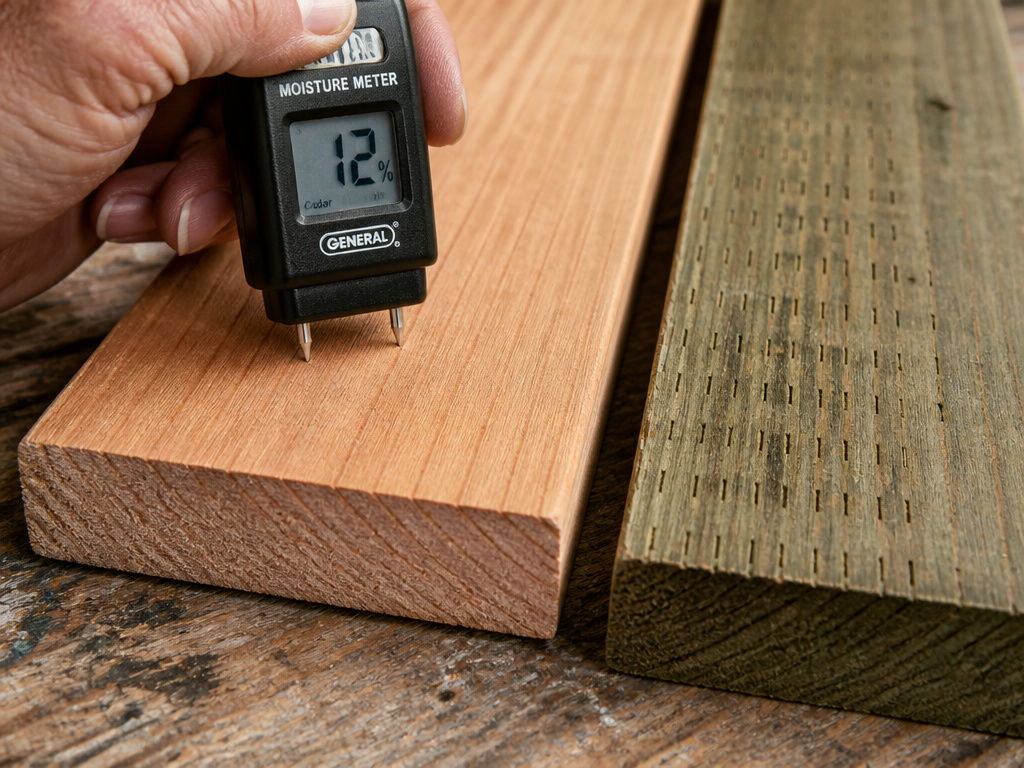
CedarWorks builds every outdoor set from a single species: Northern White Cedar. That is where the 20-year figure comes from, and it is also why the number does not transfer to whatever set is sitting in your yard.
Northern White Cedar carries a “highly decay resistant” classification, and CedarWorks cites US Forest Service figures putting untreated service life at up to 20 years. That claim covers one species. Redwood, cypress, other cedars, and imported pseudo-cedars all require chemical treatment for longevity, splinter resistance, or color matching. Species choice alone does not settle the question.
The disagreement starts there. Simpson (1988) and the Seattle draft standards both recommend that all wooden components be pressure treated. The Play For All Guidelines (Moore et al., 1987) reaches the same conclusion: all wood used to build playground equipment should be preserved to resist deterioration.
CedarWorks argues the opposite for its own species.
Both positions are on the record, and they point in different directions. Anyone weighing treated lumber should read the CPSC CCA-treated wood guidance before deciding.
Honestly, the cedar vs pressure-treated pine argument gets most of the attention online, and most of that attention is aimed at the wrong part of the set.
Why the Post at Ground Level Ends Most Playsets
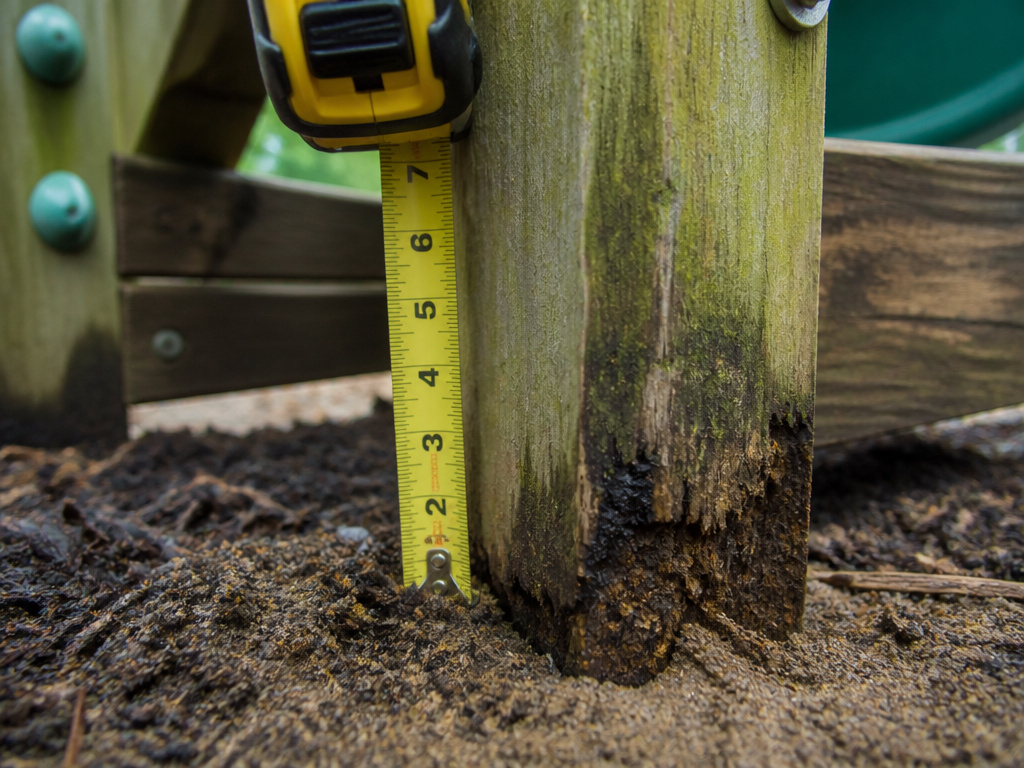
Start with the ground under their feet, because that is where the clock actually starts.
Stoops (1985) reported that the Seattle Department of Parks and Recreation had poor experiences with wood equipment because of the rainy Pacific Northwest climate. The most serious problem was severe rot damage where wooden posts contact the ground.
Sand and sawdust surfacing made it worse. Both hold moisture against the post base, which is exactly where decay begins. Ground contact decides.
The deterioration got bad enough that equipment had to be dismantled or removed from the play area after only a decade of use. That finding sits inside the CPSC playground equipment handbook report, the federal contractor document behind most of the durability claims people repeat.
Rot does not need a flood to start. Stoops also noted that rot damage on wooden members happens where end grain fiber has been exposed, or where ultraviolet light caused checking and cracking that let water penetrate.
The 6-Inch Rule and Why Footings Matter
One fix shows up in the Seattle draft standards: use concrete footings so wooden posts never touch the ground directly. The same standards state that all wooden components should be a minimum of 6 inches above grade.
That is a spec you can measure with a tape. The Backyard Adventures owner’s manual gives no equivalent numeric clearance, which is part of the gap between what a parks department builds and what arrives in a box.
Flood-prone ground is a site problem, and maintenance cannot solve it. The same report states that areas prone to flooding should not have wooden playground equipment at all.
| Position on wood vs metal lifespan | Who holds it | What it claims |
|---|---|---|
| Wood cannot match metal | Beckwith (1985), via CPSC/COMSIS | Wood-based systems fall short on long-term durability |
| Metal lasts 25 years | Moore et al. (1987), via CPSC/COMSIS | Metal treated adequately lasts 25 years |
| Cedar lasts 20 years untreated | CedarWorks, citing US Forest Service | Northern White Cedar is highly decay resistant |
| Wood fails in about a decade | Seattle Parks & Recreation, via CPSC/COMSIS | Equipment dismantled after only a decade of use |
If a wooden post disappears into soil instead of sitting on a footing, treat every lifespan number as unproven. The 6-inch gap is what those numbers quietly assume.
Rotten wood at the post base is usually a smaller job than it looks, provided the damage has not reached the beam.
What Do Playset Warranties Actually Promise?
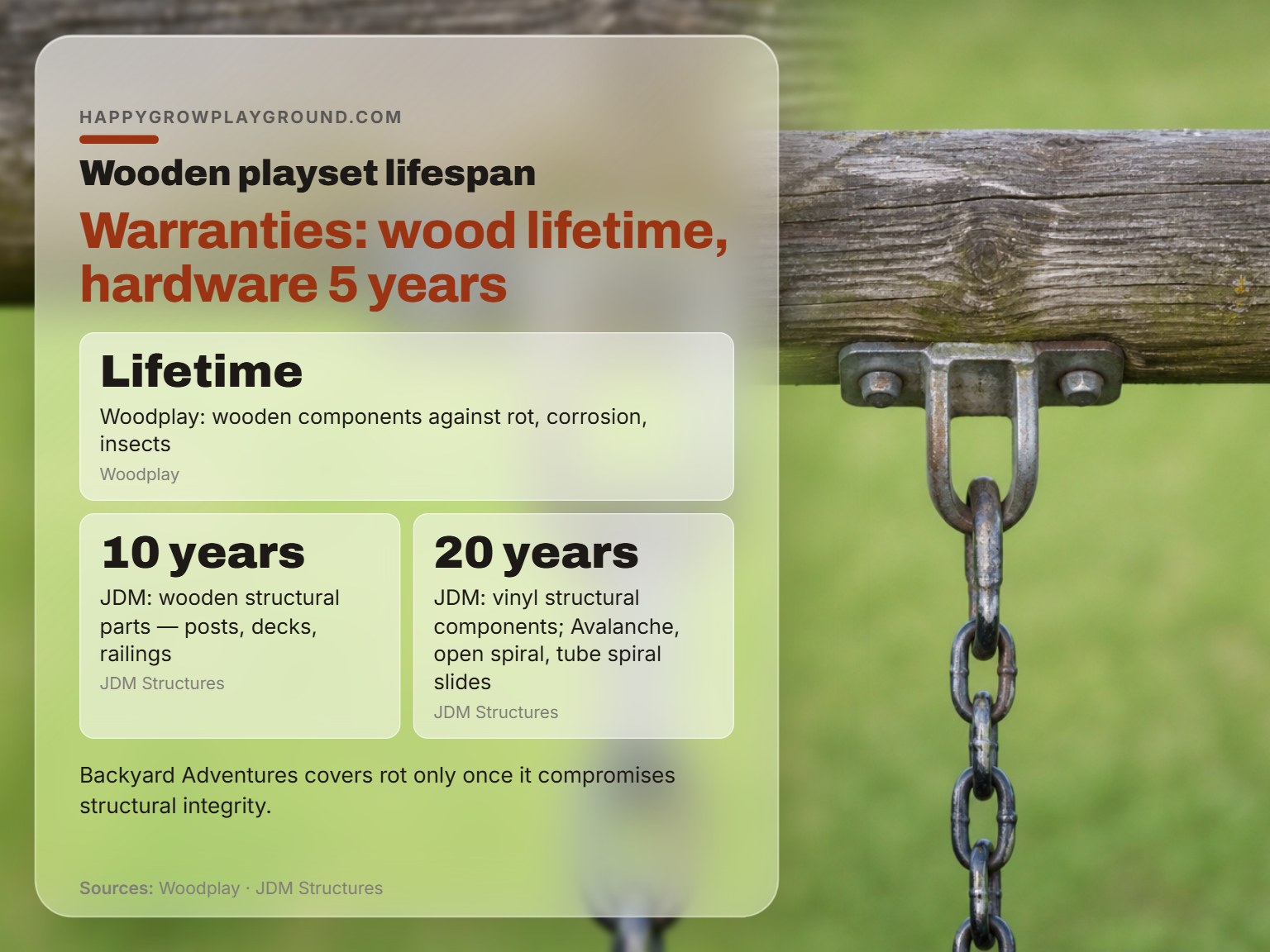
Three manufacturers, three different answers, and the gap between them tells you what each company expects to fail first.
Woodplay warrants chain, seats, swing hangers, hardware, metal braces, ropes, and accessories for five years from the date of purchase. The same document warrants all wooden components against structural failure from corrosion, wood rot, or insect infestation for the lifetime of the playset.
JDM Structures splits it differently. Wooden structural components such as posts, decks, and railings get 10 years. Vinyl structural components get 20 years. Wave slides, canopies, metal components, swings, and accessories get five years. Avalanche slides, open spiral slides, and tube spiral slides get 20 years.
Backyard Adventures covers rot under warranty once it reaches a level that compromises the structural integrity of the play set. The same manual warns that wood component failure judged to be the direct result of inadequate maintenance can void that limited lifetime coverage.
| Component category | Woodplay | JDM Structures |
|---|---|---|
| Wooden structural | Limited lifetime against rot, corrosion, insects | 10 years |
| Chain, seats, hangers, hardware, swings | 5 years | 5 years |
The wood line is long. The hardware line is five years.
Same category, two very different numbers.
One Manufacturer Calls Staining Advisable. Another Calls It Required.
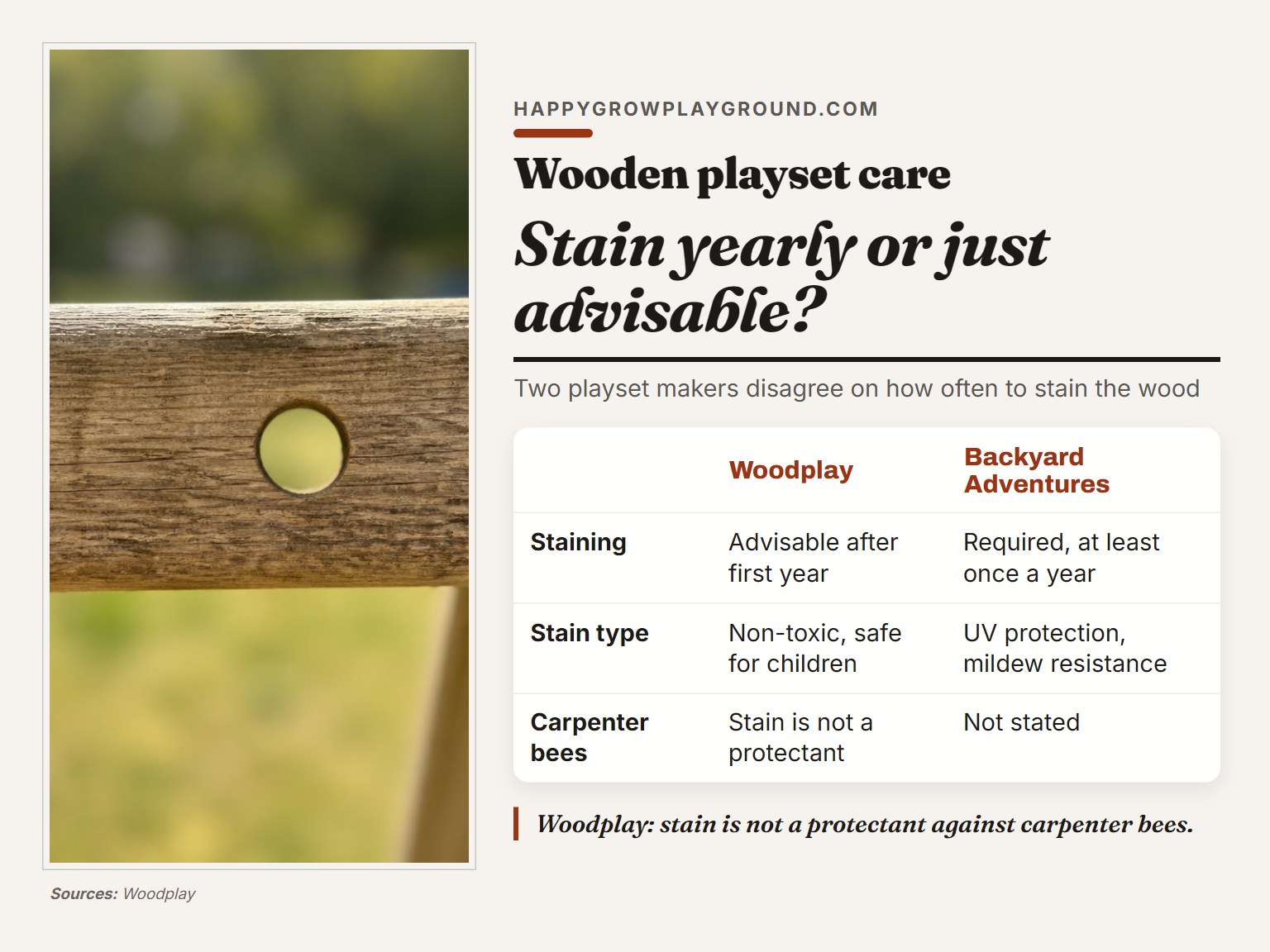
Woodplay’s warranty language says it is advisable to clean and apply a non-toxic stain or sealant after the first year of service, safe for children’s use. Backyard Adventures goes further and calls periodic staining required, recommended at least once a year.
Backyard Adventures also recommends a stain formulated with UV protection and mildew resistance.
Before you start: Household bleach and tri-sodium phosphate both burn skin and eyes, so wear gloves and eye protection and keep children off the set until the wood is dry. Cleaning reaches the wood through a stiff bristle brush, which splashes; work upwind and rinse the surrounding surfacing afterward. Rot that has reached a beam is a structural problem, not a cleaning problem.
Woodplay adds one detail that reframes the whole staining question. Females create galleries in exposed wood surfaces that are unprotected, and the document states directly that stain is not a protectant.
The gallery has a clean-cut round entrance hole with sharp edges, 3/8 to 1/2 inch wide, on the lateral wood surface. It runs inward one to two inches, then turns sharply at a 90-degree angle and continues with the grain for four inches to ten feet.
Damage from a pair of bees is slight. Many bees over several years can be extensive.
Here is what each source actually commits to:
- Woodplay calls staining advisable after the first year of service, non-toxic, and safe for children’s use.
- Backyard Adventures calls it required, at least once a year, with UV and mildew protection built in.
- On carpenter bees, Woodplay states plainly that stain is not a protectant.
Common mistake: Treating a fresh stain job as carpenter bee protection. The gallery entrance stays 3/8 to 1/2 inch wide whether the wood was stained last month or never, and a gallery left alone for several seasons can run ten feet along the grain.
Staining frequency is where most owners drift, and the two manuals above do not agree on an interval.
The 2009 Recall That Shows How Wooden Playsets Fail
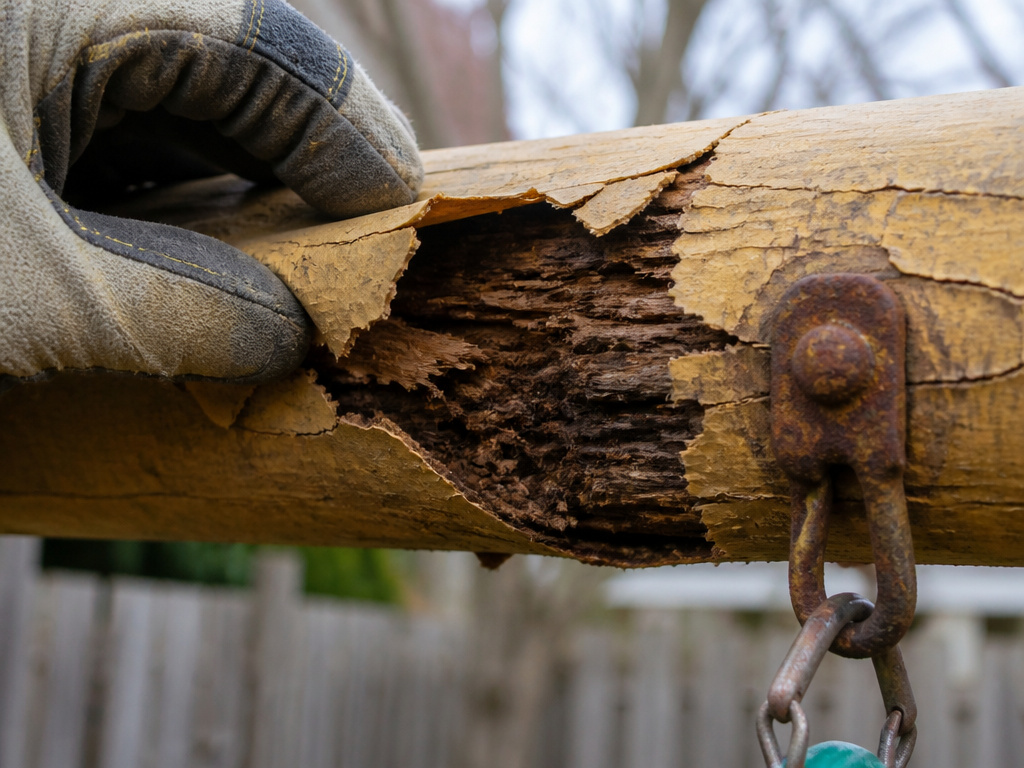
More than 1,400 reports of rotting ladders. Sixteen injuries, nine emergency room visits, two arm fractures, all in children younger than 8.
The recall was issued in 2009. The plastic-coated lumber on the horizontal ladder, which doubles as the monkey bar and swing beam, weakened over time as the whitewood underneath rotted. Whitewood means spruce, pine, and fir.
Most of the reported injuries happened when the swing came out of the monkey bar and swing beam that had rotted.
What the Recall Documented
Bellevue, Tacoma, and Durango had already been recalled once before, for detaching frames and a fall hazard. Every affected model number appears in the Adventure Playsets recall notice, and the same number is printed on the cover of the instruction manual.
Consumers were told to stop using the sets immediately and contact the company for a replacement kit.
Four things stand out in that document:
- The rot started under a plastic coating, where nothing was visible from above.
- The swing hardware was anchored into the same beam that rotted, so the beam failed and the swing left with it.
- The affected sets had already been recalled once before, for a different failure.
- The injuries were concentrated in children younger than 8, including two arm fractures.
A safety inspection that skips the underside of the beam is not really an inspection.
If the beam itself has gone soft, swing set repair stops being a hardware swap and becomes a structural job.
Hardware Fails First. The Warranties Already Admit It.
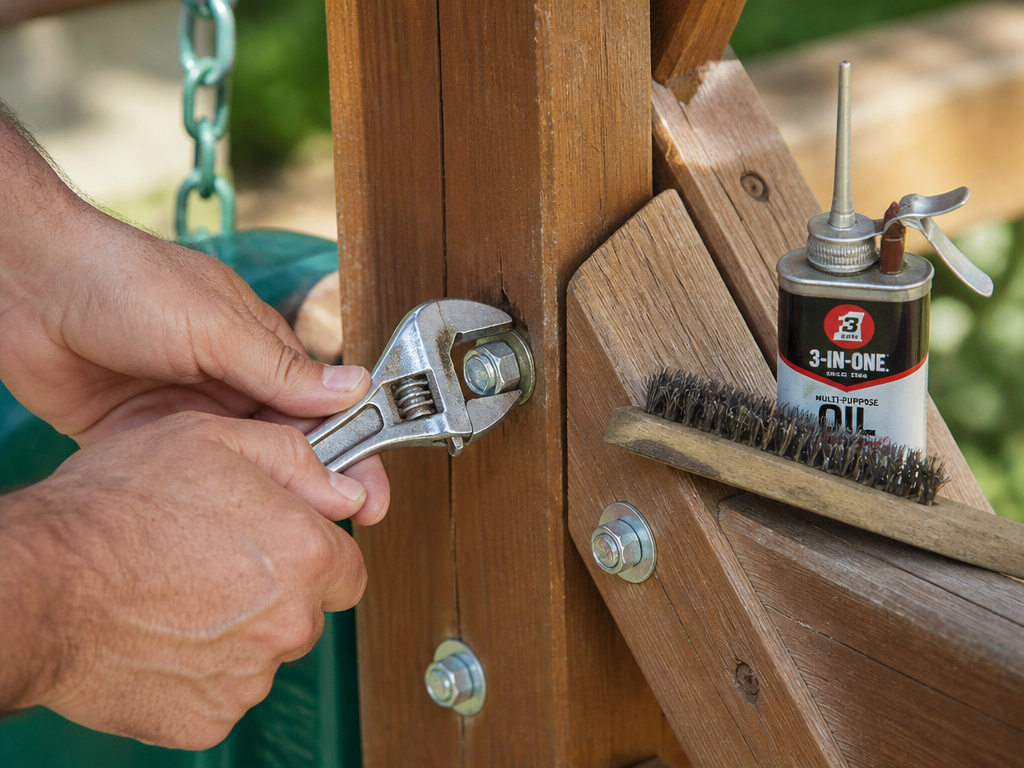
Shrinkage loosens the joints first.
Backyard Adventures states it plainly: shrinkage of wood due to loss of moisture causes clamps, bolts, and screws to loosen.
That is why the same manual requires inspecting all nuts and bolts twice monthly during the usage season and tightening as required. It flags the start of each season as particularly important.
Metal moving parts need oil or grease monthly during the usage period. Metal pieces need a rust check, with sanding and touch-up paint if rust has started. Wood parts need a monthly look too, since the grain can lift and throw splinters, and light sanding may be necessary to keep the playing surface safe.
The warranties already tell you which part each company expects to fail first.
The Monthly Hardware Check
- Put a wrench on every nut and bolt. Skipping this lets seasonal wood shrinkage open a joint that a two-minute tighten would have closed.
- Oil or grease the metal moving parts. Skip it and the swing hangers wear flat spots that show up as a grinding squeak before they show up as a wobble.
- Check every metal piece for rust. Rust left alone pits the metal, and touch-up paint stops working once the pit is deep enough to hold water.
- Run a bare hand along the wood rails. Lifted grain catches a fingernail before it catches a child.
- Take the swing seats indoors when temperatures drop below 32°F. Cold makes the plastic brittle, and a seat that cracks mid-swing is a fall.
| What you notice | Likely cause | What to do |
|---|---|---|
| Loose nut or bolt | Seasonal wood shrinkage | Tighten; check twice monthly in season |
| Grinding at the hanger | Dry metal moving parts | Oil or grease monthly |
| Orange-brown staining | Surface rust on metal | Sand and apply touch-up paint |
| Rough, fuzzy wood | Lifted grain | Light sanding |
| Soft wood at the post base | Rot at ground contact | Stop use; assess structural integrity |
Winterizing a playset means pulling the seats, greasing the metal, and checking every fastener before the first freeze.
Checking for splinters with a bare hand takes about thirty seconds and catches the problem before a child does.
How Long Do Wooden Playsets Last in Your Yard?
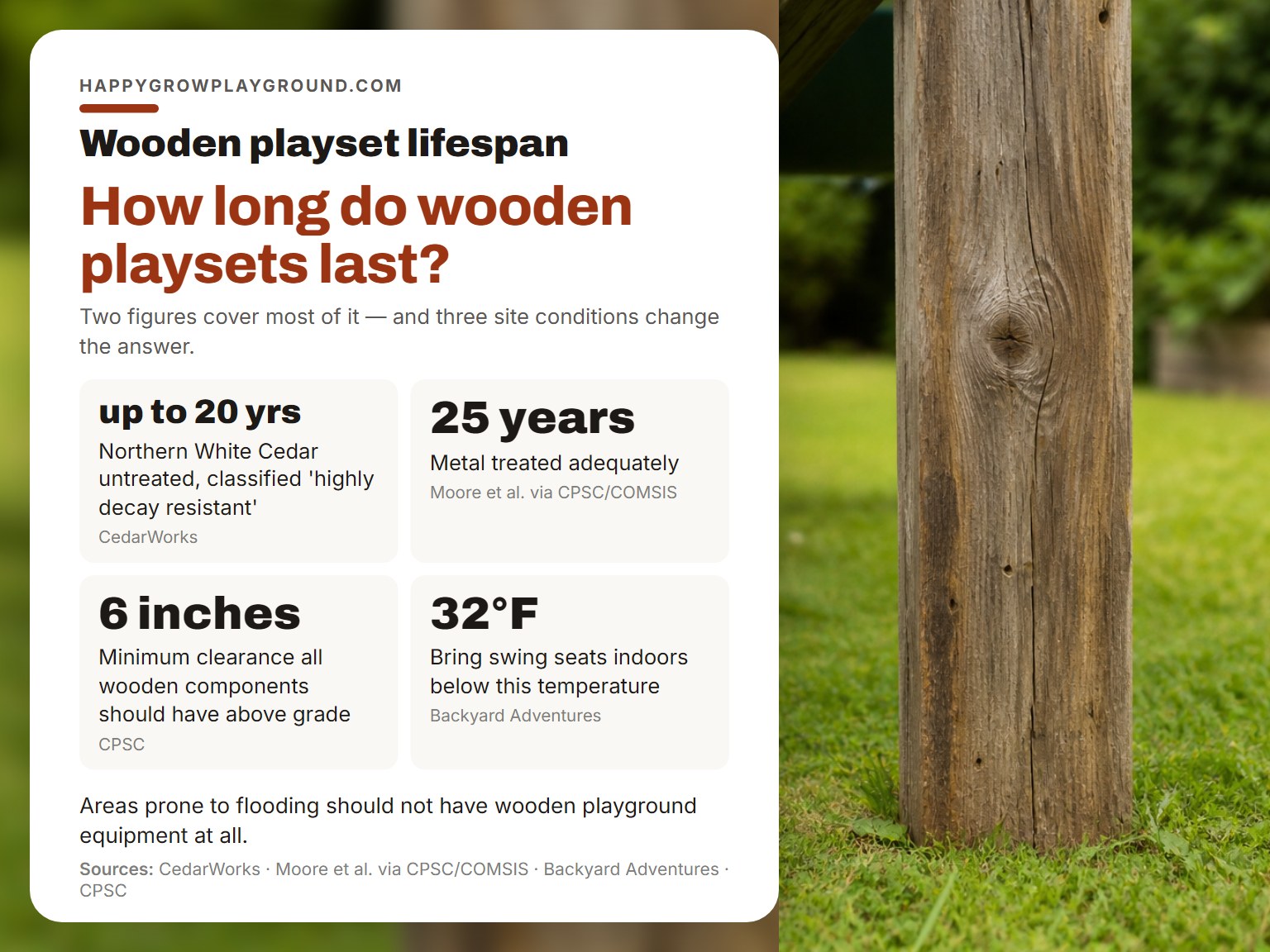
Two figures cover most of it. Northern White Cedar runs up to 20 years untreated, per the CedarWorks claim, and metal treated adequately lasts 25 years, per Moore et al. (1987).
Coastal, Cold, and Flood-Prone Sites
Three site conditions change the answer before you buy anything:
- Flood-prone ground: the CPSC contractor report states that areas prone to flooding should not have wooden playground equipment at all.
- Freezing winters: swing seats come indoors below 32°F, per Backyard Adventures.
- Sand or sawdust surfacing: both retain moisture against the post base, the condition Seattle blamed for accelerating rot.
Where this goes sideways: Buying the set before checking the site. A post that ends up in soil instead of on a footing loses the 6-inch clearance the Seattle standards call for, and rot at that contact point is what took those parks sets out of service in about ten years.
Sealing a wooden playset is the other half of that routine, and the first-year mark is where both manuals put it.
Frequently Asked Questions
How long do wooden playsets last without any treatment?
CedarWorks claims up to 20 years for untreated Northern White Cedar, citing a US Forest Service classification of the species as highly decay resistant. That figure is species-specific. Redwood, cypress, other cedars, and imported pseudo-cedars all need chemical treatment for longevity or splinter resistance. Ground contact matters more than the finish either way.
Does staining make a wooden playset last longer?
Both Woodplay and Backyard Adventures recommend it, with Woodplay calling it advisable after the first year and Backyard Adventures calling it required at least once a year. Woodplay also states that stain is not a protectant against carpenter bees, which bore galleries into exposed wood regardless of finish. Staining protects appearance and surface integrity more than it prevents insect damage.
Is a metal playset more durable than a wooden one?
The sources disagree. Beckwith (1985) concluded that wood-based systems cannot come close to matching the long-term durability of metal, and Moore et al. (1987) put adequately treated metal at 25 years. CedarWorks counters with up to 20 years untreated for Northern White Cedar. Seattle’s parks department, meanwhile, removed wooden equipment after about a decade.
How often should I check the hardware on a wooden playset?
Backyard Adventures requires checking all nuts and bolts twice monthly during the usage season and tightening as required, with particular attention at the start of each season. Metal moving parts need oil or grease monthly. The reason is shrinkage: as wood loses moisture, clamps, bolts, and screws loosen.
Can a rotted playset be repaired?
Sometimes. Rot that has not reached a structural beam is usually a manageable repair. Rot that has compromised a beam or a post is a different problem, and Backyard Adventures warns that wood component failure from inadequate maintenance can void the limited lifetime warranty. If a swing beam has gone soft, stop using the set and get it assessed.
The Bottom Line
Woodplay warrants wooden structure for the life of the playset and chain, seats, hangers, and hardware for five years. JDM Structures draws its own line at 10 years for wood and five for swings and accessories. When two manufacturers independently treat the fasteners as the short-lived part, watch the fasteners.
So how long do wooden playsets last?
