
10 Best Robot Puppy Toys in 2026
This post contains affiliate links. As an Amazon Associate, we earn from qualifying purchases.
The Little Live Pets My Really Real Puppy Patches is our pick for best overall. It wins with over 60 sounds and reactions paired with soft deluxe fur and weighted paws that make it feel like a real puppy. For kids who want to teach their pet tricks, the Ruko 18011 Smart Robot Dog takes the Best Programmable Interactive award, and the iPlay iLearn Toddler Walking Westie Dog is our choice for toddlers.
The challenge with robot puppy toys is finding one that matches your child’s age, play style, and expectations. Some kids want a soft, cuddly companion that responds to touch, while others want a programmable machine that performs stunts and follows commands.
This guide is based on manufacturer specifications, expert round-ups, and patterns in owner feedback. We looked at ten robot puppy toys across different categories to help you find the right match for your family.
Top 10 Robot Puppy Toys in the Market
Certain content that appears on this site comes from Amazon. This content is provided "as is" and is subject to change or removal at any time.
The Best Robot Puppy Toys, Reviewed
Little Live Pets My Really Real Puppy Patches

What We Like
- 60+ sounds and reactions for lifelike play
- Soft deluxe fur and weighted paws for snuggling
- 2-in-1 carrier converts into a bed
Trade-offs
- No remote or gesture control for active play
- Not programmable or capable of tricks
- No walking or moving features on its own
With 60 sounds and reactions triggered by sensors on its head and back, this beagle responds to petting and feeding like a real puppy, which is exactly the point. The soft deluxe fur, weighted paws, and blinking eyes make it feel more like a living pet than a plastic toy, and the 2-in-1 carrier that folds into a bed encourages nurturing routines. It’s designed for kids who want to cuddle, care for, and pretend with their interactive plush puppy, not for those expecting a walking or programmable robot dog.
Patches doesn’t walk, do tricks, or take commands like some other interactive pet toys, so it’s best for kids who want a calm, cuddly companion rather than a programmable robot. The beagle responds to touch with over 60 sounds and reactions, including sniffing and feeding sounds, which encourages nurturing play. Its soft deluxe fur and weighted paws make it easy for small hands to hug and carry around.
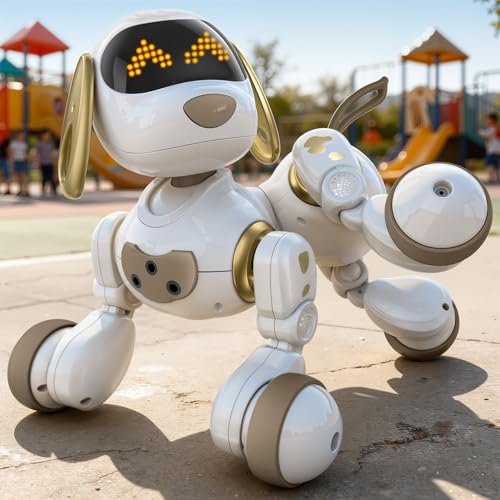
Ruko 18011 Smart Robot Dog
What We Like
- 30+ LED expressions for mood recognition
- Program up to 50 custom trick sequences
- Obstacle-avoidance sensors prevent crashes
- Gesture control plus 98-foot remote range
Trade-offs
- 45-minute playtime needs 3-hour recharge
- Remote requires 2 AAA batteries (not included)
- No voice control or app integration
Seventy LED lights and over thirty facial expressions let the puppy show animated faces, so a child can see its expressions during play. The programming mode lets them design up to fifty custom moves, a hands-on way to spark creativity. That makes the Ruko 18011 a fit for children who like to train and interact rather than just watch a toy wander.
The trade-off is battery discipline: forty-five minutes of play requires a three-hour charge, so spontaneous afternoon sessions need advance planning or a second toy in rotation. The Little Live Pets My Really Real Puppy Patches has 60+ sounds and a 2-in-1 bed, while the Ruko emphasizes programmable behavior and obstacle avoidance. It is better for a child who wants to be the trainer, less so for one who just wants a soft lap companion. The lack of voice or app control keeps operation simple but limits those who want phone pairing.
Product photos
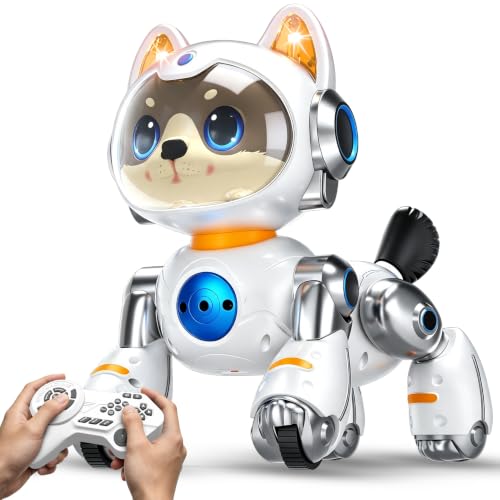
Eoyeskido Smart Robot Dog
What We Like
- Spray effect adds interactive fun
- Touch sensor triggers pet-like responses
- Programmable custom action sequences
- Rechargeable battery included
Trade-offs
- Spray effect can wet carpets and furniture.
- No app control for advanced programming.
The spray effect on this robot dog is a feature most competitors in this price range rarely offer, so kids can trigger it with the touch sensor. It adds a playful twist that many robot dogs lack. The programmable action sequences let children mix movements into custom routines, which encourages creativity and logical thinking without needing a phone app. For a family looking for a robot dog that adds a special effect beyond walking and barking, this one delivers a unique interactive experience.
Product photos
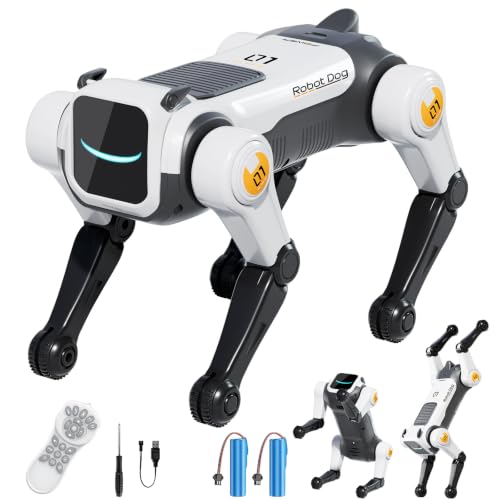
ZHYLLO Smart Robot Dog
What We Like
- 30+ lifelike actions including pranks
- Programmable STEM coding mode
- Dual control: remote and voice
- 2-hour runtime from 1.5-hour charge
Trade-offs
- Remote needs AA batteries not included
A programmable coding mode that lets kids build custom action sequences sets this robot dog apart from toys that just follow pre-set routines. That means a child can teach it to do a forward roll, a handshake, and a frog jump in whatever order they want, then watch it run the whole show automatically. It’s a genuine introduction to logic and sequencing, not just a remote-controlled gimmick, which makes it a smart pick for parents who want playtime to double as a low-pressure STEM lesson. The 30-plus actions include silly surprises like the ‘pee attack’ prank, so the learning doesn’t feel like homework.
The ZHYLLO uses remote and voice commands, which is fine for a kid who enjoys planning and directing, but if your child just wants to pet a dog and have it react, a touch-sensitive toy might feel more natural. The plastic body is sturdy enough for living-room floor play, but at 11.2 inches tall it’s more of a tabletop performer than a roughhousing companion.
Product photos
Ozega Smart Robot Dog

What We Like
- 13 voice commands for interactive play
- Program up to 50 motion sequences
- 2.4GHz remote with 100-foot range
- Touch sensor on back for waist twists
Trade-offs
- No realistic barking sounds included.
A 100-foot remote range means you can send this robot dog racing across the yard or steer it through the living room without chasing it. That kind of range, paired with 13 voice commands like sit and dance, makes it a smart first step into interactive play for kids who want to talk, not just push buttons. It also lets them design their own choreography with up to 50 stored motion sequences, which nudges a little logic thinking into the fun. This one suits families who want both voice and app control so a child can switch between commanding it to dance and programming a full routine on a phone. The touch sensor on its back adds a physical cue, so the dog twists and moves when patted, blending screen time with hands-on interaction.
The voice module works best in a quiet room, so a loud living room or backyard play might frustrate a younger child who expects it to hear every command. The Ruko 18011 Smart Robot Dog offers 30 LED expressions for emotional feedback, while the Ozega uses a dynamic LED face that shows emotions in real time. For a child who enjoys talking to their toy and programming their own tricks, this is a capable companion. Not for families who want a more lifelike pet experience with sounds.
Product photos
Marsjoy Husky Walking Barking Dog

What We Like
- Realistic licking tongue and wagging tail
- Walks alone with remote control
- Plays 8 songs and 5 bark sounds
Trade-offs
- No programmable actions or gesture control
- No gesture or voice control for hands-free play.
The Marsjoy Husky repeats what you say in a funny voice, which helps kids practice talking without feeling self-conscious. It walks on its own, wags its tail, and sticks out its tongue for a more lifelike interaction than many electronic pets offer. A remote control lets younger children steer it easily, while the touch sensor adds another way to play. Families who want a talking pet instead of one that just barks or sings will get the most out of this toy.
The Marsjoy focuses entirely on mimicry and basic movement, so it lacks the programmable tricks or gesture controls you get with something like the Ruko 18011. If your child wants a robot dog that learns new routines or responds to hand waves, they will outgrow this one faster. But for a preschooler or early talker who loves hearing their own words echoed back in a funny voice, the Husky delivers exactly that experience without the mess or allergies of a real pet.
Product photos
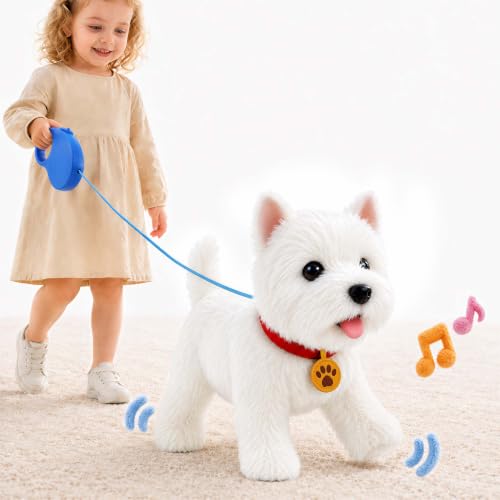
iPlay iLearn Toddler Walking Westie Dog
What We Like
- Leash-controlled walking and music
- Touch-responsive head pat and stroke
- Funny repeat-back talking mode
- Soft plush Westie design
Trade-offs
- No remote control, only leash button
- At 0.8 lb, feels lightweight for older kids
- Walking only forward, not steerable
A leash-controlled walking function and touch-responsive head pats mean this Westie puppy is built for the youngest pretend-pet owners, ages two and up. The 54 cm leash lets toddlers lead the dog forward, trigger barking, and cycle through eight cheerful music tracks with a simple button press. That keeps the interaction intuitive rather than overwhelming. Soft plush construction and a light 0.8-pound weight make it easy for small hands to carry and cuddle, while the repeat-back talking mode adds a giggle-worthy layer of parent-child play that older robot dogs often skip.
This Westie plush dog walks forward, barks, plays music, and moves its head. But it only goes straight and responds to a leash button, so a child expecting a steerable or programmable pet will find the play simple. The Little Live Pets My Really Real Puppy Patches has over 60 sounds and a two-in-one bed for kids ages five and up, while the iPlay iLearn is designed for younger children. That makes it a better fit for a two- or three-year-old starting interactive pet play, but less engaging for a kindergartner wanting more control.
Product photos
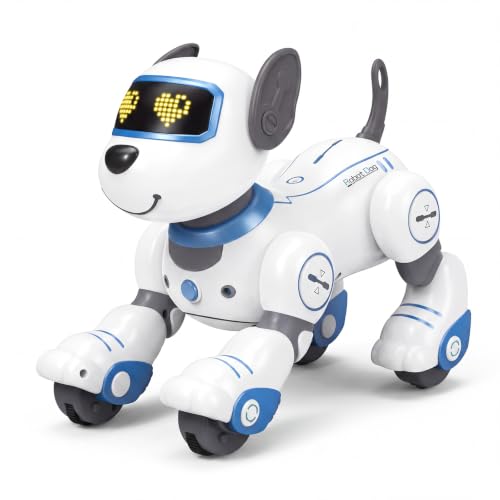
Raqivudo Robot Dog
What We Like
- Touch sensor for natural interaction
- Lifelike stunts and puppy behaviors
- Follow mode responds to kids' movement
Trade-offs
- Remote needs 2 AAA batteries not included
- Up to 50-minute playtime per full charge
Battery life is limited: up to 50 minutes of play per two-hour USB recharge, so you may want to plan for breaks between sessions. The Little Live Pets My Really Real Puppy Patches offers more than 60 sounds and a bed that converts into a carrier, while the Raqivudo focuses on programmable stunts and follow-mode activity rather than realistic plush features. Best for children who enjoy commanding a robot sidekick with interactive play.
Product photos
FurReal Walk-A-Lots Bernedoodle

What We Like
- Super-soft brown, white, black fur
- Bouncy walk with head wobble
- Barks, pants, and 'sings'
- Leash included for guided play
Trade-offs
- No remote or gesture control
- Only 8 inches tall, smaller than some
- No programmable actions or tricks
The 8-inch plush body and included leash mean this Bernedoodle is built for one thing: hands-on, imaginative walking play. Push it gently and the head wobbles, the legs bounce, and it barks or pants like a real pup. That direct, leash-guided interaction makes it feel less like a robot and more like a living toy for kids who want to pretend they’re taking a dog for a stroll around the living room. It suits younger children (ages 4+) who aren’t ready for remote controls or complex programming, but still want the soft fur and sound effects that mimic real pet behavior.
Unlike some robot dogs that offer remote control or programmable gestures, this FurReal relies on leash-guided pushing to move. That makes it less versatile for older kids who want a dog that dances or performs tricks on command. But for the child who just wants to clip on the leash and hear a happy bark as they walk it down the hall, this plush puppy delivers that one experience with charming focus.
Product photos
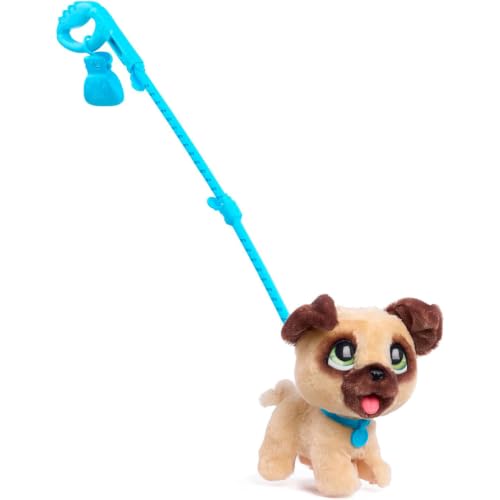
FurReal Poop-a-Lots Pug
What We Like
- Interactive walking and pooping action
- Includes leash, treats, and poop scoop
- Soft plush pug with sweet puppy eyes
- Teaches responsibility through pretend care
Trade-offs
- Only rolls on flat surfaces
- Poop is just the treats you feed it
The single most decisive fact about this toy is that it actually poops. Feed a treat, walk it on its leash, and out comes the same treat, ready to scoop up with the included poop scoop. That loop of feed-walk-poop-scoop is the whole point, and for a kid who thinks potty humor is peak comedy, it delivers exactly that. This 8-inch plush pug is soft, cute, and rolls along flat floors, making it a silly introduction to pet care for ages 4 and up. It suits families who want a giggle-inducing, low-commitment pet experience rather than a realistic robot dog.
The FurReal Poop-a-Lots Pug is designed around a single gag: feed it a treat, walk it on a leash, and it poops that same treat out for scooping. The Little Live Pets My Really Real Puppy Patches includes over 60 sounds and a bed that doubles as a carrier, but this pug focuses entirely on the potty joke. The toy rolls along flat surfaces, so it works best on hard floors. Reviewers note the cleanup loop is simple, the included scoop picks up the treat, which then gets fed again, so the play cycle repeats quickly. Best for kids who will find the potty humor funny for a few rounds.
How We Evaluated Robot Puppy Toys
Our evaluation focused on what makes a robot puppy toy genuinely engaging for children. We examined each toy’s interactive features, build quality, and how well it matched its intended age group. Manufacturer documentation and expert comparisons informed our understanding of what works in this category.
The four criteria that mattered most were interactivity depth (sounds, reactions, programmability), physical design (fur quality, size, safety), control methods (remote, voice, gesture), and age appropriateness. A toy that works for a two-year-old will frustrate an eight-year-old, and vice versa.
Because our recommendations are based on published specs and the collective experience of parents and reviewers, we prioritize toys with clear feature sets and consistent owner feedback patterns over flashy claims.
What To Look For In Robot Puppy Toys
The right robot puppy toy depends on your child’s age, their tolerance for technology, and whether they want a cuddle buddy or a programmable machine.
A robot puppy that matches your child’s age, play style, and expectations is more important than any single feature. A soft, touch-responsive puppy delights a toddler, while a programmable robot dog engages an older child for hours.
Interactivity Level
The range of interactivity in robot puppy toys varies widely. Some toys offer over 60 sounds and reactions, like the Little Live Pets Patches, which responds to petting and play. Others, like the Ruko 18011, allow you to program up to 50 custom trick sequences and recognize moods through LED expressions.
Consider whether your child wants a toy that responds naturally to touch and voice, or one they can teach new behaviors. The [best interactive robot dogs combine both approaches, offering pre-programmed tricks with programmable sequences for longer engagement.
Control and Play Style
Control methods range from simple leash buttons to gesture control and voice commands. The iPlay iLearn Westie uses a leash button for walking, perfect for toddlers. The Ruko 18011 offers gesture control plus a 98-foot remote range for active play. The Ozega robot dog supports 13 voice commands.
For older kids, the ability to [program custom action sequences extends the toy’s lifespan significantly.
Physical Design and Safety
Fur texture, size, and weight matter. Soft plush designs like the FurReal Walk-A-Lots Bernedoodle appeal to younger children who want to cuddle. Hard plastic bodies with sensors are common in the programmable category. Always check for small parts and battery compartment security.
- Check that the toy’s suggested age range matches your child’s age.
- Verify that battery compartments are secured with screws.
- Consider the toy’s size and weight for your child’s hands.
- Look for soft, non-toxic materials on plush designs.
A toy that is too advanced or too simple for your child will end up in the closet. Match the toy to the child, not the trend.
Robot Puppy Toys Compared
The table below compares the top robot puppy toys across key features to help you see the differences at a glance.
| Product | Dimensions | Weight | Interactive Sensors |
|---|---|---|---|
| Little Live Pets My Really Real Puppy Patches | L 6.3 x W 12.0 x H 12.9 in | 2.1 pounds | Head and back sensors |
| Ruko 18011 Smart Robot Dog | 8.9 × 8.9 × 9.8 inches | 0.0 pounds | Touch sensor |
| Eoyeskido Smart Robot Dog | L 9.0 x W 5.5 x H 9.4 in | 2.0 pounds | Touch sensor |
| ZHYLLO Smart Robot Dog | 4.4 x 6.7 x 11.2 in | N/A | N/A |
| Ozega Smart Robot Dog | L 6.0 inches, W 9.0 inches, H 10.0 inches | N/A | Touch sensing |
| Marsjoy Husky Walking Barking Dog | 10.4 x 4.8 x 10.4 in | N/A | Touch sensor |
| iPlay iLearn Toddler Walking Westie Dog | 11.0 x 5.5 x 11.2 in | 0.8 pounds | Touch-responsive |
| Raqivudo Robot Dog | 1.0 x 1.0 x 1.0 inches | 1.5 pounds | Touch sensor |
| FurReal Walk-A-Lots Bernedoodle | 9.0 x 5.2 x 9.0 in | 1.1 pounds | N/A |
| FurReal Poop-a-Lots Pug | 9.0 x 5.2 x 9.0 in | 1.0 pounds | N/A |
Frequently Asked Questions
What is the best robot puppy toy for a toddler?
For toddlers ages two to four, the iPlay iLearn Toddler Walking Westie Dog is our pick for Best For Toddlers. It offers leash-controlled walking, touch-responsive head patting, and a funny repeat-back talking mode in a soft plush design. It has no small parts or remote control, making it safe for little hands.
Can robot puppy toys help teach coding skills?
Yes, some robot puppy toys double as STEM learning tools. The ZHYLLO Smart Robot Dog features programmable STEM coding mode, allowing children ages 6-12 can sequence up to 30 lifelike actions. This teaches basic coding logic through building routines and commands.
How long do robot puppy toys typically last on a full charge?
Playtime varies significantly between models. The ZHYLLO Dog offers a 2-hour runtime from a 1.5-hour charge. The Ruko 18011 provides 45 minutes of playtime but needs a 3-hour recharge. Battery life is a practical consideration for sustained play sessions.
Do any robot puppy toys actually walk on their own?
Yes, several models walk independently. The Marsjoy Husky walks alone with remote control, and the iPlay iLearn Westie walks when the leash button is pressed. The FurReal Walk-A-Lots Bernedoodle features a bouncy walk with a head wobble. These [walking toy dogs are controlled via remote or leash rather than autonomous navigation.
What is the difference between a robot puppy and a plush puppy toy?
Robot puppy toys offer interactive features like walking, barking, and responding to touch or voice commands. They often include programmable actions, sensors, and remote controls. Plush puppy toys are soft and cuddly but lack electronic interactivity. Some robot puppies, like the Little Live Pets Patches, combine soft fur with electronic features for a hybrid experience.
The Bottom Line
The Little Live Pets My Really Real Puppy Patches is the best overall robot puppy toy for kids who want a soft, lifelike companion. It has over 60 sounds and reactions that respond to petting and play. Its soft deluxe fur and weighted paws make it feel like a real puppy, while its 2-in-1 carrier converts into a bed for snuggling.
For children who want programmable, the Ruko 18011 Smart Robot Dog offers 30+ LED expressions, custom trick sequences, and obstacle-avoidance sensors for active play.
The single most important factor is matching the toy to your child’s age and expectations. A toddler needs a soft, simple walking puppy, while an older child will enjoy a programmable robot dog with voice control and custom tricks. Choose the toy that fits your child, not the one with the longest feature list.
