
10 Best Puzzle Games in 2026
This post contains affiliate links. As an Amazon Associate, we earn from qualifying purchases.
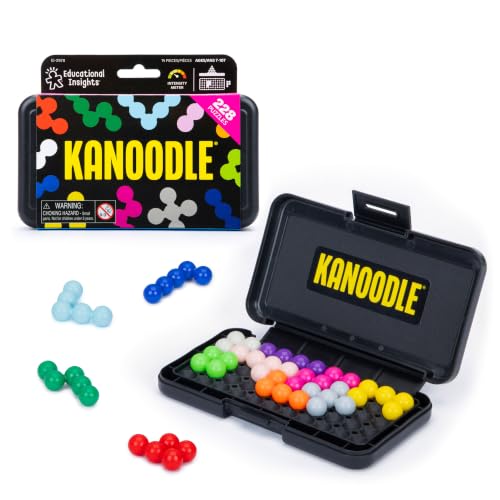
The Educational Insights Kanoodle Brain Teaser earns our Best Overall spot because it packs 228 puzzles in 2D and 3D into a compact case. The case doubles as the game board, so it fits in a glove box and makes a great screen-free travel companion. For families who want to build together, the ThinkFun Gravity Maze Logic Game is our pick for STEM learning. The ThinkFun Rush Hour Traffic Jam Game wins for family fun with its award-winning, multi-age design.
The real challenge with puzzle games is finding one that matches your child’s age, attention span, and preferred play style. A game that delights a 6-year-old pattern-matcher might frustrate a 12-year-old who craves logic mazes, and a single-player-only design can leave siblings fighting over whose turn it is.
This guide is research-based, drawing on manufacturer specifications, expert round-ups, and patterns in owner feedback across 10 top-rated puzzle games. We break down what each game does best so you can match the right challenge to your family’s needs.
Top 10 Puzzle Games in the Market
Certain content that appears on this site comes from Amazon. This content is provided "as is" and is subject to change or removal at any time.
The Best Puzzle Games, Reviewed
Educational Insights Kanoodle Brain Teaser
What We Like
- 228 puzzles in 2D and 3D
- Compact case doubles as game board
- Portable for travel
- Screen-free single-player fun
Trade-offs
- Single-player only, no multiplayer mode
- Not suitable for multiplayer or group play
With 228 puzzles spanning both 2D and 3D configurations, this little case packs a serious mental workout into something that slips into a backpack or glove box. The 12 colorful pieces fit snugly into the compact board, so you never have to worry about losing a piece mid-trip. It’s a screen-free, single-player challenge that fits easily into travel or quiet time at home.
With over eleven million copies sold, the Kanoodle brain teaser has clearly struck a chord with puzzle fans of all ages. Its 228 challenges range from beginner to expert in both 2D and 3D configurations, so you can start easy and work your way up. The whole thing packs into a compact case that doubles as the game board, making it easy to toss in a bag or keep in the car for screen-free entertainment.
ThinkFun Gravity Maze Logic Game

What We Like
- Includes 9 towers and 3 marbles
- Encourages collaborative play with friends
- Targets ages 8-14 for focused skill building
Trade-offs
- Limited to ages 8+ due to small parts
- Marbles pose choking hazard for children under 8
The trade-off is size: at 10.5 inches tall and 9.4 inches long, it demands a decent tabletop or floor area, unlike the more compact Kanoodle Brain Teaser. If you have the space and want a hands-on logic builder that siblings or friends can tackle together, Gravity Maze delivers. If portability or storage is tight, the smaller Kanoodle might be a better fit.
ThinkFun Rush Hour Traffic Jam Game

What We Like
- 40 challenges from beginner to expert
- Award-winning design with 20+ awards
- Develops logical reasoning and planning skills
- Trusted brand with over 50 million sold
Trade-offs
- Only 40 challenges, fewer than some competitors
With 40 challenges that ramp from beginner to expert, this sliding-block puzzle forces you to think several moves ahead to clear a path for the red car. That progressive difficulty means a child can start on the easy ones and grow into the head-scratchers, while an adult won’t breeze through the later levels. The real draw here is the shared experience: because the rules take seconds to explain and the game is completely screen-free, it naturally pulls family members around the table to take turns or offer quiet advice. ThinkFun has sold over 50 million of these brain games, and the Parents Choice Award recognition backs up the quality of the design.
The library of 40 challenges is modest compared to the 500-plus puzzles packed into the GiiKER Super Slide. Once you and your family solve all of Rush Hour’s scenarios, the replay value depends on how much you enjoy re-solving them from memory. That said, the physical sliding of the cars and trucks gives a tactile satisfaction that a digital screen can’t match. The game’s slim 0.1-inch profile makes it easy to toss in a bag for restaurants or road trips. For a family that wants a single, well-built logic game they can enjoy together without batteries or setup, this is a smart buy.
Educational Insights Kanoodle Ultimate Champion

What We Like
- 500 brain teaser puzzles
- Timer adds pressure for experts
- Portable case doubles as board
- Screen-free single-player fun
Trade-offs
- Batteries for timer sold separately
- Single-player only, no multiplayer mode
With 500 puzzles packed into a case that doubles as the game board, this is the kind of brain teaser that keeps even seasoned puzzle fiends busy for months. The battery-powered timer cranks up the pressure, forcing you to think fast under a ticking clock. That makes it a natural fit for anyone who’s already solved dozens of logic puzzles and wants a steeper challenge without moving to a completely different format.
You’re on your own here: there’s no head-to-head mode. And you’ll need to grab a couple of AAAs before the first round, since the timer ships without batteries. But if you’re the type who likes to sit alone with a puzzle and a stopwatch, this is a puzzle-dense option for the money.
GiiKER Super Slide Puzzle Game

What We Like
- 500+ built-in challenges
- LED screen shows setup
- Portable pocket-size design
Trade-offs
- No multiplayer or speed mode
- Only one puzzle type (slide)
With over 500 built-in challenges and two modes packed into a 7.2-inch square frame, this handheld puzzle gives you a huge variety of logic problems without needing a table or extra pieces. The LED screen shows you exactly how to set up each challenge, so there’s no booklet to lose or flip through. That makes it a natural fit for road trips, waiting rooms, or any spot where you want a quick brain workout without pulling out a phone or tablet. The slide mechanic is simple to learn but the difficulty ramps up enough to keep teens and adults engaged, while younger kids can start with the easier puzzles and build reasoning skills over time.
The biggest draw here is the sheer number of puzzles packed into a single device: over 500 built-in challenges across two modes, all focused on sliding blocks to free the big square. If you prefer variety in your logic games, something like ThinkFun Gravity Maze offers a different physical challenge with falling marbles and gravity mazes. But for pure portability and a massive library of puzzles in one handheld unit, the GiiKER is tough to match. It uses an LED screen to show each setup, giving kids a break from constant electronic gadget use. Just keep in mind the unit is very thin and light, so it won’t feel as substantial as a chunky board game box.
Product photos
iDventure Cluebox Houdini's Escape
What We Like
- Immersive escape room in a box
- Reusable after reassembly
- Secret compartment for gifts
- High-quality birch wood construction
Trade-offs
- Single playthrough per assembly
- Small secret compartment limits storage
- Requires patience and focus
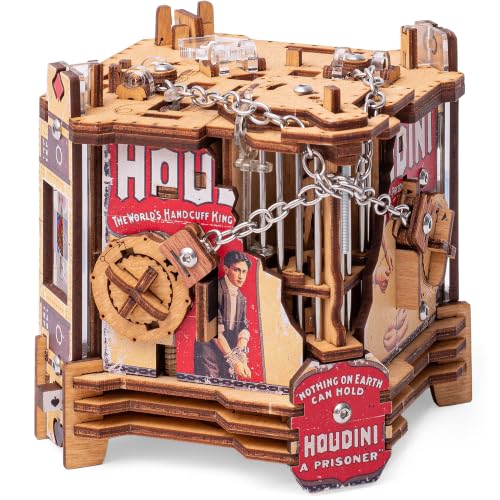
The story-driven design pulls you into Houdini’s world, with each step unlocking clever mechanisms that feel like real magic tricks. If you love the thrill of an escape room but want it in a compact, reusable format you can share with friends, this delivers that experience without needing to leave home.
After you solve this puzzle box, you have to reassemble it for the next person, which takes a bit of patience. Compared to the ThinkFun Gravity Maze, which offers varied marble-run challenges, this is a one-and-done puzzle per assembly. But the satisfaction of cracking it and the secret compartment inside make it feel more like a trophy than a toy. Best for puzzle lovers who enjoy a narrative challenge and don’t mind resetting the game for others.
Product photos
The Uzzle 3.0 Board Game

What We Like
- 100 unique puzzles across 4 difficulty levels
- Bigger blocks in version 3.0
- Learned in under 1 minute
- Improves problem-solving and cognitive skills
Trade-offs
- Only 4 players without buying extra games
- No solo play mode for quiet puzzle solving
With 100 unique puzzles split across four difficulty levels, this game offers a range from simple pattern matching at levels 1-2 to more challenging puzzles at levels 3-4. The bigger blocks in version 3.0 are a change from previous versions, and the game can be learned in under a minute, which is helpful when setting up with kids. It’s a pattern-matching race that sharpens observation and quick thinking without feeling like homework.
The biggest drawback is that you’re capped at four players unless you buy a second copy, so larger family gatherings or classroom groups will need extra sets. Compared to the solo Kanoodle, which offers 228 challenges for one player, The Uzzle is designed for multiple players racing to solve puzzles. If your kid prefers quiet, methodical puzzle solving on their own, the competitive pattern matching might not suit them. But for families who want a game that gets everyone flipping blocks and racing to finish first, this delivers that energy.
Moose Games Flipslide Handheld Puzzle
What We Like
- Four distinct game modes
- Multiplayer mode for group play
- Compact and lightweight at 0.3 lb
- Batteries included, ready to play
Trade-offs
- Only one game unit in the box
- No rechargeable battery option mentioned
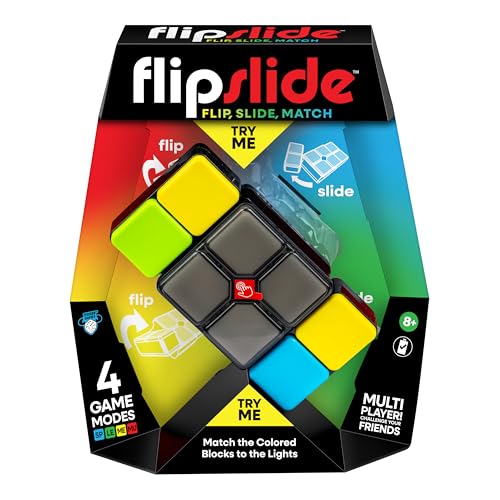
Four game modes. Speed, Multiplayer, Level, and Memory, mean this little handheld doesn’t run out of ways to challenge you. Kids 8 and up can pick it up quickly, and the fast-paced flip-and-slide action keeps the energy high without needing a screen.
The catch is that the box includes only one unit, so multiplayer means sharing that single console rather than each person having their own. If your group prefers everyone working on separate puzzles simultaneously, something like ThinkFun Gravity Maze offers a different solo experience. But for real-time head-to-head reaction and competition, the Flipslide creates a lively social dynamic that many handheld puzzles lack. Just note that it runs on included disposable batteries, not a rechargeable pack, so you’ll want extras on hand.
Product photos
Lartoys Rope Untangling Puzzle Game
What We Like
- Two-player design for family bonding
- 3-level difficulty grows with skill
- Screen-free travel-friendly case
- Strengthens spatial awareness and focus
Trade-offs
- Only two players at a time
- Requires setup time for each challenge
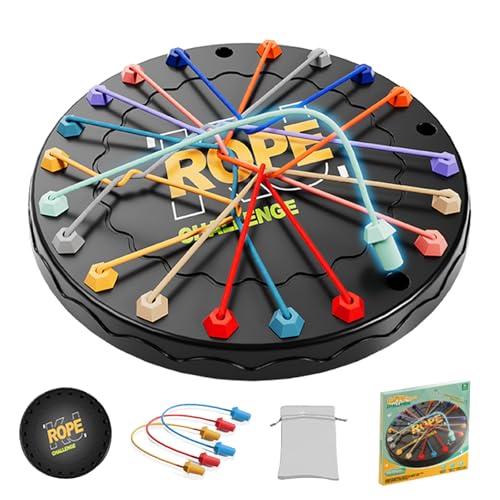
The two-player design where one person sets a tangled challenge and the other races to solve it makes this a genuinely interactive experience, not just another solo puzzle. With 10 plastic-tipped ropes and 22 board holes, you can adjust difficulty from a simple 3-rope knot for younger kids to a dense 10-rope maze that will stump adults. That flexibility turns puzzle-solving into a shared, screen-free activity that builds spatial reasoning and focus while creating real laughs and friendly competition. The travel-ready case means it can go to restaurants, road trips, or holiday gatherings without losing pieces.
This one is strictly a two-player game, so larger families or groups will need to take turns or pair up. That can slow down the action compared to something like ThinkFun Rush Hour that works solo or in rotation. The adjustable difficulty lets you start simple and ramp up as dexterity improves. For families who want a cooperative brain teaser that actually gets everyone talking and laughing together, this is a smart pick that delivers more connection than most logic puzzles.
Product photos
Hasbro Gaming Perfection Game

What We Like
- Fast-paced timed gameplay for kids
- Helps practice shape recognition
- Easy setup and repeat play
- Works for solo or group play
Trade-offs
- Only 9 shapes limits long-term challenge
- Pieces pop out when time runs out
- No adjustable difficulty for older kids
The fast-paced timed gameplay turns shape-matching into a frantic race that keeps little ones engaged. With just nine pieces to place, it’s perfectly calibrated for ages 4 and up, short attention spans stay locked in because the pressure is real and the payoff is immediate. This is the kind of game that makes preschoolers laugh while they learn to identify shapes, and the simple setup means you can play a round in under a minute. The popping action and ticking clock deliver exactly what young children need: a clear, repeatable challenge that rewards speed and accuracy without overwhelming them.
Older kids or puzzle veterans will solve those nine shapes quickly and then want more. Compared to the ThinkFun Gravity Maze, which offers escalating logic puzzles for ages 8 and up, the Perfection game has a lower ceiling for sustained difficulty. It’s best as an energetic introduction to puzzle games rather than a deep solo brain workout. If your child is already matching shapes confidently, they may outgrow this one fast, but for the preschool set, the popping action and ticking clock are pure, joyful chaos.
Product photos
How We Evaluated Puzzle Games
We started by examining the core specs of each game: number of challenges, age range, number of players, and portability. Manufacturer documentation told us the intended skill progression, while expert round-ups from toy and education outlets helped us understand which games actually hold a child’s attention beyond the first play. Owner feedback patterns revealed the real-world trade-offs, which games get played weekly versus which gather dust after a single session.
Three criteria mattered most. First, replay value: a puzzle game with 40 challenges is very different from one with 500. Second, age fit: a game that says “ages 8+” but plays like a preschool toy will bore its target audience, while one that demands abstract reasoning can frustrate younger kids. Third, social flexibility: some families need solo quiet time, others need a game that seats four players at once, and many want both options in one box.
A research-led evaluation has limits. What we can offer is a clear, honest picture of what each game delivers based on its design and how owners describe their experience.
For even more options, check out our curated selection of adult puzzle games for older solvers or our best puzzles for families for more group-friendly picks. If you love the escape room genre, our top escape room puzzle games list has several story-driven options. And for those who prefer hands-on challenges, our top picks for mechanical puzzles cover tactile builds and brain teasers. Finally, our puzzles for kids guide breaks down age-appropriate choices in more detail.
What To Look For In Puzzle Games
The best puzzle game for your family depends on one thing: who will actually play it. A brilliant logic maze is useless if it sits in the closet because your child prefers fast-paced pattern matching.
Choose a puzzle game by matching the challenge count, age range, and player count to your family’s habits. A game with 500 puzzles serves a dedicated solo player; 40 challenges might be enough for a family that rotates games weekly.
Challenge Count and Difficulty Progression
The number of puzzles matters less than how they scale. The best games start easy enough to build confidence and ramp up slowly enough that kids don’t hit a wall. The ThinkFun Rush Hour Traffic Jam Game offers 40 challenges from beginner to expert, which is plenty for a family that plays through a few each game night. The GiiKER Super Slide Puzzle Game packs 500+ built-in challenges, making it ideal for a solo player who wants months of steady progression.
Age Range and Skill Level
Manufacturer age ratings are a starting point, not a rule. The ThinkFun Gravity Maze Logic Game targets ages 8-14, and owner feedback confirms that 8-year-olds need some adult help while 12-year-olds can solve independently. The Uzzle 3.0 Board Game works for ages 4 and up because the rules take under a minute to learn, but the pattern-matching gets genuinely challenging for adults too. Always check whether a game’s difficulty ceiling matches your child’s patience.
Player Count and Play Style
Single-player games like the Kanoodle Brain Teaser or the Kanoodle Ultimate Champion are perfect for quiet travel or solo downtime. Multiplayer games like The Uzzle 3.0 (up to 4 players) or the Moose Games Flipslide Handheld Puzzle (group mode) turn puzzle time into a social event. The Lartoys Rope Untangling Puzzle Game is a rare two-player cooperative design that builds communication skills. Decide whether you need quiet solo play, competitive group play, or cooperative bonding.
- Check the challenge count: 40 puzzles is a weekend; 500 is a season.
- Verify the age range against your child’s actual patience and reading level.
- Confirm the player count matches your typical game night group.
- Look for portability: a case that doubles as a board saves space.
- Read owner feedback about difficulty spikes, some games jump from easy to frustrating with no middle ground.
A good rule of thumb: if the game’s age range spans four years or more, it likely has the difficulty progression to grow with your child.
Puzzle Games Compared
The table below compares all 10 puzzle games side by side. You can see at a glance which ones fit your child’s age, your family’s play style, and your need for portability or multiplayer action.
| Product | Age Range | Dimensions | Weight |
|---|---|---|---|
| Educational Insights Kanoodle Brain Teaser | 8-12 | 5.8 x 3.2 x 0.8 inches | 0.2 pounds |
| ThinkFun Gravity Maze Logic Game | 8-14 years | 9.4 x 2.8 x 10.5 in | 1.1 lb |
| ThinkFun Rush Hour Traffic Jam Game | 8 to 80 | 9.2 x 8.8 x 0.1 in | 0.8 lb |
| Educational Insights Kanoodle Ultimate Champion | 7+ | 238.0 x 3.4 x 1.9 inches | 0.6 lbs |
| GiiKER Super Slide Puzzle Game | 6+ | 7.2 x 7.2 inches | N/A |
| iDventure Cluebox Houdini's Escape | N/A | 4.3 x 4.3 x 4.7 in | N/A |
| The Uzzle 3.0 Board Game | 4+ | 8.0 x 8.0 x 4.0 inches | 1.6 pounds |
| Moose Games Flipslide Handheld Puzzle | 8+ | 3.0 x 6.0 x 1.9 inches | 0.3 pounds |
| Lartoys Rope Untangling Puzzle Game | N/A | 9.0 x 8.0 x 0.0 in | 0.5 lb |
| Hasbro Gaming Perfection Game | Ages 4+ | 1.9 x 7.9 x 10.4 inches | 0.8 pounds |
Frequently Asked Questions
What is the best puzzle game for a 10-year-old?
The ThinkFun Gravity Maze Logic Game is a strong match for 10-year-olds who enjoy building and spatial reasoning. It targets ages 8-14, so a 10-year-old can solve independently while still finding the later challenges engaging. For a child who prefers logic puzzles over construction, the ThinkFun Rush Hour Traffic Jam Game works well for the same age group.
Which puzzle game has the most challenges?
The GiiKER Super Slide Puzzle Game offers 500+ built-in challenges, and the Educational Insights Kanoodle Ultimate Champion includes 500 brain teaser puzzles. Both provide months of solo play. The standard Kanoodle Brain Teaser has 228 puzzles, which is still substantial for most players.
Are there puzzle games that work for both kids and adults?
Yes. The Uzzle 3.0 Board Game is designed for ages 4 and up, and the pattern-matching challenges scale to keep adults engaged. The ThinkFun Rush Hour Traffic Jam Game also works across generations because the early challenges are simple enough for kids while the expert levels stump most adults.
What is the best two-player puzzle game?
The Lartoys Rope Untangling Puzzle Game is built specifically for two players, with cooperative challenges that require communication and spatial reasoning. It has three difficulty levels so the game grows with the players’ skill. For a competitive two-player option, The Uzzle 3.0 works with two players but supports up to four.
Can puzzle games really help with cognitive development?
Yes. Many puzzle games strengthen spatial reasoning, logical planning, and pattern recognition. The cognitive benefits of regular puzzle play include improved problem-solving skills and sustained focus. Games like the Kanoodle Brain Teaser and ThinkFun Gravity Maze are specifically designed to build these skills in a fun, screen-free format.
The Bottom Line
The Educational Insights Kanoodle Brain Teaser is our Best Overall pick because it balances a generous 228-puzzle library with a truly portable design that works anywhere. It is the right choice for families who want a single-player game that travels well and keeps a child engaged for months without screens.
If your family prefers building and collaborative problem-solving, the ThinkFun Gravity Maze Logic Game delivers the best STEM experience for kids 8-14. For group game nights with multiple ages, the ThinkFun Rush Hour Traffic Jam Game and The Uzzle 3.0 Board Game both scale well from young children to adults.
The single most important factor in choosing a puzzle game is matching the challenge type to your child’s natural curiosity. A spatial builder will love Gravity Maze; a pattern-matcher will thrive with The Uzzle; a logic planner will devour Rush Hour. Pick the game that fits the thinker, not the box.
