
8 Best Kites in 2026
This post contains affiliate links. As an Amazon Associate, we earn from qualifying purchases.
For most families, the Prism Kites Vertex Diamond Kite is the best overall choice because it comes with a spare frame rod and connector, folds small for easy transport, and includes quality line. For a dramatic showstopper, the Premier Kites 7 Ft Parrot 3D Kite is our Best Large 3D Kite. The In the Breeze 7.5 Rainbow Parafoil Kite earns the Best No-Assembly Parafoil award for instant fun.
The real challenge with buying a kite isn’t finding one that looks cool, it’s finding one that actually flies well with the wind you have and survives the first crash. A kite that needs assembly in the field or breaks on its second outing turns a sunny afternoon into a frustrating one.
This guide is based on manufacturer specifications, expert round-ups, and patterns in owner feedback. We focused on durability, ease of setup, wind range, and value to help you pick a kite that will spend more time in the air than in the repair pile.
Top 8 Kites in the Market
Certain content that appears on this site comes from Amazon. This content is provided "as is" and is subject to change or removal at any time.
The Best Kites, Reviewed
Prism Kites Vertex Diamond Kite

What We Like
- Includes spare frame rod and connector
- Folds small for easy transport
- Triple streamer tail adds visibility
- Quality braided line and winder included
Trade-offs
- Single-line design limits stunt control
- Wingspan too small for strong wind days
A 36.5-inch wingspan and a 5-25 mph wind range make this diamond kite a reliable flier in most breezes, so you’re not stuck waiting for perfect conditions. It’s the kind of straightforward, well-built kite that suits anyone who wants to grab a tail and head to the park without fussing over setup or tuning. The included spare frame rod and connector mean a broken part won’t end your afternoon, and the whole thing folds small enough to toss in a backpack.
The trade-off is that this is a single-line kite, so you won’t be doing tricks or stunts like you could with a dual-line model such as the HQ Kites Symphony Beach III. If your priority is pure flying simplicity and durability rather than aerobatics, that’s not a problem. But if you want loops and dives, you’ll want to look at a stunt kite instead.
Product photos
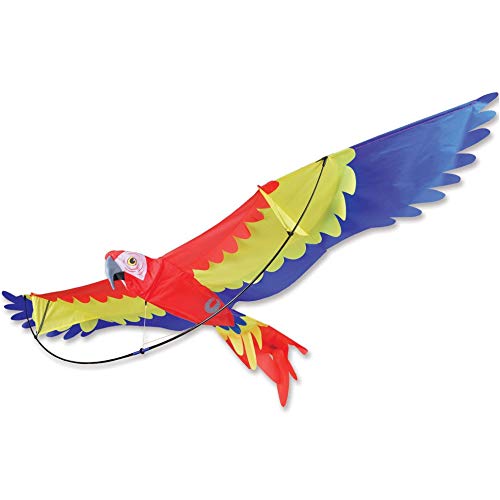
Premier Kites 7 Ft Parrot 3D Kite
What We Like
- Huge 86-inch wingspan for dramatic presence
- Lightwind design catches breeze easily
- Includes 300 ft of line and spool
- Fiberglass frame with ripstop polyester
Trade-offs
- Large size requires open space to fly safely
- Lightweight frame struggles in gusty winds
An 86-inch wingspan and 41-inch body make this parrot kite a real head-turner at the park or beach. The ripstop polyester and fiberglass frame keep it light enough to catch a light breeze, so you don’t need a gale to get it airborne. It comes with 300 feet of line and a hand-grip spool, which means you can set up and fly right out of the box without hunting for extras.
At just 0.3 pounds, this lightweight kite can be tricky in stronger winds and needs a big open field to avoid tangling in trees or power lines. The 86-inch wingspan creates a vivid spectacle in the sky, but it demands calm conditions and plenty of room. Compared to the Prism Kites Vertex Diamond, which is smaller and easier to manage in tight spaces, this parrot is best saved for wide, breezy meadows rather than small yards or gusty coastal spots.
Product photos
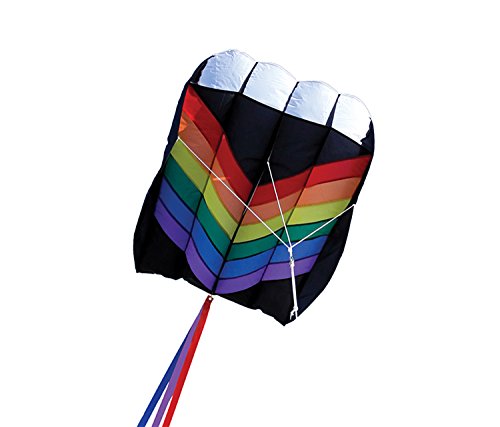
In the Breeze 7.5 Rainbow Parafoil Kite
What We Like
- No assembly needed out of box
- Lightweight rip stop polyester construction
- Includes 330 ft braided line and winder
- Stain and fade resistant fabric
Trade-offs
- No frame means less stability in gusty wind
- Single-line design limits steering control
A kite that needs no assembly means you can pull it from the bag and be flying in under a minute. That’s exactly what you want for a spontaneous trip to the beach or park. It catches a breeze from 7 to 25 mph, so it flies in light winds and holds up in stronger gusts. The rip stop polyester fabric resists stains and fading, keeping it looking good after repeated use.
A frameless parafoil is less stable in shifting or gusty winds than a delta or diamond kite. For beginners who want quick, easy flying without assembly, this is a smart pick.
Product photos
Premier Kites 3D Blue Angel Plane

What We Like
- Durable polyester ripstop reinforced fabric
- Includes 300 ft line and spool
- Easy to disassemble and store
- Fiberglass frame for light weight
Trade-offs
- Smaller wingspan limits wind range
- Single-line only, no stunt capability
With a 38-inch wingspan and a fiberglass frame reinforced with polyester ripstop fabric, this kite is built to handle regular use without falling apart. It includes 300 feet of strong line and a hand grip spool, so you can get it airborne quickly. The careful symmetry and accuracy in its design help keep it stable once it’s up, which makes it easier for beginners or parents teaching kids to fly.
The 38-inch wingspan is smaller than the Premier Kites 7 Ft Parrot 3D Kite’s 86-inch span. That means the Blue Angel Plane is easier to pack up and store, and it disassembles simply for trips to the beach or the park. That compact size also makes it a practical choice if you don’t have a lot of space to carry a kite around.
Product photos
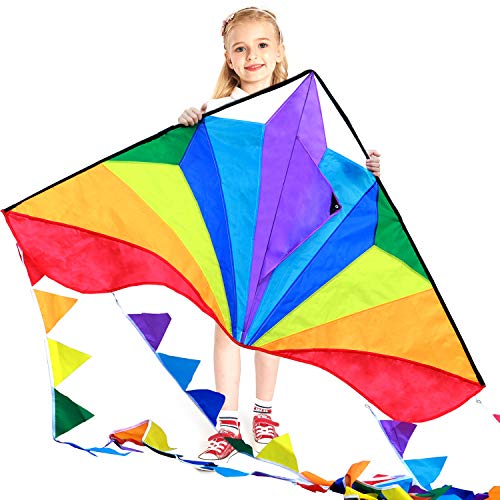
Honbo Large Delta Kite
What We Like
- Large 54×31 inch delta shape
- Includes 300 ft anti-tangle line
- Pre-assembled with easy instructions
- Bright printing that won't fade
Trade-offs
- Single-line design limits stunt capability
A 54×31 inch delta with two 13-foot tails means this kite catches light wind easily and puts on a show in the sky without any tricky setup. It comes partially pre-assembled, so you’re not wrestling with confusing instructions while the kids are already bored. For a family looking to grab something affordable and get flying fast, this is exactly the kind of straightforward, no-fuss kite that makes a beach trip or park afternoon actually fun instead of frustrating.
The fiberglass frame is durable enough for casual use, but for a budget-friendly delta that gets beginners and kids airborne with minimal effort, the Honbo delivers exactly what it promises.
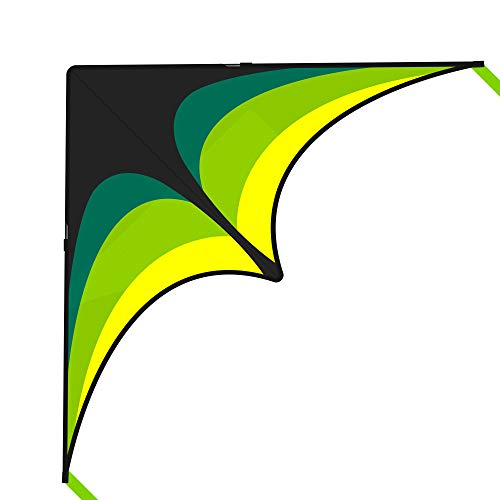
Mint's Colorful Life Delta Kite
What We Like
- Extremely easy to fly for beginners
- Comes ready with 300ft string and handle
- Bright colors and 3 long ribbons
- Compact 17" package for travel
Trade-offs
- Single-line design limits stunt capability
- No spare parts included for repairs
At 63 by 30 inches with three 118-inch ribbons, this delta kite gives young flyers a big, colorful presence in the sky without the frustration of a fussy setup. It comes fully assembled with 300 feet of string on a handle, so you can hand it to a four-year-old and head straight to the beach or park. The bright triangle shape and attached tails make it easy to spot, and the lightweight build keeps lift gentle for little arms. For parents introducing kids ages four to twelve to kite flying, this is about as close to a guarantee of first-flight success as you can get.
The trade-off for that easy lift is that this is a single-line kite, so there is no steering or stunt control. If your child wants to dive and loop like a dual-line sport kite, they will outgrow this quickly. Compared to the Prism Kites Vertex Diamond, which includes spare parts and a triple streamer tail, the Mint’s Colorful Life Delta is simpler but comes ready to fly with its own ribbons and string. For a beginner who just wants to see a kite soar on a sunny afternoon, that simplicity is exactly the point.
Kaiciuss Bald Eagle Kite

What We Like
- 210T tear-resistant nylon fabric
- 300 ft string handle included
- Foldable with storage bag
Trade-offs
- Requires wind force 3 or higher
- Single-line design limits stunt capability
The upgraded structure mimics a real eagle’s wing posture, and the 210T tear-resistant nylon holds up to bumps and friction, so it’s durable enough for beginners who might crash it a few times. It comes with a 300-foot string and assembles in under a minute, making it a straightforward pick for kids aged 8-12 and adults who want a striking bird kite without a steep learning curve.
This eagle kite needs a steady breeze of force 3 or higher to fly well, so calm days can leave it grounded. It’s a single-line kite, so if you’re after dual-line stunts, you’ll want a different design. When conditions are right, the eagle kite’s biomimetic frame and durable nylon make for an impressive sight.
Product photos
HQ Kites Symphony Beach III Stunt Kite

What We Like
- No assembly required, ready to fly
- Tough and forgiving for beginners
- Operates in 6-31 mph wind
- Includes winder, straps and line
Trade-offs
- 51-inch wingspan offers less pull than larger kites
- Dual-line control has a learning curve for young kids
- Soft foil design needs steady wind to stay inflated
A 51-inch dual-line foil that fills with air mid-flight to form its own wing shape means you get a stable, forgiving stunt kite that won’t collapse the second you make a mistake. The rip-stop polyester construction handles the bumps and tumbles of learning, and the included winder, straps, and line mean you’re flying minutes after you open the bag, no poles, no clips, no frustration. This kite is designed for adults and kids ages 8 and up who want to learn dual-line flying without spending a weekend assembling spars.
Soft foils need a steady breeze to stay puffed up; in gusty or very light wind below 6 mph, the wing can deflate mid-flight. But when the wind is blowing within the 6-31 mph range, the Symphony Beach III offers a forgiving experience for learning stunts at a weight of 0.4 pounds. It’s an entry into dual-line flying that leaves room to grow.
Product photos
How We Evaluated Kites
Our research started with the technical specs: frame materials (fiberglass vs. Carbon fiber), fabric types (ripstop polyester vs. Nylon), and included accessories like line, winders, and spare parts. We cross-referenced these against manufacturer claims for wind range and assembly time.
We then looked at three criteria that matter most for family kites. Durability came first, a kite that can’t handle a tumble onto grass or sand isn’t worth buying. Ease of assembly was second, because a kite that takes 20 minutes to put together often gets left at home. Wind performance rounded out the list. A kite that only flies in perfect conditions limits your flying days.
A research-led evaluation has honest limits: we don’t test kites ourselves, so we rely on patterns in owner feedback and expert consensus. What owners consistently praise, or complain about, tells us more than a spec sheet alone.
What To Look For In Kites
Choosing a kite means matching its design to your wind conditions and your patience for setup. Here is what to check before you buy.
Look for a kite with a durable frame (fiberglass is best for beginners), ripstop fabric, and a wind range that matches your local conditions. A pre-assembled kite or one with a clear instruction card saves the most frustration on the first launch.
Frame Material and Durability
The frame is the skeleton of the kite, and fiberglass is the standard for family kites because it bends rather than breaks on impact. Carbon fiber frames are lighter and stiffer but more brittle, better for experienced flyers who don’t crash often. Check whether the manufacturer includes a spare frame rod or connector; this single detail can double the kite’s usable life. Many of the best kite designs for families use fiberglass frames for this reason.
Fabric and Construction
Ripstop polyester is the gold standard for kite fabric. It resists tearing, fading, and staining, which matters when your kite drags across a parking lot or sits in the sun all afternoon. Nylon is lighter and often used in parafoils, but it can stretch when wet. Look for reinforced stitching at stress points like the bridle attachment and the wing tips, those are the first places a cheap kite fails.
Ease of Assembly and Portability
Some kites come fully assembled and fly right out of the bag, the In the Breeze 7.5 Rainbow Parafoil is a perfect example. Others require snapping together a frame and attaching a tail. If you are buying for young children, prioritize a kite that takes under two minutes to set up. Many kites for beginners are designed with tool-free assembly. Also check the packed size: a kite that folds into a 17-inch package is much easier to bring to the park than one that needs a dedicated bag.
- Check if the kite includes a spare frame rod or connector.
- Confirm the fabric is ripstop polyester, not standard nylon.
- Look at the packed dimensions to see if it fits in your car or backpack.
- See if the kite comes with line and a winder, or if you need to buy them separately.
A kite that packs small and assembles in under two minutes is the one you will actually take outside.
Kites Compared
The table below compares all eight kites across the features that matter most for family flying: wingspan, assembly time, included accessories, and best use case.
| Product | Type | Wingspan | Line Included |
|---|---|---|---|
| Prism Kites Vertex Diamond Kite | Single-Line | 36.5 in | 200 ft x 50 lb |
| Premier Kites 7 Ft Parrot 3D Kite | 3D Kite | 86 inches | 300 ft |
| In the Breeze 7.5 Rainbow Parafoil Kite | Parafoil | 28 x 36 inches | 330 ft braided polyester |
| Premier Kites 3D Blue Angel Plane | 3D kite | 38 inches | 300 ft |
| Honbo Large Delta Kite | Delta | 54×31 inches | 300 ft anti-tangle on handle |
| Mint's Colorful Life Delta Kite | Delta | 63" x 30" | 300 ft |
| Kaiciuss Bald Eagle Kite | N/A | 70 x 33in | 300 ft |
| HQ Kites Symphony Beach III Stunt Kite | Dual-line stunt kite | 51 inches | N/A |
Frequently Asked Questions
What is the best kite for a beginner?
The best kite for a beginner is a single-line delta or diamond kite with a fiberglass frame and pre-attached line. The Prism Kites Vertex Diamond Kite and the In the Breeze 7.5 Rainbow Parafoil are both excellent choices because they require little to no assembly and fly well in light to moderate wind.
How much wind do you need to fly a kite?
Most single-line kites fly best in winds between 5 and 25 mph. Lightwind designs, like the Premier Kites 7 Ft Parrot 3D Kite, can launch in breezes as low as 3 mph. If you live in a consistently windy area, look for kites for beach conditions that handle stronger gusts.
What is the difference between a single-line and a dual-line kite?
A single-line kite flies in one direction and is steered by walking backward or moving the line. A dual-line kite, like the HQ Kites Symphony Beach III Stunt Kite, uses two lines to perform loops, dives, and figure-eights. Dual-line kites have a steeper learning curve but offer more control.
How do I choose a kite for a child?
Choose a kite with a small to medium wingspan (under 40 inches), a fiberglass frame, and a single line. The Mint’s Colorful Life Delta Kite is designed specifically for children ages 4 to 12 and comes ready to fly with 300 feet of line and a handle. Avoid large or stunt kites for young kids.
What should I do if my kite won’t fly?
First, check that you have enough wind, hold the kite up and see if the tail lifts. Second, make sure the bridle (the strings connecting the line to the kite) is not tangled. Third, try running backward to create artificial wind. If none of these work, the kite may need a longer tail for stability or a different wind range.
The Bottom Line
For most families, the Prism Kites Vertex Diamond Kite is the best overall pick. It includes a spare frame rod and connector, folds small for easy transport, and comes with quality braided line and a winder. This kite is for casual flyers who want something durable that launches easily and survives the inevitable crash.
If you want a massive showpiece, the Premier Kites 7 Ft Parrot 3D Kite delivers an 86-inch wingspan that turns heads at the park. For the absolute easiest setup, the In the Breeze 7.5 Rainbow Parafoil requires zero assembly and flies straight out of the bag. Budget-conscious buyers should look at the Honbo Large Delta Kite, which offers a big 54×31 inch delta shape at an affordable price.
The single most important factor in buying a kite is matching its wind range to your local conditions. A kite that needs 10 mph of wind will sit in the closet if your area averages 5 mph. Check the wind specs first, then choose the design that excites you most.
