
10 Best Educational Toys For Infants in 2026
This post contains affiliate links. As an Amazon Associate, we earn from qualifying purchases.
The Baby Einstein 4-in-1 Kickin’ Tunes Activity Gym is our Best Overall pick for its four play modes that grow with your baby. Its multilingual piano teaches colors, shapes, and numbers. For parents seeking a musical walking companion, the Fisher-Price Laugh & Learn Smart Stages Puppy Walker is the Best Musical Walking Toy, while the Melissa & Doug Take-Along Shape Sorter earns the Best Shape Sorter award for its portable, sensory-rich design.
Every parent wants toys that do more than just entertain, they want tools that spark curiosity and build foundational skills. But with so many options promising “educational” benefits, it’s hard to know which ones actually deliver for your infant’s specific age and stage.
We’ve researched specifications, manufacturer documentation, and patterns in owner feedback to bring you a curated list of 10 educational toys that truly support early development. This guide breaks down what to look for and which toys excel at each skill.
Top 10 Educational Toys For Infants in the Market
Certain content that appears on this site comes from Amazon. This content is provided "as is" and is subject to change or removal at any time.
The Best Educational Toys For Infants, Reviewed
Baby Einstein 4-in-1 Kickin' Tunes Activity Gym

What We Like
- 4 play modes grow with baby
- Piano teaches colors, shapes, numbers in 4 languages
- 70+ melodies and sounds reward movement
- Machine-washable mat for easy cleanup
Trade-offs
- Requires 3 AA batteries not included
- At 34 inches long, needs generous floor space
The piano rewards baby’s kicks and presses with over 70 melodies, sounds, lights, and phrases, and it teaches colors, shapes, and numbers in four languages: English, Spanish, French, and German. Seven sensory toys, including a crinkle medallion, triangle rattle, BPA-free textured music note, flash cards, self-discovery mirror, piano toy, and tummy time pillow, encourage reaching, pressing, and kicking, supporting fine and gross motor skills. The gym grows with baby from 0 to 36 months, with four modes: lay and play, sitting up, tummy time, and on the go.
The trade-off is that you’ll need to supply three AA batteries to keep the fun going, and the 34-inch length means it claims a decent chunk of floor real estate. Compared to the Melissa & Doug Take-Along Shape Sorter, this gym offers more interactive features and a longer usable age span, but it also demands more space and setup. For families who want a single activity center that adapts from newborn kicking to toddler exploration, the versatility here is hard to beat.
Fisher-Price Laugh & Learn Smart Stages Puppy Walker

What We Like
- 75+ songs and phrases teach alphabet, shapes, colors
- 3 Smart Stages levels grow with baby
- 7 hands-on activities engage fine motor skills
- Sturdy 4-wheel base steadies first steps
Trade-offs
- Requires floor space for walking play
- Not suitable for infants under 6 months
The Fisher-Price Laugh & Learn Smart Stages Puppy Walker includes 75-plus songs, sounds, and phrases that teach the alphabet, shapes, colors, numbers, and Spanish words, so your child gets exposure to early academic content while they practice standing and walking. Three Smart Stages levels adjust the content as your child develops, keeping the toy engaging from those first wobbly steps through toddlerhood. The seven hands-on activities, including light-up piano keys, a roller, spinner, and flip page, keep little fingers busy during sit-down play, making this a two-in-one toy that supports both fine and gross motor skills for infants and toddlers ages 6-36 months.
Designed for infants and toddlers ages 6 to 36 months, this musical walking toy offers two ways to play as your child grows: sitting on the floor to explore the activities or standing up to take first steps. The easy-grasp handle and sturdy four-wheel base help steady those early wobbly movements, which is reassuring for both baby and parent. Seven hands-on activities, including a light-up piano nose and keys, a roller, a spinner, and a flip page, keep little fingers busy. The three Smart Stages levels deliver over 75 songs, sounds, and phrases that introduce the alphabet, shapes, colors, numbers, and even some Spanish words. So the toy adapts alongside your child’s development.
Product photos
Melissa & Doug Take-Along Shape Sorter

What We Like
- 9 textured blocks for sensory play
- Crinkly flaps reveal hidden pictures
- Padded bag doubles as storage
- Montessori-inspired fine motor skill building
Trade-offs
- Soft bag lacks rigid sorting tray stability
- Soft fabric sides don't hold blocks upright for easy grabbing
A padded 2-sided activity bag with handle turns this shape sorter into a portable sensory station. Nine textured blocks and crinkly flaps that reveal hidden pictures give little fingers plenty to explore, while matching shapes through holes builds early problem-solving and fine motor control. It’s a thoughtful pick for parents who want Montessori-inspired play that travels, the whole thing zips up and goes along to grandma’s or the waiting room without losing a single piece.
The soft bag design itself is the main compromise. Unlike a rigid bucket sorter, the fabric sides don’t hold the blocks upright for easy grabbing, so younger infants may need a little help steadying the opening. Compared to the Fisher-Price Baby’s First Blocks, which offers a stiff plastic bucket and 10 blocks, this Melissa & Doug version leans harder on sensory texture and portability rather than pure stacking precision. Best for families who value on-the-go play over a traditional sorting tray.
Product photos
VTech Musical Rhymes Book

What We Like
- Twist and slide play pieces
- 5 colorful piano buttons
- Learning and music modes
- Engaging nursery rhymes
Trade-offs
- Demo batteries only, needs new ones
- At 1.1 lb, light but not pocketable
The VTech Musical Rhymes Book packs five piano buttons and two learning modes into a 1.7-inch-thick book, so a 6-month-old can explore sounds and vocabulary without needing a full play mat. It’s built for the lap or high chair, with easy-to-turn pages and twist-and-slide pieces that keep little hands busy while introducing nursery rhymes, colors, and instrument sounds. For parents who want an early literacy toy for children 6 months to 3 years, this book offers music play and age-appropriate vocabulary in one package.
The included AAA batteries are only for demo use, so you’ll need to buy fresh ones before regular play, a minor step that ensures the book works right away. Compared to the Baby Einstein Take Along Tunes Musical Toy, this book offers more interactive elements like pages to turn and pieces to slide. The Einstein toy is lighter at 0.3 pounds and smaller, making it easier to slip into a diaper bag. If your infant is ready for a book with pages and play pieces, this is a reasonable choice; if you need a lighter, more compact sound toy, the smaller Einstein toy might suit better.
Melissa & Doug My First Activity Book

What We Like
- Soft cloth pages with peekaboo flaps
- Removable hand puppet and finger puppets
- Button, buckle, and clock activities
- Built-in handles and clear tote for storage
Trade-offs
- Soft pages lack electronic sounds for audio learners
- Requires adult supervision for buckle activities
Eight soft pages packed with peekaboo flaps, button-and-buckle tasks, a movable clock, and three puppets keep tiny hands busy during tummy time, stroller rides, or travel. Weighing just half a pound and coming with built-in handles and a clear tote, it’s easy to carry anywhere. The book targets fine motor skills, shape and color recognition, and early problem-solving through tactile play, making it a screen-free option for parents who prefer Montessori-inspired learning.
Because it relies entirely on touch and visual engagement, it won’t provide the audio feedback some babies enjoy. For comparison, the Baby Einstein 4-in-1 Kickin’ Tunes Activity Gym measures 34 inches long and includes music and a piano mat for floor play, but it’s much larger and heavier at 3.2 pounds. The Melissa & Doug book is far more portable and quiet, so if your child responds well to sounds, you might consider adding an electronic toy to your rotation.
LeapFrog Learning Friends 100 Words Book
What We Like
- Bilingual English and Spanish words
- 100+ age-appropriate words by learning experts
- Sound effects, fun facts, and songs
- Touch-activated pages for independent play
Trade-offs
- Requires 2 AA batteries for regular use
- No volume control for the sound effects
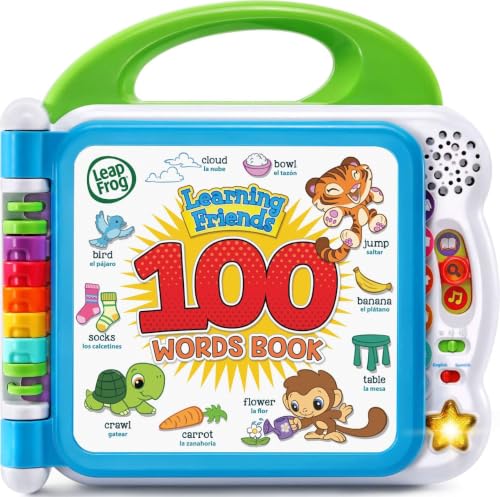
Touching the pages plays words, sound effects, and fun facts, that direct cause-and-effect is what makes vocabulary stick for a toddler. With 100+ age-appropriate words chosen by learning experts and a full bilingual experience in English and Spanish, this book turns passive listening into active exploration. It suits parents who want a screen-free way to build early language skills and introduce a second language naturally, all while letting little fingers drive the learning.
One hundred words, while a solid start, won’t last forever; once your child masters them, you’ll be looking for the next step. Compared to the VTech Musical Rhymes Book, which weighs 1.1 pounds, the LeapFrog is heavier at 1.5 pounds and better suited for lap time than on-the-go use. Ideal for the 18-month-old who’s just catching the language bug and needs a rich, interactive vocabulary primer.
VTech Sit-to-Stand Learning Walker
What We Like
- Detachable activity panel for seated play
- Five piano keys encourage creativity
- Three shape sorters build motor skills
- Two-speed switch adapts to growing toddlers
Trade-offs
- No built-in storage for shape sorter blocks
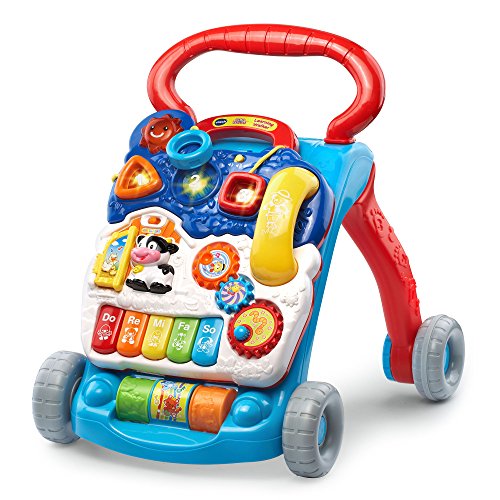
The detachable activity panel is the standout feature here, it lets babies play with the piano keys, shape sorters, and spinning rollers while sitting up, then clips back onto the walker for cruising around. That flexibility means it grows with your child from stationary play to first steps, and the two-speed control switch keeps pace as their confidence builds. For families who want one toy that transitions from floor time to walking practice, this design covers both stages without needing a separate purchase.
The VTech Sit-to-Stand Learning Walker includes a removable activity tray that lets babies play while seated, then reattaches for walking practice on carpet or bare floors. Its two-speed control switch adjusts as your child gains confidence, so you don’t have to buy a new walker as they speed up. The five piano keys and telephone handset encourage creativity and role-play, making this more than just a walker.
Fisher-Price Baby's First Blocks
What We Like
- BPA-free plastic for safe play
- 10 blocks for sorting and stacking
- Easy-carry handle for travel
- All blocks store inside bucket
Trade-offs
- No sound or lights for cause-and-effect feedback
- No batteries means no lights or sounds for engagement
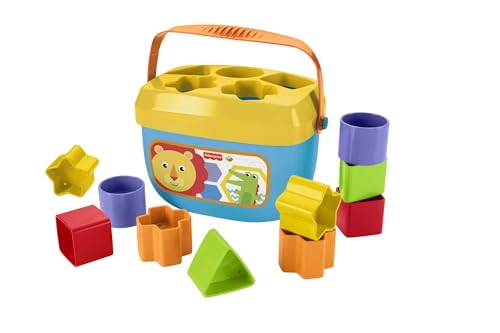
Ten colorful blocks and a shape-sorter bucket mean your baby gets sorting, stacking, and dropping all in one tidy set. At just 0.7 pounds with a carry handle, it’s easy to take along anywhere, and the BPA-free plastic gives me peace of mind as a parent. This is the kind of straightforward, no-fuss toy that helps build fine motor skills and problem-solving from six months onward, without needing batteries or a manual.
The set includes 10 colorful blocks and a bucket with a shape-sorter lid, so babies can practice sorting, stacking, and dropping shapes through the correct openings. All blocks fit inside the bucket for easy storage, and the built-in carry handle makes it convenient to take along on trips. This toy helps introduce colors and shapes while fostering fine motor skills and problem-solving for infants and toddlers ages 6 months and older.
Product photos
Baby Einstein Take Along Tunes Musical Toy
What We Like
- Large button toggles 7 melodies
- Colorful lights dance to music
- Volume control for parents
- Includes play tips for parents
Trade-offs
- Only 7 melodies, limited variety
- Requires new batteries for regular use
- No interactive features beyond button press
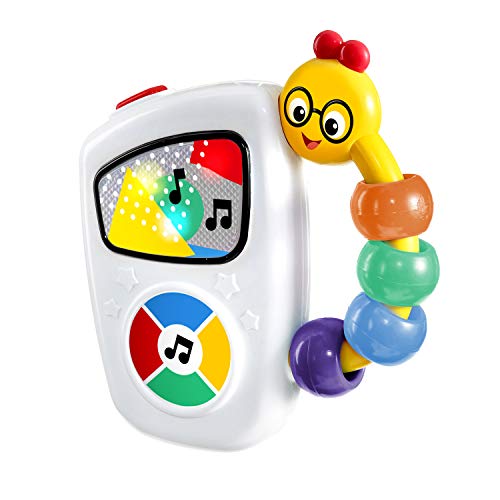
A 0.3-pound toy that fits in a diaper bag means you can take musical discovery anywhere without adding bulk. The Baby Einstein Take Along Tunes Musical Toy is built around one big, easy-to-press button that cycles through 10 classical masterpieces from Chopin to Mozart, so even a 3-month-old can trigger cause-and-effect learning. Colorful lights dance across the screen to each song, pulling baby’s attention and supporting both auditory and visual development. For parents, the volume control is a sanity-saver, and the included Einstein Way Play Tips give you simple, purposeful ways to turn a few minutes of music into a bonding moment. This is the portable music toy for families who want a lightweight, no-fuss option that travels well and delivers real developmental value from the very first months.
The musical library is limited to 7 tracks, which means you’ll hear the same pieces on repeat during long car rides or play sessions. Compared to other toys in its category, the Take Along Tunes is simpler and more repetitive by design. That simplicity is exactly what makes it work for the youngest infants, there’s no learning curve, no small parts, and no screen to worry about. But once your baby starts craving more variety or wants to explore cause and effect beyond a single button, you’ll likely want to rotate in another toy. For the first six months of portable musical play, though, this little box delivers exactly what it promises.
Product photos
Sassy Stacks of Circles Stacking Ring

What We Like
- Straight post strengthens hand-eye coordination
- Chunky rings easy for baby to grasp
- Each ring has different texture and weight
- Clear ring with beads connects sound to sight
Trade-offs
- Straight post limits stacking to one method
The straight post accepts rings of different sizes, so your baby gets real hand-eye coordination practice from the start. Chunky rings are easy for little hands to grasp, strengthening fine motor skills, and each ring features a different texture and weight, great for mouthing and sensory exploration. The clear ring with colorful beads connects sound to sight, keeping curious infants engaged. This 9-piece set is designed for babies 6 to 24 months, offering a simple, focused activity that builds fine motor skills without overwhelming them.
Product photos
How We Evaluated Educational Toys For Infants
This guide is based on manufacturer specifications, expert recommendations from child development specialists, and patterns in owner feedback across thousands of reviews. We analyzed which features consistently earn praise from parents and align with developmental milestones.
We prioritized four criteria. Age appropriateness was first, a toy must match or adapt to an infant’s changing abilities, not overwhelm or under-stimulate them. Skill-building focus came next: we looked for toys that target specific developmental areas like fine motor control, cause-and-effect understanding, language exposure, or sensory exploration. Durability and safety mattered heavily, since infants explore with their mouths and need non-toxic, well-constructed materials. Finally, longevity separated good toys from great ones. The best educational toys grow with the child through multiple stages of development.
We also weighed practical factors like ease of cleaning, portability, and whether a toy requires batteries. No single toy is perfect for every family, so we’ve noted trade-offs honestly so you can match a toy to your specific needs.
What To Look For In Educational Toys For Infants
Choosing the right educational toy means looking past the marketing and focusing on what actually supports your baby’s development. Here’s what matters most.
Look for toys that match your infant’s current developmental stage, offer multiple ways to play as they grow, and are made from safe, durable materials. Prioritize skill-building over flashy features.
Age and Stage Matching
The most important factor is whether the toy fits your baby’s current abilities. A toy that’s too advanced frustrates; one that’s too simple bores. For newborns, high-contrast patterns and gentle sounds work best.
Around 3 to 6 months, babies start reaching and grasping, so toys with easy-to-hold rings or soft textures are ideal. From 6 months onward, cause-and-effect toys, ones that light up or play music when touched, become engaging. For specific age ranges, our guides on toys for newborns, toys for 6 month olds, and toys for 9 month olds break down the best options by month.
Skill Development Focus
Not all educational toys teach the same skills. Some build fine motor control through stacking and sorting; others focus on language with words and songs. Sensory toys, those with varied textures, sounds, and colors, are especially valuable for infants because they stimulate multiple areas of the developing brain. Our list of sensory toys for infants highlights options that engage touch, hearing, and sight simultaneously. Think about which skill you want to encourage most and choose a toy that targets it directly.
Longevity and Adaptability
The best educational toys don’t get abandoned after a month. Look for toys with multiple play modes or adjustable difficulty levels. Activity gyms that convert from tummy-time mats to seated play stations, or walkers with detachable panels for floor play, offer months more use than single-function toys. Choosing educational toys that adapt to your child’s growth saves money and reduces clutter. Also consider whether the toy is easy to clean. Machine-washable fabrics and wipe-clean surfaces are a practical necessity.
- Check age recommendations on the box, but also observe whether your baby shows interest in the toy’s features.
- Look for toys made from BPA-free, non-toxic materials, especially for mouthing infants.
- Consider whether the toy requires batteries and if that’s a dealbreaker for your household.
- Evaluate portability: will this toy travel well to grandma’s house or on car trips?
- Read owner feedback about durability, toys that break quickly are not educational at all.
A toy that grows with your child is worth twice the price of one they outgrow in a month.
Educational Toys For Infants Compared
The table below compares our top 10 educational toys for infants across key features, including age range, primary skills developed, and standout qualities.
| Product | Age Range | Dimensions | Weight | Key Features |
|---|---|---|---|---|
| Baby Einstein 4-in-1 Kickin' Tunes Activity Gym | 0 to 36 months | 34 x 27 x 18 inches | 3.2 pounds | 7 sensory toys |
| Fisher-Price Laugh & Learn Smart Stages Puppy Walker | 6-36 months | 19.3 x 16.2 x 18.2 inches | 0.0 pounds | 7 hands-on activities |
| Melissa & Doug Take-Along Shape Sorter | 9 months & up | 14 x 10 x 4 inches | 1.3 pounds | 9 textured blocks |
| VTech Musical Rhymes Book | 6 months to 3 years | 1.7 x 8.8 x 7.5 inches | 1.1 pounds | 5 colorful piano buttons |
| Melissa & Doug My First Activity Book | N/A | 8.5 x 2.8 x 8.8 inches | 0.5 pounds | 8-page cloth book |
| LeapFrog Learning Friends 100 Words Book | 18+ months | 9.2 x 9.4 x 1.9 inches | 1.5 pounds | 100+ words |
| VTech Sit-to-Stand Learning Walker | N/A | 16.5 x 14.2 x 18.1 in | 4.6 pounds | Detachable activity panel |
| Fisher-Price Baby's First Blocks | 6+ months | 5.1 x 4.9 x 8.3 inches | 0.7 pounds | 10 colorful blocks |
| Baby Einstein Take Along Tunes Musical Toy | 3 months + | 5.0 x 4.8 x 1.1 inches | 0.3 pounds | 10 classical masterpieces |
| Sassy Stacks of Circles Stacking Ring | 6 to 24 months | 4.2 x 4.2 x 8.0 inches | 0.6 pounds | 9 piece set |
Frequently Asked Questions
What is the best educational toy for a newborn?
For newborns, look for high-contrast patterns, gentle sounds, and soft textures. The Baby Einstein Take Along Tunes Musical Toy is a great choice for infants as young as 3 months, offering simple cause-and-effect play with colorful lights and melodies.
When should I introduce educational toys to my baby?
You can introduce simple educational toys from birth. Black-and-white contrast cards, soft rattles, and musical mobiles are appropriate for newborns. Around 3 to 6 months, babies become more interactive and benefit from toys that respond to their actions, like activity gyms and musical toys.
Are wooden toys better than plastic toys for infants?
Both materials have advantages. Wooden toys are durable, eco-friendly, and often have a pleasing weight and texture. Plastic toys can offer lights, sounds, and easy cleaning. The best choice depends on your priorities, many families mix both for variety.
How many educational toys does an infant need?
Quality matters more than quantity. A few well-chosen toys that target different skills, one for fine motor, one for language, one for sensory play, are more valuable than a room full of toys your baby ignores. Rotating toys every few weeks also keeps interest high.
What should I look for in a safe educational toy?
Safety first: ensure the toy has no small parts that could become choking hazards, is made from non-toxic materials, and has no sharp edges. Check that batteries are secured behind a screw-on panel. Always supervise play, especially with toys that have strings, straps, or removable pieces.
The Bottom Line
The Baby Einstein 4-in-1 Kickin’ Tunes Activity Gym takes the Best Overall spot because it delivers four distinct play modes that grow with your baby from tummy time to seated play. It also offers multilingual exposure through its piano. It’s the ideal choice for parents who want one long-lasting toy that builds motor skills and introduces language concepts simultaneously.
If your budget is tighter, the Fisher-Price Baby’s First Blocks offers a simple, durable shape sorter at an affordable price without sacrificing developmental value. For families focused on language development, the LeapFrog Learning Friends 100 Words Book provides bilingual vocabulary building in a touch-activated format.
The single most important factor in choosing an educational toy is matching it to your infant’s current developmental stage. A toy that meets your baby where they are today will engage them, teach them, and earn its place in your home.
