
10 Best Educational Toys For 4 Year Olds in 2026
This post contains affiliate links. As an Amazon Associate, we earn from qualifying purchases.
The LeapFrog Mr Pencil’s Scribble Write and Read is the best educational toy for 4 year olds because it combines step-by-step letter tracing with playful animations that turn letters into animals, rewarding each stroke. For screen-free families, the Momo & Nashi Magic Grooved Writing Practice Books offer reusable handwriting practice, while the ThinkFun Zingo Bingo Award Winning Preschool Game builds language skills for up to seven players.
A four-year-old’s brain is wired for cause-and-effect, pattern recognition, and the thrill of “I did it myself.” The right toy meets that energy with structured guidance or open-ended exploration. But the wrong one either bores them in ten minutes or frustrates them into tears.
This guide is research-based: we looked at specifications, manufacturer documentation, expert round-ups, and patterns in owner feedback to find ten toys that actually teach something. Each pick targets a specific skill, handwriting, fine motor control, STEM thinking, or social play, so you can match the toy to your child’s current obsession.
Top 10 Educational Toys For 4 Year Olds in the Market
Certain content that appears on this site comes from Amazon. This content is provided "as is" and is subject to change or removal at any time.
The Best Educational Toys For 4 Year Olds, Reviewed
LeapFrog Mr Pencil's Scribble Write and Read

What We Like
- Step-by-step letter tracing with Mr. Pencil
- Transforms letters into animated animals
- Custom name entry for personal practice
- Sound-it-out bar lights up as you slide
Trade-offs
- Demo batteries included, new ones recommended
- Requires 3 AA batteries for regular use
The step-by-step letter tracing with Mr. Pencil is the feature that sets this apart, kids follow dotted lines to write uppercase and lowercase letters, then watch those letters turn into animated animals. That immediate visual reward keeps a 4-year-old engaged far longer than a static workbook. It also lets you enter a child’s full name so they can practice writing it, which adds a personal stake that most preschool toys skip. For a parent looking for an electronic learning system that actually teaches handwriting rather than just flashing lights, this is the one that delivers real progress without feeling like a chore.
Mr. Pencil’s step-by-step guidance turns letters into animated animals, which keeps a 3-year-old engaged while learning to write uppercase and lowercase. The sound-it-out bar lights up as kids slide the stylus across the screen, helping them sound out new words. Customizing the practice with a child’s first, middle, and last name makes the experience personal, and the whole thing runs on three AA batteries (included for demo use only, so you’ll want fresh ones for regular play).
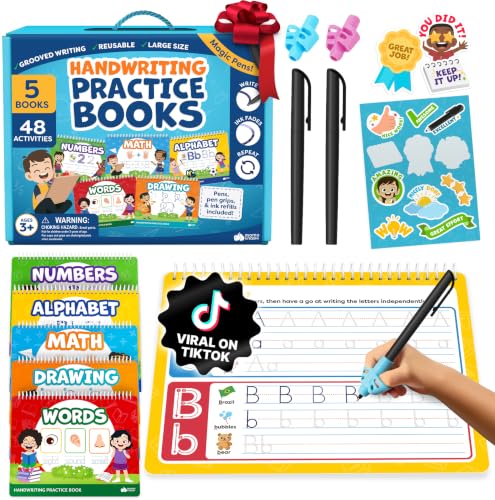
Momo & Nashi Magic Grooved Writing Practice Books
What We Like
- 5 reusable books with disappearing ink
- 48 activities: letters, math, drawing
- Includes 2 pens, 10 refills, pencil grips
- Spiral-bound, sturdy pages for durability
Trade-offs
- Disappearing ink fades, requiring refills
- No audio feedback for independent learners
With 48 guided activities packed into a set of five reusable books, this handwriting kit gives a four-year-old plenty of structured practice without burning through paper. The grooved lines guide writing, and the magic disappearing ink keeps kids engaged, so they can trace the same page again the next day. It’s a screen-free setup that works well for quiet time, travel, or a calm afternoon at home, and the set includes two soft pencil grips to support comfort during use.
The disappearing ink means you’ll eventually need to buy refills, and at 11.6 inches long, this set is larger than some other options. If your child prefers an electronic learning tool, the LeapFrog Mr Pencil’s Scribble Write and Read offers a different experience in a smaller package. But if you want a tactile, reusable workbook that builds fine motor skills through repeated tracing, this set delivers exactly that, no batteries, no screens, just practice.
Product photos
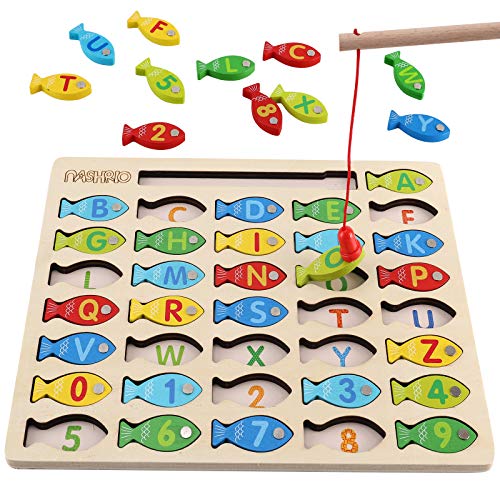
NASHRIO Magnetic Wooden Fishing Game
What We Like
- Smooth, polished wood with non-toxic paint
- Teaches letters, numbers, and color recognition
- Develops hand-eye coordination and fine motor skills
- Compact size for easy storage
Trade-offs
- Only one fishing pole limits turn-taking for pairs
- No storage bag or box for the pieces
The wooden board, just over half an inch thick, holds a set of colorful fish pieces printed with letters and numbers, so your preschooler gets an alphabet and number lesson while playing a simple game. The magnetic pole forces them to aim carefully, building hand-eye coordination and fine motor control with every catch. It’s a quiet, self-contained activity that works on a coffee table or a play mat, and the eco-friendly paint and smooth edges mean I don’t have to hover. For a four-year-old who loves sorting and collecting, this turns letter recognition into a satisfying challenge.
The trade-off is that the board is thin and lightweight, so it can slide around on a slick table unless you hold it steady. Compared to the Melissa & Doug Primary Lacing Beads, which offers more open-ended stringing play, this fishing game is more structured and goal-oriented. That makes it better for a child who needs clear tasks to stay engaged, but less ideal for free-form creative play. If your kid thrives on matching and catching, this is a focused, durable tool that delivers exactly what it promises.
Product photos
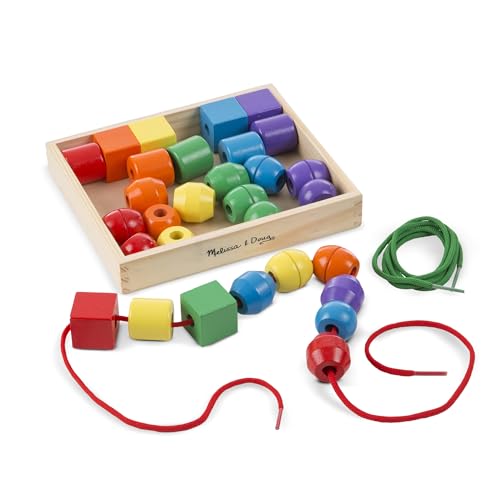
Melissa & Doug Primary Lacing Beads
What We Like
- 30 colorful wooden beads in assorted shapes
- 5 bead shapes easy for little hands
- Builds fine motor, cognitive, and visual perception skills
- Includes wooden storage case for organization
Trade-offs
- Only 2 laces limit group play or shared use
- Beads too small for children under 3
Thirty painted wooden beads in assorted shapes give a preschooler plenty of variety to thread and sort, each bead helping build fine motor control. The five easy-to-grasp shapes and laces that fit through each bead easily make this set a natural pick for developing hand-eye coordination and visual perception through screen-free play.
With 30 painted wooden beads and just two laces, shared play is limited to two children at a time unless they take turns, but the included wooden storage case keeps everything tidy between sessions. This set builds fine motor skills, hand-eye coordination, and visual perception through hands-on, screen-free play, skills that lay the groundwork for later handwriting. The thin laces fit easily through each bead, making it a good starter kit for little hands.
VTech Race and Discover Driver

What We Like
- 20 driving games, races, road trips
- Turn signals, horn, gear shift
- Counting, spelling, problem-solving games
- Three racetracks with hazards
Trade-offs
- Batteries included only for demo use
- Screen-based play limits tactile exploration
Twenty built-in games, races and road trips give a preschooler plenty of variety. A colorful game screen and interactive dashboard includes turn signals, horn, gear shift and buttons for taking calls, checking maps and hearing traffic reports on the radio. The destinations around town offer counting, spelling and problem-solving games, so the play has a clear learning payoff. For a child who loves cars and action, this driving toy delivers a lot of interactive fun.
At just two pounds, this driving toy is light enough for a preschooler to carry from room to room, yet sturdy enough to survive drops. The three racetracks include hazards to avoid, and winning first place lets kids level up, which reviewers say keeps them engaged. Just plan on buying fresh AA batteries right away, the demo ones won’t last.
Doctor Jupiter My First Science Experiments Kit

What We Like
- 100+ experiments in one kit
- Step-by-step illustrated instructions
- STEM learning for critical thinking
- Screen-free fun for 100+ days
Trade-offs
- No experiments for children under age 4
- Manual does not cover troubleshooting failed experiments
With over 100 experiments packed into a single box, this kit gives a four-year-old more hands-on science activities than most families will get through in a year. Each one is designed to build problem-solving skills while keeping things playful, think Water Fireworks and Walking Water. The step-by-step illustrated manual means you won’t be left guessing, and the whole thing meets ASTM F963-17 safety standards, so you can let them explore without hovering every second. It’s a natural fit for parents who want to channel that endless four-year-old curiosity into something structured and genuinely educational.
The kit includes over 100 experiments, so you’ll have plenty of activities to rotate through. The step-by-step illustrated manual makes it easy to follow along, and the ASTM F963-17 safety standard means the materials have been tested for basic safety. Compared to the ThinkFun Zingo Bingo Award Winning Preschool Game, which focuses on quick word recognition, this kit offers a broader range of hands-on science activities that require more setup and adult involvement. If you’re comfortable guiding your child through experiments, the variety here keeps things fresh for a long time.
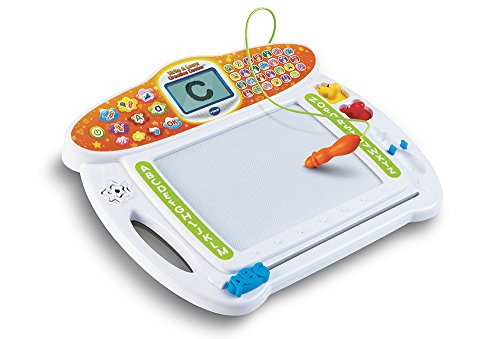
VTech Write and Learn Creative Center
What We Like
- Animated stroke-order demonstrations for letters
- Custom name teaching for step-by-step writing
- Stencil system builds drawing from lines to objects
- Built-in magnetic drawing board and stylus
Trade-offs
- Demo batteries only; fresh ones needed for regular use
- No audio feedback for letter sounds or phonics
The animated stroke-order demonstrations for both uppercase and lowercase letters mean a child can watch exactly how each letter is formed before trying it themselves, no guessing or parent hovering required. That alone makes this a strong pick for a 4-year-old just starting to write, especially since you can program in their name and have the board walk them through it step by step. The stencil system also builds drawing confidence, moving from simple lines to 26 different objects, so it doubles as an art tool when handwriting practice feels like a chore.
The magnetic drawing board gives kids a screen-free way to practice writing, though it won’t replicate the feel of pencil on paper. At 1.8 pounds, it’s heavier than the 0.9-pound LeapFrog Mr Pencil’s Scribble Write and Read, so it’s better suited for a desk or table than for tossing into a diaper bag. For a stationary setup, the VTech offers a larger writing surface and a stencil library that provides more variety in drawing activities.
ThinkFun Zingo Bingo Award Winning Preschool Game

What We Like
- Up to 7 players with extra card
- Builds language and matching skills
- Includes unique Zinger device
- Clear instruction manual for quick start
Trade-offs
- No built-in difficulty progression for older or experienced players
With room for up to 7 players, this game turns solo practice into a small-group activity that keeps pre-readers and early readers engaged. The Zinger device adds a tactile, unpredictable element that makes matching feel like a race, not a lesson. It’s a smart pick for playdates, classrooms, or family game nights where you want kids building language skills without realizing they’re learning. The beginner-level design means even a 4-year-old who hasn’t touched a board game before can jump in right away.
The trade-off is that once a child masters the matching patterns, the challenge plateaus, there’s no built-in difficulty ramp for older or more experienced players. Compared to LeapFrog Mr Pencil’s Scribble Write and Read, which focuses on handwriting, Zingo leans entirely on fast-paced visual matching and verbal recall. If your child thrives on repetition and social play, this will be a hit. If they need more progressive skill-building, you might pair it with a writing-focused toy to round out their learning.
Product photos
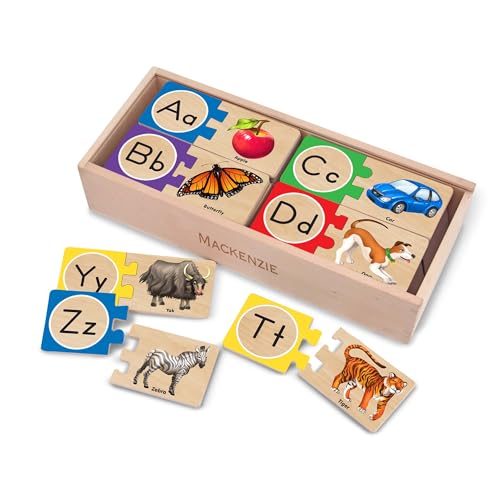
Melissa & Doug Self-Correcting Alphabet Wooden Puzzles
What We Like
- Self-correcting pieces build confidence
- Includes capital and lowercase letters
- Sturdy wooden construction
- Portable storage box included
Trade-offs
- Only covers alphabet, no numbers or shapes
- Storage box adds bulk for travel
Each of the 52 wooden puzzle pieces only fits its correct match, so a child can try, fail, and try again without frustration. That self-correcting design turns letter recognition into a quiet, hands-on discovery process, perfect for a 4-year-old who needs to build confidence alongside alphabet skills. The set covers both uppercase and lowercase letters, with labeled illustrations that support vocabulary, and the included storage box keeps everything tidy between play sessions.
The set covers only the alphabet, with no numbers or shapes included. If your child wants a broader range of early learning activities, the LeapFrog Mr Pencil’s Scribble Write and Read is another option, though its features are not detailed here. For a straightforward alphabet puzzle that supports letter recognition and fine motor skills through self-correcting play, this Melissa & Doug set is a reasonable choice.
Product photos
Learning Resources Gears Deluxe Building Set

What We Like
- 100-piece set for open-ended builds
- Develops fine motor skills through snapping
- Encourages STEM and engineering exploration
- Includes crank handle for moving models
Trade-offs
- Requires adult help for complex builds
With 100 interlocking pieces including gears, pillars, axles, and a crank handle, this set lets a 4-year-old build spinning machines and towers that actually move. That hands-on cause-and-effect play is exactly what makes it a natural fit for early STEM learning. Kids who love figuring out how things work will spend hours snapping connectors together and watching their creations turn, which also builds hand-eye coordination and problem-solving skills along the way.
The 100-piece set includes gears, pillars, axles, and a crank handle, so kids can build moving models that demonstrate cause and effect. That hands-on play supports early STEM learning and helps develop hand-eye coordination and problem-solving skills. The set is designed for ages 4 and up, and the pieces snap together to create spinning machines and towers. Compared to the Melissa & Doug Primary Lacing Beads, which is a 33-piece lacing set, this Gears set offers a different kind of construction play focused on mechanics and motion. If your child enjoys building and figuring out how things move, this set provides a more open-ended engineering experience.
Product photos
How We Evaluated Educational Toys For 4 Year Olds
We started with manufacturer specs and skill claims, then cross-referenced those against patterns in parent feedback across dozens of sources. A toy that claims to teach letter formation but gets consistent complaints about confusing instructions or fragile parts didn’t make the cut. We also consulted expert round-ups from child development specialists and occupational therapists to understand which skills matter most at this age.
The four criteria that mattered most were skill alignment, durability, engagement longevity, and safety. A toy that only holds a child’s attention for one afternoon isn’t educational, it’s clutter. We prioritized toys with multiple modes, progressive difficulty, or reusable components that keep a four-year-old coming back. Materials mattered too: wood, thick cardboard, and BPA-free plastics won out over flimsy alternatives.
A research-led evaluation has limits. We haven’t watched every child play with every toy, and individual kids vary wildly in what clicks. What we can tell you is which toys consistently earn praise from parents who bought them for this age group. For deeper guidance on matching a toy to your child’s temperament, see our educational toy selection guide.
What To Look For In Educational Toys For 4 Year Olds
Four-year-olds are in a sweet spot: they’ve outgrown baby toys but aren’t ready for school-age complexity. The best toys for this age offer just enough challenge to stretch a skill without tipping into frustration.
Look for toys with adjustable difficulty, durable construction, and a clear skill target (letters, numbers, fine motor, social turn-taking). Avoid anything with too many small pieces or a single-use activity that can’t be replayed.
Skill Alignment With Developmental Stage
A four-year-old’s developmental milestones include letter recognition, counting to ten or higher, using scissors, and playing cooperatively with peers. The toy should target one or more of these skills directly. A magnetic fishing game that teaches letter names while building hand-eye coordination hits two birds with one pole. A 100-experiment science kit builds patience and cause-and-effect reasoning. If the toy’s skill target is vague (“promotes creativity” without a mechanism), it’s probably not doing much teaching.
Replay Value and Progressive Difficulty
The best educational toys for four-year-olds grow with the child. Look for multiple modes, interchangeable pieces, or activities that get harder as the child improves. The LeapFrog Mr Pencil, for example, lets kids practice their own name, a feature that stays relevant for months. The Doctor Jupiter science kit has over 100 experiments, which means a new activity every day for three months. A toy that can be played the same way every time will end up in the donation pile by week two.
Materials and Safety
Four-year-olds are still putting things in their mouths, and they’re not gentle. Look for solid wood construction, non-toxic paints, and pieces too large to be a choking hazard. The Melissa & Doug lacing beads and the NASHRIO fishing game both use smooth, polished wood with non-toxic finishes. Avoid toys with sharp edges, easily swallowed magnets, or thin plastic that cracks on the first drop. Safety certifications like ASTM or CPSIA are worth checking on the package.
- Check that all pieces are larger than a toilet paper roll (the standard choke-tube test).
- Run your hand over the toy to feel for splinters, sharp corners, or rough seams.
- Read the age rating, “3+” means tested for that age, not just suggested.
- Look for a storage solution (bag, box, or tray) so pieces don’t get lost.
- Verify that batteries are included or budget for them separately.
If the toy has small pieces you wouldn’t trust near a toddler, keep it away from younger siblings.
Educational Toys For 4 Year Olds Compared
The table below compares all ten picks across their key features, skill targets, and best-use scenarios so you can see at a glance which toy fits your child’s needs.
| Product | Age Range | Dimensions | Weight |
|---|---|---|---|
| LeapFrog Mr Pencil's Scribble Write and Read | 3+ years | 2.0 x 7.7 x 8.6 inches | 0.9 pounds |
| Momo & Nashi Magic Grooved Writing Practice Books | N/A | 11.6 x 9.3 x 0.1 in | 2.3 lb |
| NASHRIO Magnetic Wooden Fishing Game | 3-5 years | 11.8 x 8.9 x 0.6 inches | N/A |
| Melissa & Doug Primary Lacing Beads | Ages 3-5 | 8.8 x 7.3 x 1.3 inches | 1.3 pounds |
| VTech Race and Discover Driver | 3-6 years | 13.4 x 9.7 x 5.4 inches | 2.0 pounds |
| Doctor Jupiter My First Science Experiments Kit | 4+ years | 12.6 x 9.4 x 2.0 inches | 1.5 pounds |
| VTech Write and Learn Creative Center | 3-6 years | 12.1 x 14.4 x 2.8 in | 1.8 lb |
| ThinkFun Zingo Bingo Award Winning Preschool Game | Age 4 and Up | 8.2 x 3.5 x 10.2 inches | 1.0 pounds |
| Melissa & Doug Self-Correcting Alphabet Wooden Puzzles | Ages 4+ | 13.0 x 6.0 x 3.0 in | 2.0 lb |
| Learning Resources Gears Deluxe Building Set | Ages 4+ | 12 x 10.4 x 4.1 inches | 2.2 pounds |
Frequently Asked Questions
What is the best educational toy for a 4 year old who loves letters?
The LeapFrog Mr Pencil’s Scribble Write and Read is the top choice for letter practice. It guides children through tracing each letter with a stylus, then rewards them with an animated animal that matches the letter’s sound. For a screen-free alternative, the Momo & Nashri Magic Grooved Writing Practice Books use disappearing ink and grooved lines to teach letter formation without batteries.
How do I choose between a STEM toy and a language toy?
It depends on what your child is drawn to right now. If they’re constantly asking “why” and taking things apart, a STEM toy for 4 year olds like the Doctor Jupiter science kit or the Learning Resources Gears set will feed that curiosity. If they’re starting to recognize letters or ask how to spell their name, a writing or phonics toy is a better fit. You can always rotate both types over the year.
Are Montessori-style toys better for 4 year olds than electronic ones?
Neither is inherently better, it’s about the child’s learning style. Montessori toys for 4 year olds emphasize self-directed, hands-on exploration without screens or audio feedback. They’re excellent for building concentration and independence. Electronic toys like the LeapFrog and VTech options provide structured guidance and immediate audio rewards, which helps children who need more external motivation. Many families use both.
What kind of puzzle is best for a 4 year old?
Self-correcting puzzles, like the Melissa & Doug Self-Correcting Alphabet Wooden Puzzles, are ideal because they let children learn through trial and error without adult help. Each piece only fits its correct match, so the child gets immediate feedback. For more variety, check out our guide to puzzles for 4 year olds, which covers jigsaw puzzles, floor puzzles, and number puzzles for this age.
How many toys does a 4 year old actually need at once?
Fewer than you think. Child development experts generally recommend rotating 5-7 toys at a time rather than dumping everything in one bin. A good rotation includes one fine-motor toy, like lacing beads or a fishing game. It also includes one language toy, such as a writing board or alphabet puzzle. Add one building set, like gears or blocks, one game, such as Zingo or a matching game, and one open-ended creative toy, like play dough or art supplies. Swap every week or two to keep things fresh.
The Bottom Line
The LeapFrog Mr Pencil’s Scribble Write and Read earns the top spot because it turns handwriting practice into a game that kids actually want to play. The step-by-step tracing, letter-to-animal animations, and custom name entry make it a toy that stays relevant for months. It’s the best choice for parents who want a guided, screen-based tool that teaches letter formation with immediate feedback.
If you’re avoiding screens, the Momo & Nashi Magic Grooved Writing Practice Books offer the same handwriting practice without batteries, and the Melissa & Doug Primary Lacing Beads build fine motor skills through hands-on threading. For group play, the ThinkFun Zingo Bingo game gets siblings and friends learning together. Budget-conscious families should look at the NASHRIO Magnetic Wooden Fishing Game, it teaches letters, numbers, and colors in one compact, durable package.
The single most important factor in any educational toy purchase is whether your child will actually engage with it. A perfect toy that sits on a shelf teaches nothing. Match the toy to your child’s current passion, letters, building, pretending, or experimenting, and you’ll never have to ask them to “go play with it.”
