
10 Best Educational Toys For 10-year-olds in 2026
This post contains affiliate links. As an Amazon Associate, we earn from qualifying purchases.
The best educational toy for a 10-year-old is the Educational Insights Kanoodle Brain Teaser, a portable logic game with 228 puzzles that builds spatial reasoning and critical thinking. For hands-on builders, the Klutz Lego Gear Bots STEM Activity Kit teaches mechanical engineering, while the ThinkFun Gravity Maze Logic Game combines construction with physics.
By age ten, many kids have outgrown simple toys but aren’t ready for complex hobbies. They need challenges that hold their attention, build real skills, and don’t feel like homework. The right educational toy bridges that gap.
We researched dozens of kits, puzzles, and building sets, analyzing specifications, manufacturer claims, expert round-ups, and patterns in owner feedback. This guide covers ten top picks across logic, STEM, science, and coding, so you can find the perfect fit for your child’s interests.
Top 10 Educational Toys For 10-Year-Olds in the Market
Certain content that appears on this site comes from Amazon. This content is provided "as is" and is subject to change or removal at any time.
The Best Educational Toys For 10-Year-Olds, Reviewed
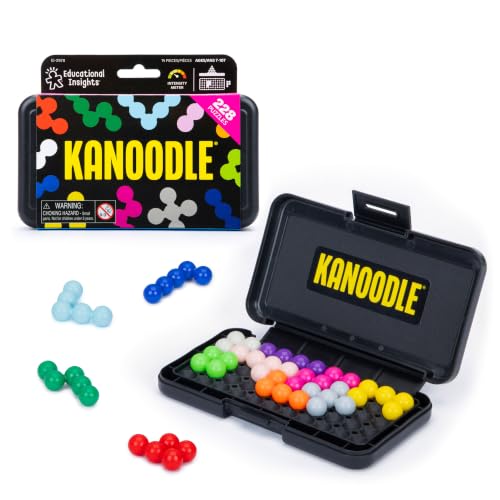
Educational Insights Kanoodle Brain Teaser
What We Like
- 228 puzzles from beginner to expert
- Portable case doubles as game board
- Screen-free single-player logic fun
- Spatial reasoning and critical thinking
Trade-offs
- Single-player only, no multiplayer option
- No included storage bag for loose pieces
With 228 challenges ranging from beginner to expert in both 2D and 3D configurations, this compact puzzle box offers a wide variety of puzzles that can grow with a child’s skill level. The 12 colorful pieces fit into a case that doubles as the playing board, making it easy to take on car rides or store in a backpack without losing pieces. It forces real spatial reasoning and critical thinking, not just rote memory, which is why it’s a strong option for a 10-year-old who needs a challenge that lasts beyond the first week.
With over 11 million copies sold, Kanoodle has become a viral brain teaser for a reason. It packs 228 logic puzzles into a case that doubles as the game board, so it’s easy to toss in a backpack or glove box. The 12 colorful pieces fit snugly inside, allowing play anywhere without losing parts. It’s a solo challenge that builds spatial reasoning and patience, and since there’s no screen involved, it keeps kids entertained quietly on car rides or during downtime.
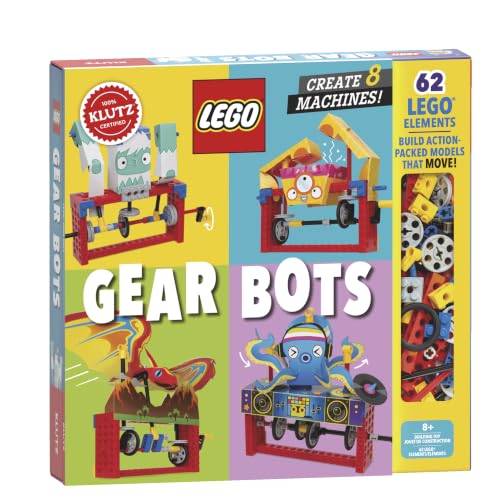
Klutz Lego Gear Bots STEM Activity Kit
What We Like
- Builds 8 physics-driven kinetic creatures
- Includes every LEGO element needed
- Teaches axles, cams, cranks in machines
- 64-page book with step-by-step instructions
Trade-offs
- Only 8 builds limit long-term replay
- Papercraft pieces require careful assembly and handling
Building eight physics-driven kinetic creatures from LEGO Technic bricks and papercraft gives a child a clear look at real mechanical concepts like axles, cams, and cranks. The included 64-page book walks them through each build while explaining how those same parts work in everyday machines, so it’s not just assembly, it’s genuine STEM learning disguised as fun. For a young builder who loves constructing and wants to understand how things move, this kit turns play into a practical lesson in engineering.
The trade-off is that after those eight creatures are built, the papercraft elements can tear if handled roughly, and there’s no endless rebuild factor like with pure brick sets. Compared to the ThinkFun Gravity Maze, which offers a logic puzzle you can replay many ways, this kit delivers a more structured, project-based experience. It’s best for kids who enjoy following a plan to completion and want to see mechanical principles come to life, rather than open-ended tinkering.
ThinkFun Gravity Maze Logic Game

What We Like
- Hybrid of fun and STEM learning
- Collaborative play builds communication skills
- Endless marble run design possibilities
Trade-offs
- At 1.1 lb, less portable than card games
- Only 9 towers limit complexity for older kids
This logic game turns engineering puzzles into a hands-on brain workout for kids 8-12. Each build requires planning tower placement so the marble lands in the target, which sharpens spatial reasoning and problem-solving without feeling like homework. It’s a smart pick for parents who want a screen-free activity that feels more like play than a lesson, especially for kids who enjoy figuring out how things fit together.
After mastering all the included challenges, some kids may wish for more towers to create truly complex runs. Compared to the Kanoodle Brain Teaser, which packs 228 puzzles into a tiny 0.2 lb case, Gravity Maze demands more table space and offers fewer total challenges. Still, the physical marble action and tower building give it a satisfying hands-on feel that pure puzzle tiles can’t match.
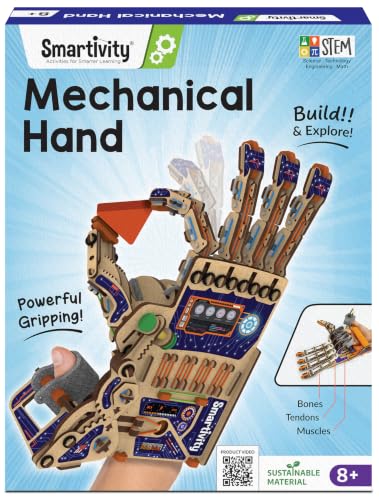
Smartivity Robotic Mechanical Hand STEM Toy
What We Like
- 100% screen-free DIY build
- Lifetime replacement parts included
- Made from sustainable engineered wood
Trade-offs
- Single build limits long-term replay value
- Small wooden pieces require careful handling for smaller fingers
A 0.6-pound wooden mechanical hand that kids build themselves is exactly the kind of hands-on challenge that keeps a 10-year-old away from a screen for hours. The step-by-step manual guides them through assembling real working finger joints, so they learn about levers and tendons without realizing it’s a lesson. It’s a project that rewards patience and curiosity, making it a strong choice for educational play at this age.
Once the mechanical hand is assembled, the play shifts toward demonstration and light manipulation rather than the open-ended replay of a logic game like Gravity Maze. Kids can flex the fingers, grip small objects, and explore how the string-and-pulley system moves each digit, which reinforces the mechanical principles they learned during construction. The step-by-step manual guides builders through a deeply engaging DIY experience, and the 100% screen-free build helps reduce screen time while boosting confidence and creativity. After assembly, the hand becomes a conversation piece or a prop for superhero-themed play, but the activity is more about understanding the mechanism than generating new challenges each time.
Smartivity DIY Pinball Machine Kit

What We Like
- Builds a working arcade pinball machine
- Teaches levers, springs, and momentum
- No glue or screws needed
- Free lifetime replacement for lost parts
Trade-offs
- Assembly required before first play
A 14.6-inch-long pinball machine that you build yourself means this kit delivers something most STEM toys don’t: a game you’ll actually keep playing after the last piece snaps in. The spring launcher, flippers, and scoring targets turn momentum and energy transfer into something you can feel, not just read about. It’s perfect for a kid who wants to understand how things work but also wants bragging rights when they beat the family high score. No screens, no app, just wood, rubber bands, and marbles, and a satisfying click every time the steel ball hits a target.
This kit isn’t a grab-and-go toy. Assembly is part of the experience, and the tabletop size (14.6 inches long) means it needs a clear space to set up. Compared to the Gravity Maze logic game, the Smartivity is a building kit first and a game second. But for a kid who loves the process as much as the payoff, and who might lose a marble or two, the free lifetime replacement parts mean that lost piece never ends the fun.
Sillbird 12-in-1 Solar Robot Building Kit

What We Like
- 12 different builds from 190 pieces
- Solar-powered for outdoor play
- Upgraded larger solar panel
- Clear step-by-step instructions
Trade-offs
- Indoor play requires strong artificial light
- Not suitable for kids who dislike following diagrams
Twelve different models from a single 190-piece set means this kit keeps delivering new challenges long after the first robot is built. The upgraded solar panel captures more sunlight, so the bot moves reliably outdoors without batteries, a clever way to introduce renewable energy through play. For a child curious about how things work, the varying difficulty levels let them start simple and tackle more complex builds as their skills grow. It’s screen-free, hands-on, and built to hold attention across multiple afternoons.
The Sillbird 12-in-1 Solar Robot Building Kit runs on sunlight, so indoor play requires a strong flashlight or lamp, which can be a hassle on cloudy days or in dim rooms. With 190 pieces and 12 possible builds, it rewards patience and careful diagram-following, making it a solid introduction to solar engineering for kids who enjoy a challenge. For children who prefer instant results, a simpler kit might be a better fit.
Product photos
Blue Marble NGSCIMAGIC Educational Toys

What We Like
- 10 mind-blowing magic science experiments
- Includes magic wand and white gloves
- Kid-friendly illustrated experiment guide
- All tools included in the box
Trade-offs
- Only 10 tricks, limiting long-term replay value
- Heavier than some other science kits at 0.8 pounds
Ten experiments that double as magic tricks make this kit a rare blend of showmanship and real science. Your child can make a coin float, change water color, or conjure snow from nowhere, each trick is also a lesson in science. The included magic wand and white gloves let them dress the part, which turns a solo experiment into a performance for friends and family. The illustrated guide doesn’t just walk them through steps; it explains the science that creates the magic and even shares techniques used by real scientists. That means a child gets both the thrill of a magic show and the satisfaction of understanding why it works.
The kit includes exactly 10 magic tricks, so once a child has practiced them all, there’s no new content to explore, unlike the Gravity Maze logic game, which offers 228 challenges for repeat play. However, every required tool and ingredient is packed inside the box, meaning no last-minute trips to the store for supplies. For a young performer who loves wowing an audience rather than replaying the same puzzle, this set provides a complete, ready-to-use experience.
Product photos
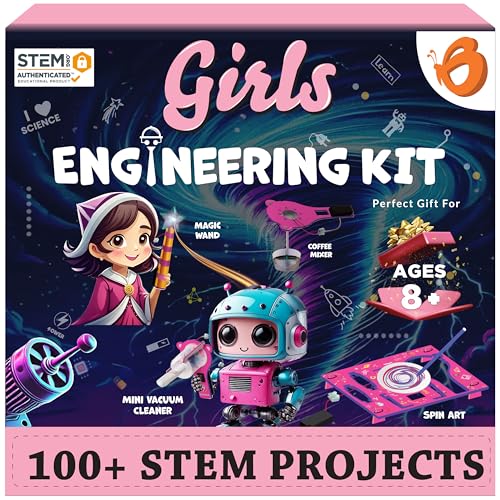
Butterfly EduFields Girls Engineering Science Kit
What We Like
- 100+ STEM projects in one kit
- Designed by IIT engineers
- Screen-free educational play
- Safe, durable, and reusable parts
Trade-offs
- Small box (10x5x1 in) limits storage space
- 100+ small projects, not one big build
With over 100 engineering and science projects packed into a single kit, this set gives a ten-year-old girl enough hands-on experiments to keep her curious for months. Gears, levers, circuits, and working machines turn abstract STEM ideas into something she can build and test herself. The step-by-step guides are designed for ages 8 to 12, so the challenges feel right for a fifth grader who’s ready to move beyond basic science kits. It’s a screen-free way to build problem-solving skills and real confidence, especially for girls who might not see themselves in engineering yet.
The kit’s size and weight are worth noting. At 1.3 pounds and packed in a 10x5x1-inch box, the parts are compact, which means some models feel small in the hand compared to bulkier sets like the Smartivity Robotic Mechanical Hand. That lighter build might not satisfy a kid who wants a single big project to show off. But for a family looking for variety and reuse, projects that can be taken apart and rebuilt differently, this kit stretches further than a single-build toy. It’s a strong pick for the girl who loves to tinker and experiment, not just follow one plan.
Product photos
Teach Tech Mech-5 Coding Robot Kit
What We Like
- Build-it-yourself mechanical coding robot
- Teaches mechanical engineering basics
- Hands-on STEM building project
Trade-offs
- Multiple hours of assembly required
- Not pre-assembled, patience needed
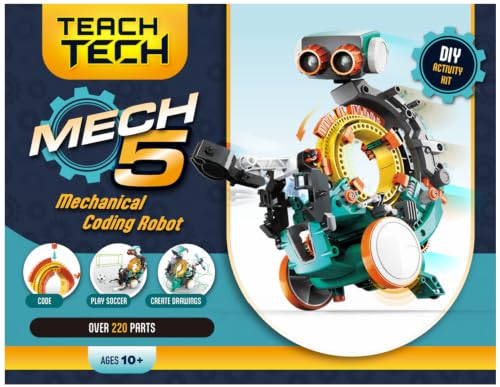
A mechanical coding wheel that you snap buttons onto lets this robot throw, lift, kick, and draw. That hands-on approach makes it a perfect entry point for a child who wants to understand how machines actually work, not just how to swipe a tablet. It’s a proper build, taking several hours to assemble from scratch, so it suits a kid who enjoys following detailed steps and seeing a project through to the end. The focus is on mechanical engineering principles and coding basics, which means the learning comes from the building and the button arrangement.
This is an in-depth STEM building project that takes multiple hours to assemble, so it’s not a toy you open and play with in five minutes. If your child gets frustrated easily or wants instant gratification, a kit with a quicker build might be a better fit. But for a young engineer who likes to understand the ‘why’ behind the movement, the Mech-5’s mechanical coding system is a genuinely different way to learn programming logic. It’s a deliberate, methodical project that rewards patience with a working robot that does real physical tasks.
Product photos
Snap Circuits Explorer SC-100 Kit
What We Like
- 100+ projects from one kit
- No soldering or tools needed
- Color-coded snap-together parts
- Award-winning STEM design
Trade-offs
- Batteries not included
- Projects are pre-defined, not open-ended
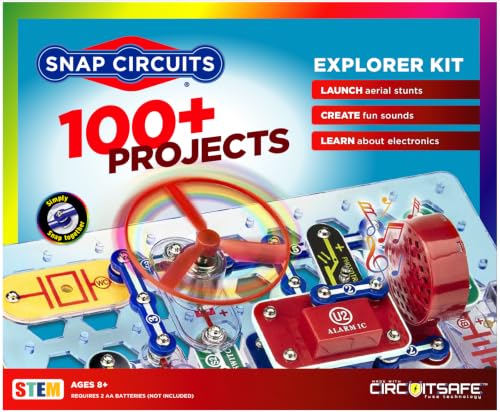
With over 100 projects packed into a single box, this kit gives a ten-year-old a real taste of electrical engineering without needing a soldering iron or any extra tools. The 29 snap-together pieces click onto a plastic grid, so a kid can build a flying saucer that actually takes off and sounds an alarm, then tear it down and start something new. That hands-on, trial-and-error process teaches circuitry basics in a way no app or video can match. For a family on a tight budget who still wants a STEM toy that delivers variety and genuine learning, this is the one that keeps giving.
The 28 snap-together parts let kids build over 100 different electronic gadgets, so the kit stays fresh long after the first flying saucer takes off. Color-coded pieces and a full-color manual mean no soldering or tools are required, which keeps frustration low for beginners. Reviewers note the numbered grid makes assembly straightforward, and the 29 included parts cover enough variety to keep an 8-year-old engaged without overwhelming them.
Product photos
How We Evaluated Educational Toys For 10-Year-Olds
We started by reviewing the specifications and educational claims from each manufacturer. For every kit, we checked the number of projects or puzzles, the materials used, and the recommended age range. We also looked at how each toy teaches a specific skill, whether that’s spatial reasoning, mechanical engineering, or coding logic.
Next, we read patterns in owner feedback from hundreds of reviews. We paid attention to what parents and kids said about replay value, ease of use, and whether the toy actually held a ten-year-old’s attention. We noted common complaints about missing pieces, fragile parts, or confusing instructions.
A research-led evaluation has limits. We don’t test toys in a lab or with kids in a controlled setting. What we offer is a careful analysis of what each toy promises, how it’s built, and what real owners report. This approach helps you narrow the field, but your child’s personality and interests should be the final judge.
What To Look For In Educational Toys For 10-Year-Olds
A ten-year-old’s brain is ready for complex thinking, but their patience might not be. The best educational toys balance challenge with fun, and they respect the fact that a kid this age wants to feel capable, not frustrated.
Look for toys that teach a specific skill, offer enough variety to stay interesting, and are built to survive a ten-year-old’s enthusiasm. Avoid anything too simple or too frustrating.
Skill Focus
The most effective educational toys teach one skill well rather than many skills poorly. A logic puzzle like Kanoodle builds spatial reasoning. A gear kit teaches mechanical principles. A coding robot introduces sequencing and debugging. Choose a toy that targets a skill your child is curious about or needs to practice. For a broad overview of options, check out our guide on STEM toys for 10-year-olds.
Replay Value
A toy that gets played with once and forgotten isn’t educational. Look for kits with multiple builds, puzzles with hundreds of configurations, or projects that can be repeated with different results. The best picks in this guide, like the Sillbird 12-in-1 Solar Robot Kit, offer 12 different builds from a single set of pieces. Single-build kits, like the Smartivity Robotic Hand, trade replay value for a deeper, more satisfying construction experience.
Build Quality and Safety
Ten-year-olds are not always gentle. Look for toys made from durable materials like sustainable engineered wood, ABS plastic, or reinforced cardboard. Avoid kits with tiny pieces that break easily. Check that the toy meets safety standards for the age group. The Snap Circuits kit, for example, uses color-coded, snap-together parts that are nearly indestructible and require no soldering or tools.
- Does the toy require batteries, and are they included?
- Are the pieces large enough to avoid being a choking hazard for younger siblings?
- Can the toy be stored easily, or will it take over the dining room table?
- Are replacement parts available if something gets lost or broken?
- Does the toy require adult supervision or can a ten-year-old work independently?
A good educational toy should challenge a ten-year-old without needing constant adult help. If the instructions are too complex for a fourth-grader to follow alone, it’s probably not the right fit.
Educational Toys For 10-Year-Olds Compared
The table below compares all ten picks across their key features, including the number of projects, the primary skill taught, and whether the toy is single-player or multiplayer.
| Product | Age Range | Weight | Dimensions |
|---|---|---|---|
| Educational Insights Kanoodle Brain Teaser | 8-12 | 0.2 pounds | 5.8 x 3.2 x 0.8 in |
| Klutz Lego Gear Bots STEM Activity Kit | 8-12 years | 1.0 pounds | 10.0 x 1.5 x 10.0 in |
| ThinkFun Gravity Maze Logic Game | 8-12 | 1.1 pounds | 9.4 x 2.8 x 10.5 in |
| Smartivity Robotic Mechanical Hand STEM Toy | 8-14 years | 0.6 pounds | 11.8 x 9.8 x 7.5 in |
| Smartivity DIY Pinball Machine Kit | 8-99 years | 1.2 pounds | 14.6 x 5.3 x 11.0 in |
| Sillbird 12-in-1 Solar Robot Building Kit | 8-13 | N/A | 10.2 x 7.9 x 2.6 in |
| Blue Marble NGSCIMAGIC Educational Toys | 8-12 years | 0.8 pounds | 7.3 x 3.0 x 10.0 in |
| Butterfly EduFields Girls Engineering Science Kit | 8-12 years | 1.3 pounds | 10.0 x 5.0 x 1.0 in |
| Teach Tech Mech-5 Coding Robot Kit | 10+ | 1.0 pounds | 12.4 x 2.5 x 9.1 in |
| Snap Circuits Explorer SC-100 Kit | 8+ | 1.4 pounds | 12.0 x 9.5 x 1.8 in |
Frequently Asked Questions
What is the best educational toy for a 10-year-old who loves building?
The Klutz Lego Gear Bots STEM Activity Kit is the top choice for kids who love following instructions and building mechanical models. It teaches how gears, cams, and cranks create motion through eight different kinetic creatures.
Are there educational toys for 10-year-olds that don’t use screens?
Yes, all ten picks in this guide are screen-free. The Educational Insights Kanoodle Brain Teaser, Smartivity Robotic Mechanical Hand, and Teach Tech Mech-5 Coding Robot all work without any screen time.
What is a good STEM toy for a 10-year-old girl?
The Butterfly EduFields Girls Engineering Science Kit is designed specifically to encourage girls in STEM. It includes over 100 projects created by IIT engineers, covering topics from circuits to mechanical engineering.
How do I choose an educational toy for a 10-year-old who gets bored easily?
Look for toys with high replay value, like the Sillbird 12-in-1 Solar Robot Kit or the Snap Circuits Explorer SC-100 Kit. These offer multiple builds or projects, so there’s always something new to try. Our guide on choosing educational toys can help you match a toy to your child’s attention span.
What is the difference between STEM toys and educational toys?
STEM toys focus specifically on science, technology, engineering, and math skills. Educational toys can also teach logic, creativity, or social skills. All STEM toys are educational, but not all educational toys are STEM. For example, a board game that teaches strategy is educational but not STEM.
The Bottom Line
The Educational Insights Kanoodle Brain Teaser is our best overall pick because it offers 228 puzzles that grow with your child, from beginner to expert. It’s portable, screen-free, and builds the kind of spatial reasoning that helps in math and science. If your child loves logic and puzzles, this is the one to buy.
For hands-on builders, the Klutz Lego Gear Bots kit teaches mechanical engineering through eight fun builds. The ThinkFun Gravity Maze is perfect for kids who love construction with a physical reward. And if you’re on a budget, the Snap Circuits Explorer SC-100 offers over 100 electronics projects at a great value.
The single most important factor is your child’s personality. A kid who loves following instructions will thrive with a structured kit. A creative thinker might prefer open-ended puzzles. Match the toy to the child, not the label, and you’ll find something that educates and entertains. For more ideas, explore our list of the best toys for 10-year-olds.
