
10 Best Board Games For Young Adults in 2026
This post contains affiliate links. As an Amazon Associate, we earn from qualifying purchases.
For game night with friends, CATAN Board Game 6th Edition is our best overall pick because its modular board and resource trading create a different challenge every time. The CMYK Wavelength Party Game works best for large groups that want a fast, laugh-filled session, while CGE Codenames 2nd Edition is the top choice for word association fans.
Young adults often want games that are social enough for a group but still offer real strategy and replayability. The challenge is finding titles that fit a range of player counts and attention spans without feeling too childish or overly complex.
We researched specifications, manufacturer descriptions, expert round-ups, and patterns in owner feedback to build this guide. You will find ten games covering party games, strategy, social deduction, and quick bluffing, each with clear trade-offs so you can match the right game to your group.
Top 10 Board Games For Young Adults in the Market
Certain content that appears on this site comes from Amazon. This content is provided "as is" and is subject to change or removal at any time.
The Best Board Games For Young Adults, Reviewed
CATAN Board Game 6th Edition

What We Like
- Modular board for high replayability
- Resource trading and building strategy
- Supports 3-4 players in 60-90 min
Trade-offs
- No 2-player option without expansion
- Requires 60-90 minutes per session
Resource management drives every decision in this strategy game, as players collect brick, wood, wheat, ore, and sheep to construct roads, settlements, and cities. The goal is straightforward: be the first to reach 10 victory points through careful building and expansion. Competing against up to three opponents means constantly balancing your own development with blocking others’ progress. The modular hexagonal board ensures each session unfolds differently, so no two games play out the same way. Families and strategy enthusiasts alike find the 60- to 90-minute playtime fits neatly into a game night without dragging on.
The game doesn’t support two players out of the box, so smaller groups will need the separately sold CATAN 5-6 Player Extension to expand the player count. But if you regularly have three or four people ready to settle an island, the modular board and resource trading offer plenty of variety. Plan for a session that can last up to 90 minutes.
CMYK Wavelength Party Game

What We Like
- Works with 2-12+ players
- 5-second setup and 1-minute learn
- 30-minute play time
- Telepathic clue-giving mechanic
Trade-offs
- No solo play option
- Not suited for strategy gamers
A 30-minute play time and 5-second setup mean this hits the table faster than almost anything else in the guide. You’re not reading rules for ten minutes or waiting for someone to finish a turn, you’re guessing where a clue falls on a spectrum and laughing at how wrong everyone is. That ‘hot or cold’ mechanic works because it forces quick, creative thinking, and the 2-12+ player count covers everything from a small apartment hangout to a crowded party. It’s the kind of game that gets pulled out when people just want to have fun without a long commitment.
The trade-off is that the abstract guessing game won’t hook everyone the way a narrative or deduction game does. Some groups love the freedom of feeling out a vague spectrum, while others find it frustrating. If your crowd prefers clear right-or-wrong answers or a theme they can latch onto, this might feel too loose. But for a quick, low-stakes icebreaker that gets everyone involved, it’s hard to beat.
Product photos
CGE Codenames Board Game 2nd Edition

What We Like
- Two-team word association race
- Spymaster gives one-word clues
- Assassin ends game instantly
- Revised words and refreshed art
Trade-offs
- Requires at least 4 players
- Assassin rule can end game abruptly
A 5×5 grid of word cards means two teams race to identify their agents, guided only by a spymaster’s one-word clue. That simple constraint forces creative thinking and tight communication, making it a natural fit for game nights where quick wit and shared vocabulary matter more than luck. The new edition includes revised words and refreshed art, so returning players get a refresh without losing the core tension.
The assassin rule adds real stakes: one wrong guess and your team loses instantly, which keeps everyone engaged but can frustrate groups that prefer slower, more forgiving play. Compared to a social bluffing game like One Night Ultimate Werewolf, Codenames trades rapid-fire accusations for deliberate wordplay and team coordination. It’s best for groups of four or more who enjoy word association and creative clue-giving, and not ideal for players who dislike sudden game-ending mechanics.
Product photos
Cards Against Humanity

What We Like
- Version 2.0 adds 150+ new cards
- Includes both standard and alternate rules
Trade-offs
- Not for players who dislike crude humor.
- Expansion packs required for variety.
With 500 white cards and 100 black cards, this party game offers enough combinations to keep a group of young adults entertained for many game nights without repeating the same jokes. The version 2.0 update adds over 150 new cards, which keeps the content feeling fresh even for returning players. It’s best suited for groups who appreciate dark, irreverent humor and don’t mind pushing boundaries, the game’s tagline ‘for horrible people’ is a fair warning about the tone. The included booklet gives you both sensible rules and preposterous alternate rules, so you can tailor the experience to your group’s mood.
The card count, 500 white and 100 black, means you can play many rounds before seeing the same combinations. The version 2.0 update adds over 150 new cards to keep things fresh for returning players. The tagline ‘for horrible people’ gives a fair warning about the tone, so it’s best for groups that enjoy dark, irreverent humor. The included booklet offers both standard and alternate rules, letting you adjust the experience to your group’s mood.
Product photos
Days of Wonder Ticket to Ride

What We Like
- Giant North American map with miniature trains
- Simple rules, easy to learn
- Multiple victory paths for replayability
- Works for casual and competitive play
Trade-offs
- 2-5 player limit excludes larger groups
- No solo or two-player mode limits smaller groups
A 30-60 minute playtime with 2-5 players makes this a perfect centerpiece for a game night that doesn’t drag on. The giant map of North America and miniature trains give it a tangible, satisfying presence on the table, while the simple rules let anyone jump in after a quick explanation. For young adults looking to host a casual evening with friends who aren’t all board game veterans, this hits the sweet spot between accessible and strategic.
Its straightforward mechanics make it a breeze to teach and play, but players who crave the deep, asymmetric complexity of something like Root will find it too simple. The 2-5 player limit means larger groups will need to split into teams or pick a different game. For a cross-country train adventure that’s easy to learn and offers multiple paths to victory, it delivers exactly what it promises.
Product photos
Secret Hitler

What We Like
- Fast-paced deception and betrayal
- Beautiful wooden components
- Solid game boards with foil inlay
- Hidden roles and secret envelopes
Trade-offs
- Requires at least five players to play
- Box is small, but components are dense
Hidden roles and secret envelopes for five to ten players make Secret Hitler a natural fit for groups who love trust-testing chaos. The fast-paced deception means rounds move quickly, so no one sits bored while others scheme. Wooden components and foil-inlaid boards give it a tactile, premium feel that stands up to repeated betrayals. This game thrives on loud accusations and whispered alliances, perfect for young adults who’d rather argue than roll dice.
The catch is the player count: you need at least five, which rules out smaller hangouts. But when you’ve got six or more, the bluffing and backstabbing create a memorable night that lighter party games can’t match. Just don’t expect a quiet evening.
Product photos
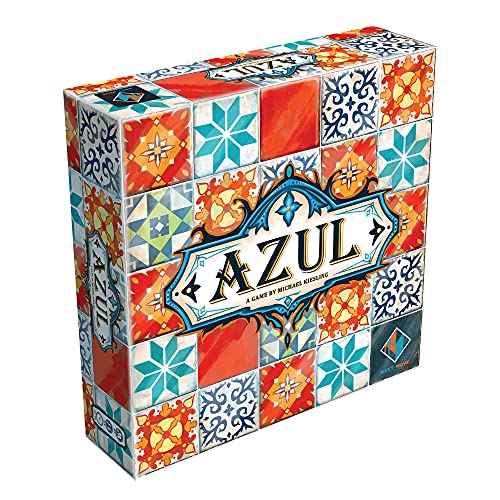
Azul Mosaic Tile-Placement Game
What We Like
- Award-winning Spiel des Jahres 2018
- Beautiful mosaic tile placement
- Easy rules, deep strategy
- Replayable with shifting tile combinations
Trade-offs
- Only supports 2-4 players
- Not suitable for solo play
With 30 to 45 minutes of playtime and support for 2 to 4 players, Azul fits neatly into a game night without dragging on. The tile-drafting mechanic means you’re always balancing what you want against what you think your opponents need, so every round feels like a fresh puzzle. It’s a great pick for young adults who enjoy visual payoff and tactical decisions but don’t want to commit to a two-hour epic.
The 2018 Spiel des Jahres winner Azul limits play to 2-4 players, so larger groups will need a different game. It focuses on individual tile placement and mosaic building rather than party-style chatter, making it ideal for those who prefer quiet, strategic competition over loud social deduction. If your group enjoys direct head-to-head duels or small gatherings, this award-winning board game delivers exactly that.
Product photos
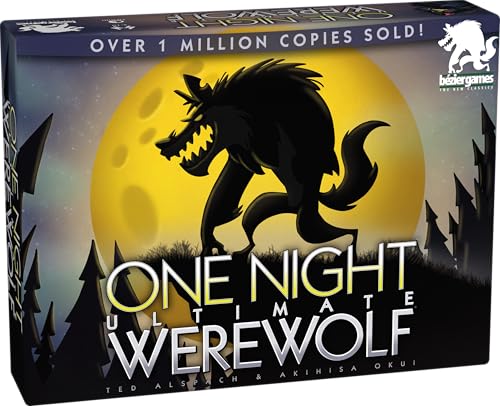
Bezier Games One Night Ultimate Werewolf
What We Like
- 10-minute rounds for fast sessions
- Hidden roles encourage bluffing and deduction
- Easy to learn, high replay value
- Expandable with additional role packs
Trade-offs
- Requires 3+ players to work well
- No solo or two-player mode available
- Relies on group discussion, not for quiet settings
A 10-minute round time means you can play multiple sessions back to back, making this one of the fastest social deduction games for parties or game nights. Each player gets a secret role like Seer or Werewolf, and the whole group has just a few minutes to debate, accuse, and bluff before the reveal. That tight clock keeps the energy high and forces everyone to think on their feet, which is exactly why it works so well for groups with mixed experience levels. The simple rules let newcomers jump in immediately, while the variety of roles keeps veterans coming back for more.
You need at least three people to play, and the game lives or dies on group participation. If your group prefers quiet strategy or has only two players, something like Codenames offers a word-association challenge that works with 4 or more players. But for a lively crowd that loves quick rounds of deception and accusation, One Night Ultimate Werewolf delivers a compact, highly replayable experience that fits in a small bag and hits the table fast.
Product photos
Stonemaier Games Wingspan

What We Like
- 170+ unique bird cards
- Thematically designed bird abilities
- Beautiful, naturalistic bird illustrations
- Includes solo Automa mode
Trade-offs
- No expansion included for additional variety
With 170 unique bird cards and a 6-minute setup, Wingspan turns a quiet afternoon into a surprisingly deep engine-building puzzle. Each bird you play triggers a chain of abilities tied to its real-life behavior, cowbirds lay eggs in other nests, mockingbirds copy their neighbors, so every decision feels connected to the natural world. This one rewards patience and observation, perfect for young adults who want something more thoughtful than a quick party round. The gorgeous bird illustrations by Natalia Rojas and Beth Sobel make the table feel alive, and the solo Automa mode means you can keep playing even when friends aren’t around.
Wingspan demands more attention than something like Codenames or Wavelength. At 60-90 minutes with medium-weight rules, it’s not the game to pull out when half the group is distracted or just wants to laugh. But for the player who enjoys building a quiet, satisfying combo engine and watching their preserve grow, Wingspan delivers a relaxing, rewarding experience that stays fresh through dozens of plays.
Product photos
Leder Games Root

What We Like
- Asymmetric factions drive unique replayability
- Each player role has distinct abilities
- Thematic woodland conflict and area control
- Encourages strategic interaction and narrative
Trade-offs
- Requires 2-4 players, not ideal for solo play
Root is an asymmetric strategy board game where each player controls a different faction with unique abilities, creating an unparalleled level of interaction and replayability. The game supports 2-4 players aged 14 and up, and each session involves adventure, conflict, and area control as players compete to rule the woodland. This design means no two games play the same, rewarding repeated plays and group investment. It’s a deep, strategic experience that appeals to young adults who enjoy layered conflict and storytelling.
This is not a game you can teach in five minutes or finish quickly. Compared to a party game like Codenames, Root requires more time and a dedicated group willing to learn the rules together. If your crew enjoys unraveling complex systems and outthinking each other over a couple hours, Root delivers. But if you need something quick and light for a mixed crowd, you’ll want to save this for your regular game night regulars.
Product photos
How We Evaluated Board Games For Young Adults
Our evaluation is research-based: we examined manufacturer specifications, expert round-ups from board game communities, and patterns in owner feedback. We did not play-test these games ourselves. Instead, we focused on what real owners consistently report about play time, player count, and replay value.
The three criteria that mattered most were player count flexibility, session length, and depth of strategy. Young adults often play in groups that shift size, so we prioritized games that accommodate at least three to five players. Session length matters because a game that drags past 90 minutes can lose a casual group, while a ten-minute bluffing game like One Night Ultimate Werewolf keeps energy high.
Depth of strategy separates a game that gets played once from one that gets played for years. CATAN and Root both reward repeated plays through modular or asymmetric design.
A research-led evaluation has limits. We cannot tell you exactly how a game feels in your hands or how your specific group will react to its social dynamics. What we can do is surface the patterns that matter most. Which games consistently get called “easy to teach”? Which ones do owners say have the most replayability? And which trade-offs keep coming up in real feedback?
For more curated options, check out our guides on board games for college students and board games for teens.
What To Look For In Board Games For Young Adults
Choosing the right board game for a young adult group comes down to matching the game’s mechanics to your group’s preferred style of play. Here are the key factors to weigh before you buy.
The best board game for your group fits your typical player count, preferred session length, and tolerance for complexity. Prioritize replayability and social interaction over component quality alone.
Player Count and Flexibility
The most common complaint in owner feedback is that a game only works for a narrow player range. If your group often has six or more people, a game like Secret Hitler (minimum five) or Wavelength (up to twelve) will get more use than a strict four-player game. For smaller groups of two to four, Azul or Wingspan are better fits. Games that support variable player counts give you more value over time.
Session Length and Pacing
Young adult schedules are unpredictable. A game that takes 90 minutes might work for a planned game night but flop when friends drop by for an hour. Quick-play games like One Night Ultimate Werewolf (ten minutes) or Wavelength (30 minutes) fit casual settings. Longer strategy games like CATAN or Root work best when everyone has agreed to a dedicated session. Look for games that match the energy of your typical gathering.
Depth and Replayability
A game that feels the same every time will collect dust after three plays. Replayability comes from modular boards (CATAN), asymmetric factions (Root), or a large card pool (Wingspan with its 170+ bird cards). Strategy depth also matters. Azul is easy to learn but offers layers of tactical decisions that keep experienced players engaged. For groups that rotate, games with clear rules and quick teach times (Ticket to Ride) are safer bets than complex rulebooks.
- Check the listed player count against your typical group size, games that say “3-4” are not flexible.
- Read owner feedback about how long the first play takes versus subsequent plays, learning time is real.
- Look for expansions or variant rules that extend the game’s life without requiring a new purchase.
- Consider the social dynamic: bluffing games (Secret Hitler) require confrontation, while cooperative games require teamwork.
A game that fits your group’s player count and preferred play time will get played far more often than a game with better components but a worse fit.
Board Games For Young Adults Compared
The table below compares all ten games by player count, play time, and core mechanic so you can quickly spot which ones fit your group.
| Product | Players | Play Time | Weight |
|---|---|---|---|
| CATAN Board Game 6th Edition | 3-4 | 60-90 min | 2.6 lb |
| CMYK Wavelength Party Game | 2-12+ | 30 minutes | 2.5 lbs |
| CGE Codenames Board Game 2nd Edition | 4+ | N/A | 1.2 pounds |
| Cards Against Humanity | N/A | N/A | 2.2 pounds |
| Days of Wonder Ticket to Ride | 2-5 | 30-60 min | 2.8 lb |
| Secret Hitler | N/A | N/A | 2.4 pounds |
| Azul Mosaic Tile-Placement Game | 2-4 | 30-45 min | 2.5 lb |
| Bezier Games One Night Ultimate Werewolf | N/A | 10 minutes | 0.6 pounds |
| Stonemaier Games Wingspan | 1-5 | 60-90 min | 2.2 pounds |
| Leder Games Root | 2-4 | N/A | 2.2 lb |
Frequently Asked Questions
What is the best board game for a group of four young adults?
CATAN is the best overall choice for four players because its modular board and resource trading create high replayability in a 60-90 minute session. Azul and Ticket to Ride also work well for four players, with Azul offering faster rounds and Ticket to Ride providing simpler rules.
What is a good party game for a large group of young adults?
CMYK Wavelength Party Game works with up to twelve players, has a five-second setup, and takes about 30 minutes to play. Its telepathic clue-giving mechanic keeps everyone engaged, making it a strong choice for larger gatherings where you want minimal downtime.
Are there board games for young adults that are quick to learn?
Ticket to Ride has simple rules that most players grasp in minutes, and One Night Ultimate Werewolf takes about the same time to explain as it does to play a round. Both games let new players join without a long rules explanation.
What board games for young adults are best for couples or two players?
Azul and Wingspan both support two players and offer meaningful strategy without requiring a larger group. Wingspan also includes a solo Automa mode for single-player sessions. CATAN requires an expansion for two-player play.
What is the most replayable board game for young adults?
Root offers the highest replayability through its asymmetric factions, each player has a completely different set of abilities and win conditions, so every game plays out differently. CATAN’s modular board also ensures no two games are the same.
The Bottom Line
For most young adult groups, CATAN Board Game 6th Edition is the best overall pick. Its blend of strategy, trading, and a board that changes every game makes it a reliable choice for groups of three to four who want a session that feels substantial without dragging past 90 minutes.
If your group leans toward larger, louder gatherings, the CMYK Wavelength Party Game delivers fast fun with no setup. For two-player strategy sessions, Azul and Wingspan both shine. Wingspan also offers a solo mode for when you want to play alone.
The single most important factor is matching the game to your group’s typical player count and preferred session length. A game that fits those two constraints will get played, and a game that doesn’t will stay on the shelf. For more curated recommendations, browse our guides on best party games for adults, strategy board games, and modern board games.
