
Toy Subscription Boxes Pros and Cons: Are They Worth It?
This post contains affiliate links. As an Amazon Associate, we earn from qualifying purchases.
Toy subscription boxes pros and cons are straightforward: age-matched toys arrive every two or three months without you researching anything, but the cost recurs, the pieces pile up, and one subscription brand carries two CPSC recalls. Wirecutter tested 12 boxes over five months and picked Lovevery and KiwiCo.
The toy subscription boxes pros and cons recalls are the part worth slowing down for. Both involved small parts working loose from toys aimed at babies, the Basket with Balls drew two reports and the Toy Box with Bins drew five, and neither injured anyone. That combination is exactly why they’re easy to miss.
What follows: how the delivery schedule really works, what independent testers found, what a safety label actually certifies, and the storage math that decides whether a box survives past month three.
Key Takeaways
- Delivery runs every two or three months, not monthly, for nearly every box in the category.
- Wirecutter named Lovevery and KiwiCo the best of 12 boxes tested across five months in late 2024.
- Lovevery’s lock-in is disputed: Good Housekeeping says you must subscribe to get even one box, while A Life Well Consumed says you can purchase just one kit and cancel recurring shipments at any time.
- “ASTM certified” is disputed: ASTM F963-17 says it does not cover product performance or quality except as related to safety, while consumer-facing roundups treat “ASTM certified” as a safety signal.
- Two CPSC recalls hit Monti Kids in 2022 and 2023, both for small parts.
How Often Do Toy Subscription Boxes Actually Arrive?
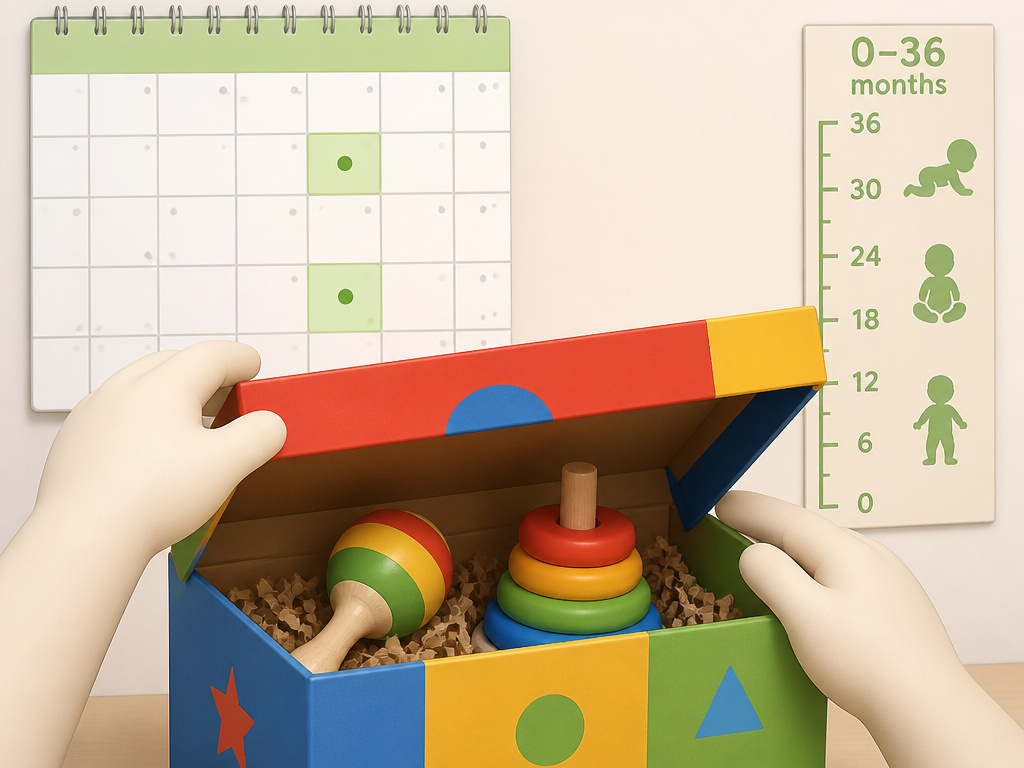
Two or three months is the typical gap between boxes. Wirecutter puts the general range at every two or three months.
The typical toy subscription box ships every two or three months, timed to a child’s age rather than a calendar month. Lovevery sends every two months from birth to twelve months, then every three months from one to four years. KiwiCo’s Panda Crate ships every two months for ages 0 to 36 months.
Age drives the schedule. Lovevery’s kits run from birth to age four, KiwiCo’s Panda Crate covers 0 to 36 months, and Lalo’s boxes stop at age two. Wirecutter’s overall range for the category is newborn up to age three or four.
That banding matters more than the toy count. A box aimed two months ahead of your kid gets used. A box aimed a year ahead goes back in the carton. Age banding is the whole sorting mechanism, which is why a best toy subscription boxes by age view of the category can be useful.
| Brand | Delivery Cadence
Frequently Asked Questions
Can you pause a toy subscription instead of canceling it?
Most major brands let you skip an upcoming shipment rather than close the account entirely, which helps during months when your child is still working through the last box. Pausing usually has to happen before a cutoff date tied to your billing cycle, so check the account page a week or two ahead. Skipping repeatedly can sometimes trigger a minimum-commitment clause, so read the terms before you lean on it as a long-term strategy.
Do the toys hold resale value once your child outgrows them?
Partially. Wooden and silicone items from premium brands often sell on resale marketplaces for a meaningful fraction of the original price because the materials survive heavy use. Cheaper plastic kits and anything with missing pieces tend to move slowly or not at all. If resale matters to you, keep the original packaging and instruction cards, since buyers pay more for complete sets.
Is a subscription cheaper than buying equivalent toys separately?
Rarely on a per-toy basis for the toy subscription boxes pros and cons, but the comparison is not quite fair. You are also paying for curation, age timing, and the research you did not have to do, and those have real value for busy parents. Buying secondhand or mixing a few open-ended toys usually costs less overall. The subscription wins on convenience and on not accumulating random mismatched items.
What should you do if a toy in your box gets recalled?
Stop using the item immediately and check the CPSC recall notice for the exact remedy, which is typically a refund or replacement part. Most brands contact subscribers directly by email, but do not wait for that message if you spot a problem yourself. Keep the toy out of reach until you have completed the return or repair steps, and photograph any loose or broken pieces in case you need to document the issue.
