
10 Best Ball Pits For Baby in 2026
This post contains affiliate links. As an Amazon Associate, we earn from qualifying purchases.
The best overall ball pit for baby is the Delta Children Ladybug Soft Ball Pit, thanks to its GREENGUARD Gold certified foam walls, machine-washable slipcover, and the inclusion of 50 play balls. For families on the go, the Infantino Pop-Up Ball Pit is our best portable pick, while the Little Tikes Sweet Spaces Inflatable Ball Pit offers a modern, easy-clean option with 250 balls included.
A ball pit can be a wonderful tool for sensory play and motor skill development, but the right choice depends heavily on your space, your child’s age, and your cleaning tolerance. A pit that’s too shallow for an active toddler or too bulky for a small apartment will end up in the closet rather than in the living room.
This guide is built on research: we analyzed specifications, manufacturer documentation, expert round-ups on child development, and patterns in owner feedback to find the best ball pits for baby. We focused on safety certifications, portability, ease of cleaning, and the number of balls included to help you choose with confidence.
Top 10 Ball Pits For Baby in the Market
Certain content that appears on this site comes from Amazon. This content is provided "as is" and is subject to change or removal at any time.
The Best Ball Pits For Baby, Reviewed
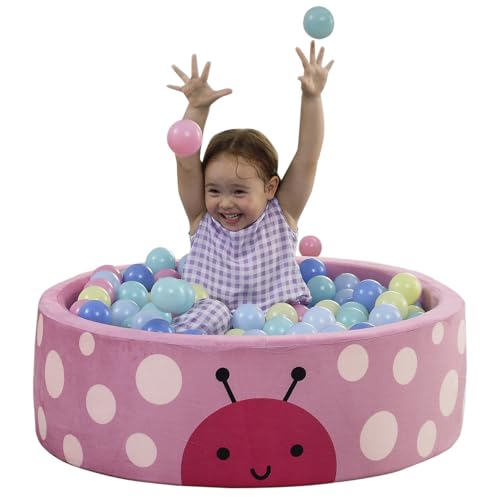
Delta Children Ladybug Soft Ball Pit
What We Like
- 50 play balls included
- Machine-washable slipcover
- GREENGUARD Gold certified for low emissions
- Thick foam walls for safety
Trade-offs
- Only 12 inches tall, shallow for older toddlers
- Recommended for ages 2+, not for younger babies
GREENGUARD Gold Certified, this foam ball pit meets strict chemical emissions standards for cleaner indoor air. It arrives with 50 play balls included, so setup is immediate. The removable ladybug slipcover is machine washable, making cleanup simple.
The trade-off is depth: at 12 inches tall, it’s fine for seated play but won’t contain a rambunctious 3-year-old who likes to flop over the walls. Compared to the pop-up Infantino model, the foam construction is heavier and more stable, but the Infantino is lighter and easier to store. If you value a fixed, durable play space with certified low emissions over portability, this is the one to get.
Product photos
Infantino Pop-Up Ball Pit

What We Like
- Pops up in seconds for instant play
- Includes 50 colorful balls
- Lightweight 1.7 lb for easy carrying
- Comes with storage bag for travel
Trade-offs
- 12-inch walls are low for older toddlers
- Only 50 balls for a 35-inch pit
At just 1.7 pounds and folding flat in seconds, this is the ball pit you actually take to Grandma’s or the park. The 35-inch floor gives a baby plenty of room to roll and reach, and the 50 included colorful balls mean you don’t have to buy extras right away. It suits parents who want a portable play zone for on-the-go use, not a permanent fixture in the living room.
At 1.7 pounds, this pop-up ball pit is the lightest option among similar-sized pits. The Delta Children Ladybug Soft Ball Pit weighs 5.4 pounds, making it the easiest to toss in a car trunk or carry to a park. The 12-inch walls are fine for infants and younger toddlers, but once a child starts standing or climbing, the lightweight frame may tip if they lean hard on the sides. It’s a trade-off: you get unmatched portability for trips and quick setups, but it’s not built for rough-and-tumble play.
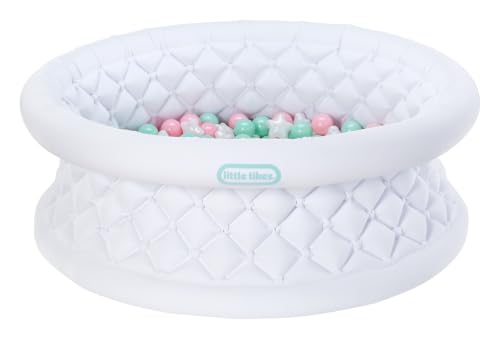
Little Tikes Sweet Spaces Inflatable Ball Pit
What We Like
- Includes 250 colorful balls
- Smooth wipeable surface for easy cleaning
- Compact and portable design
- Sleek white modern look
Trade-offs
- Low 8-inch walls limit active play
- Compact size limits play for multiple kids
This Little Tikes ball pit comes with 250 balls included, so you can start sensory play right away without buying extra balls. The smooth, wipeable surface makes cleanup quick after snacks or spills, and the compact size fits easily into a corner of a room or a car for travel. It’s designed for children 12 months and older who enjoy independent play.
This pit is noticeably smaller than the 35-inch-wide, 12-inch-tall Infantino Pop-Up Ball Pit, at just 8 inches tall and 18 inches wide, so older toddlers may feel cramped or climb out easily. It’s best for babies and younger toddlers who are still content to sit and explore rather than roll around. The inflatable walls are easy to deflate and pack away, but they’re less sturdy than the padded foam walls of the SHJADE Foam Ball Pit.
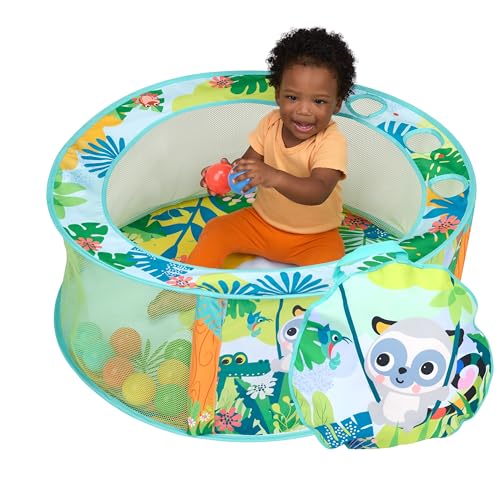
Bright Starts Rowdy Rainforest Stow & Go Ball Pit
What We Like
- Folds small with carry bag included
- Lightweight at just 1.2 pounds
- Mesh panels for airflow and visibility
- Three ball-drop openings for motor play
Trade-offs
- Only 20 balls included, fewer than most
- 31.5-inch diameter is tight for older toddlers
- No padding or foam walls for bump protection
At just 1.2 pounds and folding down to the size of a small tote bag, this ball pit is built for families who don’t have a dedicated playroom. The included carry bag means you can pack it up after playtime and stash it under a couch or in a closet, or toss it in the trunk for visits to grandma’s house. The mesh panels let you keep an eye on your baby while they explore the three ball-drop openings, which encourage reaching and grasping. It’s a thoughtful design for small apartments, RVs, or any space where a bulky playpen just won’t fit.
With just 20 balls and a 31.5-inch diameter, this ball pit is designed for one baby to sit and play, not for a toddler to dive into a sea of color like the 35-inch circle with 50 balls from the Delta Children Ladybug Soft Ball Pit. It folds down small and comes with a carry bag, so it’s easy to stash or take along. That makes it a practical choice for small spaces or travel, but keep in mind it’s a compact, sit-and-play space for infants, not a romping pool for older kids.
SHJADE Foam Ball Pit

What We Like
- Removable, washable zippered cover
- Versatile as toy storage or decor
- Skin-friendly fabric surface
Trade-offs
- Balls sold separately
The removable, washable cover unzips easily so you can clean up after messy play without wrestling with the whole pit, a real sanity saver for daily use. It’s a great fit for parents who want a permanent, sturdy play zone that doubles as a toy bin or photo backdrop, and the skin-friendly fabric means babies can roll around without irritation.
Because it’s vacuum-packed, the foam can take up to three weeks to fully round out, though you can speed it up with a hairdryer or by stuffing it with pillows. Compared to the Infantino Pop-Up Ball Pit, which includes 50 balls, this one asks you to buy balls separately and wait for the foam to settle. If you prefer a setup with balls included, the Infantino is an option; if you want a soft, washable foam pit, this is a good choice.
Product photos
Wilwolfer Foam Ball Pit

What We Like
- Soft memory foam walls protect from impact
- Thick walls for safety and durability
- Stylish design suitable for photography
- Encourages motor skill development
Trade-offs
- Balls not included; requires at least 200
- Lower walls than some competitors (10.5 in)
A 33.5-inch round play area made of soft memory foam gives your child a cushioned, impact-absorbing space that is highly elastic and resists deformation. The thick walls are designed to protect toddlers from bumps, making this a practical choice for parents who value safety and comfort. The neutral gray finish works well in any room, and the design is popular for photography or decoration.
The biggest thing to know is that balls are sold separately, and you’ll need at least 200 to fill it, so factor that into the total cost. The pit’s soft memory foam walls are thick enough to protect toddlers from impact, making it a safe spot for play. If you already have balls or want a clean gray look for photos, this foam design delivers comfort without the extra bulk.
Product photos
QPAU 3-in-1 Inflatable Bounce House

What We Like
- 3-in-1 bounce house, ball pit, playpen
- Full safety net with zippered door
- Phthalate-free, puncture-resistant PVC
- Indoor and outdoor use
Trade-offs
- At 34.6 inches tall, it needs ceiling clearance indoors
- No balls included for the ball pit feature
A 43-inch-wide inflatable that works as a bounce house, ball pit, and playpen gives toddlers a contained space for bouncing, crawling, and imaginative play without taking over the whole room. For kids ages 1-3 who are still developing motor skills, the full mesh safety net and zippered door let you keep an eye on them while they explore. The phthalate-free PVC is soft on baby skin and tough enough to handle daily use, making it a versatile option for families who want one piece of gear that adapts as their child grows.
At nearly 35 inches tall, it won’t fit under a low ceiling or in a tight apartment corner without some planning. Compared to the Delta Children Ladybug Soft Ball Pit, which sits just 12 inches high and takes up less vertical space, the QPAU offers more active play but demands more room. If you have a playroom or a basement with decent headroom, this inflatable gives you a bounce house, ball pit, and soft playpen in one package, a solid multi-function setup for active toddlers.
Wilhunter Pop Up Ball Pit Tent

What We Like
- Pop-up setup in seconds
- 50 balls included
- Mesh sides for ventilation
- Lightweight at 2.2 lb
Trade-offs
- 36-inch height limits crawling toddlers
- Mesh sides let small toys fall out easily
With 50 balls included and a 43-inch wide pop-up tent, you can have a play space ready in seconds without hunting for extra accessories. The mesh design keeps the interior ventilated and breathable, while the tie-up curtains give parents a clear view of their kids at play. It’s a dedicated ball pit that doubles as a cozy hideaway for little ones.
At 36 inches tall, this tent offers a vertical enclosure that may feel limiting for children who are taller or more active. Compared to the Infantino Pop-Up Ball Pit, which sits at just 12 inches tall, the Wilhunter provides more vertical space but a different play experience. It’s a pop-up option that prioritizes quick setup and included balls over a low, open design.
Product photos
Hikiddy Large Ball Pit

What We Like
- 44-inch diameter fits 2-3 children
- Pop-up playmat with memory steel frame
- Sets up and folds in seconds
- Includes storage bag for portability
Trade-offs
- Balls not included, must buy separately
- At 12 inches tall, shallow for older toddlers
A 44-inch diameter gives this ball pit a large play area that comfortably fits two or three children, making it a good choice for playdates or siblings. The pop-up playmat uses high-strength memory steel holders to keep its shape during play, and the whole setup folds into its storage bag in seconds for easy transport or storage.
The trade-off for that generous size is that balls are sold separately, and at 12 inches tall the walls are on the lower side. For babies just learning to sit, that’s fine, but a more mobile toddler might step out easily. If you already have a stash of balls and want maximum floor space for multiple little ones, the Hikiddy delivers.
Product photos
Bright Starts 5-in-1 Your Way Ball Play

What We Like
- Grows from newborn to toddler play
- 40 balls with carrying case included
- Musical elephant toy detaches for travel
- Machine washable mat, wipeable toys
Trade-offs
- Smaller play area than typical ball pits
- Only 40 balls included, fewer than some
- Mesh canopy limits full ball-pit immersion
This 5-in-1 design converts from a play mat into a ball pit with a mesh canopy, so you get a newborn-friendly gym that later becomes a contained ball play space. The 40 balls, detachable musical elephant, and seven take-along toys mean there’s enough variety to keep a baby engaged from day one through toddlerhood. It suits parents who want one piece of gear that stretches across early developmental stages without cluttering the nursery.
The play area is 26.8 by 27.6 inches, making it more compact than a dedicated ball pit like the 35-inch-wide Delta Children Ladybug Soft Ball Pit. That smaller footprint means it fits neatly in a corner of a living room or nursery, and the included mesh canopy lets parents drop balls through a hole for interactive play. If you’re after a multi-use station that transitions with your child, this Bright Starts model delivers; if you want a big, classic ball-pit experience from the start, a larger dedicated pit may be a better fit.
How We Evaluated Ball Pits For Baby
We started by reviewing the specifications and safety certifications of dozens of ball pits, then cross-referenced those details with expert round-ups on infant play and motor skill development. Patterns in owner feedback helped us understand which designs hold up to daily use and which features parents actually appreciate, versus what looks good on a box.
Four criteria mattered most. First, safety and materials, we prioritized pits with GREENGUARD Gold certification, non-toxic PVC, and soft foam walls. Second, portability and storage, a pit that folds small or pops up quickly is far more useful in a real home. Third, ease of cleaning, machine-washable covers and wipeable surfaces save parents hours. Fourth, included balls and capacity, some kits arrive ready to play, while others require a separate purchase of pit balls.
A research-led evaluation has limits: we didn’t test these pits with children in a lab. What we offer is a thorough analysis of what’s available, backed by expert consensus on safe materials and practical design, so you can narrow your options before you buy.
What To Look For In Ball Pits For Baby
Choosing a ball pit means balancing safety, size, and how much cleaning you’re willing to do. The best pit is one that fits your floor plan, your child’s age, and your tolerance for stray balls under the couch.
Look for a ball pit with certified non-toxic materials and walls tall enough to contain your child’s play. It should also have a washable or wipeable surface and enough balls to create a proper play zone, typically 50 to 200 depending on the pit’s diameter.
Safety Certifications and Materials
The most important factor is what your baby touches. Look for GREENGUARD Gold certification, which tests for over 10,000 chemicals and ensures low emissions. Foam pits should have a non-toxic, phthalate-free cover, and inflatable pits should be made from puncture-resistant PVC. The pros and cons of ball pits include the risk of off-gassing from cheap materials, so a certified pit gives you real peace of mind.
Size, Depth, and Age Appropriateness
A ball pit that’s too shallow won’t contain play, and one that’s too deep can be hard for a baby to get in and out of. For babies under 12 months, walls around 8 to 12 inches are ideal. For toddlers 18 months and older, look for walls at least 12 inches tall. The diameter matters too, a 35-inch pit works for one child, while a 44-inch pit fits two or three. If floor space is tight, consider playpens for small spaces that double as a play zone.
Ease of Cleaning and Portability
Babies drool, spill, and track crumbs into everything. A ball pit with a machine-washable slipcover or a wipeable inflatable surface will save you from a smelly mess. Pop-up designs that fold into a carry bag are great for travel, while foam pits tend to be heavier but more durable. If you plan to move the pit between rooms or take it to a grandparent’s house, weight and setup time become critical factors.
- Check whether balls are included or must be purchased separately, a pit without balls can cost more than a complete set.
- Measure your floor space before buying, a 44-inch pit needs a clear area.
- Look for mesh panels or ball-drop openings that add motor skill challenges.
- Verify the recommended age range, some pits are not suitable for babies under 12 months.
- Consider how the pit stores, does it fold flat, pop down, or require deflation?
A good rule of thumb: the easier it is to clean, the more often your child will actually use it.
Ball Pits For Baby Compared
The table below compares the ball pits across the criteria that matter most, size, included balls, cleaning method, and portability, so you can see at a glance which model fits your home.
| Product | Dimensions | Weight | Balls Included |
|---|---|---|---|
| Delta Children Ladybug Soft Ball Pit | 35" x 35" x 12" | 5.4 pounds | 50 |
| Infantino Pop-Up Ball Pit | 35 x 35 x 12 in | 1.7 lb | 50 colorful balls |
| Little Tikes Sweet Spaces Inflatable Ball Pit | 18 x 23 x 8 inches | N/A | 250 sprinkle balls |
| Bright Starts Rowdy Rainforest Stow & Go Ball Pit | 31.5 inches diameter | 1.2 pounds | 20 balls |
| SHJADE Foam Ball Pit | 35.4" x 35.4" x 11.8" | 4.5 lb | No |
| Wilwolfer Foam Ball Pit | 33.5" x 33.5" x 10.5" | 4.3 lb | No |
| QPAU 3-in-1 Inflatable Bounce House | 43.3 x 43.3 x 34.6 in | 9.6 lb | N/A |
| Wilhunter Pop Up Ball Pit Tent | 43 x 43 x 36 in | 2.2 lb | 50 balls |
| Hikiddy Large Ball Pit | 44 inches diameter | 4.8 pounds | N/A |
| Bright Starts 5-in-1 Your Way Ball Play | 26.8 x 27.6 x 19.7 in | 2.8 lb | 40 |
Frequently Asked Questions
What age is a ball pit suitable for a baby?
Most ball pits are recommended for babies 6 months and older, once they can sit up with support. Always check the manufacturer’s age recommendation, as some pits with low walls or small parts are not safe for younger infants.
How many balls do I need for a baby ball pit?
A standard 35-inch pit needs at least 50 balls for a thin layer, while a 44-inch pit needs 200 or more for proper coverage. If your pit doesn’t include balls, you can buy ball pit balls separately to reach the right volume.
Are ball pits safe for babies?
Ball pits are safe when made from non-toxic, phthalate-free materials and used under adult supervision. Check for GREENGUARD Gold certification and avoid pits with small parts that could become choking hazards. Always supervise play and regularly clean the balls and the pit.
How do you clean a ball pit?
Foam pits with removable, machine-washable slipcovers are the easiest to clean. Inflatable pits can be wiped down with a mild soap solution. Balls can be cleaned in a mesh laundry bag on a gentle cycle or wiped by hand. Spot-clean regularly to prevent mold and mildew.
Can a ball pit help with baby development?
Yes, ball pits support sensory exploration, motor skill development, and hand-eye coordination. Reaching for and grasping balls helps strengthen fine motor skills, while the colorful environment encourages visual tracking and cause-and-effect learning. For more on the developmental benefits, see our guide to ball pits.
The Bottom Line
The Delta Children Ladybug Soft Ball Pit is our best overall pick for good reason: it combines GREENGUARD Gold certified safety, a machine-washable cover, and 50 included balls in a sturdy foam design. It’s the right choice for parents who want a safe, durable pit that’s easy to keep clean and ready to play with straight out of the box.
If you need something more portable, the Infantino Pop-Up Ball Pit packs down to 1.7 pounds and comes with a storage bag, making it ideal for travel or small apartments. For families with multiple children, the Hikiddy Large Ball Pit offers a 44-inch diameter that fits two or three kids, though you’ll need to buy balls separately.
The single most important factor when buying a ball pit for your baby is safety certification. A pit that’s free of harmful chemicals and built with soft, durable materials will give you the confidence to let your little one explore, roll, and play without worry.
