
10 Best Toys For 18 To 24 Month Old in 2026
This post contains affiliate links. As an Amazon Associate, we earn from qualifying purchases.
The best overall toy for this age is the VTech Chomp and Count Dino, a pull-along dino that teaches colors, shapes, and counting through a fun feeding game with over 130 sounds and phrases. For toddlers on the move, the Fisher-Price Corn Popper rewards every step with popping balls and sound. And the LeapFrog Learning Friends 100 Words Book builds vocabulary in both English and Spanish.
Between 18 and 24 months, toddlers shift from crawling to walking, babbling to talking, and solitary play to simple interaction. The right toy meets them where they are, encouraging that first confident stride or that first spoken word. But with so many options, it’s easy to end up with a toy they outgrow in a week.
This guide is research-based, drawing on manufacturer specifications, expert round-ups on child development, and patterns in owner feedback. We organized 10 picks by specific needs, walking support, fine motor skills, language development, and creative play, so you can match the toy to your toddler’s current stage.
Top 10 Toys For 18 To 24 Month Olds in the Market
Certain content that appears on this site comes from Amazon. This content is provided "as is" and is subject to change or removal at any time.
The Best Toys For 18 To 24 Month Olds, Reviewed
VTech Chomp and Count Dino
What We Like
- 130+ songs, melodies, sounds and phrases
- Recognizes eight colored food pieces
- Teaches colors, shapes, food, counting
- Pull-along design moves with toddler
Trade-offs
- Demo batteries only, need new for regular use
- No color or shape sorting for the food pieces
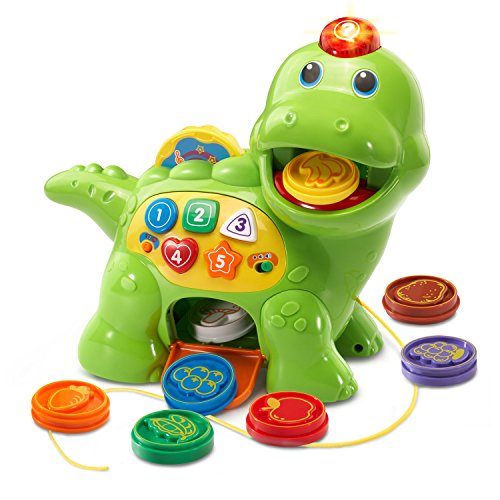
Eight brightly colored food pieces that the dino actually recognizes as you feed him means this toy turns snack-time pretend play into a real learning conversation. With over 130 songs, melodies, and phrases packed inside, it keeps a one-year-old engaged long enough for you to sip your coffee while they sort shapes, count bites, and answer Dino’s questions. The pull-along feature means it moves with them as they cruise around the room, so the learning doesn’t stop when they stand up. For a toddler who loves cause-and-effect and is starting to name colors and numbers, this is the one that does the most with the least fuss.
The trade-off is that the demo batteries are just enough to get you through the first afternoon, so you’ll want fresh ones handy before the novelty wears off. Compared to the Fisher-Price Corn Popper, which is a push-along toy with ball-popping action, the VTech Chomp and Count Dino offers interactive food recognition and learning responses. For most families, the choice depends on whether the child prefers seated interactive play or gross motor movement.
Fisher-Price Corn Popper Push-Along Toy

What We Like
- Colorful balls pop with pushing motion
- Encourages walking with sound feedback
- Strengthens gross motor skills
- Introduces cause and effect
Trade-offs
- Assembly required before first use
- No volume control for the popping sounds
The popping action that happens when a toddler pushes the toy forward provides immediate sound and motion feedback. That direct cause-and-effect loop helps introduce baby to cause and effect, as stated in the product features. At 1.8 pounds, the toy is light enough for a small child to push, and the 22.5-inch length gives them something to hold onto while walking. This toy suits families who want a simple push toy that encourages walking with fun popping sounds and action.
The biggest trade-off is that you’ll need to put it together yourself, it’s a two-piece assembly, so plan on a few minutes with the screwdriver before handing it over. Compared to the VTech Sort and Discover Activity Wagon, which weighs nearly 4 pounds and offers multiple activity panels, the Corn Popper is far lighter and more focused on the walking motion itself. But that also means it lacks the stationary play options the wagon provides. If your toddler is still finding their feet and you want a toy that literally pops with encouragement, this one earns its place in the cart.
Product photos
Fisher-Price Little People See 'n Say

What We Like
- Teaches animal names and sounds
- Quiz mode tests animal knowledge
- Music note plays fun songs
- Strengthens fine motor skills
Trade-offs
- Only 2 pages of animals limits variety
- At 1.1 lb, light but not pocket-sized
- No volume control or off switch listed
Two pages of animals with a pointer and lever mean this toy turns a simple pull into a lesson in cause and effect. Your toddler points the arrow at a picture, pulls the lever, and hears the animal’s name and its sound, then flips the page for a fresh set. The quiz mode calls out questions, giving your child a chance to prove what they’ve learned, and the music note plays fun songs about the animals. At just over a pound, it’s light enough to carry from room to room but sturdy enough to survive a drop. For a toddler who’s starting to connect words with pictures, this is a focused way to build vocabulary without a screen.
Two pages of animals with sounds and phrases teach animal names and their sounds, so a toddler can master that set through repetition. The lever-and-pointer design means no menus or accidental button presses, just clear feedback every time. If your child thrives on that kind of predictable interaction, this toy delivers. For more variety, you could pair it with the Learning Resources Snap-n-Learn Matching Dinos.
VTech Sort and Discover Activity Wagon

What We Like
- Five-sided activity wagon with shape sorting and gears
- Push or pull triggers music and sound effects
- Folds flat for storage with extra play side
- Room to haul toys, snacks, and treasures
Trade-offs
- At 3.9 lb, heavier than some push toys for toddlers
- Demo batteries included; new ones needed for regular use
A wagon that’s 19.1 inches wide gives your toddler four sides of activities, shape sorting, gear spinners, mazes, and peek-a-boo doors, plus a bonus fifth play surface when you fold the handle flat. That’s a lot of variety for a kid who’s just learning how things fit and move. The push-and-pull motion rewards them with cheerful music and sound effects, so every trip across the living room feels like a little adventure. It also doubles as a toy hauler, letting them pack along snacks or stuffed animals as they explore. For a child in the 12-to-36-month age range who’s on the move and hungry for cause-and-effect play, this wagon delivers more distinct activities than most single-purpose push toys.
This wagon weighs nearly four pounds, so a new walker may find it a bit of a workout to push across carpet. The Fisher-Price push toy is lighter and simpler, with that classic ball-popping action that’s pure fun, but it offers only one activity and no storage. If your little one is already steady on their feet and you want a toy that grows with them through shape sorting and fine-motor challenges, the VTech wagon’s extra heft is a fair price for the versatility. Just grab fresh AA batteries before you hand it over, because the demo ones won’t last long.
Learning Resources Snap-n-Learn Matching Dinos
What We Like
- Builds hand strength and dexterity
- Teaches color recognition through play
- Chunky halves sized for small hands
- Sturdy storage bucket included
Trade-offs
- Only one play mode (matching colors)
- No sound or electronic features
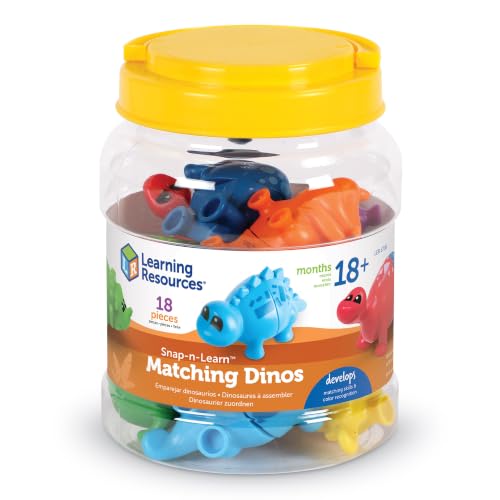
Nine snap-apart dinosaur halves give a toddler’s fingers a real workout. Each chunky piece is sized for a 18-month-old’s grip, so pulling them apart and snapping them back together builds hand strength and dexterity naturally. The color matching adds a layer of learning without feeling like a lesson, you can reinforce color names as your child sorts the bright halves. That makes it a smart pick for parents who want fine motor practice and early vocabulary in one tidy bucket.
Simplicity is the key here. Unlike the VTech Chomp and Count Dino, there are no sounds, lights, or counting games to hold a child’s attention once the matching is mastered. You can mix and match halves for silly combos, but the play stays quiet and hands-on. That’s perfect for focused skill building, but if your toddler craves electronic feedback, they may lose interest faster. For a straightforward, durable tool that strengthens little hands, this set delivers exactly what it promises.
Product photos
Melissa & Doug Caterpillar Gear Toy

What We Like
- Six bright interchangeable color gears
- Solid-wood base with painted caterpillar design
- Sturdy pegs for easy matching and spinning
- Builds hand-eye coordination and fine motor skills
Trade-offs
- At 1.0 pounds, too light for rough play
- Only six gear pieces limit complex building
- No sound or lights for sensory variety
A 12-inch-wide wooden gear board with six interchangeable color gears gives a toddler a clear cause-and-effect lesson: place a gear on a peg, spin it, and watch the whole line turn. For a child just past their first birthday, that direct reward keeps attention long enough to practice matching colors and fitting pegs. It suits parents who want a quiet, screen-free activity that builds fine motor control without batteries or noise, ideal for a calm corner or a waiting room.
This toy is deliberately simple. At one pound, it slides across a table if a toddler pushes too hard, and the six-piece set doesn’t offer the sprawling build options of something like the MEGA BLOKS First Builders bag. For a child who craves variety or already loves stacking and knocking over, the caterpillar gear toy may feel limited after a few sessions. But for the 18-month-old still figuring out how to fit peg to hole, that focused challenge is exactly right.
LeapFrog Learning Friends 100 Words Book
What We Like
- Bilingual English and Spanish audio
- Over 100 age-appropriate words
- Sound effects and fun facts
- Light-up star button plays songs
Trade-offs
- Requires 2 AA batteries for regular use
- No volume control for quiet play
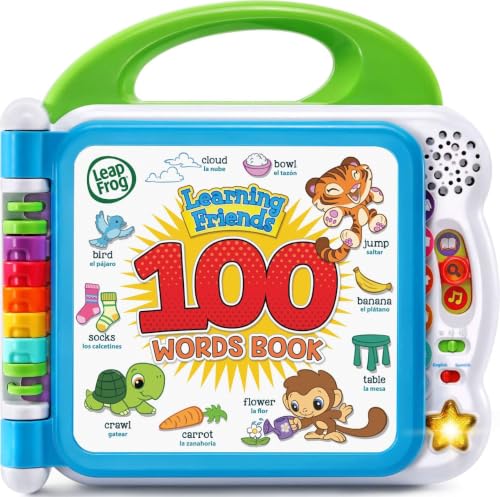
More than 100 words chosen by learning experts means this book covers the vocabulary a toddler is actually ready for, from pets and food to opposites and outside. Turtle, Tiger, and Monkey guide little fingers to touch each page, triggering clear spoken words, sound effects, and short fun facts. The bilingual option lets you hear everything in English or Spanish, so it works equally well for families raising bilingual kids or those just wanting early exposure. At 1.5 pounds and with a 9.4-inch square footprint, it sits open on a lap or a low table without sliding around.
This is a battery-powered electronic book, not a board book you can toss in a diaper bag and forget. You will need fresh AA batteries after the demo ones die, and there is no volume dial if your toddler wants it loud at nap time. If your child is still in the heavy-chewing phase, the book’s construction may be less forgiving than a plastic toy, but for building early word recognition with audio reinforcement, this is a well-thought-out tool.
MEGA BLOKS First Builders Big Building Bag
What We Like
- Blocks sized for small hands
- Includes storage bag
- 10 shapes and 9 colors
Trade-offs
- No instruction booklet for guided builds
- Only basic block shapes, no specialty pieces
- Bag is storage only, not a play mat
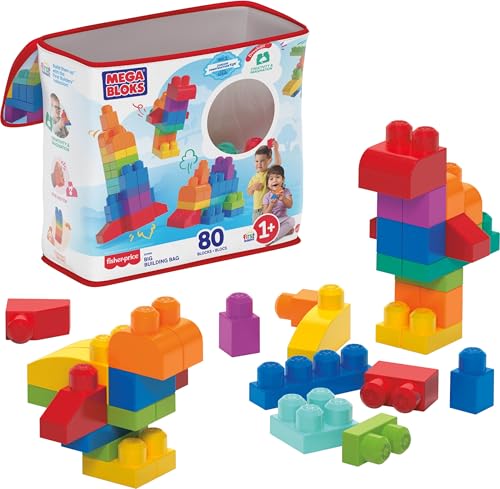
Sixty colorful blocks in ten shapes and nine colors give a toddler a solid amount of raw building material. The blocks are designed to be easy for little hands to grip, stack, and pull apart, which helps keep frustration low during play. For a parent who wants a simple, creative toy without electronics or single-purpose features, this bag delivers straightforward building fun that can be combined with other MEGA BLOKS sets.
The set includes only basic blocks, no wheels, animal figures, or specialty shapes that suggest a specific build. It is a straightforward starter set that puts a good number of blocks first, which is exactly what families looking for a basic building toy need.
Product photos
SEREED Baby Balance Bike
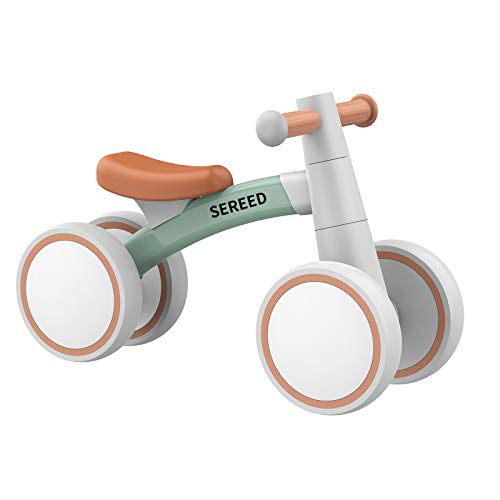
What We Like
- Closed wheels avoid pinching little feet
- Silent wheels work indoors and out
- 135° turning limit for safety
Trade-offs
- 55 lb limit outgrown before age 3
- No pedals means no independent propulsion
The recommended age range of 12-24 months and a 55-pound weight limit mean this bike is built for a specific stage, not for years of growth. By the time your child nears three, they’ll likely have outgrown it in both size and skill. Compared to the push-along toy that works past age two and weighs 1.8 pounds, the SEREED offers real balance training but demands a tighter window of use. If you have a second child coming or plan to pass it along quickly, the lightweight build and safety features make it worth the shorter timeline.
Product photos
Kikidex Magnetic Drawing Board

What We Like
- Three height adjustments for growing toddlers
- Non-toxic ABS with rounded corners
- Sealed back prevents small-part hazards
- Mess-free reusable doodle surface
Trade-offs
- Drawing area limited to board size
- No sound or light features for engagement
- Legs require assembly and screw tightening
Three height adjustments let this board grow with your child from wobbly first scribbles to confident tabletop drawing. The sealed back and rounded corners help prevent accidental scratches and small-part hazards, while the ABS material is non-toxic and BPA-free. The magnetic stylus and smooth eraser knob make for clean, reusable doodling that saves paper and crayons, a practical choice for parents who value mess-free play.
This drawing board is a sturdy, reusable doodle pad with detachable legs that adjust to three heights, so it grows with your toddler and stays stable during use. It weighs 1.2 pounds and measures about the size of a small laptop, making it easy to move from room to room or toss in a bag for travel. The board uses magnets instead of paper or crayons, which means no mess and no need for batteries, just slide the eraser knob to clear the surface and start over.
This board is best for families who want a safe, mess-free, height-adjustable drawing board for quiet creative play. It is not ideal for toddlers who need sound or light features to stay engaged, as it offers no auditory or visual feedback. The simple magnetic design encourages independent scribbling and learning without the clutter of paper or crayons.
Product photos
How We Evaluated Toys For 18 To 24 Month Olds
We focused on three sources: published specifications from each manufacturer, consensus from child-development experts on what skills matter at this stage, and recurring themes in owner reviews, both praise and complaints. No toy was tested in a lab; this is a research-led evaluation designed to save you time.
The four criteria that mattered most were developmental fit, durability, safety, and engagement range. A toy that only works for one week of a toddler’s rapid growth isn’t a good value. We looked for toys that grow with the child, adjustable features, multiple play modes, or open-ended use.
The honest limit of this approach: we can’t tell you how a specific child will react. Temperament varies wildly at this age. What we can do is flag the trade-offs, like demo batteries or assembly needs, so you know what you’re getting into before the box arrives.
What To Look For In Toys For 18 To 24 Month Olds
At this stage, toddlers are learning to walk, talk, and manipulate objects with purpose. The best toys support one of those three skills without overwhelming the child with too many features.
Walking Support and Gross Motor Development
A toddler just finding their balance needs a push toy that’s stable and responsive. Look for a wide base and wheels that don’t roll too fast. The Fisher-Price Corn Popper works because the popping sound gives immediate feedback with every step, reinforcing the cause-and-effect connection. For more advanced walkers, the VTech Sort and Discover Activity Wagon adds hauling capacity and multiple activities.
Fine Motor and Cognitive Skills
Between 18 and 24 months, hand-eye coordination improves rapidly. Toys that require matching, twisting, or snapping build dexterity. The Learning Resources Snap-n-Learn Matching Dinos use chunky halves that small hands can separate and reattach. The Melissa & Doug Caterpillar Gear Toy introduces matching through color-coded gears that spin on sturdy pegs. Both are screen-free and quiet, which matters for calm play.
Language and Vocabulary Building
This is a prime window for language acquisition. Electronic toys that name objects, animals, or colors can reinforce what you’re teaching. The LeapFrog Learning Friends 100 Words Book covers over 100 words in English and Spanish, with sound effects and fun facts. The Fisher-Price Little People See ‘n Say adds a quiz mode that tests knowledge. Both reward repetition without requiring a screen.
- Check that batteries are included (even demo ones) so the toy works out of the box.
- Look for volume control or an off switch, some toys lack both.
- Choose toys with rounded corners and non-toxic materials for mouthing behavior.
- Verify weight limits on ride-on toys like balance bikes before buying.
- Prefer storage solutions built into the toy, like the MEGA BLOKS storage bag.
The best toy at this age is the one the child returns to, not the one with the most buttons.
Toys For 18 To 24 Month Olds Compared
The table below compares all 10 picks across key specs, including play type, battery requirements, and assembly needs, so you can quickly spot which toy fits your toddler’s current stage.
| Product | Age Range | Weight | Dimensions |
|---|---|---|---|
| VTech Chomp and Count Dino | 1 to 3 years | 1.6 lb | 11.4 x 10.0 x 4.9 in |
| Fisher-Price Corn Popper Push-Along Toy | 12+ months | 1.8 pounds | 22.5 x 8.5 x 6.2 in |
| Fisher-Price Little People See 'n Say | 18+ months | 1.1 pounds | 4.3 x 0.7 x 0.0 in |
| VTech Sort and Discover Activity Wagon | 12-36 months | 3.9 lb | 12.2 x 19.1 x 9.4 in |
| Learning Resources Snap-n-Learn Matching Dinos | 18 months+ | 1.1 lb | 5.7 x 5.7 x 7.5 in |
| Melissa & Doug Caterpillar Gear Toy | 18 months to 3 years | 1.0 pounds | 12.0 x 16.0 x 2.2 in |
| LeapFrog Learning Friends 100 Words Book | 18+ months | 1.5 pounds | 9.2 x 9.4 x 1.9 in |
| MEGA BLOKS First Builders Big Building Bag | 1+ years | 1.0 pounds | 12.0 x 12.0 x 10.0 in |
| SEREED Baby Balance Bike | 12-24 months | 3.6 pounds | 8.7 x 3.7 x 5.5 in |
| Kikidex Magnetic Drawing Board | 1-3 years | 1.2 pounds | 12.5 x 10.9 x 1.3 in |
Frequently Asked Questions
What kind of toys are best for an 18-month-old?
Toys that support walking, fine motor skills, and language development are ideal. Push toys like the Fisher-Price Corn Popper encourage walking with sound feedback. Matching toys like the Learning Resources Snap-n-Learn Matching Dinos build hand strength. And electronic books like the LeapFrog Learning Friends 100 Words Book expand vocabulary. The best toy depends on what skill your toddler is working on right now.
How many toys does a 2-year-old need?
A small, rotating selection is more effective than a large collection. At this age, toddlers focus best with a handful of toys available at a time, rotated every week or two. Too many choices can overwhelm them and reduce the depth of play. Focus on one toy from each category, a push toy, a building set, a matching game, and a book, and swap them out as interest wanes.
Are electronic toys bad for toddlers?
Not when used intentionally. Electronic toys that name objects, play songs, or offer quiz modes can reinforce vocabulary and cause-and-effect learning. The concern is when they replace human interaction entirely. The best approach is to use electronic toys as a supplement to conversation and reading, not a substitute. Look for toys with volume control and a shut-off timer to manage exposure.
What is the difference between toys for 12-18 months and 18-24 months?
Toys for the younger stage focus on cause-and-effect and sensory exploration, rattles, stacking rings, and simple shape sorters. For 18-24 months, the toys introduce more complexity: matching colors, learning words, and pushing or pulling while walking. The VTech Chomp and Count Dino, for example, combines a pull-along design with eight colored food pieces and over 130 phrases, far more interactive than a basic shape sorter.
How do I choose a safe toy for a toddler?
Check for non-toxic materials, rounded edges, and no small parts that could be a choking hazard. For ride-on toys like the SEREED Baby Balance Bike, verify the weight limit and look for safety features like closed wheels and a limited turning radius. Avoid toys with long cords or strings. Always read the age recommendation on the box, it’s there for safety, not just marketing.
The Bottom Line
For most families, the VTech Chomp and Count Dino is the best overall pick because it combines learning with active play. The pull-along design keeps a walking toddler moving while the feeding game teaches colors, shapes, and counting through over 130 sounds and phrases. It’s a toy that grows with the child for several months.
If your toddler is still finding their feet, start with the Fisher-Price Corn Popper for walking motivation. If language is the priority, the LeapFrog Learning Friends 100 Words Book offers bilingual vocabulary building. And for quiet, screen-free fine motor play, the Learning Resources Snap-n-Learn Matching Dinos or Melissa & Doug Caterpillar Gear Toy are excellent choices.
The single most important factor is matching the toy to your toddler’s current developmental focus, walking, talking, or tinkering. A toy that hits that one skill at the right moment will be played with far more than a toy that tries to do everything.
