
10 Best Toys For 15 Month Old in 2026
This post contains affiliate links. As an Amazon Associate, we earn from qualifying purchases.
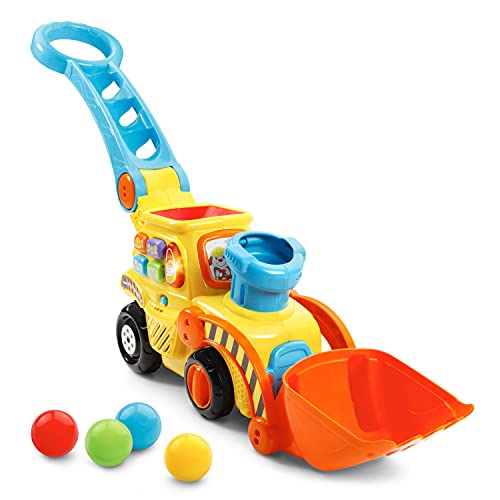
The VTech Pop-a-Balls Push and Pop Bulldozer takes the Best Overall spot because it combines gross motor movement with cause-and-effect action and early learning buttons in one engaging toy. For a 15 month old, the world is about motion, discovery, and tiny hands that want to poke, push, and pull everything. The right toy meets that energy without overwhelming a short attention span.
This guide covers ten toys that target the specific skills emerging at this age, walking, grasping, problem-solving, and pretend play. We evaluated each pick by its design, durability, and the type of play it encourages, drawing on manufacturer specs, expert round-ups, and patterns in parent feedback. No toy here was tested by our team.
Top 10 Toys For 15 Month Old in the Market
Certain content that appears on this site comes from Amazon. This content is provided "as is" and is subject to change or removal at any time.
The Best Toys For 15 Month Old, Reviewed
VTech Pop-a-Balls Push and Pop Bulldozer
What We Like
- Push handle activates ball-popping action
- Buttons teach colors, numbers, and phrases
- Motion sensors trigger tunes on the move
- Chunky handle supports motor skill development
Trade-offs
- Requires new batteries for regular use
- No volume control for the sound effects.
Pushing the handle makes balls pop out of the chimney into the bucket, which gives a toddler instant cause-and-effect feedback that encourages them to keep moving. As the bulldozer rolls, motion sensors trigger tunes and songs, turning a simple walk into a playful chase. Pressing the buttons teaches colors, numbers, and phrases, so it works as both a push toy and a learning tool. The chunky handle is easy for little hands to grab, helping build motor skills without frustration.
The Fisher-Price Corn Popper offers a different kind of ball-popping action, but the VTech provides more interactive learning features (colors, numbers, phrases) that the Corn Popper doesn’t have, so you’re trading simplicity for richer play. At 2.5 pounds and a compact 6.3-inch height, it’s easy for a toddler to push without tipping, and the motion-triggered music keeps them curious about what happens next.
VTech Busy Learners Activity Cube
What We Like
- 5 sides of play encourage exploration
- 14 interactive features develop fine motor skills
- Motion sensor rewards movement with sounds
- Volume control and auto shut-off included
Trade-offs
- AAA demo batteries included, not for long use
- 6.2-inch cube is compact, limited surface area
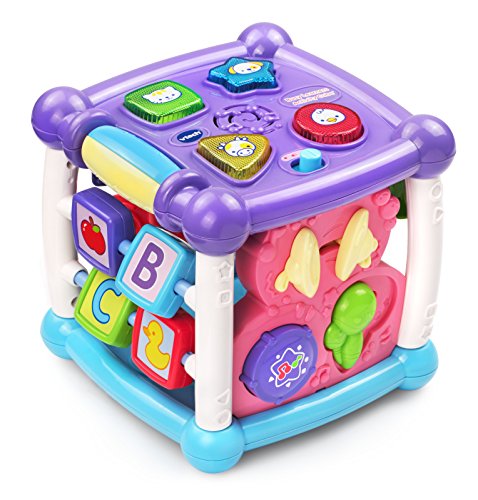
A baby from 6 months to 3 years gets plenty of discovery per square inch from a cube with 14 interactive features. Five sides of play include light-up buttons, animal names, shapes, and a motion sensor that rewards crawling, keeping little hands and eyes busy without overwhelming them. Parents get one compact station that teaches colors, shapes, and animal sounds while encouraging a baby to sit up and move. The 25 songs and melodies add staying power, and the adjustable volume means you can keep your own sanity during the hundredth play-through.
The cube’s small footprint limits how many toys can be on the table at once. The LeapFrog 6-in-1 Snap and Learn Busy Cube is even smaller at 4.3 inches, but it also packs fewer features. At 1.4 pounds, the VTech stays put better than a lightweight plastic toy, though on a slick table it may slide when a determined toddler pushes it. For a baby who is still mastering sitting balance, the motion sensor is a clever nudge to crawl or reach, but the demo batteries are a minor annoyance, plan to replace them quickly.
Melissa & Doug Farm Animals Jumbo Knob Puzzle

What We Like
- Jumbo knobs for easy grasping
- Extra-thick wooden puzzle pieces
- Full-color matching pictures under pieces
- Vibrant farm animal artwork
Trade-offs
- Single puzzle format limits open-ended play
- No sound, lights, or moving parts
Eight extra-thick wooden pieces with jumbo knobs mean a toddler’s fist can grab each animal without frustration. That’s the whole point at this age: you want a puzzle that builds confidence, not tears. The full-color picture under each piece acts like a cheat sheet, so a child can match the cow to its outline and feel like a genius. This is a quiet, screen-free activity that strengthens fine motor control and hand-eye coordination through repetition, not noise. It suits a parent who values focused, independent play over flashy bells and whistles.
This puzzle does one thing and does it well, but it doesn’t adapt. Once the cow, pig, and horse are in their spots, there’s nothing to spin, pop, or chase, unlike the VTech bulldozer, which rewards pushing with motion and sound. At 12 inches square, the board also demands a clear spot on the floor or a low table. For a toddler who prefers cause-and-effect action, the puzzle may sit unused. But for a child who enjoys the satisfaction of fitting a piece into its home, this is a sturdy, forgiving first puzzle.
Product photos
Fisher-Price Corn Popper Push-Along Toy

What We Like
- Ball-popping sound and action when pushed
- Encourages walking with auditory reward
- Strengthens gross motor skills
- Introduces cause and effect
Trade-offs
- At 22.5 inches long, it needs floor space
- Assembly required out of the box
A push toy that rewards every step with popping sounds and motion creates a clear cause-and-effect loop that encourages a toddler to keep walking. The 1.8-pound weight is light enough for little arms to steer without tipping, and the design requires no batteries, so the fun comes purely from physical play. This classic toy suits caregivers who want a straightforward walking aid that builds gross motor skills through action and sound.
Its length is a practical concern: at 22.5 inches, this popper needs a clear path and won’t fit into a small playpen corner as easily as the VTech bulldozer, which measures just 6.2 inches on each side. If your home has tight hallways or limited open floor space, you may find it a challenge to navigate. But if you have a generous living area and want a simple walking toy that rewards every push with noise and motion, this is a strong option.
Product photos
Melissa & Doug First Bead Maze

What We Like
- Suction base holds steady on surfaces
- 18 beads and 3 rings slide and spin
- Soft-coated wires for safe exploration
- Montessori-inspired fine motor skill building
Trade-offs
- Small footprint limits reach for active toddlers
- Only four looping wires for variety
A suction cup base that sticks to a high chair tray or table means this bead maze stays put when a toddler is pushing, pulling, and grasping at those 18 beads and 3 rings. That stability is the whole point; without it, the toy slides away and the fine motor practice stops. With four looping wires of soft-coated metal and smooth wooden blocks, it gives a toddler just enough complexity to work on hand-eye coordination and cause-and-effect without overwhelming them. This is the kind of quiet, focused play that suits a child who likes to sit and figure things out rather than chase a rolling ball across the room.
That compact size comes with a trade-off. At 8.7 inches long and 4.1 inches tall, the bead maze is small enough to fit on a high chair tray, but it also means a toddler can only reach two or three wires from one spot. They will need to rotate the toy or scoot around to access all four loops, which can interrupt the flow of play. Compared to the VTech bulldozer, which encourages moving around the room, this Melissa & Doug maze is a stationary, tabletop activity. It works best for a child who enjoys focused, seated exploration rather than one who wants to roam and chase.
LeapFrog Spin and Sing Alphabet Zoo

What We Like
- Three learning modes: letter, animal, music
- Lights and musical responses reward touch
- Spin, push, slide build motor skills
- Introduces letters A-Z and animal sounds
Trade-offs
- At 1.9 lb, heavier than some seated toys
- No carry handle for on-the-go play
- Only one spinning wheel limits variety
Three distinct play modes, letter, animal, and music, mean this toy doesn’t just spin; it teaches the alphabet and animal names with every turn. The lights and playful sounds reward each touch, so a toddler gets immediate feedback that keeps them engaged. At 1.9 pounds, it’s sturdy enough to stay put during active play, yet light enough to move from floor to table without a struggle. This is the kind of toy that grows with a toddler: early on they enjoy the spin and sounds, later they start recognizing the letters and animals.
The single spinning wheel, while great for focused learning, offers less variety than a multi-activity toy like the VTech activity cube. Your child will master the spin quickly, and after that the toy relies on the three modes to keep it fresh. For a toddler who loves repetition and cause-and-effect, that’s fine, but if your little one needs constant new surfaces to explore, the cube’s six sides may hold their attention longer. Still, for alphabet-first learning with clear audio and bright rewards, this is a focused tool that delivers.
Fisher-Price Chatter Telephone Pull Along Toy

What We Like
- Rotary dial introduces numbers 0-9
- Eyes move up and down for engagement
- Lightweight at 0.9 pounds for toddlers
- Two play modes: sit-at or walking
Trade-offs
- No music or lights for extra sensory input
- No battery compartment for adding lights or sounds
The Fisher-Price Chatter Telephone weighs just 0.9 pounds, so a toddler who’s just starting to walk can pull it along without tipping over or getting frustrated. That lightweight build, combined with the rolling wheels and moving eyes, turns a simple walk into a cause-and-effect game. The rotary dial introduces numbers 0-9 through pretend play, so your toddler gets early number exposure while practicing fine motor skills. It’s ideal for the kid who’s just finding their feet and wants something to tow behind them during those wobbly first steps.
The trade-off here is that there are no lights or music, which some toddlers crave for sustained attention. If your child responds best to sound and light feedback, the VTech activity cube offers more sensory bells and whistles at a similar weight. But for a straightforward, durable pull-along that encourages walking and early role-play without overstimulating, this telephone does exactly what it says on the box. Just don’t expect it to hold the attention of a child who’s already bored by quiet toys.
Product photos
Kidoozie Whirl 'N Go Ball Tower

What We Like
- Six colorful spiral levels
- Rattle balls with beads for sound
- Teaches cause and effect
- Screen-free, no batteries needed
Trade-offs
- Requires hard flat floor for play
- Lift by base to keep levels together
- No lights or electronic feedback
Drop a ball into the top and watch it spiral down six colorful levels into the base. Each level drops the ball in a different spot, so little ones keep watching to see where it lands next. The four clear balls are filled with colorful beads that rattle as they roll down the ramps, catching your baby’s attention by sight and sound. This helps your child learn cause and effect as they drop each ball into the top level, building fine motor skills, visual tracking, and hand-eye coordination through hands-on play. It’s a simple, screen-free toy with no batteries needed.
This tower works best on a hard, flat surface; carpet can make the base wobble or the balls stop short. Compared to other toys like the VTech bulldozer, which has different dimensions and weight, the Kidoozie stays put and focuses on a stationary drop-and-watch rhythm. That rhythm is great for toddlers who enjoy predictable surprises, but if your child prefers moving around while playing, a different toy might hold their interest longer.
Ideal for a toddler who enjoys watching objects fall and wants a simple, no-frills cause-and-effect toy. Not ideal for a child who prefers active, mobile play or needs electronic sounds and lights to stay engaged.
Product photos
Hieoby Baby Pop Up Toy with Music

What We Like
- Five different trigger actions for fine motor skills
- Three play modes including quiet no-battery option
- Animal sounds and lights in game mode
- Lightweight and rounded edges for safety
Trade-offs
- At 13.7 inches long, it is not compact for travel
- Game mode requires batteries (not included) for music and lights
- Only five animals limit variety for extended solo play
Five distinct trigger mechanisms, push, turn, flip, press, slide, mean a 15-month-old gets five different fine-motor challenges from one toy, not just the same button over and over. That variety keeps cause-and-effect learning fresh and matches how toddlers at this age explore: they want to know what happens when they twist versus when they slap. The quiet mode works without batteries, so you can hand it over during diaper changes or car rides without worrying about a sudden light show. It suits parents who want a single toy that grows with a child’s understanding, from simple popping up to following light cues in game mode.
The trade-off for those five actions is size: at 13.7 inches long, this toy takes up more floor space than something like the VTech activity cube, which packs multiple activities into a compact 6-inch cube. That length means it is harder to toss in a diaper bag or stash on a crowded shelf. The learning and game modes need batteries you supply, and while the animal sounds are a nice touch for vocabulary building, the five animals are the only ones you get, no expansion or interchangeable pieces. For a 15-month-old just starting to connect actions with outcomes, the variety of triggers outweighs the bulk, but if your space is tight or you want something truly grab-and-go, the cube might fit better.
Product photos
LeapFrog 6-in-1 Snap and Learn Busy Cube
What We Like
- 12 sides of slide, spin, touch activities
- Snaps into cube, tower, or flat layout
- Raised patterns for tactile stimulation
- Includes animals, beads, gears, mirrors
Trade-offs
- No batteries means no lights or sounds
- At 4.3 inches per side, panels are small
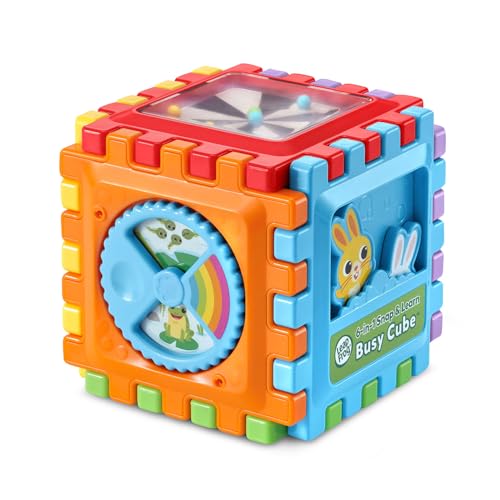
Twelve sides of play from a 4.3-inch cube means every face and edge offers something to slide, spin, or touch, no dead zones. That density of activity is rare at this size, and the snap-together design lets you rearrange it as a tower for standing play or lay it flat for tummy time. The raised patterns add tactile variety, and the mix of animals, beads, gears, and a mirror covers cause-and-effect, visual tracking, and self-discovery all in one toy. For a toddler who craves variety but still needs something they can handle without frustration, this cube delivers a lot of interaction in a compact, portable package.
There are no lights, sounds, or batteries here, this is a purely mechanical, tactile toy. If your child is drawn to music and flashing buttons, the VTech activity cube offers electronic feedback at a similar size, though it weighs a bit more and needs batteries. The LeapFrog cube’s strength is its versatility: you can reconfigure it, and the lack of electronics means no dead batteries and no volume knob to argue over. For parents who want a quiet, hands-on toy that grows with how the child chooses to play, this is a thoughtful pick.
How We Evaluated Toys For 15 Month Old
To build this list, we studied manufacturer specifications and consulted child development round-ups. We also analyzed what parents consistently report about each toy’s durability and engagement level. We focused on three age-specific criteria: whether the toy supports the physical milestones of a walking toddler, how it challenges fine motor control without causing frustration, and whether it offers enough sensory variety to hold interest beyond the first five minutes.
A 15 month old is not a baby and not yet a preschooler. The best toys for 1.5 year olds bridge that gap by offering cause-and-effect feedback, safe textures, and room for repetitive practice. We prioritized toys that grow with the child rather than ones that are outgrown in a month.
A research-led evaluation has limits, we cannot speak to how a specific toddler will react, and individual preferences vary wildly. What we can do is highlight which toys reliably hit the developmental notes that matter most at this stage.
What To Look For In Toys For 15 Month Old
Choosing a toy for this age means looking past the packaging and asking whether it matches how your child actually plays right now. Here is what to check.
Look for toys that reward movement, offer varied fine motor challenges, and provide sensory feedback through sound, texture, or motion. Avoid anything with small parts that pose a choking hazard or requires complex rules a toddler cannot follow yet.
Movement and Cause and Effect
A 15 month old is either walking or working on it. Toys that respond to motion, a push that triggers popping balls, a pull that makes eyes wiggle, reinforce the connection between action and reaction. This is the core of cognitive development at this age. The best interactive toys for 1 year olds use simple triggers: press a button, hear a sound; push the toy, see it move.
Fine Motor Variety
Look for multiple types of actions on one toy, sliding, spinning, twisting, poking, and grasping. A single activity like a bead maze is fine, but a cube or panel with five different mechanisms keeps a toddler engaged longer. The different toy types available for this age range from knob puzzles to snap-together cubes, and variety matters more than complexity.
Sensory Feedback and Safety
Sound, lights, and texture all help a toddler understand what the toy does. But volume control and auto shut-off are practical features that save your sanity. Safety-wise, check that pieces are too large to swallow, edges are rounded, and cords or strings are short enough to avoid tangling. Wooden toys should be finished with non-toxic paint.
- Check that all pieces are larger than a toilet paper tube to avoid choking hazards.
- Look for volume control or a silent play mode on battery-operated toys.
- Verify that suction cups or bases are strong enough to stay put on a high chair tray.
- Choose toys with no sharp corners or pinch points on moving parts.
- Confirm that any cords or pull strings are under 12 inches long.
If a toy has more than three small pieces you could lose under the couch, it is probably too complex for this age.
Toys For 15 Month Old Compared
The table below compares all ten picks across size, power source, and the primary skill each toy targets, so you can see at a glance which one fits your toddler’s current needs.
| Product | Weight | Dimensions | Age Range |
|---|---|---|---|
| VTech Pop-a-Balls Push and Pop Bulldozer | 2.5 pounds | 6.2 x 6.2 x 6.3 inches | Baby & Toddler (Push & Pull) |
| VTech Busy Learners Activity Cube | 1.4 pounds | 6.2 x 6.2 x 6.5 inches | 6 months to 3 years |
| Melissa & Doug Farm Animals Jumbo Knob Puzzle | 1.6 pounds | 12.0 x 12.0 inches | Ages 1+ |
| Fisher-Price Corn Popper Push-Along Toy | 1.8 lbs | 22.5 x 8.5 x 6.2 in | 12+ months |
| Melissa & Doug First Bead Maze | 1.2 pounds | 8.7 x 8.1 x 4.1 inches | Ages 1+ |
| LeapFrog Spin and Sing Alphabet Zoo | 1.9 pounds | 6.5 x 7.1 x 8.5 inches | N/A |
| Fisher-Price Chatter Telephone Pull Along Toy | 0.9 pounds | 6.3 x 7.7 x 4.2 inches | 12+ months |
| Kidoozie Whirl 'N Go Ball Tower | 1.2 lb | 10.2 x 4.7 x 13.8 in | 9-24 months |
| Hieoby Baby Pop Up Toy with Music | 1.8 pounds | 13.7 x 3.0 x 2.9 inches | 12-18 Months |
| LeapFrog 6-in-1 Snap and Learn Busy Cube | 1.0 pounds | 4.3 x 4.3 x 4.3 inches | 12+ months |
Frequently Asked Questions
What kind of toys are best for a 15 month old?
The best toys for this age support walking, fine motor control, and cause-and-effect learning. Push-and-pull toys, activity cubes with multiple mechanisms, knob puzzles, and simple ball drops all work well. Avoid toys with small parts or complex rules that a toddler cannot understand yet.
How many toys does a 15 month old need?
A small rotation of five to eight toys is plenty. Toddlers at this age learn through repetition, so fewer toys with more ways to play, like a multi-sided activity cube or a stacking toy, are better than a large pile of single-purpose items. Rotate toys weekly to keep interest fresh.
Are electronic toys good for 15 month olds?
Electronic toys can be beneficial when they offer simple cause-and-effect feedback, like lights that flash when a button is pressed or music that plays when the toy is pushed. The key is choosing toys that require the child to act, not just watch. Look for volume control and auto shut-off to manage screen-like stimulation.
What motor skills should a 15 month old be developing?
A 15 month old is typically refining their pincer grasp (thumb and forefinger), learning to stack blocks, and practicing walking or cruising. Toys that encourage these actions, like knob puzzles for grasping, building toys for hand-eye coordination, and push toys for walking, match their natural developmental timeline.
Should I buy wooden or plastic toys for a 15 month old?
Both materials work well, and the choice depends on your priorities. Wooden toys are durable, battery-free, and often have a classic look, but they can be heavy and offer no sound or light feedback. Plastic toys are lighter, easier to clean, and often include interactive features, but they may be less durable and rely on batteries. A mix of both is ideal.
The Bottom Line
The VTech Pop-a-Balls Push and Pop Bulldozer is the best overall pick for a 15 month old who loves movement, music, and figuring out how things work. It hits the three big milestones, walking, cause-and-effect, and early learning, in one toy that does not need a lot of floor space.
If your toddler prefers calm, seated play, the Melissa & Doug Farm Animals Jumbo Knob Puzzle or the Melissa & Doug First Bead Maze offer focused fine motor practice without batteries or noise. For families on a budget, the Fisher-Price Corn Popper and the Kidoozie Whirl ‘N Go Ball Tower deliver classic fun with no electronics and no ongoing battery cost.
The single most important factor at this age is whether the toy matches your child’s current mobility level. A toy that rewards the movement they are already practicing will always win over one that expects skills they have not yet developed.
