
10 Best Tech Kids Toys For Hands-on Building in 2026
This post contains affiliate links. As an Amazon Associate, we earn from qualifying purchases.
For hands-on builders who love seeing their work light up, move, or respond, the Snap Circuits Explorer SC-100 STEM Kit is the best overall pick, offering over 100 safe, tool-free projects from just 28 parts. The LEGO Technic NASA Artemis Rocket 42221 wins for space fans, while the Thames & Kosmos My Robotic Pet Coding Chameleon is our top unplugged coding choice.
The real challenge with tech building toys isn’t finding one, it’s finding one that matches your child’s patience, skill level, and interest without collecting dust after a single weekend. A kit with too many pieces frustrates a beginner; one with too few bores an advanced builder.
We built this guide by analyzing manufacturer specifications, expert round-ups, and patterns in owner feedback across dozens of kits. Our picks focus on build quality, replay value, and the right balance of tech features for each age and interest.
Top 10 Tech Kids Toys For Hands-On Building in the Market
Certain content that appears on this site comes from Amazon. This content is provided "as is" and is subject to change or removal at any time.
The Best Tech Kids Toys For Hands-On Building, Reviewed
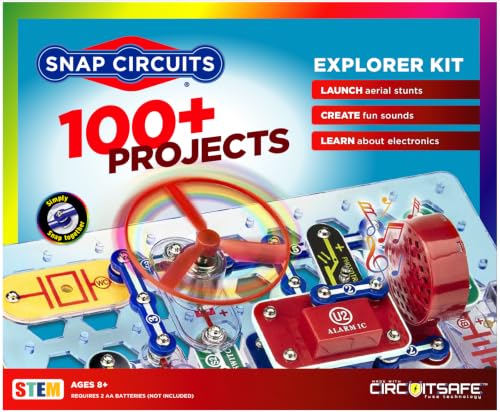
Snap Circuits Explorer SC-100 STEM Kit
What We Like
- 100+ projects from 28 snap-together parts
- No soldering or tools required
- Color-coded pieces snap onto plastic grid
Trade-offs
- Batteries not included
- Limited to 28 parts for advanced builders
A hundred different electronic projects from a single box of 28 snap-together parts means your child can build a flying saucer one afternoon and a light-activated alarm the next. All without ever touching a soldering iron. That breadth of play makes this the natural starting point for any kid curious about how circuits actually work. It suits the 8-year-old who wants tangible results fast, not a lecture on Ohm’s law, and parents who value safety and simplicity over complexity.
The trade-off is that the 28-piece kit will eventually feel limiting once your builder starts dreaming up their own creations. The Snap Circuits Arcade SCA-200 offers a different set of projects, so it’s a possible next step rather than a replacement. But for the price of entry and the sheer number of projects you get right out of the box, this kit delivers the best balance of instant fun and genuine learning.
LEGO Technic NASA Artemis Rocket 42221

What We Like
- Working 3-stage rocket separation
- Includes 4 astronaut nanofigures
- 632-piece build for focused engagement
Trade-offs
- Narrow base: 3 in. wide, tips easily
- Single model, no alternate builds
A 27.5-inch tall rocket with three working separation stages means your child gets to experience the same staging sequence that will launch Orion into lunar orbit. That’s not a static display piece, it’s a mechanical demonstration. For a kid who loves space and wants to understand how real rockets shed weight to reach orbit, this set turns abstract engineering into a hands-on lesson.
Stability is a concern here: at 27.5 inches tall and only 3 inches wide at the base, this rocket will tip over if bumped during play or display. That’s a real frustration for a kid who wants to show it off on a bedroom shelf. But if your young builder is patient enough to handle a delicate finished model and fascinated by real space hardware, this set delivers an experience no other toy in this guide can match: a NASA-licensed staging mechanism you can operate with your own hands.
Thames & Kosmos My Robotic Pet Coding Chameleon

What We Like
- No screens or apps needed
- Three distinct play modes
- Teaches coding via physical cards
Trade-offs
- Only one model to build
- Requires adult help for ages 8-11
- Batteries not included
A color sensor and infrared sensor let kids program this chameleon using nothing but physical action cards, no screen, no app, no tablet in sight. That single design choice makes it a rare find for parents who want coding lessons without the device dependency. The 15-inch model responds to gestures, changes color with its RGB LEDs, and automatically fires and retracts its tongue, all controlled by the sequence of cards you lay down. With three modes (Coding, Wild, and Pet), there’s enough variety to keep an 8-year-old engaged through the 48-page guided build, though younger kids will need an adult alongside for the assembly steps.
The chameleon is a single build, so once you’ve assembled it and worked through the coding challenges, the replay value comes from reprogramming the same robot in new sequences. That focused, screen-free coding practice is great for families who want depth over variety.
Snap Circuits Arcade SCA-200 STEM Kit

What We Like
- Over 200 projects from one kit
- No tools or soldering needed
- Includes arcade-style games with lights and sounds
- Color-coded snap-together pieces
Trade-offs
- Batteries not included
- Projects are pre-designed, not fully open-ended
With over 200 possible projects packed into a single 36-piece kit, this set gives you a remarkable range of arcade-style electronic builds without needing a workshop full of tools. The snap-together design means kids can jump straight into creating games that flash, beep, and spin, no soldering, no frustration. It’s ideal for a child who wants to see immediate results from their circuitry work, especially one drawn to the playful side of engineering rather than abstract theory.
The 36-piece kit builds over 200 projects, so a child can keep discovering new things to make without needing another box right away. The pieces snap together on a plastic grid with no tools or soldering, which means a kid can start building a spinning LED message or a sound-effects game in minutes. Reviewers say the colorful instruction book makes it easy to follow, though once a child finishes the guide, they may wish for more open-ended building options.
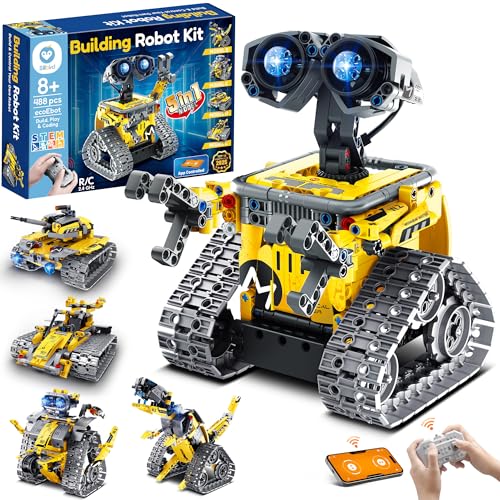
Sillbird STEM Robot Building Kit 5in1
What We Like
- Five buildable models in one kit
- Dual control via app or remote
- Rechargeable battery, no replacements needed
- Clear step-by-step instructions included
Trade-offs
- 40-minute battery life limits extended play
- 488 pieces require sorting and patience before play
With 488 pieces and five different models, robot, dinosaur, car, tank, and more, this kit gives a child the freedom to build something new each time. The dual control options, app and remote, mean they can start with simple driving and later explore basic programming. The rechargeable battery delivers up to 40 minutes of play per charge, which is enough for a focused session without hunting for AAAs. This is a strong pick for a kid who wants variety without committing to a single, expensive set.
The 40-minute battery life feels short once a child really gets into coding or remote play, and the 488 pieces can be a lot for an eight-year-old to sort through alone.
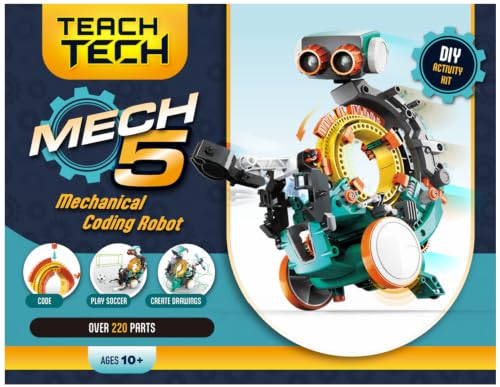
Teach Tech Mech-5 Coding Robot Kit
What We Like
- Mission-based entry-level robot design
- Designed to teach mechanical engineering and coding basics
Trade-offs
- No electronic coding or app control
- Not suitable for kids who prefer app-controlled robotics.
Those hours of assembly are real, so a younger or impatient builder might lose steam before the robot moves. Compared to the Snap Circuits Explorer SC-100, which builds projects with snap-together parts, the Mech-5 demands more assembly time upfront. But for a kid who enjoys figuring out how machines work, the mechanical coding approach offers a direct way to see how each button changes the robot’s movement.
Product photos
K'NEX 3in1 Classic Amusement Park Set

What We Like
- 744 pieces for three different builds
- Battery-powered motor included
Trade-offs
- Only three ride designs from 744 pieces
- Large finished build needs floor space
Unlike the Snap Circuits Explorer SC-100, which offers over 100 projects from 28 parts, the K’NEX set is less about variety of outcomes and more about the satisfaction of a single, dramatic build.
Product photos
Klever Kits 36in1 Motor Robotic Kit
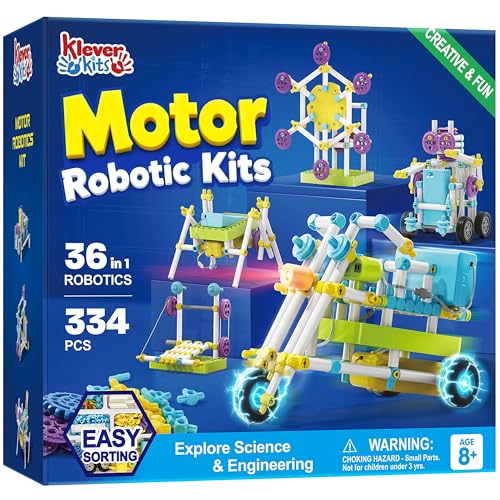
What We Like
- 36 different robot builds in one box
- 14 motorized models for active play
- Parts tray keeps components organized
- Video tutorials support visual learners
Trade-offs
- Each build uses fewer pieces than a single-model kit
- No remote control or app functionality included
Thirty-six different robot builds from a single kit means your child can keep coming back to something new without needing another box. With 14 of those models actually motorized, the builds aren’t just static displays, they walk, race, and move, which is exactly what keeps an eight-to-thirteen-year-old engaged past the first afternoon. The included sorting tray and video guides help keep parts organized and provide visual support for building. This is the set for a kid who loves variety and wants to build motorized robots that move when finished.
Kids who enjoy committing to a single, elaborate build over several hours may find the 36-in-1 concept less focused. This set offers thirty-six different robot designs, with fourteen of those being motorized models that range from walking machines to racing cars. Because the parts are organized in a sorting tray, switching between builds is straightforward, but the variety means no one project demands the deep, sustained attention of a larger kit. For a child who prefers finishing one complex challenge before moving on, a more concentrated building experience might be a better fit.
Product photos
K'NEX Typhoon Frenzy Roller Coaster Building Set

What We Like
- 640+ pieces for complex builds
- 2-in-1 design with alternate instructions
- Helps develop fine motor skills and logic
Trade-offs
- Large finished size needs floor space
- 640+ pieces can overwhelm younger builders
Assembling this set involves over 640 rods and connectors, plus a silver coaster car and a motorized power unit, so builders can expect a rewarding project that results in a fully functional amusement park ride. The finished layout stretches 19 feet of track, which means it occupies a good portion of a living room floor and delivers a genuine roller coaster experience at home. Because the pieces click together in a specific sequence, the build encourages careful attention to detail and patience, making the final working model feel like a real achievement for anyone who completes it.
That size means you’ll need a clear floor area to build and run the coaster, and the 640-plus pieces can feel like a lot for someone who wants a quick result. This set is a 2-in-1 model: you build the Typhoon Frenzy Coaster first, then download instructions for a second model called the Tsunami Surge Coaster. Compared to the K’NEX 3-in-1 Classic Amusement Park Set, which is another motorized option with 744 pieces, this one focuses on a single long track with an alternate build available online. The motor adds motion, so the coaster runs on its own once assembled.
Product photos
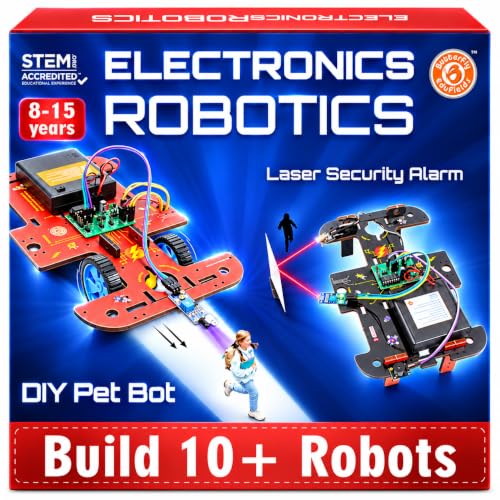
Butterfly EduFields 10in1 STEM Electronics Robotics Kit
What We Like
- 100+ components for 10 science activities
- Builds within 15 minutes with step-by-step manual
- Sensor control with line-following and obstacle-avoidance
Trade-offs
- Only 10 projects limits long-term replay value
- No coding or app control for advanced builders
This is the kit I’d hand to a child who keeps asking how their toys work, because it answers that question with a screwdriver and a handful of LEDs.
The quick-build simplicity comes with limited variety. Ten projects are included, but the Snap Circuits Explorer SC-100 offers over 100 projects from a single set, so the Butterfly EduFields kit provides fewer builds. The kit does not include coding or remote-control features, so children who want programmable behavior may outgrow it quickly. For a first electronics kit that delivers quick results and basic lessons, it’s a reasonable starting point. For a child who wants to experiment for months, the Snap Circuits might be a better fit.
Product photos
How We Evaluated Tech Kids Toys For Hands-On Building
Our research method examined product specs, manufacturer documentation, and patterns in owner feedback. We looked at what experienced builders and parents consistently praised or flagged in their reviews, then cross-referenced those observations with each kit’s stated capabilities.
We prioritized four criteria. First, build variety, how many models or projects a single kit supports, since that determines how long it stays interesting. Second, tech integration, whether the toy teaches real concepts like circuits, coding, or mechanical engineering without relying on a screen. Third, age-appropriate complexity, a kit that matches a child’s developmental stage reduces frustration. Fourth, part quality and safety, durable pieces that snap together reliably and stay together during play.
A research-led evaluation has limits: we cannot report on long-term durability or how a kit handles a specific child’s temperament. What we can do is help you narrow the field to kits with strong track records and clear strengths, so your final choice is an informed one.
What To Look For In Tech Kids Toys For Hands-On Building
The best tech building toy for your child depends on their age, attention span, and whether they prefer following instructions or inventing their own designs. Focus on the type of tech skill the toy teaches, the number of builds included, and the complexity of assembly.
Look for a kit that teaches a real skill (circuits, coding, or mechanics) through hands-on assembly. Prioritize build variety to extend play value, and match the part count to your child’s patience level.
Build Variety and Replay Value
A kit that builds only one model often ends up on a shelf after a single afternoon. Kits like the Klever Kits 36in1 Motor Robotic Kit offer 36 different builds in one box, giving a child weeks or months of projects. The Snap Circuits Arcade SCA-200 STEM Kit delivers over 200 circuit-based projects from the same set of parts.
For children who enjoy mastering one complex build, a single-model kit like the LEGO Technic NASA Artemis Rocket 42221 can provide a focused, satisfying challenge. Consider whether your child craves variety or depth.
Type of Tech Skill
Not all tech toys teach the same thing. Circuit kits like the Snap Circuits Explorer SC-100 teach how electricity flows through components. Coding kits such as the Thames & Kosmos My Robotic Pet Coding Chameleon introduce logic through physical cards with no screen needed. Mechanical coding kits like the Teach Tech Mech-5 Coding Robot Kit teach programming concepts through gears and levers. Choose the skill that matches your child’s curiosity, or look for a kit that combines several.
Age and Complexity Match
Part count alone doesn’t determine difficulty. The Sillbird STEM Robot Building Kit 5in1 has 488 pieces but includes clear step-by-step instructions, making it manageable for an 8-year-old with patience. The K’NEX Typhoon Frenzy Roller Coaster has 640+ pieces and requires multiple hours of focused assembly, better suited for a 9-year-old or older. Check the recommended age range, but also consider your child’s past experience with building kits. A younger builder who has mastered smaller sets may be ready for a step up.
- Match the part count to your child’s proven patience, not their age alone.
- Look for kits with color-coded pieces or numbered bags to simplify sorting.
- Check whether batteries are included, many kits require them but don’t supply them.
- Consider storage: large finished builds like roller coasters need floor space.
- Read the instruction style: some kits use paper manuals, others offer video tutorials.
A good rule of thumb: if your child can finish a 200-piece LEGO set in one sitting, they are ready for a larger tech kit.
Tech Kids Toys For Hands-On Building Compared
The table below compares each kit’s core features, including the number of builds, primary tech skill, and recommended age, so you can see at a glance which one fits your child’s interests.
| Product | Age Range | Piece Count | Weight |
|---|---|---|---|
| Snap Circuits Explorer SC-100 STEM Kit | 8+ | 28 snap-together | 1.4 pounds |
| LEGO Technic NASA Artemis Rocket 42221 | 9+ | 632 | 2.2 pounds |
| Thames & Kosmos My Robotic Pet Coding Chameleon | 8+ | N/A | 1.5 pounds |
| Snap Circuits Arcade SCA-200 STEM Kit | 8+ | 36 | 1.3 pounds |
| Sillbird STEM Robot Building Kit 5in1 | 8+ | 488 | 1.8 pounds |
| Teach Tech Mech-5 Coding Robot Kit | 10+ | N/A | 1.0 pounds |
| K'NEX 3in1 Classic Amusement Park Set | 9+ | 744 | 3.0 pounds |
| Klever Kits 36in1 Motor Robotic Kit | 8-13 | N/A | N/A |
| K'NEX Typhoon Frenzy Roller Coaster Building Set | 9+ | 640+ | 1.7 pounds |
| Butterfly EduFields 10in1 STEM Electronics Robotics Kit | 8-12 | 100+ pieces | 0.9 pounds |
Frequently Asked Questions
What is the best tech building toy for a beginner?
The Snap Circuits Explorer SC-100 STEM Kit is the best starting point for beginners ages 8 and up. Its 28 snap-together parts require no tools or soldering, and the 100+ projects let a child explore circuits safely. The color-coded pieces make it easy to see how each component connects.
Are there tech building toys that don’t need a screen?
Yes. The Thames & Kosmos My Robotic Pet Coding Chameleon teaches coding logic using physical cards with no screen or app required. The Teach Tech Mech-5 Coding Robot Kit also uses a screen-free mechanical coding system where children program the robot’s actions by adjusting gears and pins on a rotating disc.
What is the difference between a circuit kit and a coding kit?
Circuit kits like the Snap Circuits line teach how electricity flows through components such as switches, lights, and motors. Coding kits like the Thames & Kosmos Chameleon teach logic sequences, what step comes first, second, and third, to control a robot’s behavior. Some kits, like the Sillbird 5in1, combine both by offering app-based programming alongside remote control.
How many builds should a good tech toy kit include?
It depends on your child’s personality. A child who enjoys mastering one detailed project will be satisfied with a single-model kit like the LEGO Technic NASA Artemis Rocket. A child who gets bored quickly will get more value from a multi-build kit like the Klever Kits 36in1 Motor Robotic Kit, which offers 36 different robots. Look for at least 10 projects if your child craves variety.
What tech building toys work for a 10-year-old?
The Teach Tech Mech-5 Coding Robot Kit is an excellent fit for a 10-year-old who enjoys patient, methodical building. The K’NEX Typhoon Frenzy Roller Coaster offers a challenging 640+ piece build with a motorized payoff. For space enthusiasts, the LEGO Technic NASA Artemis Rocket provides a detailed mechanical build with realistic rocket-stage separation.
The Bottom Line
The Snap Circuits Explorer SC-100 STEM Kit is our best overall pick for most families because it balances safety, variety, and real circuit-building skills in a tool-free package. It suits first-time builders ages 8 and up who want to learn how electronics work without frustration.
For budget-minded shoppers, the Sillbird STEM Robot Building Kit 5in1 offers excellent value with five buildable models, dual control options, and a rechargeable battery. Space-obsessed kids will find their match in the LEGO Technic NASA Artemis Rocket, while screen-free coding fans should look at the Thames & Kosmos My Robotic Pet Coding Chameleon.
The single most important factor is matching the kit’s complexity to your child’s patience and experience. A kit that challenges without overwhelming will teach the most, and stay off the shelf.
