
10 Best Montessori Toys For 3-4 Year Olds in 2026
This post contains affiliate links. As an Amazon Associate, we earn from qualifying purchases.
The Melissa & Doug Primary Lacing Beads is our Best Overall pick for its classic, focused fine motor activity that builds hand-eye coordination through 30 brightly colored wooden beads. For families seeking open-ended STEM play, the PlanToys Balancing Cactus offers a sustainable, award-winning design. The Momo & Nashi Montessori Busy Book is our top choice for travel-friendly learning.
A three- or four-year-old is in a sweet spot, they crave independence but still need toys that isolate one skill at a time. The best Montessori toys for this age use real materials, encourage repetition, and let the child correct their own mistakes without flashing lights or digital noise.
We built this guide by analyzing specifications, manufacturer documentation, expert round-ups, and patterns in owner feedback for 10 top-rated toys. You will find clear recommendations for fine motor work, early math, sequencing, and quiet travel play.
Top 10 Montessori Toys For 3-4 Year Olds in the Market
Certain content that appears on this site comes from Amazon. This content is provided "as is" and is subject to change or removal at any time.
The Best Montessori Toys For 3-4 Year Olds, Reviewed
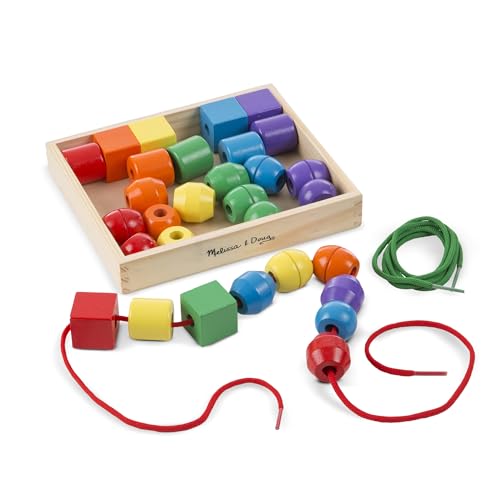
Melissa & Doug Primary Lacing Beads
What We Like
- 30 brightly colored wooden beads
- 5 shapes easy for little hands
- Includes storage case and 2 laces
- Builds fine motor and hand-eye coordination
Trade-offs
- Only 2 laces for multiple children
- Storage case too small for all beads
Thirty painted wooden beads in five distinct shapes make this set a straightforward, no-fuss introduction to threading and sorting for a 3- or 4-year-old. The thin laces slide through each bead easily, so little fingers get the satisfaction of completing a string without frustration. It builds fine motor control and hand-eye coordination through simple, screen-free play, and the wooden storage case keeps everything tidy between sessions. This is the kind of toy that lets a child focus on the task at hand rather than bells and whistles.
The trade-off is that you only get two laces, so if you have siblings or a playdate, someone may have to wait their turn. Compared to the Hieoby Wooden Beads Sequencing Toy, which adds stacking and matching shapes to the mix, this Melissa & Doug set is more focused on pure lacing practice. That narrow focus is actually its strength for the 3-4 age range, where mastering one skill at a time builds confidence. If your child thrives on repetition and you want a durable, no-surprises starter kit, this is the one.
PlanToys Balancing Cactus

What We Like
- Open-ended STEM play with balance and symmetry
- Strengthens fine motor skills and hand-eye coordination
- Eco-friendly rubberwood with water-based pigments
- Award-winning design from multiple global awards
Trade-offs
- Small pieces require supervision for younger 3-year-olds
The PlanToys Balancing Cactus uses a simple stacking challenge to introduce early STEM concepts like weight distribution and structural balance, without screens or batteries. Each piece requires careful grip and placement, building fine motor control and spatial awareness through trial and error. That makes it a natural fit for preschoolers who learn best by doing, especially those who enjoy figuring out how things work on their own terms. The open-ended design means there’s no single right answer, so kids can experiment freely and build confidence in their problem-solving skills.
The PlanToys Balancing Cactus is rooted in Montessori principles, so it teaches cause and effect through a single, focused stacking challenge, great for kids who thrive on calm, screen-free problem-solving. Children learn by making decisions independently and testing strategies, which develops fine motor control and hand-eye coordination as they carefully place each branch. It’s best for families who value sustainable craftsmanship over flashy features, since the rubberwood is bonded with formaldehyde-free glue and colored with organic pigments.
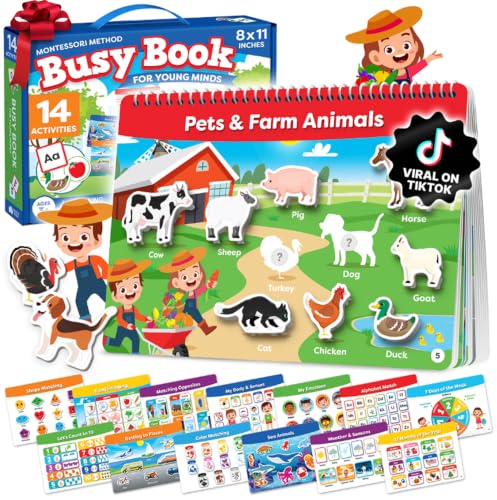
Momo & Nashi Montessori Busy Book
What We Like
- Pre-assembled, no setup required
- 14 educational themes included
- Travel-friendly with packaway box
- Child-safe rounded edges
Trade-offs
- Book dimensions (8.9 x 1.9 x 2.0 inches) limit space for large-group use
- Pre-assembled design limits customization for creative learners
A pre-assembled design means you can hand this busy book to a child the moment it arrives, no cutting, laminating, or velcro-sticking required. With 14 learning themes covering letters, numbers, emotions, and weather, it offers a broad introduction to preschool concepts in a single compact package. The included packaway box with handle makes it easy to toss into a diaper bag or carry-on, so it’s ready for airplanes, restaurants, or waiting rooms. For parents who want a screen-free activity that travels well and keeps little hands busy, this is a practical, no-fuss choice.
The Momo & Nashi Montessori Busy Book comes pre-assembled and ready to use, so there’s no setup time, just open the box and hand it to a toddler. It packs 14 learning activities covering letters, numbers, emotions, and weather, all in a compact book that measures 8.9 inches long. That makes it easy to toss in a diaper bag or keep in the car for quiet play. Reviewers note it’s a screen-free travel activity that stows neatly in its own packaway box with a handle, ideal for airplanes, waiting rooms, or any time you need a few minutes of calm.
Product photos
TONZE Wooden Kids Tool Set

What We Like
- Battery-powered drill with forward/reverse
- 21 guided builds plus open-ended play
- Solid wood with non-toxic water-based paint
- 44 pieces including apron and toolbox
Trade-offs
- Drill requires 2 AA batteries (not included)
- Smooth operation needs loosely placed bolts
The battery-powered drill with separate forward and reverse buttons lets a three-year-old tighten and loosen bolts, offering hands-on cause-and-effect play that builds fine motor skills. The 44-piece set includes solid wood tools, building parts, wheels, and a washable apron, supporting both pretend repair and guided construction. The 21-model guide helps kids progress from simple hammering and sawing to building a flower, car, or robot, making it a natural fit for a child who wants to mimic adults around the house.
The drill works best when bolts are started loose, and if a screw gets stuck, an adult needs to step in to twist it free. It’s not a dealbreaker, but worth knowing if your child tends to crank everything down tight. Best for a three- to five-year-old who loves tools and building. Not ideal for a child who gets frustrated easily when things don’t spin freely.
Product photos
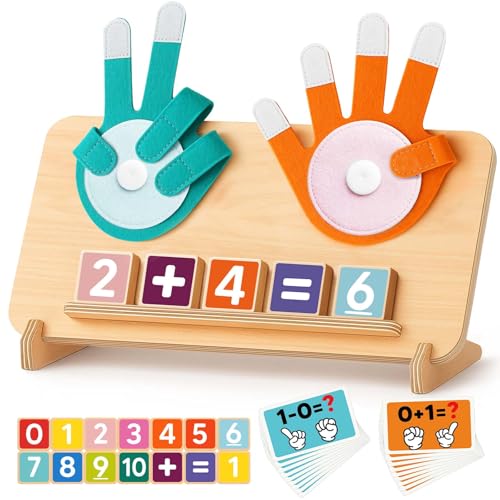
Gagule Number Counting Block Toy
What We Like
- Finger counting board for visual math
- Includes 20 math flash cards
- Smooth rounded edges for safety
- Comes with storage box
Trade-offs
- Limited to addition and subtraction within 10
The finger counting board makes addition and subtraction within 10 visual and intuitive, so a child can literally see how numbers combine and break apart. That hands-on approach helps preschoolers grasp basic math concepts without frustration, which is exactly what you want when introducing numbers at this age. With 14 number blocks, 20 flash cards, and a sturdy storage box, this set gives you multiple ways to practice counting and simple equations. It suits families looking for a structured, screen-free math activity that builds early numeracy skills through tactile play.
The math stays within 10, so once your child masters those basics, you’ll need another toy to push further. Unlike the Melissa & Doug Primary Lacing Beads, which offers 33 pieces including painted wooden beads and laces for fine motor sorting play, this Gagule set is more targeted for number learning but less open-ended. It’s a focused tool rather than a free-play toy, ideal for short, guided sessions rather than independent exploration. If your goal is a clear introduction to counting and simple arithmetic, this delivers exactly that.
Product photos
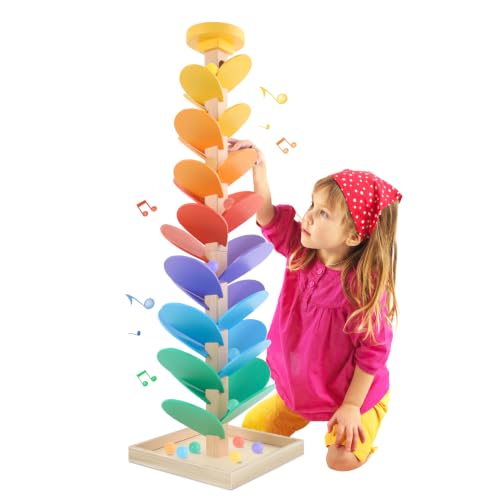
RECEKA Wooden Marble Run Music Tree
What We Like
- 49-piece set with 6 color groups
- Solid wood with non-toxic paint
- Pleasant wood sound on ball drop
- Exercises visual tracking and color recognition
Trade-offs
- 1.6-inch height limits vertical play space
With 49 pieces spanning six distinct colors, this marble run gives a three-year-old plenty to sort, track, and drop without overwhelming them. The solid wood build and non-toxic paint mean it can survive the occasional tumble, and the pleasant wood sound as each ball slides down the leaves keeps little eyes following the path. It’s a smart pick for parents who want a toy that quietly teaches color matching and hand-eye coordination while still feeling like pure fun.
The 1.6-inch height of this set means it won’t create the towering runs some kids expect from marble toys, so it’s better suited for tabletop play than floor-based building. In contrast to the Melissa & Doug Primary Lacing Beads, which offers 33 pieces for threading and sorting, the RECEKA tree provides 49 pieces focused on color sorting and ball tracking. If your child enjoys dropping objects to watch them roll, this is a natural fit; if they prefer stacking upward, a taller option might work better.
Hieoby Wooden Beads Sequencing Toy

What We Like
- 25 beads in 12 colors and 11 shapes
- 8 double-sided pattern cards for sequencing
- Includes lacing beads for threading play
- Lightweight blocks safe for small hands
Trade-offs
- Stand is 2 inches wide, tipsy on uneven surfaces
- No storage case included for the pieces
Twenty-five wooden beads in twelve colors and eleven shapes give a preschooler plenty to sort, stack, and sequence. The eight double-sided pattern cards guide a matching game that, according to the manufacturer, helps enhance problem-solving skills, logical thinking, and observation ability. Threading beads on the included laces adds a hand-eye coordination challenge, and the whole set is made from non-toxic wood with lightweight pieces that tiny fingers can manage easily. This is a versatile combo that covers sequencing, stacking, and fine motor work in one box.
The wooden stand is only two inches wide, so it can tip if a child stacks blocks too enthusiastically on one side. For comparison, the PlanToys Balancing Cactus measures 9.3 by 9.3 inches, offering a much broader base for stacking games. But if you want a single toy that teaches sequencing, color matching, shape recognition, and lacing, all with one set of beads, this Hieoby kit delivers those learning modes in a compact package. It is best for a child who enjoys following a pattern card and needs variety to stay engaged.
Product photos
TMGOT Magnetic Wooden Maze

What We Like
- 20 double-sided cards for variety
- Portable and lightweight for travel
- Magnetic pen secured with rope
- Smooth edges and sturdy wood
Trade-offs
- Only 4 colors limit complexity for older kids
- Puzzle board is relatively small at 5.7 x 8.26 inches
Twenty double-sided cards give this magnetic maze plenty of variety, each card presents a new pattern to match, so kids can stay engaged for multiple sessions. The wooden board is compact and lightweight, making it easy to toss in a backpack for restaurant waits or plane rides. It’s a practical pick for parents who want a quiet, screen-free activity that builds fine motor skills and color recognition without taking up much space. The magnetic pen stays attached with a rope, so you won’t lose it mid-trip, and the acrylic cover keeps all the wooden pieces securely inside.
The TMGOT Magnetic Wooden Maze comes with 20 double-sided cards, a magnetic pen, and 16 round wooden pieces in four colors. It’s a focused matching game that helps kids practice precision movements and color recognition. Unlike the lacing and sorting set from Melissa & Doug, which includes 30 painted beads and two laces, this maze offers a more guided activity where each card gives a specific pattern to follow. It’s best for children who enjoy structured matching puzzles and need to develop fine motor control, but it may not hold the interest of kids who prefer open-ended creative play.
Product photos
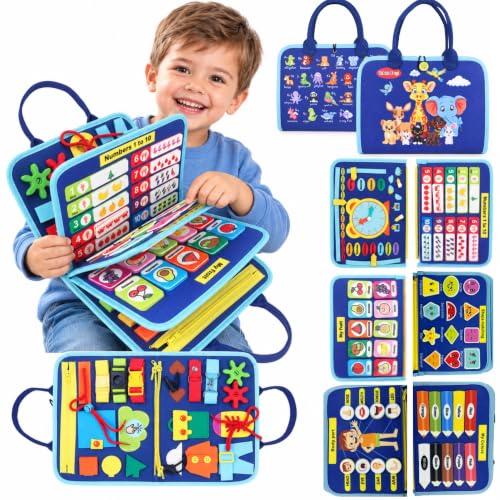
URBAN TOYS Montessori Busy Board
What We Like
- 30 activities across 8 pages
- Teaches letters, numbers, shapes, colors
- Practice buckles, zippers, buttons, laces
- Lightweight for airplane and car travel
Trade-offs
- No activities for children under 3
Thirty hands-on activities packed into eight pages means this busy board covers more ground than most single-topic toys. Letters, numbers, shapes, colors, and matching exercises let a child around age three or four cycle through different skills without flipping to a new toy. The buckles, zippers, buttons, and laces also build fine motor control and everyday independence, so it pulls double duty as a quiet learning tool and a practical life-skills trainer. For parents who want one compact item that does the job of several, this all-in-one approach saves shelf space and keeps a child engaged longer during a single sitting.
With 30 hands-on activities across 8 pages, the URBAN TOYS Montessori Busy Board gives a preschooler plenty to explore, letters, numbers, shapes, colors, and matching games all in one book. That variety means a child can practice multiple skills without needing a stack of different toys, which is handy for keeping a 3-year-old engaged during a car ride or at a restaurant. Reviewers note it works well as a screen-free travel activity, and the soft felt pieces add a sensory element that many kids enjoy.
Product photos
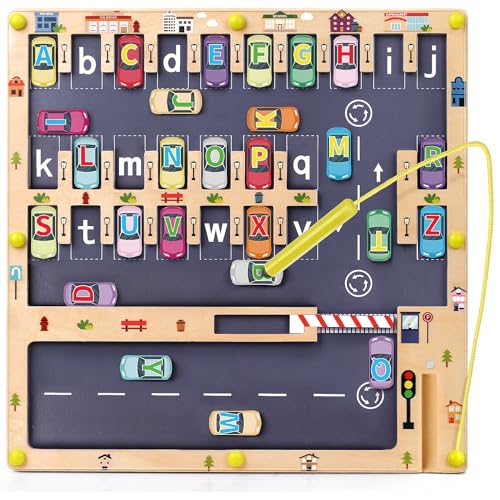
Scuwtocn Wooden Magnetic Alphabet Maze
What We Like
- Safe rounded edges and acrylic cover
- 26 car-shaped letters for parking game
- Strong magnet holds blocks even vertically
- Portable with attached pen and storage
Trade-offs
- Pen must stay vertical during use
- Only covers alphabet learning, not numbers or shapes
A 26-piece magnetic parking lot where each car is a letter means kids learn the alphabet by literally parking the right car in its spot. The acrylic cover keeps the small wooden blocks contained, so there’s no choking hazard, and the attached magnetic pen is strong enough to guide letters even when the board is tilted. For a child around age three or four who loves cars and is just starting to recognize letters, this turns what could be a passive flashcard drill into an active, hands-on game that strengthens fine motor control and letter familiarity at the same time.
The pen has to stay vertical for the magnet to work properly. If your child tends to tilt or swing the wand, the block may drop before reaching its space. That said, the Scuwtocn maze is more portable and self-contained than something like the Melissa & Doug Lacing Beads, which has loose pieces that can scatter. If your kid is patient enough to keep the pen upright, this is a focused, mess-free way to practice letters. Not ideal for children who prefer open-ended building or counting games, since it’s strictly an alphabet toy.
Product photos
How We Evaluated Montessori Toys For 3-4 Year Olds
This guide draws from manufacturer specifications, expert round-ups, and patterns in owner feedback. It highlights toys that align with Montessori principles: self-correction, real-world materials, and a single skill focus per activity.
Four criteria mattered most for this age group. First, the toy must isolate one skill, lacing, balancing, sequencing, so a child can master it without distraction. Second, materials should be natural (wood, fabric, non-toxic finishes) rather than plastic with electronic sounds. Third, the toy must allow independent play: the child should be able to set up, attempt, and correct mistakes without adult intervention. Fourth, portability and storage matter for families on the go.
A research-led evaluation has limits. We cannot report how a toy holds up to daily chewing or how long a particular child stays engaged. What we can do is identify which toys most consistently match the Montessori method based on design, materials, and what other parents report about durability and engagement. For more context on the philosophy behind these picks, our Montessori toy guide covers the full approach.
What To Look For In Montessori Toys For 3-4 Year Olds
A good Montessori toy for this age does one thing well, uses natural materials, and lets the child see and fix their own mistakes without a grown-up stepping in.
Skill Isolation
The best Montessori toys teach one concept at a time. A lacing set works on threading and hand-eye coordination. A balancing game focuses on weight distribution and symmetry. When a toy tries to teach letters, numbers, colors, and shapes all at once, a three-year-old loses the thread. Look for toys that do one job and do it completely.
Natural Materials
Wood, cotton, wool, and metal feel different from plastic. They have weight, texture, and temperature variation that teach a child about the real world. Non-toxic paints and water-based finishes are standard on quality wooden toys. Avoid anything with small parts that could break off or sharp edges. The best Montessori toys for 3 year olds almost always use solid wood construction.
Self-Correction
A Montessori toy should show the child when they have made a mistake. A bead that does not fit the lace, a block that tips the cactus, a marble that rolls the wrong way, these are feedback loops. The child adjusts their own action without an adult saying “no, try again.” This builds patience and problem-solving.
Portability and Storage
- Does the toy come with a storage box, bag, or tray?
- Can a child carry it independently?
- Does it fit in a diaper bag or backpack for restaurants and travel?
- Are there loose pieces that will scatter under car seats?
A toy that takes five minutes to set up and ten minutes to clean up will not get used. Prioritize storage solutions that match your daily routine.
For a deeper look at how to organize these toys at home, our guide on how to create a Montessori playroom offers practical shelf and rotation strategies.
Montessori Toys For 3-4 Year Olds Compared
The table below compares all 10 picks by material, skill focus, and key features so you can see at a glance which toy fits your child’s current needs.
| Product | Material | Dimensions | Age Range |
|---|---|---|---|
| Melissa & Doug Primary Lacing Beads | Wooden | L 8.8 inches, W 7.3 inches, H 1.3 inches | Ages 3-5 |
| PlanToys Balancing Cactus | Sustainably harvested rubberwood | 9.3 x 9.3 x 8.6 inches | 3+ years |
| Momo & Nashi Montessori Busy Book | N/A | 8.9 x 1.9 x 2.0 in | N/A |
| TONZE Wooden Kids Tool Set | Solid wood, water-based paint | L 11.5 inches, W 2.5 inches, H 8.4 inches | N/A |
| Gagule Number Counting Block Toy | Natural wood, non-toxic paint | 11.7 x 6.2 x 1.2 inches | 3-6 years |
| RECEKA Wooden Marble Run Music Tree | Solid wood, environmental paint | L 14.9 inches, W 11.8 inches, H 1.6 inches | 3+ years |
| Hieoby Wooden Beads Sequencing Toy | Non-toxic wood | 8.7 x 2.0 x 6.7 inches | 3-5 years |
| TMGOT Magnetic Wooden Maze | Natural wood | 5.7 x 8.26 inches | 3-7 years |
| URBAN TOYS Montessori Busy Board | N/A | 11.8 x 8.2 x 2.3 in | 3+ years |
| Scuwtocn Wooden Magnetic Alphabet Maze | Natural wood + acrylic | 11.8 x 11.8 inches | N/A |
Frequently Asked Questions
What makes a toy Montessori for a 3-4 year old?
A Montessori toy isolates one skill, uses natural materials, and lets the child self-correct. It does not have batteries, flashing lights, or a single right way to play. The child leads the activity, and the toy responds to their actions with real physical feedback, a bead that won’t thread, a block that tips, a shape that does not fit.
How many toys does a 3-4 year old need at once?
Montessori philosophy recommends rotating toys rather than offering many at once. Three to five well-chosen toys on a low shelf let a child choose deeply rather than flit between options. When interest wanes, swap one or two out. This keeps the play space calm and the child focused.
Are Montessori toys better than regular toys for preschoolers?
Montessori toys are designed to build specific skills through repetition and self-correction, which many parents find more effective than passive electronic toys. They tend to last longer because they are made from wood and other durable materials. That said, a child also benefits from open-ended imaginative play with dolls, blocks, and dress-up clothes.
Can a 3 year old use toys meant for 4 year olds?
It depends on the skill. A three-year-old who has good fine motor control may enjoy sequencing or balancing toys listed for ages 4 and up. Watch for small parts that pose a choking hazard. If the toy frustrates them, set it aside and try again in a few months. The best toys for 3-4 year olds span that range by design.
What is the difference between Montessori toys and educational toys?
All Montessori toys are educational, but not all educational toys are Montessori. A Montessori toy is self-correcting, made from natural materials, and designed for independent use. Many educational toys rely on electronic prompts, rewards, or adult-led instruction. Montessori toys trust the child to discover the lesson through their own repeated attempts.
The Bottom Line
The Melissa & Doug Primary Lacing Beads is our Best Overall pick because it nails the Montessori sweet spot: one skill, natural materials, and clear self-correction. It is ideal for a single child who needs focused fine motor practice. If your child thrives on open-ended challenges, the PlanToys Balancing Cactus offers a more complex cause-and-effect experience with an award-winning design.
For budget-conscious families, the Momo & Nashi Montessori Busy Book delivers 14 themes in a pre-assembled, travel-friendly format that requires no setup. The Gagule Number Counting Block Toy is a strong choice if you want a gentle introduction to math concepts before kindergarten.
The single most important factor when choosing a Montessori toy for this age is skill isolation. A toy that tries to teach everything at once teaches nothing well. Pick one skill, lacing, balancing, sequencing, counting, and let your child master it before moving on.
