
10 Best Family Board Games For 6 Players in 2026
This post contains affiliate links. As an Amazon Associate, we earn from qualifying purchases.
For a family game night with exactly six people, the USAOPOLY Hues and Cues Color Guessing Game is our best overall pick. It works for 3-10 players, takes seconds to learn, and rewards creative thinking over deep rules. For larger crowds, the Big Potato Herd Mentality Party Game handles up to 20. If you prefer working together, the Asmodee Just One Cooperative Party Game gets everyone on the same team.
Finding a board game that keeps six players of different ages engaged is the real challenge. Too many games max out at four, and others drag on too long or leave younger kids bored. You need a game that fits your family’s attention span, reading level, and tolerance for competition.
We built this guide by analyzing manufacturer specs, expert round-ups, and patterns in owner feedback for dozens of games. The ten picks here cover cooperative play, pure strategy, silly action, and everything in between, so you can match the game to your group’s mood.
Top 10 Family Board Games For 6 Players in the Market
Certain content that appears on this site comes from Amazon. This content is provided "as is" and is subject to change or removal at any time.
The Best Family Board Games For 6 Players, Reviewed
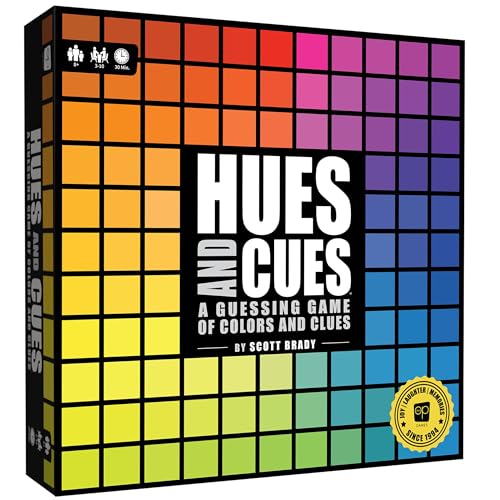
USAOPOLY Hues and Cues Color Guessing Game
What We Like
- 480 unique color squares for variety
- Quick to learn with easy rules
- Works for 3-10 players
- Encourages creative word clues
Trade-offs
- No scoring or strategy depth for competitive groups
- Requires at least three players to play
With 480 distinct color squares, Hues and Cues ensures that no two rounds are the same, so every playthrough feels fresh. That variety works well for groups of three to ten players, and the easy rules mean you can get started quickly. It rewards creative thinking without requiring special knowledge, making it accessible for anyone ages eight and up. The core experience is simple: one player gives a one- or two-word clue, and everyone else tries to guess the exact hue. That shared challenge creates a lively, social atmosphere that keeps the fun going.
The trade-off is that Hues and Cues is purely a guessing game, with no scoring or strategy depth for competitive groups. If your group prefers a game with more competitive elements, this will feel more like an icebreaker than a main event. But for a family gathering where the goal is laughter and connection rather than winning, it delivers exactly what it promises: a colorful, low-pressure activity that gets everyone talking. It works for a wide age range starting at 8 and doesn’t require players to keep up with complex rules.
Product photos
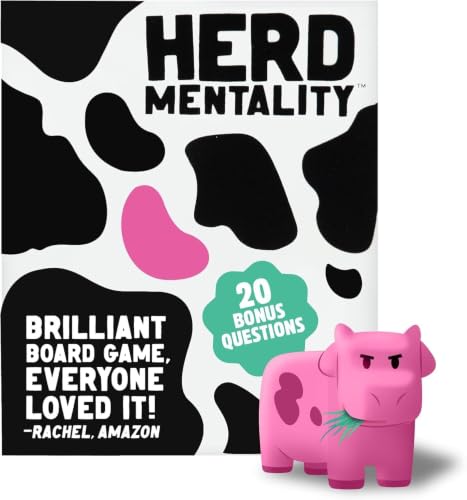
Big Potato Herd Mentality Party Game
What We Like
- Supports 4-20 players
- Easy to learn rules
- Includes 20 extra questions
- Quick to play and replay
Trade-offs
- Age 10+ excludes younger kids
- Odd one out gets pink cow of doom
With room for 4 to 20 players, Herd Mentality is built for exactly the kind of chaotic, laugh-filled game night where you don’t want to leave anyone out. It’s easy to learn, just flip a question and guess what everyone else is thinking. If your answer matches the majority, you score a cow; if you’re the odd one out, you’re stuck with the pink cow of doom. That simple twist keeps the pressure on and the jokes flowing, making it a natural fit for big family gatherings or holiday get-togethers where you need something that works for teens and adults alike. The included 20 extra questions add variety, so the game stays fresh even after a few rounds.
The catch is that the pink cow of doom can feel a bit punishing for the player who consistently thinks differently, it’s a social dynamic that might frustrate someone who’s more of a lone wolf. Compared to other party games in the guide, Herd Mentality is competitive and singles out the oddball. If your group enjoys a little gentle ribbing and doesn’t mind being the target, this is a blast. But if you have players who get embarrassed easily, you might want a game where everyone wins together. For large, rowdy groups that love a good-natured roast, Herd Mentality delivers.
Product photos
Plan B Games Camel Up Second Edition

What We Like
- Unique pyramid dice shaker builds suspense
- Supports up to 8 players
- Updated 2018 edition with new artwork
- Rogue camels add unexpected twists
Trade-offs
- Betting focus means less direct player interaction
- No solo or two-player mode for smaller groups
The pyramid dice shaker that releases one die at a time turns every camel move into a mini event, making the race feel genuinely unpredictable. That mechanic alone makes this a standout for groups of up to eight who want a game that’s more about shared laughter than deep planning. The 2018 refresh gives it a clean, inviting look that keeps everyone engaged round after round.
With a playtime of 30-45 minutes, Camel Up keeps the action moving fast enough that even younger players stay engaged, but the quick rounds mean the game is over before you can develop deep strategies. For a family night where you want everyone from age 8 up to stay involved without anyone zoning out, this delivers exactly that energy.
Product photos
Spin Master Hedbanz Picture Guessing Game

What We Like
- Picture cards for non-readers
- Includes 6 themed headbands
- Teaches deductive reasoning
- Quick 3-card win condition
Trade-offs
- Only 2-6 players, not larger groups
- No expansion cards included
Sixty-nine picture cards mean even kids who can’t read yet can jump in and play. That’s the core insight behind this second edition of the classic “What Am I?” guessing game. Instead of word cards, each player wears a headband with an image (dino, narwhal, robot, flower, butterfly, or brain) and asks yes/no questions to figure out what’s on their own card. The first person to correctly guess three cards wins, and the included timer keeps rounds moving so attention spans don’t wander. For families with children ages 6 and up, this is a low-stress way to build deductive reasoning without anyone feeling left out because they can’t read yet.
The 2-6 player cap means it won’t stretch to cover a big family reunion or a classroom party the way a game like Herd Mentality can handle up to 20 players. Still, for a family night where the youngest members need to be included and the goal is laughter rather than deep strategy, this delivers exactly what it promises.
Hasbro Gaming Clue Mystery Board Game

What We Like
- Textured gold-plated zinc tokens
Trade-offs
- Ages 8+ excludes younger kids
- No playtime listed for planning
Six suspects, one murder, and a beautifully detailed Tudor Mansion set the stage for this reimagined Clue game. Families with kids aged 8 and up will find the deduction loop satisfying. Each player collects Clue cards to narrow down the killer, weapon, and room, and the race to solve it keeps the energy high.
Product photos
CMYK Wavelength Mind Reading Party Game

What We Like
- Supports 2-12+ players
- 5-second setup, 1-minute learn
- 30-minute playtime
Trade-offs
- Requires group creativity for clues
With support for 2 to 12+ players, this game fits everything from a quiet family of four to a chaotic holiday gathering without anyone sitting out. The 5-second setup and 1-minute learning curve mean you can go from box to laughing in under two minutes, no rulebook wrestling. The game works by having players give clues that fall on a spectrum, turning abstract thinking into a shared challenge that gets everyone talking.
The 30-minute playtime can feel brisk if your group loves to linger over rounds, you might find yourself resetting for another go. Compared to Hues and Cues, which is a color guessing game for 3-10 players, Wavelength supports a wider player count and focuses on open-ended clues rather than a fixed color board. It’s a lighter, faster option that rewards quick wit over deep deduction.
Product photos
Hasbro Gaming Monopoly Classic Board Game

What We Like
- 8 larger metal tokens for style
- Banker's tray keeps cash organized
- Includes family game records tracker
- Classic gameplay for 2-6 players
Trade-offs
- No cooperative play, elimination until one winner
- Playtime can stretch long with 6 players
A 2-6 player count means Monopoly fits your six-player family night exactly, but the real upgrade here is the Banker’s storage tray that keeps cash, deeds, houses, and hotels from sliding into chaos mid-game. That small organizational fix, plus eight larger metal tokens like the Scottie Dog and a new Sack of Money, modernizes a classic without changing the ruthless buy-and-bankrupt loop fans expect. It’s the right pick for groups who want a familiar, property-trading marathon where the last player standing wins, the kind of game that turns a quiet evening into a loud, competitive ritual.
Monopoly’s elimination mechanic means someone’s out early, and with six players the downtime between turns can drag. If your group loves the slow burn of empire-building and doesn’t mind a player sitting out, this is your classic. If you want everyone engaged start to finish, look at Camel Up instead.
Product photos
Goliath Don't Wake Daddy Action Game

What We Like
- No reading required for play
- Supports up to 6 players
- Develops hand-eye coordination
- Quick to learn for young kids
Trade-offs
- Limited strategic depth for older players
- Not suitable for kids under 4 years old
With support for up to six players and no reading required, this is one of the few board games a four-year-old can jump into on equal footing with older siblings. The simple press-and-react mechanic means everyone gets a turn without needing to decode rules or wait through long explanations, which keeps the energy high and the giggles rolling. It’s a great way to introduce turn-taking and fine motor control to the youngest members of a family game night, and the suspense of whether Daddy will wake up adds just enough tension to hold attention spans.
The gameplay is entirely luck-based, so older kids or adults looking for strategy or meaningful decisions won’t find them here. Don’t Wake Daddy is designed for ages 4 and up, making it a good fit for younger children who enjoy simple, suspenseful fun. For groups where everyone is 8 or older, a game with more strategic depth might offer more lasting appeal.
Asmodee Just One Cooperative Party Game

What We Like
- Cooperative mystery word guessing
- Unique clue mechanic prevents repeats
- Quick 15-minute playtime
- Supports 3 to 7 players
Trade-offs
- Identical clues cancel out, frustrating some
- Not playable with groups larger than 7
The cooperative clue-giving mechanic is what makes Just One stand out in a family game night. Everyone works toward the same goal, but identical clues cancel each other out, so you have to think creatively without repeating. Designed for 3 to 7 players and a brisk 15-minute playtime, it fits neatly into a family gathering where you want something inclusive and fast-paced. The 2025 refresh keeps the core concept tight, making it a strong pick for groups that prefer collaboration over competition.
The game is designed for exactly 3 to 7 players, so if your group is larger than that, someone will be left out. Compared to Hues and Cues, which supports up to 10 players, Just One has a smaller maximum group size. For families who love wordplay and hate long rules explanations, this is a solid, low-stress option that gets everyone talking.
Product photos
Asmodee 7 Wonders Civilization Strategy Game

What We Like
- Supports 3-7 players
- 30-minute playtime keeps rounds fast
- Ages 10+ strategy depth
Trade-offs
- Requires 10+ age minimum for complexity
- Base game only, expansions sold separately
A 30-minute playtime with 3-7 players means you can run through a full civilization arc in the time it takes most strategy games to finish setup. That speed, combined with card drafting and military conflicts, makes it a rare beast: a deep strategy game that doesn’t eat the whole evening. It’s best for families with older kids (10+) who want real decisions, resource management, long-term goals, and neighbor-watching, without the slog.
This game demands more focus and reading than a party game like Herd Mentality, which accommodates up to 20 players with simpler rules. That’s fine if your group enjoys competition, but if you want quick laughs with a big crowd, this one requires a longer attention span. It’s a deliberate step up for families ready to move from light fun to real strategic stakes.
Product photos
How We Evaluated Family Board Games For 6 Players
We started with the player count. A game that says “2-6 players” often plays best at four, so we focused on titles where six feels natural, not cramped. We cross-referenced official rules, component lists, and age ratings against expert recommendations from round-ups of family board games and games for 6-8 players.
The three criteria that mattered most were playtime, age range, and replayability. A shorter game is very different from a longer one when you have restless kids. We also looked at how many players can actually participate at once, some games claim six but only let one or two act per turn, which leaves the rest waiting.
We prioritized games that consistently appear on curated lists of best games for 6 to 8 players and board games for 5-6 people, and we weighed trade-offs honestly.
What To Look For In Family Board Games For 6 Players
Choosing a game for six players means balancing player count, complexity, and playtime. Here are the key factors to consider before you buy.
Focus on games that genuinely support six simultaneous players, match the youngest player’s reading ability, and fit your available time slot. A short game and a long game serve very different family nights.
Player Count and Turn Structure
A game that supports six players on the box might still leave three people waiting while the other three take turns. Look for simultaneous play mechanics, like in 7 Wonders, where everyone acts at once. For 6-player board games, the best designs keep everyone engaged between turns with betting, guessing, or cooperative discussion.
Age Range and Reading Level
Check the minimum age rating, but also consider whether the game requires reading. Hedbanz uses picture cards for non-readers, while Clue and Monopoly assume basic reading skills. Games like Don’t Wake Daddy require no reading at all, making them accessible to kids as young as four. For families with a wide age gap, look for games for five or six that include simpler roles or team play.
Playtime and Replay Value
A 30-minute game like Just One or Wavelength fits a weeknight, while Monopoly can stretch past two hours with six players. Consider how often you will replay the same game. Games with variable setups, like Camel Up’s random camel order or Hues and Cues’ 480 unique color squares, offer more replay value than a fixed board.
- Read the rules summary online to confirm the game actually works well at six players.
- Check if the game uses player elimination, some kids handle it fine, others get upset.
- Look for expansion packs if you plan to play the same game many times.
- Verify that the youngest player’s reading level matches the cards or instructions.
- Consider whether your group prefers competitive, cooperative, or team-based play.
A game that fits your family’s schedule and temperament will hit the table far more often than one with perfect reviews but the wrong playtime.
Family Board Games For 6 Players Compared
The table below compares all ten picks across player count, age range, playtime, and key features so you can see at a glance which game fits your family.
| Product | Players | Ages | Weight | Dimensions |
|---|---|---|---|---|
| USAOPOLY Hues and Cues Color Guessing Game | 3-10 | 8+ | 2.7 pounds | 10 x 10 x 2.5 inches |
| Big Potato Herd Mentality Party Game | 4-20 | 10+ | 1.0 pounds | 7.4 x 5.8 inches |
| Plan B Games Camel Up Second Edition | 3-8 | 8+ | 2.9 lb | 11.7 x 11.7 x 2.8 in |
| Spin Master Hedbanz Picture Guessing Game | 2-6 | 6+ | 1.2 pounds | 10.6 x 10.6 x 2.0 inches |
| Hasbro Gaming Clue Mystery Board Game | 2-6 | 8+ | 2.2 pounds | 15.8 x 10.5 x 1.6 inches |
| CMYK Wavelength Mind Reading Party Game | 2-12+ | N/A | 2.5 pounds | 10.2 x 10.2 x 2.8 inches |
| Hasbro Gaming Monopoly Classic Board Game | 2 to 6 | 8+ | N/A | 10.5 x 10.5 x 0.1 inches |
| Goliath Don't Wake Daddy Action Game | 2-6 | 4+ | N/A | 10.5 x 2.5 x 10.5 in |
| Asmodee Just One Cooperative Party Game | 3-7 | 8+ | 1.3 pounds | 6.3 x 2.1 x 9.1 inches |
| Asmodee 7 Wonders Civilization Strategy Game | 3-7 | 10+ | 3.2 lb | 11.6 x 11.6 x 3.0 inches |
Frequently Asked Questions
What is the best family board game for exactly six players?
The USAOPOLY Hues and Cues Color Guessing Game is our top pick because it supports 3-10 players, has very simple rules, and keeps everyone involved with creative color clues. It works well for families with kids ages 8 and up.
What is a good board game for six players who don’t like strategy?
For groups that prefer creativity over strategy, Wavelength is a fast, mind-reading party game with a 30-minute playtime and no complex rules. Hues and Cues is another good option that focuses on describing colors rather than building strategies.
Are there cooperative board games for six players?
Yes. Just One is a cooperative word-guessing game for 3-7 players where everyone works together to give clues without repeating each other. It plays in about 15 minutes and rewards teamwork over competition.
What board games for six players work with young kids?
Don’t Wake Daddy works for ages 4 and up with no reading required, and Hedbanz uses picture cards for kids ages 6 and older. Both support up to six players and keep the rules simple enough for young children.
How long do most six-player board games take to play?
Playtime varies widely. Just One and Wavelength finish in about 15-30 minutes, while Monopoly and 7 Wonders take 30-60 minutes depending on player count and familiarity with the rules. Check the listed playtime before buying to match your available time.
The Bottom Line
For most families with six players, the USAOPOLY Hues and Cues Color Guessing Game is the best choice. It is quick to learn, works for a wide age range, and keeps everyone engaged with creative clues rather than complicated rules. It is the safest bet for a mixed-age group that wants to start playing in under two minutes.
If your group leans competitive or prefers strategy, the Asmodee 7 Wonders Civilization Strategy Game offers deep decisions in a fast 30-minute round. For families with kids under 8, the Goliath Don’t Wake Daddy Action Game or the Spin Master Hedbanz Picture Guessing Game are better fits because they require no reading.
The single most important factor is matching the game to your group’s actual attention span and reading level. A game that fits your family’s energy will be played again and again, while a mismatch will sit on the shelf.
