
10 Best Educational Toys For 9 Month Old in 2026
This post contains affiliate links. As an Amazon Associate, we earn from qualifying purchases.
The VTech Busy Learners Activity Cube is our Best Overall pick because it combines five sides of interactive play with a motion sensor that actually encourages crawling. For babies who prefer seated exploration, the VTech Little CEO Learning Desk offers a desk-style setup with numbers, letters, and music. The Melissa & Doug Flip Fish Stuffed Animal wins for sensory play with its multi-textured fabrics and crinkle sounds.
At nine months, your baby is shifting from passive observation to active exploration. They want to grab, mouth, shake, and figure out how things work. The right toy at this stage supports crawling, fine motor control, and early cause-and-effect understanding without overwhelming a still-developing attention span.
We built this guide by analyzing manufacturer specifications, expert round-ups on infant development, and patterns in parent feedback across dozens of products. The result is a focused list of ten toys that target specific skills, from teething and grasping to shape sorting and auditory learning, so you can match a toy to your baby’s current interests.
Top 10 Educational Toys For 9 Month Old in the Market
Certain content that appears on this site comes from Amazon. This content is provided "as is" and is subject to change or removal at any time.
The Best Educational Toys For 9 Month Old, Reviewed
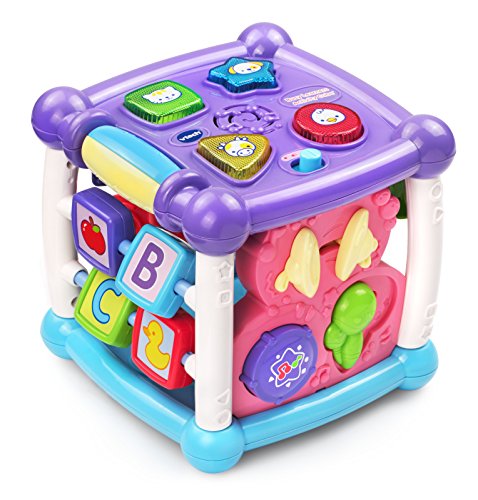
VTech Busy Learners Activity Cube
What We Like
- 5 sides of play encourage exploration
- Motion sensor attracts crawling babies
- 4 light-up buttons teach animals and shapes
- Volume control and auto shut-off
Trade-offs
- 2 AAA demo batteries included, not long-life
- At 1.4 lb, not ideal for carrying around
The VTech Busy Learners Activity Cube has five sides of play, so a baby can discover something new every time they bat, grab, or crawl toward it. The motion sensor triggers sounds when the cube moves, which encourages a baby to chase it, turning tummy time into a game that builds motor skills. With 14 interactive features, 25 songs, and four light-up buttons introducing animal names and shapes, it keeps curious minds engaged without overwhelming them. The age range is 6 months to 3 years, so it can be used as a child grows from sitting up to early preschool play.
The included demo batteries won’t last long, so plan on picking up fresh AAA batteries right away. Compared to the lighter Manhattan Toy Winkel Rattle & Teether (0.2 lb), this cube is heavier and less portable, so it’s better suited for stationary floor play than tossing in a diaper bag. For a stationary activity center that rewards movement and discovery, the VTech Busy Learners Activity Cube offers a lot of learning in a compact design.
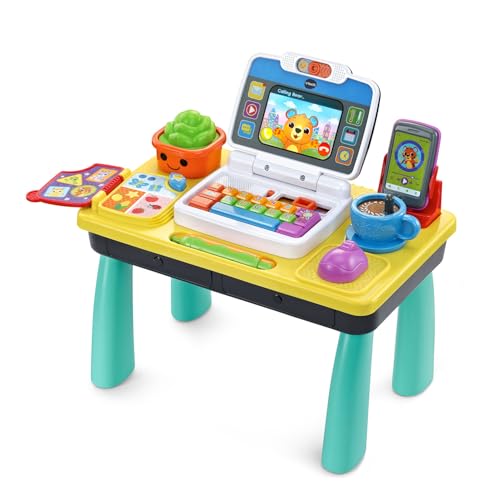
VTech Little CEO Learning Desk
What We Like
- Teaches numbers, letters, and music
- Multiple interactive features for fine motor skills
- Includes sing-along songs and melodies
- Phone, mouse, and book for pretend play
Trade-offs
- At 3 pounds, it's heavy for a 9-month-old to move
- Batteries included only for demo use
A desk that introduces numbers, letters, and music through typing, stirring, flipping, and scrolling means your 9-month-old gets a mini command center for early learning. The phone, mouse, and peekaboo plant keep little fingers busy with cause-and-effect play, while sing-along melodies add a musical layer. It is intended for ages 9-36 months and requires 3 AA batteries (included for demo only).
The trade-off is weight: at 3 pounds, this desk stays put, which is great for stability but means your baby won’t carry it around like the lighter VTech Busy Learners Activity Cube (1.4 pounds). That cube offers a different play experience in a portable form, while the desk gives a more desk-like experience with a phone and mouse.
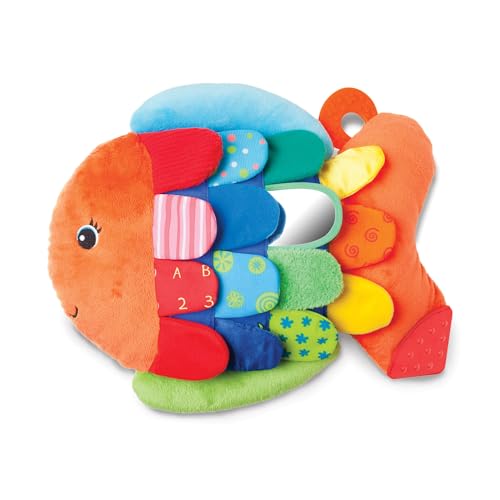
Melissa & Doug Flip Fish Stuffed Animal
What We Like
- Multi-textured fabrics invite tactile exploration
- Squeaker tail and crinkle sounds reward touch
- Shatterproof mirror supports self-recognition
- Peek-a-boo scales hide pictures for discovery
Trade-offs
- At 13.5 inches tall, it's bulky for tiny hands
- Surface wash only, no machine cleaning option
The crinkling, squeaking, multi-textured fabrics reward every grab, so a baby who’s just learning to reach and grasp gets instant feedback, a squeak here, a crinkle there. That makes it a strong option for sensory exploration, especially for little ones who need more than a single rattle to stay engaged. The hidden pictures under each scale add a peek-a-boo element that invites discovery as their curiosity grows.
Measuring 13.5 inches in height, this plush fish is designed as a lap-friendly companion rather than a compact, on-the-go toy. Its generous size invites babies to cuddle and explore during seated play or tummy time. The multi-textured body, complete with a squeaker tail and crinkling elements, encourages sensory discovery through touch and sound. Hidden pictures beneath brightly colored peek-a-boo scales add an element of surprise, while a shatterproof mirror supports self-recognition. Weighing just 0.8 pounds, it remains light enough for little arms to grasp and interact with, promoting finger strength and cause-and-effect learning during screen-free play sessions.
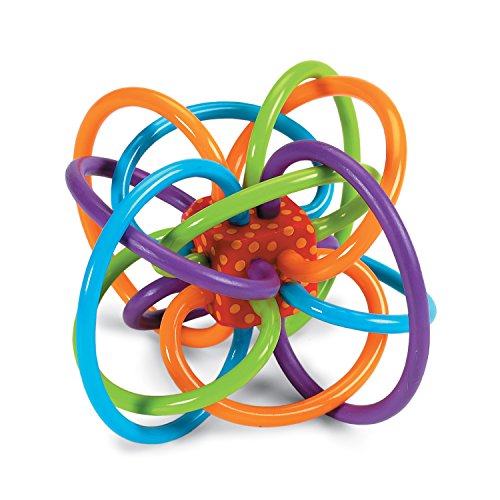
Manhattan Toy Winkel Rattle & Teether
What We Like
- BPA-free teething tubes for soothing
- Lightweight and easy to grasp
- Encourages two-handed play and clutching
- Center cube rattle for auditory stimulus
Trade-offs
- No electronic sounds or lights for older babies
Weighing just 0.2 pounds, this rattle is light enough for tiny hands to wave without tiring, and the continuous loop of soft, BPA-free tubes makes it easy for babies to grab and hold. The center cube houses a gentle rattle that rewards shaking with sound, so babies learn cause and effect while soothing sore gums. It’s a simple, focused toy that supports grasping, shaking, and chewing, exactly what a teething baby needs.
The Winkel’s simplicity is a strength for teething. Its BPA-free tubes are safe to chew and can be refrigerated for extra soothing, and the lightweight 0.2-pound design makes it easy to toss in a diaper bag. But there are no electronic sounds or lights, so once your baby outgrows the need to mouth everything, they may lose interest faster than with a busier toy like the VTech Busy Learners Activity Cube.
Fisher-Price Laugh & Learn Gift Set

What We Like
- Three electronic toys in one set
- Over 20 songs, sounds, and phrases per toy
- Lights and rattle beads engage sensory skills
- Pretend play with to-go cup and earbuds
Trade-offs
- Batteries not included in the set
- Electronic sounds can be repetitive for caregivers
Getting three electronic toys in one set means you have a to-go cup with lights and over 20 songs, earbuds that teach colors and opposites, and a key fob with counting phrases, all right out of the box. That variety works well for a baby who’s just starting to reach, bat, and explore cause and effect. The lights and sounds grab attention while the rattle beads and teether badge add tactile play. Families who want multiple learning modes without buying separate toys will appreciate the set, and the 6-month to 3-year range means it grows with your child through early pretend play stages.
None of these toys come with batteries, so you’ll need to supply your own before the lights and songs work. Compared to the VTech Busy Learners Activity Cube, which is a single larger cube, this set gives you three smaller items that are easier to scatter or lose. The earbuds and key fob are especially small, so keep an eye on them during play. For a baby who’s still mouthing everything, the teether and squishy bottle are nice, but the electronic parts mean you’ll be listening to those 20+ phrases on repeat. If you prefer quieter, battery-free options, the Melissa & Doug Flip Fish offers crinkles and a mirror without any power needed.
Product photos
SmileyBubs Montessori Baby Toys Set

What We Like
- Six targeted developmental tools in one set
- Non-toxic, BPA-free materials for safe mouthing
- Sliding box teaches cause and effect
- Stacking cups build fine motor skills
Trade-offs
- Limited to 7-9 month developmental stage
- No electronic or sound features for auditory variety
This set packs six developmental tools into one box: a sliding box with three balls, a mirror puzzle, stacking cups, a treasure basket with two sensory balls, a rainstick, and animal flash cards. Every piece is made from non-toxic, BPA-free materials, so when your baby mouths, grips, and explores, you don’t have to hover. The sliding box teaches cause and effect, stacking cups build fine motor skills, the rainstick sharpens auditory senses, and the sensory balls stimulate touch. It’s a complete kit for a 7-9 month old working on object permanence, fine motor control, and auditory awareness without buying a dozen separate toys.
The SmileyBubs Montessori Baby Toys Set is precisely designed for 7-9 month old babies, offering six developmental tools that target cause and effect, fine motor skills, and sensory play. Compared to the VTech Busy Learners Activity Cube, which uses electronic lights and sounds, this set relies entirely on manual play, a deliberate choice for parents who prefer quiet, tactile exploration without batteries. The downside is that this set is tightly focused on a specific developmental window, so families looking for a toy that spans multiple stages might consider supplementing with other options.
Product photos
Smart Steps Happy Hammer Toy

What We Like
- Soft silicone ends for safe engagement
- Lights and sounds stimulate auditory cues
- Textured handle promotes grasping skills
- Designed for cause and effect learning
Trade-offs
- Only one play action limits long-term engagement
- Not suitable for children under 9 months
At just 0.2 pounds with soft silicone ends, this hammer is light enough for a 9-month-old to wave and smack without hurting themselves or anything nearby. The textured handle gives tiny fingers something to grip, while the lights and sounds reward every hit, exactly the kind of immediate feedback that builds cause-and-effect understanding. It’s a straightforward, no-fuss toy that does one thing well: teach your baby that their actions make things happen.
The Happy Hammer is designed for children 9 months and up, so it targets a very specific developmental stage rather than growing with a child into toddlerhood. That focused design means it excels at teaching cause and effect, grasping, and auditory skills without overwhelming a young learner. But the play is limited to one action: hitting the hammer on either side to trigger lights and sounds. Parents looking for a toy that offers multiple activities might prefer something like the VTech Busy Learners Activity Cube, though that product is heavier at 1.4 pounds compared to the Happy Hammer’s 0.2 pounds, which makes the hammer much easier for a baby to hold and manipulate.
Product photos
Sassy Stacks of Circles Stacking Ring

What We Like
- Each ring has different texture and weight
- Chunky rings easy for baby to grasp
- Clear ring with colorful beads links sound to sight
- Straight post builds hand-eye coordination
Trade-offs
- Only 9 pieces limit variety for older babies
- Straight post lacks wobble for advanced stacking
Each of the nine rings has a distinct texture and weight, turning a simple stacking activity into a mini sensory lab for a 9-month-old. The chunky design makes it easy for little hands to grab, and the clear ring filled with colorful beads adds an auditory cue that connects sound to sight. That combination of tactile variety and cause-and-effect feedback is exactly what supports fine motor development at this age. For a baby who’s still mouthing everything, the BPA-free construction gives one less thing to worry about.
The straight post is designed to accept different sized rings, which helps strengthen hand-eye coordination. Once a baby masters the size order, the activity may become less challenging, but the varied textures and weights keep it engaging. Compared to other toys in the guide, such as the VTech Busy Learners Activity Cube, this ring stacker offers a more focused, single-activity experience. It’s a good fit for babies who are still developing basic grasp and release skills, while toddlers who want more variety might prefer a multi-sided toy.
Product photos
Fisher-Price Baby's First Blocks
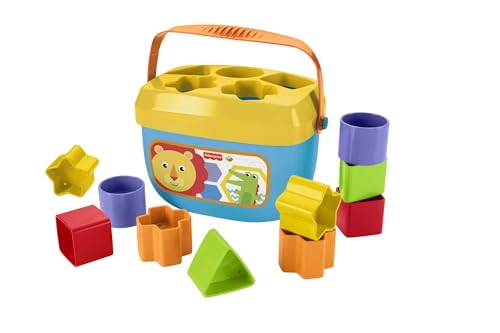
What We Like
- 10 colorful blocks for sorting and stacking
- Shape-sorter lid for problem-solving play
- All blocks store inside the bucket
- Easy-carry handle for on-the-go fun
Trade-offs
- Blocks are small, so watch for choking hazards
- No electronic sounds or lights for engagement
Ten colorful blocks and a shape-sorter lid give babies ages 6 months and older a hands-on introduction to sorting, stacking, and problem-solving. The bucket stores everything inside and has a carry handle, making it easy to bring along to grandma’s or the park. This is the sort of toy that grows with your child, starting with simple dropping and moving toward matching shapes as their fine motor skills develop.
This is a purely mechanical toy, so if your little one craves lights, sounds, or music, some electronic activity toys offer that sensory feedback. But for a parent who values quiet, open-ended play that builds concentration and hand-eye coordination, the Fisher-Price set delivers exactly that. At 0.7 pounds, it’s light for a baby to handle, and the BPA-free plastic is a standard safety feature. It’s a straightforward tool for early learning that won’t overwhelm a young child.
Product photos
hahaland Baby Tissue Box Toy
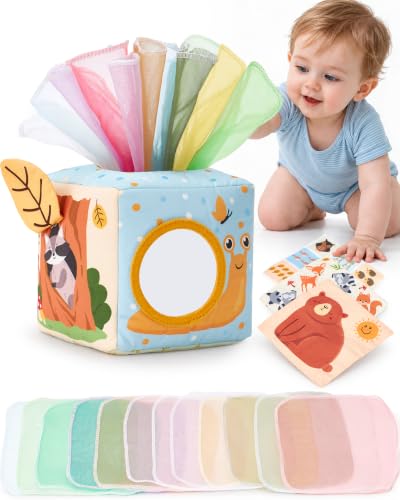
What We Like
- Multi-sensory textures and crinkle sounds
- Learning elements with animals and numbers
- Safety-tested with no choking hazards
Trade-offs
- No electronic features for babies who prefer lights and sounds
- Small size limits play surface compared to larger activity cubes
Fifteen separate pieces, three textured crinkle tissues and twelve silk scarves, mean this little box keeps a 9-month-old busy pulling, rustling, and discovering long after a single-tissue toy would be abandoned. That variety directly supports fine motor development and sensory exploration, making it a strong option for babies over 6 months. The set includes cloth tissues with learning elements such as animals and numbers, contributing to early education cognition in a playful way.
At just 4.7 inches on each side, this box is small enough for a baby to grip and pull tissues from easily. It won’t cover as much play area as a larger activity toy such as the VTech Busy Learners Activity Cube, which measures 6.2 inches per side and weighs 1.4 pounds. For a quiet, hands-on sensory toy that builds fine motor skills and curiosity, this box delivers.
Product photos
How We Evaluated Educational Toys For 9 Month Old
Every toy here was assessed against what a nine-month-old actually needs: toys that reward movement, invite grasping, and introduce simple cause-and-effect relationships. We studied material safety certifications, age-grading guidelines, and the specific developmental milestones that emerge between seven and twelve months.
The four criteria that mattered most were sensory variety, motor-skill challenge, safety and durability, and engagement range. Sensory variety covers textures, sounds, and lights. Motor-skill challenge includes graspability, weight, and two-handed play. Safety and durability means non-toxic materials, no small parts, and easy cleaning. Engagement range asks whether the toy holds interest for more than one play session. A toy that scores high on all four earned a higher rank.
This is a research-led evaluation, not a hands-on test. We synthesized what experts say about infant development with what real parents report in their long-term use. If a toy has a trade-off, like being too heavy for a baby to carry, we flag it so you can decide if that matters for your home.
What To Look For In Educational Toys For 9 Month Old
Nine-month-olds learn through their senses and their growing ability to make things happen. The best toys for this age give them something to reach for, something to manipulate, and a clear reward for their effort.
Choose toys that encourage movement, offer multiple textures or sounds, and are safe to mouth. Avoid anything with small parts that could become choking hazards, and look for easy-clean surfaces.
Sensory Variety
Babies at nine months are sensory scientists. They need toys that offer different textures, soft fabric, smooth plastic, ridged silicone, because each texture teaches their brain something new about the world. Crinkle sounds, rattles, and gentle music hold attention longer than silent toys. The Melissa & Doug Flip Fish uses squeaker tails and crinkle scales to reward every touch, while the hahaland Baby Tissue Box Toy combines multiple fabric textures with animal and number graphics for layered learning.
Motor Skill Challenge
Look for toys that require your baby to use both hands, transfer objects from one hand to the other, or coordinate a reach-and-grasp motion. The Manhattan Toy Winkel Rattle & Teether is lightweight enough for unsteady hands but wide enough to encourage two-handed clutching. The Sassy Stacks of Circles Stacking Ring has chunky rings with different weights, so your baby learns to adjust grip strength. A toy that is too light or too heavy won’t build the fine motor control they need for later skills like self-feeding.
Cause and Effect
This is the cognitive breakthrough of the nine-month stage. Babies begin to understand that their actions produce predictable results, and they want to repeat those results over and over. The Smart Steps Happy Hammer Toy delivers a satisfying light-and-sound reward when your baby taps the soft silicone ends. The SmileyBubs Montessori Baby Toys Set includes a sliding box that teaches the same principle without batteries. When choosing a toy, ask yourself: does my baby’s action create an immediate, interesting reaction?
- Check that all parts are too large to fit through a toilet paper tube (the standard choking-hazard test).
- Confirm the toy can be wiped clean or surface-washed without damage.
- Look for volume controls on any toy with electronic sounds, your ears will thank you.
- Avoid toys with long strings or cords that could pose a strangulation risk.
- Choose toys that match your baby’s current mobility: stationary toys for sitters, rolling toys for crawlers.
A nine-month-old’s attention span is measured in minutes, not hours. The best toy is one they can return to multiple times a day.
Educational Toys For 9 Month Old Compared
The table below compares all ten picks across key features so you can see at a glance which toy fits your baby’s current stage and your family’s preferences.
| Product | Age Range | Weight | Dimensions |
|---|---|---|---|
| VTech Busy Learners Activity Cube | 6 months to 3 years | 1.4 pounds | 6.2 x 6.2 x 6.5 inches |
| VTech Little CEO Learning Desk | 9-36 months | 3.0 pounds | 14.0 x 8.7 x 0.1 inches |
| Melissa & Doug Flip Fish Stuffed Animal | 0-9 months | 0.8 lbs | 9.8 x 3.7 x 13.5 in |
| Manhattan Toy Winkel Rattle & Teether | Newborns and up | 0.2 pounds | 5 x 4 x 3.5 inches |
| Fisher-Price Laugh & Learn Gift Set | 6 months to 3 years | 1.0 pounds | 3.5 x 10.0 x 7.4 inches |
| SmileyBubs Montessori Baby Toys Set | 7-9 months | N/A | 13.4 x 5.5 x 9.5 in |
| Smart Steps Happy Hammer Toy | 9 months and up | 0.2 pounds | 2.0 x 5.2 x 6.0 in |
| Sassy Stacks of Circles Stacking Ring | 6 to 24 months | 0.6 pounds | 4.2 x 4.2 x 8.0 inches |
| Fisher-Price Baby's First Blocks | 6+ months | 0.7 pounds | 5.1 x 4.9 x 8.3 inches |
| hahaland Baby Tissue Box Toy | 6+ months | N/A | 4.7 x 3.7 x 4.7 inches |
Frequently Asked Questions
What is the difference between educational toys and regular toys for a 9-month-old?
Educational toys are designed to target specific developmental skills, fine motor control, cause-and-effect reasoning, sensory processing, rather than just providing passive entertainment. A rattle that rewards shaking with sound teaches cause and effect; a stuffed animal that only sits there does not. The best developmental toys for 9-month-olds combine play with a learning goal.
How many toys does a 9-month-old actually need?
Most babies do best with three to five toys available at a time, rotated every few days. Too many options can overwhelm a nine-month-old’s still-developing attention span. A focused set like the SmileyBubs Montessori Baby Toys Set gives you six targeted tools in one purchase, which is plenty for this stage.
Can a 9-month-old play with stacking rings?
Yes. Stacking rings are excellent for this age because they build hand-eye coordination and introduce size relationships. The Sassy Stacks of Circles Stacking Ring is especially good because each ring has a different texture and weight, adding a sensory layer to the stacking challenge.
When should I introduce shape sorters?
Nine months is the right time to introduce a simple shape sorter, though your baby will likely need help at first. The Fisher-Price Baby’s First Blocks has a straightforward lid that lets babies practice dropping blocks through the correct openings. Expect frustration and celebrate the small wins, the skill develops over several months.
Are electronic toys better than non-electronic toys for learning?
Neither is inherently better; they teach different things. Electronic toys like the VTech Busy Learners Activity Cube use lights and sounds to reinforce cause and effect and teach early vocabulary. Non-electronic toys like the Melissa & Doug Flip Fish build tactile discrimination and imaginative play. A mix of both gives your baby the widest range of learning experiences.
The Bottom Line
The VTech Busy Learners Activity Cube earns the Best Overall spot because it does what a nine-month-old needs most: it motivates movement. The motion sensor rewards crawling with sounds and lights, and the five sides of play keep a curious baby engaged through multiple developmental stages. If your baby is already sitting confidently and loves interactive play, this is the one to start with.
For families on a budget or those who prefer battery-free play, the SmileyBubs Montessori Baby Toys Set delivers six developmental tools in one affordable package. The Manhattan Toy Winkel Rattle & Teether is the right choice if teething relief and grasping practice are your top priorities right now.
The single most important factor in choosing a toy at this age is whether it meets your baby where they are developmentally today, not where you hope they will be next month. Watch what your baby reaches for, what they mouth, and what makes them smile. Then pick the toy that rewards that exact behavior.
