
10 Best Educational Toys For 8-year-olds in 2026
This post contains affiliate links. As an Amazon Associate, we earn from qualifying purchases.
The Klutz Lego Gear Bots STEM Activity Kit earns our top spot because it combines the universal appeal of LEGO with a clear, hands-on lesson in mechanical engineering. For families exploring the full range of best toys for 8-year-olds, this kit teaches axles, cams, and cranks through 8 buildable creatures. Other strong contenders include the ThinkFun Gravity Maze for logic and the Snap Circuits Explorer for electronics.
An 8-year-old is at a sweet spot for learning. They can follow multi-step instructions, understand cause and effect, and are ready for concepts like circuits and physics. The challenge is finding a toy that matches their growing intellect without feeling like homework.
We built this guide by analyzing manufacturer specs, expert recommendations, and patterns in owner feedback. Our goal is to help you find a toy that will engage your child’s curiosity and build real skills. We also have a dedicated educational toys guide for a broader look at learning through play.
Top 10 Educational Toys For 8-Year-Olds in the Market
Certain content that appears on this site comes from Amazon. This content is provided "as is" and is subject to change or removal at any time.
The Best Educational Toys For 8-Year-Olds, Reviewed
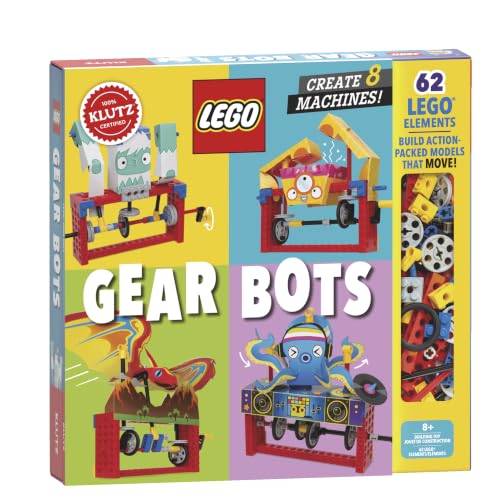
Klutz Lego Gear Bots STEM Activity Kit
What We Like
- Includes all LEGO elements needed
- 64-page book with step-by-step instructions
- Teaches axles, cams, and cranks
- Builds 8 physics-driven creatures
Trade-offs
- Only 8 builds limit long-term replay
- No extra pieces for free-form creation
Building eight different kinetic creatures from LEGO Technic bricks and papercraft means your child gets a fresh mechanical puzzle each time, not just one model to snap together and forget. The included 64-page book covers STEM content about axles, cams, cranks, and engineering in everyday machines, with step-by-step instructions for each build. That hands-on understanding of how everyday machines transfer motion is exactly what makes this kit stand out for an eight-year-old who’s curious about how things work. It’s a rare combination of genuine STEM content and the satisfying click of LEGO bricks that keeps them coming back to finish all eight creatures.
The kit includes exactly enough LEGO Technic bricks and papercraft pieces to build eight physics-driven kinetic creatures, so once those are done, there are no leftover parts for free-form building. That means the structured play has a clear finish line, which works well for a child who enjoys following step-by-step instructions and seeing a moving result. Reviewers note that the 64-page book teaches real mechanical principles like axles, cams, and cranks without feeling like a lesson.
ThinkFun Gravity Maze Logic Game

What We Like
- Builds critical thinking and problem-solving
- Collaborative play with friends and family
- STEM-focused marble maze design
Trade-offs
- Small marbles are a choking hazard for younger siblings
- Requires flat, stable surface for play
- Limited to 9 towers for construction variety
This marble-run logic game forces kids to think ahead rather than just guess. The nine towers and three marbles mean each puzzle has a specific solution, so trial and error teaches planning and spatial reasoning. For an 8-year-old who loves figuring out how things fit together, this is a quiet, focused activity that rewards patience without needing a screen.
The trade-off is that the fixed number of towers limits open-ended building compared to something like the Klutz Lego Gear Bots kit, which lets kids invent their own mechanical creatures. Gravity Maze works best for kids who enjoy solving a defined problem rather than free-form construction. It’s a tight, satisfying logic workout that fits easily on a desk and travels well at just over a pound.
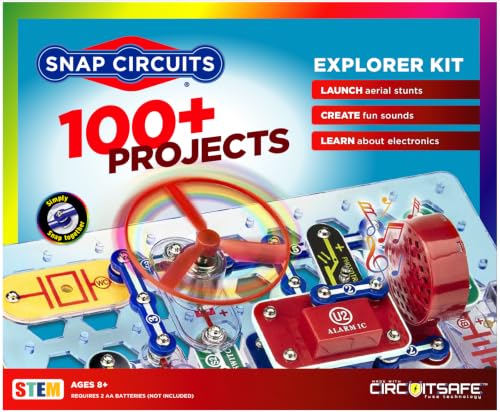
Snap Circuits Explorer SC-100 Kit
What We Like
- 100+ STEM projects from 28 parts
- No soldering or tools needed
- Award-winning educational kit
- Color-coded pieces snap onto grid
Trade-offs
- Requires batteries (not included)
- Projects are pre-defined; limited open-ended building
With 100+ projects packed into 28 snap-together parts, this kit lets an 8-year-old build a flying saucer one afternoon and a sound alarm the next. No soldering, no tools, just a plastic grid and color-coded pieces that click into place. That breadth of instant, safe circuitry is why it lands as the electronics starter for kids who want to see results fast. It suits the child who loves cause-and-effect tinkering and a parent who wants a proven, award-winning introduction to electrical engineering without a workshop full of gear.
One catch is that the projects are laid out in the manual, so once a kid builds the 100-plus designs, the creative exploration narrows unless you buy expansion kits. This Snap Circuits kit focuses purely on electronics and gives a structured path for beginners. Best for the young engineer who wants a guided introduction to circuits and doesn’t mind following a recipe to get there.
LeapFrog Magic Adventures Globe

What We Like
- BBC video content on screen
- Thousands of facts via stylus
- Three interactive quiz games
- Explores cultures, animals, habitats
Trade-offs
- Screen is small at 2.8 inches
- Requires 4 AA batteries for use
- Demo batteries need replacing immediately
A 2.8-inch video screen built into a globe means your child watches BBC clips about cultures and habitats while spinning the world, no tablet needed. This interactive map lets them tap with a stylus to hear thousands of facts, then race through quiz games that test what they just learned. For a child who loves geography or animals, it turns passive screen time into active exploration, and the games keep them coming back to discover more.
One drawback is that small screen size: kids used to a tablet might lean in close, and the demo batteries included won’t last long, plan on fresh AAs right away. Compared to the Lego Gear Bots kit from Klutz, which is designed for ages 8-12 and weighs 1.0 pounds, this globe is more about digital discovery than hands-on construction. It suits a child who prefers facts and videos over building, but if your kid craves tactile projects, the Gear Bots might hold their attention longer.
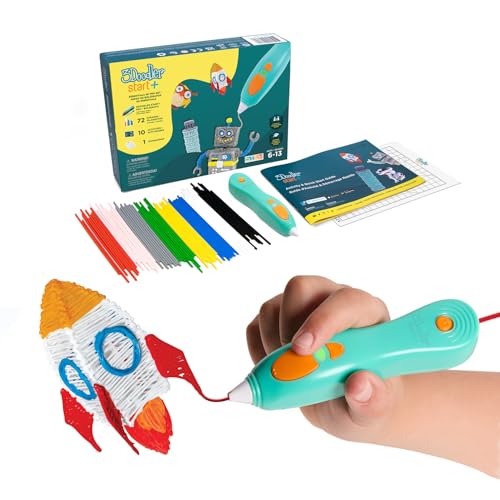
3Doodler Start+ 3D Pen Set
What We Like
- No hot parts, safe for kids 6+
- Charges 50% faster than previous model
- Includes 72 plastic strands and 10 stencils
- Screen-free STEM learning tool
Trade-offs
- Uses only proprietary 3Doodler Start filaments
- At 0.7 lb, lightweight but tethered by USB cable
- Limited to one color per strand swap
Seventy-two strands of filament and ten stencils are included, so the set provides a genuine starter experience rather than just a pen. The child-safe nozzle and plastic remain cool to the touch, eliminating burn risks for kids ages six and up. This screen-free tool encourages hands-on learning, letting children connect with STEM concepts while creating three-dimensional objects. The slimmer, easier-to-hold pen charges fifty percent faster than previous versions, and an added safety standby mode helps conserve power during breaks. A USB-C cable, activity guide, and DoodlePad round out the package, making it ready for immediate use right out of the box.
A limitation is that you’re locked into 3Doodler’s own Start plastic, standard filament won’t work, and you can’t mix colors mid-strand. That’s fine for beginners, but if your child wants to experiment with different materials, something like the Snap Circuits Explorer SC-100 offers a different kind of hands-on building with electronics. Still, for a first 3D pen that’s completely safe for kids and comes with everything needed to start drawing in 3D, the Start+ is a practical choice.
CYOEST DIY FM Radio Kit

What We Like
- No soldering needed for assembly
- Crystal-clear FM reception with retractable antenna
- Automatic broadcast search on 88-108MHz
- Power indicator and volume control
Trade-offs
- Requires 2 AA batteries not included
- Only FM band, no AM or other bands
This DIY FM radio kit requires no soldering, so a child can assemble a working radio with just the included parts and clear instructions. Once built, the automatic scan and retractable antenna let them pick up FM broadcasts in the 88-108MHz range. The result is a functional device they built themselves, which gives a tangible sense of accomplishment.
One thing to note is that you’ll need to supply two AA batteries, and the radio only receives FM broadcasts, so if your child is fascinated by shortwave or AM, this won’t cover that ground. Compared to the Snap Circuits Explorer kit, which offers over 100 projects with snap-together parts, this one focuses on a single, complete build that yields a functional device. For a kid who loves the idea of making something they can actually use, the CYOEST kit delivers that satisfaction in a compact, manageable package.
Product photos
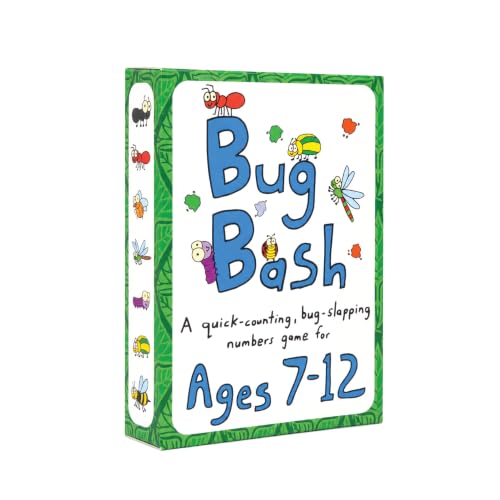
Niche Nation Games Bug Bash Card Game
What We Like
- Builds quick estimation and counting skills
- Fast-paced reflex and strategy gameplay
- Award-winning and Mensa recommended
- Compact and easy to travel with
Trade-offs
- Too fast-paced for very young children
An Academics’ Choice Brain Toy Award winner and Mensa-recommended game, Bug Bash turns a simple bug-counting race into a workout for quick estimation, addition, and number grouping skills. The fast-paced slapping mechanic keeps everyone on edge, and at just 0.2 pounds, it slips into a bag for travel or classroom use. It’s a perfect pick for kids who love speed and competition, and the easy-to-learn rules mean you’re playing in minutes.
An Academics’ Choice Brain Toy Award Winner and American Mensa Recommended Game, Bug Bash builds quick estimation, counting, addition, number grouping, strategy, and reflex skills in kids ages 7-12. The fast-paced slapping action keeps everyone alert, so it’s a lively choice for families who want a social card game that sharpens mental math. Not ideal for children who prefer calm, solo activities or who are easily frustrated by speed-based competition.
Product photos
Dan&Darci Squishy Human Body Model
What We Like
- 30 removable squishy body parts
- Includes brain, heart, lungs, and more
- Numbered organizer helps learn organ placement
- Detailed guide with interactive challenges
Trade-offs
- Assembled model is only 2 inches tall, so it sits flat on a desk
- No moving parts or digital features for tech-loving kids
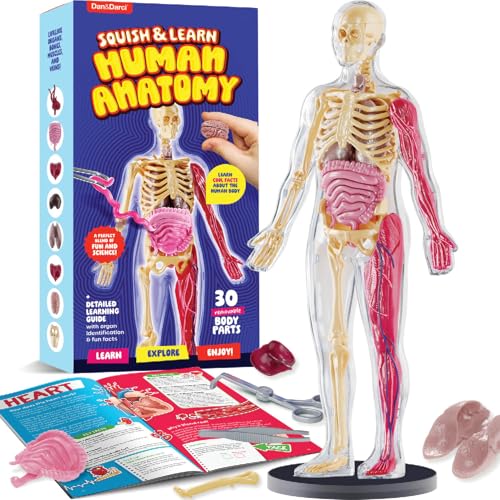
Thirty removable squishy body parts let an 8-year-old pull out the brain, heart, lungs, and even a gooey stomach, then snap everything back together. That hands-on take-apart is the core of why this set works so well for kids who learn by touching and exploring. The numbered organizer tray doubles as a matching game, so they’re not just stuffing organs back in blindly, they’re actually memorizing where each piece belongs. The included guide goes further with real-world challenges like measuring their own breathing rate or testing memory, turning anatomy into something they can connect to their own body. This is a gift for the child who wants to know what’s under their skin and isn’t afraid to get their hands a little squishy.
The Dan&Darci Squishy Human Body Model includes 30 removable body parts, so kids can take apart and rebuild a realistic anatomy model, making it a hands-on puzzle that teaches organ placement and skeletal structure. The numbered organizer helps match each squishy organ to its correct spot, reinforcing memory through repeated assembly. For a child curious about why we blink or how long dreams last, the detailed guide provides facts and interactive challenges that connect the model to real-life body functions.
Product photos
ThinkFun Roller Coaster Challenge

What We Like
- Builds engineering, reasoning, and planning skills
- 50% logic game, 50% building set
- Clear instruction manual for quick start
Trade-offs
- Single car limits simultaneous play
- No expansion packs or extra track sets
Forty progressively harder challenge cards turn this into a logic puzzle you build with your hands, not just a coaster set you assemble once. Each card demands you place posts and tracks to make the car complete a full circuit, so kids are engineering solutions rather than following step-by-step plans. That mix of trial-and-error building with real problem-solving sneaks in planning and reasoning skills while they’re focused on getting the car to loop and drop.
Product photos
Osmo Genius Kit STEM Learning Games

What We Like
- Five hands-on learning games in one kit
- Real-time response keeps kids engaged
- No WiFi needed for gameplay
- Includes Osmo Base, reflector, and storage
Trade-offs
- Requires an iPad (not included)
- Older iPad models not compatible
- Some iPad models need separate Osmo Reflector
Five distinct learning systems, covering math, spelling, drawing, physics, and spatial reasoning, mean this kit doesn’t just teach one skill; it builds a foundation across subjects. The Osmo Base turns physical tiles and drawings into interactive on-screen action, so kids aren’t just tapping glass. They’re arranging, drawing, and problem-solving with their hands, which keeps them focused longer and makes screen time feel productive. For a curious child who is easily distracted by passive videos, this turns the iPad into an active learning tool. The included Tangram, Numbers, Words, Masterpiece, and Newton games each target a different type of thinking, so there’s always something new to try. And since no WiFi is required, it works just as well in the car or at a restaurant as it does at the kitchen table.
The Osmo Genius Kit requires a compatible iPad (5th generation or newer with iOS 15 or later), so if your child doesn’t have one, you’ll need to budget for that. Some iPad models also need the separate Osmo Reflector, which adds a small setup step. Compared to the Lego Gear Bots kit, which is completely screen-free and self-contained, the Osmo system demands a tablet and a bit of upfront compatibility checking. But for families who already own an iPad and want to turn it into a hands-on learning station, this kit delivers more variety and depth than most single-activity STEM toys. It’s also trusted by educators and used in over 50 thousand classrooms, so you’re getting a system that’s been tested in real learning environments.
Product photos
How We Evaluated Educational Toys For 8-Year-Olds
Our research began with a deep dive into the specifications and intended age ranges of dozens of kits and games. We looked at manufacturer documentation to understand the core learning goals of each toy, from circuit theory to spatial reasoning. We also consulted expert round-ups from educators and toy reviewers to see which products consistently earned praise for their educational value.
The four criteria that mattered most were skill development, engagement, safety, and replay value. An 8-year-old needs a toy that teaches a tangible skill, whether that’s coding, engineering, or anatomy, while keeping them engaged long enough to learn it. Safety is paramount, especially for kits with small parts or electronics. We also favored toys that offer multiple challenges or expansions to grow with the child.
This evaluation is based on research, not on product testing. We rely on the collective experience of thousands of owners and the judgment of expert reviewers to identify patterns of quality and durability. This approach gives us confidence in our picks while acknowledging that every child learns differently.
What To Look For In Educational Toys For 8-Year-Olds
Choosing the right educational toy means matching the child’s interests with the right type of challenge. The best options build skills without frustrating the user.
Look for toys that teach a specific STEM or creative skill, offer clear instructions, and have enough depth to stay interesting after the first play session. Avoid anything that feels too babyish or too advanced.
Skill Development and Learning Goals
The best educational toys for this age teach a concrete skill. STEM toys for 8-year-olds might focus on coding, engineering, or physics. Others build geography knowledge, anatomy understanding, or strategic thinking. Identify what your child is curious about and choose a toy that feeds that interest. A child who loves taking things apart will thrive with a human body model, while a future engineer will love a gear-based building kit.
Engagement and Replay Value
An 8-year-old can spot a one-trick pony quickly. The toy needs multiple ways to play or increasing levels of difficulty. Kits with many projects, like the Snap Circuits Explorer, keep a child busy for months. Logic games with many challenges offer a clear progression path. If the toy is a one-and-done build, it should be something the child will want to display or play with afterward.
Safety and Age Appropriateness
Always check the recommended age range and watch for small parts. Some kits use small marbles or components that are a choking hazard for younger siblings. For electronics, look for snap-together circuits that require no soldering. For 3D pens, ensure the nozzle stays cool to the touch. A good rule of thumb is that the toy should challenge the child without requiring constant adult intervention.
- Check for small parts if younger children are in the home.
- Verify that electronic kits require no tools or soldering.
- Look for clear, illustrated instructions designed for independent use.
- Consider the battery requirements and whether they are included.
- Ensure the toy’s complexity matches your child’s patience level.
A toy that requires a parent to set it up every time will likely end up in the closet.
Educational Toys For 8-Year-Olds Compared
The table below compares our top picks side-by-side, so you can see which toy best matches your child’s interests and your family’s needs.
| Product | Age Range | Weight | Dimensions | Key Features |
|---|---|---|---|---|
| Klutz Lego Gear Bots STEM Activity Kit | 8-12 years | 1.0 pounds | 10.0 x 1.5 x 10.0 inches | Build 8 kinetic creatures |
| ThinkFun Gravity Maze Logic Game | 8-12 | 1.1 pounds | 9.4 x 2.8 x 10.5 inches | 9 towers, 3 marbles, grid, target |
| Snap Circuits Explorer SC-100 Kit | 8+ | 1.4 pounds | 12.0 x 9.5 x 1.8 inches | 100+ projects, 28 snap-together parts |
| LeapFrog Magic Adventures Globe | 5+ years | 2.9 pounds | 11.1 x 10.2 inches | 2.8" video screen |
| 3Doodler Start+ 3D Pen Set | 6+ | 0.7 pounds | 9.1 x 6.0 x 2.6 inches | 72 strands of plastic, USB-C cable |
| CYOEST DIY FM Radio Kit | 8-13 | N/A | 3.5 x 2.2 x 2.8 inches | DIY FM Radio Kit, no soldering |
| Niche Nation Games Bug Bash Card Game | 7-12 years | 0.2 pounds | N/A | Quick-counting bug-slapping card game |
| Dan&Darci Squishy Human Body Model | 8 year old boy | 1.2 lbs | 12.8 x 6.5 x 2.0 in | 30 removable body parts |
| ThinkFun Roller Coaster Challenge | 6 and Up | 1.3 pounds | 11.0 x 2.8 x 11.6 inches | 36 posts, 39 tracks, 1 car |
| Osmo Genius Kit STEM Learning Games | 6-10 years | 2.2 pounds | 2.8 x 12.0 x 9.6 inches | 5 STEM learning games |
Frequently Asked Questions
What is the best educational toy for an 8-year-old who loves building?
The Klutz Lego Gear Bots STEM Activity Kit is our top pick for builders. It combines LEGO bricks with a 64-page book that teaches mechanical principles like axles and cams through 8 different creatures.
Are there educational toys for 8-year-olds that don’t require a screen?
Yes. Many of our picks are completely screen-free, including the Klutz Lego Gear Bots, ThinkFun Gravity Maze, and the Dan&Darci Squishy Human Body Model. The 3Doodler Start+ 3D Pen Set is also a great screen-free option for creative kids.
What is the best STEM toy for an 8-year-old girl or boy?
The Snap Circuits Explorer SC-100 Kit is a fantastic STEM toy for any 8-year-old. It introduces circuit theory through 100+ projects using color-coded, snap-together parts, and requires no soldering or tools.
How do I choose a toy for an 8-year-old who is advanced for their age?
Look for toys with adjustable difficulty levels or multiple challenges. The ThinkFun Gravity Maze and Roller Coaster Challenge both offer many puzzles that increase in complexity. The Osmo Genius Kit also adapts to the child’s skill level through its interactive games.
What is the best educational toy for an 8-year-old who loves science?
The Dan&Darci Squishy Human Body Model is excellent for science-loving kids. It features 30 removable squishy organs and a numbered organizer to help with anatomy learning. The CYOEST DIY FM Radio Kit is another great option for kids interested in physics and electronics.
The Bottom Line
The Klutz Lego Gear Bots STEM Activity Kit is our best overall pick because it teaches real mechanical engineering concepts through a medium kids already love. It’s perfect for the child who enjoys following instructions and wants to understand how things work. For kids who prefer logic puzzles or open-ended building, the ThinkFun Gravity Maze or the Snap Circuits Explorer are excellent alternatives.
If you’re on a budget, the Niche Nation Games Bug Bash Card Game offers a fast, affordable way to build math and strategy skills. For a child who wants a unique, hands-on project, the CYOEST DIY FM Radio Kit delivers the thrill of building a working radio from scratch. The 3Doodler Start+ is the safest way to introduce 3D printing without hot parts.
The single most important factor is matching the toy to your child’s natural curiosity. A toy that aligns with their interests will teach them more than a dozen generic options ever could.
