
10 Best Developmental Toys For 2 Year Old in 2026
This post contains affiliate links. As an Amazon Associate, we earn from qualifying purchases.
The LeapFrog Learning Friends 100 Words Book earns our Best Overall spot because it combines bilingual vocabulary building with engaging sound effects that keep toddlers pressing pages. For role-play and early academics, the LeapFrog 2-in-1 LeapTop Touch offers five learning modes, while the Learning Resources Spike The Fine Motor Hedgehog targets dexterity directly.
A two-year-old’s brain is wiring language, motor control, and cause-and-effect understanding at a staggering pace. The right toy doesn’t just occupy them, it matches their developmental stage with the right challenge level, avoiding frustration or boredom.
We built this guide by analyzing manufacturer specifications, expert round-ups on toddler development, and patterns in owner feedback across dozens of models. The result is a curated list of 10 toys that each serve a specific developmental purpose, from fine motor skills to bilingual exposure.
Top 10 Developmental Toys For 2 Year Olds in the Market
Certain content that appears on this site comes from Amazon. This content is provided "as is" and is subject to change or removal at any time.
The Best Developmental Toys For 2 Year Olds, Reviewed
LeapFrog Learning Friends 100 Words Book
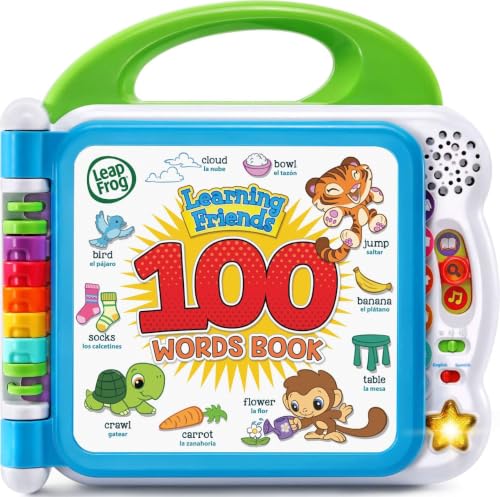
What We Like
- Bilingual English and Spanish mode
- Touching pages plays words and sounds
- Light-up star button with songs
- Categories include opposites and outside
Trade-offs
- Batteries included only for demo use
- Requires adult to replace batteries regularly
More than 100 age-appropriate words, chosen by learning experts and organized into categories like pets, opposites, and outside, make this a strong vocabulary-building tool for a two-year-old. Touching the pages triggers words, sound effects, and fun facts, turning passive reading into an active, multisensory experience. The bilingual English and Spanish mode means the same book grows with a child learning either language, or both, without needing a separate purchase. That flexibility alone sets it apart for families who value early exposure to a second language.
The trade-off is that the book relies on batteries, and the included ones are only for demo, you will need fresh AA cells right out of the box. Compared to a purely mechanical toy like the Melissa & Doug Shape Sorting Cube, there is nothing to break or power down, but the LeapFrog offers far more interactive learning per minute. For a toddler who loves pressing buttons and hearing sounds, this is the richest vocabulary tool in the guide. Just keep a pack of batteries handy.
LeapFrog 2-in-1 LeapTop Touch

What We Like
- 2-in-1 design flips from keyboard to tablet
- Five learning modes cover ABCs, numbers, games, music, messages
- Customizable to spell child's own name
- Role-play e-mail activity with Scout
Trade-offs
- 3 AA batteries needed for regular use (included only for demo)
The flip screen that converts this toy from a keyboard to a tablet means a two-year-old gets two distinct play experiences in one compact package. That 2-in-1 design is the standout feature here: it lets little fingers practice typing letters A–Z and numbers 1-10, then swivel the screen and tap through five learning modes covering ABCs, numbers, games, music, and messages. Parents can even customize it to help their child spell their own name, which adds a personal touch that keeps engagement high. For a toddler who loves mimicking grown-ups on their devices, this gives them a safe, age-appropriate way to do it without the real thing.
The five learning modes. ABCs, numbers, games, music, and messages, keep preschoolers engaged longer than a single-function toy, and the 2-in-1 design lets kids flip the screen from a keyboard to a tablet shape for role-play. It runs on three AA batteries (the included ones are just for demo), so you’ll want to have spares ready. Compared to the LeapFrog Learning Friends 100 Words Book, this laptop offers a wider variety of activities and adapts as the child grows up to age five.
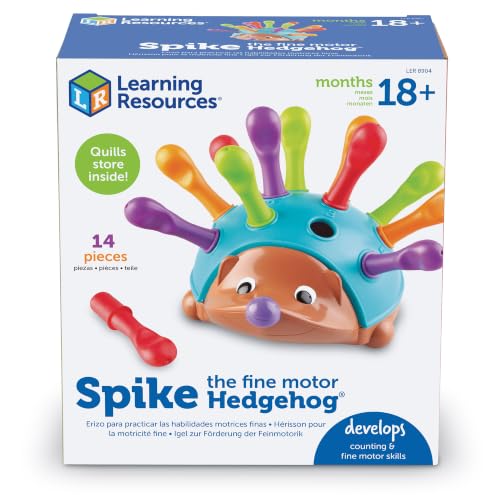
Learning Resources Spike The Fine Motor Hedgehog
What We Like
- Chunky pegs build fine motor skills
- Color quills teach sorting and counting
- Quills store inside hedgehog body
- Includes activity guide
Trade-offs
- Rounded shape wobbles on hard surfaces during play
- Only 12 quills limit sorting variety
Twelve chunky, peg-shaped quills that fit into the back of a friendly hedgehog make this a direct, no-fuss tool for building fine motor skills in two-year-olds. The pieces are sized just right for little hands to grasp and push, and the color sorting and counting opportunities add a layer of learning that goes beyond simple pincer-grip practice. It’s a straightforward toy that does exactly what it promises, strengthen those small hand muscles, without any screens or batteries. For a toddler who’s still mastering the basics of hand-eye coordination, this is a focused, effective option that also stores neatly when playtime ends.
The twelve peg-shaped quills store inside the hedgehog body when playtime ends, so parents don’t have to hunt for lost pieces. For a toddler focused on inserting the pegs, the rounded hedgehog can wobble on a hard surface, but the activity itself is straightforward and satisfying. Compared to the Shape Sorting Cube, which offers a dozen wooden shapes and a more traditional sorting challenge, Spike is a more specialized tool for fine motor practice rather than a multi-activity toy. If your main goal is targeted fine motor skill development with a clear cause-and-effect action, this hedgehog delivers in a way that a shape sorter doesn’t.
Product photos
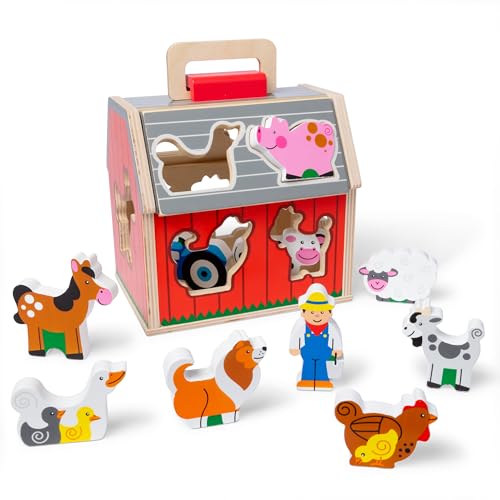
Melissa & Doug Take-Along Wooden Toy Barn
What We Like
- 11-piece portable playset with built-in handle
- Flip-up roof for quick toy access
- Encourages shape sorting and matching
- Chunky wooden figures stand for storytelling
Trade-offs
- At 2.1 pounds, heavier than some portable toys
- Small size limits play to one child at a time
A built-in handle and flip-up roof make this 11-piece wooden barn the easiest way to pack farm play for a car ride or waiting room. The chunky animals, tractor, and farmer double as sorting pieces and stand-alone figures, so a two-year-old can practice matching shapes one minute and invent a barnyard story the next. That combination of portable storage and open-ended play keeps screen-free fun literally in hand without sacrificing developmental value.
At 2.1 pounds, this barn is heavier than some other portable toys, so it’s a bit weighty for a toddler to carry around on their own. The compact size means only one child can reach inside at a time, which is something to keep in mind for playdates. But for a family wanting a self-contained, no-loose-pieces activity that builds sorting skills and imagination on the go, this barn delivers exactly what it promises.
Yetonamr Montessori Shape Sorter Puzzle

What We Like
- Chunky wooden pieces for tiny hands
- Smooth edges and non-toxic paint
- Teaches colors, shapes, and counting
- Encourages fine motor and problem-solving
Trade-offs
- Pegs are sturdy but fixed design
- Only 4 shapes limit variety for older toddlers
Twenty chunky wooden pieces with smooth edges and food-safe paint mean this puzzle is built for the roughest two-year-old hands. The blocks come in five colors and four geometric shapes, so while your child stacks and sorts, they’re also building color recognition, shape vocabulary, and hand-eye coordination without any worry about splinters or toxic finishes. It’s the kind of straightforward, open-ended play that lets a toddler focus on one skill at a time without distractions, which is exactly why it earned the safety nod here.
With 20 pieces in 5 colors and 4 geometric shapes, this set gives a toddler just enough variety to learn matching without feeling overwhelmed, ideal for a first shape sorter. The chunky wooden blocks are easy for tiny hands to grasp, and the smooth edges and food-safe paint mean parents don’t have to worry about splinters or toxins. Reviewers note that the simple stacking peg keeps the activity frustration-free, so a two-year-old can focus on building coordination and color recognition.
Product photos
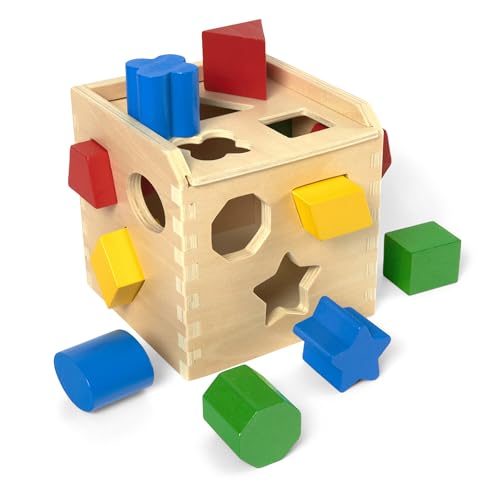
Melissa & Doug Shape Sorting Cube
What We Like
- 12 bright, easy-to-grip shapes
- Sturdy wooden construction
- Promotes color and shape recognition
- Classic screen-free learning activity
Trade-offs
- Weighs 1.4 pounds, so it's not easily portable for travel
- Wooden cube is not collapsible for compact storage
Twelve distinct shapes and a solid wooden cube mean this sorter gives a two-year-old plenty of chances to match, drop, and problem-solve before the activity feels repetitive. The bright colors and chunky pieces are easy for small hands to grab, so frustration stays low and focus stays high. That hands-on, screen-free play is exactly what a toddler needs to build recognition skills and hand-eye coordination without a battery in sight.
With twelve distinct shapes and bright colors, this cube gives a two-year-old a focused sorting challenge that builds matching skills through hands-on play. The wooden construction holds up to daily use, so it stays stable as little hands push each shape through its correct slot. Reviewers note that the straightforward design keeps attention on the learning task without extra bells or sounds.
KMTJT Montessori Wooden Farm Toy

What We Like
- Polished edges and non-toxic paint for safety
- Multiple play modes: sorting, pulling, matching
- Encourages parent-child and peer play
Trade-offs
- Small parts require adult supervision per warning
- At 8.4 inches, it's compact for travel but limited floor space
- No storage bag or tray included for loose pieces
The polished edges and non-toxic water-based paint let me breathe easier about safety, which is always my first check. For a child who’s ready to move beyond single-task toys, this farm set offers enough open-ended play to hold attention and build dexterity at the same time.
The warning advises direct adult supervision and not putting toys in the mouth, so you’ll want to stay nearby during play. Unlike the Take-Along Wooden Toy Barn, which is a portable 11-piece playset with farm animals and a pop-up roof, the KMTJT focuses more on fine-motor challenges through sorting and worm-catching games. If your child still mouths everything, the barn set might be a safer bet. But if you’re looking for a toy that grows with their hands, from pulling radishes to shape matching, this compact farm delivers a lot of purposeful play in a small footprint.
Product photos
Kidific Magnetic Color And Number Maze

What We Like
- 55 beads in 10 colors
- Thick natural wood construction
- Acrylic panel prevents bead loss
- Portable at 0.4 inches thick
Trade-offs
- Magnetic pen requires precise control for 2-year-olds
Fifty-five magnetic beads in ten distinct colors give a 2-year-old plenty of sorting and counting work without overwhelming them. The included magnetic pen lets little hands slide each bead along the track to the matching ice-cream cone, which builds hand-eye coordination and fine motor control in a way that feels like a game. The thick natural wood base and clear acrylic panel keep everything contained, so you don’t spend the afternoon chasing runaway beads across the floor. For a parent who wants a quiet, self-contained activity that teaches color and number recognition, this board delivers exactly that.
The board’s slim 0.4-inch profile makes it easy to store or carry, though on a soft lap or uneven surface it can shift while a child works. The magnetic pen demands a steady grip that some 2-year-olds still find tricky, so you may need to sit beside them at first. Unlike the Shape Sorting Cube, which uses larger blocks, this maze requires more precision. Once they get the hang of it, though, the focus and patience it teaches are hard to beat.
Product photos
Chuckle & Roar Pop It Book

What We Like
- Bilingual English & Spanish learning
- Tactile pop-it sensory play
- Sturdy plastic for rough handling
- Quiet mode option available
Trade-offs
- Only 0.1 inches thick, easy to misplace
- Limited to color vocabulary only
A 0.1-inch-thick plastic book that doubles as a bilingual color primer and a fidget toy, that’s the Chuckle & Roar Pop It Book in a nutshell. It covers colors in English and Spanish while giving little fingers the satisfying pop sensation toddlers crave. The quiet mode option means you can let them pop away without driving the whole house crazy, and the sturdy build survives being dropped, chewed, and sat on. This is a great pick for families raising bilingual kids or anyone who wants a screen-free way to reinforce color words through hands-on play.
The trade-off is that this book is very thin, at just 0.1 inches, it can slide between couch cushions or disappear under a rug faster than you’d expect. And unlike some other learning toys that cover a wider range of topics, this one sticks strictly to color names. That focus is fine for a 2-year-old just starting to learn colors, but if your child already knows red from azul, they may outgrow it quickly. For a durable, bilingual sensory toy that travels easily, though, it’s hard to beat.
Product photos
Play-Act Montessori Farm Train

What We Like
- Detachable roof for interactive play
- 9 numbered barns for counting practice
- Farm animals double as hand puppets
- Locomotive with farmer figure included
Trade-offs
- Roof detaches, so pieces can be misplaced
- Small animal figures and numbered barns can be misplaced during play
Nine numbered barns and three colorful wagons pulled by a locomotive give this train a built-in counting and sorting structure that most toy trains skip. Each barn holds a farm animal, so loading, unloading, and matching numbers to animals turns play into a quiet math lesson without feeling like one. The detachable roof means kids can reach inside to place figures, and the animals double as hand puppets for role-play. That combination of hands-on sorting and pretend play makes it a strong fit for a child who is starting to recognize numbers and colors but still needs the sensory feedback of picking up and placing objects.
The small animal figures and numbered barns are easy to lose, especially when the roof comes off during play. Unlike the Take-Along Wooden Toy Barn, which keeps everything contained in a portable case, this train requires more deliberate cleanup and supervision to keep all nine animals accounted for. At 1.7 pounds, it has some heft that might make it less portable for a toddler to carry around. For a child who thrives on open-ended farm play and early number work, though, the structured counting and sorting features here are worth the extra attention to parts.
How We Evaluated Developmental Toys For 2 Year Olds
Our evaluation combined manufacturer specifications, expert round-ups on early childhood development, and patterns in what parents report as most and least useful in real play sessions. We looked at the full spectrum of our toy recommendations for two year olds to understand what features actually hold a toddler’s attention over weeks, not just minutes.
Three criteria mattered most. First, developmental alignment, does the toy build skills appropriate for a toddler, such as vocabulary, sorting, or fine motor control? Second, engagement longevity, toys that rely on a single gimmick often lose interest quickly, while those with multiple modes or open-ended play earn longer rotation. Third, safety and durability, chunky pieces, non-toxic finishes, and no small parts that pose choking hazards.
A research-led evaluation has limits. We cannot replicate the unpredictability of a real toddler’s attention span or the specific preferences of your child. We prioritize toys with strong track records across many households, but your mileage will always depend on your child’s unique personality and current skill level.
What To Look For In Developmental Toys For 2 Year Olds
Choosing the right toy means matching the play experience to your child’s current abilities and your family’s values around screen time, noise, and mess.
Look for toys that target one or two specific skills rather than claiming to do everything, and check that all pieces are large enough to prevent choking hazards.
Skill-Specific Design
The best toys that teach focus on one developmental domain, fine motor, language, sorting, or pretend play, rather than trying to cover everything. A shape sorter like the Melissa & Doug Shape Sorting Cube teaches color and shape recognition through repeated trial and error. A magnetic maze like the Kidific Magnetic Color And Number Maze builds precision grip and counting in a single activity. When a toy tries to do too much, toddlers often bounce between modes without mastering any.
Engagement and Repetition
Two-year-olds learn through repetition, but the toy must offer enough variety to stay interesting. The LeapFrog 2-in-1 LeapTop Touch succeeds here by offering five modes. ABCs, numbers, games, music, and messages, so a child can return to the same toy and discover something new. The best activity toys often include a surprise element, like the light-up star button on the Learning Friends book or the detachable roof on the Play-Act Montessori Farm Train.
Safety and Build Quality
At this age, toys get dropped, thrown, chewed, and stepped on. Chunky wooden pieces with smooth edges, like those on the Yetonamr Montessori Shape Sorter Puzzle, survive this treatment. Non-toxic paint and finishes are non-negotiable. Avoid toys with small parts that fit entirely inside a toilet paper tube, as these pose choking risks. The KMTJT Montessori Wooden Farm Toy includes small pieces that require adult supervision, which is clearly stated in its warning.
- Can the toy survive a drop from a high chair or a toddler’s throw?
- Are all pieces larger than a toilet paper tube to prevent choking?
- Does the toy use non-toxic materials and finishes?
- Can the toy be cleaned easily with a damp cloth?
- Are batteries required, and are they included for demo or full use?
If a toy requires batteries, plan to buy a fresh set immediately, the demo batteries included in most electronic toys last only a few hours.
Developmental Toys For 2 Year Olds Compared
The table below compares the 10 developmental toys across their primary skill focus, best use case, and key trade-offs to help you find the right match for your toddler.
| Product | Age Range | Weight | Dimensions |
|---|---|---|---|
| LeapFrog Learning Friends 100 Words Book | 18+ months | 1.5 pounds | L 9.2 inches, W 9.4 inches, H 1.9 inches |
| LeapFrog 2-in-1 LeapTop Touch | 2-5 years | 1.3 lb | L 2.0 inches, W 10.1 inches, H 6.0 inches |
| Learning Resources Spike The Fine Motor Hedgehog | Toddler & preschool | 0.1 pounds | L 10.0 inches, W 10.0 inches, H 4.0 inches |
| Melissa & Doug Take-Along Wooden Toy Barn | N/A | 2.1 pounds | L 6.5 inches, W 7.5 inches, H 8.0 inches |
| Yetonamr Montessori Shape Sorter Puzzle | N/A | 0.6 pounds | L 11.5 inches, W 2.7 inches, H 2.4 inches |
| Melissa & Doug Shape Sorting Cube | 2 to 4 years | 1.4 pounds | L 5.5 inches, W 5.5 inches, H 5.5 inches |
| KMTJT Montessori Wooden Farm Toy | 1-4 years | N/A | L 8.4 inches, W 5.1 inches, H 3.5 inches |
| Kidific Magnetic Color And Number Maze | 2-4 years | N/A | L 11.5 inches, W 10.4 inches, H 0.4 inches |
| Chuckle & Roar Pop It Book | 1-4+ years | 1.4 pounds | L 11.5 inches, W 2.2 inches, H 0.1 inches |
| Play-Act Montessori Farm Train | N/A | 1.7 pounds | L 5.0 inches, W 4.0 inches, H 2.0 inches |
Frequently Asked Questions
What is the best developmental toy for a 2 year old?
The LeapFrog Learning Friends 100 Words Book is our Best Overall pick because it builds vocabulary in both English and Spanish through interactive page-touching and sound effects. It targets language development at exactly the right level for a two-year-old who is starting to name objects and imitate sounds.
Are electronic toys better than wooden toys for development?
Neither is inherently better, they serve different purposes. Electronic toys like the LeapFrog 2-in-1 LeapTop Touch provide audio feedback and multiple learning modes that can teach letters and numbers. Wooden toys like the Melissa & Doug Shape Sorting Cube encourage open-ended, screen-free problem-solving. The best approach is a mix of both types.
How do I know if a toy is safe for my 2 year old?
Check that all pieces are larger than a toilet paper tube to prevent choking hazards. Look for non-toxic, lead-free paint and smooth, splinter-free edges. Avoid toys with long cords or strings that could wrap around a child’s neck. Always supervise play with toys that include small parts, even if they are labeled for the age group.
What fine motor skills should a 2 year old be developing?
At this age, children are learning to grasp small objects with their thumb and forefinger (pincer grasp), stack blocks, turn pages, and manipulate knobs or pegs. Toys like the Learning Resources Spike The Fine Motor Hedgehog and the Kidific Magnetic Color And Number Maze directly target these skills through inserting pegs or guiding a magnetic pen.
How many toys does a 2 year old actually need?
A small rotation of 5 to 8 well-chosen toys is more effective than a large collection. Toddlers focus better and engage more deeply when they have fewer options. Rotating toys every few weeks keeps them novel without requiring constant new purchases. Focus on variety, one language toy, one fine motor toy, one sorting toy, and one pretend-play set.
The Bottom Line
The LeapFrog Learning Friends 100 Words Book is the best overall developmental toy for a 2 year old because it directly targets vocabulary growth in two languages through a format toddlers love to repeat. It is ideal for families who want an interactive, screen-free way to build early language skills.
If your child prefers role-playing grown-up activities, the LeapFrog 2-in-1 LeapTop Touch offers the same interactive quality in a laptop form. For parents focused specifically on fine motor development, the Learning Resources Spike The Fine Motor Hedgehog delivers targeted practice in a simple, self-contained package.
The single most important factor when choosing a developmental toy for a 2 year old is matching the skill level to the child, not the age on the box. A toy that is too easy bores quickly; one that is too hard frustrates. Watch how your child plays and adjust accordingly.
