
7 Best Building Blocks For Toddlers in 2026
This post contains affiliate links. As an Amazon Associate, we earn from qualifying purchases.
The best building blocks for toddlers are the MEGA BLOKS First Builders Big Building Bag, thanks to their easy-grip size and included storage bag that makes cleanup simple. For families wanting a classic starter set, the LEGO DUPLO Brick Box 10913 offers guided play with themed pieces, while the Melissa & Doug 100 Wooden Building Blocks deliver timeless open-ended creativity.
Every parent knows the struggle: you want blocks that challenge your toddler without frustrating them, but the wrong size or material can lead to chewing hazards or tears when towers tumble. The real trick is matching the block type to your child’s age, motor skills, and play style.
We researched specifications, manufacturer guidance, and patterns in owner feedback to find the seven sets that balance safety, durability, and developmental value. This guide breaks down what each set does best so you can pick with confidence.
Top 7 Building Blocks For Toddlers in the Market

Certain content that appears on this site comes from Amazon. This content is provided "as is" and is subject to change or removal at any time.
The Best Building Blocks For Toddlers, Reviewed
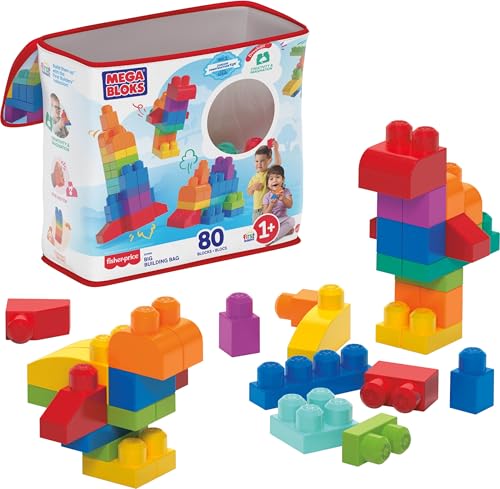
MEGA BLOKS First Builders Big Building Bag
What We Like
- Easy to grip, stack, and pull apart
- Develops creativity and fine motor skills
- Includes storage bag for cleanup
Trade-offs
- No themed figures or specialty pieces
- Blocks lack themed pieces for imaginative play
The trade-off is that while you get a generous number of blocks, there are no themed figures or specialty pieces like you’d find in some other building sets. If your child prefers guided play with characters, a set with figures might engage them more. But for pure, creative stacking and sorting, this MEGA BLOKS bag delivers exactly what a toddler needs.
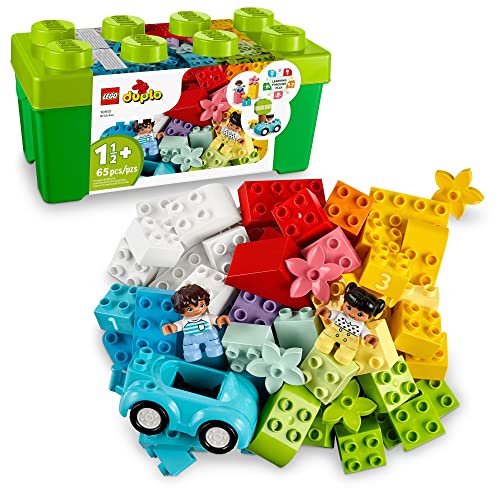
LEGO DUPLO Brick Box 10913
What We Like
- 65 colorful bricks and special pieces
- Includes car, windows, flowers, and figures
- Number bricks for early counting
- Storage box keeps everything tidy
Trade-offs
- Only two figures in the set
- No pieces for older kids who want detail
Sixty-five pieces might sound modest, but this set packs a surprising variety: a car with rolling wheels, windows, flowers, two figures, and number bricks that turn building into a counting game. The larger DUPLO bricks are easy for small hands to snap together, so toddlers can focus on creating a street, a baker’s shop, or a flower archway without frustration. That mix of open-ended play and early learning cues makes it a natural starting point for any 18-month-old who’s ready to stack, sort, and pretend.
After a few builds, some kids will want more bricks to expand their world. Compared to the MEGA BLOKS First Builders Big Building Bag, which offers 80 pieces in a lighter bag, this set gives you fewer parts but adds themed elements like the car and figures that spark directed play. If your toddler loves following a loose story while they build, the LEGO DUPLO Brick Box delivers that balance. Just be ready to add another set down the road when their imagination outgrows the box.
LEGO DUPLO My First Animal Train 10412

What We Like
- Teaches color matching with animals
- Pull-along train with detachable carriages
- Buildable animal figures for creative play
- Develops fine motor skills
Trade-offs
- Only 19 pieces limit building variety
With 19 pieces and four buildable animals that pair with colored carriages, this set turns color matching into a hands-on, pull-along game. It’s ideal for toddlers around 18 months who are just starting to notice differences in hues and love moving toys. The detachable carriages and wobbly rooster neck give little fingers a gentle workout in fine motor control, while the included building cards offer guided play or the freedom to invent new critters. For a parent seeking a first building toy that teaches a specific early skill, this train delivers focused, playful learning without overwhelming a young child.
If your child already has a big brick collection, this set adds purposeful play; if you’re starting from scratch, the Brick Box might stretch further.
Melissa & Doug 100 Wooden Building Blocks

What We Like
- 100 solid wood blocks
- 4 colors and 9 shapes
- Includes storage box with handle
Trade-offs
- No interlocking system for stable structures
- Cardboard storage box, not a hard bin
100 solid wood blocks in four colors and nine classic shapes give toddlers the raw material for open-ended stacking, sorting, and knocking down. That variety supports early shape recognition and fine motor control, and the included cardboard box with a handle keeps cleanup simple.
These are classic stacking blocks, not interlocking bricks. Toddlers who prefer snap-together builds may find the lack of connection frustrating, and the cardboard storage box is a simple container rather than a hard bin. For a child who loves balancing and toppling, though, the simplicity is the point.
Product photos
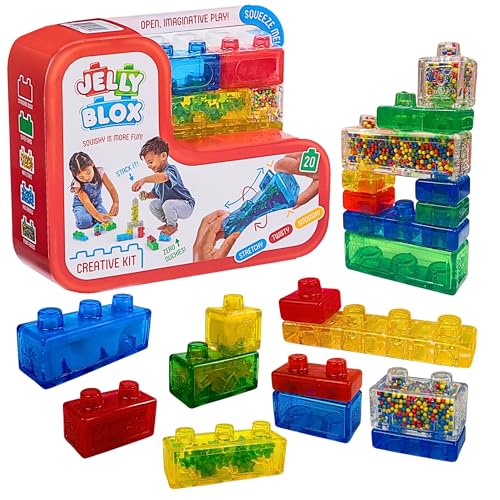
Jelly Blox Creative Kit
What We Like
- Ouch-free and easy to clean
- MESH accredited for developmental skills
- Safety tested for worry-free play
Trade-offs
- Only 20 blocks in the kit
Twenty blocks you can squeeze, stretch, and squish, that’s the whole point of Jelly Blox Creative Kit. That makes this kit a natural fit for toddlers who need more than just stacking; they get sensory feedback with every press and pull. It’s also MESH accredited, meaning the design supports problem-solving, self-regulation, and other developmental milestones. For a child who learns best through touch and messy play, this is a refreshing change from hard plastic bricks.
Twenty blocks is a small set. If your toddler loves building big towers or sprawling cities, they’ll run out of pieces fast, especially compared to the 65-piece LEGO DUPLO Brick Box. It’s best for kids who value the squish factor over quantity, and for parents who prioritize ouch-free, easy-clean play over sheer volume of bricks.
Product photos
Melissa & Doug Ms. Rachel Letter Number Game Wooden Learning Blocks
What We Like
- 30 wooden blocks plus 14 activity cards
- Embossed letters and numbers for tactile learning
- Designed with early learning specialists
- FSC-certified wood construction
Trade-offs
- 2.1 lb set is heavier than many block bags
- Wood blocks can be noisy on hard floors
- Activity cards are cardboard, not laminated
This set includes 30 wooden blocks and 14 double-sided activity cards, so it’s built for guided play, not just stacking. The 1.5-inch blocks are embossed with letters, numbers, pictures, and objects, which gives little fingers something to feel while they learn. That tactile design, paired with Ms. Rachel’s popular videos, supports early speech, turn-taking, and social-emotional skills. The FSC-certified wood construction is sturdy and durable, offering a solid feel that many plastic sets lack.
At 2.1 pounds, this box is heavier than a bag of MEGA BLOKS, so it stays put on a table but isn’t as easy to tote around. Wood blocks also tend to be noisier than soft or foam alternatives like the B. toys One Two Squeeze set, which might be a consideration for some families. For toddlers who are still in the throw-and-bang phase, a quieter option might be better. But for structured learning time with a grown-up nearby, this kit delivers real developmental value.
Product photos
B. toys One Two Squeeze Soft Building Blocks

What We Like
- Soft and squeezable for safe play
- Embossed textures aid sensory development
- Includes numbers, animals, shapes, and colors
- Comes with reusable bag made from recycled fabric
Trade-offs
- Only 10 blocks limits complex building
- Too few blocks for older toddlers
Ten soft, squeezable blocks with embossed numbers, animals, shapes, and colors make this set ideal for babies as young as six months. The textured surfaces encourage sensory exploration and fine motor development right from the start, while the reusable bag of recycled fabric keeps everything tidy for on‑the‑go play. For parents introducing a first building toy, this is a gentle, safe entry point that focuses on discovery rather than construction complexity.
The trade‑off is clear: with only ten blocks and no interlocking system, this set won’t satisfy toddlers who want to build towers or follow blueprints. Compared to the 80‑piece MEGA BLOKS First Builders bag, the B. toys set is more of a sensory starter than a building kit. That focus on early development makes it perfect for the youngest builders, but you’ll likely need a larger set once your child’s ambitions grow beyond squeezing and stacking a few soft cubes.
Product photos
How We Evaluated Building Blocks For Toddlers
We started by reviewing manufacturer specifications and safety certifications for each set, then cross-referenced those details with expert round-ups from child development specialists. Owner feedback patterns, what parents consistently praised or flagged, helped us separate marketing claims from real-world performance.
Four criteria mattered most: piece size and grip (can a 12-month-old hold it?), material safety (non-toxic, BPA-free, no sharp edges), developmental range (does it grow with the child from stacking to storytelling?), and storage practicality (does the set encourage independent cleanup?). A block set that fails any of these creates more frustration than fun.
A research-led evaluation has limits. We haven’t placed these in a playroom ourselves, but by combining expert consensus with verified owner reports, we can confidently point you toward the sets that toddlers actually enjoy and parents don’t regret buying.
What To Look For In Building Blocks For Toddlers
Choosing the right block set means matching the material, size, and play style to your toddler’s current abilities. Here are the key factors to consider before you buy.
Look for blocks that are large enough to prevent choking, easy for small hands to grasp, and made from non-toxic materials. Prioritize sets that offer a mix of open-ended play and guided learning opportunities.
Block Size and Grip
The most important physical feature is how easily a toddler can pick up, stack, and separate the blocks. For children under two, blocks should be at least 1.5 inches in their smallest dimension to prevent choking. Interlocking bricks like MEGA BLOKS and LEGO DUPLO are designed with a looser fit than standard bricks, making them easier for small hands to pull apart. Wooden blocks don’t lock together, so stability depends entirely on a flat surface and careful stacking, which is a different, equally valuable challenge.
Material and Safety
Blocks for toddlers must withstand chewing, dropping, and the occasional throw. Plastic sets should be BPA-free and free of phthalates, while wooden blocks should use non-toxic paints and rounded edges. The B. Toys One Two Squeeze set uses soft, squeezable material that’s gentle on gums and quiet on hard floors, making it ideal for the youngest builders. For sensory-sensitive toddlers, the Jelly Blox Creative Kit offers a squishable texture that’s been safety tested and MESH accredited for developmental play.
Developmental Value
The best block sets do more than occupy hands, they build skills. Look for sets that introduce numbers, letters, or color matching naturally through play. The LEGO DUPLO My First Animal Train teaches color matching by asking toddlers to pair animals with the correct carriage, while the Melissa & Doug Ms. Rachel Letter Number Game uses embossed letters and activity cards designed with early learning specialists to support speech development.
- Check that all pieces are larger than a toilet paper roll to pass the choke test.
- Run your hand over every block to feel for sharp seams or splinters.
- Confirm the storage solution fits your space, a bag is more portable than a box.
- Read the age recommendation on the box; “18 months+” is a real safety guideline, not a suggestion.
A good rule of thumb: if you wouldn’t let your toddler put the block in their mouth, don’t buy it.
Building Blocks For Toddlers Compared
The table below compares all seven sets side by side so you can see at a glance which blocks match your toddler’s age, interests, and developmental needs.
| Product | Pieces | Age Range | Weight | Dimensions |
|---|---|---|---|---|
| MEGA BLOKS First Builders Big Building Bag | 80 | 1+ years | 1.0 pounds | L 12.0 inches, W 12.0 inches, H 10.0 inches |
| LEGO DUPLO Brick Box 10913 | 65 | 18+ months | 2.2 pounds | L 14.6 inches, W 7.1 inches, H 7.1 inches |
| LEGO DUPLO My First Animal Train 10412 | 19 | 18 months+ | 1.0 pounds | L 13.9 inches, W 7.5 inches, H 2.8 inches |
| Melissa & Doug 100 Wooden Building Blocks | 100 | 2+ | 0.2 pounds | L 8.9 inches, W 12.6 inches, H 3.7 inches |
| Jelly Blox Creative Kit | 20 blocks | 2+ | 1.5 pounds | L 9.8 inches, W 3.1 inches, H 7.9 inches |
| Melissa & Doug Ms. Rachel Letter Number Game Wooden Learning Blocks | 30 blocks + 14 cards | 18 Months+ | 2.1 pounds | L 3.1 inches, W 9.1 inches, H 10.3 inches |
| B. toys One Two Squeeze Soft Building Blocks | 10 | 6+ Months | 1.1 pounds | L 2.2 inches, W 2.2 inches, H 2.2 inches |
Frequently Asked Questions
What size building blocks are safe for toddlers?
Blocks should be at least 1.5 inches in their smallest dimension to prevent choking hazards. For babies under 12 months, soft or oversized blocks like the B. Toys One Two Squeeze set are the safest choice because they’re too large to swallow and gentle on gums.
How many blocks does a toddler need?
A set of 20 to 30 blocks is enough for a one-year-old just learning to stack. Older toddlers benefit from larger sets like the MEGA BLOKS First Builders Big Building Bag or the Melissa & Doug 100 Wooden Building Blocks, which allow for more complex structures and shared play with siblings.
Are wooden or plastic blocks better for toddlers?
Both have strengths. Wooden blocks offer natural texture, weight, and durability for open-ended stacking, while plastic interlocking bricks like LEGO DUPLO allow for more stable structures and guided play. The best choice depends on whether your toddler prefers to stack freely or follow a building plan.
What age should a toddler start playing with blocks?
Babies as young as six months can explore soft blocks like the B. Toys One Two Squeeze set for sensory play. By 12 to 18 months, most toddlers can stack two to four blocks and will benefit from larger interlocking sets like MEGA BLOKS or LEGO DUPLO.
Can building blocks help with speech development?
Yes, especially sets with letters, numbers, and guided activities. The Melissa & Doug Ms. Rachel Letter Number Game was designed with early learning specialists to support speech through tactile letter recognition and activity cards that encourage naming and describing.
The Bottom Line
The MEGA BLOKS First Builders Big Building Bag is our best overall pick because it nails the fundamentals: blocks that are easy to grip, a generous quantity for open-ended play, and a storage bag that makes cleanup a teachable moment. It’s the set we’d hand to a parent who wants one versatile option that works from first stacks to imaginative towers.
If your toddler needs something more specific, the LEGO DUPLO Brick Box 10913 offers a guided start with themed pieces and number bricks. The Melissa & Doug 100 Wooden Building Blocks delivers the classic Montessori-style experience. For sensory seekers, the Jelly Blox Creative Kit provides a squishable, ouch-free alternative that’s hard to find elsewhere.
The single most important factor is matching the block size and material to your toddler’s age and mouthing habits. Get that right, and everything else, color matching, speech development, fine motor skills, follows naturally through play.
