
10 Best Board Games For 11 Year Olds in 2026
This post contains affiliate links. As an Amazon Associate, we earn from qualifying purchases.
The best board game for most kids is Days of Wonder Ticket to Ride Board Game, because its simple rules and giant map make strategic route-building accessible and fun for new players. For families who prefer working together, the Ravensburger Horrified Dungeons & Dragons Board Game is a top cooperative choice, while large groups will love the chaos of Big Potato Herd Mentality Board Game.
At eleven, kids are ready for deeper strategy but still need games that don’t feel like homework. The sweet spot is a game that challenges their planning skills without a rulebook the size of a textbook. You want something that holds their attention for a full family game night but doesn’t drag on so long they lose interest.
This guide is based on a careful review of manufacturer specifications, expert round-ups of family-friendly games, and patterns we found in owner feedback. We focused on what actually matters for this age group: appropriate complexity, replay value, and how well a game fits different group sizes and play styles. We also have a guide to best board games for 10 to 12 year olds if you want to see more options for that age range.
Top 10 Board Games For 11 Year Olds in the Market

Certain content that appears on this site comes from Amazon. This content is provided "as is" and is subject to change or removal at any time.
The Best Board Games For 11 Year Olds, Reviewed
Days of Wonder Ticket to Ride Board Game

What We Like
- Easy to learn rules
- Giant North America map
- Miniature trains included
- Multiple victory paths
Trade-offs
- 2-player mode less strategic than with more players
- Map limited to North America only
Ticket to Ride plays in 30-60 minutes, which fits a family game night without dragging on. The giant map of North America and miniature trains make the board visually engaging, and the rules are easy to learn, so new players can jump in quickly. With simple setup and genuine strategic depth, it works for both casual and competitive gamers.
With only two players, the route competition is less intense, so the game shines best with three to five players. Compared to the Europe edition, the original North American map offers a more open layout, making it a gentler introduction for younger players. If someone prefers fast-paced chaos, a party game like Herd Mentality might be a better fit, but for a thoughtful game night that adults enjoy, this is a strong choice.
Product photos
Asmodee Ticket to Ride Europe Board Game

What We Like
- 225 plastic trains for immersive play
- Detailed map with tunnels and ferries
- Supports 2-5 players for group fun
- Develops network planning and spatial skills
Trade-offs
- No solo play option for one child
- Tunnel and ferry rules add complexity for new players
With 225 plastic trains, 15 stations, and 46 destination tickets packed into a detailed European map, this standalone adventure turns a rainy afternoon into a cross-continental puzzle. The route-collection mechanics reward planning ahead, and navigating tunnels and ferries adds just enough friction to keep sharp minds engaged without bogging down the 30-60 minute playtime. Parents looking for a strategy game that feels like a real journey will appreciate how the components and map work together to create a satisfying, competitive experience.
The trade-off is that the box is only 0.1 inches thick, which means the game relies on a sturdy table and careful storage to keep those 225 trains organized. Compared to the original Ticket to Ride, the Europe version introduces tunnels and ferries that require a little more rule-checking, so it’s slightly less pick-up-and-play for absolute beginners. If your child is new to train games, the classic Ticket to Ride might be a gentler starting point. But for a kid ready to stretch their spatial and decision-making skills, this edition delivers a richer puzzle without overstaying its welcome.
Product photos
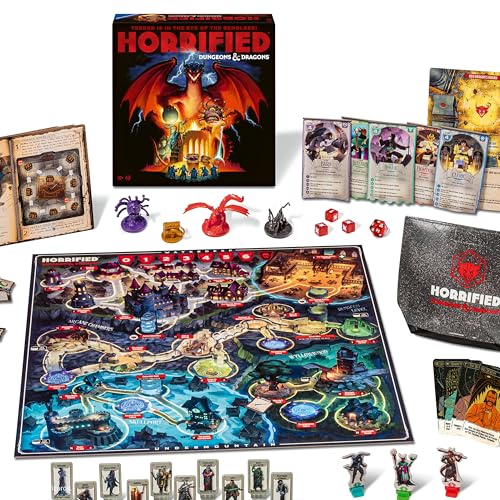
Ravensburger Horrified Dungeons & Dragons Board Game
What We Like
- Cooperative gameplay boosts teamwork and critical thinking
- Four unique D&D monsters with different tactics
- Visually stunning components including sculpted miniatures
- Custom d20 adds immersive D&D flair
Trade-offs
- Requires reading and strategy, not ideal for very casual play
Four legendary D&D monsters. Beholder, Displacer Beast, Mimic, and Red Dragon, each with unique tactics means every session feels like a new puzzle to solve together. That cooperative focus is what makes this stand out for families who want to play as a team rather than against each other. The richly illustrated board, sculpted monster miniatures, and custom d20 pull you straight into Waterdeep and Undermountain without needing a dungeon master. For a fantasy-loving kid ages 10 and up, this is a great way to sharpen critical thinking and problem-solving while sharing a laugh with siblings or parents.
The 60-minute playtime is a real commitment compared to something like Ticket to Ride, which can play in 30-60 minutes. That longer session works best when you have a dedicated game night and a group that stays focused. The D&D theme is a strength for the right kid, but if your child isn’t into monsters or fantasy lore, the theme might not click. It’s also a step up in complexity from a pure luck-based game, so younger or less patient players might need a bit of guidance. For families ready for a cooperative challenge that rewards planning and communication, this delivers exactly that.
Asmodee 7 Wonders Board Game

What We Like
- Fast 30-minute playtime
- Supports 3-7 players
- Builds strategic thinking skills
- 150 replay combinations with expansions
Trade-offs
- Requires careful reading of card effects
- Expansions sold separately
A 30-minute playtime means you can fit a full game into a weeknight without dragging into homework time, and the 3-7 player count handles everything from a small family to a larger sleepover group. This civilization-building card game asks each player to draft resources, develop trade routes, and build a wonder over three ages, rewarding long-term planning without the hours-long commitment of heavier strategy games. It suits kids who enjoy thinking a few moves ahead and don’t mind a little competition with neighbors.
Unlike the more tactile train-laying experience of Ticket to Ride, 7 Wonders relies on card drafting and scoring that can feel abstract. That game shows progress clearly across a map, while 7 Wonders asks you to track multiple scoring paths in your head. For a player aged 10 and up who already enjoys building and planning games or wants to step up from simpler family fare, this is a natural next step that rewards repeated play without getting stale.
Product photos
Ravensburger Horrified Universal Monsters Board Game
What We Like
- Teaches teamwork and critical thinking
- 7 unique monster challenges for variety
- Visually stunning thematic components
- Supports solo play too
Trade-offs
- Complex for younger or impatient players
- Requires group cooperation, not solo competition
With seven distinct monster challenges packed into a single box, Horrified forces you and your crew to adapt every game, no two sessions play the same. That variety keeps players engaged because each monster offers a unique challenge, so once you figure out one, the next flips the script. It’s cooperative, so instead of one winner gloating, everyone wins or loses together, which builds the kind of teamwork that actually feels rewarding. The 60-minute playtime is long enough to feel like an adventure but short enough to fit into an evening. This is a game that encourages problem-solving and critical thinking for players ages 10 and up.
A 60-minute playtime demands attention. If your group includes a player who zones out early, they may struggle to keep up. Compared to Ticket to Ride, which offers a more individual route-building experience, Horrified asks everyone to stay engaged and communicate. That’s a strength for focused players ages 10 and up but a real friction point for mixed-age groups or short-attention-span sessions. Still, if you’ve got a handful of kids who love monsters and like working together, this cooperative monster game is a strong choice.
Hasbro Gaming Battleship Board Game

What We Like
- Portable battle cases with storage
- Salvo feature for advanced play
- Easy to learn 2-player game
Trade-offs
- Only 2 players, no solo or group play
- No cooperative or team variant
For a two-player game that fits in a backpack, the Battleship board game is a classic that still delivers. The portable battle cases store all ships and pegs neatly, so you can take the naval combat to a friend’s house or on a road trip without losing pieces. It’s easy to learn for kids as young as 7, but the optional Salvo rule lets advanced players launch multiple attacks per turn, adding a layer of strategy. This is a head-to-head game that works best when you have one opponent ready for a focused battle.
The biggest trade-off here is that it’s strictly a two-player game. If you’re looking for something the whole family can play at once, Ticket to Ride supports up to five players. But for a focused, one-on-one battle that teaches deduction and planning, Battleship is hard to beat. The self-contained cases make it a great travel companion.
Product photos
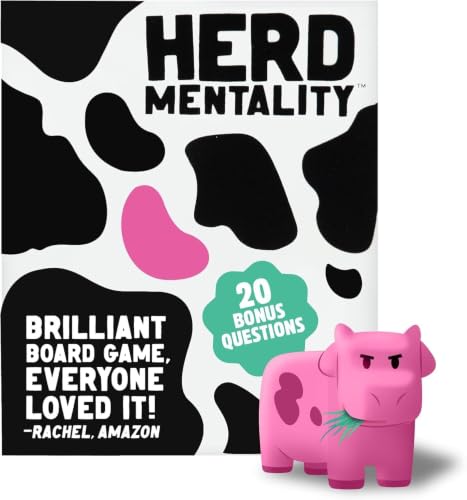
Big Potato Herd Mentality Board Game
What We Like
- Supports 4-20+ players
- Easy to learn rules
- Udderly hilarious gameplay
- Includes 20 extra questions
Trade-offs
- Odd one out gets the pink cow of doom
- Not suitable for kids under 10
With room for 4 to 20+ players, this party game handles crowds that would leave most board games in the dust. The premise is simple: answer a question, hope your answer matches the majority, and avoid being the odd one out stuck with the pink cow of doom. It’s easy enough to teach in under a minute, so even the most reluctant player can jump right in. For a large family gathering or a birthday sleepover, this is the kind of game that gets everyone laughing and talking without anyone feeling left out.
The recommended age starts at 10, so younger children might not find all the questions accessible. Compared to a more strategic pick like Ticket to Ride, Herd Mentality trades depth for sheer chaotic fun. If your group leans toward quick, silly laughs over careful planning, this one delivers. Just be ready for the pink cow of doom to make a few appearances.
Product photos
Hasbro Gaming Clue Board Game

What We Like
- Reimagined classic mystery storyline
- Gold-plated zinc weapon tokens
- Sculpted character movers
- Clue cards speed up sleuthing
Trade-offs
- Not cooperative, players compete against each other
- Not a cooperative game; players compete against each other.
For a group of 2 to 6 players, this Clue reimagining packs a rich, updated mystery into a beautifully detailed Tudor Mansion board. The gold-plated zinc weapon tokens and sculpted character movers give it a premium feel that stands out on game night. It works well for kids ages 8 and up who enjoy deduction and storytelling, especially those ready for a slightly more atmospheric take on the classic whodunit.
Every player is a suspect, so it’s purely competitive, no teamwork here. If your group prefers cooperative play, Ravensburger’s Horrified Dungeons & Dragons board game lets everyone work together against the monsters. But for families who love unraveling secrets and out-sleuthing each other, this Clue game delivers a polished, engaging experience that keeps everyone guessing.
Product photos
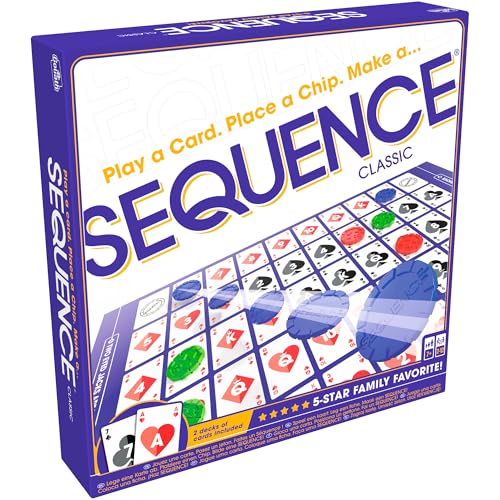
Jax SEQUENCE Original Board Game
What We Like
- Supports 2-12 players at once
- Develops STEM skills like strategy
- Easy enough for children, challenging for adults
- Includes folding board and two card decks
Trade-offs
- Red chips are fewer, limiting some team setups
- Requires a large table for board and components
With support for up to 12 players right out of the box, this is one of the few board games that can handle a whole birthday party or a large family game night without splitting into groups. The play is straightforward: play a card from your hand, find its matching space on the board, and place a chip. When you line up five in a row, you’ve scored a sequence. That simple loop hides real strategic depth, especially when opponents start blocking your runs or stealing your spots. The manufacturer says it’s easy enough for children yet challenging for adults. The STEM skill development, pattern recognition, forward planning, spatial reasoning, is a natural fit for players ages 7 and up who are ready for more than luck-based games.
Table space can be an issue. The folding board measures 19.75 inches by 15.25 inches, and with two decks of cards and 135 chips spread out, you’ll need a decent-sized table to keep everything organized. If your family room coffee table is small, you might find yourself juggling components. That said, the game plays quickly once everyone knows the rules, and the 2-12 player count means you can include younger siblings or grandparents without buying expansions. Not ideal for families who prefer cooperative play or who have very limited table space.
Space Cowboys Skull Bluffing Party Game

What We Like
- Pure bluffing with no luck
- Quick 30-minute playtime
- Portable disc design for travel
- Works for 3-6 players
Trade-offs
- No luck means less forgiving for casual players
- Requires reading opponents, not just rules
A 30-minute playtime means this bluffing game fits neatly into a party or game night without dragging on. For players ages 10 and up who love psychology and outsmarting friends, Skull delivers pure nerve and strategy with zero luck involved. Every round is a tense read of who’s bluffing and who’s holding a skull. The portable discs make it easy to toss in a bag for sleepovers or family trips, and the simple rules let kids focus on the social deduction rather than a thick rulebook.
Skull is a pure test of nerve and reading opponents, so if you’re not comfortable with bluffing and direct confrontation, this game might feel stressful rather than fun. It’s best for players who enjoy the challenge of out-bluffing their friends and can handle the occasional sting of flipping a skull.
Product photos
How We Evaluated Board Games For 11 Year Olds
We started by looking at the official specifications and manufacturer descriptions for dozens of popular board games. We then cross-referenced those with expert round-ups from toy and game reviewers who focus on family play. Finally, we analyzed patterns in thousands of owner reviews to understand what parents and kids actually praise or complain about after months of play.
The four criteria that mattered most were age-appropriate complexity, replay value, group size flexibility, and the balance of luck versus strategy. An eleven-year-old can handle multi-step planning but may get frustrated by overly fiddly rules. Games that offer different paths to victory or variable setups get played more than twice. We also considered whether a game works for both a quiet two-player evening and a rowdy four-player game night.
A research-led evaluation like this has limits. We don’t own or playtest every game ourselves, so we rely on the collective wisdom of owners and experts. What we can tell you is which games consistently satisfy families with kids this age, and which trade-offs are worth knowing about before you buy.
What To Look For In Board Games For 11 Year Olds
Finding the right game means matching the complexity to your child’s experience level and the group size you usually play with. The best games for this age reward planning without punishing mistakes too harshly.
Look for games with a 30-60 minute playtime, clear but not overwhelming rules, and enough strategic depth to stay interesting after ten plays. Avoid games that require heavy reading or have elimination mechanics that leave one player sitting out.
Age-Appropriate Complexity
A child can handle games with multiple phases, resource management, and long-term planning. But the rulebook should be learnable in under fifteen minutes. Games like Ticket to Ride and 7 Wonders succeed because their core loop is simple even as the strategy deepens. Avoid games designed for adults that have lengthy rulebooks or require constant rule-checking.
Replay Value and Variety
The best games for this age group offer different experiences each time you play. Variable setups, multiple victory paths, or different character abilities keep the game fresh. A game that plays the same way every round will collect dust after a few sessions. Look for games with expansion options or built-in variety, like the 150 replay combinations in 7 Wonders.
Group Size and Social Dynamics
Consider who will be playing most often. A game that only supports two players is fine for siblings but won’t work for a family game night with four or five. Conversely, games that require four or more players can be frustrating if your child often wants to play one-on-one with a parent. Cooperative games like Horrified are great for mixed-age groups because everyone works toward the same goal.
- Check the player count on the box and think about your typical game night group.
- Look for games with a “family mode” or simplified rules for younger players.
- Consider whether the game allows players to join or leave mid-session.
- Read the box to see if the game requires reading fluency or can be played by pre-readers with help.
- Look for games with a clear end condition and a predictable playtime.
A good rule of thumb: if the rulebook is longer than a children’s picture book, it’s probably too complex for casual family play.
Board Games For 11 Year Olds Compared
The table below compares our top picks across the key criteria that matter for young players.
| Product | Players | Ages | Weight |
|---|---|---|---|
| Days of Wonder Ticket to Ride Board Game | 2-5 | 8+ | 2.8 pounds |
| Asmodee Ticket to Ride Europe Board Game | 2-5 | 8+ | N/A |
| Ravensburger Horrified Dungeons & Dragons Board Game | 1-5 | 10+ | 1.5 pounds |
| Asmodee 7 Wonders Board Game | 3-7 | 10+ | 3.2 pounds |
| Ravensburger Horrified Universal Monsters Board Game | 1-5 | 10+ | 2.2 pounds |
| Hasbro Gaming Battleship Board Game | 2 | 7+ | 1.0 pounds |
| Big Potato Herd Mentality Board Game | 4-20+ | 10+ | 1.0 pounds |
| Hasbro Gaming Clue Board Game | 2-6 | 8 and up | 2.2 pounds |
| Jax SEQUENCE Original Board Game | 2-12 | 7 and up | 0.4 pounds |
| Space Cowboys Skull Bluffing Party Game | 3-6 | 10+ | 0.8 pounds |
Frequently Asked Questions
What is a good board game for an 11 year old who likes strategy?
Ticket to Ride is an excellent choice for a strategic child. It requires planning routes, blocking opponents, and managing a limited set of train pieces, but the rules are simple enough to learn in one round. For a faster game, 7 Wonders offers deep strategy in a 30-minute playtime.
Are there board games for 11 year olds that are cooperative?
Yes. Ravensburger Horrified Dungeons & Dragons Board Game and Ravensburger Horrified Universal Monsters Board Game are both cooperative games where players work together to defeat monsters. These games encourage teamwork and critical thinking rather than direct competition.
What is a good board game for a large group of 11 year olds?
Big Potato Herd Mentality Board Game supports 4 to 20 players and is perfect for parties or large sleepovers. It is easy to learn and focuses on matching answers with the group, which creates lots of laughs. Jax SEQUENCE Original Board Game also works well for up to 12 players.
What is the best two-player board game for an 11 year old?
Hasbro Gaming Battleship Board Game is a classic two-player game that is quick to set up and play. It teaches deductive reasoning and spatial thinking in a head-to-head format. For a more strategic two-player experience, Ticket to Ride works well, though it is less balanced with only two players.
How do I choose a board game for an 11 year old who gets bored easily?
Look for games with a short playtime, ideally 30 minutes or less. Space Cowboys Skull Bluffing Party Game plays in about 30 minutes and relies on bluffing and reading opponents rather than long setup. 7 Wonders also plays in 30 minutes and has enough variety to stay interesting across many sessions.
The Bottom Line
For most families, Days of Wonder Ticket to Ride Board Game is the best overall choice. It strikes the perfect balance of simple rules and strategic depth for a child, and the giant map and miniature trains make it feel special. It works best with three to five players, so it is ideal for family game night or small groups of friends.
If your child prefers working with others instead of competing, go with Ravensburger Horrified Dungeons & Dragons Board Game for a cooperative fantasy adventure. For large gatherings or parties, Big Potato Herd Mentality Board Game delivers the most laughs per minute and accommodates almost any group size.
The single most important factor is matching the game’s complexity to your child’s experience. A child who has played a few modern board games can handle Ticket to Ride or 7 Wonders. A complete beginner might enjoy Hasbro Gaming Clue Board Game or Jax SEQUENCE Original Board Game first. For more ideas, check out our guides on games for tweens, middle school board games, and board games for 10 year olds.
