
How to Get Sticker Residue Off Toys: Tape and Heat First
This post contains affiliate links. As an Amazon Associate, we earn from qualifying purchases.
To get sticker residue off toys, lift the bulk with tape pressed sticky-side out, soften what’s left with a hair dryer, then work in cooking oil and rinse with dish soap. A white vinegar soak takes about 5 minutes. Acetone can remove the surface finish of a product, such as lacquer or melamine, so keep it away from anything with decals.
Heat softens the glue so it peels instead of smearing, and oil breaks the adhesive down so it wipes. IKEA’s own label-removal guide lists both methods, and the order matters when you’re working out how to get sticker residue off toys a toddler still puts in their mouth.
What follows: six steps in the order that saves the finish, the two solvents that will take paint with them, and the one family device where sticker residue turned into a paid repair.
Key Takeaways
- Tape first, solvent last. The sticky side of masking tape pulls most of a fresh residue off before you wet anything.
- A white vinegar soak runs about 5 minutes, and it’s the gentlest thing on this list that still dissolves adhesive.
- Acetone and WD-40 can both damage lacquer and melamine finishes, per IKEA’s own guidance. Test a hidden spot every time.
- Skip metal scrapers. Loctite recommends a plastic card or a tongue depressor on plastic, never a razor or putty knife.
- Goo-Gone works, but it may require several applications to completely remove residue. I stopped using it on toys.
Start With Tape and Heat Before You Reach for a Solvent
Two fingers and a strip of masking tape handle the first pass. Wrap the tape sticky-side out and dab at the residue. Most of a fresh sticker lifts without any liquid at all.
Masking tape wrapped sticky-side outward lifts fresh adhesive residue from hard plastic housings without solvent. Heat from a hair dryer softens the remaining glue so it peels instead of smearing. For foam mounting strips, dental floss cuts through the backing once the adhesive has been warmed, and the leftover film stretches off by hand.
Nintendo’s own support page for the Wii describes exactly that method: masking tape, sticky side out, dabbed at residue left by third-party vinyl stickers on the console housing. No liquid, no cloth, no risk to the finish.
Mattel’s customer center gives the same logic for a broken 3M Command Strip. Warm the base plate with a hair dryer, work dental floss through the foam, then peel or stretch off whatever adhesive is left.
Grab these before you start:
- Masking tape, wrapped sticky-side out around two fingers
- A hair dryer
- Cooking oil, mineral oil, or baby oil, plus a clean cloth and dish soap for the rinse
- A plastic card or a tongue depressor for scraping
- White vinegar and a paper towel
A fresh residue is tacky and pulls at your thumb. Old residue behaves differently: it goes dry and grey and rolls into little pills under pressure instead of smearing.
That difference decides your method.
If the toy has been outside all summer, treat this as the last stage of how to clean plastic toys rather than a separate job.
How to Get Sticker Residue Off Toys Without Ruining the Paint
The answer is order: mechanical first, heat second, oil third, and solvent only if the first three fail. That sequence keeps the harshest thing you touch down at dish soap.
Before you start: Acetone and nail polish remover give off fumes that build up fast in a closed room, so open a window. WD-40 is highly flammable, so keep it well away from the hair dryer you were just holding. And keep the dryer moving, because heat held on one spot softens thin plastic along with the glue.
The Order That Saves the Finish
- Test a hidden spot first. Avery’s standing advice for any cleaning solution, and it’s cheap insurance. Skip it and you find out the finish was painted on when the paint comes off with the residue.
- Warm the residue with a hair dryer. Hold it a few inches back and keep it moving. IKEA notes the heat softens the glue so it peels instead of smearing. Skip this and you drag sticky strings across clean plastic.
- Dab with tape, sticky side out. Nintendo’s method for the Wii housing. Skip it and you push residue into seams where nothing else reaches.
- Work in a little cooking oil with your thumb. Give it a moment, then wipe. The oil breaks the adhesive down so it wipes instead of smears. Skip the oil and you scrub, and scrubbing scratches.
- Soak stubborn spots in white vinegar for about 5 minutes. IKEA’s number. Lay a soaked paper towel over the residue and let it sit. Skip the soak and you’ll scrape at adhesive that’s still bonded.
- Scrape the last of it with a plastic card, then rinse with dish soap. Loctite’s guidance, and the rinse matters because oil and vinegar both leave an odor behind.
Once the residue is gone, sanitize plastic toys before they go back in the bin.
Why Does a 5-Minute Vinegar Soak Beat Scrubbing?
Five minutes of waiting replaces a few minutes of rubbing, and rubbing is what scratches plastic. [
Vinegar shows up in two independent manufacturer guides, which is more than most of the internet’s favorite methods can claim.
The soak does the work. Your hand doesn’t.
Which Oils Actually Break Down Adhesive
I keep one bottle of plain cooking oil in the toy-cleaning bin and nothing else. Worked in with a thumb and rinsed with dish soap, it takes sticker residue off hard plastic without touching the finish. It also doesn’t smell like anything an hour later, which is more than I can say for the citrus-based removers.
On a toy, I’d skip the peanut butter. Toys go in mouths, and the smell hangs around.
If you already run a clean toys with vinegar routine on the toy bin, you’ve got the soak part handled.
Fabric is a different job. Stains on plush toys need their own method, because a vinegar soak on a stuffed animal just moves the problem into the stuffing.
WD-40, Acetone, and Goo-Gone: Where the Sources Split
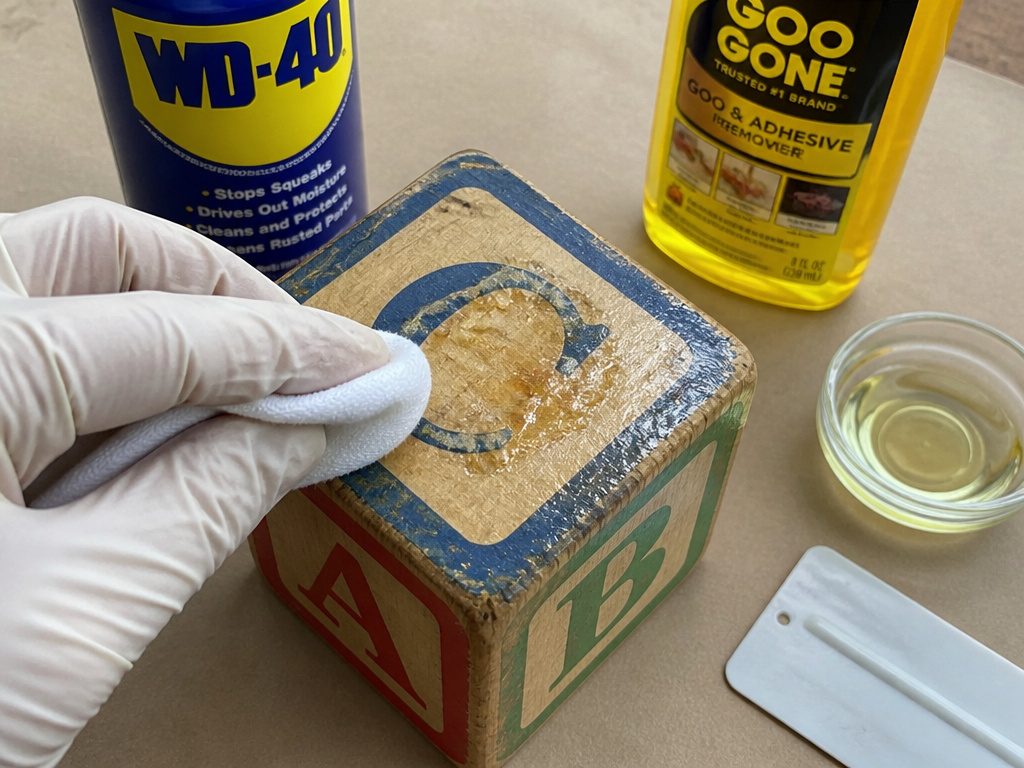
WD-40 is the clearest case of two manufacturers disagreeing in public. IKEA endorses it: spray a bit on the residue, let it sit a few minutes, wipe it away. The same IKEA article warns that WD-40 is highly flammable and can damage finishes like lacquer or melamine.
Loctite’s guide for plastic doesn’t mention WD-40 at all. It sends you to warm soapy water, white vinegar, or nail polish remover instead.
| Product or method | Position A | Position B |
|---|---|---|
| Nail polish remover | Avery: a more aggressive solvent that may remove the residue | IKEA: dissolves adhesive, but can strip lacquer or melamine |
| WD-40 | IKEA: spray, wait a few minutes, wipe | Loctite: not listed at all |
| Scraping tool | Loctite: plastic card or tongue depressor | IKEA: dull edge of a knife after a soap soak |
Neither side is wrong. They’re answering different questions about the same solvent.
Goo-Gone is the one I’d flag. Avery’s adhesive residue guidance recommends it by name. It works too, because it’s built to target adhesive, gum, and glue. I used it on a secondhand wooden toy set once, and it took several applications before everything came off. I switched to cooking oil and never went back.
Avery’s own guidance adds one more detail: Goo-Gone or nail polish remover may need to soak into the residue for a few minutes, and it can take several applications before everything comes off.
What most people get wrong: Reaching for nail polish remover because it’s already in the bathroom cabinet. Avery calls it a more aggressive solvent. IKEA warns that acetone can dissolve the finish along with the adhesive, and once the sheen goes cloudy on a lacquered toy, it stays cloudy.
The same test-patch logic applies when you’re removing permanent marker from plastic toys, where a melamine sponge will lift the print as fast as it lifts the ink.
Which Toy Surfaces Should Never See Acetone or WD-40?
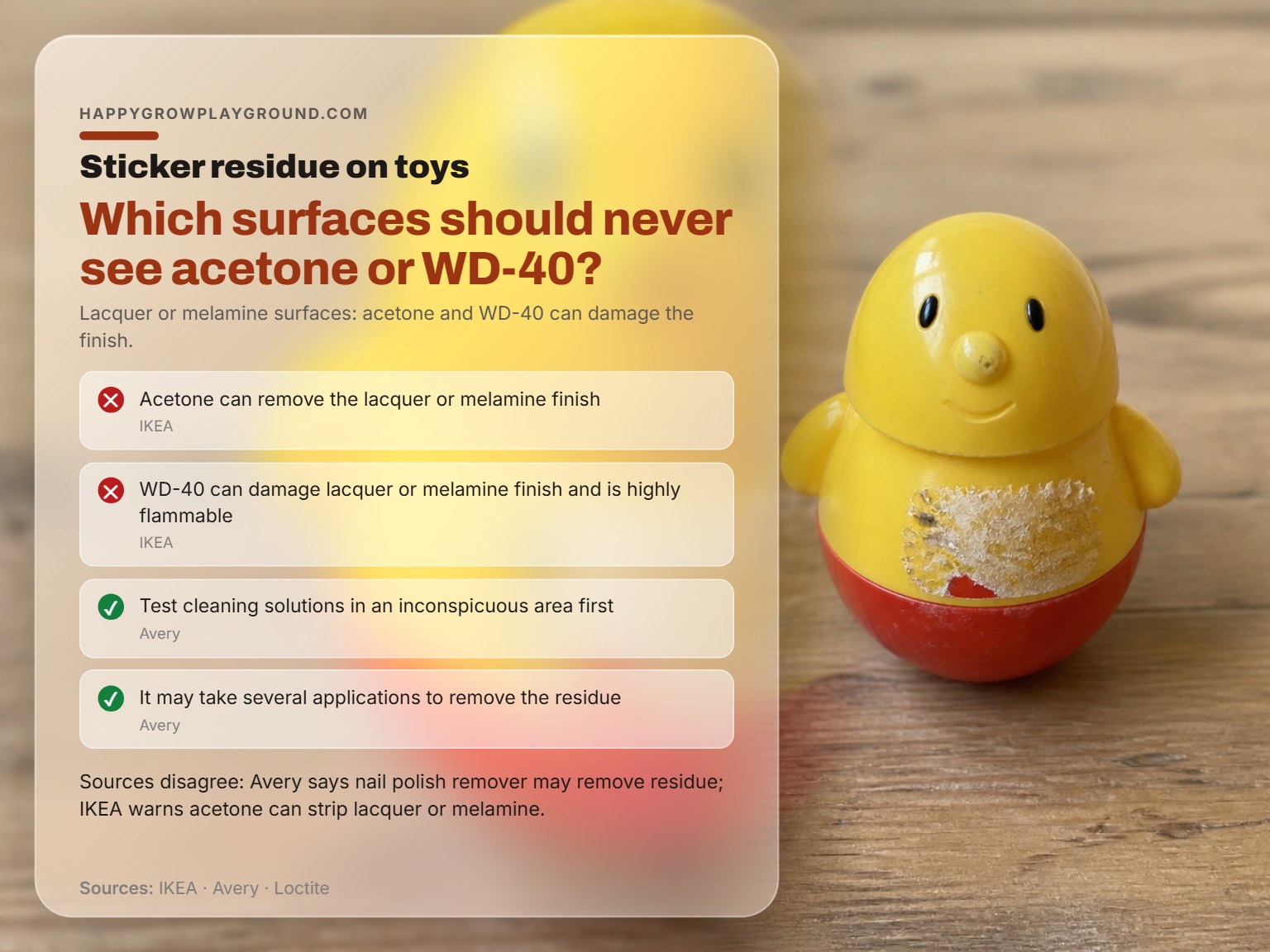
Anything with a painted, printed, or lacquered surface is off limits for solvents. That covers most of the toys worth worrying about.
Solvents stay in the cupboard.
| Surface | Safe first move | Never use |
|---|---|---|
| Bare hard plastic | Tape dab, then cooking oil | Razor or putty knife |
| Painted or printed plastic | Hair dryer heat, then tape | Acetone, nail polish remover |
| Lacquer or melamine finish | Warm soapy water and a cloth | WD-40, acetone |
| Console or handheld housing | Masking tape, sticky side out | Anything wet |
| Plush and fabric | Gentle scrub with soap and water | A vinegar soak on stuffing |
Loctite’s plastic-safe scraping guidance is specific: even the hardest plastics get ripped, scratched, or punctured by a straight razor or a putty knife. Use a plastic card or a tongue depressor and let the soak do the work.
The Melamine Sponge Exception
A melamine sponge is the exception that proves why you test first. On bare hard plastic it takes marker off with light pressure. On anything printed, it takes the print too.
I found that out on a secondhand shape sorter. Now I test on the underside of every toy before I touch the front.
A few things to avoid, in no particular order:
- Don’t use a razor or a putty knife on plastic.
- Don’t leave WD-40 sitting on lacquer or melamine.
- Don’t skip the test patch.
- Don’t expect one pass to clear it. It may take several applications.
When Sticker Residue Turns Into a Paid Repair
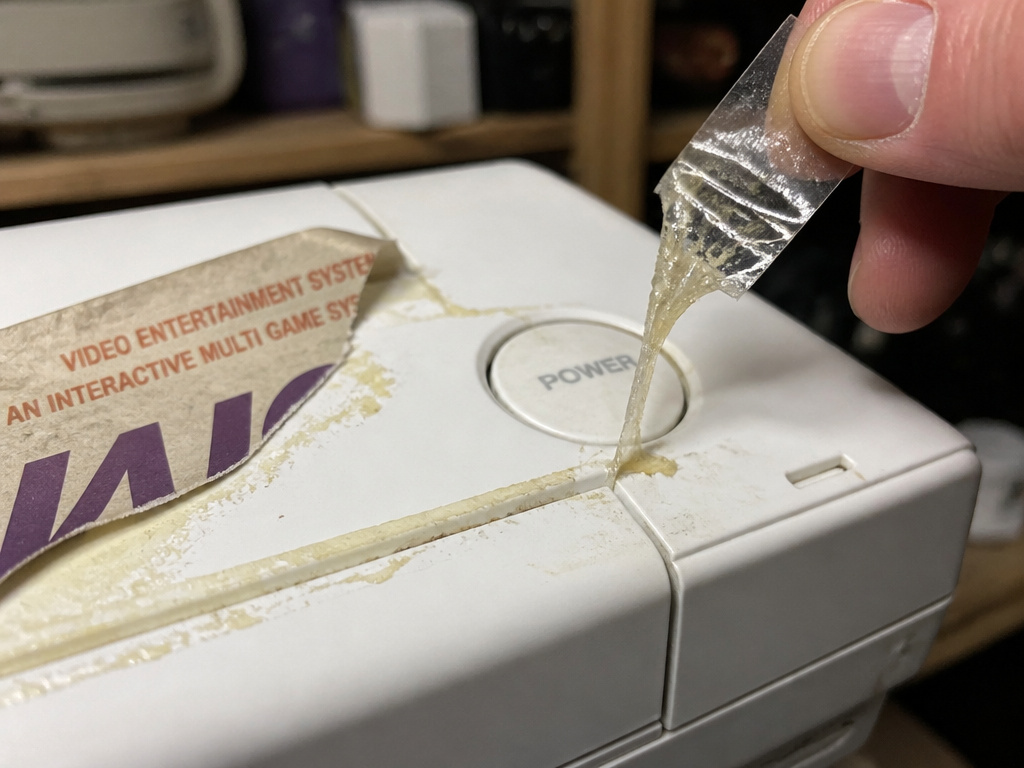
A Wii in the basement with a third-party vinyl sticker on the housing looks like a cosmetic problem. [
That’s the outlier position in this category.
Any residue that reaches a button, a hinge, or a seam has stopped being a cleaning problem. Deal with it before it gets there, because past that point you’re paying for a repair.
The practical takeaway is timing. Fresh residue comes off with tape. Residue that’s been sitting long enough to go hard has bonded to the surface, and by then you’re choosing between a mark and a scratched finish.
Frequently Asked Questions
Does cooking oil really remove sticker residue from plastic toys?
Yes, and it’s the method I reach for first. IKEA lists mineral oil and baby oil for the same job, and notes that the oils in peanut butter break down adhesive the same way. Work a little oil in with your thumb and give it a moment. Then wipe it off and rinse with dish soap.
Can I use nail polish remover or acetone on a plastic toy?
Only if you don’t care about the finish. On a painted or printed toy, that’s a one-way trip.
Is WD-40 safe for removing sticker residue from toys?
IKEA endorses the method and warns about it in the same paragraph. Spray it on, let it sit a few minutes, and wipe it away. Keep it away from flames, because it’s highly flammable. Loctite’s guide for plastic doesn’t mention WD-40 at all. Since it’s going on something a child handles, I’d use oil instead.
How long should I let a residue remover sit?
Long enough to soften the adhesive, and that varies. IKEA says to soak a paper towel in white vinegar and place it over the residue for about 5 minutes. Avery says Goo-Gone or nail polish remover may require letting the cleaning solution soak into the residue for a few minutes.
What about residue stuck in a seam or a crevice?
Tape handles that better than any liquid. Nintendo’s Wii guidance is the masking tape dab, sticky side out, worked into the residue. A plastic card or a tongue depressor gets the last of it out of a groove without scratching the plastic around it.
What should I never use on a toy with printed decals?
Acetone, nail polish remover, and WD-40. Stick with heat, tape, and oil. Test a hidden spot first, which is Avery’s standing advice for any cleaning solution.
The Bottom Line
One rule covers almost everything: flat surfaces come clean with tape and oil, and anything that reaches a button, a hinge, or a seam stops being a cleaning job. Nintendo’s Wii page is the only manufacturer source here that puts a paid repair on the other side of that line.
This all changes if the toy has a printed decal or a lacquered finish. In that case, drop the solvents entirely and stay with heat, tape, and oil. The finish is the toy’s whole look, and once acetone clouds it, no amount of polishing brings it back.
The order never changes when you’re working out how to get sticker residue off toys: heat, tape, oil, then a vinegar soak if the residue is stubborn.
Tonight, before you buy anything, grab the masking tape. Sticky side out, dab at the residue, and see how much comes off with no liquid at all. Most of it will.
Here’s what I’d tell a friend: buy the vinegar, skip the acetone.
